You can buy potato grow bags right now from Amazon, Walmart, Home Depot, Lowe's, or specialty garden retailers like Gardener's Supply and MIgardener. For most home growers, a 10-gallon fabric grow bag is the right starting point, and you can find a decent 4- or 5-pack for under $20 at any of those stores. If you'd rather make your own, that's a totally viable option too, and I'll walk you through both paths below.
Where to Buy Grow Bags for Potatoes or Make One
Marcus Holloway
11 Jun 2026
Where to buy potato grow bags (online and local)
The easiest place to start is whichever retailer you already use. Potato grow bags are widely stocked both online and in physical stores, so you're not stuck waiting on a specialty order unless you want a specific brand.
Online retailers
- Amazon: The biggest selection by far. Search 'potato grow bag 10 gallon' and you'll find dozens of options, including multi-packs from VIVOSUN, iPower, and generic brands with harvest windows. Filter by ratings and read a few reviews before buying.
- Walmart.com: Lists potato grow bags in 7-gallon and 10-gallon sizes, including Smart Pot fabric grow bags and VIVOSUN 5-packs with 360-degree visibility and harvest windows. Solid value and often available for free shipping or in-store pickup.
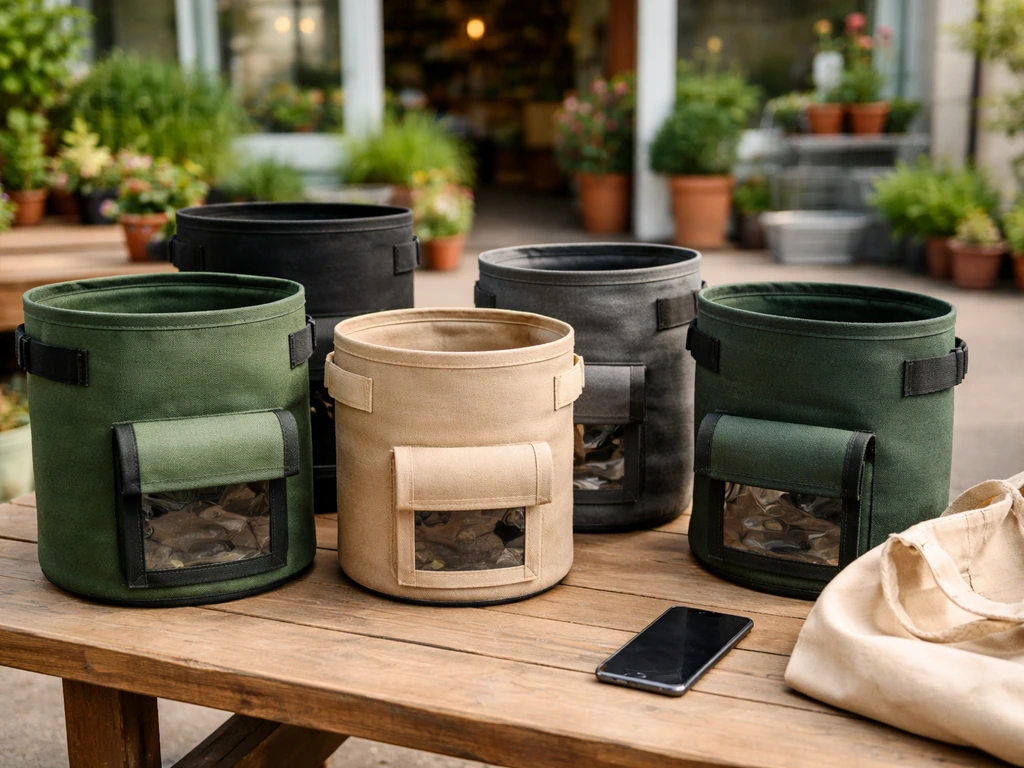
- Home Depot (homedepot.com): Carries a 10-gallon round potato grow bag set (4-piece) in non-woven fabric with harvest windows and handles. You can check store availability online and pick them up same day.
- Lowe's (lowes.com): Lists a 10-gallon potato grow bag 5-pack in heavy-duty 350g nonwoven fabric with reinforced handles and a clear harvest window. Check the garden center section.
- Gardener's Supply (gardeners.com): Home of the Gardener's Best Potato Grow Bag, which holds 50 quarts of soil. They also sell a Jumbo version that holds about 120 quarts. These are higher quality and more expensive than generic bags, but they're purpose-built and very well reviewed.
- MIgardener (migardener.com): Sells black porous felt grow bags in multiple sizes including 7, 10, 15, and 20 gallons. Good quality for the price and a good source if you're already buying seeds there.
Local stores and garden centers
If you want to buy today and start planting this weekend, check your local Home Depot or Lowe's garden center first. Both carry potato-specific grow bags in season. Independent garden centers and farm supply stores (like Rural King or Tractor Supply) often carry Smart Pot brand bags, which are one of the best fabric containers on the market. Nurseries that sell seed potatoes in spring frequently stock grow bags alongside them, which makes it easy to grab everything in one trip. If it's mid-season and the display racks look picked over, check the store's website to confirm in-store inventory before you drive out.
Choosing the right size and type for potatoes
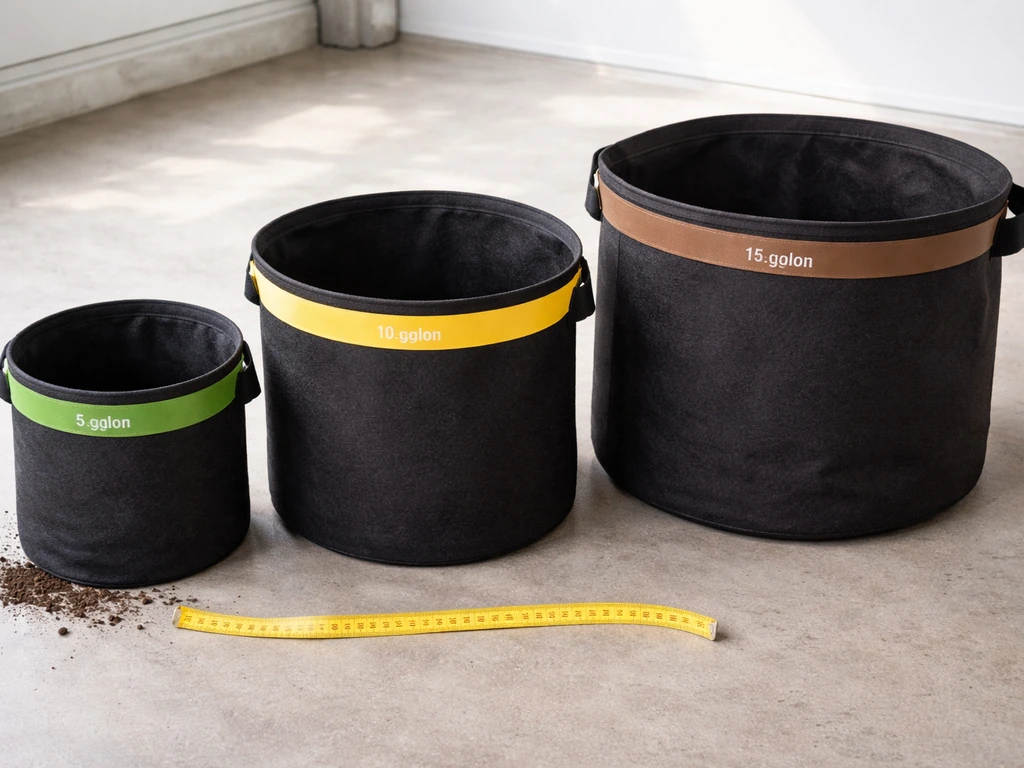
Size matters more than brand here. Potatoes need room to spread horizontally underground, so going too small is the number-one mistake beginners make. The minimum you want for any potato variety is 10 gallons, which is enough room for 2 to 3 seed potatoes. Gertens and most extension sources recommend at least 10 gallons for best results. If you want more potatoes per bag, the Gardener's Best Jumbo bag at around 120 quarts (roughly 30 gallons) is a substantial step up.
| Bag Size | Seed Potatoes Per Bag | Best For | Example Product |
|---|---|---|---|
| 5 gallons | 1 to 2 | Small spaces, trial run | Generic nonwoven bags |
| 7 gallons | 2 | Balconies, limited space | VIVOSUN or generic 4-pack |
| 10 gallons | 2 to 3 | Most home growers (recommended) | Home Depot 4-pack, Lowe's 5-pack, Smart Pot |
| 15 to 20 gallons | 3 to 4 | Larger varieties, bigger harvest | MIgardener, Smart Pot |
| 50 quarts (~13 gal) | 3 to 4 | Dedicated potato bags | Gardener's Best Potato Grow Bag |
| ~30 gallons (jumbo) | 5 to 6 | Maximum yield, more space needed | Gardener's Best Jumbo |
For fabric type, look for nonwoven or felt fabric rather than woven mesh. Nonwoven fabric (the same material used in Smart Pot and most commercial potato bags) allows air to pass through the walls, which does two important things: it air-prunes the roots so they don't circle and become root-bound, and it keeps the soil from overheating in summer. Smart Pot's design is explicitly built around this, with no extra drainage holes needed because the entire wall is porous. Bags with a harvest window are a nice bonus for potatoes specifically because you can peek in and check tuber development without uprooting anything early.
Quick guide to make potato grow bags
Making your own potato grow bags is genuinely practical, especially if you want a larger size than what's sold locally or you have extra fabric on hand. The key design requirements are: porous fabric that breathes and drains, enough structural support to hold soil weight, and sufficient depth and volume to support tuber development. Here's how to do it.
Materials you'll need
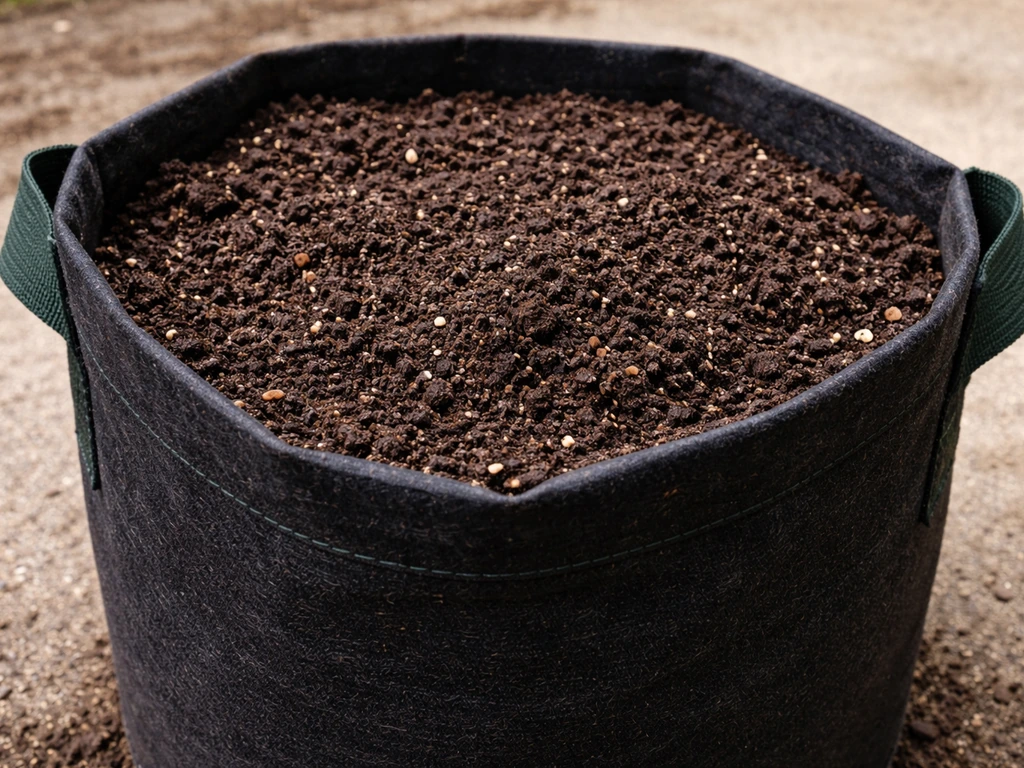
- Heavy-duty nonwoven geotextile fabric or landscaping fabric (at least 3 to 5 oz weight per square yard for durability), available at home improvement stores by the yard
- Burlap or thick felt as an alternative fabric option (both breathe and drain well)
- Scissors or a rotary cutter
- Zip ties, heavy-duty staples, or a sewing machine with outdoor thread for seaming
- Optional: nylon webbing or sturdy fabric strips for handles (about 12 to 18 inches per handle, two handles per bag)
- Optional: a piece of window screen or mesh fabric for reinforcing the bottom seam
Steps to build the bag
- Cut your fabric into two circles (for top and bottom) and one rectangle for the sidewall, or just one large rectangle that you'll fold and seam into a cylinder. For a 10-gallon bag, aim for roughly 14 inches in diameter and 15 inches tall.
- Fold the rectangle into a cylinder and seam the vertical edge using zip ties spaced every 2 inches, or sew it with a double-stitched outdoor seam. If using zip ties, thread them through small holes punched along the edge.
- Attach the circular bottom piece using the same method. Reinforce this seam well because it bears the most weight. A layer of mesh fabric on the inside of the bottom seam helps prevent soil from washing through while still allowing drainage.
- If you want a harvest window, cut a 4x6-inch flap on the lower sidewall before assembly and fold the cut edges back with a few zip ties or stitches to keep them from fraying.
- Attach two handles by looping nylon webbing through the top edge of the bag and securing each end with zip ties or stitches. Reinforce the attachment points because wet soil is heavy.
- Punch or cut a few small drainage holes near the bottom edge if your fabric is not already porous enough to drain freely. Test by pouring a cup of water in the empty bag and watching it drain through within 20 to 30 seconds.
- Roll the top edge down by about 4 inches before filling. As plants grow and you add more soil, unroll the top to increase bag depth. This is the same 'hilling in a bag' method used with commercial potato bags.
The Instructables tote bag method is a simpler shortcut: use a heavy-duty reusable shopping tote or fabric shopping bag (the kind sold for $1 at grocery stores) and punch drainage holes in the bottom. It's not as durable as a custom-built bag, but it works for one or two seasons and costs almost nothing. The fabric in those totes is usually nonwoven polypropylene, which breathes and drains reasonably well.
Fabric grow bag setup for potatoes
Filling with the right soil mix
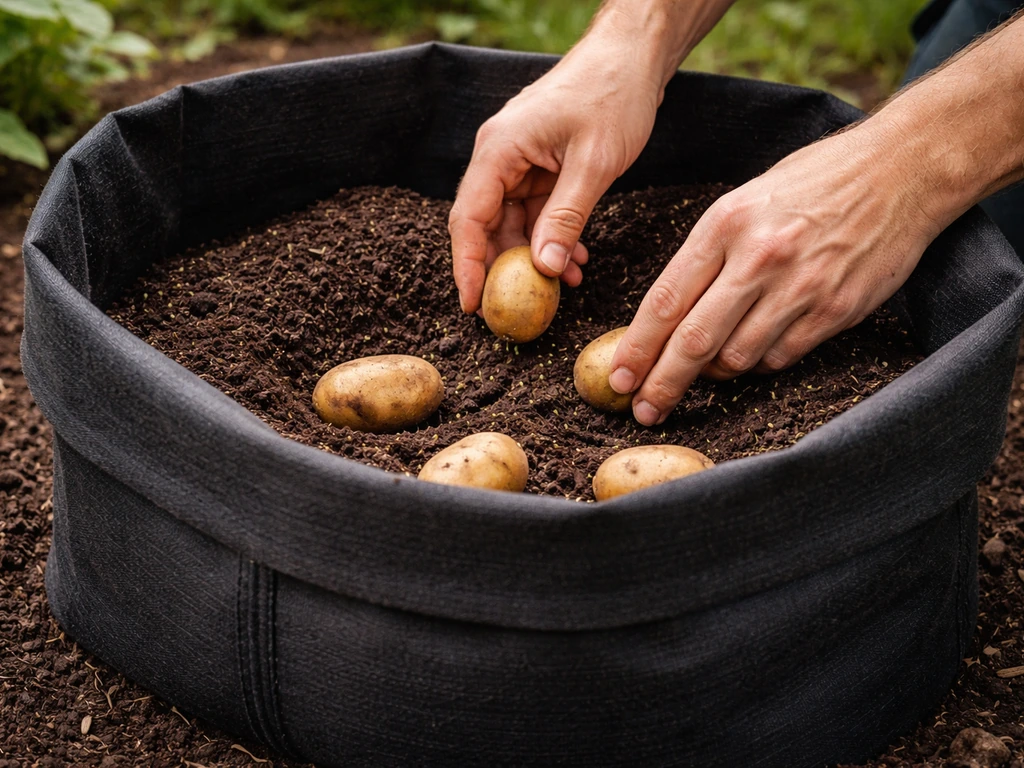
Don't use straight garden soil in a grow bag. It compacts, doesn't drain well, and becomes anaerobic fast. Start with a quality commercial potting mix (not garden soil or topsoil) and blend in about 20 to 25 percent compost or aged compost. The Gardener's Best bag, for example, is designed to hold 50 quarts and calls for premium potting mix. If you want to add a slow-release fertilizer at planting time, work it into the bottom third of the soil. A soil mix that is loose, well-aerated, and slightly acidic (pH 5.8 to 6.5) will give you the best tuber development.
Planting your seed potatoes
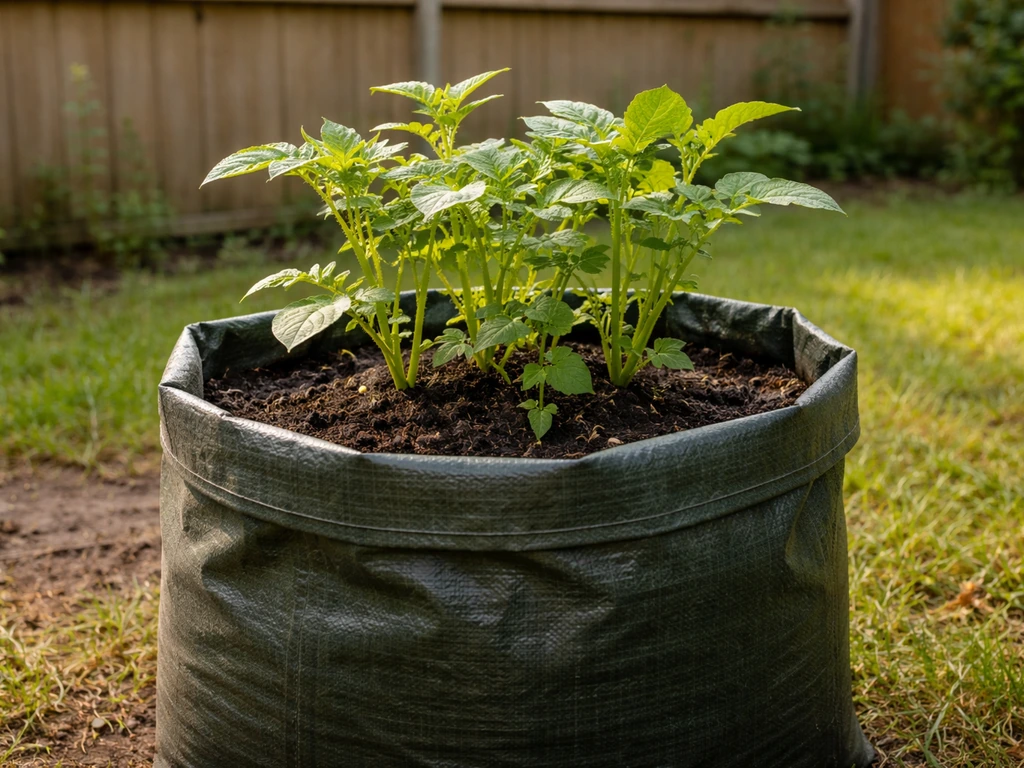
Start with the bag rolled down to about half its height (or one-third full of soil), which gives you room to add more soil as the plants grow. Fill the bottom third with your soil mix, then place 2 to 3 seed potato pieces cut-side down with at least one eye each, spacing them evenly. Cover with 3 to 4 inches of soil and pat it down gently. As green shoots appear and reach 4 to 6 inches tall, add another 3 to 4 inches of soil and unroll the bag slightly. Repeat this hilling process until the bag is nearly full or until the plant flowers. Gardening Know How recommends stopping hilling once flowering begins, as that's when tuber formation is underway.
Watering approach
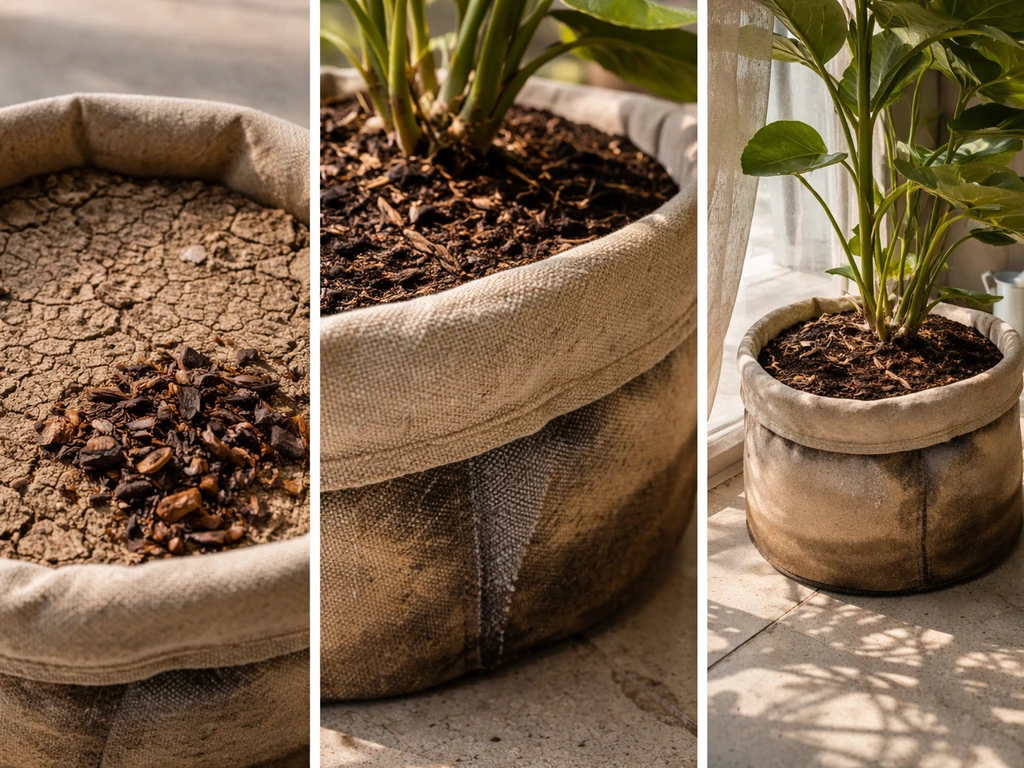
Fabric bags dry out faster than plastic pots, especially in warm weather, so you need to stay on top of watering. Because fabric grow bags can dry out quickly, the BYU PDF on growing potatoes in a gunny sack also emphasizes blank" rel="noopener noreferrer">watering regularly, and it identifies Colorado potato beetle as a common pest to watch for. The consistent guidance from Gardener's Supply, UC Davis, and Penn State grow kit instructions is the same: keep the soil moist but never soggy. Water deeply when the top inch or two of soil feels dry, and let it partially dry between waterings. Stick your finger 2 inches into the soil as a quick check. In hot weather, that might mean watering every day. In cooler or cloudy conditions, every 2 to 3 days is often enough. Use room-temperature or warm water if possible, and water slowly so the soil absorbs it rather than running out the sides.
Tips, troubleshooting, and maintenance
Common problems and fixes
| Problem | Likely Cause | Fix |
|---|---|---|
| Soil drying out too fast | Fabric wicking + heat, pot too small | Water more frequently, add mulch on top of soil, move bag to partial shade during peak heat |
| Waterlogged or soggy soil | Poor drainage, wrong soil mix, bag on solid surface | Elevate bag on bricks or a stand, switch to a porous potting mix, check that bag fabric is actually draining |
| Slow or no shoot emergence | Seed potato too deep, cold soil, poor tuber viability | Replant at 3-4 inch depth, wait until soil temp is above 45°F, use certified seed potatoes next time |
| Yellowing leaves mid-season | Nitrogen deficiency or waterlogging | Feed with a balanced fertilizer if soil is not soggy; if soggy, improve drainage first |
| Colorado potato beetle | Common pest, arrives mid-season | Hand-pick adults and egg clusters daily, use row cover early in season, consider neem oil spray |
| Small tuber yield at harvest | Bag too small, not enough hilling, harvested too early | Use at least 10-gallon bags, hill consistently until flowering, wait until foliage dies back before harvesting |
Maintenance across the season
- Check moisture daily during the first 2 weeks after planting, as seed potatoes are establishing and the bag soil dries quickly.
- Keep the bag in a location with at least 6 hours of direct sun per day. Potatoes are full-sun crops.
- After harvest, empty the bag completely, shake out loose soil, and rinse with a mild bleach solution (1 tablespoon per gallon of water) to prevent disease carryover. Let it dry fully before storing.
- Inspect the fabric for tears or thinning spots, especially at the handle attachment points and base seams, before reusing.
- Quality commercial bags like Smart Pot can last 3 to 5 seasons or more. Thinner generic bags often last 1 to 2 seasons.
Cost, value, and whether to buy or DIY
Here's the honest breakdown: generic 10-gallon potato grow bags from Walmart, Home Depot, or Lowe's run about $3 to $5 per bag when bought in a 4- or 5-pack, making them extremely affordable for a first-time grower. A single Gardener's Best Potato Grow Bag costs more (closer to $20 to $25) but is a purpose-designed, durable product that you'll use for years, which lowers the cost per season considerably. Smart Pot bags fall in the middle range, typically $8 to $15 for a 10-gallon, and they're among the most durable and well-designed on the market.
DIY bags cost roughly $2 to $6 per bag in materials if you're cutting geotextile landscape fabric you've purchased by the yard, or nearly nothing if you're repurposing tote bags. The trade-off is time and durability. A hand-assembled bag with zip ties is unlikely to last more than 1 to 2 seasons, while a sewn bag in good nonwoven fabric could approach the lifespan of a budget commercial bag. For most beginners, just buying a 5-pack of generic bags to start makes more practical sense than DIY, unless you want a specific size, enjoy the project, or already have fabric on hand.
If you're serious about grow bag gardening long-term and want to understand whether the whole method is worth it for potatoes specifically, it helps to go deeper on what these bags actually do for root development and yield. The air-pruning mechanism in quality fabric bags like Smart Pot genuinely produces healthier root systems compared to rigid pots, where roots circle and become bound. That translates to better tuber development when all other variables are equal. Whether you buy or DIY, the most important thing is getting the size right (at least 10 gallons), using the right soil mix, and staying consistent with watering. Get those three things right and you'll grow a solid potato crop. If you're comparing options, the best potato grow pots (and grow bags) will come down to size, breathable fabric, and how consistently you can keep moisture under control. Bulbs are easy in a potato grow bag too: just ensure the bag is large enough and keep the soil evenly moist so roots can establish. Once you’ve dialed in size, soil, and watering for potatoes, the same grow-bag approach can help you better grow orchids in a bag too. Do potato grow bags work well for producing a real potato harvest, not just leaves Get those three things right.
FAQ
Is it better to buy grow bags for potatoes in-store or online?
If you want to start the same weekend, buy locally first, since in-season stock can sell out quickly. If you are flexible, online lets you compare exact sizes (volume in gallons or quarts) and fabric type (felt or nonwoven), which matters more than brand. For online orders, check the bag’s stated volume and whether it includes a harvest window before you pay.
What should I look for on the label besides “10-gallon” size?
Confirm the fabric is porous, typically described as felt, nonwoven, or fabric designed for air-pruning. Also check whether the bag includes built-in drainage or has a recommended placement (set on a tray or in a container). If the listing only says “woven mesh” or does not explain breathability, it may not perform the same for root development.
Can I use any potting mix, or do I need a specific type for potatoes?
Use a commercial potting mix, not garden soil or topsoil, because those compact and can go anaerobic. If the mix is very dense or coir-heavy, blend it with extra compost as your baseline (about 20 to 25 percent), and ensure the final mix stays loose and aerated so tubers develop without restrictions.
Do potato grow bags need drainage trays or are they self-draining?
Even breathable bags benefit from catching runoff, especially on patios and decks. If your bag does not include a porous bottom layer, place it over a saucer, bucket tray, or stand so excess water drains away and the soil does not remain waterlogged.
How many seed potatoes can I plant in a 10-gallon grow bag?
Plan on 2 to 3 seed potatoes per bag when using at least a 10-gallon size. If you cram 4 or more in a single bag, the plants can compete for oxygen and space, which often reduces tuber size even if the foliage looks healthy.
What’s the fastest way to tell if my fabric grow bag is drying out too quickly?
Do the finger test about 2 inches down, because the surface can look fine while the root zone is drying. If that 2-inch layer feels dry within a day during hot weather, increase watering frequency and water slowly until moisture is absorbed, not just run through.
Can I reuse grow bags from last year?
You can often reuse them, especially durable fabric bags, but inspect for tears, thinning spots, or clogged pores. If the bag held diseased plants (for example, signs of rot), it’s safer to replace it, since reuse can carry over spores even if you refreshed the soil.
Are DIY tote-bag grow bags good enough for potatoes?
They can work for one or two seasons because many tote bags are nonwoven polypropylene, but they usually lack the reinforcement and lifespan of sewn or professionally made bags. For potatoes, keep an eye on seam stress and bottom stability, and expect more careful watering because DIY bags may dry out faster or fail earlier.
Do I need fertilizer if I’m using potting mix plus compost?
You can add a slow-release fertilizer at planting time by mixing it into the bottom third of the soil, which reduces nutrient fluctuations. If you prefer not to add any at planting, plan on supplementing later, but avoid over-fertilizing early, since too much nitrogen can push leaves at the expense of tuber formation.
What if I planted and the bag is almost full before flowering starts, should I keep adding soil?
If the bag is nearing full, prioritize consistent moisture over continuing to add soil. Hilling is mainly about covering stems and supporting tuber formation, and you should stop when flowering begins, because tuber development is underway and too much disturbance or extra burying is not helpful.
Next Articles
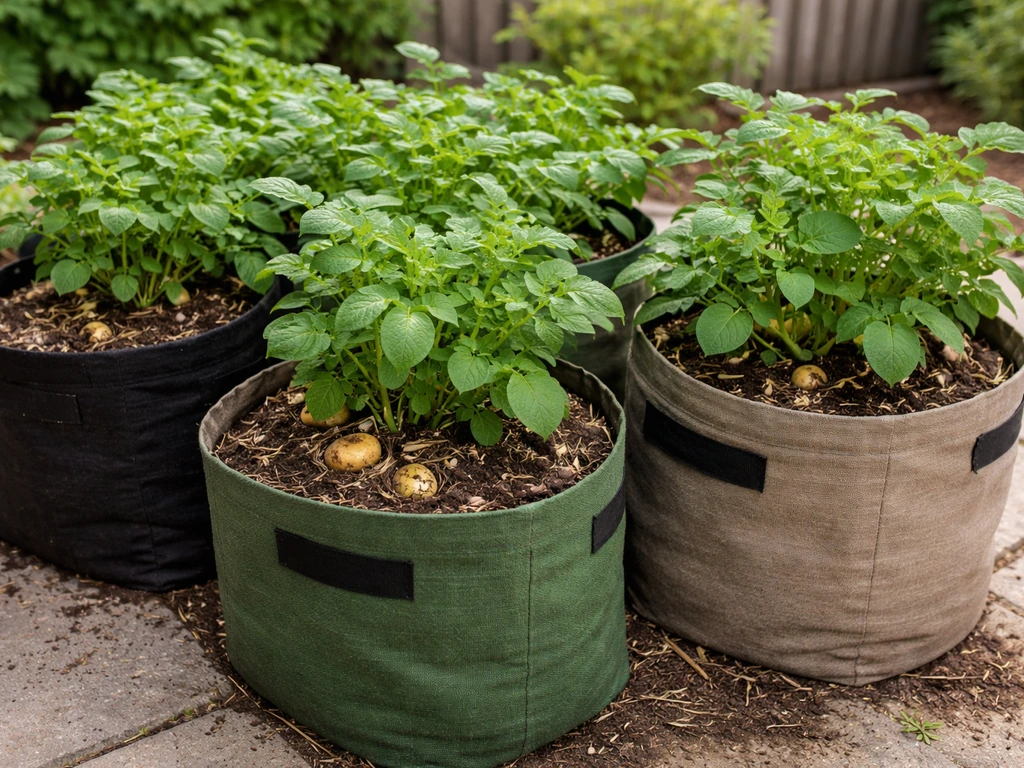
Do Potato Grow Bags Work? Guide, Setup, Care, and Results
Know if potato grow bags work, plus bag choice, soil depth, hilling steps, care, troubleshooting, and yield expectations
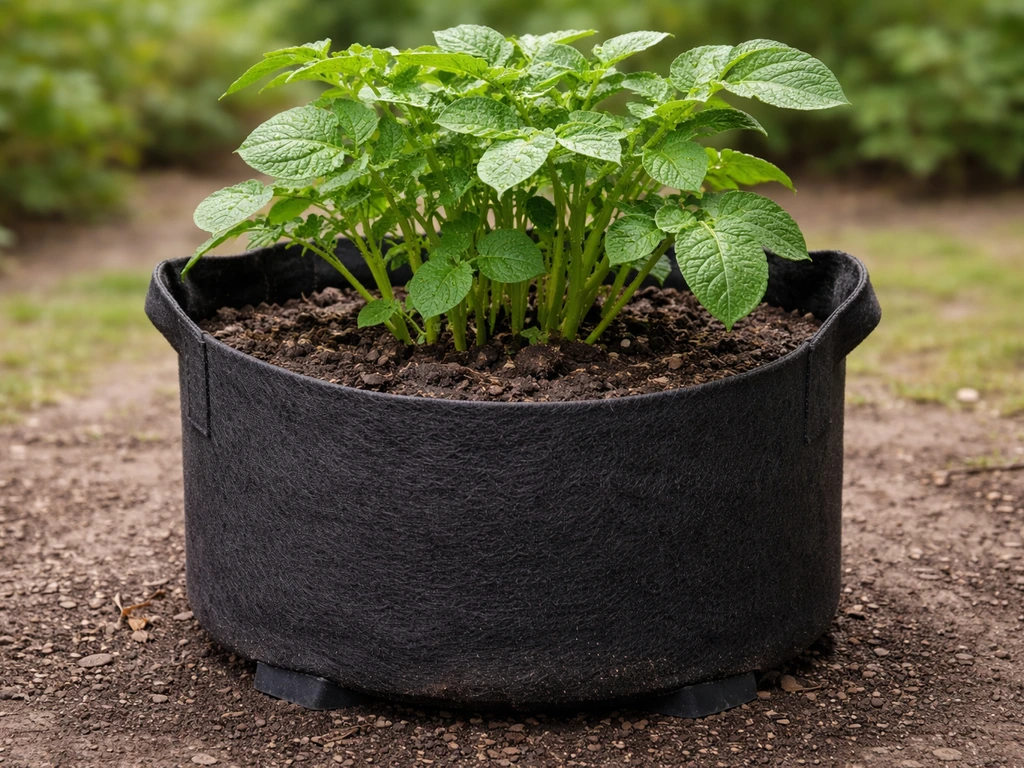
How Often to Water Potatoes in Grow Bags
Practical watering schedule for potatoes in grow bags: how to water, avoid soggy soil, and when to stop before harvest.
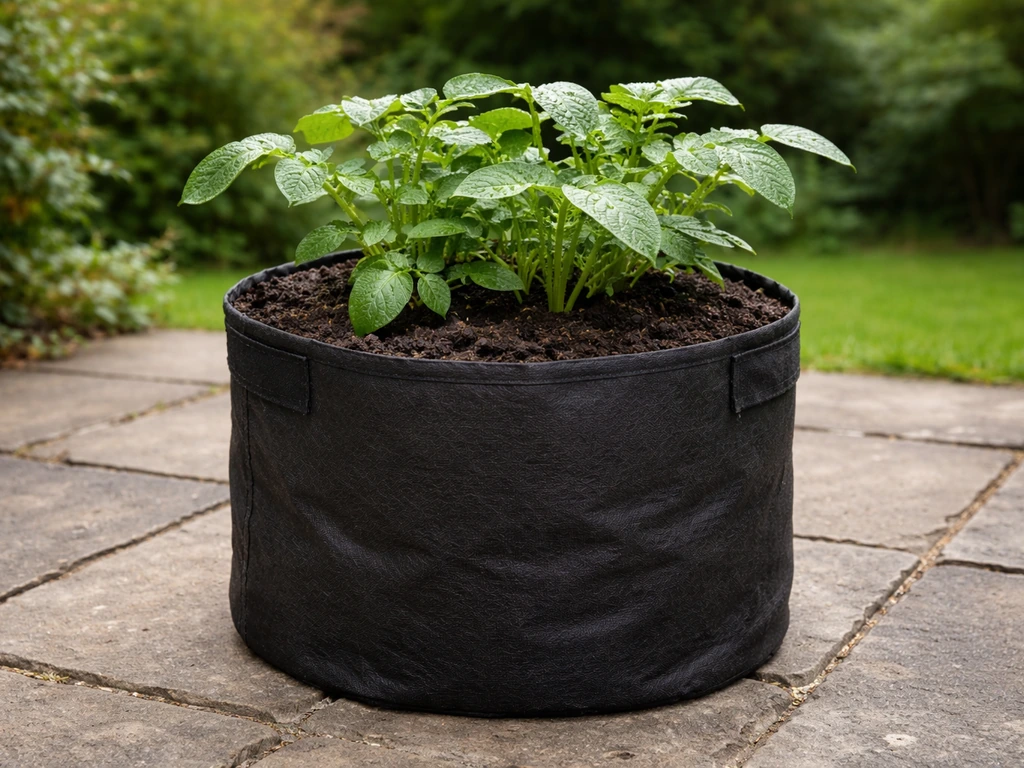
Best Potato Grow Bag UK Guide: Top Picks by Size
UK guide to the best potato grow bag picks by size, plus top bag-suitable varieties, setup, and troubleshooting tips.