Gardener's Best grow bags, sold by Gardener's Supply Company, are well-made fabric planters that genuinely work for home growers. The breathable polypropylene construction air-prunes roots, drains freely, and folds flat for off-season storage, all real advantages over rigid pots. That said, they are not the right tool for every crop or every grower, and the right model depends heavily on what you're planting. This guide covers every Gardener's Best model and size, how fabric grow bags work, how they stack up against competing bags and rigid pots, and exactly which bag to use for potatoes, vegetables, bulbs, flowers, small trees, and more.
Gardener's Best Grow Bag: Complete Buyer's Guide & How-To
Marcus Holloway
20 Jul 2026
Who this guide is for
If you've searched for 'gardeners best grow bag,' 'Gardener's Best potato grow bag,' 'Gardener's Supply Company grow bag,' or 'Gardener's Best Universal Grow Bag,' you've landed in the right place. This article is written for home growers at every level: beginners trying to understand whether fabric bags are worth buying, and experienced container gardeners who want to match the right Gardener's Best model to a specific crop. We cover the full product line from the compact 5-gallon Universal up to the Jumbo Potato Grow Bag, compare the brand against Smart Pots, Root Pouch, and standard rigid containers, and give crop-by-crop guidance so you can make a confident buying decision.
Quick verdict: do Gardener's Best grow bags actually work?
Yes, they do, with some honest caveats. The breathable polypropylene fabric does what the manufacturer claims: it air-prunes roots, promotes drainage, and keeps the root zone from staying waterlogged. The reinforced nylon handles and BPA-free materials are genuinely useful features, not just marketing copy. The 'fold for storage, reuse year after year' claim is realistic if you clean and dry the bags before storing them. Where the bags fall short is in moisture retention during heat waves (dark fabric in full sun heats the root zone noticeably) and in crop categories like orchids and mushrooms, where fabric planters are simply the wrong tool entirely.
- Pros: air-pruning fabric encourages fibrous, productive root systems; free drainage prevents root rot; folds flat for compact storage; BPA-free polypropylene; reinforced nylon handles; available in sizes from 5 gallons to 120 quarts
- Pros: 'Made in USA' manufacturing claimed by Gardener's Supply; manufacturer provides clear planting instructions including hilling guidance for potatoes
- Pros: price-competitive at $16.99–$29.99 depending on model; reusable across multiple seasons with proper care
- Cons: dark fabric absorbs heat in full sun, which can stress roots during peak summer temperatures
- Cons: breathable fabric dries out faster than rigid pots, requiring more attentive watering in hot weather
- Cons: not suitable for mushroom cultivation (mushrooms need sealed, sterile substrate) or typical orchid culture (orchids need highly aerated, open media)
- Cons: fabric degrades over time with UV exposure; lifespan varies by use frequency and sun exposure
How fabric grow bags work
A fabric grow bag is a non-woven or woven container made from breathable material, usually polypropylene, recycled PET, or a natural-fiber blend, that allows both air and water to pass through the walls. This is fundamentally different from a rigid plastic or ceramic pot, which only drains from the bottom hole.
Air pruning and root health
When roots reach the breathable wall of a fabric bag, the exposed root tip desiccates and stops elongating, a process called air pruning. The plant then redirects energy into producing lateral feeder roots deeper in the container. The practical result is a denser, more fibrous root system that fills the available soil volume more efficiently. In a rigid plastic pot, roots hit the wall and spiral, eventually girdling the plant. Air pruning prevents that circling entirely.
Drainage and aeration
Water exits through the entire surface area of a fabric bag, not just a single drainage hole. This means even heavy irrigation events drain quickly, reducing anaerobic zones in the soil. The tradeoff is faster evapotranspiration: the soil dries out from the sides as well as the top. Container irrigation research consistently shows that smaller containers need more frequent watering because root-zone volume is smaller and dries faster. This is amplified in fabric bags, so monitor soil moisture closely in smaller sizes, especially during hot weather.
Root-zone temperature
Container color significantly affects root-zone temperature. Research published in Agriculture (MDPI, 2025) confirms that black containers can generate noticeably higher substrate temperatures than lighter-colored containers in full sun. Gardener's Best bags are typically dark-colored, which means placement matters: against a south-facing wall in midsummer, root-zone temperatures can climb high enough to stress cool-season crops like potatoes. On hot days, position bags where they receive afternoon shade, or group multiple bags together so they shade each other's sides.
Gardener's Best product overview and feature checklist
Gardener's Best is Gardener's Supply Company's proprietary grow bag brand. The bags are sold primarily through the Gardeners.com website and through the company's retail partners. When you land on a product page, here's what to confirm before adding to cart:
- Material: BPA-free polypropylene fabric (confirm this is listed — not all grow bags from other brands use food-safe materials)
- Handle material: reinforced nylon handles (check for double-stitched seams at the handle attachment points)
- Capacity in quarts or gallons: confirm the volume matches your crop's root-zone needs (see crop-by-crop section below)
- Dimensions: diameter and height both matter — height affects how much hilling room you have for potatoes
- Country of manufacture: Gardener's Supply claims Made in USA for this product line
- Side opening (potato bags only): the Potato Grow Bag has a flap opening on the side for checking tuber development without disturbing the plant
- Price and availability: as of July 2026, Universal Grow Bag ~$16.99, Potato Grow Bag ~$22.99, Jumbo Potato Grow Bag ~$29.99 — prices fluctuate seasonally
- Included instructions: most Gardener's Best bags ship with a printed or downloadable how-to guide; download it before planting
Models and sizes in the Gardener's Best line
Gardener's Supply offers three core Gardener's Best grow bag models at the time of writing. Each is sized and shaped for a specific type of growing use. Picking the wrong size is the most common mistake I see beginners make, either cramming too many plants into a small bag or using an oversized container for a single herb and wondering why it stays soggy.
| Model | Dimensions | Capacity | Best For | Approx. Price |
|---|---|---|---|---|
| Universal Grow Bag (small) | ~12.5" dia × 11" H | ~20 qt (5 gal) | Herbs, single vegetables, flowers, small bulb groups | ~$16.99 |
| Potato Grow Bag (regular) | 16" dia × 16" H | ~50 qt | Potatoes (3–5 seed pieces), large tomatoes, peppers | ~$22.99 |
| Jumbo Potato Grow Bag | 25" dia × 14" H | ~120 qt | Potatoes (7–10 seed pieces), multiple plants, squash | ~$29.99 |
Universal Grow Bag (5-gallon)
At roughly 12.5 inches in diameter and 11 inches tall, the Universal is Gardener's Supply's general-purpose option. It holds about 20 quarts of potting mix, which is enough for a single tomato plant (though I'd push you toward the larger Potato Grow Bag for indeterminate tomatoes), two to three pepper plants, a mixed herb planting, or a cluster of annual flowers. At $16.99, it's the most accessible entry point into the line. The compact size also makes it easy to move indoors when frost threatens.
Potato Grow Bag (regular, 50-quart)
This is the workhorse of the line. At 16 inches diameter and 16 inches tall, it holds 50 quarts of mix, enough for 3 to 5 seed potato pieces according to Gardener's Supply's own planting guidance, which aligns well with the general rule of about 5 gallons of soil volume per potato plant. See Gardener's Supply Company's Gardener's Best Potato Grow Bag for full product specifications and planting guidance. For a focused comparison of options, see our guide to the best potato grow bag. The 16-inch height is important for potatoes specifically: it gives you meaningful hilling room as stems emerge. The bag has a side flap for checking tuber development without pulling the whole plant. I'd also use this size for indeterminate tomatoes, where the extra soil volume keeps the root zone moist longer between waterings.
Jumbo Potato Grow Bag (120-quart)
The Jumbo is a serious piece of kit. At 25 inches in diameter and 14 inches tall, it holds 120 quarts, Gardener's Supply recommends filling it with six 20-quart bags of potting mix and planting 7 to 10 seed potatoes. The wider, shallower profile compared to the regular bag means slightly less vertical hilling room per plant, but the total production capacity is substantially higher. It's also a reasonable choice for squash or multiple pepper plants if you want to consolidate several plants into one large container.
Materials and construction: what actually matters
All three Gardener's Best models use BPA-free polypropylene as their primary fabric. Polypropylene is the standard material in the fabric grow bag industry, it's food-safe, relatively UV-stable compared to some natural fibers, and maintains its structure season after season when stored properly. Here's how the construction details break down in practice:
Fabric weight and weave
Heavier fabric means better durability and slightly more resistance to UV degradation, but also a marginally denser weave that slows lateral water movement. The Gardener's Best bags use a fabric weight appropriate for multi-season reuse, this puts them above thin single-use propagation bags (which are designed to degrade within a growing season) and in the same performance tier as competitors like Smart Pots.
Handles
The nylon handles are reinforced and stitched at multiple points. This matters more than it sounds: a bag full of 50 quarts of wet potting mix is genuinely heavy, and cheap handles tear out at the seam. I've had handles fail on lower-quality bags mid-season, which is a frustrating mess. The Gardener's Best handles have held up without issue in my use. That said, always lift a fully loaded bag by supporting the base if possible, not just pulling by the handles.
Side flap (potato bag models)
The side opening on the Potato Grow Bag and Jumbo Potato Grow Bag is a practical feature for checking tuber size before committing to a full harvest. You reach in, feel around, and close the flap back up if the potatoes need more time. It's held closed with a hook-and-loop fastener, which works fine but tends to collect soil and debris over the season. Rinse it out when you clean the bag for storage.
UV resistance and lifespan
No fabric grow bag lasts forever in full sun. Polypropylene degrades with sustained UV exposure, becoming brittle and losing structural integrity over time. In my experience, bags used seasonally (planted, harvested, cleaned, and stored indoors) last 4 to 6 seasons without significant degradation. Bags left outdoors year-round in intense sun tend to show wear within 2 to 3 seasons. For comparison, Root Pouch bags made from recycled PET blended with natural fibers come in two product tiers: thin propagation bags designed to degrade within 12 to 18 months, and heavier root-control bags intended for multi-season reuse. The Gardener's Best polypropylene bags fall solidly in the reusable category.
Gardener's Best vs. the competition
Here's an honest side-by-side comparison of Gardener's Best bags against the other main options home growers encounter: Smart Pots (the original fabric container brand), Root Pouch, generic polypropylene bags, and standard rigid pots.
| Factor | Gardener's Best | Smart Pots | Root Pouch | Generic Fabric Bags | Rigid Plastic Pots |
|---|---|---|---|---|---|
| Material | BPA-free polypropylene | Non-woven polypropylene | Recycled PET + natural fibers | Varies (often low-grade PP) | Plastic (HDPE/PP) |
| Air pruning | Yes | Yes | Yes | Yes (if breathable) | No |
| Drainage | Through full surface area | Through full surface area | Through full surface area | Through full surface area | Bottom holes only |
| Durability | 4–6+ seasons (stored) | 3–5+ seasons | Varies by line (thin bags ~1 season) | 1–3 seasons typical | Many years |
| Portability | Foldable, lightweight | Foldable, lightweight | Foldable, lightweight | Foldable | Bulky, heavy |
| Root-zone heating | Moderate (dark fabric) | Moderate (dark fabric) | Moderate | Moderate to high | High (black plastic) |
| Price range | $16.99–$29.99 | ~$10–$40 depending on size | ~$5–$30 depending on size | $5–$15 (multipack) | $5–$25 |
| Food-safe claim | Yes (BPA-free) | Yes | Generally yes | Not always stated | Depends on grade |
| Side access flap | Yes (potato models) | No | No | Some models | No |
| Made in USA | Claimed | Yes | No | Often imported | Varies |
My recommendation for most home growers: if you specifically want the potato bag side flap and a Gardener's Supply-backed warranty, go with Gardener's Best. If you want a wider size range and a long-established track record, Smart Pots are equally reliable. Avoid generic bags unless you're buying them as a cheap trial run, the handle failure rate and fabric variability aren't worth the small savings for anything you're growing seriously.
Fabric bags vs. rigid pots
Rigid pots hold moisture longer, which is an advantage for moisture-loving plants or growers who water infrequently. They're also more durable in direct sun over many years. But fabric bags win decisively on portability (a 120-quart fabric bag folds to the size of a jacket when empty), air pruning, and drainage. For crops like potatoes, tomatoes, and peppers, where root aeration and drainage quality directly affect yield, fabric bags are a genuine performance improvement over rigid plastic containers.
Crop-by-crop guide: which bag size and fabric type to use
This is the section most growers actually need. Below I've gone through each major crop category and matched it to the right Gardener's Best model (or the closest alternative when the product line doesn't have a direct fit), with planting density, soil notes, and any crop-specific caveats.
Potatoes
Potatoes are what the Gardener's Best line was specifically designed around, and the product performs well for this crop. For a detailed examination of whether potato grow bags work, see do potato grow bags work. University of New Hampshire Cooperative Extension recommends containers of at least 10 to 15 gallons for good yields, with roughly 5 gallons of soil volume per seed potato piece. That guidance maps directly to the Gardener's Best sizing. Start with 6 to 8 inches of potting mix in the bottom of the bag, set your seed potato pieces on top, and cover with another 3 to 4 inches of mix. As shoots reach 6 to 8 inches tall, add mix to bury the lower two-thirds, this is the hilling step that encourages more tuber formation along the buried stem. Repeat until the bag is full. WSU Extension research on potato culture also emphasizes loose, well-drained media and timely hilling before the plant blooms, both of which the Gardener's Best bags support well. For more options and to compare sizes and features, see our guide to the best potato grow pots.
| Bag Model | Capacity | Seed Potatoes | Potting Mix Needed |
|---|---|---|---|
| Potato Grow Bag (regular) | ~50 qt | 3–5 pieces | ~3 × 20-qt bags |
| Jumbo Potato Grow Bag | ~120 qt | 7–10 pieces | ~6 × 20-qt bags |
Watering potatoes in grow bags requires more attention than in-ground growing. During active vegetative growth in moderate temperatures, water every 2 to 3 days or when the top inch of soil is dry. During peak summer heat with the bags in full sun, daily watering may be needed. Signs you're underwatering: wilting foliage that doesn't recover in the evening, dry soil well below the surface. Signs of overwatering: yellowing lower leaves, soil that stays wet and smells sour, slow growth. The free-draining nature of the fabric bags makes true overwatering difficult as long as you're using a quality, porous potting mix rather than dense garden soil.
Tomatoes
Tomatoes are one of the best crops for fabric grow bags. Determinate (bush) varieties do well in 10 to 15 gallons of soil volume; indeterminate (vining) varieties really want 15 to 20 gallons or more to support a full season of growth. The regular Potato Grow Bag at 50 quarts (about 12.5 gallons) is a workable size for most determinate tomatoes. For indeterminate types, the Jumbo bag is a better fit. Smart Pots' own sizing guidance recommends 10 to 15 gallons for determinate tomatoes and 15 to 20+ gallons for indeterminate, which aligns with this.
Other vegetables (peppers, cucumbers, beans)
Peppers do very well in the Universal Grow Bag at 5 gallons for a single plant, or two plants in the regular Potato Grow Bag. Cucumbers and climbing beans can work in the larger bags but benefit from a trellis placed nearby, the bags themselves aren't rigid enough to support a heavy trellis load, so stake into the ground next to the bag. Leafy greens and brassicas are fine in the Universal size for individual plants.
Herbs
Most herbs thrive in 1 to 5 gallons of soil volume. The Universal Grow Bag is ideal for a mixed herb planting of 3 to 4 herbs, or a single large basil plant. Smart Pots' guidance suggests 1 to 2 gallons for individual herbs and 5 gallons for mixed herb bowls, which is consistent with the Universal's 5-gallon capacity. Herbs that prefer drier conditions (rosemary, thyme, oregano) are particularly well-served by the breathable fabric, which prevents the soggy conditions these plants hate.
Bulbs
Spring bulbs (tulips, daffodils, hyacinths) work well in the Universal Grow Bag, with 5 to 6 bulbs per bag at standard planting depth for each species. The free-draining fabric is genuinely beneficial for bulbs, which are prone to rotting in waterlogged soil. See our guide on growing bulbs in potato grow bags for practical tips on planting depth, spacing, and using the Potato Grow Bag effectively. Plant bulbs in fall for spring bloom, then tip the bag out after foliage dies back, dry the bulbs, and store them, the bag itself stores flat until next season. For summer bulbs like dahlias, the larger Potato Grow Bag gives more room for the tuberous root system to expand.
Annual flowers
Annuals like marigolds, petunias, zinnias, and impatiens do well in the Universal Grow Bag. Plan for 3 to 4 small annuals per 5-gallon bag, or use a single large specimen plant. Because annuals are often displayed prominently on patios and decks, the relatively utilitarian look of a fabric grow bag may or may not suit your aesthetic, this is a personal call, and there's no functional reason fabric bags outperform a decorative ceramic pot for ornamental annuals.
Small trees and shrubs
Fabric bags are used commercially in nursery production for tree and shrub propagation, partly because the air-pruning effect produces transplant-ready root balls. For home growers, the Jumbo bag at 120 quarts is large enough for a dwarf citrus, fig, or olive tree for several seasons. Plan to eventually size up into a permanent large container as the tree matures. Root Pouch, for context, produces specific heavy-duty tree bags for exactly this purpose, if you're planning a long-term tree planting in a bag, look at fabric bags purpose-built for tree production rather than the vegetable-oriented Gardener's Best line.
Mushrooms
Fabric grow bags are not the right tool for mushroom cultivation. Mushroom production requires sealed, sterile or pasteurized substrate bags, typically purpose-made plastic bags with filter patches for gas exchange during colonization. The open, breathable nature of a fabric garden grow bag introduces contamination and allows the substrate to dry out, both of which prevent successful colonization. NCAT's 2026 mushroom cultivation guidance confirms that standard mushroom systems use plastic bags, buckets, or logs, not fabric planters. Mushroom Cultivation, ATTRA/NCAT publication (2026) notes typical systems use plastic grow bags with filter patches, buckets, totes, or logs rather than breathable fabric planters Mushroom Cultivation — ATTRA/NCAT publication (2026). Don't try to adapt a Gardener's Best bag for mushroom growing.
Orchids
Similarly, fabric grow bags are not recommended for orchids. Most commonly grown orchids are epiphytic, meaning they evolved growing on tree bark rather than in soil. They require extremely open, free-draining media, fir bark, coarse perlite, sphagnum, or cork mounts, and typically use slotted plastic pots or net pots that maximize air circulation around the roots. The American Orchid Society's guidance emphasizes that orchid roots need both excellent drainage and substantial air exposure. See American Orchid Society guidance (Predictions from the Medium (Potting), Orchids.org / American Orchid Society) for specifics on orchid root aeration and drainage blank" rel="noopener noreferrer">Predictions from the Medium (Potting) — Orchids.org / American Orchid Society. A fabric grow bag holds too much moisture relative to what the roots need, and the media required for orchids (chunky bark mixes) would fall through or not behave well in a fabric container. Use the right pot for orchids. For tips on how to better grow orchids in a bag, see our guide on growing orchids in containers and alternative methods.
Setting up your Gardener's Best grow bag: fill, plant, and hill
The setup process is straightforward, but a few details make a real difference in performance. Always use a quality potting mix designed for containers, not native garden soil, which compacts in containers and drains poorly. A mix with perlite or coarse vermiculite incorporated improves aeration and prevents compaction over the season.
- Position the bag before filling it — a 50-quart or 120-quart bag is very heavy when full and hard to move
- For potatoes: add 6–8 inches of potting mix to the bottom of the bag
- Place 3–5 seed potato pieces (regular bag) or 7–10 pieces (Jumbo bag) on top of the mix, spacing them evenly across the bag's diameter
- Cover seed potatoes with 3–4 inches of mix, leaving the bag mostly empty above
- Water thoroughly until water drains freely from the bag's sides and base
- When shoots reach 6–8 inches, add potting mix to bury the lower two-thirds of the stems — this is 'hilling' and promotes tuber formation along the buried stem
- Repeat hilling until the bag is filled to within 2–3 inches of the top
- Fertilize with a balanced fertilizer during vegetative growth, then switch to a lower-nitrogen fertilizer as plants flower and begin tuber set
- Harvest when foliage dies back or use the side flap to check tuber size
Watering schedule and signs to adjust
Because fabric bags dry out faster than rigid pots, watering discipline matters. University of Connecticut extension guidance notes that small containers typically need water 2 to 4 times per week in spring, ramping up to daily during hot summer conditions. Larger bags buffer this somewhat, a 120-quart Jumbo bag will stay moist longer than a 5-gallon Universal under the same conditions. The core principle from container irrigation research: more soil volume means less frequent watering, which is another reason to avoid undersizing your bag for the crop.
| Bag Size | Season / Conditions | Approximate Watering Frequency |
|---|---|---|
| Universal (5 gal) | Spring / mild | Every 2–3 days |
| Universal (5 gal) | Summer / hot and sunny | Daily or every other day |
| Potato Grow Bag (50 qt) | Spring / mild | Every 2–3 days |
| Potato Grow Bag (50 qt) | Summer / hot and sunny | Every 1–2 days |
| Jumbo (120 qt) | Spring / mild | Every 3–4 days |
| Jumbo (120 qt) | Summer / hot and sunny | Every 1–2 days |
These are starting points, not fixed rules. Always check actual soil moisture before watering: push your finger 2 inches into the mix. If it's moist, wait. If it's dry at that depth, water thoroughly. During a heat wave, check twice daily for smaller bags.
Troubleshooting common problems
Poor drainage or waterlogging
If your grow bag isn't draining well, the cause is almost always the potting mix, not the bag. Dense, peat-heavy mixes compact over the season and reduce drainage. Fix this by incorporating perlite (aim for 20 to 30% of total volume) when filling the bag. Placing the bag on a hard surface where water can escape freely beneath it also helps, don't sit a fabric bag in a saucer, as this defeats the drainage advantage entirely.
Roots growing through the bag fabric
You may see fine root hairs poking through the outside of the fabric. This is normal and is actually evidence that air pruning is working as intended, the root tips are being desiccated at the wall. It doesn't mean the bag is failing. You can leave these roots in place; they won't cause problems and will die back naturally.
Wilting despite watering
If plants wilt even though the soil is moist, root-zone overheating is a likely culprit, especially in dark bags in full afternoon sun. Move the bag to a location with afternoon shade, or wrap the outside of the bag with a light-colored material to reflect heat. This is one situation where a lighter-colored fabric bag, or a rigid white container, would genuinely outperform the standard dark Gardener's Best bag.
Fabric degradation and UV wear
If you notice the fabric becoming brittle, discoloring unevenly, or developing small holes or fraying, UV degradation has set in. At this point, the bag's structural integrity is compromised, it may still function for one more season, but replace it before it fails mid-season with a full planting. Prevent degradation by storing bags indoors (not in a sunny shed) during the off-season.
Pests
Fabric grow bags don't provide any special protection against common pests. Aphids, whiteflies, and caterpillars will find your plants regardless of container type. The one advantage fabric bags have over in-ground growing is that soil-dwelling pests (like wireworms) are less likely to be present in fresh commercial potting mix than in garden soil. Inspect plants regularly and address pest issues with the same methods you'd use in any container or garden.
Cleaning, storage, and reuse
Getting multiple seasons out of your Gardener's Best bags requires a bit of end-of-season maintenance. After harvest, shake out as much soil as possible, then turn the bag inside out and brush off any remaining dry mix. Rinse the bag thoroughly with a hose, a pressure nozzle helps dislodge soil embedded in the fabric weave. For disease prevention (especially if you grew potatoes and want to avoid introducing Phytophthora or other pathogens into the next season's planting), soak the cleaned bag in a diluted bleach solution (1 part bleach to 9 parts water) for 30 minutes, then rinse thoroughly and allow to dry completely in the sun. Once dry, fold the bag flat, store it in a breathable bag or container indoors, and it will be ready for the next season. Storing bags folded in a cool, dry, dark location significantly extends their useful lifespan.
Where to buy Gardener's Best grow bags
The most reliable source is Gardeners.com, the Gardener's Supply Company's own website, where you'll find the full product line with accurate dimensions, current pricing, and official planting instructions. Gardener's Supply also operates retail stores and sells through select garden centers. Third-party retailers (large online marketplaces) sometimes carry the product, but verify the seller is an authorized retailer before purchasing, as counterfeit or mislabeled grow bags do appear on major platforms. Prices on third-party sites may be higher or lower than the manufacturer's listed price depending on season and stock. If you're looking for alternatives to the Gardener's Best line, whether for different sizes, price points, or specific crop applications, Smart Pots and Root Pouch are both widely available through specialty garden retailers and online. If you need help finding where to buy grow bags for potatoes, check our buying guide for retailer recommendations and sizing tips.
FAQ
Are Gardener's Best grow bags worth buying for home growers?
Yes for many home growers. Gardener’s Best grow bags (Universal/regular/Jumbo potato models) are practical, affordable fabric planters that offer good drainage, root aeration and portability compared with rigid pots. They’re particularly useful where soil is poor or space is limited and for crops that tolerate or benefit from repeated hilling (potatoes). For crops that require sterile, highly specific or very airy media (most orchids, sterile mushroom substrate) fabric garden grow bags are not the recommended tool.
What are the main features of Gardener’s Best grow bags?
Common features across the line: non‑woven/synthetic breathable fabric (BPA‑free polypropylene on manufacturer pages), reinforced nylon handles, foldable for storage, marketed as 'air‑pruning' to reduce circling roots, and available in several sizes (Universal ~5 gal/20 qt; Potato regular ~50 qt, 16"×16"; Jumbo potato ~120 qt, 25"×14"). Manufacturer fill and planting guidance is provided on product pages.
How do Gardener’s Best bags compare to other fabric brands (Smart Pots, Root Pouch)?
All are breathable fabric pots that improve aeration and drainage versus many rigid pots. Differences: material and UV/durability vary — Smart Pots use non‑woven polypropylene and advertise multi‑season life (3–5+ years commonly reported); Root Pouch offers recycled PET blends and UV‑resistant lines, with some lightweight propagation bags designed to degrade earlier. Gardener’s Best bags are competitively priced and branded for potato growing; choose based on fabric weight, UV rating, and handle strength for reuse expectations.
Which bag sizes/materials should I choose by crop?
General recommendations: - Potatoes: regular potato bag (~50 qt, 16"×16") for 3–5 seed potatoes; jumbo (~120 qt) for 7–10 seed potatoes or larger yields. Aim ~5 gallons (≈20 qt) soil per potato as an extension rule of thumb. - Tomatoes / large vegetables: 15–20+ gallon (use multiple 5‑gal Universal bags or larger fabric pots) for indeterminate tomatoes; determinate can work in 10–15 gal. - Peppers, eggplant, beans: 5–10 gal. - Herbs, annual flowers: 1–5 gal (Universal ~5 gal works well). - Bulbs (tulips, daffodils): 5–10 gal for small groups or use multiple smaller bags. - Mushrooms: fabric garden grow bags are not recommended; use purpose‑made sterilizable mushroom substrate bags. - Orchids: fabric bags generally not recommended; use slotted, net pots and orchid media. - Small trees/shrubs: choose heavy‑duty, large (15–30+ gal) fabric containers with stronger fabric/handles.
How do I set up a Gardener’s Best grow bag (fill mix and layering)?
Step‑by‑step: 1) Place bag where it will stay (heavy once filled). 2) Use a high‑quality, light potting mix (soilless mix) with peat or coco coir, perlite or coarse sand for drainage, and a slow‑release fertilizer or starter feed. For potatoes, start with ~6–8" of mix in the bag. 3) Plant seed potatoes or seedlings per spacing recommendations. 4) Add more mix as stems grow (hilling) for potatoes. Avoid using garden subsoil without amendment; fabric bags drain quickly so a moisture‑retentive component (coco or compost) helps.
What is the recommended planting depth and hilling method for potatoes?
Planting and hilling: 1) Fill bag with about 6–8" of potting mix. 2) Place seed potato pieces or whole small seed potatoes on the surface 6–8" apart. 3) Cover with 3–4" of mix. 4) When shoots reach 6–8" tall, add more mix to leave only the top 1–2" of foliage exposed (repeat as stems reach that height). Continue until the bag is nearly full; this creates additional tuber‑forming zone. Follow manufacturer guidance (3–5 seed potatoes in regular bag, 7–10 in Jumbo).
Next Articles
Best Potato Grow Pots: Top Fabric Grow Bags & Pots Guide
Best potato grow pots: compare fabric grow bags vs plastic, sizes, planting, watering schedule & top product picks.
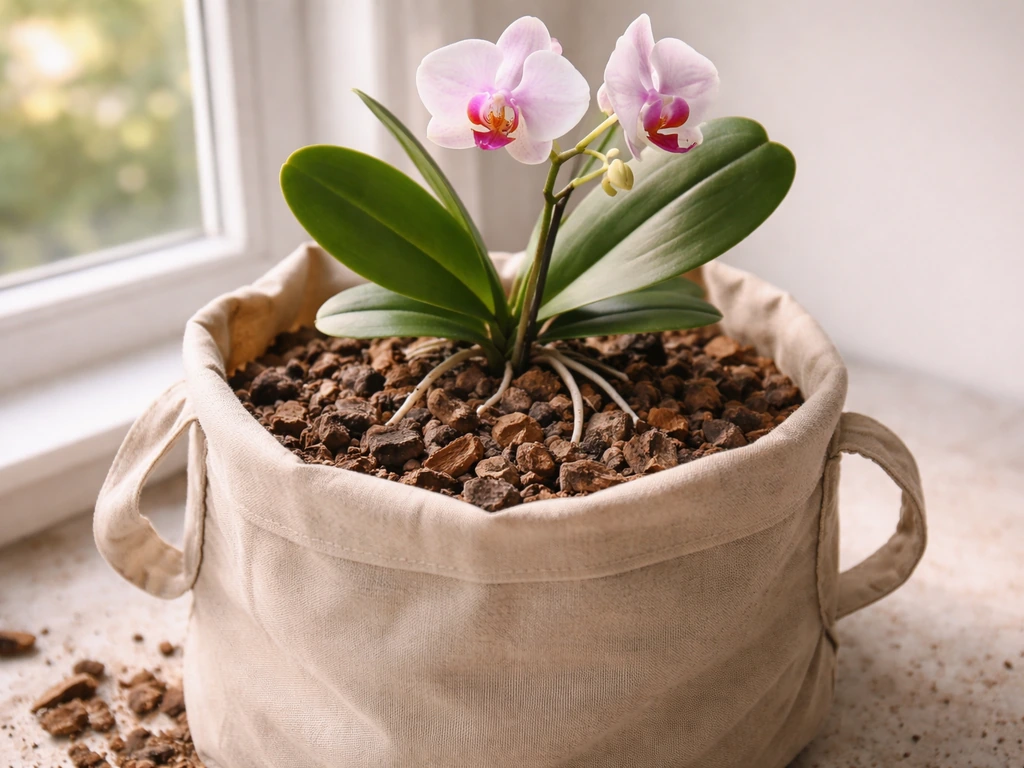
Better Grow Orchids in a Bag: Step by Step Setup
Step-by-step to better grow orchids in a bag: choose bag, mix, drainage, airflow, watering, then fix rot, pests, poor bl
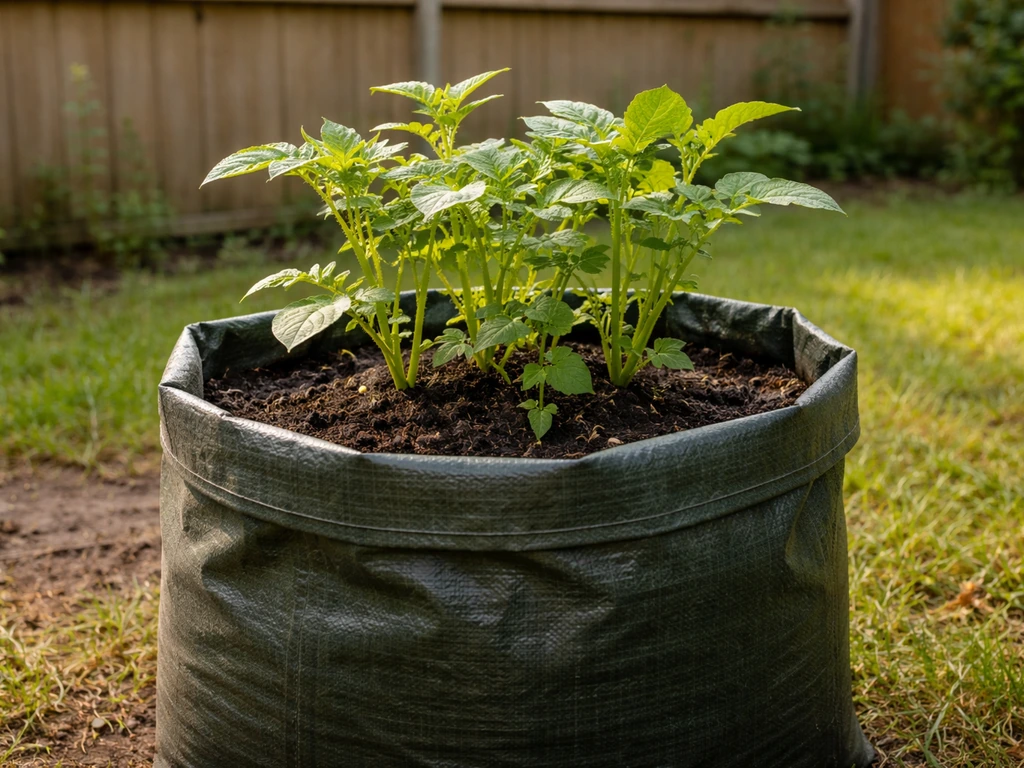
Where to Buy Grow Bags for Potatoes or Make One
Buy or DIY potato grow bags: where to shop, what to check, and steps to make, fill, plant, and troubleshoot.