
In a fabric grow bag, potatoes need watering roughly every 1 to 3 days during warm weather, and every 3 to 5 days in cooler or overcast conditions. That wide range exists because grow bags dry out faster than traditional pots or in-ground beds, and the right schedule depends on bag size, ambient temperature, wind, and the stage your plants are at. The goal at every stage is the same: keep the root zone evenly moist without letting water pool or saturate the soil for extended periods.
How Often to Water Potatoes in Grow Bags
Marcus Holloway
20 Apr 2026
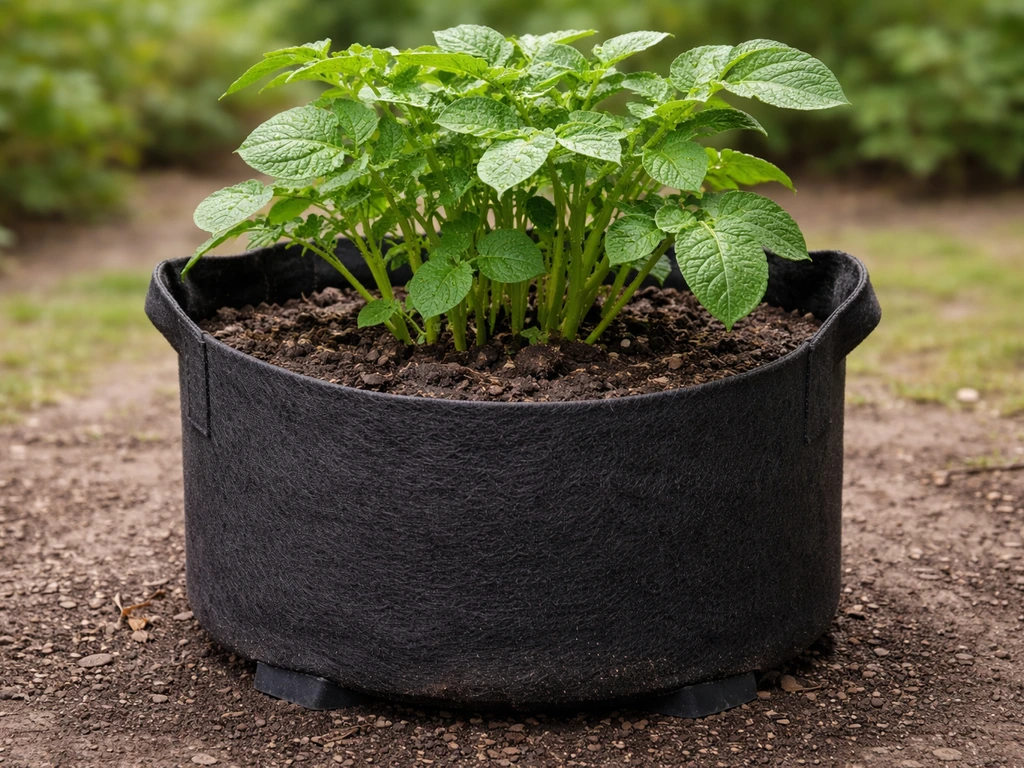
Potato grow-bag watering fundamentals
Fabric grow bags are breathable by design, which is exactly what makes them such a good fit for potatoes. Air-pruning roots, excellent drainage, and reduced compaction all contribute to healthy tuber development. The trade-off is that the same breathability that prevents waterlogging also accelerates moisture loss from the sides and bottom of the bag, not just the surface. In hot, sunny, or windy conditions a grow bag can dry from the outside in, leaving a dry outer shell and a slightly wetter core that fools you into thinking the soil is fine.
Potatoes have roughly 90% of their roots concentrated in the top 12 to 18 inches of soil. That matters a lot in a container context because it means surface watering alone isn't enough. If you want the best potato grow pots, prioritize containers with good drainage, enough depth for root growth, and a shape that lets you water evenly surface watering alone isn't enough.
You need to wet that entire active root zone on every watering session, not just dampen the top inch or two. At the same time, keeping soil saturated opens the door to pythium water rot, bacterial soft rot, and lenticel damage on developing tubers, all of which are much harder to fix than a missed watering day. The whole job is finding and staying in the middle.
Soil moisture fluctuations are also directly linked to physiological disorders like hollow heart and cracking. Tubers grow rapidly and unevenly when water availability swings between dry and saturated, causing internal stress and splitting. Consistent moisture, especially during tuber initiation and tuber bulking, is what keeps potato quality high.
How often to water potatoes in grow bags
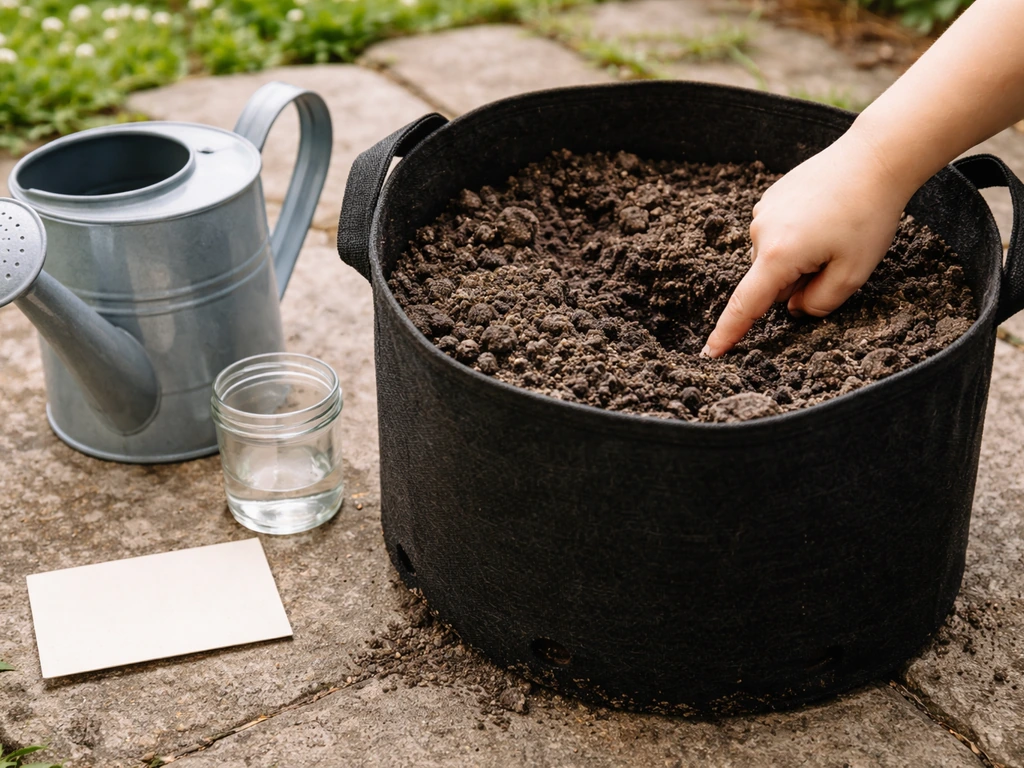
There is no single universal answer, but there is a practical framework based on real conditions. Use this as your starting point and adjust based on what you observe in the soil and on the plant.
| Condition | Typical Watering Frequency | Notes |
|---|---|---|
| Cool weather, overcast (below 65°F) | Every 4–5 days | Check soil before watering; bags dry slowly in cool conditions |
| Mild weather (65–75°F), partial sun | Every 2–3 days | Standard baseline for most spring/fall growing |
| Warm weather (75–85°F), full sun | Every 1–2 days | Wind accelerates drying; check daily |
| Hot summer conditions (above 85°F) | Daily or near-daily | UC ANR recommends daily watering at peak summer heat |
| Small bag (5–10 gallon) | More frequent than large bags | Less soil volume = faster drying |
| Large bag (25–45 gallon) | Less frequent than small bags | More soil buffer; still check soil depth, not just surface |
| Sandy or perlite-heavy mix | More frequent | Low water retention; may need watering more than once a day in heat |
| Compost-heavy or coco coir mix | Less frequent | Retains moisture longer; easier to overwater |
The University of Minnesota extension recommends soaking the soil thoroughly once or twice a week for potatoes in home gardens. That's a reasonable baseline for in-ground growing, but fabric grow bags typically need more frequent attention because of their faster evaporation rate.
A gardener's best grow bag is designed to support steady moisture and airflow, which makes it easier to keep potatoes in the right balance through the season. If you're wondering whether these watering trade-offs mean that potato grow bags work at all, the answer is yes, as long as you water often enough for the bag’s faster evaporation do potato grow bags work.
In practice, once or twice a week works only in cooler conditions or with larger bags filled with moisture-retentive soil mix. When it's hot, expect to be out there daily.
How growth stage changes watering needs
Water demand isn't constant across the season. Early on, when you've just planted seed potatoes and no foliage has developed, the bag dries more slowly and overwatering is the bigger risk. Once the plants are actively growing and starting to flower, tuber initiation begins and moisture becomes critical. During tuber bulking (the period of rapid tuber enlargement after flowering), you want the soil held consistently at around 80 to 90% of its maximum moisture-holding capacity. This is the phase where inconsistent watering does the most damage. Soil moisture deficits during tuber bulking directly limit tuber size and cause shape abnormalities.
- Planting to emergence (weeks 1–3): Water once at planting to settle the soil, then check every 2–3 days. The bag doesn't need to stay wet; just don't let it bone-dry.
- Vegetative growth (foliage expanding): Increase frequency as leaf area grows. The plant is transpiring more and the soil dries faster.
- Flowering and tuber initiation: This is your most critical period. Keep moisture consistent. Don't let the soil dry out more than an inch or two down.
- Tuber bulking: Maintain high, even moisture. Daily checks in warm weather are not optional.
- Late season / approaching harvest: Begin tapering off as described in the section below.
How to water potatoes in grow bags the right way
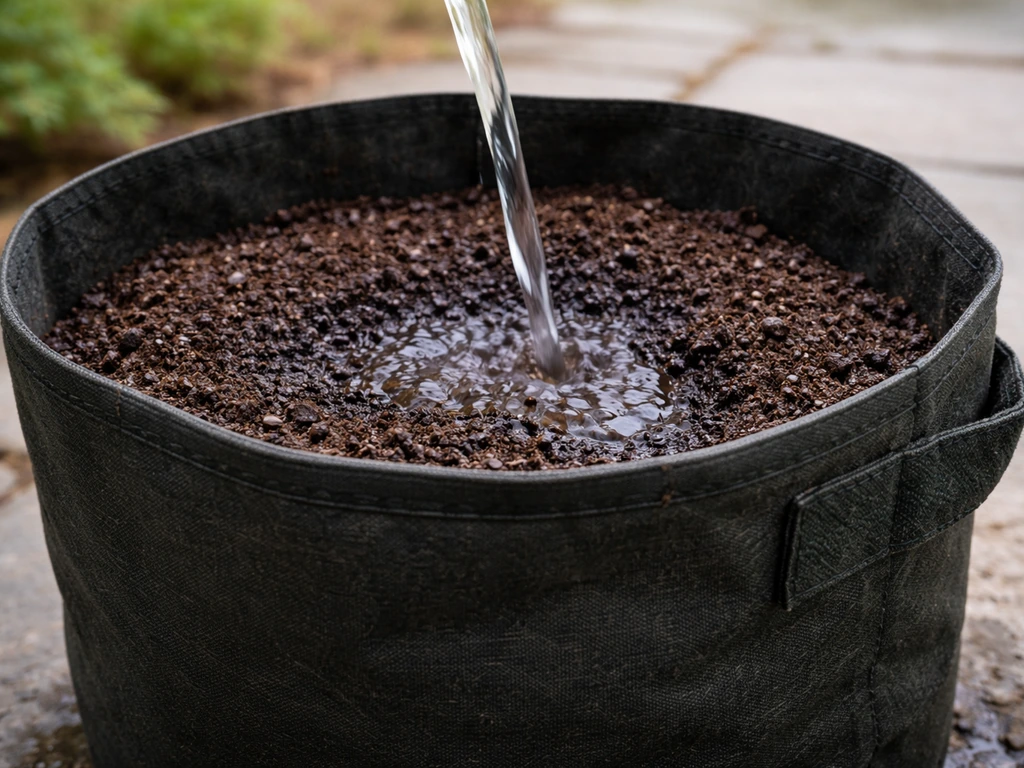
Technique matters as much as frequency. The goal every time you water is to wet the full root zone depth, not just the surface. For most potato grow bags, that means watering until you see free drainage coming from the bottom of the bag. Stop before the drainage becomes a constant stream that carries nutrients out of the root zone.
The finger test and the lift test
Before watering, push your finger 2 to 3 inches into the soil near the edge of the bag (not directly over the seed potato or tubers). If it feels dry at that depth, it's time to water. If it still feels cool and moist, wait another day. For a quicker read on larger bags, lift one corner slightly. A bag that feels noticeably lighter than it did after the last watering is telling you the soil has dried significantly. Neither test is perfect, but both are reliable enough for day-to-day management.
Best watering method for grow bags
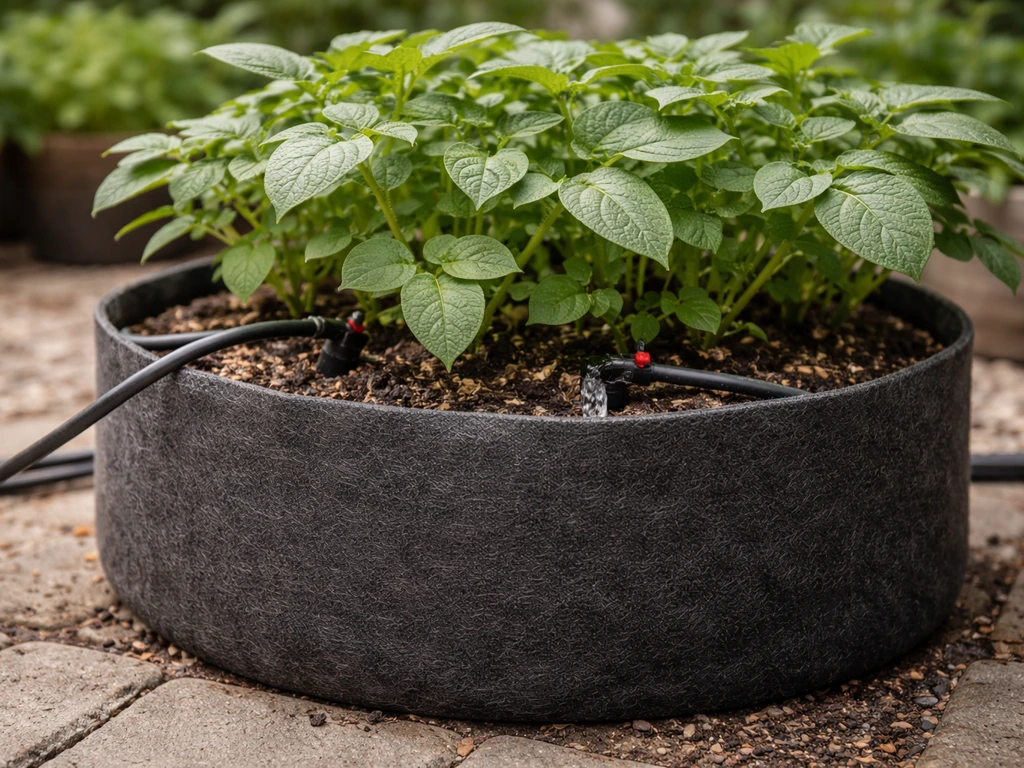
Drip irrigation is the best option if you can set it up. It delivers water directly to the soil, keeps foliage dry, and can be adjusted as growth conditions change. blank" rel="noopener noreferrer">Wet foliage promotes foliar diseases including late blight, which thrives in high humidity and damp conditions.
MSU Extension notes that irrigation water, along with rain, can wash late blight sporangia from infected foliage into the soil, which is why avoiding excess leaf wetness and overhead irrigation during blight periods is important wet foliage promotes foliar diseases including late blight.
If you're hand-watering, use a watering can or a hose with a gentle rose head and water at the base of the plant, not over the top. Water slowly and evenly around the entire surface of the bag, not just directly over the stem, so moisture distributes through the full soil volume rather than channeling straight down one path and leaving dry pockets on the sides.
Avoid overhead sprinklers for potatoes in grow bags. Beyond disease risk, sprinkler patterns rarely distribute water evenly across a round or square bag surface, and you'll get uneven moisture in the root zone as a result.
How much water per session
A 10-gallon grow bag typically needs about 0.5 to 1 gallon per watering session in mild conditions, more in heat. A 25-gallon bag might need 2 to 3 gallons. But amount is secondary to the rule: water until you see drainage from the bottom, then stop. If water runs out the bottom immediately and in large volume, your soil mix may be too porous or hydrophobic from drying out completely. If no drainage ever appears, you may be packing in too much or the bag fabric is clogged. Both are worth fixing.
When to stop watering as harvest approaches
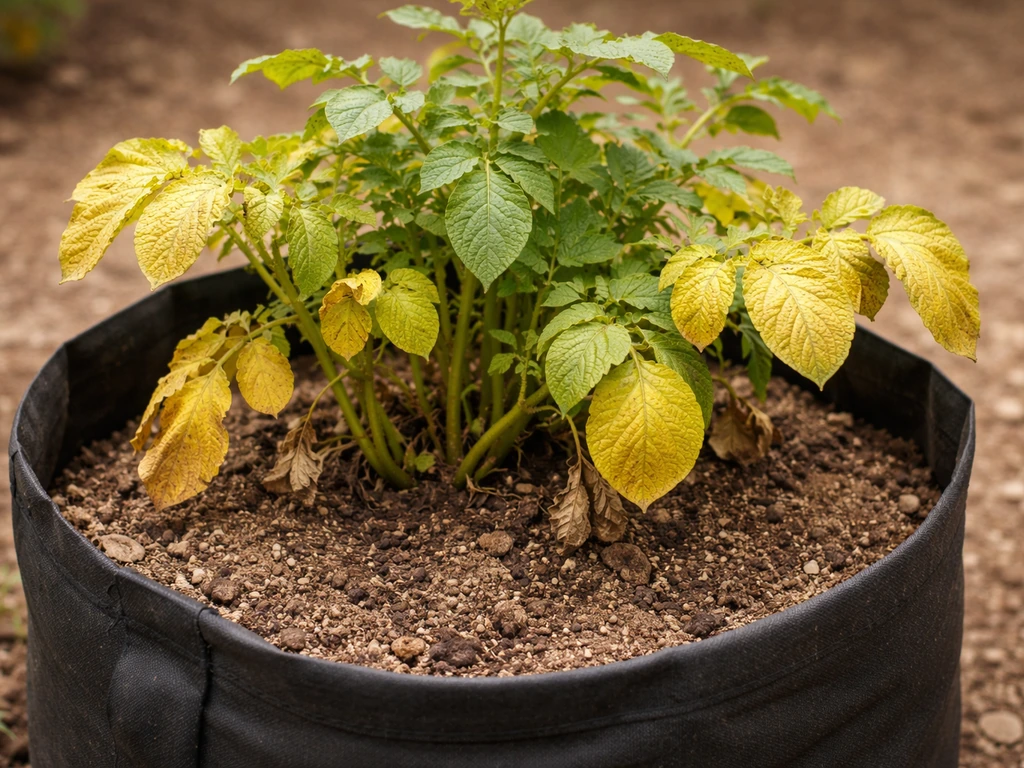
Knowing when to back off on watering is just as important as knowing when to water. Too much moisture late in the season delays skin set, which means skins stay soft and fragile instead of curing properly for storage. It also increases the risk of pythium water rot and bacterial soft rot in the tubers themselves, both of which are specifically associated with excessively wet conditions near harvest time.
As a general rule, begin reducing watering frequency when the foliage starts to yellow and die back naturally. This usually happens around 10 to 14 days before your planned harvest date. You don't want to stop watering abruptly when the plants are still actively growing, but you can let the soil dry down more between sessions during this wind-down period. Aim for a soil that stays slightly on the drier side rather than consistently moist.
If your plants have been affected by late blight (foliage infected and diseased), vine kill is recommended well ahead of harvest to prevent disease moving into tubers. In that situation, stop watering immediately when you've killed or cut back the foliage and allow the soil to dry for 2 to 3 weeks before harvesting. In normal healthy conditions without disease pressure, gradually reduce and then stop watering about 1 to 2 weeks before harvest to allow the skin to firm up in the bag.
| Stage | Watering Action |
|---|---|
| Foliage still green and lush | Continue regular watering schedule |
| Foliage beginning to yellow (natural senescence) | Start reducing frequency; let soil dry further between sessions |
| Foliage mostly yellow/dying back | Water only if soil is very dry; skin set is underway |
| 10–14 days before planned harvest | Stop watering; allow soil to dry down |
| Disease-related vine kill | Stop watering immediately; harvest after 2–3 weeks of dry-down |
Signs you're overwatering or underwatering
Both problems are common with grow bags, and both will cost you yield and quality if you don't catch them early. Here's what to look for and how to tell them apart.
Signs of overwatering
- Yellowing lower leaves, especially if soil feels wet and has been wet for several days in a row
- Soft, mushy stems at the base of the plant
- A sour or unpleasant smell from the soil surface (indicates anaerobic conditions or rot)
- Water sitting on the soil surface for extended periods instead of draining through
- At harvest: tubers with soft or watery rot inside (pythium water rot), enlarged lenticels on the skin that look like raised bumps or blisters, or tubers that feel spongy
- Bacterial soft rot: slimy, foul-smelling breakdown of tuber flesh, strongly associated with waterlogged conditions
Signs of underwatering
- Wilting foliage, especially in the afternoon heat (some afternoon wilt is normal in very hot weather, but morning wilt means the plant is stressed)
- Leaf edges curling inward
- Dry, light-feeling bag when lifted
- Soil pulling away from the bag walls as it shrinks
- At harvest: small or misshapen tubers, hollow heart (a cavity inside otherwise normal-looking tubers), skin cracking, or second growth knobs on existing tubers (caused by moisture interruptions during bulking)
The trickiest situation is when you see yellowing that could be either overwatering or underwatering. Check the soil before assuming. If it's wet and has been wet, overwatering is the culprit. If the soil is bone dry despite the plant looking stressed, you're underwatering. Plants that wilt but recover fully overnight when temperatures drop have usually been through heat stress or mild drought, not a disease problem.
Troubleshooting watering problems in fabric grow bags
Grow bags introduce a few specific challenges that you won't encounter in traditional containers or in-ground beds. Here are the most common issues and what to do about them.
The soil dries out too fast
If you're watering daily and the bag still feels dry by the next morning, your soil mix is probably too porous. A mix that's heavy on perlite or coarse bark with very little coco coir or compost will drain fast but hold almost no moisture. Add more coco coir or well-rotted compost to your mix next season. For this season, mulching the top of the bag with a thin layer of straw or wood chips slows surface evaporation noticeably. Moving the bag out of direct wind also helps significantly since wind strips moisture faster than sun does.
Water runs straight through without wetting the soil
If water appears at the drainage holes almost immediately when you start watering, the soil has likely become hydrophobic from drying out completely. Dry peat or coco-based mixes can repel water rather than absorb it when they're too dry. The fix is slow watering: apply a small amount of water, wait 5 minutes for it to start absorbing, then water again. Repeat until the soil is accepting water normally. You can also place the bag in a tray of water for 20 to 30 minutes to rehydrate from the bottom up, though this is easier with smaller bags.
The bag stays wet for days after watering
This usually means drainage is restricted. Check that the bottom of the bag isn't sitting on a flat, non-draining surface. Placing grow bags on a simple slatted platform, a layer of gravel, or even bricks allows air and water to move freely from the bottom. If the bag is sitting flat on concrete or a deck in shade, the soil will stay wet much longer than intended. A soil mix with too much compost and not enough drainage material can also compact and hold water excessively. If you've already planted, the best fix is to improve airflow and reduce watering frequency while the soil rebalances.
Uneven moisture across the bag
Larger bags (25 gallons and above) can develop dry zones on the sides while the center stays wetter, especially if you're watering only from the center. Water slowly and move the watering point around the full circumference of the bag. For drip setups, use multiple emitter points rather than a single central dripper. Checking moisture in two or three spots at depth (not just the center) gives you a better picture of what's actually happening in the root zone.
Yellowing leaves but moisture seems fine
If soil moisture checks out and you're still seeing yellowing, consider nutrient leaching. Fabric grow bags drain freely, which is great for avoiding waterlogging but also means nutrients wash out faster than they would in a solid pot. Potatoes are heavy feeders and grow bags watered frequently may need more regular feeding than in-ground plants. A consistent liquid feed program during vegetative and tuber-bulking stages helps maintain nutrient levels. Also rule out late blight if yellowing is accompanied by dark lesions or a water-soaked appearance on leaves, especially in humid, cool conditions.
Choosing the right grow bag for potatoes in the first place makes all of these challenges easier to manage. If you're deciding among options, a grow bag specifically suited to potatoes can help you get more consistent moisture with less guesswork best potato grow bag. Bag size, fabric quality, and even specific products designed for potato growing affect how water moves through and how stable the moisture environment stays.
If you're still in the planning stage, it's worth thinking through those choices before you plant. If you're still in the planning stage, choosing the right gardener's best grow bag can make watering easier to manage. If you're still choosing, comparing different options for the best potato grow pots can help you pick a container that matches your watering routine and conditions.
If you're still in the planning stage, you can also check where to buy grow bags for potatoes so you choose the right bag locally or online before planting. You can use the same moisture and drainage principles to help you better grow orchids in a bag. If you want the same idea for flowers, you can apply similar grow-bag moisture and airflow thinking to help you better grow orchids in a bag.
If you want an even simpler setup, look for potato grow bags that are easy to use and help keep watering consistent, including good bulb options for planting bulbs are easy potato grow bag. If you want an easier time managing moisture and drainage, choosing the best potato grow bag for your conditions is a great place to start.
If you're looking for a reliable option, the gardener's supply company gardener's best potato grow bag is designed to help you keep moisture and airflow balanced. If you are shopping for a bag that supports consistent moisture, consider the gardener's supply company gardener's best potato grow bag for dependable airflow and water balance.
FAQ
How do I tell if I watered too much versus just not enough the day before? (My plants look yellow.)
Check for drainage after watering, then do a deeper recheck 24 hours later, since grow bags can drain quickly but still leave the outer 2 to 4 inches dry. If the bag is light and the top is dry at 2 to 3 inches depth the next day, increase frequency or add a more moisture-retentive mix (coco coir or compost).
What’s the best way to adjust the watering schedule when I miss a watering day?
Use a single consistent trigger: water only when the soil near the edge is dry at 2 to 3 inches, not by calendar alone. If you accidentally watered early, pause and recheck in 12 to 24 hours, because fabric bags can dry unevenly and the plant may not show stress immediately.
Should I water potatoes in grow bags in the morning or at night?
Water early in the day so the bag has time to dry slightly between hot spells, without leaving constantly wet conditions overnight. If you only have evenings, keep water at the soil level (not foliage) and ensure the bag drains freely, since damp overnight foliage increases late blight risk.
Is it better to keep the bag evenly moist, or let it dry slightly between waterings?
Aim for “wet then stops,” not “always damp.” The practical rule is watering until you see drainage, then stop before it becomes a constant sheet. After that, let the root zone approach your 2 to 3 inch dryness threshold before watering again.
My finger test says the top is dry, but the plant seems okay. How can I test accurately in a grow bag?
Finger checks can be misleading if the top crust is dry but the mix below is still wet. For confirmation, lift one corner of the bag and compare weight to the day right after a full watering, or check moisture in 2 to 3 spots at the same depth (especially in 25-gallon bags).
What should I do if water drains out the bottom immediately when I start watering?
If water runs through immediately without soaking in, the mix may have shrunk or become hydrophobic. Fix it with slow, split applications (small pour, wait about 5 minutes, then repeat) so water has time to penetrate, and consider reworking the mix next season with more coco coir.
What if my grow bag never seems to drain?
If there is no drainage, don’t keep adding water. First ensure the bag is not on a non-draining surface, then check that the fabric bottom is not clogged and that the mix has enough airy components. After planting, reduce watering frequency and improve airflow before increasing volume.
How should I set up drip irrigation for grow bags to avoid dry side zones?
Use drip emitters spaced around the bag circumference, and keep the soil at the root zone depth, not just the center. A common mistake is one emitter in the middle, which leaves dry side zones on larger bags and can reduce tuber size.
When potatoes start flowering and tubers begin, should I water less or keep the same schedule?
During tuber bulking (after flowering), prioritize consistent moisture even if it means shorter intervals in heat. Small swings matter, so resist the urge to “let it dry out” between days during this phase.
Can I stop watering completely before harvest to prevent rot?
Yes, but do it after skins have had time to firm up. Gradually reduce watering about 1 to 2 weeks before harvest, and do not stop abruptly while vines are still actively green, since uneven drying can worsen cracking and poor storage skin.
How should I change watering if my harvest date is close but the vines are still green?
Reduce watering once foliage naturally begins to yellow and die back, usually about 10 to 14 days before harvest. If late blight is involved, follow a disease response approach, including stopping watering immediately after vine kill, because wet soil around harvest raises risk of tuber soft rot.
If leaves are yellow, how do I know whether it’s watering problems, nutrient leaching, or late blight?
If you see yellowing that could be nutrient stress, overwatering, or disease, recheck soil moisture first. Then look at leaf symptoms: late blight often shows dark lesions or water-soaked leaf areas, while overwatering usually matches consistently wet soil and slower drying.
Next Articles
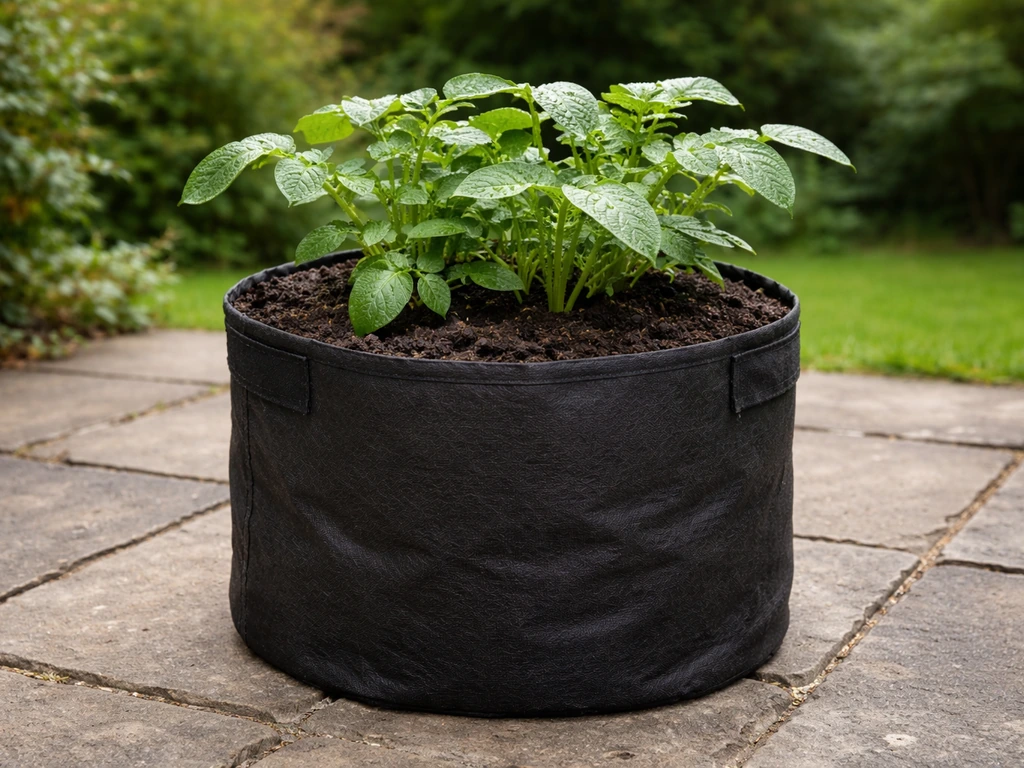
Best Potato Grow Bag UK Guide: Top Picks by Size
UK guide to the best potato grow bag picks by size, plus top bag-suitable varieties, setup, and troubleshooting tips.
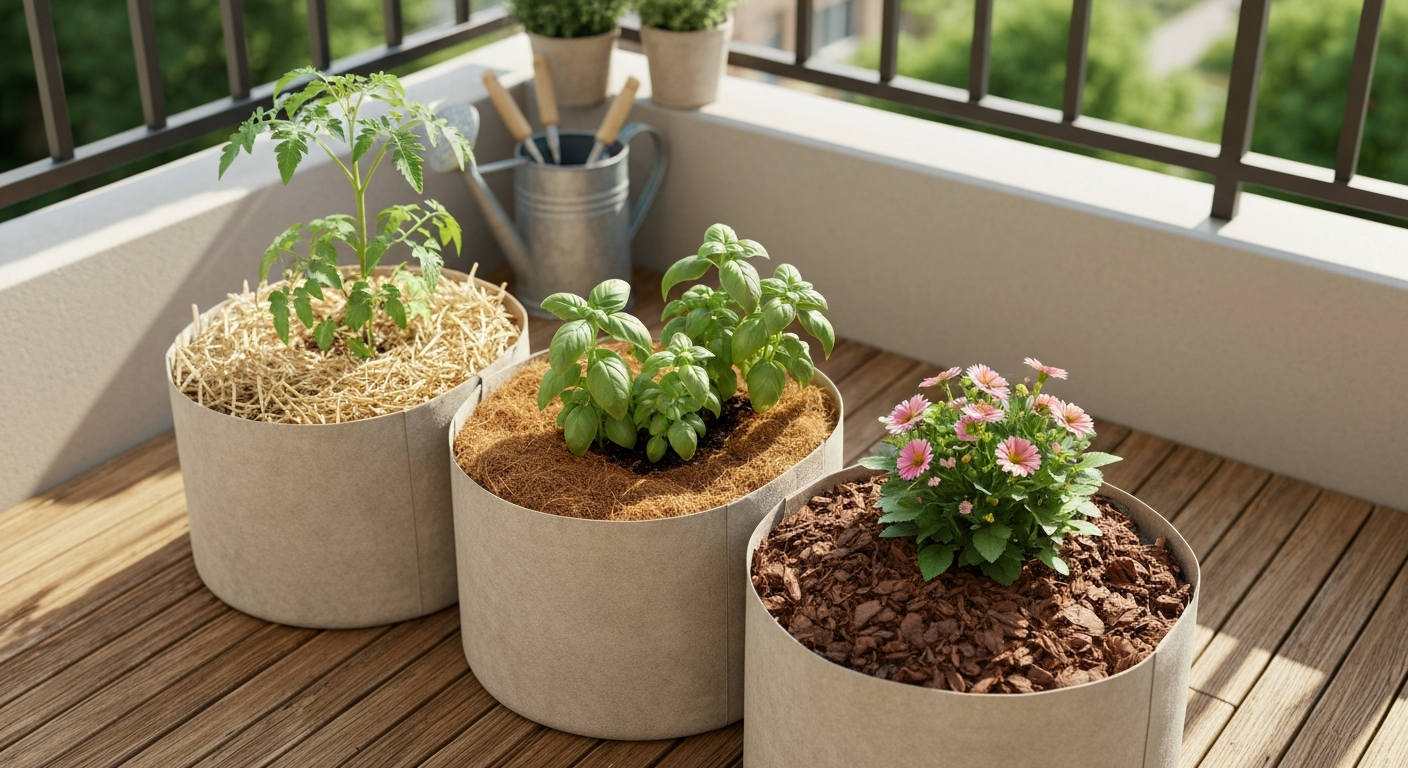
Best Mulch for Grow Bags: Top Picks for Vegetables & Flowers
Find the best mulch for fabric grow bags: top picks, how-to apply, crop & climate advice, and troubleshooting.
Best Flowers for Grow Bags: Top Picks, Soil & Care Guide DIY
Best flowers for grow bags: top annuals, perennials, bulbs & trailers; soil, fertilizer, planting and care checklists.