
Bush beans and dwarf runner beans are the best beans to grow in a fabric grow bag, especially if you're working with limited space or weight constraints. That said, climbing French beans and full-size runner beans work brilliantly too, as long as your bag is deep enough and you give them a proper support structure. The key is matching the right variety to the right bag size, then keeping up with watering, because fabric bags dry out faster than plastic pots and beans will drop their flowers the moment they get stressed. If you want the full step-by-step for other crops too, this guide to how to grow plants in grow bags will walk you through the basics.
Best Beans to Grow in a Bag: Top Varieties and How-To
Marcus Holloway
30 May 2026
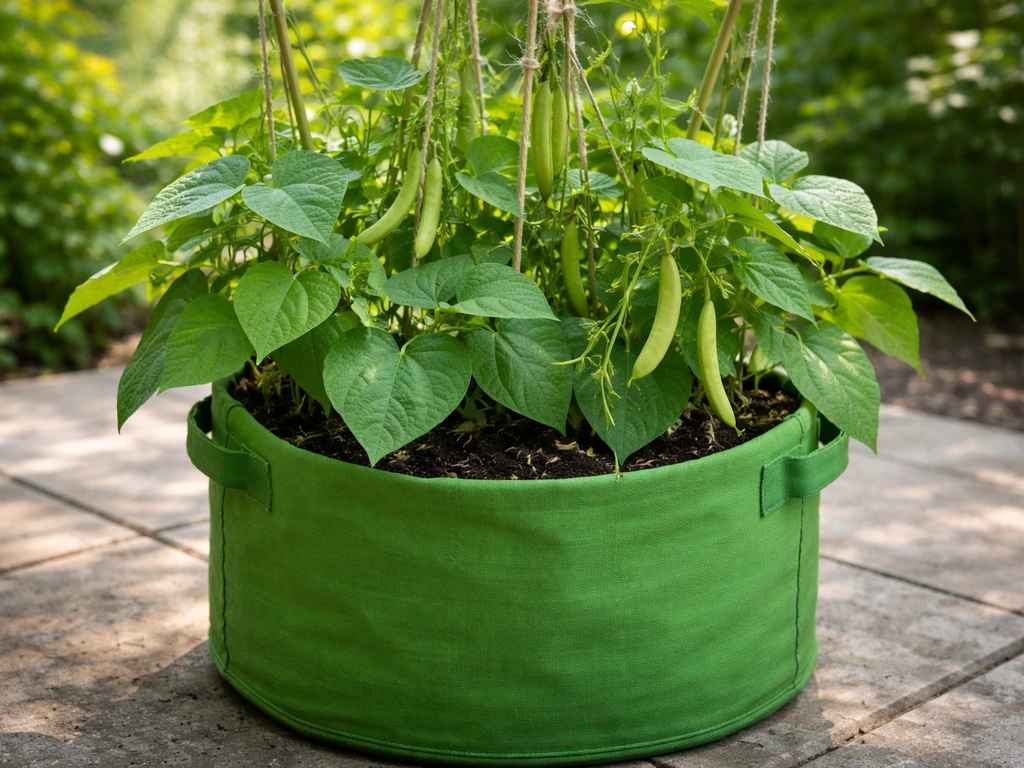
Which bean types actually thrive in fabric grow bags
Beans are, broadly speaking, shallow-rooted crops. Their roots typically need somewhere between 6 and 12 inches (15–30cm) of soil depth, which makes them a genuinely good match for fabric grow bags. The question is which type suits your setup.
Bush beans (also called dwarf French beans or haricot-style beans) are the easiest starting point. They stay compact, need no support, and can grow well in a bag as shallow as 12 inches (30cm). A single 10–12 litre bag works for two or three plants, and you can line up several bags on a patio or balcony without any fuss.
Climbing French beans and runner beans are a step up in effort but reward you with a much longer harvest window. They need deeper bags, a solid trellis or cane structure, and reliable watering. The fabric bag actually helps here because the air-pruning effect encourages a dense, fibrous root system rather than one long taproot, which means the plant feeds efficiently even in a container. A 75-litre bag, or at minimum a 40-litre, is where climbing beans really hit their stride.
Yardlong beans (Asian long beans) are a less common choice but worth mentioning for growers who want something different. They're vigorous climbers that love heat, so in a warm UK summer or a sheltered spot, a large fabric bag works well. Treat them like climbing French beans for spacing and support.
What doesn't work well in bags: broad beans. They need more root depth and volume to justify the space, and they don't benefit from container growing the way climbing beans do. Stick to French, runner, or yardlong types for bags.
Match your bean variety to the right bag size
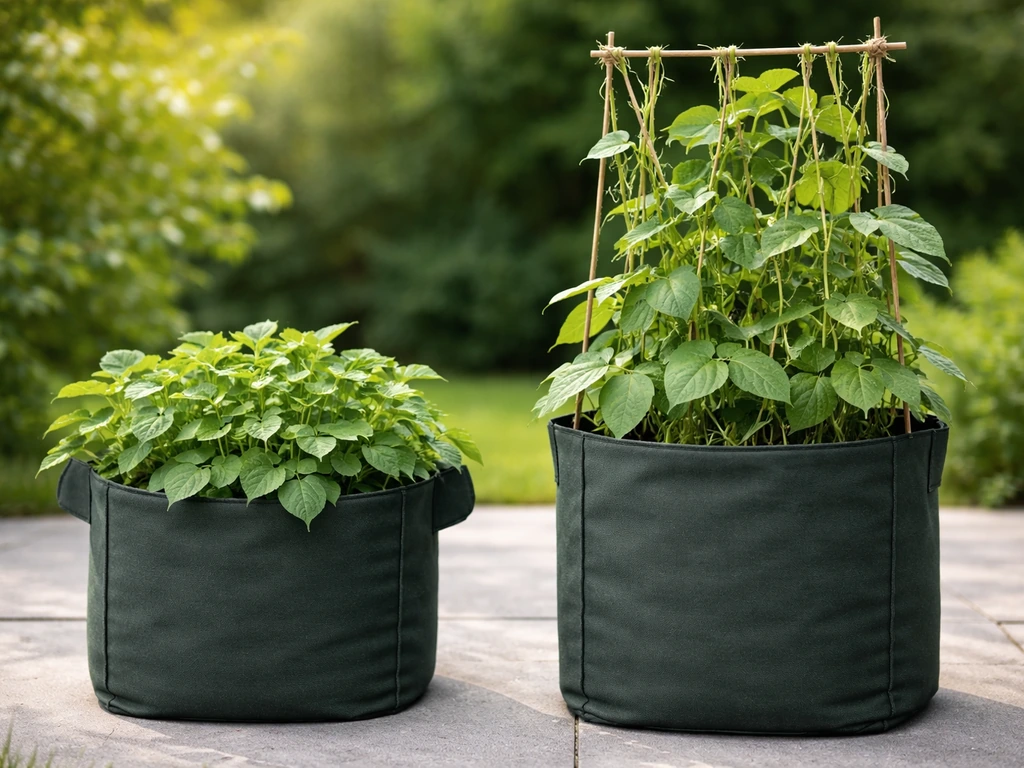
Getting the bag size right is the single most important decision you'll make before you even buy seeds. Too small and the roots hit the limits of the bag during peak summer heat, the compost dries out every few hours, and pod set collapses. Too large and you're dragging an unnecessarily heavy container around the patio.
| Bean Type | Minimum Bag Depth | Recommended Bag Volume | Plants Per Bag |
|---|---|---|---|
| Bush/Dwarf French beans | 12 in / 30cm | 10–15 litres | 2–3 plants |
| Dwarf runner beans | 12 in / 30cm | 20–30 litres | 2–3 plants |
| Climbing French beans | 18 in / 45cm | 40–50 litres | 3–4 plants |
| Full-size runner beans | 18 in / 45cm | 50–75 litres | 3–4 plants |
| Yardlong/Asian long beans | 18 in / 45cm | 40–60 litres | 2–3 plants |
The RHS recommends a container at least 75cm (30in) wide and 45cm (18in) deep for climbing runner beans, and heavy enough that it won't topple when canes are loaded with foliage. A large fabric grow bag filled with damp compost achieves that weight naturally, which is one of the practical advantages over plastic pots for climbing varieties.
For dwarf varieties, the RHS gives 30–45cm (12–18in) as a suitable container width, which maps neatly to a 20–30 litre fabric bag. If you're growing on a balcony, two or three of these bags placed side by side gives you a meaningful harvest without overloading the structure.
Top bean varieties worth planting in a bag
There's no single best bean variety, but there are clear front-runners for bag growing. Here are the ones I'd actually recommend, and why each one earns its place.
Bush and dwarf French beans
- Safari (bush): compact, early-cropping, and consistently prolific. One of the best dwarf French beans for containers and very reliable in UK summers.
- Speedy (bush): as the name suggests, it's fast-maturing and great if you want pods before midsummer. Good disease resistance too.
- Mascotte (bush): bred specifically for container growing, stays tidy at around 40cm tall, and produces over a long season. If you only try one bush bean in a bag, make it this one.
- Purple Teepee (bush): pods are held above the foliage so they're easy to spot and pick, and the purple colour makes it a genuinely attractive patio plant.
Climbing French beans
- Cobra: a classic climbing French bean that crops heavily over a long season. Handles container growing well when given enough root volume.
- Blauhilde (Blue Lake type): produces long, deep purple pods on a vigorous plant. Excellent flavour and a conversation piece on a sunny patio.
- Hunter: flat-podded, stringless, and very productive. A good choice if you're feeding a family from a few large bags.
Runner beans
- Hestia (dwarf runner): this is the stand-out choice for bags. It stays at around 45cm, needs no support beyond a couple of short canes, and sets pods reliably even in warm weather when full-size runners can struggle.
- Scarlet Emperor (full runner): the traditional choice if you want heavy yields from a large bag with a proper trellis. Flowers are striking and pods are classic quality.
- White Lady: sets pods in warmer conditions better than many red-flowered types, which matters if your bag is in a south-facing spot.
Setting up your grow bag: soil mix, spacing, and sowing
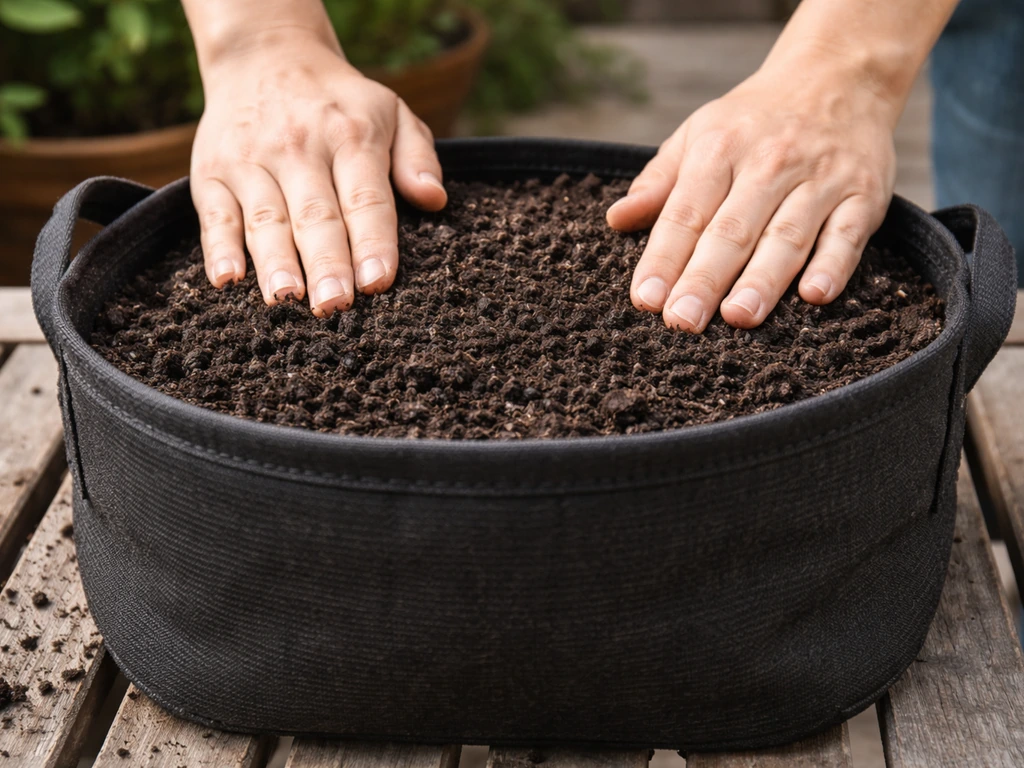
Beans are not heavy feeders compared to tomatoes or squash, but they do need well-structured compost that drains freely while holding enough moisture to get through a hot afternoon. A mix of around 70% good-quality multipurpose compost and 30% perlite or horticultural grit is a solid starting point. Avoid using straight topsoil from the garden, which compacts badly in a fabric bag and holds water unevenly.
Fill the bag to within about 5cm (2in) of the top, then firm gently. Fabric bags drain extremely well, which is one of their advantages, but it does mean the compost level will drop as it settles after the first few waterings. Top up once before sowing if needed.
Direct sowing is the simplest approach and beans generally don't like root disturbance anyway. Sow seeds 5cm (2in) deep, and wait until the soil temperature has reached at least 12°C (54°F) before planting outside. In the UK that usually means mid-May in southern areas and early June further north. Sowing into cold compost just causes the seed to rot rather than germinate.
For bush beans in a 10–15 litre bag, plant two to three seeds in a triangle pattern, thinning to the two strongest seedlings. For a larger bag with climbing beans, place three to four seeds evenly around the edge of the bag (not clustered in the centre) so each plant has its own run of cane and airflow between the stems. The RHS suggests 15–30cm (6–12in) between canes for climbing runner beans, and that spacing translates well to bag growing.
Starting seeds indoors is useful if you want a head start of two to three weeks, especially for runner beans. Use root trainers or deep modules rather than shallow seed trays, because bean roots run long quickly and don't appreciate being bent or cramped when you transplant them.
Watering and feeding: what to do and what to avoid
Watering is where most people go wrong with beans in fabric bags. The breathable walls wick moisture away faster than plastic containers, especially on a warm or breezy day. Checking the bag daily in summer is not optional. During flowering and pod set, allowing the compost to dry out completely is the fastest route to empty pods and dropped flowers.
Water deeply each time rather than just moistening the surface. You want water to flow freely from the drainage area at the bottom of the bag, which tells you the root zone is genuinely saturated. For established climbing beans in hot weather, watering every day (or every other day minimum) is realistic. Thompson and Morgan recommend daily watering for runner beans as a routine approach, and that's sound advice for bag growing in summer.
The other common mistake is overfeeding with nitrogen-rich fertiliser. Beans fix their own nitrogen through root nodules, so throwing high-nitrogen feed at them encourages lush leafy growth at the expense of pods. This is one of the most consistent reasons people get plenty of flowers but no beans. Start with a good compost that has some balanced slow-release fertiliser incorporated, and then switch to a potassium-rich feed (tomato feed works well) once flowering begins. This encourages pod set rather than vegetative growth.
- Do water deeply every day in hot weather, especially during flowering and pod set.
- Do use a balanced slow-release granular fertiliser mixed into the compost at planting.
- Do switch to a high-potassium liquid feed (tomato feed) once plants begin to flower.
- Don't let the bag dry out completely at any point during the growing season.
- Don't feed with high-nitrogen fertiliser (lawn feed, blood/fish/bone in excess) once plants are established.
- Don't water little and often at the surface — shallow watering encourages surface roots and drought stress.
Trellising and support: getting it right for bags
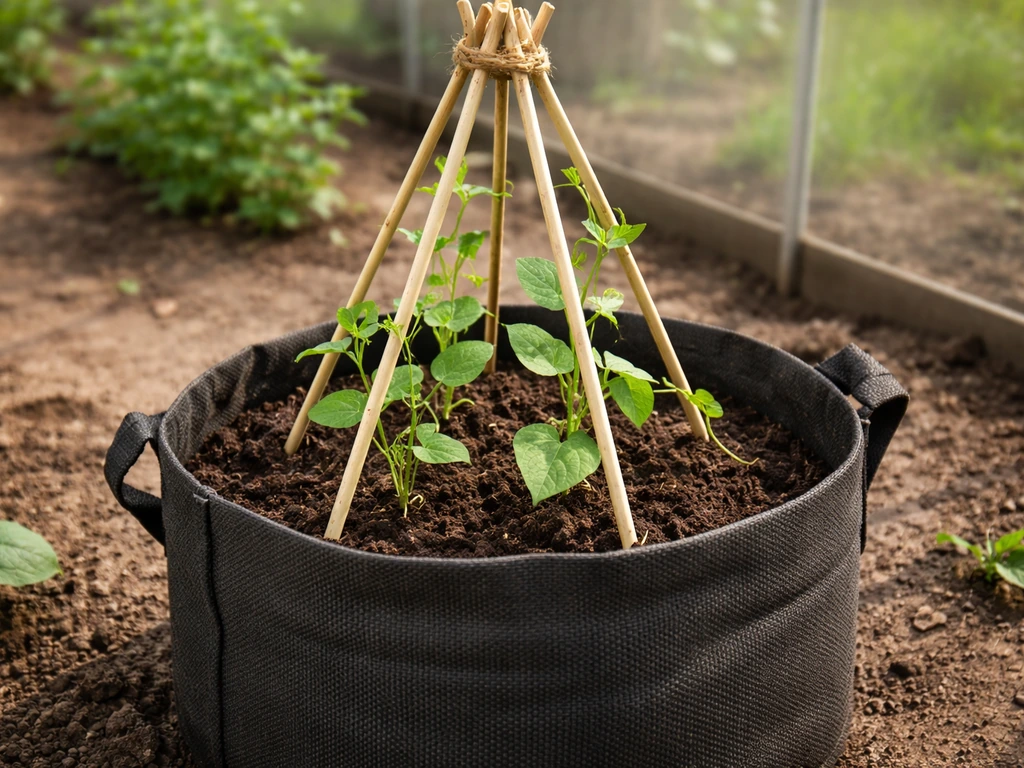
Climbing beans in a fabric bag need their support installed before or at sowing time, not once the plants are already scrambling around. Adding canes after the fact disturbs roots and often topples the bag.
For a single large bag, a wigwam of four to six bamboo canes (at least 2.4m / 8ft long) pushed firmly into the compost and tied together at the top is the classic approach. Thompson and Morgan specifically suggest a wigwam structure for container runner beans, and it works well because the bag's weight stabilises the whole structure. For a rectangular bag or two bags against a wall or fence, lean-to cane structures work better, with canes angled slightly inward and tied near the top to a horizontal cane, following the RHS spacing guidance of 15–30cm (6–12in) between vertical canes.
The most important practical point: fabric grow bags filled with damp compost are heavy, which is actually an advantage when it comes to stability. A 50-litre bag of damp compost can weigh 25kg or more, which means a wigwam planted into it won't blow over in normal wind. Still, avoid placing high cane structures in fully exposed, windy spots where gusts can torque the whole assembly.
For dwarf runner beans like Hestia, or bush French beans, you only need short pea sticks (30–40cm) or a few twigs pushed in around the plants to keep stems upright as they fill out. Nothing elaborate needed.
Troubleshooting: why your beans aren't producing (and how to fix it)
Flowers but no pods
This is the most common complaint with container beans, and it almost always comes down to one of three things: drought stress during flowering, excess nitrogen in the compost, or temperatures that are too high for pollination. Check your watering first. Bloomingexpert also stresses that shallow containers can dry out quickly, causing blossom drop and pod abortion, so ensure multiple drainage holes and water deeply until water flows from the drainage holes Check your watering first.. If the bag feels light or the top 2–3cm of compost is bone dry, that's your answer. If you've been feeding with a nitrogen-heavy fertiliser, stop and switch to tomato feed. If the weather has been very hot (above 30°C), the beans may simply need cooler nights to resume pod set, and the situation usually resolves itself.
Bags drying out too fast
Fabric bags are breathable by design, which is why roots thrive in them, but it does mean they lose moisture faster than solid containers. If you're watering morning and evening and still finding dry compost, try placing a saucer or tray under the bag to catch and hold some drainage water. You can also mulch the surface with a layer of compost or bark to slow evaporation. Grouping bags together also reduces moisture loss from the sides.
Aphids (blackfly)
Black bean aphid is a regular visitor to runner beans in particular and can colonise shoot tips rapidly in late May and June. Check the growing tips weekly and pinch out heavily infested tips as soon as you spot them. This also encourages the plant to divert energy to pod production rather than extension growth. A jet of water or an insecticidal soap spray handles outbreaks on the rest of the plant. The RHS lists blackfly as one of the main pests to watch on runner beans.
Slugs and snails
Seedlings and young plants are particularly vulnerable. The raised nature of a grow bag helps, but slugs climb and snails drop in from nearby plants. A ring of copper tape around the base of the bag, or slug pellets placed nearby rather than in the bag itself, keeps damage manageable. Check under the bag on damp evenings.
Powdery mildew
Powdery mildew shows up as a white, powdery coating on leaves and stems, typically appearing in late summer when days are warm and nights are cooling down. In a bag, the risk is compounded if plants are crowded together with poor airflow between stems. The best prevention is keeping plants well-spaced (don't cram extra seeds into a bag to compensate for small space) and avoiding watering the foliage in the evening. Once mildew takes hold it spreads quickly, so remove affected leaves promptly and consider a bicarbonate of soda spray as an early intervention. The practical lesson here is that overcrowded bags are more prone to mildew than bags with two or three well-spaced plants.
Root zone heat
Dark-coloured fabric bags placed on a sun-baked patio can get very hot on the sides in direct sun, which raises root zone temperature and stresses the plants. Light-coloured bags, or placing bags where the sides are shaded by neighbouring pots, helps significantly. Alternatively, wrapping the sides of the bag in reflective material or bubble wrap during the hottest weeks of summer works as a practical fix.
Harvesting: when to pick and how to keep beans coming
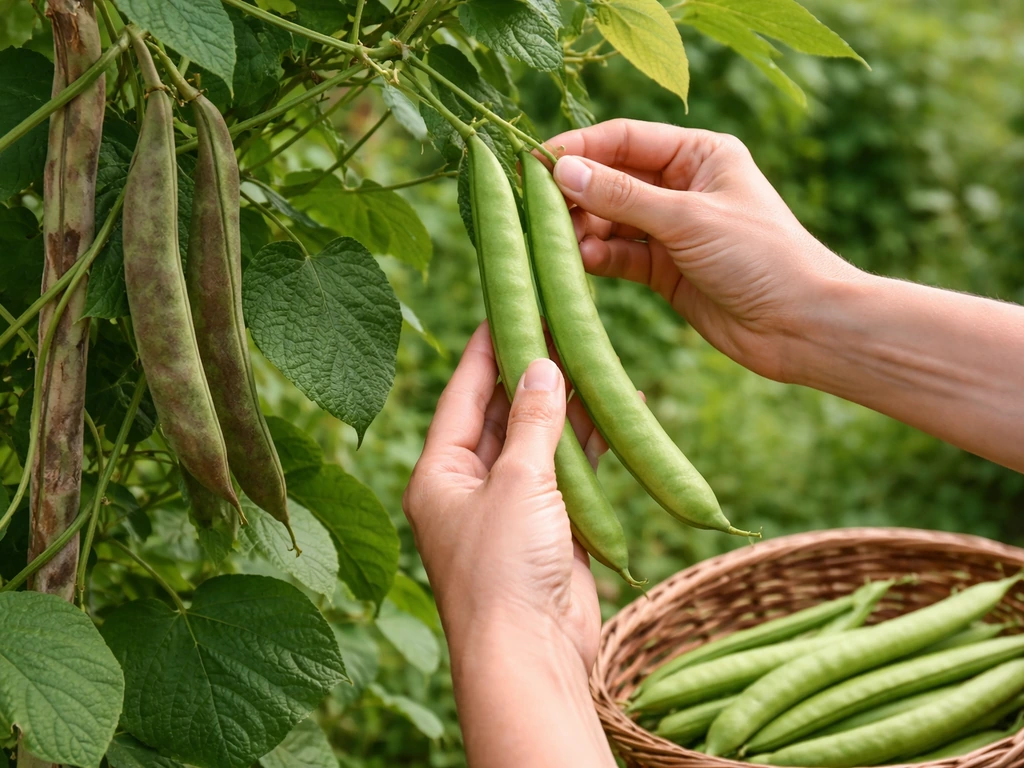
For runner beans and climbing French beans, the picking window makes or breaks your yield. Pods are at their best at 15–20cm (6–8in) long. Beyond that, the beans inside start to bulge, the pod wall becomes stringy and tough, and the plant reads it as a signal to stop producing. Pod the plants every two to three days during peak season, and ideally every day when the weather is warm and growth is fast.
Bush French beans have a slightly longer quality window, but the same principle applies: the more you pick, the more the plant produces. Once pods are left to mature and set seed, the plant winds down. If you're heading away for a week, harvest everything harvestable before you leave, even pods that are slightly under-sized, to reset the plant's production cycle.
In the UK, you can expect to be harvesting from mid-summer through early autumn depending on when you sowed. A late May sowing of runner beans in a sheltered spot typically gives you pods from late July, with the main flush running through August and September. Climbing French beans sown at the same time will often start a week or two earlier.
If you want dry beans rather than fresh pods, leave a small number of pods on the plant until they are fully swollen and the pod is yellowing and papery. Pick these before the first frosts and allow them to dry completely indoors. This doesn't work well with runner beans (the seed is large but not particularly useful dried), but climbing and bush French beans of the haricot type give you a secondary crop worth having.
To keep production going as long as possible: keep picking regularly, keep watering consistently, and add a potassium-rich liquid feed every week or two from midsummer onward. Fabric grow bags genuinely earn their place here because the excellent drainage keeps roots healthy longer into autumn than a solid pot, where waterlogging in September can cut the season short.
If you're figuring out the wider picture of what to grow in your bags alongside beans, or you're considering green beans specifically as a bag crop, both topics are worth exploring on their own. If you're also asking what to grow in hanging grow bags, you can use the same thinking about space, root depth, and consistent watering to pick the best compatible crops. If you are wondering can you grow green beans in grow bags, the key is choosing the right bean type for your bag size and keeping the compost evenly moist green beans specifically as a bag crop. If you want more ideas beyond beans, check our guide on what to grow in grow bags in the UK what to grow in your bags alongside beans. The core principles here, soil volume, consistent watering, and picking regularly, carry across all bag-grown bean types.
FAQ
What’s the best bag size if I want to grow beans year after year without fiddling each season?
For the easiest “set it and forget it” option, choose a single 40–75 litre bag depending on the bean type, because it buffers you against hot weather drying and missed watering. Bush beans can work in 10–15 litre bags, but climbing runner or French beans perform much better when the roots have more volume, typically 40 litres minimum, 75 litres ideal.
Can I mix different bean types in the same grow bag?
It usually backfires in a fabric bag because the plants compete for moisture and you cannot easily match their support needs. If you want variety, keep one bean type per bag, and if you pair beans with another crop, do it only if the other crop has similar watering needs and won’t shade the bean canopy too much.
How do I tell whether my bean problem is drought stress, nitrogen, or pollination issues?
Start with a quick triage: if the compost feels light or the top 2–3 cm is bone dry during flowering, it’s usually drought stress. If you have lots of leaves and flowers but no pods, reduce any nitrogen-rich feeding and switch to a potassium-focused tomato feed. If it’s very hot (around 30°C and above), you may see poor pollination, and the fix is often simply consistent watering plus waiting for cooler nights.
Do I need to inoculate or treat bean seeds when growing in a bag?
In most cases, you do not need extra inoculation if you have grown beans in the general area before, because nodules form with normal conditions. If you are new to bean growing where you live or you have never used that seed type locally, a legume inoculant can help, but it will not replace good watering and correct compost drainage.
What’s the best way to prevent beans from drying out too fast in fabric bags on a balcony?
Use two practical steps together: keep to a deep, stable watering routine (water until it flows from the base each time) and add surface protection such as a mulch layer to reduce evaporation. If you can, place the bag where its sides get shade during the hottest part of the day, and consider clustering bags so they shield each other from wind.
How often should I water climbing beans in a bag if I’m not able to check them every day?
Climbing beans in fabric bags typically need daily watering in heat, or at least every other day, but the real rule is to check the root zone. If the bag is getting light or the top couple of centimetres dry out quickly, you need a more frequent schedule or extra moisture retention measures like mulching and, in some setups, a tray underneath to catch drainage.
Should I water the leaves to reduce powdery mildew risk?
Avoid wetting foliage in the evening. Powdery mildew gets worse when airflow is poor and leaves stay damp overnight. Water at the compost level, and only consider leaf-directed sprays as early intervention if you spot a few symptoms.
My runner beans are in a bag, but pods keep dropping soon after flowering. Why?
The most common cause is stress during flowering, usually from compost drying out fully. A second common cause is over-fertilising with nitrogen, which can encourage leafy growth at the expense of pods. Finally, if there’s a heat spell, pollination can struggle and the plant may drop blooms until conditions improve.
When should I start feeding beans in a bag, and what should I avoid?
Wait until flowering begins, then switch from whatever balanced compost nutrition you started with to a potassium-rich liquid feed. Avoid nitrogen-heavy fertilisers, because beans can make their own nitrogen and extra nitrogen often reduces pod set.
Do I need to top up compost after filling a new bag?
Yes, often. Fabric bags settle after the first few waterings, so the compost level can drop a couple of centimetres. Top up once before sowing if you are already low, and don’t leave large gaps near the rim because they reduce the active root volume.
What support method works if my bag is against a wall or fence?
For wall-side bags, a lean-to cane structure angled slightly inward is usually more stable and easier to manage than a central wigwam. Install the support before or at sowing so you avoid root disturbance, and tie vertical canes near the top to a horizontal support to reduce wobble.
Can I grow broad beans in a grow bag if I use a large one?
Even if you use a very large bag, broad beans generally need more root volume and depth than most container bean setups provide, and they do not benefit from bag-specific advantages the way climbing French and runner beans do. If you want low-risk results, stick to French, runner, or yardlong types.
How do I reduce pests like black bean aphid without harming the plants?
Check shoot tips weekly, and pinch out heavily infested tips early to stop rapid colonisation. For the rest of the plant, use a targeted approach like a jet of water or insecticidal soap on affected growth rather than broad, repeated spraying.
What can I do if seedlings get eaten before I can harvest?
Slugs and snails are a bigger risk in bag setups than people expect, because they can reach the base from nearby damp areas. Place slug controls nearby rather than inside the bag where possible, and check underneath on damp evenings so you catch damage early.
When should I harvest beans from bags for the best eating quality?
For runner beans and climbing French beans, harvest when pods are about 15–20 cm long. If you leave them to get longer, the pods become tougher and the plant often reduces new pod formation, so frequent picking is the main lever for keeping yields high.
Next Articles
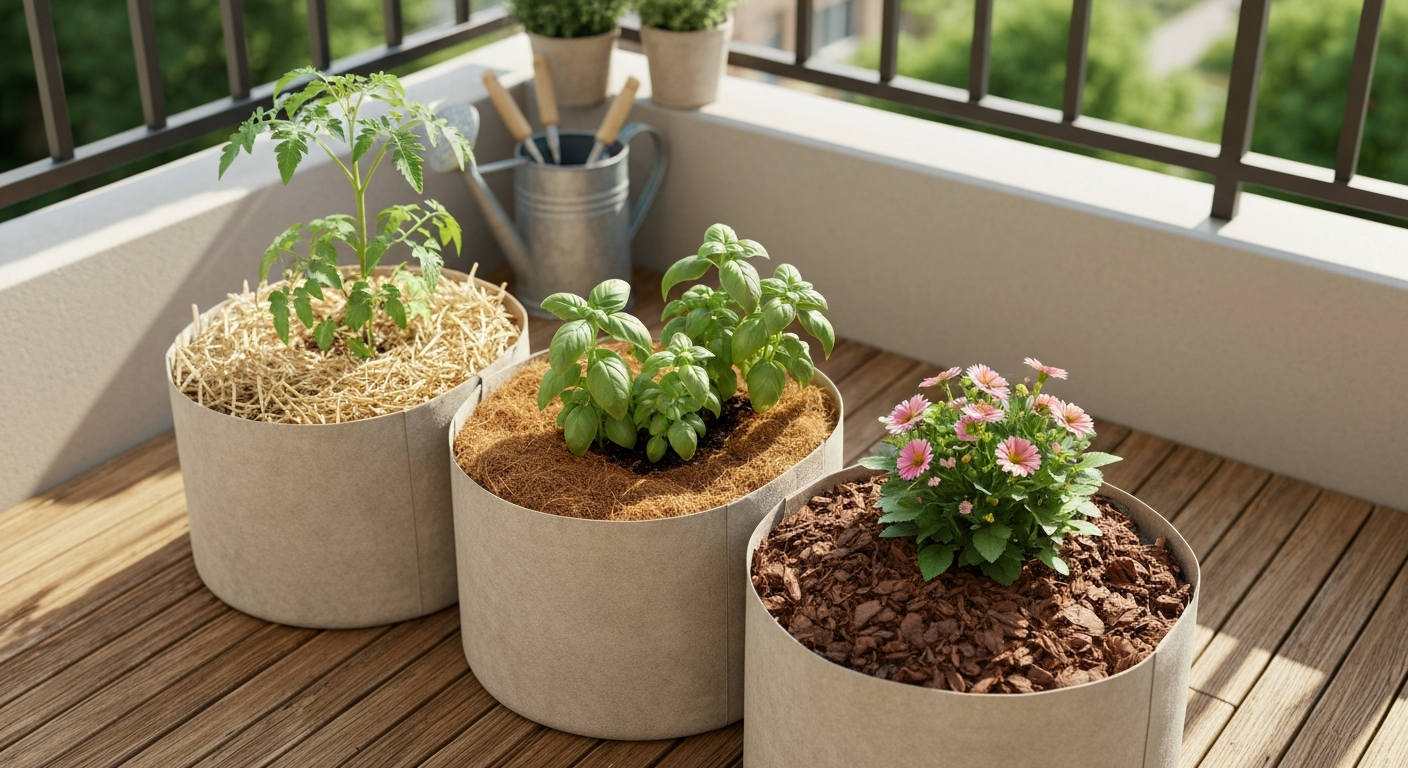
Best Mulch for Grow Bags: Top Picks for Vegetables & Flowers
Find the best mulch for fabric grow bags: top picks, how-to apply, crop & climate advice, and troubleshooting.
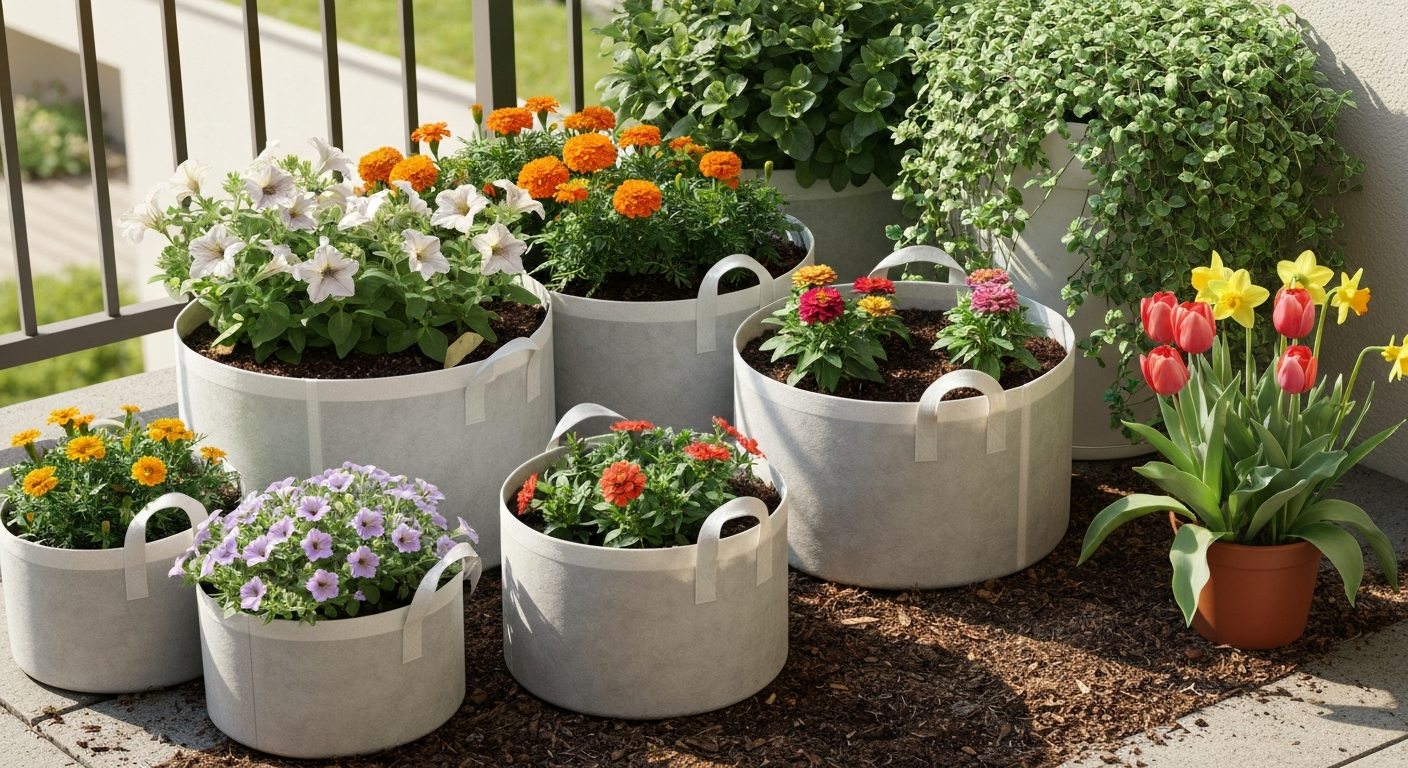
Best Flowers for Grow Bags: Top Picks, Soil & Care Guide DIY
Best flowers for grow bags: top annuals, perennials, bulbs & trailers; soil, fertilizer, planting and care checklists.
Best Landscape Fabric for Grow Bags: Buy and Install Guide
Choose the best landscape fabric for grow bags with weed-blocking, drainage and aeration tips plus DIY install steps.