If you're growing in the UK right now (late June 2026), the best crops for fabric grow bags are tomatoes, courgettes, cucumbers, salad leaves, French beans, strawberries, and herbs like basil, thyme, and mint. RHS recommends [Mediterranean edible container herb candidates such as sage, thyme, rosemary, marjoram or oregano, and winter savory](https://www. rhs. org.
What to Grow in Grow Bags UK Best Crops and Tips
Marcus Holloway
27 Jun 2026
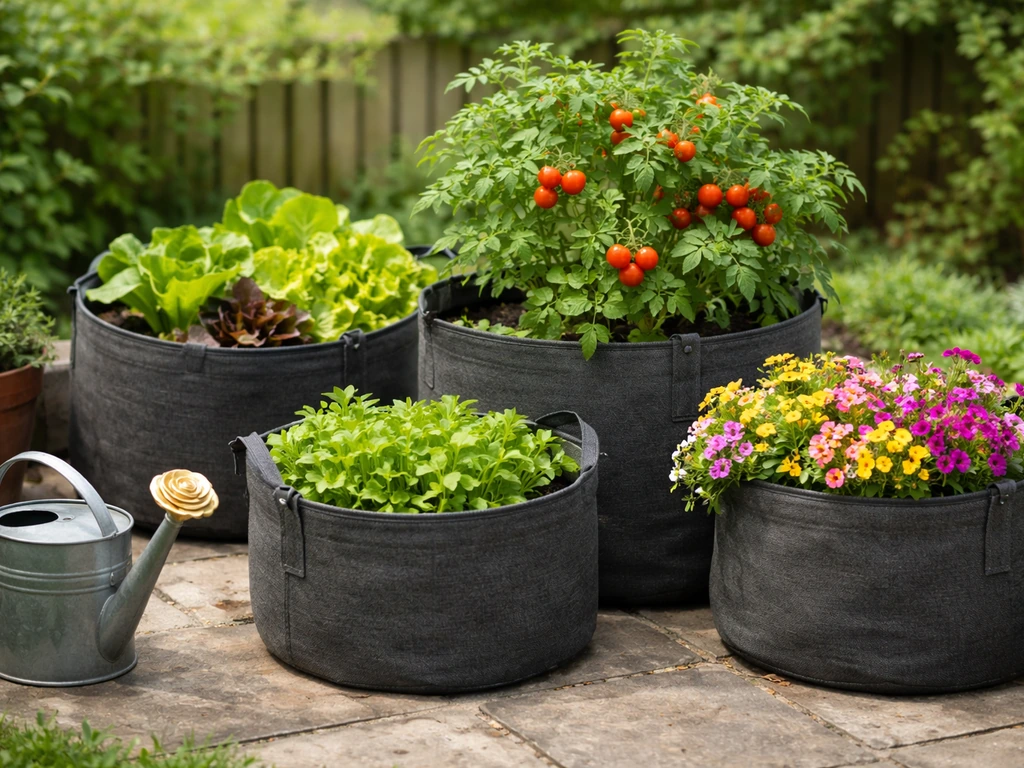
uk/advice/grow-your-own/containers/veg-on-walls/june-edible-container-idea), and warns that mint needs its own pot because it spreads quickly. These plants all thrive in the limited root space of a fabric bag, respond well to air-pruning, and suit the UK's growing window. Pick the right bag size (20–40 litres for most vegetables, 7–10 litres for herbs, 100+ litres for dwarf fruit trees), use a peat-free multipurpose or John Innes No. 3 compost, water daily in warm weather, and start liquid feeding at the five-to-six-week mark.
That's the core of it. Read on for the detail that separates a mediocre harvest from a good one.
Best crops for UK grow bags: the shortlist
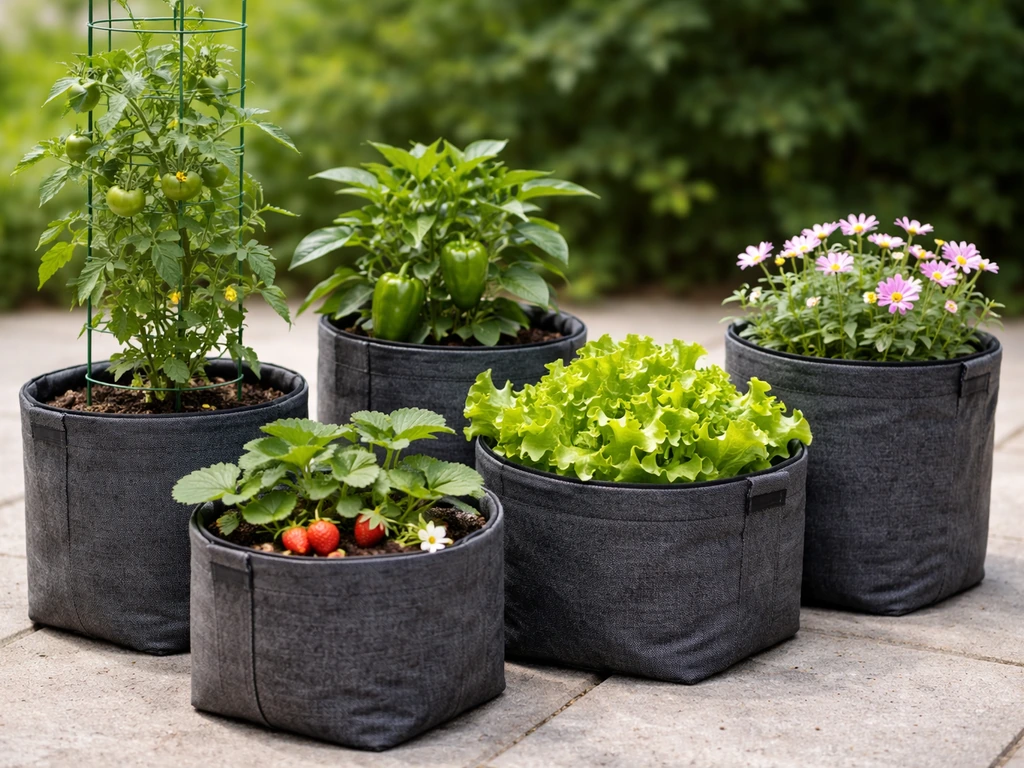
Grow bags work best for crops that have relatively contained root systems, respond well to the air-pruning that fabric sides provide, and don't mind their water and nutrients being managed externally. That rules out sprawling root vegetables like parsnips but leaves a genuinely impressive list.
| Crop | Why it works in a grow bag | Minimum bag size (litres) |
|---|---|---|
| Tomatoes (cordon or bush) | Deep roots, benefit hugely from air-pruning, love the warmth a raised bag retains | 30–40 L per plant |
| Courgettes | Fast-growing, shallow-rooted enough for a wide bag, one plant per large bag | 40–50 L |
| Cucumbers | Similar needs to tomatoes; thrives with warmth and good drainage | 30–40 L per plant |
| Salad leaves (loose-leaf lettuce, rocket) | Shallow roots, fast turnover, can cut-and-come-again for weeks | 10–15 L |
| French beans (dwarf) | Compact, heavy cropping, no need for deep root run | 20–25 L for 3–4 plants |
| Strawberries | Perfect for bags; shallow roots, benefit from elevated position reducing slug damage | 7–10 L per 2–3 plants |
| Herbs (basil, thyme, sage, oregano) | Low water demand (Mediterranean types), compact root systems | 7–10 L |
| Potatoes (early/second early) | Classic use case; easy harvest by tipping bag out | 40–50 L |
| Chillies and peppers | Compact plants, love the warmth fabric bags hold in a sunny spot | 15–20 L per plant |
| Dwarf French marigolds / nasturtiums | Great companion planting options, also attractive in patio bags | 7–10 L |
If you're a complete beginner and want one crop to start with, make it tomatoes or salad leaves. If you want to explore more options, check the best beans to grow in a bag for similar space-saving crops tomatoes. Tomatoes give you high reward for effort, and salad leaves are the most forgiving, fastest option if you want results within weeks.
Match your crop to the right grow bag size and fabric
The single biggest mistake grow-bag beginners make is going too small. A cramped bag doesn't just slow growth, it creates a vicious cycle of drying out, nutrient exhaustion, and stressed plants. Here's how to think about sizing and fabric choices.
Size guide
| Bag size (approx. litres) | Bag dimensions (approx.) | Best suited crops | |
|---|---|---|---|
| 7–10 L | 20×20 cm | Herbs (individual), strawberries (2 plants), small salad leaves | |
| 15–20 L | 25×25 cm | Chillies, peppers, dwarf French beans, rocket/lettuce | |
| 20–25 L | 30×30 cm | Bush tomatoes, salad mixes, compact courgettes (tight) | |
| 30–40 L | 35×35 cm | Cordon tomatoes (1 per bag), cucumbers, larger courgettes | |
| 40–50 L | 40×40 cm | Courgettes, potatoes, larger trailing squash | |
| 100 L+ | 50×50 cm and above | Dwarf fruit trees, blueberries, large ornamental shrubs |
A 10×10 inch bag (roughly 20–25 litres) is genuinely too small for a cordon tomato and will have you watering twice a day and fighting blossom end rot all summer. Go for a 30–40 litre bag minimum for tomatoes. For courgettes, which have a surprisingly wide root spread, a 40–50 litre bag gives the plant room to produce properly.
What to look for in fabric grow bags for UK conditions
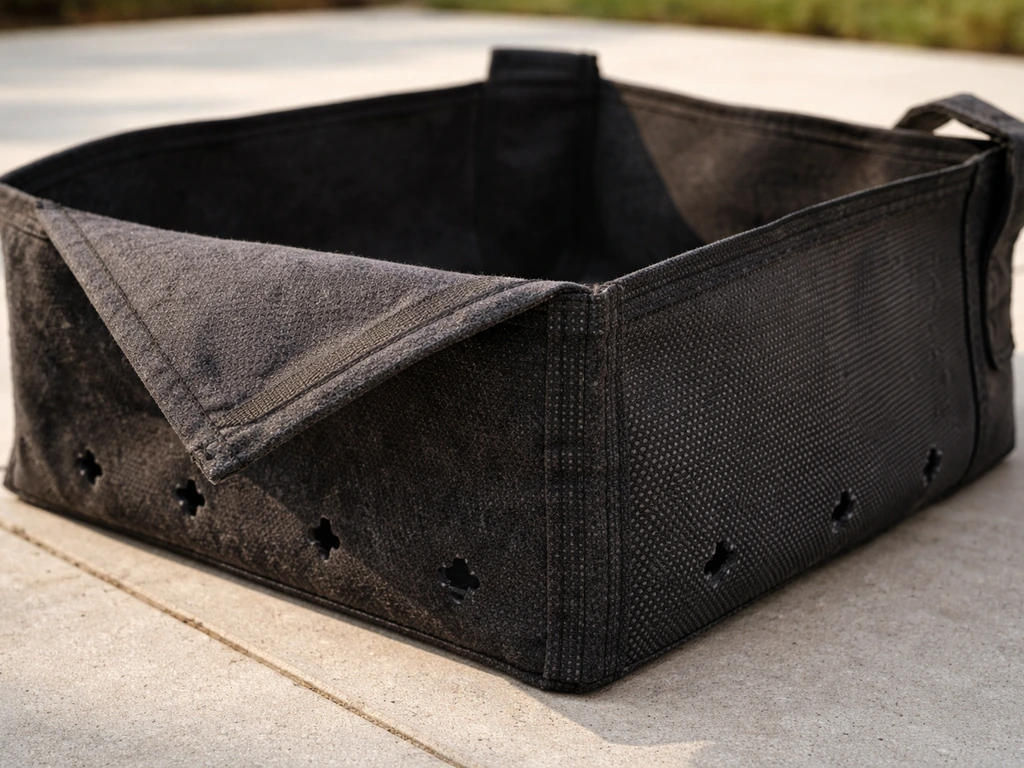
UK summers swing between wet and surprisingly hot, so you need a fabric that handles both. A few key features matter here. Fabric thickness (measured in GSM, grams per square metre) should be at least 200–300 GSM for outdoor use. Thinner bags are fine for indoor seedlings but will degrade in UV and wind faster outdoors.
Handles are genuinely important for UK growers who move bags to catch sun or bring them under cover during late-season frosts. Look for reinforced stitched handles on anything over 20 litres. Drainage holes or a porous base matter: fabric grow bags are not waterproof by design, which is part of the point. The breathable sides allow excess water to escape and air to reach the root zone, triggering air-pruning where roots branch outward rather than circling.
That root architecture improves nutrient uptake and plant health. But it also means moisture leaves the bag faster than a solid plastic pot, so your watering routine needs to reflect that.
Seasonal planting plan: what to grow in UK grow bags now and next
It's late June. The good news is you haven't missed most of the season. Here's a practical month-by-month snapshot for the rest of the year.
| Month | Sow / Plant now | Notes |
|---|---|---|
| June (now) | Courgettes (outdoors, south/midlands), salad leaves, French beans, basil, cucumbers (if unplanted) | RHS confirms courgettes can still be sown outdoors in June in southern England. Lettuce benefits from light shade to prevent bolting in heat. |
| July | Salad leaves (successional), dwarf French beans, basil, second sowing of courgettes if space | Sow salad in small batches every 2–3 weeks for continuous harvest. Avoid sowing in the hottest part of the day. |
| August | Strawberry runners/plants for next year's crop, winter salads (e.g., endive, lamb's lettuce) | Planting strawberries in August or September gives them time to establish before the following year's fruiting season. |
| September | Winter herbs (sage, thyme, rosemary into bags for overwintering), spring bulbs in bags | Move Mediterranean herbs into bags with grit-mixed compost for better drainage over winter. |
| October–March | Bare-root strawberries (September to April window), plan and order for spring | RHS notes the bare-root strawberry planting window runs September through April. |
If you're in Scotland or northern England, treat all 'June' recommendations as 'late June to early July' at best, and protect tender crops like basil and courgettes with fleece if nights drop below 10°C. In the south and under glass or polytunnel cover, you have more flexibility.
How to grow vegetables in grow bags: compost, watering, and feeding
Compost choice
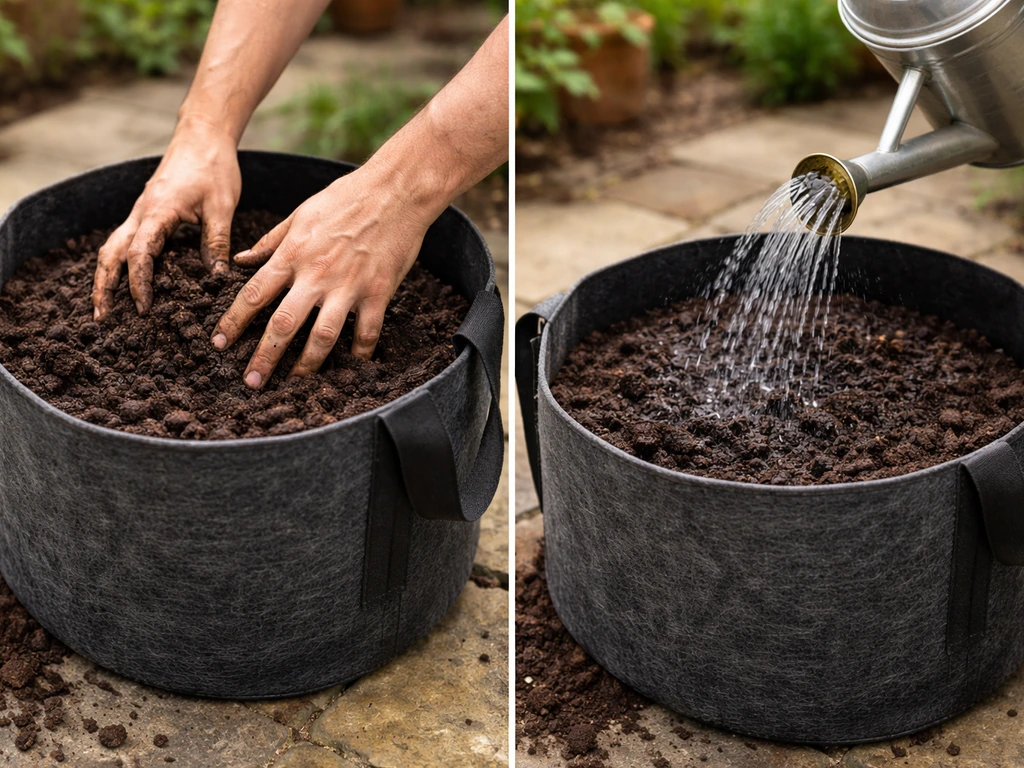
For vegetables, you want a compost that holds moisture without waterlogging, provides structure, and buffers against chemical fluctuations. A good peat-free multipurpose compost works well for most crops, but for longer-season vegetables like tomatoes and courgettes, John Innes No. 3 is worth considering. John Innes compost is loam-based, which means it holds nutrients and water more consistently than lighter soil-free mixes, and it's less prone to drying out irreversibly. The trade-off is that it's heavier, which matters if you're moving bags around a balcony. A practical middle ground is to mix two parts multipurpose with one part John Innes No. 3. This gives you the lightness of a multipurpose mix with the buffering stability of a loam-based compost.
Watering
Fabric grow bags lose moisture faster than solid pots. A standard bag can hold around 10–15 litres of available water when fully saturated, and on a warm UK July day that can be depleted within 24 hours for a large, actively growing tomato plant. Check daily by pushing a finger about 2 cm into the compost: if it feels dry at that depth, water now.
The BBC's advice to water in the early morning or cool of the evening is practical rather than pedantic: watering at midday on a warm day causes significant evaporation before the water reaches the roots. Aim for a slow, thorough soak rather than a quick splash. You want water to reach the full depth of the root zone, not just wet the surface.
One problem specific to grow bags is hydrophobic compost. If a bag dries out completely, the compost can develop patches that actually repel water, causing it to run down the sides of the bag and out without ever soaking into the root zone. If you notice water pooling on the surface and running off rather than absorbing, the compost has gone hydrophobic. The fix: tip the compost into a container, add warm water slowly while mixing, then re-fill the bag. Alternatively, for an established plant you can't disturb, stand the bag in a shallow tray of water for 30–60 minutes to rehydrate from the bottom up.
Feeding
Most growing media contains enough nutrients for roughly five to six weeks. After that, the plant is entirely dependent on what you feed it. For tomatoes, switch to a high-potassium tomato feed (like Tomorite) once the first flowers appear. For leafy crops like lettuce and herbs, a balanced liquid fertiliser every two weeks is sufficient.
For courgettes and beans, a balanced NPK feed every week to ten days once they're in full growth covers their needs. You can also grow green beans in grow bags, as long as you choose a bag size that suits the variety and keep up with regular watering and feeding.
Don't skip this step: a midsummer courgette in a 40-litre bag with no feeding will stall and become highly susceptible to powdery mildew because a stressed plant has lower resistance.
Flowers and container-style crops in grow bags
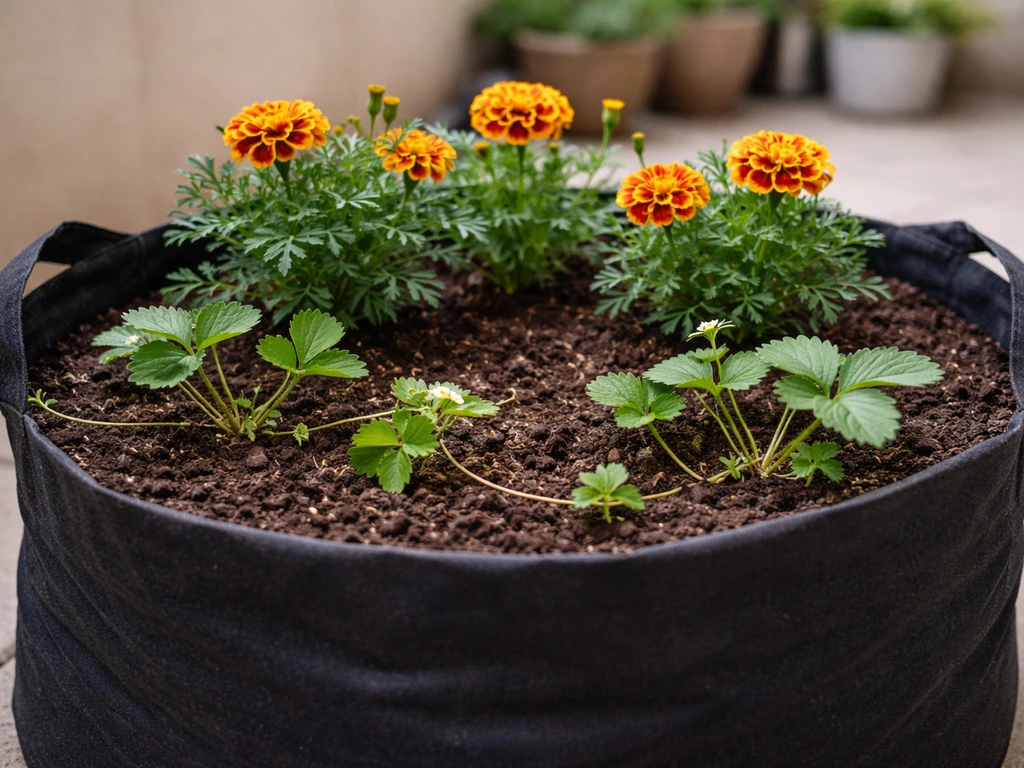
Grow bags aren't just for edibles. Flowers work brilliantly, especially for patio and balcony gardeners who want colour alongside their crops. Dwarf French marigolds are a practical favourite because they also deter aphids and whitefly from nearby tomatoes. Nasturtiums are low-maintenance, edible, and produce a carpet of colour in a 15-litre bag. For a more ornamental approach, trailing petunias, verbena, and calibrachoa all perform well in 15–20 litre fabric bags because the air-pruning keeps roots healthy and the excellent drainage prevents the root rot that kills these plants in overwatered solid pots.
Spacing matters more than people expect in grow bags because the root volume is fixed. For marigolds or similar annuals, allow one plant per 3–4 litres of bag volume as a general rule. For larger flowering plants like dahlias, use a 20–30 litre bag per tuber. Place bags in full sun (at least six hours daily) for the best flowering, and feed flowering plants with a high-potassium fertiliser every two weeks once buds form. Deadhead regularly: unlike plants in borders, grow-bag flowers need to be encouraged to keep producing rather than setting seed.
Hanging grow bags are a slightly different category, worth mentioning here because they suit trailing flowers (and strawberries) particularly well. The weight and watering demands of hanging bags mean you need to choose lightweight compost and accept more frequent watering than ground-level bags.
Trees and larger plants in grow bags: is it actually feasible?
Yes, but with conditions. Fabric grow bags are used by commercial nurseries and serious home growers for fruit trees, and they work well for dwarf rootstock varieties. The key is using a large enough bag (100 litres minimum for a young dwarf apple, pear, or cherry on a restricted rootstock) and accepting that the tree will need repotting or moving into a larger bag every two to three years as it matures.
For UK home growers, the most practical tree options for grow bags are dwarf apple trees on M9 or M26 rootstock, dwarf pear on Quince A or C rootstock, and blueberries. Blueberries are actually an excellent grow-bag candidate because you can fill the bag with ericaceous compost to meet their need for acidic conditions without having to acidify your entire garden soil. Use a 40–60 litre bag per plant, water with rainwater if possible (tap water in hard-water areas raises pH over time), and feed with an ericaceous fertiliser through spring and summer.
Training matters for tree grow bags. Cordon, espalier, or fan training against a wall or trellis suits trees in bags because it limits the volume of wood the restricted root system needs to support. A full-sized standard tree in a bag will struggle: the root volume simply can't support the canopy in a dry summer. Stake trees securely because fabric bags don't anchor the plant in the same way that in-ground planting does, and a tree in a 100-litre bag can topple in wind.
Mushrooms and specialist crops in grow bags
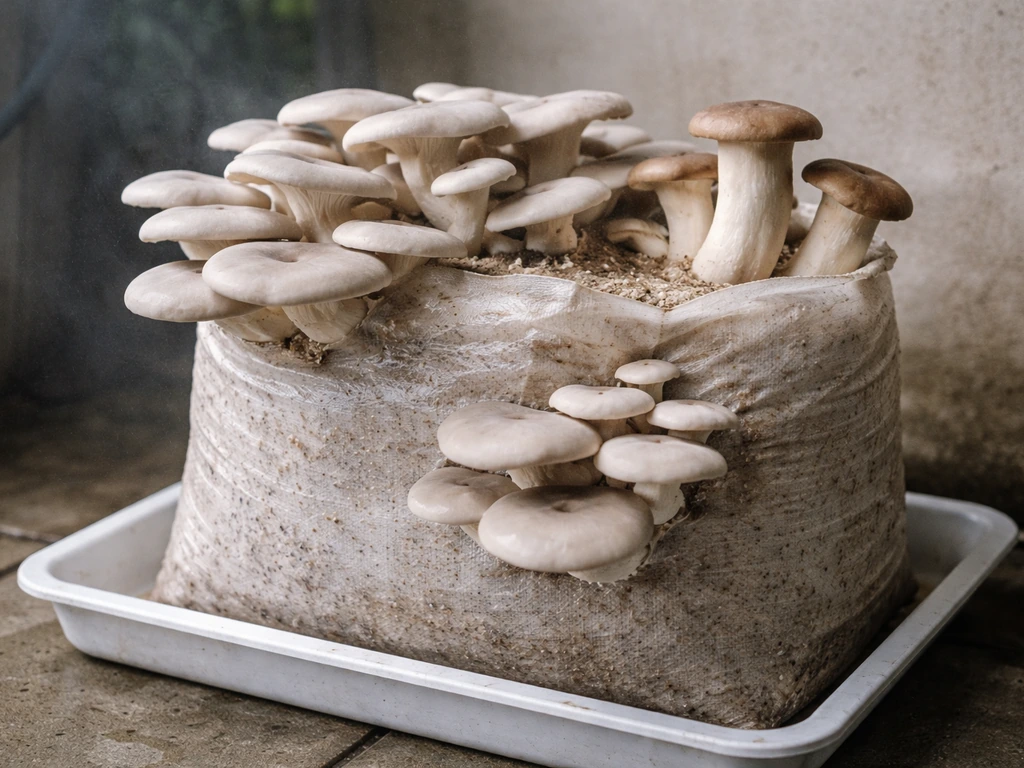
Oyster mushrooms (Pleurotus ostreatus) and king oyster mushrooms are genuinely grown in fabric-style bags in the UK, and it's a surprisingly accessible project for home growers. The method uses pasteurised straw or grain spawn packed into a bag, which then fruits through cuts in the sides or the top of the bag. A 20-litre bag of inoculated straw can produce multiple flushes of mushrooms over several weeks.
The conditions that matter most for UK mushroom grow bags are humidity and fresh air exchange. Mist the bag two to three times a day to keep humidity high around the fruiting points. A common beginner mistake is either insufficient fresh air (which leads to long, spindly stems and small caps) or too much airflow (which dries out the surface and aborts pinning before mushrooms can develop). Ambient indirect light is all that's needed: mushrooms don't photosynthesize, but they do use light as a directional cue. A cool spare room, shed, or garage at 15–20°C is ideal for oyster mushrooms in the UK. Avoid placing mushroom bags in direct sunlight, which dries them out rapidly.
Specialist grow-bag kits for mushrooms come ready-inoculated and are the easiest entry point. They're widely available online and from garden centres. If you want to scale up or go beyond mushrooms, the same grow-bag setup principle applies to growing microgreens in shallow bags (5–7 litres) or sprouting legumes, though for microgreens specifically a flat tray tends to be more practical than a bag.
Troubleshooting common grow-bag problems
Drying out too fast
This is the most common grow-bag complaint in the UK. The breathable fabric that makes grow bags so good for root health also accelerates moisture loss. Solutions: use a larger bag (more compost volume means more water retention), add water-retaining granules when filling, mulch the top of the bag with a 2 cm layer of bark chip or compost, and place bags in a position where they get morning sun but afternoon shade in peak summer. Standing bags on a saucer or shallow tray provides a small reservoir and slows moisture loss from the base.
Blossom end rot (tomatoes, peppers, courgettes)
Blossom end rot shows up as a dark, sunken patch on the base of the fruit. It's caused by calcium deficiency in the developing fruit, and in grow bags the cause is almost always irregular watering rather than a lack of calcium in the compost. When the bag dries out and then gets a heavy watering, the plant can't absorb calcium fast enough to supply the rapidly growing fruit. The fix is consistent moisture: check daily, water slowly and thoroughly, and never let the bag dry out completely between waterings. Calcium-rich foliar sprays can help in severe cases, but consistent watering is the real solution.
Nutrient depletion mid-season
Plants that suddenly stall, produce pale yellow leaves, or stop flowering in midsummer are usually out of nutrients. Remember, the five-to-six-week window from planting is when the bag's compost is exhausted. If you haven't started feeding yet and your plants are showing these symptoms, start immediately with a balanced liquid feed and switch to a high-potassium feed for fruiting crops. Weekly feeding is not optional for grow-bag vegetables: it's built into the method.
Root restriction and stunted growth
If a plant seems stunted despite regular watering and feeding, the bag may simply be too small. Unlike circling roots in a plastic pot, fabric bags air-prune roots, which is good, but there's still a physical limit to how much root mass can develop in a small volume. The only fix is to pot up into a larger bag. Do this gently to minimize root disturbance: cut down the sides of the old bag rather than pulling the rootball out.
Pests and disease
Aphids, whitefly, spider mites, and vine weevil are the most common pest problems in UK grow bags. The elevated position of bags on a patio or raised surface does reduce slug and snail pressure significantly compared to ground-level growing, which is a genuine practical advantage. For aphids and whitefly on tomatoes and peppers, introduce biological controls early in the season (parasitic wasps like Encarsia formosa are available by mail order).
For powdery mildew on courgettes (very common in a UK summer), improve airflow around the plant, avoid wetting the leaves when watering, and remove affected leaves promptly. A preventative spray of diluted milk (one part milk to nine parts water) on courgette leaves has good evidence behind it and is both cheap and non-toxic.
Overwintering and reusing bags
Most fabric grow bags can be reused for two to four seasons if stored correctly. At the end of the season, empty the spent compost (add it to your garden borders or compost heap), rinse the bag with water, and allow it to dry fully before storing folded in a dry shed or garage. Never store damp, as this encourages mould in the fabric.
When reusing, always refill with fresh compost: spent grow-bag compost from a full season of tomatoes is nutrient-depleted and may carry disease. Good crop rotation applies to grow bags just as it does to beds: don't grow tomatoes in the same bag year after year without refreshing the compost, as this builds up soilborne diseases like blight.
FAQ
Can I keep grow bags outside all year in the UK?
Yes, but you must account for faster drying. If you leave grow bags on a deck or balcony in hot, windy weather, expect to water more often than the daily guidance, and always check moisture at 2 cm depth before adding more. In very windy spots, mulching the compost surface (2 cm bark chip or compost) helps reduce evaporation.
What grow bag size should I pick for tomatoes to avoid blossom end rot?
Avoid using a bag size that is smaller than the plant needs for the full growing season. The article highlights 20–40 litres for most vegetables, but if you want a high yield from cordon tomatoes you should treat 30 litres as the real minimum. Going smaller often leads to water stress and blossom end rot, even if you feed on schedule.
Are the same grow bag sizes suitable for all herbs?
For herbs, 7 to 10 litres is usually sufficient, but you still need separate potting plans for spreaders like mint. Mint will take over a small bag, so either keep it in its own bag or use a larger volume and consider trimming regularly to prevent it going woody. Also, herbs like basil hate long dry spells, so finger checks matter as much as feeding.
How do I tell if I am overwatering versus underwatering in a fabric grow bag?
If you overwater, you can still get problems, even though fabric sides are breathable. The key is to water slowly until the compost is evenly moist, then stop, and let the top dry slightly before watering again. If you notice soggy compost and pale, limp growth, reduce frequency and improve drainage by ensuring the bag sits on a stable base with good runoff.
What is the best watering method when my grow bag dries out too fast?
Use the finger test at 2 cm depth, then water in a single thorough session rather than small top-ups. Aim for early morning or cool evening, but the most important factor is soaking the full root zone. If water runs straight down the sides, suspect hydrophobic compost and re-soak by mixing with warm water off the bag, then refilling.
Can I use tomato feed for everything I grow in bags?
For leafy crops and herbs, feeding too strongly can cause lush growth that tastes weaker and is more prone to pests. A balanced liquid feed every two weeks is the safer default, and for fruiting crops you switch to higher potassium once flowering begins. If you see dark, overly soft leaves plus poor fruiting, back off nitrogen and move toward potassium-focused feeding.
Do grow bags ever work without liquid feeding in the UK?
You should not. The compost in grow bags runs down nutrients in roughly the first five to six weeks, so continuing with just plain compost will usually lead to pale leaves and reduced flowering later. A common workaround is to mix nutrients at potting, but for container growth you still need ongoing liquid feeding because the plants rely on what you supply.
Can I grow strawberries in a hanging grow bag, and what changes?
You likely can, but treat it as a crop by crop decision. Strawberries can do well, and the method works, but hanging bags and small volumes increase watering demand. For best reliability, use a larger bag than you would for herbs and keep the crown just above the compost line to prevent rot.
Is it safe to reuse grow bag compost for the next crop?
Yes, fabric grow bags can be reused, but only if you start fresh with compost and avoid disease carryover. The article recommends reusing the bag for a couple of seasons, but you should never reuse spent compost from a disease-prone crop like tomatoes for another tomato crop. When in doubt, replace compost every season for tomatoes and other heavy feeders.
My plant is stunted despite regular care, how can I diagnose the cause?
Most of the time, a stunted plant in a bag is either too small a volume or nutrient exhaustion after the first month. If you are already watering and feeding and growth remains poor, check whether the roots are effectively root-bound in the bag volume. The fix is potting up to a larger bag, and to minimize shock, cut down the sides of the old bag rather than yanking the rootball out.
What should I watch for when moving grow bags around during the season?
It can happen and is often easiest to prevent rather than fix mid-season. If you need to move bags for weather or sun, use the handles on reinforced bags where possible and secure them during transport so they do not tip. After moving, recheck moisture at 2 cm because the compost can dry out faster in new wind exposure.
Why do my dwarf fruit trees in grow bags keep leaning or struggling?
For fruit trees, keep training tight because root volume is limited. The article points to cordon, espalier, or fan training against a wall or trellis, and this is where many failures start. Also, stake well because fabric bags do not anchor like in-ground planting, and wind can topple a tree in a 100 litre container.
Can I grow microgreens in fabric grow bags, or should I use trays?
Yes. The biggest switch is that microgreens and sprouting legumes are better in shallow trays than fabric bags because you need even moisture and frequent harvesting. If you still use a bag, keep it small and shallow volume, and prioritize consistent surface moisture, since fabric will dry the top faster than in a tray.
Next Articles
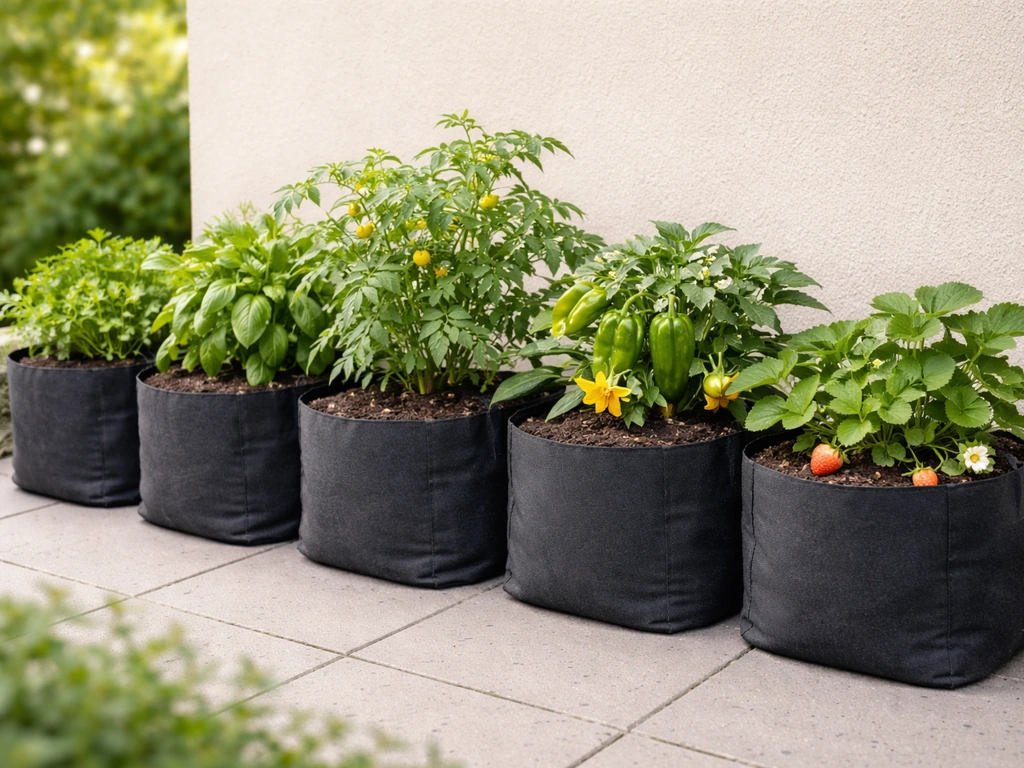
How to Grow Plants in Grow Bags: Setup, Care, and Troubleshooting
Step-by-step guide to grow bags: choose the right size, prep soil, water and feed routines, and fix common plant problem
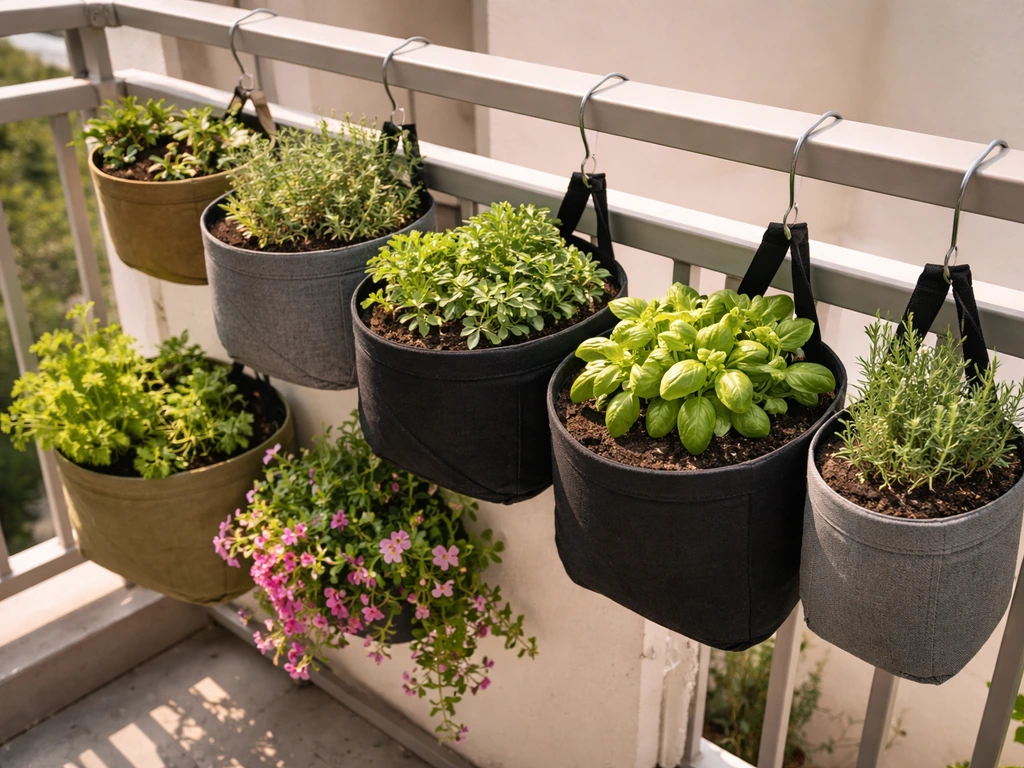
What to Grow in Hanging Grow Bags: Best Plant Picks
Best plants for hanging grow bags: beginner crops, herbs, vegetables, flowers, mushrooms, plus care tips for watering an
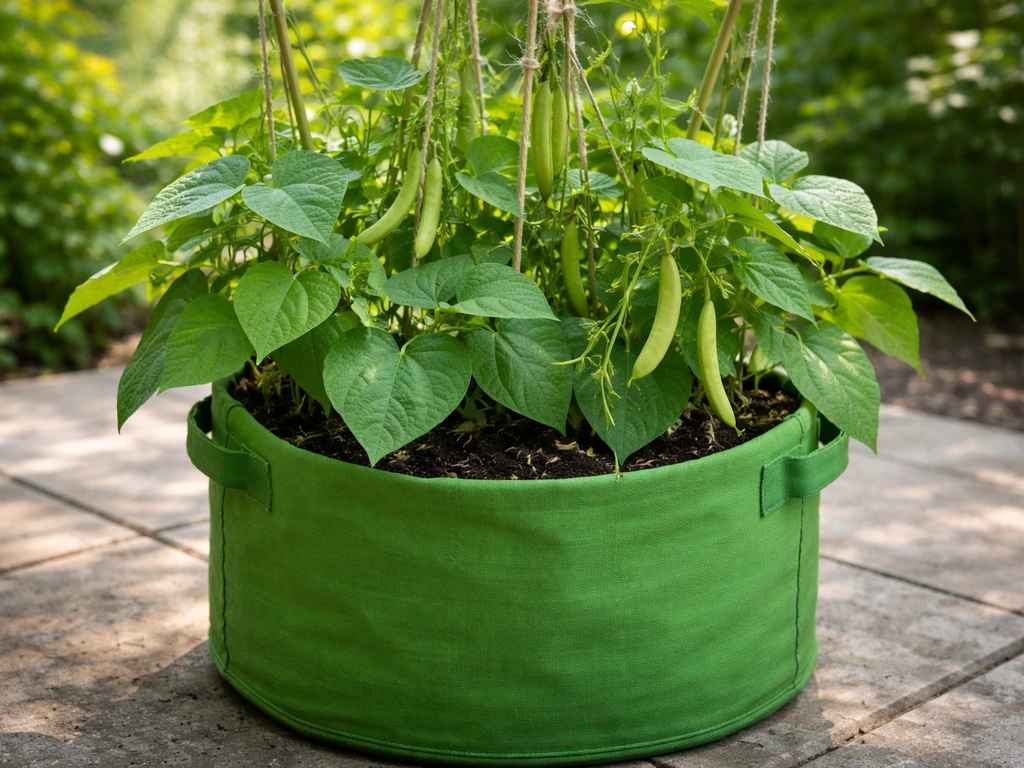
Best Beans to Grow in a Bag: Top Varieties and How-To
Top bush and pole bean picks for fabric grow bags plus planting, care, feeding, pest tips, and harvest timelines.