
The best flowers for grow bags are compact to mid-sized plants with moderate to vigorous root systems that respond well to air-pruning and fast drainage. Petunias, marigolds, zinnias, nasturtiums, calibrachoa, lavender, coneflowers, tulips, and daffodils all perform excellently in fabric containers. What makes these picks stand out is that they either thrive in the well-aerated, slightly drier root zone that fabric bags create, or they need the sharp drainage that plastic pots often fail to deliver. Below you'll find exactly which varieties work best, what size bag to use, and how to plant, feed, water, and troubleshoot each of them.
Best Flowers for Grow Bags: Top Picks, Soil & Care Guide DIY
Marcus Holloway
13 Jul 2026
Who this guide is for
Whether you've just bought your first set of fabric grow bags or you've been growing vegetables in them for years and now want to try flowers, this guide covers the full picture. I'll walk through the best annual, perennial, trailing, and bulb flowers suited to fabric containers, explain why each one works, and give you sizing, soil, and care guidance you can act on immediately. If you've been wondering whether the soil mix or fertilizer you use for tomatoes will work for flowers, or whether you even need different bags, I answer all of that here too.
Quick reference: top flower picks for grow bags
Here's the at-a-glance list organized by category. Each entry includes a minimum bag size recommendation so you can match what you already own or plan to buy.
| Flower | Category | Min. Bag Size | Why It Works in Fabric |
|---|---|---|---|
| Petunia | Annual | 1–2 gal | Tolerates fast-draining mix, responds to deadheading, compact roots |
| Marigold | Annual | 1–2 gal | Heat-tolerant, shallow roots, thrives in aerated soil |
| Zinnia | Annual | 2–3 gal | Loves warm root zone, dislikes wet feet — fabric drainage is ideal |
| Nasturtium | Annual | 2 gal | Performs better in lean, well-drained soil — exactly what grow bags provide |
| Calibrachoa | Annual | 1–2 gal | Prolific trailing bloomer, needs excellent aeration to avoid root rot |
| Lavender | Perennial | 3–5 gal | Must-have drainage; fabric bags prevent the overwatering that kills it in plastic |
| Coneflower (Echinacea) | Perennial | 5 gal | Deep taproot benefits from air-pruning; prevents root circling |
| Salvia | Perennial | 3–5 gal | Drought-tolerant once established, thrives in well-aerated fabric |
| Tulip | Bulb | 3–5 gal (depth 10–12") | Needs cold, good drainage; fabric allows chilling management |
| Daffodil | Bulb | 3–5 gal (depth 10–12") | Reliable in containers; fabric prevents the bulb rot common in plastic |
| Calibrachoa / Bacopa | Trailing/Spiller | 2–3 gal | Cascades beautifully; thrives in fast-draining fabric edges |
| Trailing Lobelia | Trailing/Spiller | 1–2 gal | Short season, compact roots, excellent in hanging fabric bags |
| Sweet Alyssum | Trailing/Spiller | 1–2 gal | Spreads over edges, fragrant, drought-resilient once established |
Best annual flowers for grow bags
Annuals are where fabric grow bags really shine for flower growers. Because you're starting fresh each season, you're not fighting perennial root systems or worrying about overwintering the bag itself. Most common garden annuals have fibrous, relatively shallow roots that adapt quickly to the air-pruning environment that non-woven fabric creates. Research from Texas A&M and UF/IFAS confirms that fabric containers encourage finer lateral root branching instead of the root circling you get in smooth plastic pots, and for annuals this translates directly into faster establishment and more vigorous blooming.
Petunias
Petunias are one of the most forgiving flowers you can grow in a fabric container. A 1- to 2-gallon bag per plant is sufficient, and they do well planted three to a 5-gallon bag for a full display. They like consistent moisture but despise waterlogged roots, which is precisely the condition fabric bags prevent. Deadhead weekly to keep blooms coming, and switch to a bloom-booster fertilizer (higher phosphorus and potassium) once the first buds appear.
Marigolds
African and French marigolds both do well in grow bags because they're heat-tolerant and have compact, fibrous root systems. French marigolds work beautifully in 1-gallon bags; African types (which can reach 3 feet) need at least a 2- to 3-gallon bag. One thing I've noticed growing marigolds in fabric bags on a sunny patio is that they hold color longer than they do in plastic because the root zone stays cooler. Water daily in full sun during summer and feed with a balanced liquid fertilizer every two weeks.
Zinnias
Zinnias are arguably the best cut flower you can grow in a fabric bag. They need warmth, hate having wet crowns or soggy roots, and respond aggressively to deadheading. A 2- to 3-gallon bag per plant works well for standard varieties; dwarf types can share a 5-gallon bag at three plants. Because zinnias are prone to powdery mildew when airflow is poor, the breathable fabric wall actually helps by reducing humidity at the root zone.
Nasturtiums
Nasturtiums are an unusual case because they actually bloom better in lean, low-nutrient soil. Too much fertilizer pushes foliage at the expense of flowers. Grow bags filled with a basic coir-perlite mix with minimal compost are ideal. Use a 2-gallon bag minimum, or a 5-gallon bag for a bushy trailing display. Direct sow seeds into the bag in late spring and thin to two to three plants per container.
Calibrachoa (Million Bells)
Calibrachoa is one of the top-performing annuals in fabric grow bags because it is extremely susceptible to root rot in any container that holds moisture. Fabric's natural drainage keeps the roots just dry enough between waterings. These are heavy feeders once established, so incorporate a slow-release fertilizer at planting and follow up with a liquid bloom feed weekly. They self-clean for the most part but benefit from an occasional trim to prevent legginess.
Best perennial flowers for grow bags
Perennials in grow bags need a bit more planning because you're either committing to overwintering the bag or moving the plant into the ground after a season or two. That said, fabric bags have a real advantage for perennials: the air-pruning effect prevents the hard root circling that eventually kills perennials grown long-term in plastic. If you've ever pulled a perennial out of a plastic nursery pot after two years and found a solid mat of girdling roots, that's the problem fabric bags solve.
Lavender
Lavender is one of the few plants I actively recommend growing in fabric bags over plastic. It requires near-perfect drainage, and most plastic pots simply don't provide it unless you're obsessive about your potting mix and watering schedule. In a 3- to 5-gallon fabric bag filled with a lean coir-perlite mix (roughly 40% coir, 60% perlite or coarse sand), lavender thrives. Avoid compost-heavy mixes; lavender prefers lower fertility. Water sparingly, never fertilize heavily with nitrogen, and place in full sun.
Coneflowers (Echinacea)
Echinacea develops a taproot over time, which is where fabric bags earn their keep. In a plastic pot, that taproot eventually hits the bottom and starts circling. In a fabric bag, air-pruning stops it at the wall and encourages a denser lateral root system instead. Use a minimum 5-gallon bag for established plants. Coneflowers don't need heavy feeding; a slow-release balanced fertilizer incorporated at planting is usually sufficient for the first season.
Salvia
Perennial salvias (including Salvia nemorosa varieties and Salvia greggii) are excellent in 3- to 5-gallon fabric bags. They're drought-tolerant once established, prefer lean-to-moderate fertility, and appreciate the well-aerated conditions fabric provides. Cut back after the first flush of blooms to encourage a second wave. In colder climates, overwinter the bags in an unheated garage or shed, or plant out in autumn and start fresh next season.
Daylilies and Hemerocallis
Daylilies are vigorous growers that fill a container quickly, which makes fabric bags a good choice because you can squeeze the sides gently and feel when roots are crowding, and you can divide them more easily than you'd think by simply cutting the bag away and splitting the clump. Use a 5-gallon minimum. They tolerate a wider range of soil mixes than most perennials, are heavy feeders during the bloom period, and reward consistent watering.
Best trailing and spiller flowers for hanging or edge grow bags
Trailing flowers work particularly well in fabric containers placed on elevated surfaces, walls, or hanging setups because the soft bag sides can be shaped and positioned easily. The key challenge with trailing plants in any container is moisture management: trailing plants often have smaller root masses than their sprawling foliage suggests, and small bags dry out fast in heat. Check daily and water whenever the top inch of mix is dry.
- Calibrachoa and Bacopa: Both cascade beautifully over bag edges and need the sharp drainage fabric provides. Plant three to five plugs per 3-gallon bag for a full spilling effect. Feed weekly with a high-potassium liquid fertilizer for continuous bloom.
- Trailing Lobelia: Best in 1- to 2-gallon bags or as an edge plant in larger 5-gallon combinations. It struggles in heat (above 85°F it often goes dormant mid-summer), so position it in morning sun with afternoon shade in hot climates.
- Sweet Alyssum: Grows quickly, spills nicely, and is surprisingly drought-resilient after establishment. A 1- to 2-gallon bag is enough per plant or use it as a filler-spiller in a 5-gallon combo bag. Shear back by one-third after the first bloom flush for a second round.
- Verbena: Trailing verbena varieties (such as Verbena 'Tapien' or 'Superbena' series) are excellent in 2- to 3-gallon fabric bags. They need full sun, good drainage, and a regular liquid feed. Pinch back occasionally to maintain shape.
- Dichondra 'Silver Falls': Not a flowering plant in the traditional sense but an outstanding trailing foliage companion; its silver, cascading stems fill out fabric bag arrangements and tolerate the fast-drying conditions fabric creates.
For a hanging-style setup, look for fabric bags designed with integrated handles or reinforced grommets. Heavier fabric (approximately 300 g/m2 or described as thick non-woven polypropylene) holds up far better when hanging than lighter bargain bags, which can stretch and tear at the handles under the weight of moist soil. Independent product testing I've reviewed consistently points to handle reinforcement as the single biggest durability factor in fabric grow bags.
Best bulb flowers for grow bags
Growing bulbs in fabric bags gives you an advantage that's easy to overlook: total drainage control. Bulb rot is almost always caused by excess moisture around the bulb during dormancy, and plastic pots are notorious for holding just enough water at the base to cause problems. Fabric bags drain freely from every surface, which is as close to ideal bulb conditions as you'll get in a container.
Tulips
Tulips need a cold period of 12 to 16 weeks below 40°F to bloom well. In fabric bags, you can manage this chilling requirement by placing the entire bag in an unheated garage, cold frame, or refrigerator (away from fruit, which emits ethylene gas). Plant bulbs with their flat sides out in autumn, at a depth of about 6 to 8 inches, in a bag with at least 10 to 12 inches of depth. A 3- to 5-gallon bag works for a cluster of five to seven bulbs. Use a lean, fast-draining mix with minimal nitrogen.
Daffodils
Daffodils are more forgiving than tulips and naturalize readily. They still appreciate the sharp drainage fabric provides. Plant at 6 inches depth in a 3- to 5-gallon bag in autumn. Unlike tulips, daffodil bulbs can be left in the bag year-round in many climates; just let the foliage die back naturally before cutting it. In very cold climates (Zone 5 and below), move the bag to a frost-free but cold location for winter.
Hyacinths, Alliums, and Crocus
All three work well in fabric bags at shallower planting depths (3 to 4 inches for crocus and hyacinth, 6 to 8 inches for alliums). Crocus and hyacinth do well in 1- to 2-gallon bags with multiple bulbs. Alliums, depending on variety, may need a 3- to 5-gallon bag for adequate depth. The same principle applies: fast-draining mix, cold-period management, and minimal watering during dormancy.
Planting notes for bulbs in fabric bags
- Fill the bag one-third full with a fast-draining potting mix (see the soil section below) before placing bulbs.
- Set bulbs pointy-end-up at the correct depth for the species, spacing them two to three bulb-widths apart.
- Cover with mix and water lightly at planting; do not water again until the chilling period begins or the bag is placed in position.
- During the chilling period, keep the mix barely moist — not wet, not bone dry.
- Move bags to their display position when shoots emerge (usually 1 to 2 inches above the mix).
- After blooming, allow foliage to yellow and die back completely before reducing water, which lets the bulb rebuild its energy reserves.
Choosing the right grow bag: sizes, depths, and fabric materials
Grow bag selection matters more for flowers than most growers expect, mainly because getting the size wrong is the number one cause of poor performance. A petunia in a 10-gallon bag wastes soil and creates moisture management problems; a coneflower in a 1-gallon bag will be root-bound by midsummer. The table below gives a practical sizing guide by flower type.
| Flower Type | Recommended Bag Size | Minimum Depth | Notes |
|---|---|---|---|
| Small annuals (lobelia, alyssum, compact petunia) | 1–2 gal | 6–8" | Can share a bag; water daily in heat |
| Medium annuals (marigold, zinnia, calibrachoa) | 2–3 gal | 8–10" | One per bag or two in 5 gal |
| Large annuals (tall zinnia, large petunia varieties) | 3–5 gal | 10–12" | Full-season performance needs volume |
| Compact perennials (salvia, lavender) | 3–5 gal | 10–12" | Lean mix for lavender specifically |
| Larger perennials (coneflower, daylily) | 5–7 gal | 12–14" | Allow room for tap/fleshy roots |
| Spring bulbs (tulip, daffodil, allium) | 3–5 gal | 10–12" | Depth more critical than volume |
| Trailing/spiller combinations | 3–5 gal | 8–10" | Wider bag preferred over deep |
Fabric weight and material
Most fabric grow bags sold for home use are made from non-woven bonded polypropylene, sometimes described as felt-like. This material is breathable, promotes air-pruning at the root tips when they reach the bag wall, and drains freely from all surfaces. The practical difference between cheap and quality bags comes down to fabric weight and handle construction. Independent product testing I've reviewed points to approximately 300 g/m2 fabric weight as a threshold for multi-season durability. Below that, bags tend to degrade after one or two seasons of UV exposure and wet-dry cycling. Reinforced stitched handles matter especially for bags over 3 gallons, which become genuinely heavy when wet.
For flowers specifically, you rarely need the ultra-thick 600 g/m2 bags designed for trees and heavy shrubs. A mid-weight fabric (300 to 400 g/m2) gives you enough durability for two to four seasons of annual replanting while keeping costs reasonable. If you're growing perennials you intend to leave undisturbed for multiple years, step up to the heavier fabric to avoid the bag degrading around the roots.
One honest limitation
Fabric bags do dry out faster than plastic pots, full stop. University of Minnesota Extension guidance confirms this, expect to water more frequently, especially in small bags, during hot weather. For flowers on a sunny patio in summer, daily watering of 1- to 3-gallon bags is often necessary. If that's not practical for your schedule, consider larger bags (which hold more moisture per surface area), place bags in partial shade during peak heat, or run a drip line with a timer to each bag. A layer of mulch on top of the potting mix also helps significantly.
Best soil for grow bags: what to use and a simple recipe
Never use garden soil or heavy loam in a grow bag. This isn't just a preference, it's a practical necessity. Garden soil compacts in a container, restricts drainage and aeration, and can introduce pathogens and weed seeds. NC State Extension Gardener Handbook is explicit on this point: containers require engineered potting mixes that maintain porosity and predictable drainage over the growing season.
What a good flower grow bag mix looks like
For most flowering annuals and perennials in fabric bags, you want a mix that drains freely, holds just enough moisture between waterings, and has a moderate organic fraction to support nutrient retention. The NCAT and UC ANR extension frameworks both converge on similar base formulas: roughly equal parts organic material (peat moss or coconut coir) and aerating material (perlite or coarse vermiculite), with optional compost for nutrient buffering.
A practical potting mix recipe for flowers in grow bags
- 1 part coconut coir (or sphagnum peat moss, pH-adjusted with lime if using peat)
- 1 part perlite or coarse pumice
- 1 part well-aged compost (no more than one-third of total volume)
- Optional: a light dusting of dolomite lime if using peat moss, to correct pH to 6.0–6.5
- Optional: a slow-release granular fertilizer incorporated at the manufacturer's recommended rate for container use
Coir is worth using as your primary organic base if you can source it. UC ANR notes it offers equivalent moisture retention to peat with better sustainability credentials. When using coir, check the supplier's guidance on pre-flushing or salt content, since some baled coir has elevated sodium levels that can affect sensitive plants.
For lavender and other Mediterranean flowers (and bulbs during dormancy), lean the mix toward more perlite: try a 30% coir and 70% perlite blend with no compost. These plants want lean, near-gritty drainage that most commercial potting mixes don't provide. For heavy-feeding annuals like petunias and calibrachoa, include the full compost fraction and plan on regular liquid fertilizer through the season. The best soil for your grow bags ultimately depends on which flowers you're growing, but the base recipe above suits roughly 80% of common garden flowers.
Feeding flowers in grow bags
Fabric bags flush nutrients faster than plastic pots because water moves through the mix and out the fabric walls more readily. This means you need to feed more consistently than you would for in-ground plants. The University of Minnesota Extension recommendation for flowering containers is to start with a slow-release fertilizer incorporated at planting, then supplement with liquid feeds during active growth and bloom. For specific product recommendations and feeding schedules, see our guide to the best fertilizer for grow bags.
For annuals, I use a slow-release granular at planting (something in the 14-14-14 or similar balanced range) and follow up with a liquid bloom fertilizer every 7 to 14 days once buds form. For bloom-set and sustained flowering, switch to a formulation with higher phosphorus and potassium relative to nitrogen once the first buds open, many 'tomato' or 'bloom booster' fertilizers fit this profile and work equally well for ornamentals. For perennials, reduce feeding frequency in late summer to avoid pushing tender growth before dormancy.
For nasturtiums specifically, skip the fertilizer almost entirely. Heavy feeding kills their bloom output. A plain coir-perlite mix with no amendments is genuinely the best approach for them.
Planting, watering, and routine care
Planting steps
- Fill the bag roughly two-thirds full with your potting mix before placing the plant.
- Remove the plant from its nursery pot, gently loosen any circling roots, and set it at the same depth it was growing previously (or slightly deeper for annuals).
- Fill in around the root ball, leaving 1 to 2 inches of headspace at the top for watering.
- Water thoroughly immediately after planting until water drains freely through the fabric walls.
- For groups in one bag, space plants so they'll touch but not smother each other at maturity — usually 6 to 10 inches apart depending on variety.
- Apply a thin layer of mulch (about 1 inch of fine bark or coir chips) on top to slow surface evaporation.
Watering
Check soil moisture daily for bags under 3 gallons in warm weather. Press a finger 1 inch into the mix, if it's dry at that depth, water. For larger bags (5 gallons and up), every other day is often sufficient unless temperatures exceed 90°F. Drip emitters run with a timer are genuinely practical for fabric bag setups; University of Maryland Extension documents using quarter-inch drip tubing and pressure-regulated emitters placed at the soil surface in container setups. That approach takes the guesswork out of watering and suits most home gardeners with more than a few bags to manage.
Deadheading and pruning
For repeat-blooming annuals (petunias, marigolds, calibrachoa, zinnias), deadheading is the single most impactful maintenance task. Remove spent blooms before they set seed; once a plant goes to seed it slows or stops producing new flowers. For petunias and calibrachoa, a light trim of one-third of the plant every three to four weeks keeps them bushy and prevents legginess. For zinnias, cutting stems at a 45-degree angle just above a leaf node encourages branching and more flower stems.
Mulch and surface management
A thin layer of mulch on top of the grow bag mix is one of the most underrated practices for flowers in fabric containers. It slows evaporation from the soil surface, moderates root-zone temperature, and reduces the need for watering. Fine bark mulch, coir chips, or even coarse compost works well. Keep the layer to about 1 inch, too thick and you can create a moisture-holding barrier that works against the drainage you're trying to achieve. Landscape fabric is not needed inside or around grow bags; the fabric wall of the bag itself handles weed suppression and drainage. Where landscape fabric is relevant is underneath a bank of grow bags on a patio or gravel surface to prevent weeds from growing up around the bag bases.
Troubleshooting common problems
Wilting despite regular watering
If plants are wilting even though you're watering daily, the problem is almost always one of two things: either the mix has become hydrophobic (repelling water rather than absorbing it), or the bag is drying out faster than your watering schedule can keep up with. Hydrophobic mix is common in coir-heavy mixes after a dry spell. Fix it by sitting the bag in a tray of water for 20 to 30 minutes so the mix rehydrates from below, then resume normal top watering. For chronically thirsty small bags, upgrade to a larger size or add a drip emitter.
Poor flowering or leggy growth
Leggy, few-flowered plants in grow bags are almost always a light or fertilizer problem. Most flowering annuals need a minimum of 6 hours of direct sun; below that, they produce foliage at the expense of blooms. If light is adequate, check your fertilizer: too much nitrogen (high first number in the NPK ratio) pushes leafy growth. Switch to a bloom formula with higher phosphorus and potassium.
Root crowding and reduced vigor mid-season
If a plant that was growing well suddenly stalls in midsummer, feel the bag with both hands. If it feels solid and firm rather than slightly flexible, the roots have likely filled the bag. For annuals, this is the signal to either feed more aggressively with liquid fertilizer (since roots can't expand further, nutrients get depleted quickly) or accept that the bag was slightly undersized and plan for one size up next season. For perennials showing this sign, it's usually time to divide or pot up.
Pests and disease
Aphids, spider mites, and fungus gnats are the most common pest issues in container flower setups. Aphids and mites tend to appear during dry spells; a strong spray of water on both leaf surfaces usually knocks numbers back significantly. Fungus gnats breed in overly moist top soil; the fast-draining mix in fabric bags naturally discourages them, but if you're overwatering or your mix has too much fine organic matter at the surface, they'll appear. Let the top inch of mix dry out between waterings to break the cycle.
Overwintering flowers in grow bags
Annual flowers don't need overwintering, pull them, compost the spent plant, and store the cleaned bag until next season. Perennials and bulbs are a different matter. For hardy perennials in fabric bags (lavender, coneflower, salvia) in Zones 6 and warmer, you can often leave the bag outside if you insulate it. Group bags together, surround with straw bales or move them against a wall with good wind protection. The fabric itself offers almost no insulation, so the root zone is at risk in hard-freeze climates.
In Zones 5 and colder, the most reliable approach is to move perennial bags into an unheated but frost-protected space (an unheated garage or cold basement works well) for the winter, water minimally (once every three to four weeks to prevent complete desiccation), then move back outside in spring after the last frost date. Bulb bags follow the same logic: chill them during dormancy, keep barely moist, and bring out when shoots emerge.
Putting it all together: a seasonal care checklist
| Timing | Task |
|---|---|
| Early spring (before last frost) | Prepare potting mix; clean and inspect bags from previous season; source slow-release fertilizer |
| At planting | Fill bags two-thirds with mix; plant at correct depth; water in thoroughly; add 1" mulch layer |
| First 2 weeks | Water daily; check for settling and top up mix if needed; do not fertilize yet |
| Weeks 3–6 (establishment) | Begin liquid feeding every 14 days; deadhead as first blooms fade; check bag moisture daily |
| Peak bloom (midsummer) | Switch to bloom-boost formula; water daily or use drip timer; deadhead weekly |
| Late summer | Reduce nitrogen for perennials; continue watering; check for pests |
| Autumn (annuals) | Pull spent plants; clean bags; store dry for next season |
| Autumn (bulbs) | Plant bulbs; begin chilling period management; move bags to cold but frost-protected location |
| Autumn (perennials) | Reduce watering; mulch bag tops; move to protected location in Zone 5 and colder |
| Winter | Water perennial and bulb bags minimally; check occasionally for extreme desiccation |
| Late winter/early spring | Move bags back outside as temperatures warm; resume feeding when new growth appears |
Fabric grow bags reward a bit of attention to detail, the right mix, the right size, and consistent watering and feeding make an outsized difference in bloom quality. The flowers listed in this guide are genuinely well-suited to the conditions fabric containers create: aerated roots, sharp drainage, and a warm but not overheated root zone. Get those basics right and you'll find grow bags produce better-flowering containers than most plastic pots of equivalent size.
FAQ
What are the top flower choices for fabric grow bags (by group)?
Annuals: Petunias, zinnias, marigolds, cosmos — fast to establish, shallow roots, tolerate warm, well-drained mixes and frequent watering. Perennials: Coreopsis, geraniums (Pelargonium), heuchera, gaura — longer-lived, do well in larger bags (≥5–10 gal) where roots have room. Trailing/spillers: Bacopa, lobelia, sweet potato vine (Ipomoea), calibrachoa — ideal for hanging or rim-spilling grow bags because of trailing habit. Bulbs: Daffodils, tulips, crocus, allium — use deeper bags (6–10 in/15–25 cm depth or larger) and good drainage to overwinter bulbs. Why these suit grow bags: chosen species have manageable root systems, respond well to air-pruned roots in porous fabric, tolerate the more frequent moisture cycles in bags, and include both shallow and deeper types so you can match bag size to plant habit.
How should I choose grow-bag size and fabric type?
Match container volume to root needs: small annuals/annual combos = 1–3 gal (4–12 L); most bedding annuals and small perennials = 3–5 gal (12–20 L); larger perennials, shrubs or multiple plants = 10–20+ gal (40+ L). Depth: bulbs/roots need 6–12 in (15–30 cm) minimum depending on species. Fabric: look for heavy non‑woven/bonded fabrics (manufacturer weights ~200–400 g/m2) and reinforced handles for reuse. Ensure the bag is breathable with good seams; avoid extremely thin hobby bags that dry out excessively. Prefer brands with university/commercial trial history (e.g., Smart Pots) or trusted reviews.
What is the best potting mix for grow bags and a simple DIY recipe?
Do not use garden soil. Use a soilless, well‑draining but moisture-retentive mix. Simple home recipe (approximate volumes): 1 part coconut coir or sphagnum peat moss (coir preferred for sustainability) + 1 part well-aged compost + 1 part perlite (or pumice) for drainage. Optional: swap 1/4 part coarse pine bark for perlite to increase structure for longer-season plants. Amend at potting with a slow-release balanced fertilizer (per label) and lime if using peat to adjust pH. Pre-moisten mix before filling bags.
Should I add hydrogels or other moisture additives?
Hydrogels can increase short-term moisture retention but offer variable field benefits and can migrate in the bag. Extension guidance usually recommends choosing an appropriate potting mix (coir/compost + aerator), mulching, and using drip/micro-irrigation instead of relying on crystals for most home growers.
What fertilizers and feeding schedule work best for flowering plants in grow bags?
Start with a potting mix that contains a starter charge or incorporate a controlled-release fertilizer (e.g., 3–4 month CRF at manufacturer rate) when filling bags. During active growth/flowering, supplement with water-soluble fertilizer: a balanced 10-10-10 or a bloom-focused 5-10-10/8-16-24 at half to full label rate. Typical schedules: liquid feed every 7–14 days or a weaker feed with every other watering (e.g., half-strength). Reapply controlled-release once per season for long-season crops. Monitor plant vigor and adjust N (if foliage is poor) or increase P/K if blooms are sparse.
Do I need mulch or landscape fabric with grow bags?
Mulch: a 1–2 in (2.5–5 cm) organic mulch (pine bark, shredded compost, straw) on top of the bagting surface reduces surface evaporation and helps moderate moisture cycles — useful especially for smaller bags and hot sites. Landscape fabric: generally unnecessary under or around individual grow bags; it can restrict drainage if placed beneath bags in poorly drained beds. If placing bags on porous surfaces, a breathable paver or gravel pad helps drainage and air flow.
Next Articles
Best Landscape Fabric for Grow Bags: Buy and Install Guide
Choose the best landscape fabric for grow bags with weed-blocking, drainage and aeration tips plus DIY install steps.
Best Soil for Grow Bags: Mix Recipes and How Much to Add
Best soil for grow bags: mix recipes, how much to add by bag size, and vegetable tweaks for strong drainage and yield.
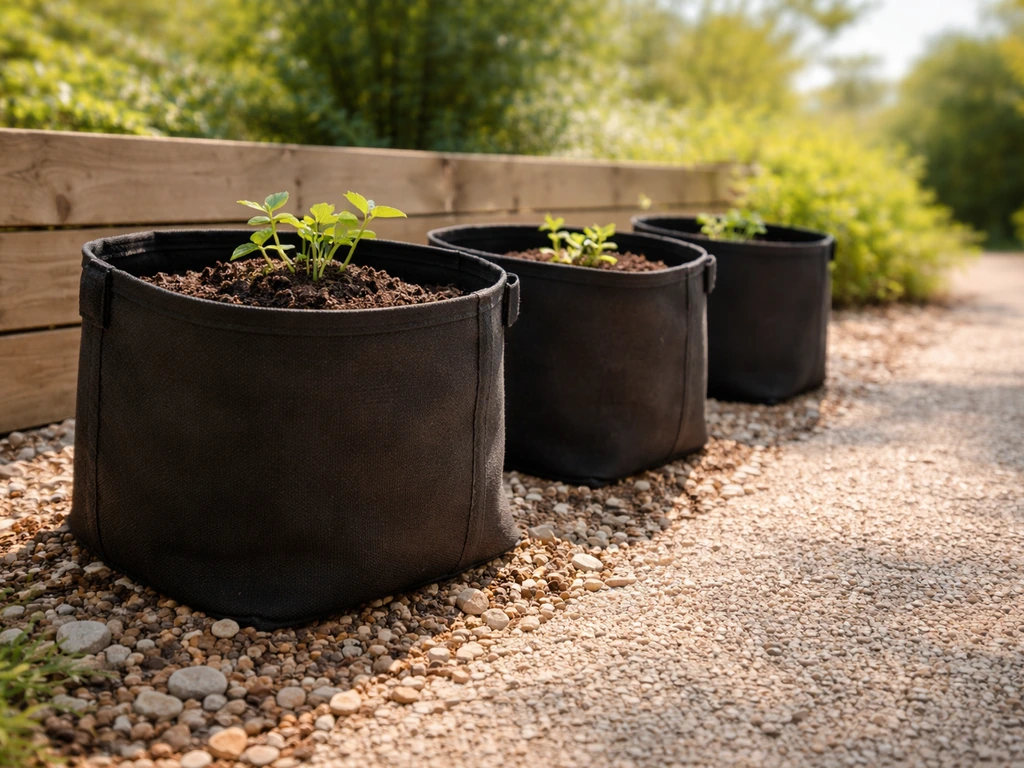
Where to Put Grow Bags: Best Location, Sun, Drainage
Find the best spot for fabric grow bags: sun, wind, drainage, spacing, surfaces, and fixes for heat and root-rot issues.