A grow bag is a flexible, container-style planter filled with a growing medium and used in place of a pot, raised bed, or in-ground planting. Modern fabric grow bags are made from porous, nonwoven material that lets air and water move through the walls, which is what makes them genuinely different from a plastic pot or a bag of compost. That breathability triggers a process called air pruning, produces healthier root systems, and makes fabric grow bags a legitimate, practical growing tool for everything from tomatoes and herbs to trees and mushrooms.
Grow Bag Meaning: What It Is and How to Use One
Marcus Holloway
25 Jun 2026
What "grow bag" actually means in gardening
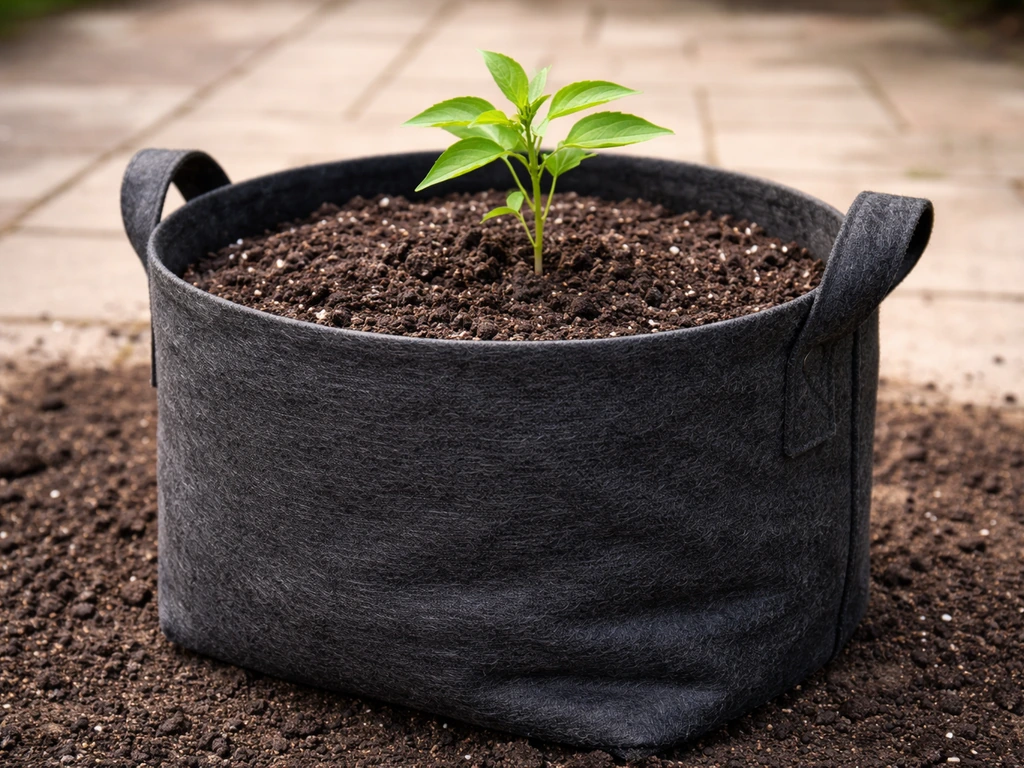
The term "grow bag" originally described simple plastic bags of compost or potting mix, laid flat on the ground and slit open to plant into. You still see those in some UK and European garden centers. But in most home-growing conversations today, especially in North America, "grow bag" refers specifically to a fabric container, usually made from nonwoven polypropylene, felt, or jute, designed to be filled with potting media and planted directly. The fabric version replaced the plastic version in mainstream use because it actually solves the root problems that rigid containers create.
So if you're trying to understand the grow bag meaning in the context of vegetable gardening, container growing, or mushroom cultivation, think of it this way: it's a breathable, flexible planter that actively improves root health rather than just holding soil in place. The material is the whole point.
How fabric grow bags actually work
Drainage and aeration
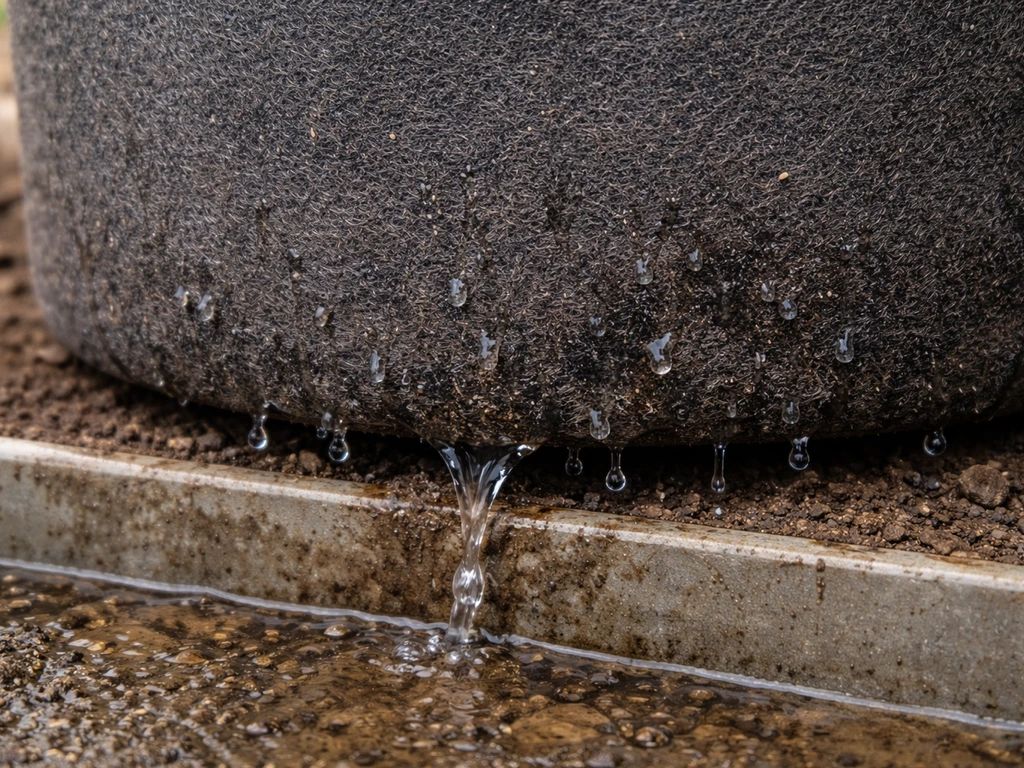
Unlike a plastic pot, every wall of a fabric grow bag is porous. That means excess water doesn't pool at the bottom waiting for a single drainage hole. It passes through the fabric slowly and evenly, which keeps the root zone from staying waterlogged. At the same time, oxygen moves into the growing medium from all sides, not just the surface. This combination of drainage and aeration is why fabric containers dramatically reduce the risk of root rot and anaerobic soil conditions, the same soggy, oxygen-poor conditions that kill container plants.
Air pruning
Air pruning is the feature that separates fabric grow bags from almost every other container type. Here's what happens: when a root tip reaches the porous wall of the bag and makes contact with air, it naturally dries out and stops growing in that direction. Instead of circling around the inside of the container like it would in a plastic pot, the plant responds by branching behind that root tip, sending out multiple new feeder roots. Over time this produces a dense, fibrous root mass with far more surface area than a circling, root-bound network. More feeder roots means better water and nutrient uptake, which shows up as healthier, more productive plants above ground.
For woody plants like trees or shrubs, this effect is especially noticeable. Research from University of New Hampshire Extension notes that trees grown in porous fabric containers develop large, swollen root nodules at the bag wall rather than circling roots. Those nodules store carbohydrates and fuel rapid establishment after transplanting, which is a structural advantage over trees grown in standard nursery containers.
Grow bags vs pots, planters, and raised beds
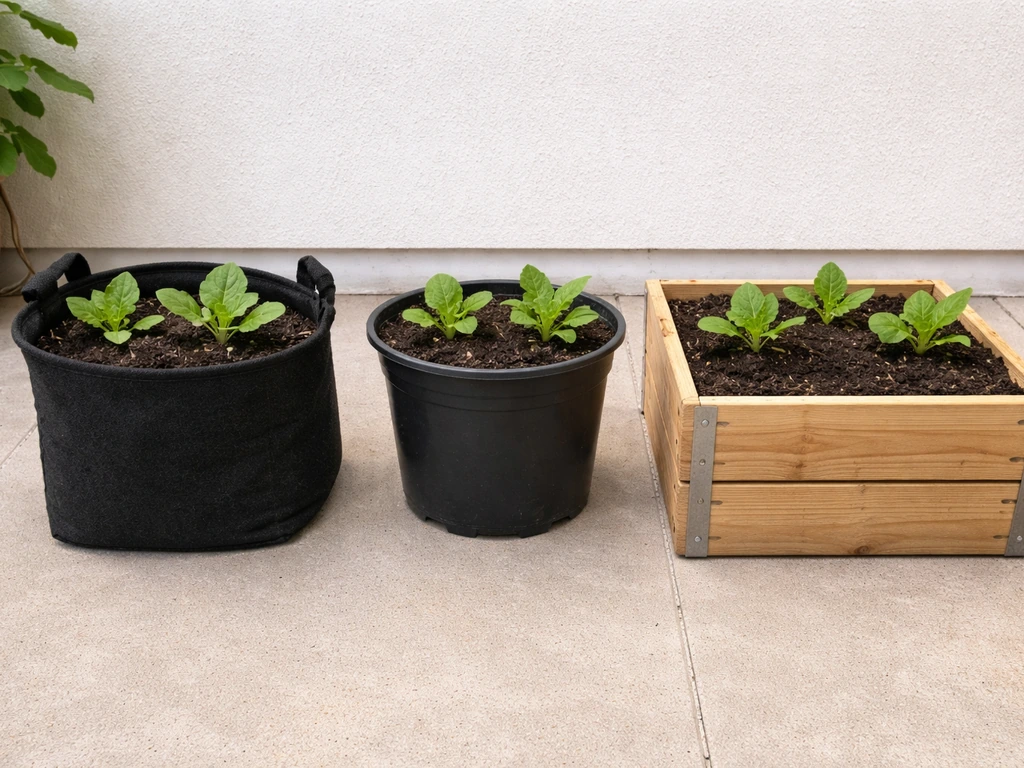
Grow bags aren't always the right call, and it's worth being clear about when they make sense versus when another option is actually better.
| Option | Best for | Main advantage | Main limitation |
|---|---|---|---|
| Fabric grow bag | Vegetables, herbs, trees in pots, mushroom substrates, rooftops, renters | Air pruning, drainage, portable, affordable | Dries out faster, needs more frequent watering |
| Plastic/ceramic pot | Houseplants, succulents, slower-drying setups | Retains moisture longer | Root circling, poor aeration, drainage depends on single hole |
| Raised bed | Permanent garden setups, large planting volume, multiple plants per bed | High volume, less frequent watering, easier long-term soil building | Fixed location, higher upfront cost, no portability |
| In-ground planting | Perennials, trees going to permanent location, large crops with space | No volume limits, natural soil life, less maintenance | No drainage control, soil quality dependent, no flexibility |
The honest tradeoff with fabric grow bags is watering frequency. A Reddit thread comparing fabric raised beds and cedar raised beds notes that in soggy, wet-feet-sensitive conditions, fabric containers can drain quickly, and some growers use container-type switching strategies by season or climate wet-feet-sensitive, soggy conditions.
Because the walls are porous, containers dry out faster than plastic pots or raised beds, sometimes requiring watering more than once a day in hot weather according to University of Minnesota Extension. If you can't water consistently, a less porous container or a raised bed might suit you better.
But if you want the best root environment for a single large tomato plant, a dwarf tree, or a batch of herbs on a balcony, a fabric grow bag is genuinely hard to beat. If you want more practical grow bag guidance, use these grow bag tips for sizing, soil, watering, and troubleshooting common problems.
If you're weighing other container options altogether, there are several grow bag alternatives worth considering depending on your climate, setup, and how much maintenance you want to manage. If you are exploring grow bag alternatives, focus on containers that also improve drainage and root airflow, not just the look of the planter.
Choosing the right grow bag
Size by plant type
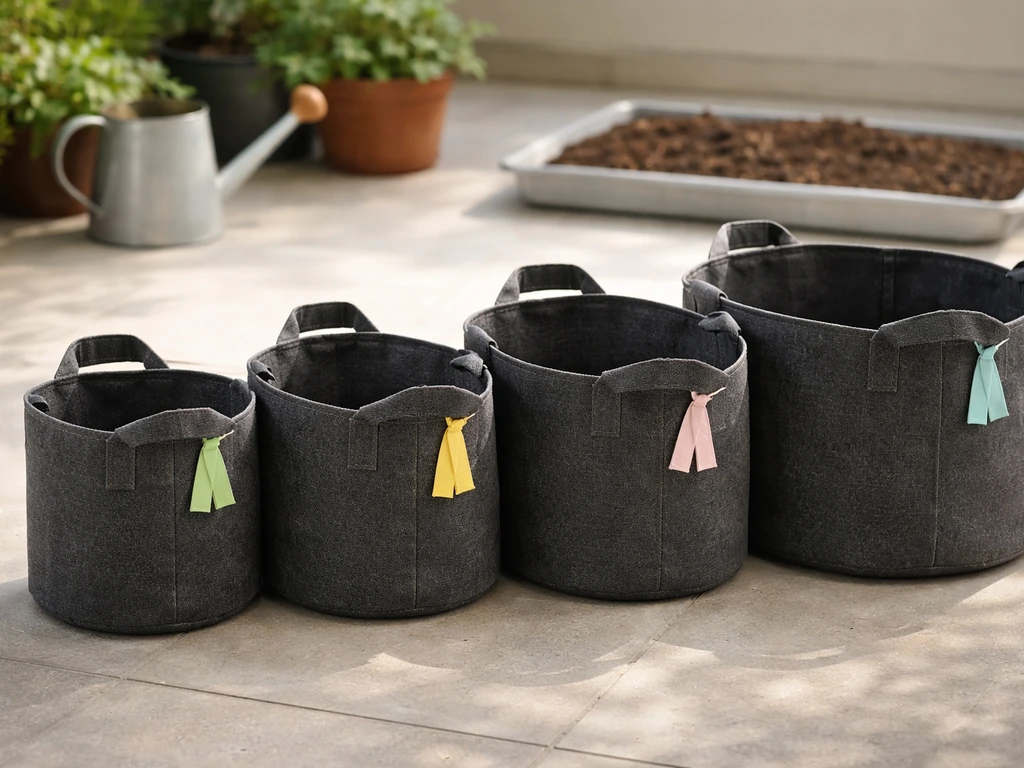
Getting the size right matters more than almost any other decision. Too small and the plant becomes root-bound and water-stressed. Too large and the extra soil stays wet too long, especially early in the season when roots haven't filled the bag. Here's a practical starting point based on crop type: After you choose the right size and material, follow these grow bag instructions for watering, fertilizing, and troubleshooting so plants stay healthy throughout the season.
| Plant type | Recommended size | Notes |
|---|---|---|
| Herbs, lettuce, radishes, flowers | 1–3 gallons | Small root systems; 10-inch container depth is adequate |
| Peppers, kale, carrots | 5–10 gallons | Mid-size root zone; 5-gallon works for most pepper varieties |
| Tomatoes (single plant) | 15–25 gallons | Illinois Extension recommends this range; indeterminate varieties need the upper end |
| Root vegetables, larger fruiting plants | 15–20+ gallons | More soil volume buffers moisture swings |
| Dwarf trees / shrubs | 25–100+ gallons | Depends on mature root spread; larger is better for multi-year growth |
| Mushrooms | Substrate-specific bag | Purpose-built mushroom grow bags use measured substrate amounts, not standard gallon sizing |
Material and construction
Most fabric grow bags on the market use nonwoven polypropylene felt, which is durable, reusable, and porous enough for consistent air pruning. Thicker felt (around 300–600 GSM) lasts longer and holds its shape better. Jute bags are biodegradable but break down faster and are better suited to single-season use. Whatever material you choose, check the seam quality before buying. Cheap bags with weak seams split when filled with wet soil, especially larger sizes. Look for reinforced handles stitched through the base panel, not just attached to the rim.
Reusability is a real consideration for cost-per-season. A good polypropylene fabric bag can last five or more growing seasons if emptied, rinsed, and stored dry. Liners are sometimes used inside fabric bags to slow drying in hot climates, but they reduce aeration and partially cancel out the air-pruning benefit, so use them selectively if at all.
Best soil and planting setup for fabric grow bags
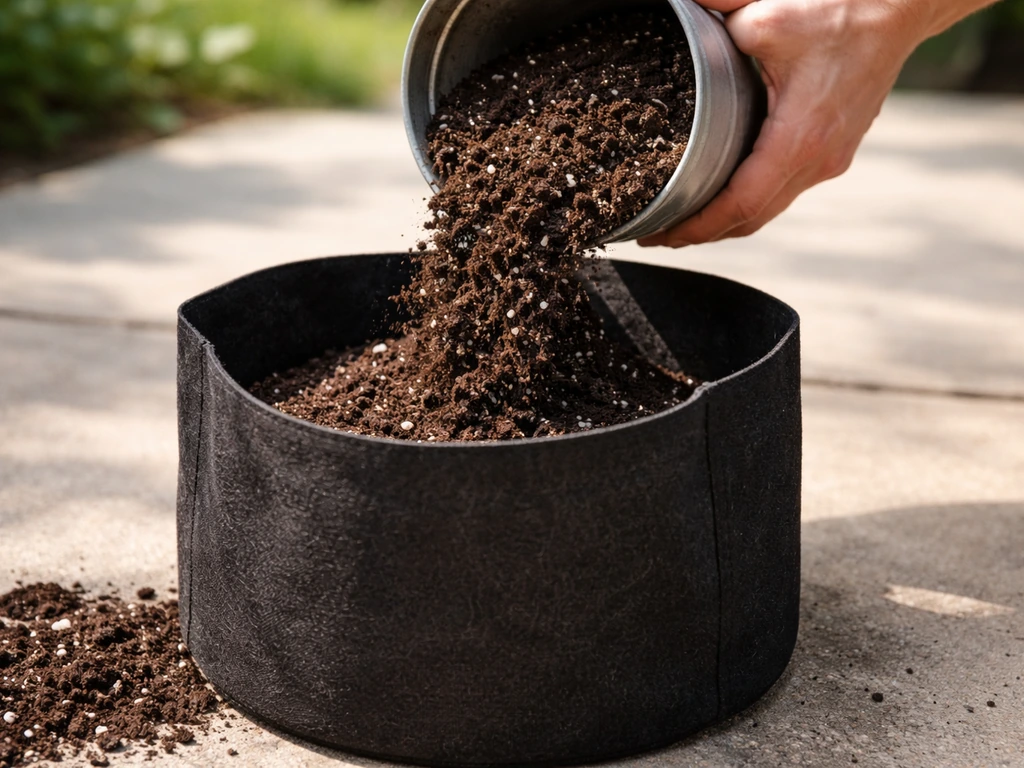
Never fill a fabric grow bag with garden soil. Actual field soil compacts when confined in a container, suffocates roots, and drains poorly. Use a purpose-made potting mix with components designed for container conditions. After you’ve picked your bag and soil mix, you can follow a grow bag garden setup checklist to ensure proper watering, feeding, and spacing. University of Maryland Extension describes the key ingredients: peat moss or coconut coir for moisture retention, perlite or vermiculite for drainage and aeration, composted bark or compost for structure and biology, and small amounts of lime and slow-release fertilizer to balance pH and give plants an early nutrient foundation.
A practical mix for most fabric grow bag crops: roughly 60% quality potting mix, 20–30% compost, and 10–20% perlite. The perlite is especially worth adding to fabric bags because even though the walls drain well, dense potting mix in the center of a large bag can still stay wet too long. More aeration in the mix itself helps. University of New Hampshire Extension recommends mixing in a solid organic fertilizer at fill time and then supplementing with liquid fertilizer once plants are established, typically around 3–4 weeks after planting.
Because fabric bags leach nutrients with every watering, container plants in general need more frequent fertilization than in-ground plants. NC State Extension notes that potting media's available nutrients deplete over time, making an ongoing fertilizer regime necessary. A dilute liquid feed once a week once plants are growing well is a solid default. Adjust based on how your plants look.
Troubleshooting common grow bag problems
Watering problems
Overwatering and underwatering are by far the most common reasons container plants fail. University of Maryland Extension identifies improper watering as the single most limiting factor in container gardening success. With fabric bags, underwatering is the more common issue because the porous walls accelerate evaporation. Check moisture by pushing a finger 2 inches into the soil.
Water thoroughly when the top inch or two feels dry, and water until you see it coming out the bottom of the bag. Water container plants thoroughly until water begins to flow out of the drainage holes, then adjust how often you water based on the container size, potting mix, plant species, and weather [water thoroughly until you see it coming out the bottom of the bag](https://yardandgarden. extension. iastate.
edu/how-to/care-plants-growing-containers). In peak summer heat, this may mean watering once or even twice daily for smaller bags.
Root problems
If you see roots visibly growing through the outside of the bag, that's normal and expected. That's air pruning working as intended. If roots are poking out but the plant looks stunted and dry, the bag is probably too small for the plant. Upgrade to the next size up. If a plant seems root-bound despite being in an appropriately sized fabric bag, check whether the bag is actually a breathable fabric or a thicker, less porous material that isn't air-pruning effectively.
Drainage issues
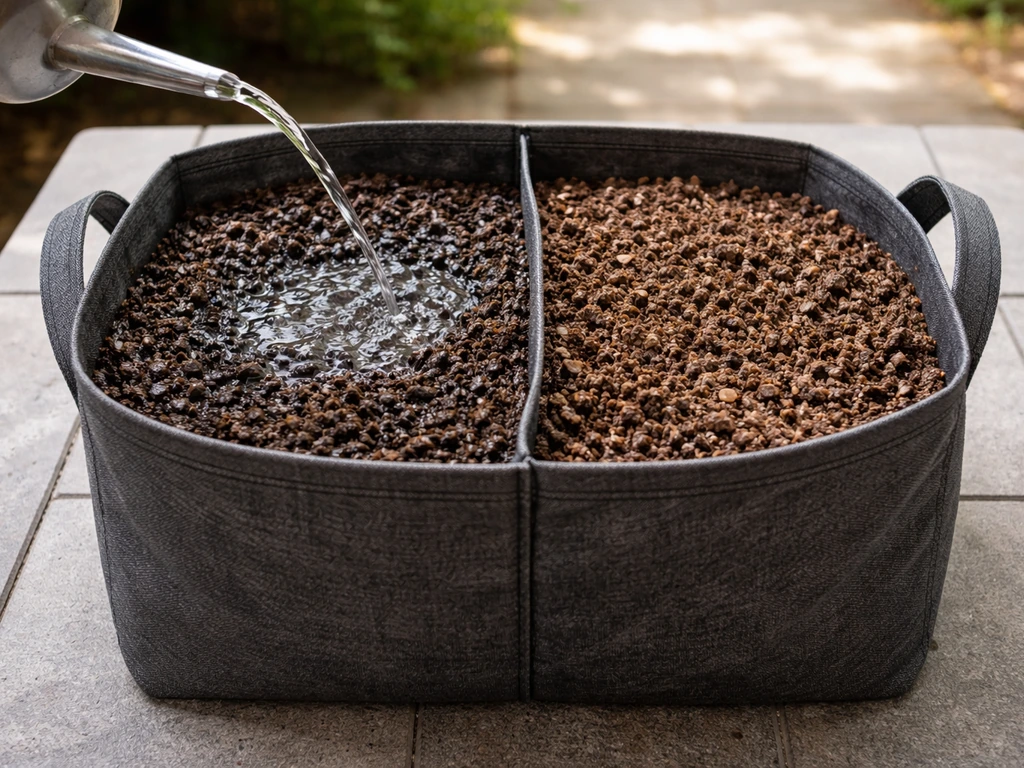
If water is pooling on the surface of the soil for more than a minute or two after watering, the problem is almost always the soil mix, not the bag. Dense, peat-heavy mixes without enough perlite or bark can become hydrophobic when they dry out. Mix in extra perlite, or if the mix has completely dried and is repelling water, soak the bag in a tub for 20–30 minutes to rehydrate the media before resuming normal watering. Standing water at the base of the bag on a solid surface can also wick back in, so elevate bags slightly on pot feet or a rack to allow full drainage.
Pests and mold
Fungus gnats are the most common pest in fabric grow bag setups, and they thrive in consistently moist, organic-rich media near the surface. Letting the top inch of soil dry out between waterings disrupts their life cycle. Root rot shows up as yellowing, wilting despite moist soil, and a foul smell from the media. It's almost always linked to a soil mix that's holding too much water. If you catch it early, let the bag dry out more aggressively between waterings and trim affected roots if you can access them. Algae or green film on the outside of the bag is cosmetic and doesn't harm the plant.
Care and next steps by plant type
Vegetables
Vegetables in fabric grow bags need consistent moisture, regular feeding, and appropriately sized bags from the start. Tomatoes are the classic example and do well in 15–25 gallon bags. A single determinate tomato can work in 15 gallons; go 20–25 gallons for indeterminate varieties. Start liquid fertilizer at about 3–4 weeks after transplanting and keep up a weekly dilute feeding through fruiting.
Position the bags where they'll get at least 6–8 hours of direct sun and in a spot where you can water easily every day. A good grow bag planting guide walks through the specific steps for setup and planting depth by crop. If you want to follow a grow bag tog guide approach, use that guide to set up the bag correctly, choose the right depth, and avoid common watering mistakes grow bag planting guide.
Flowers
Most annual flowers thrive in 3–5 gallon fabric bags. Larger perennials or statement container plants like dahlias benefit from 7–10 gallons. Flowers in fabric bags actually appreciate the improved aeration and drainage since most ornamental issues come from overwatering. Use a potting mix with a bit more compost than you'd use for vegetables to support consistent flowering. Feed with a balanced or bloom-focused fertilizer once plants are established and budding up.
Mushrooms
Mushroom grow bags are a different category from standard fabric grow bags and deserve their own understanding. These are typically purpose-built polypropylene bags filled with a sterilized substrate (grain, manure, straw, or a combination) and sealed with filter patches that allow gas exchange while blocking contamination. Some come ready for inoculation; all-in-one bags include grain and bulk substrate together so you add spores or spawn directly. The air-pruning and drainage logic doesn't apply here. The bag is functioning as a sterile growing chamber, not a container planter. For a full walkthrough of the inoculation and fruiting process, a dedicated spawn bag grow guide covers the specifics in detail.
Trees and shrubs
Growing trees in fabric bags is increasingly common in nursery production and home orchards. Dwarf fruit trees, blueberries, and ornamental shrubs all do well in 25–65 gallon bags. The air-pruned root system described earlier is a genuine advantage when you're eventually transplanting to the ground. When removing a tree from a fabric grow bag for transplanting, UNH Extension notes that any small roots that have grown through the fabric can simply be shaved or cut flush before the bag is removed. Stake trees in fabric bags as needed since the flexible container doesn't anchor them the way a pot or in-ground planting would. Water frequently, especially in the first few seasons of growth, and top-dress with compost each spring.
Once you know what a grow bag is and how it works, the next practical step is deciding on the right size and soil setup for your specific plant, then getting it planted correctly. The grow bag planting guide sections below walk you through the exact steps for your plant, from filling the bag to getting consistent watering. The grow bag instructions and grow bag tips sections of this site go deeper on setup sequences, watering schedules, and seasonal care by crop type if you want to get more specific from here.
FAQ
Can I use the same “grow bag” for multiple seasons, and how do I prep it?
Yes, but choose them for the right purpose. If you mean fabric planting bags, they are designed to be filled with potting media, not to sit as a compost sack. If you are reusing a bag for growing, make sure it has no big splits, and rinse out old media and let it dry fully before refilling to reduce disease buildup.
What’s the best way to fill a grow bag and confirm it’s actually draining?
Fill it with potting mix to at least the level recommended for your crop, then water slowly until excess runs out the bottom. In very hot weather, the surface can feel dry while the center is still wet, so check moisture 2 inches down before deciding whether to water again.
Should I add extra drainage holes to a fabric grow bag?
You usually do not. With fabric bags, the fabric itself is porous, so extra drainage holes can be redundant. If you notice persistent pooling on a flat surface, the fix is to elevate the bag slightly (pot feet or a rack) and improve the mix with added perlite or bark, rather than punching lots of holes.
How can I tell whether my grow bag is truly breathable enough for air pruning?
Many “felt” grow bags are breathable, but not all bags labeled grow bags behave the same. If roots circle or the bag stays soggy much longer than expected, it may be a less porous material or a thick, low-breathability fabric. A quick test is to water fully, wait an hour, then see whether the outer area feels dryish and the bag has stopped shedding surface water.
Can I add compost on top of the mix during the growing season?
Generally, yes. For most vegetables and herbs, you can top-dress with compost once plants are established, but avoid piling compost against tender stems. For best results, refresh lightly and then keep feeding on schedule, since fresh compost alone may not supply steady nutrients.
What should I do if my grow bag mix becomes water-repellent?
It depends on how dry you let it get. If the mix repels water or forms a hydrophobic crust, soak the entire bag in a tub for 20 to 30 minutes, then let it drain fully before returning it to its growing spot. For smaller bags, consider more frequent, lighter watering rather than letting it fully dry out.
How do I avoid fertilizer burn in fabric grow bags?
Yes, but do it strategically because fertilizing affects salt buildup. If you see leaf tip burn, white crust on the media surface, or persistent wilting despite moisture, run a thorough watering until it drains well, then resume a dilute feeding schedule. Also choose potting mix and fertilizers without overly strong rates for container media.
Do I plant the same spacing in a grow bag as I would in the ground?
In most cases, space plants like you would in containers of that size, not like in-ground spacing. For example, tomatoes and peppers need more room for airflow to reduce disease, and dense planting increases how fast the bag dries. If a plant is repeatedly stressed (drooping, slow growth), move up to a larger bag and thin or space further.
How should I support tall plants in a fabric grow bag without damaging roots?
Yes, but stake early enough that you do not tear roots later. Because fabric bags are flexible, tall plants can lean until roots anchor. Use a sturdy stake and tie at several points, then check after windy periods. For indeterminate tomatoes, a larger bag plus a trellis setup usually reduces breakage and improves light exposure.
My plant has roots poking out, is that always a problem?
If you see roots outside, that’s normal. The real red flag is stunted growth and rapid drying that does not improve after watering adjustments, which usually means the bag is undersized. Upgrade one size up, then keep a consistent weekly feeding because small bags deplete nutrients faster.
Are liners ever a good idea for grow bags?
You can, but be careful with materials that trap moisture. Lining fabric bags often slows drying and reduces airflow, which can undermine air pruning. If you must use a liner (for extreme heat or very hot balconies), choose one designed for containers and monitor closely for sogginess, then increase aeration in the mix (more perlite and structure).
Can I grow mushrooms in a regular vegetable-style fabric grow bag?
For mushrooms, follow the specific spawn bag or purpose-built mushroom system. Using a standard grow bag with potting mix does not replicate the sterile, gas-exchange substrate conditions, and results are usually poor. If you want mushrooms, look for bags that are sealed and intended for that cultivation method.
Do fruit trees in fabric grow bags need a different watering schedule than vegetables?
Not usually. Most trees and shrubs in fabric bags benefit from frequent watering, then a lighter top-dress later, but they still need a deep, evenly moist root zone. After transplanting, keep the first growing season consistent, and only adjust the watering schedule after you confirm soil moisture at multiple depths.
Why does my grow bag dry out faster than expected on a patio or balcony?
Yes, especially on balconies and patios where runoff can re-wick into the bag. Use a draining stand, keep the bag level, and ensure the surface underneath does not form a water puddle. Also watch wind exposure, because it can dry the bag faster than sun alone.
Next Articles
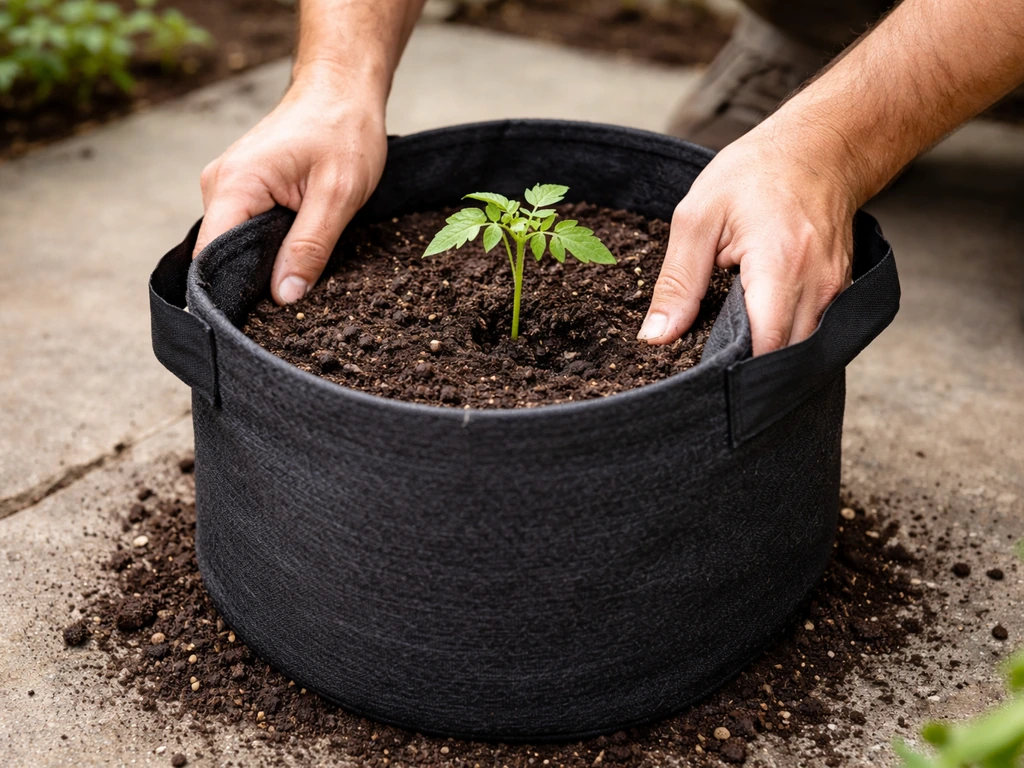
Grow Bag ToG Guide: Choose, Plant, and Care Step by Step
Step-by-step grow bag ToG guide: choose the right size and fabric, plant, care routines, troubleshooting, reuse and stor
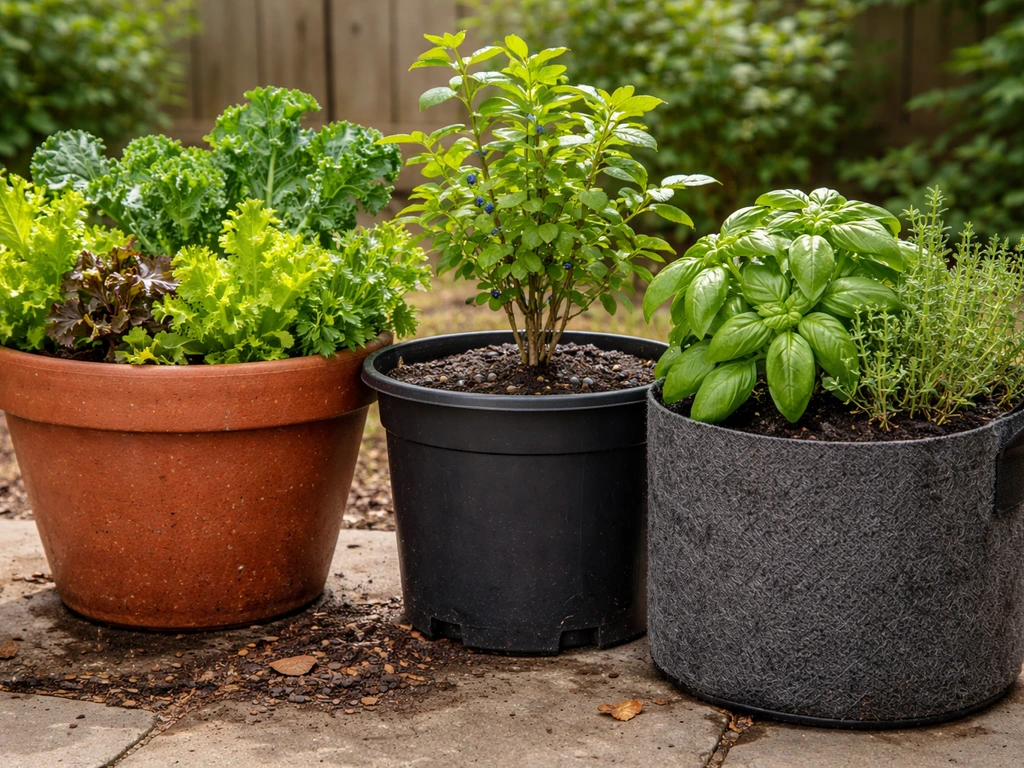
Grow Bag Alternatives: Best Options for Every Plant
Compare grow bag alternatives for veggies, flowers, trees and mushrooms, with setup tips, sizing, and fixes for drainage
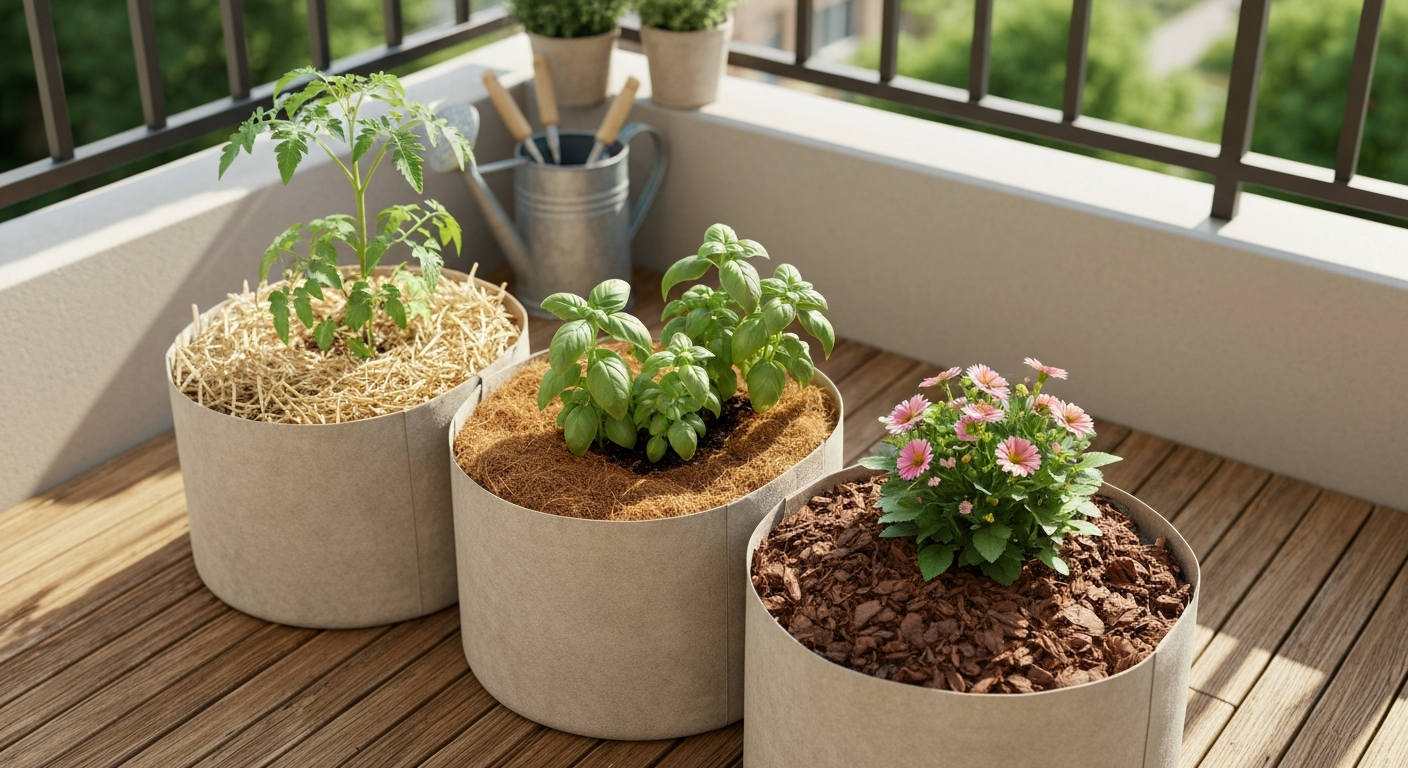
Best Mulch for Grow Bags: Top Picks for Vegetables & Flowers
Find the best mulch for fabric grow bags: top picks, how-to apply, crop & climate advice, and troubleshooting.