A grow bag is a container, and compost is a material you can put inside it. They are not competing options or two versions of the same thing. A fabric grow bag holds your growing medium and gives roots a healthy, aerated environment. If you are wondering are grow bags worth it, the short answer is that they can be, especially when you want better root health and are ready to water more often fabric grow bag.
What Is the Difference Between Grow Bags and Compost?
Marcus Holloway
20 Jun 2026
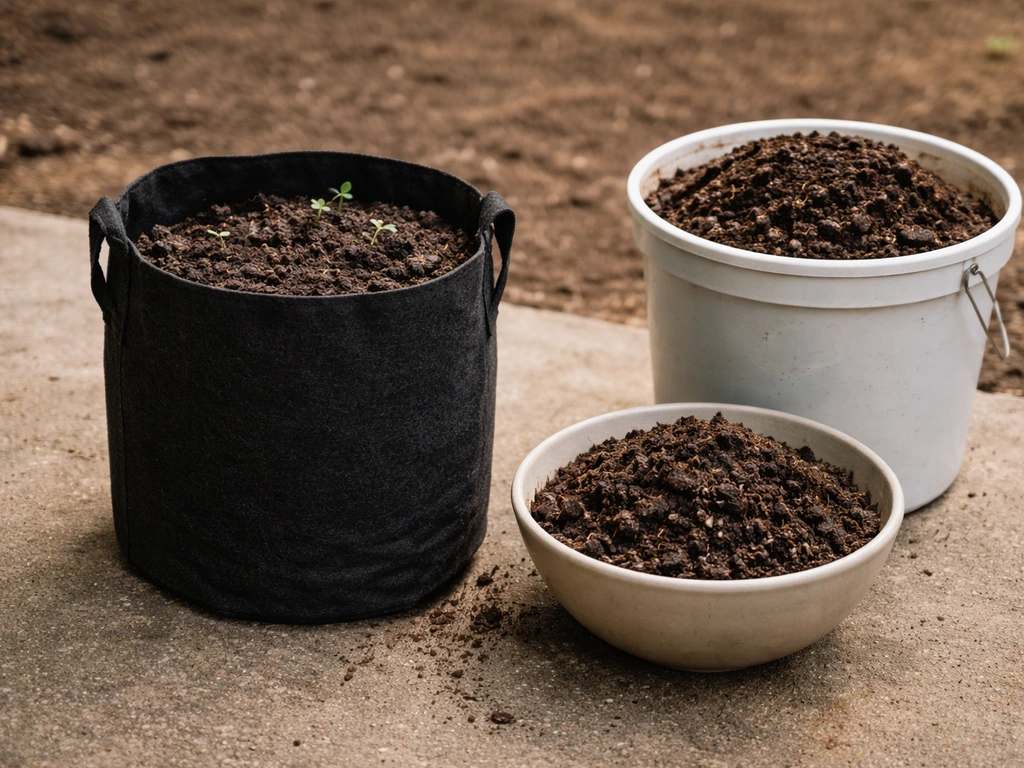
Compost is a decomposed organic material that feeds plants, improves soil structure, and holds moisture. Most home growers need both: the bag as the vessel, and a compost-based mix as the fill. Once you understand that distinction, all the other decisions (what size bag, how much compost, what to blend it with) become much easier.
Grow bags vs compost: what each one actually is
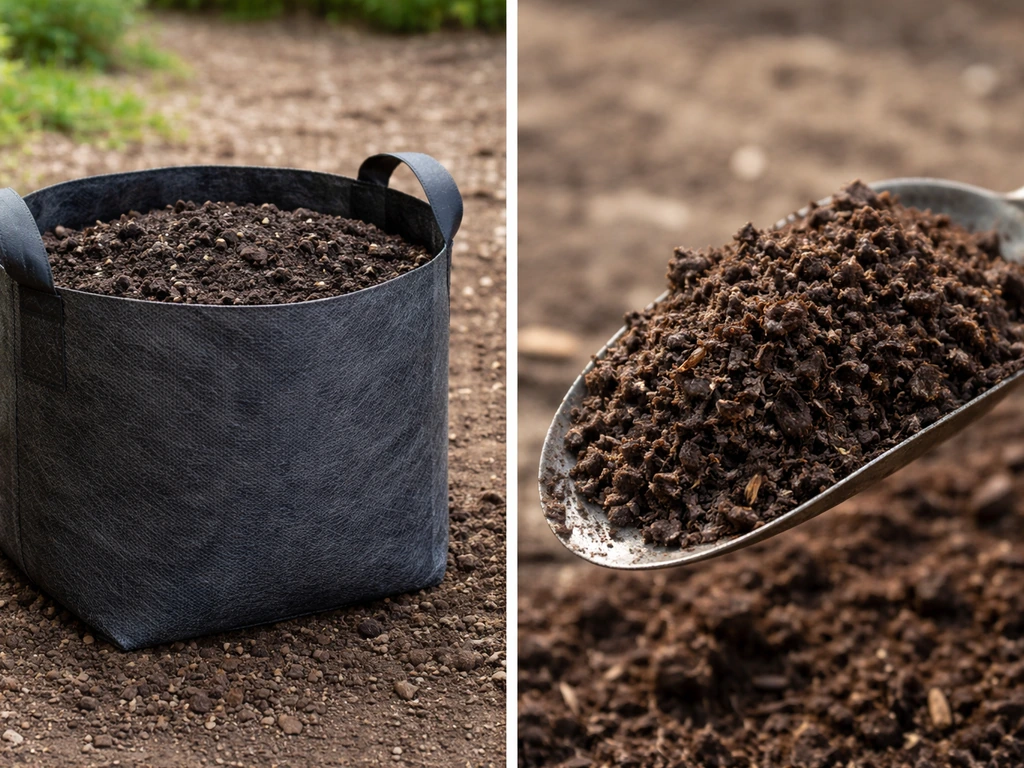
A grow bag is a planter, plain and simple. Modern fabric grow bags are made from a porous, breathable fabric (usually polypropylene felt or similar non-woven textile) that allows air and water to pass through the sides and base. You fill the bag with a growing medium, plant into it, and manage it like any other container. The bag itself provides no nutrients and does not grow anything on its own.
Compost is finished, decomposed organic matter. It starts as raw materials like food scraps, garden waste, straw, or manure, and breaks down over months (or up to two years, depending on conditions) into dark, crumbly, nutrient-rich humus. Finished compost has a C:N ratio of roughly 18:1 or less, which tells you the decomposition process is largely complete and the nutrients are becoming available to plant roots. You can use it as a soil amendment, a mulch, or as a component of a container mix.
The confusion usually starts because some traditional-style grow bags sold for tomatoes and salad crops came pre-filled with a growing medium, which was often compost-based. That led people to assume grow bags and compost were related or interchangeable. They are not. A fabric grow bag is a system. Compost is one ingredient you might choose to put inside that system.
How fabric grow bags actually work
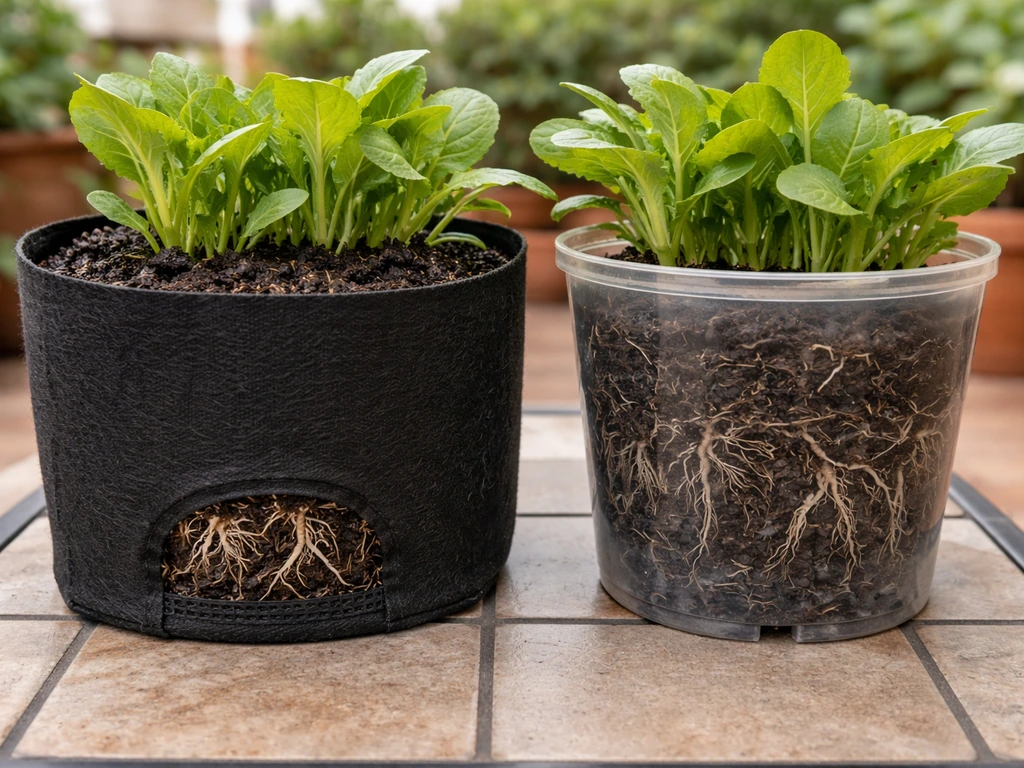
The key feature of a fabric grow bag is its porosity. Unlike a plastic pot or a ceramic planter, the entire wall of a fabric bag allows air to move through. This creates a process called air pruning: when roots grow outward and hit the breathable fabric wall, they stop elongating and instead branch inward, producing a dense, fibrous root system. Nursery and university trials have found that plants grown this way tend to develop larger, more balanced root systems and reach marketable size faster than those in rigid containers.
The porous walls also mean the growing medium drains very freely and dries out faster than it would in a sealed plastic pot. That is genuinely one of the biggest practical differences you need to manage when growing in fabric bags: you will water more often, sometimes daily in warm weather, because moisture escapes from all sides, not just the base. The flip side is that overwatering and waterlogging are nearly impossible if you are using the right growing medium, which is a major benefit over plastic containers.
Fabric walls also regulate temperature better than black plastic. Because air moves through the sides, roots stay closer to ambient temperature rather than cooking in superheated plastic during summer. This matters especially for heat-sensitive crops and for containers sitting on paved surfaces.
What compost does in a growing setup
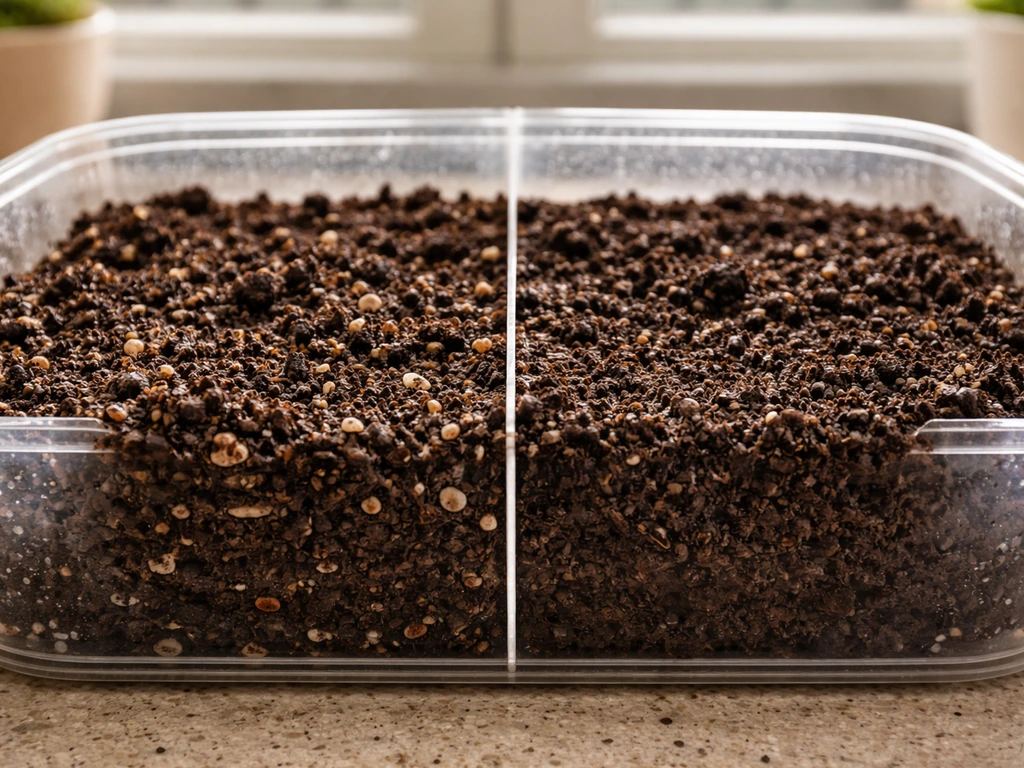
Compost does three main jobs: it feeds plants, improves physical structure, and helps retain moisture. On the nutrient side, a typical finished compost carries phosphorus in the range of 0.3 to 0.9% and potassium around 0.5 to 1.5% on a dry-weight basis, along with variable nitrogen depending on feedstock. These numbers are modest compared to synthetic fertilizers, which is actually a good thing in containers because compost releases nutrients slowly as microbes continue breaking it down, reducing the risk of nutrient burn.
On the structural side, compost improves aeration, root penetration, and water infiltration. In a container context, this matters because roots in a limited volume cannot seek out water and nutrients the way they do in open ground. The growing medium has to do all that work. Compost provides organic matter that helps hold moisture between waterings, while also preventing the mix from compacting into a solid brick over time.
One thing compost cannot do alone in a grow bag is provide adequate drainage. Pure compost in a fabric bag tends to compact, stay wet, and restrict airflow around roots. NC State Extension guidance suggests keeping compost to roughly 15 to 40 percent of total container mix for this reason. It works best as one component of a blended medium, not the entire fill.
How to use compost with grow bags: fill choices and ratios
The goal when filling a fabric grow bag is a loose, free-draining medium that still holds enough moisture and nutrients to support your plants. A straight bagged potting mix works, but most experienced growers get better results by blending in compost and a drainage amendment. A practical starting ratio that many home growers report as forgiving for most vegetables is around 60% potting mix, 30% compost, and 10% perlite. This gives you the structure and drainage of a good potting mix, the slow-release fertility of compost, and the extra porosity of perlite to prevent compaction.
When choosing a potting mix as your base, look for one that already contains perlite or vermiculite for drainage. Compost or bark in the mix provides the organic matter component. If you are buying bagged compost separately, go for finished compost rather than partially decomposed material. Partially broken-down compost can create hot spots of nitrogen that burn roots, and it may tie up nutrients as decomposition continues inside the bag.
Watch the pH of your compost too. Many commercial composts have a pH above 7.0, which can cause nutrient lockout for acid-loving plants. Keeping compost to 40% or less of your mix helps dilute any pH issues. If you are growing blueberries or other ericaceous plants in grow bags, swap standard compost for an ericaceous potting mix entirely.
| Mix Component | Typical Proportion | What It Contributes |
|---|---|---|
| Potting mix (perlite/vermiculite-based) | 50–60% | Structure, drainage, baseline nutrients |
| Finished compost | 25–40% | Slow-release fertility, moisture retention, microbial life |
| Perlite or coarse grit | 10–15% | Drainage, aeration, prevents compaction |
| Slow-release fertilizer granules (optional) | Small measured dose | Extends nutrient supply beyond compost alone |
Plant-specific guidance
Vegetables
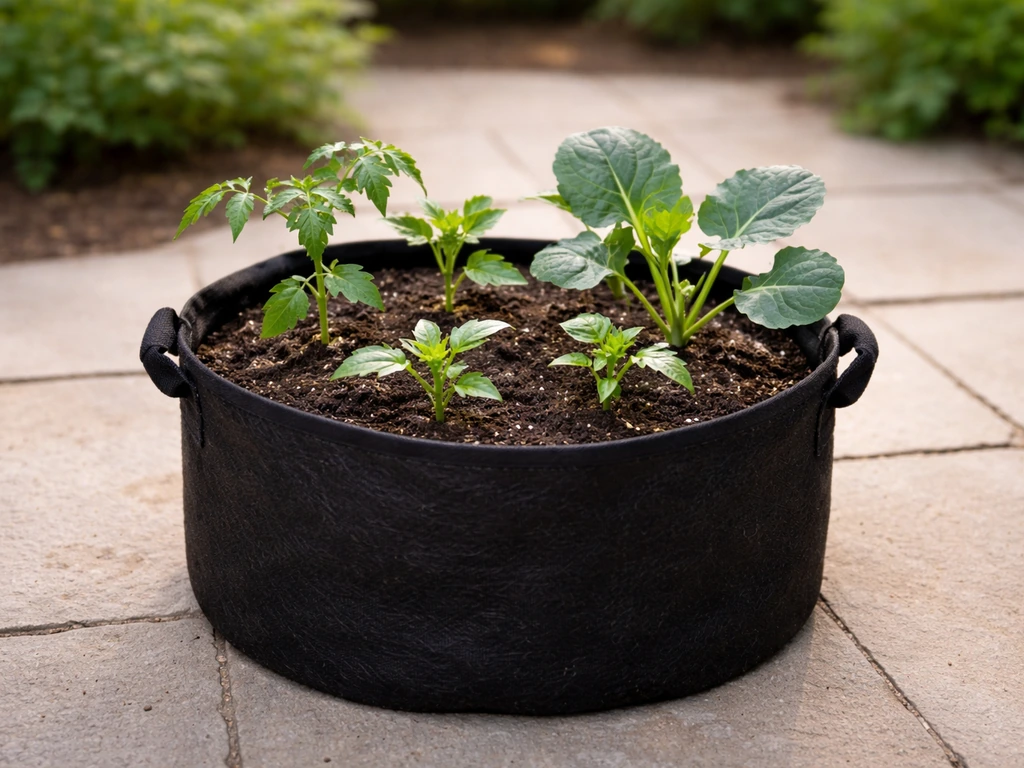
Vegetables are the most common grow bag crop, and the 60/30/10 blend described above is a reliable default for tomatoes, peppers, courgettes, and most brassicas. Tomatoes are heavy feeders, so start supplementing with a liquid fertilizer two to six weeks after planting, once compost nutrients begin to deplete. Because fabric bags dry out faster than plastic, daily watering in summer is normal for large-fruiting crops like tomatoes. Water until you see drainage from the base: this confirms the whole root zone is getting saturated, not just the top few inches.
For root vegetables like potatoes and carrots, use deeper bags (at least 12 inches, ideally 15 or more) and keep compost slightly below 30% to avoid a mix that is too dense. Loose, free-draining medium is what makes grow bags genuinely excellent for potatoes: you avoid the compaction problems of heavy clay soil and harvesting is effortless. If you are wondering whether you can leave grow bags out all winter, the short answer is usually no unless they are well protected and kept from soaking in water.
Flowers
Most flowering annuals and perennials do well in a standard compost-and-potting-mix blend. Yes, you can use grow bags for flowers by filling them with a loose, well-draining mix and adjusting compost and fertilizer for blooming can you use grow bags for flowers. Where flowers differ from vegetables is that they generally need less nitrogen and more phosphorus to support blooming. Keep the compost proportion in the lower end of the range (around 20 to 25%) and consider a bloom-focused slow-release fertilizer rather than a high-nitrogen general fertilizer. Smaller grow bags in the 3 to 5 gallon range work well for most annual flowers, and fabric bags suit hanging or patio displays because they are lightweight and do not crack.
Trees and shrubs
Growing trees and shrubs in fabric grow bags is a legitimate technique, used commercially for air-pruning rootstock before transplanting. For home growers, the main considerations are size and longevity. Use large bags (20 gallons and above for most fruit trees and shrubs) and blend compost with a loamier potting mix rather than a purely peat-based one, which can shrink away from the bag walls as it dries. A modest amount of coarse grit (10 to 15%) helps prevent waterlogging, which matters more over multiple seasons. Since trees stay in bags for years, the question of how long grow bags last becomes relevant: quality fabric bags typically hold up for several growing seasons with basic care.
Mushrooms
Mushrooms are a completely different scenario. NCAT’s mushroom cultivation guidance also recommends keeping humidity high during fruiting, aiming for roughly 85% to 95% relative humidity for most species.
When people ask about growing mushrooms in bags, they are usually referring to polypropylene grain bags or filter-patch bags used for inoculation and fruiting, not the fabric garden grow bags used for plants. The growing medium for mushrooms is not compost in the garden sense: it is a substrate designed for fungal colonisation, typically straw, wood chips, sawdust, or grain, often pasteurised before inoculation. [Oyster mushrooms, for instance, grow well on pasteurised straw in bag-based setups](https://edis. ifas.
ufl. edu/publication/SS662/pdf), with humidity maintained at 85 to 95% during fruiting. Standard fabric garden grow bags and garden compost are not suitable for mushroom cultivation.
Common mistakes and how to fix them
The bag dries out too fast
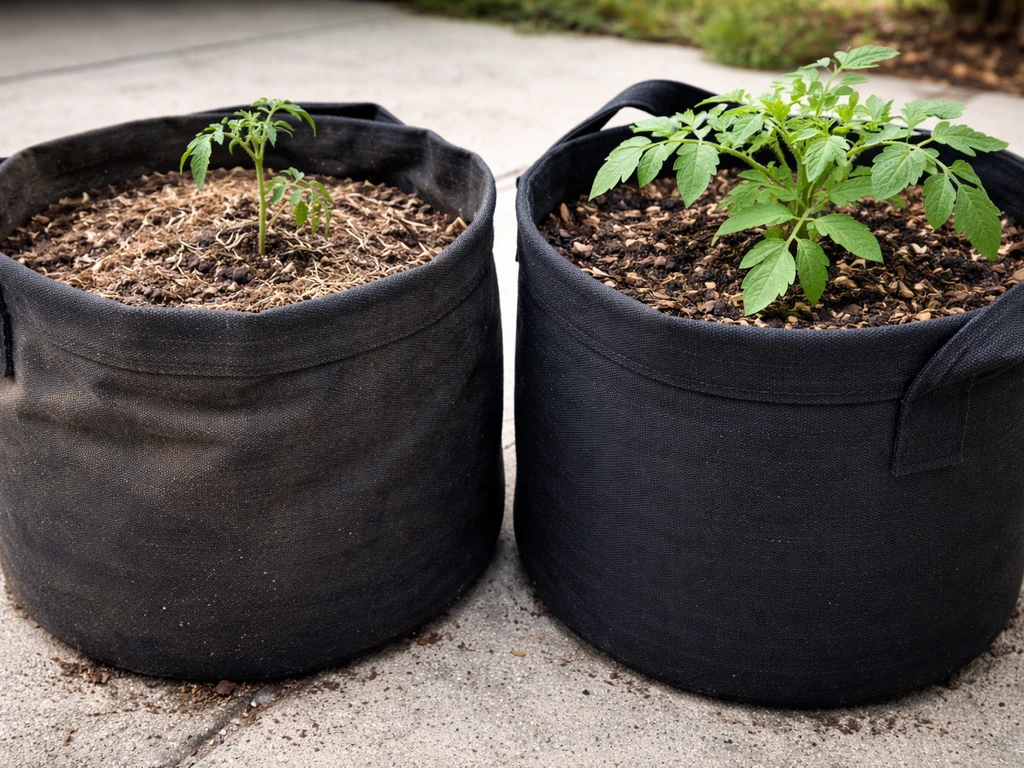
This is the most common complaint from new grow bag users, and it is a real issue. Yes, you can use grow bags outside as long as you place them where they get the right amount of light and protect them from extreme wind and waterlogging. Fabric bags lose moisture through every surface, not just the bottom.
If your plants are wilting by mid-afternoon despite morning watering, you are not doing anything wrong: the fabric is doing its job, and you just need to water more frequently. Solutions include setting up a simple drip irrigation system, placing saucers under smaller bags to create a small reservoir, and increasing compost content slightly in your mix (up to 40%) to improve moisture retention. Grouping bags together also slows moisture loss by reducing airflow around the sides.
Plants look pale or stop growing mid-season
This usually means the nutrients from your initial compost fill have been used up or washed out by frequent watering. Even a good compost-enriched mix only provides a finite supply of nutrients in a contained volume. Start liquid feeding two to six weeks after planting and continue weekly throughout the growing season with a dilute, water-soluble fertilizer. Fabric bags accelerate nutrient leaching because of the free drainage, so regular feeding is not optional: it is part of the grow bag routine.
Root growth is poor or plants seem stunted
If growth is slow despite regular watering and feeding, check your growing medium. Using pure compost without a drainage amendment leads to compaction and poor aeration, which suffocates roots even in a fabric bag. Break up compacted medium, add perlite to the top layer if possible, and water more carefully: thoroughly, but only once the top inch or two of medium feels dry. Also check that your bag is large enough for the plant: undersized bags restrict root volume and cause stress symptoms that look like nutrient deficiency.
Nutrient burn on new leaves
Scorched leaf tips and curling on new growth often point to overfeeding, especially if you are using a strong liquid fertilizer on top of a compost-rich mix. Pull back the feeding frequency, flush the medium with plain water, and switch to a more dilute fertilizer solution. Partially decomposed compost is a particular risk here because it continues releasing nitrogen unpredictably as it breaks down inside the bag. Always use fully finished, dark-brown compost in your container mixes.
How to choose your setup and get started today
Picking the right bag size
Bag size is the single most important variable to get right before you buy anything. Too small, and plants run out of root space and dry out constantly. Too large, and the medium stays wet and cold in the centre. Use these as practical starting points:
| Crop Type | Minimum Bag Size | Recommended Size |
|---|---|---|
| Herbs and salad leaves | 1–2 gallon | 3 gallon |
| Peppers, aubergines | 3 gallon | 5 gallon |
| Tomatoes (bush/determinate) | 5 gallon | 7–10 gallon |
| Tomatoes (indeterminate/tall) | 7 gallon | 10–15 gallon |
| Potatoes | 7 gallon | 10–15 gallon (tall) |
| Courgettes, cucumbers | 5 gallon | 10 gallon |
| Small fruit trees/shrubs | 15 gallon | 20–25 gallon |
| Annual flowers | 2–3 gallon | 5 gallon |
Step-by-step setup
- Choose a bag size appropriate for your crop using the guide above. When in doubt, go one size larger.
- Mix your growing medium: aim for roughly 60% quality potting mix, 30% finished compost, and 10% perlite. For trees or permanent plantings, add a small amount of coarse grit and choose a loam-based potting mix rather than pure peat.
- If using slow-release fertilizer granules, blend them into the lower two-thirds of your mix before filling, following pack rates for container use.
- Fill the bag to within 2 to 3 inches of the top. Do not compact the medium: fabric bags rely on loose fill for proper airflow.
- Water the medium thoroughly before planting, then plant at the same depth the plant was growing in its nursery container.
- Water again after planting until you see drainage from the base. This is your baseline: always water to drainage.
- Place bags in their final position now. Full fabric bags are very heavy and awkward to move.
- Begin liquid feeding two to four weeks after planting for fast-growing vegetables, or at four to six weeks for slower crops.
- Check moisture daily during warm weather. In summer, most vegetable bags need watering once or twice a day.
Fabric type and bag quality
Most fabric grow bags on the market use a non-woven polypropylene felt. Thicker fabric (300 to 400 gsm) holds shape better, lasts longer, and provides more consistent air pruning than thin budget versions. Some bags use a woven fabric, which is more durable but slightly less porous. For most home growers, a mid-range non-woven bag from a reputable brand is the best value. Whether grow bags are truly reusable across seasons is worth thinking about if cost is a factor: quality bags can last several years if cleaned and stored properly between seasons, though the fabric does degrade over time.
If you are wondering whether grow bags are worth the investment compared to cheap plastic pots or simply using compost-filled beds, the honest answer depends on your situation. If you are wondering can you reuse grow bags, it helps to clean them well and refresh the growing medium before the next season. Fabric bags genuinely do produce healthier root systems and almost eliminate waterlogging, but they demand more attentive watering. For anyone who travels frequently or cannot water daily in summer, the extra work is worth factoring into the decision. That said, for most active home growers, the results in terms of plant health and yield are hard to argue with.
FAQ
Can I treat grow bags and compost as the same thing if the bag comes pre-filled?
A grow bag is the container system, while compost is one possible ingredient inside it. If you buy a pre-filled “grow bag for tomatoes,” the fill is usually compost-based potting media, but you are still growing in a container, not in compost alone.
What happens if I fill a fabric grow bag with compost only?
No. Compost provides nutrients and some moisture holding, but it does not reliably create the drainage and airflow a fabric bag needs. For containers, compost should be blended with a draining base (like potting mix and perlite), instead of used as the entire fill.
Why are my plants yellowing or growing slowly even though I water every day?
If the leaves look pale and growth stalls despite regular watering, nutrient supply may be exhausted or washed out. In fabric bags, this often happens earlier, so plan for dilute liquid feeding starting around 2 to 6 weeks after planting and continue through the season.
How do I know my fabric grow bag is getting the right amount of water, not too much or too little?
Watering “until it drains from the base” is a good check, but also confirm the top layer is drying slightly between waterings. Because fabric loses moisture from the sides, a light daily top-up can be necessary in hot weather, but constant saturation at the root zone is not.
Should I test compost pH for grow bag gardening?
Not always. Many commercial composts run above neutral pH, which can cause nutrient lockout for acid-loving plants. If you are growing blueberries or similar crops, switch to an ericaceous potting mix rather than relying on standard compost.
How can I tell if the compost I bought is safe to use in grow bags?
Use fully finished, dark compost rather than partially decomposed material. Hot or unfinished compost can keep breaking down in the bag, creating unpredictable nitrogen release and potential root burn in container conditions.
When should I start fertilizing if I’m using compost in my grow bag mix?
If you’re growing tomatoes, peppers, and similar heavy feeders, compost alone usually will not last the whole season. A practical approach is to start liquid feeding a couple of weeks after transplanting and keep it consistent, since fabric bags leach nutrients faster than rigid pots.
Can I leave grow bags outside over winter, and what are the risks?
Yes, but start with shorter, cooler exposure and watch soil moisture closely. A common mistake is leaving bags where they get waterlogged during rainy periods, or overwintering without protection from soaking, which can rot plants and compact the medium.
Why do my plants show nutrient-deficiency symptoms even though my compost mix is correct?
Make sure the bag has enough depth and volume for the crop. Small undersized bags restrict root growth and dry quickly, which can mimic nutrient deficiency. For root crops, deeper bags are especially important to prevent misshapen or stunted harvests.
Are fabric grow bags worth reusing, and how should I refresh them between seasons?
Fabric grow bags are typically reusable for multiple seasons, but “reusable” depends on care and condition. Clean out roots and debris after harvest, store dry, and refresh the growing medium because nutrients will not be intact year to year.
Can I grow mushrooms in garden grow bags using compost?
For mushrooms, the answer is no. Mushroom grow bags usually refer to inoculation and fruiting systems with a different sterilized substrate and humidity requirements. Garden fabric grow bags and compost are not designed for mushroom cultivation.
Next Articles
Can You Use Grow Bags as Compost Instead of Compost?
Yes for growing media, not for composting: use grow bags with the right soil mix and moisture, avoid composting inside.
Are Grow Bags Worth It? When They Work and When They Don’t
See when grow bags are worth it: fabric drainage, root health, yields, watering needs, and setup tips for veggies, flowe
Can You Reuse Grow Bags? Safe Steps and Soil Advice
Learn if you can reuse grow bags safely, how to clean fabric bags, refresh soil, and handle pests or disease risks.