For most home growers, fabric grow bags are the better all-around choice. They cost less, store flat, handle a wider range of crops, and deliver genuine air-pruning benefits without any special setup. Air pots do the same root-pruning job well and have some advantages for trees, perennials, and growers who want a rigid, reusable container they can disassemble at transplant time. But for everyday vegetables, flowers, and herb growing on a patio or in a garden bed, fabric bags win on practicality and value. That said, the right answer does shift depending on what you're growing, where, and how much you want to spend.
Grow Bags vs Air Pots: Which Container to Choose?
Marcus Holloway
1 Jul 2026
What fabric grow bags actually are and why roots behave differently in them
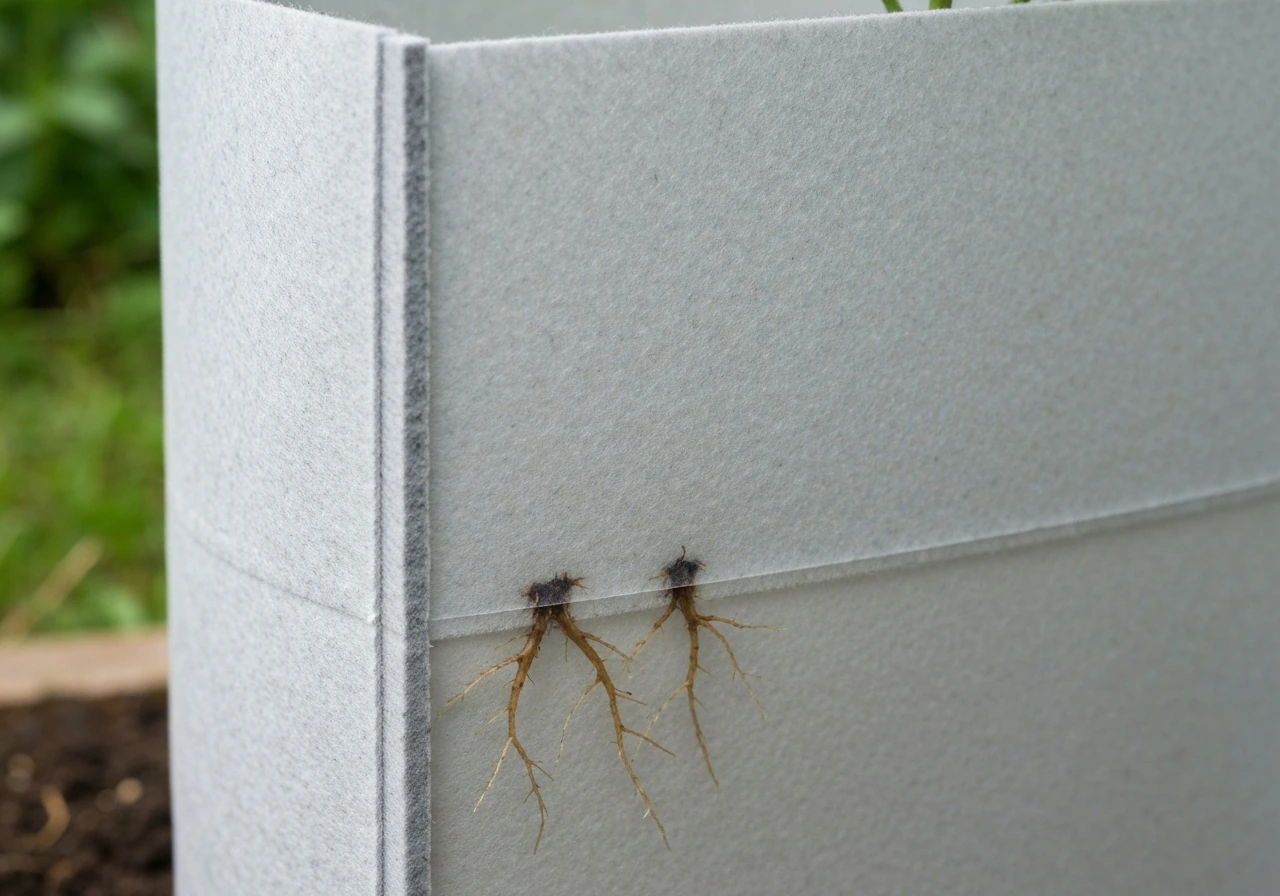
Fabric grow bags are made from nonwoven synthetic material, usually a felt-like or landscaping-fabric-style polypropylene. The key word is breathable. Air moves through the entire wall, not just through drainage holes at the bottom. That matters because when a root tip grows outward and reaches the fabric wall, it hits dry air on the other side. The tip dehydrates and stops growing in that direction. The root then sends out lateral branches behind the dead tip, and those branches do the same thing when they reach the wall. You end up with a dense, highly branched root system packed with active root tips rather than a handful of long roots circling the inside of a pot.
This process is called air pruning, and it's the main structural reason fabric containers produce healthier root systems than standard smooth-sided plastic pots. Research from nursery container studies confirms that root-pruning containers produce more fine roots and less circling than conventional plastic. The practical payoff for you as a grower is better nutrient and water uptake, faster establishment after transplanting, and fewer problems with root-bound plants. The fabric wall also lets excess water drain out from the sides and bottom, which prevents waterlogging and keeps the root zone from going anaerobic.
One real-world tradeoff is that all that breathability dries the growing medium out faster than a solid-sided pot would. Grow bags in full sun on a warm day can need watering once or even twice daily for thirsty crops like tomatoes. That's not a dealbreaker, but it's something you need to account for in your watering schedule.
What air pots are and how they do the same job differently
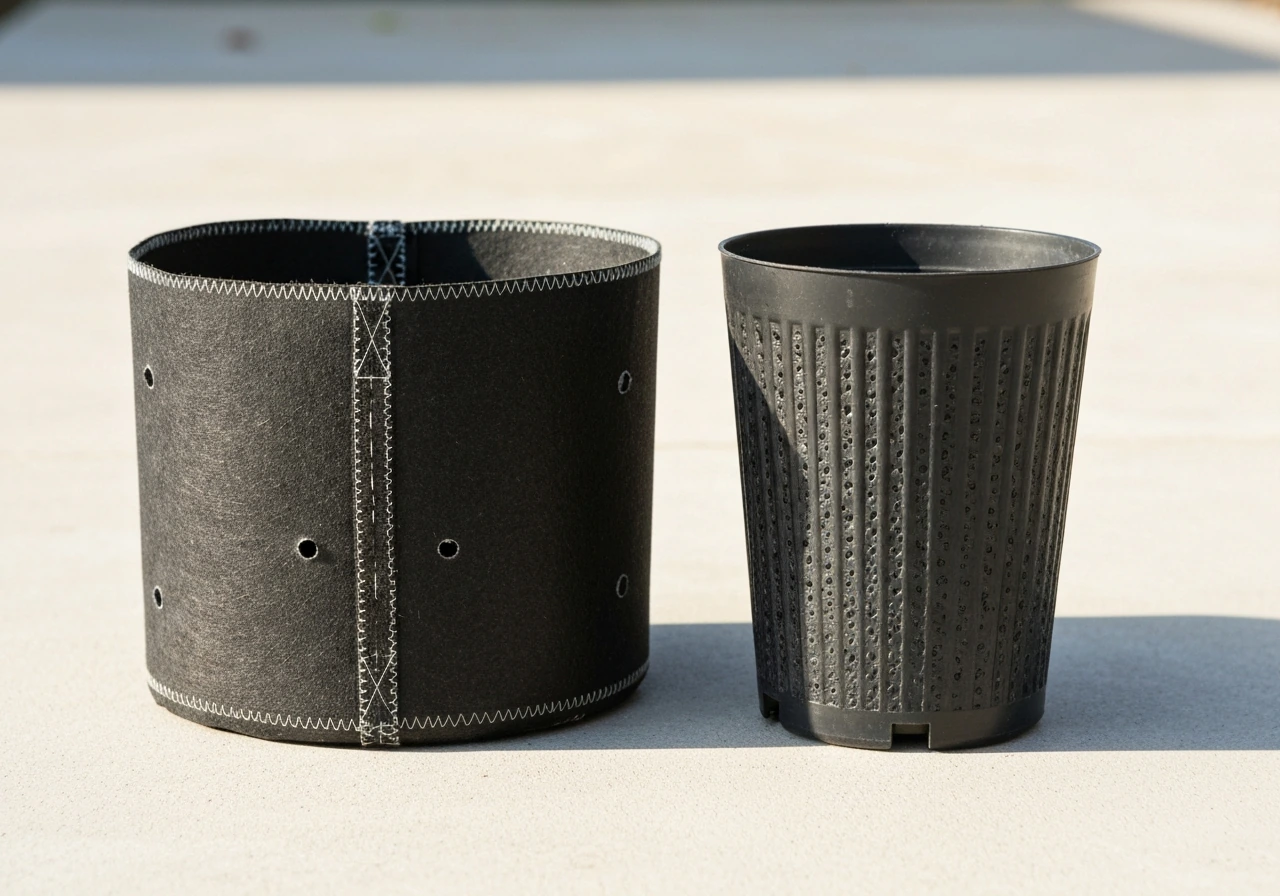
Air pots (the category, not just the Air-Pot brand) are rigid plastic containers with a wall full of openings, typically cone-shaped holes that point inward toward the root zone. The original Air-Pot design uses an egg-carton-style wall profile where each cone guides a root tip toward its opening. When the tip reaches the opening, the outside air dehydrates and kills it, triggering branching behind it, exactly the same biological mechanism as fabric bags. The difference is the delivery system: hard plastic with engineered geometry versus a fully breathable fabric wall.
Because the openings are discrete holes rather than the entire wall surface, air pruning in a hard-sided air pot is more targeted. Roots are directed toward specific exit points rather than encountering air at every point of contact with the wall. Studies comparing Air-Pot containers to standard plastic pots show measurably better root and shoot development. A two-year study in the Arboricultural Journal found saplings raised in air pots had higher root and shoot dry weight and plant height compared to those grown in conventional poly bags. The rigid wall also makes air pots extremely stable in wind and easier to work with at scale without the bag slumping around.
Air pots also tend to run cooler than black plastic pots in hot weather. The open-wall design allows airflow around the root zone, and studies on container temperature show that root-zone temperatures in standard black plastic containers can exceed 38 degrees Celsius and even spike above 46 degrees for extended periods in direct sun. Air pots and fabric bags both reduce that heat buildup compared to solid black plastic, which matters a lot for root health in summer.
Head-to-head: growth, root health, drainage, and watering
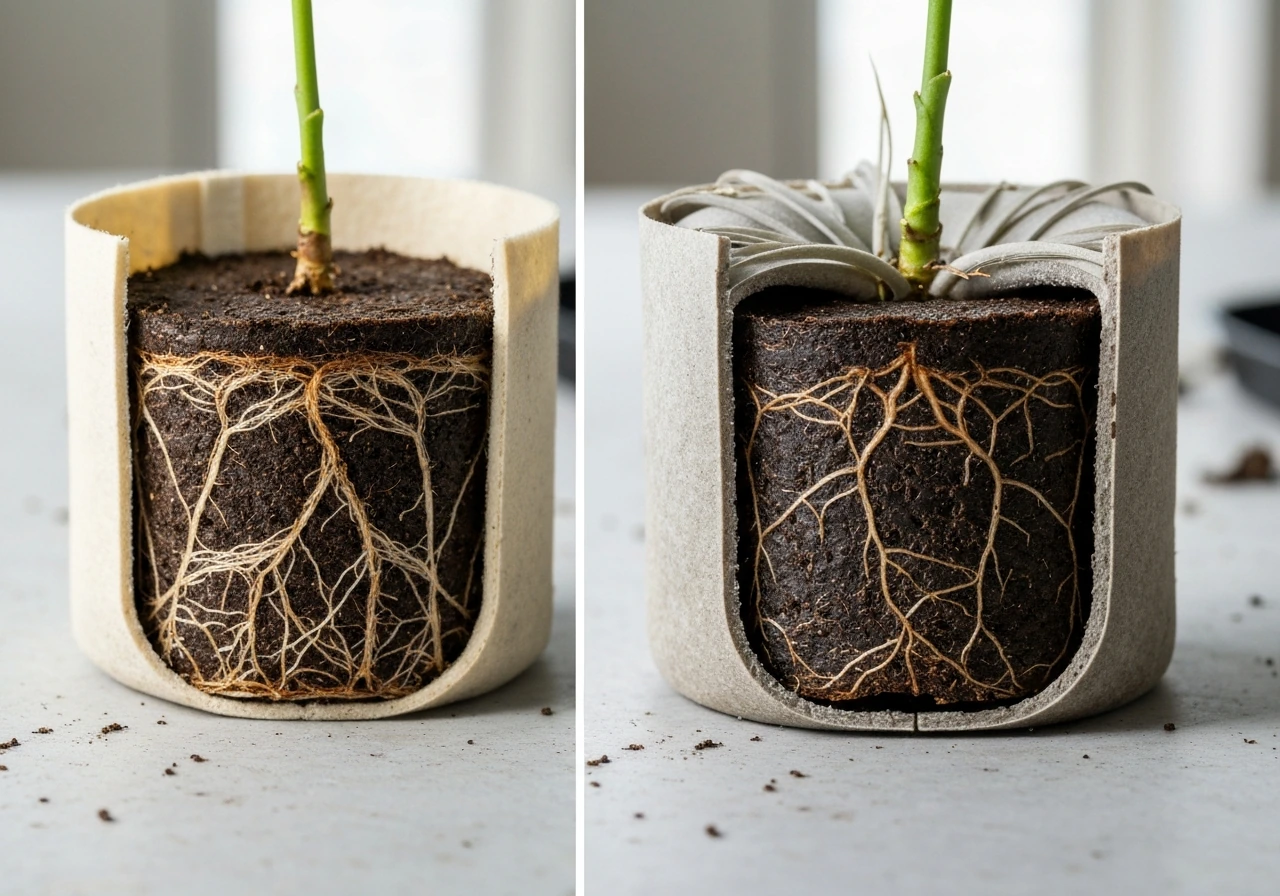
| Factor | Fabric Grow Bags | Air Pots |
|---|---|---|
| Root air pruning | Continuous across the full wall surface | Targeted through cone-shaped openings in rigid plastic |
| Root circling prevention | Excellent; full-wall air contact stops circling | Excellent; engineered geometry guides roots to air exits |
| Drainage | Strong from sides and base; fast-draining, especially in sun | Bottom drainage only; wall openings provide airflow but not water exit |
| Drying speed | Faster; can dry out quickly in heat or wind | Slower than fabric; more moisture retention in the medium |
| Root-zone temperature | Cooler than black plastic; depends on fabric color | Cooler than black plastic due to wall airflow |
| Transplant ease | Very easy; fold down the bag, tip it, or cut it | Many designs disassemble for low-disturbance transplanting |
| Stability | Can slump or tip if not supported or filled properly | Rigid and self-supporting |
| Reusability | 2 to 5 seasons depending on UV exposure and fabric quality | Long-lasting; rigid plastic rated for strong UV stability |
| Cost | Low; typically $1 to $5 per bag at common sizes | Higher; typically $5 to $20+ per pot depending on size |
On raw root health and plant performance, both systems beat standard smooth-sided plastic pots by a meaningful margin. The difference between fabric bags and air pots is smaller than the difference between either of them and a conventional nursery container. Where they diverge is in practical use: fabric bags dry out faster, cost less, and take up no storage space. Air pots retain moisture slightly better, hold their shape, and are a better long-term investment if you're going to use the same pot for years.
Choosing the right option by what you're growing and where
Vegetables
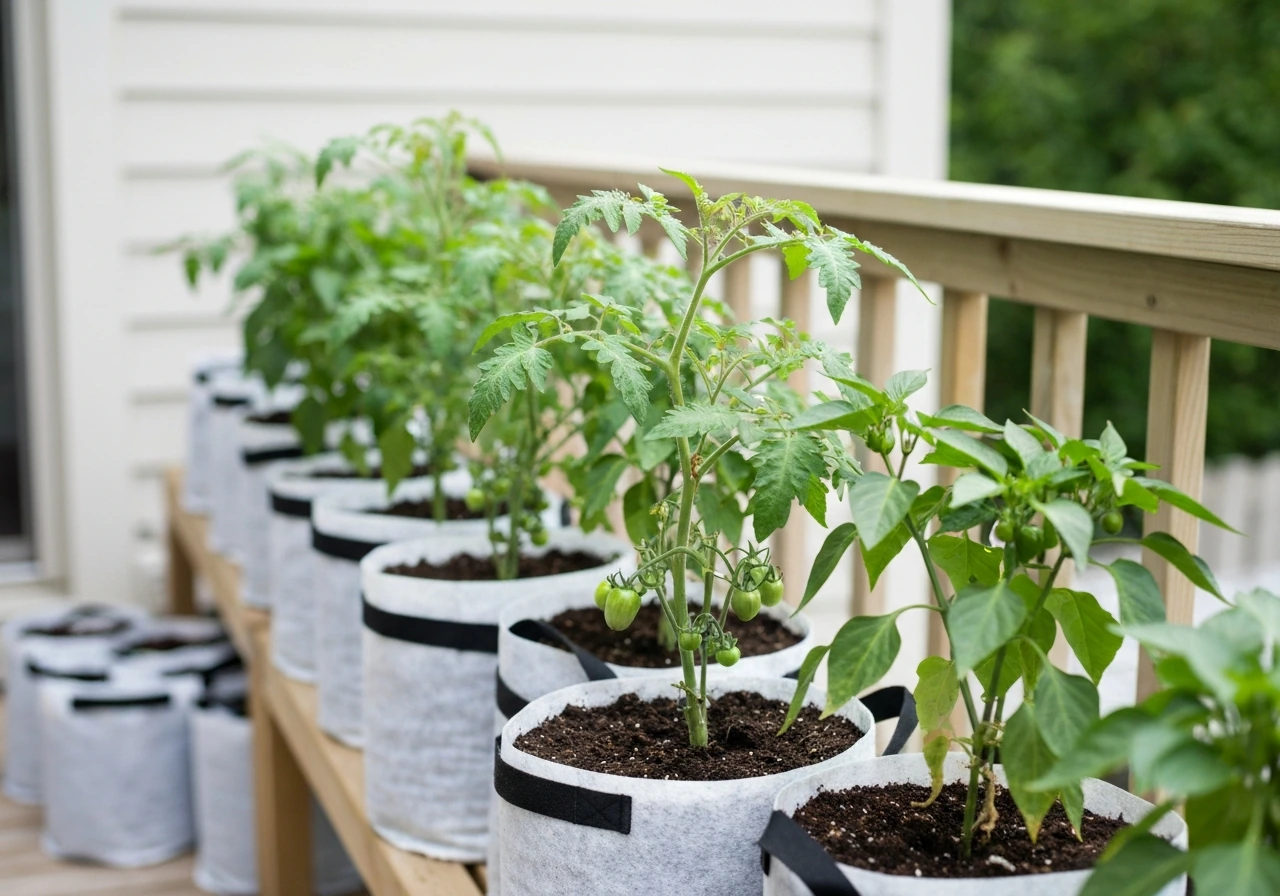
Fabric grow bags are the clear winner for vegetables. Tomatoes, peppers, cucumbers, zucchini, and potatoes all thrive in them. The fast-draining, well-oxygenated root zone suits fast-growing annual crops perfectly, and the cost is low enough that you can run a dozen bags for the price of a handful of air pots. For tomatoes and peppers, a 5-gallon bag works fine for determinate varieties, but go 10 gallons for indeterminate tomatoes if you want full-season production. Potatoes are a natural fit since you can roll the bag down at planting, add soil as you hill up, and roll it up as the plant grows. For lighter feeders like lettuce and herbs, 3-gallon bags are plenty.
Flowers
Annual flowers like marigolds, zinnias, and petunias do great in fabric bags on a patio or balcony. You're not reusing the container long-term, so the cost advantage of bags matters more. For perennials or ornamental shrubs you want to overwinter and replant, an air pot makes more sense since it will last for years and the disassembly feature lets you inspect and manage roots before replanting without major disturbance.
Trees and large shrubs
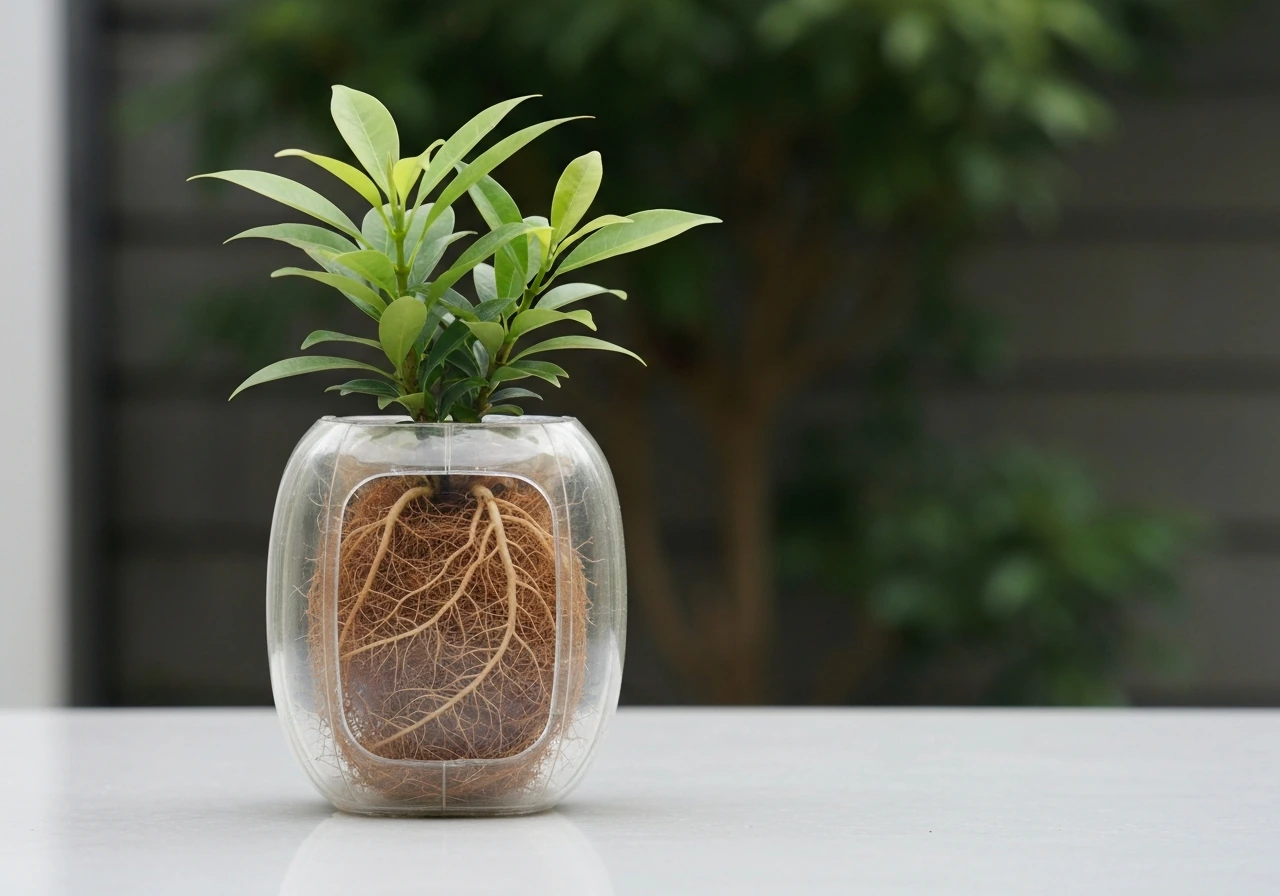
This is where air pots earn their premium. Trees grown in air-pruning containers develop fibrous, well-branched root systems that establish much faster in the ground than trees grown in smooth-sided pots. The two-year nursery research supports this directly. If you're growing a fruit tree, Japanese maple, or ornamental shrub in a container before planting it out, a large air pot is a better investment than a fabric bag, partly because of the superior root architecture it develops and partly because the rigid structure is more practical for a multi-year growing period. UV-stable rigid plastic holds up much better than fabric over multiple seasons of outdoor exposure.
Patios, balconies, and indoors
On patios and balconies, both options work well, but you'll want to put a saucer or tray under fabric bags to catch drainage and protect your surface. Air pots drain from the bottom holes too, so they have the same issue. Fabric bags are lighter and easier to rearrange. If you're deciding between a grow bag and a container, start by matching the pot size and watering needs to your crop and growing conditions grow bag vs container.
Indoors, neither is ideal because of drainage mess, but if you're using them indoors in a controlled growing setup (a grow tent, for instance), fabric bags are more commonly used because they're easier to manage in tight spaces and pair naturally with drip irrigation or hand watering.
Mushroom growing: fabric grow bags vs air pots
This is one area where grow bags and air pots are used for completely different purposes, and understanding that distinction saves a lot of confusion. In mushroom cultivation, fabric grow bags designed for plants are not what growers use. Mushroom grow bags are typically made of polypropylene plastic film with a filter patch, designed to be sterilized with substrate inside and to allow gas exchange through the filter while keeping contaminants out. They are sealed bags, not breathable fabric containers.
Hard-sided air pots are not used in mushroom cultivation either. Mushrooms need very specific humidity conditions, typically 85 to 95 percent relative humidity during fruiting, balanced with fresh air exchange (FAE) to prevent CO2 buildup. ATTRA/NCAT notes that mushrooms generally require high humidity (often around 85, 95%) together with fresh air exchange to help prevent CO2 buildup, which can contribute to poor fruiting [balanced with fresh air exchange (FAE) to prevent CO2 buildup](https://ncat. org/attra/resources/mushroom-cultivation.
pdf). Too much CO2 causes leggy, malformed fruiting bodies. The standard approach for home growers is polypropylene mushroom bags for colonization and then either fruiting in the bag (by cutting slits) or transferring to a dedicated fruiting chamber. Oyster mushrooms in particular need strong FAE, more than a simple sealed tub can provide.
So if you came here specifically looking at grow bags for mushrooms: the breathable fabric grow bags used for vegetables and flowers are not the right tool. You want food-grade polypropylene mushroom bags with filter patches. And air pots are not a practical option for mushrooms at any stage of cultivation.
Cost, durability, sizing, and what to actually buy
Fabric grow bags are genuinely affordable. A 5-gallon nonwoven polypropylene bag typically runs $1 to $3, and a 10-gallon bag is usually under $5. You can buy a pack of 5 or 10 for less than the cost of a single air pot at the same volume. The tradeoff is longevity. Fabric bags degraded by UV exposure can start losing structural integrity after one or two seasons if they're made with thin, non-stabilized fabric. Quality indicators to look for include heavy-duty nonwoven polypropylene, reinforced handles with double stitching, and UV stabilization in the material spec. Storing bags in a shed or garage over winter extends their life noticeably.
Air pots cost more upfront, typically $5 to $20 per pot at the most common home-grower sizes, and more for large containers. The rigid plastic wall on a quality air pot is rated for strong UV stability, meaning the same pot can realistically last a decade or more with basic care. If you're going to grow trees or long-cycle perennials and want to reuse the container every season, that upfront cost is justified. Some air pot designs are also disassembly-friendly, meaning you can open the wall to remove a root ball without cutting the container or wrestling a plant out by force.
For sizing, the same rules of thumb that apply to any container apply here. Shallow-rooted crops like herbs and lettuce work at 3 gallons. Peppers and bush beans are happy at 5 gallons. Tomatoes, cucumbers, and eggplant prefer 10 gallons or more for a full growing season. Large shrubs and dwarf fruit trees need at least 15 to 25 gallons. Undersizing is one of the most common mistakes in container growing regardless of pot type, and it's especially painful with fabric bags because a small, densely rooted bag dries out extremely fast.
The fabric type and construction quality of grow bags matters more than most people realize. Thin bags feel similar to thick ones when new but behave very differently after a season in the sun. If you're comparing grow bag options, heavier fabric weight and UV-stabilized polypropylene are worth paying a bit more for. You can find more on what grow bags are made of and how different fabrics compare if you want to go deeper on materials. If you are deciding between black and tan grow bags, the color can affect how fast the bag heats up and dries out in sun.
Setup, care, and fixing problems after you choose
Getting started right
Whether you're using fabric bags or air pots, the setup principles are the same. Use a well-draining growing mix, not heavy garden soil. A peat- or coir-based potting mix with added perlite drains well and resists compaction. Fill to about 2 to 3 inches below the rim to allow for watering without overflow. For fabric bags on hard surfaces, place a saucer underneath to catch runoff or use a drip tray. Position air pots on feet or a raised surface to ensure the bottom holes aren't blocked.
Watering and feeding
Fabric bags dry out faster than almost any other container type. In warm weather and full sun, a large tomato plant in a 10-gallon fabric bag may need watering every day. Stick your finger 2 inches into the medium; if it feels dry at that depth, water thoroughly until you see runoff from the base. Because water moves through the fabric quickly, nutrients leach out faster too. That means you need to feed more frequently than with a standard pot. A balanced liquid fertilizer every 7 to 10 days during active growth is a reasonable starting point for heavy feeders like tomatoes and peppers.
Air pots retain moisture slightly better because water only exits from the bottom, not through the wall. You'll still water more often than with a smooth-sided pot, but the pace is more forgiving. The same leaching concern applies, especially if you're watering heavily to compensate for heat.
Common problems and how to fix them
- Wilting despite wet soil: This usually means roots are sitting in waterlogged, oxygen-depleted medium. Check that drainage isn't blocked and that the potting mix isn't too dense. Add perlite to improve drainage if needed.
- Wilting despite regular watering: In hot weather, a fabric bag can dry out faster than you're checking it. Try watering twice daily during peak heat or mulching the top of the bag to slow surface evaporation.
- Slow growth or yellowing leaves: Often a nutrient deficiency caused by frequent leaching. Increase fertilizer frequency or switch to a slow-release granular fertilizer applied to the surface.
- Roots escaping from the fabric: If root tips are growing through the bag wall and into the ground or a saucer, air pruning isn't completing the job. This usually happens when bags are sitting on moist soil. Elevate the bag to restore dry air contact below.
- Root circling in air pots: If you open an air pot and find long circling roots rather than a branched system, the air pruning mechanism may not have been working. Check that the pot's openings aren't clogged with growing media and that the pot was in a well-ventilated location, not enclosed in a space where humidity was very high.
- Heat stress in summer: Black fabric bags absorb heat and can push root-zone temperatures high on hot days. Consider switching to tan or light-colored bags, which research shows stay measurably cooler than black in direct sun. This is covered in more detail in the comparison of black vs tan grow bag colors.
- Nutrient runoff and waste: Both systems produce runoff with nutrients when you water thoroughly. Collecting runoff and applying it to non-container plants in the garden is a practical way to reduce waste.
- Transplant shock: Both fabric bags and air pots produce root systems with more active tips and branching, which actually reduces transplant shock compared to conventional pots. Still, water well immediately after transplanting, provide shade for the first day or two in hot weather, and avoid disturbing roots more than necessary.
Which one should you actually buy?
If you're growing vegetables or annual flowers on a budget and want results right now with minimal fuss, get fabric grow bags. If you want the quick answer for grow bags, look for the grow bags best suited to your crop and sunlight level. They work, they're cheap, they store flat, and you can scale up easily without a big investment. Pay attention to fabric quality and size up rather than down.
If you're growing trees, perennials, or ornamental shrubs and plan to reuse your containers for years, air pots are worth the higher upfront cost for the rigid structure, UV durability, and transplant-friendly design. For indoor growing in a tent or controlled environment, fabric bags are the practical standard. For outdoor patio growing in a hot climate, consider lighter-colored bags or air pots to keep root-zone temperatures in check.
The biggest mistake people make isn't choosing the wrong container type. It's choosing the wrong size or skimping on growing medium quality. Get those two things right, and both fabric bags and air pots will produce noticeably healthier plants than standard plastic pots.
FAQ
Can I use an irrigation timer with grow bags or air pots?
Yes, but plan for more frequent checks. Because fabric walls breathe and pull moisture through the medium quickly, an irrigation timer that works for plastic pots often under-waters. A practical approach is to run drip or soaker to bring the mix to runoff, then adjust based on finger depth (about 2 inches down) and how fast the tray empties.
How do I prevent fabric grow bags from drying out too fast in hot weather?
In many cases, mulch or a surface cover helps more than you’d expect, especially in full sun. Use a light-colored mulch layer (straw, leaf mold, or shredded bark) on top of the mix, or choose reflective/light tan bags when appropriate. This reduces evaporation from the surface without defeating the container’s root-zone air-pruning.
What’s the best growing mix for grow bags vs air pots?
Do not skip the growing mix quality. Heavy, compacting garden soil can clog and reduce airflow pathways, making both bag types perform worse than intended. Stick with a potting mix designed for containers (often peat or coir based) plus perlite for structure, and avoid mixes that stay soggy after watering.
Can I reuse these containers year after year, and what maintenance helps them last?
If you need to reuse containers, rinse and inspect before each cycle. Fabric bags can develop weak spots or salt buildup, especially after hard-water feeding, so check for thinning and discoloration. Air pots are easier to scrub, but also inspect the openings for clogging from fine compost particles.
Do grow bags and air pots both need a tray or saucer under them?
It depends on whether you are managing drainage carefully. A tray or saucer is important for patios and indoors because both systems can drain from the bottom, not just “through the sides.” The difference is that fabric bags can also leak runoff through the wall edge, so use a tray large enough for the heaviest watering you’ll do.
What placement mistakes block drainage or airflow in air pots?
Air pots can be placed directly on the ground or a solid bench, as long as the bottom openings are not blocked. If you set them on thick fabric, tight mats, or crowded pot stands, you can restrict exit flow and reduce the intended pruning and drainage. Use feet or a raised surface when airflow is limited.
Will I need different feeding schedules depending on fabric bags vs air pots?
Yes, but treat fertilizer frequency as part of “container type choice.” Fabric bags commonly need more frequent feeding because water and nutrients move out faster. A good rule is to start with a balanced liquid fertilizer during active growth, then fine-tune based on plant vigor and how quickly the mix dries and drains.
How should I transplant from grow bags or air pots to reduce transplant shock?
If you transplant from a container, keep root disturbance minimal. For fabric bags, you can remove the plant and backfill without stripping roots aggressively, then water in thoroughly. For air pots, the rigid form plus the disassembly-friendly designs (on some models) can help you manage the root ball with less ripping, which can speed recovery.
What is the most common sizing mistake people make, and how can I avoid it?
Oversizing often costs money, but undersizing is the bigger performance killer. With both container types, an undersized pot dries out faster and can become nutrient-limited, especially in fabric bags where the wall accelerates moisture loss. Use the crop’s typical full-season gallons guidance and size up if you are growing in strong sun or windy conditions.
Are air pots always cooler than fabric grow bags in summer?
Air pots often help in heat because the root zone tends to run cooler than solid black plastic, but you still need to manage sun exposure and water. For very hot climates, use lighter-colored fabric, provide afternoon shading, and check moisture daily. Even the better root-zone cooling won’t prevent drought stress.
Can I use fabric grow bags or air pots for home mushroom growing?
Yes, but it changes what “grow bag” means. For mushrooms, you generally want food-grade polypropylene mushroom bags with a filter patch designed for sterility and gas exchange, not breathable plant grow bags and not rigid air pots. If you’re growing culinary mushrooms, use the mushroom-specific bag workflow and fruiting setup.
Which container type is better if I plan to reuse the same pots for multiple seasons?
If your goal is long-term, replantable container growing (shrubs, fruit trees, overwintering perennials), air pots are usually the better fit because the rigid wall holds shape and resists UV breakdown longer. If your goal is seasonal annual production on a patio or balcony, fabric bags usually win on cost and storage. Choose based on whether the container needs to survive multiple outdoor seasons.
Next Articles
Grow Bags Are Made Of What Fabric and Components
Learn what fabric grow bags use, key components, and how materials affect drainage, airflow, heat, durability, and food
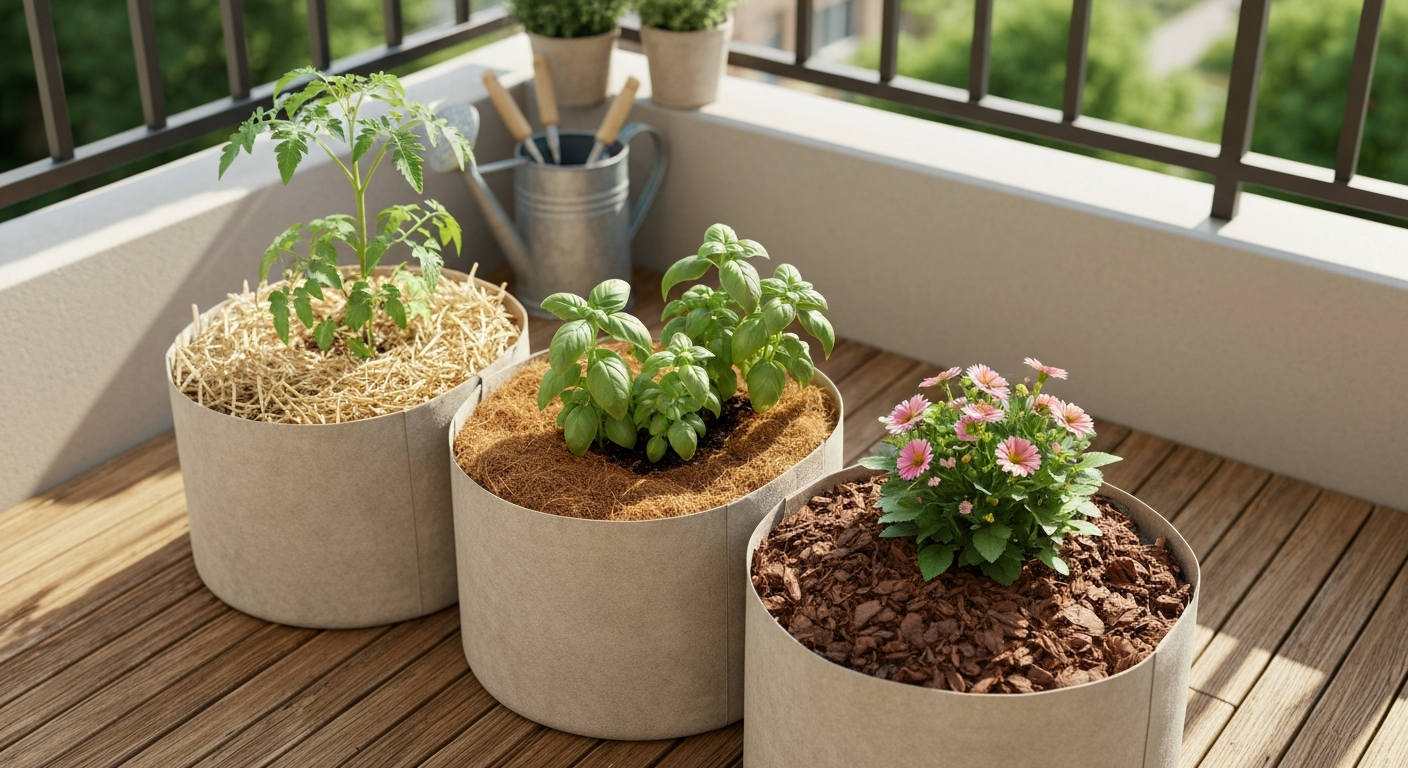
Best Mulch for Grow Bags: Top Picks for Vegetables & Flowers
Find the best mulch for fabric grow bags: top picks, how-to apply, crop & climate advice, and troubleshooting.
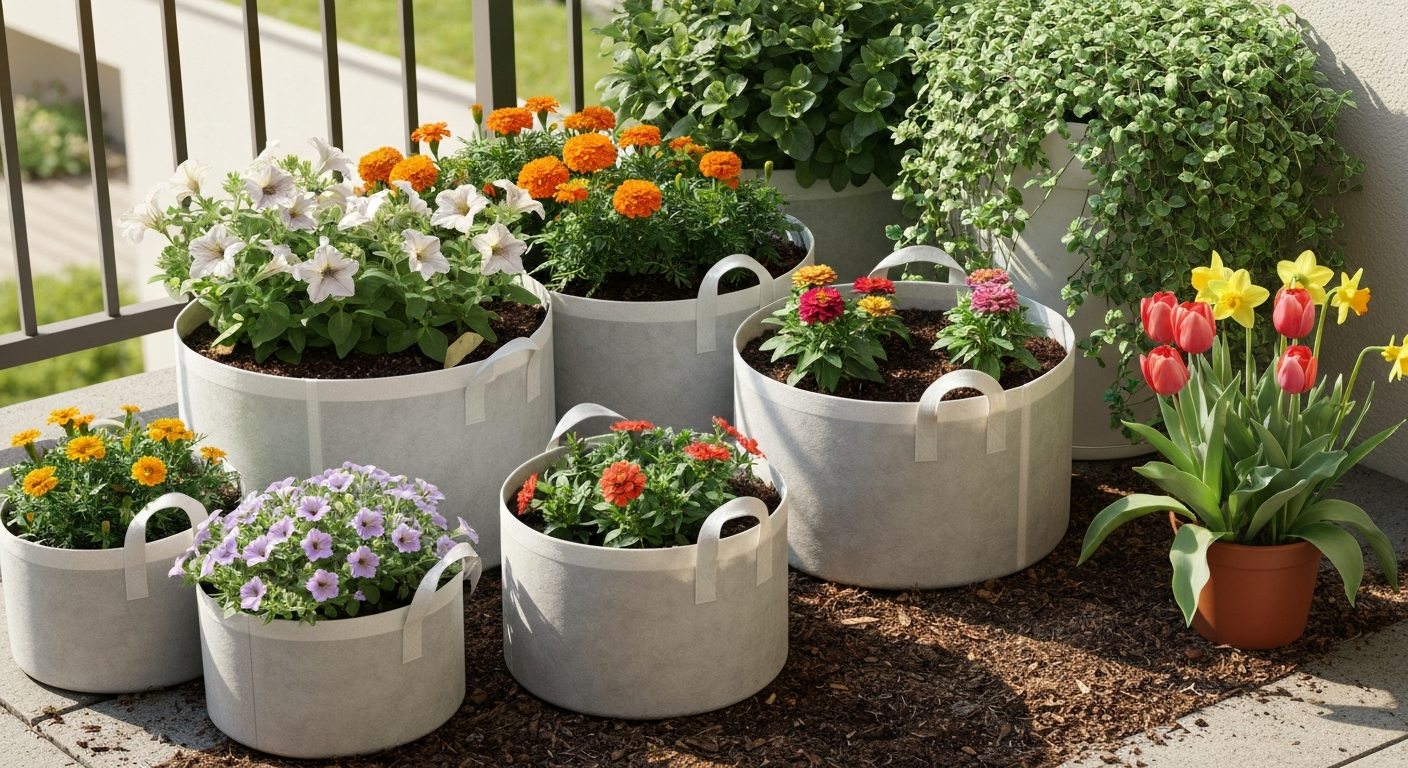
Best Flowers for Grow Bags: Top Picks, Soil & Care Guide DIY
Best flowers for grow bags: top annuals, perennials, bulbs & trailers; soil, fertilizer, planting and care checklists.