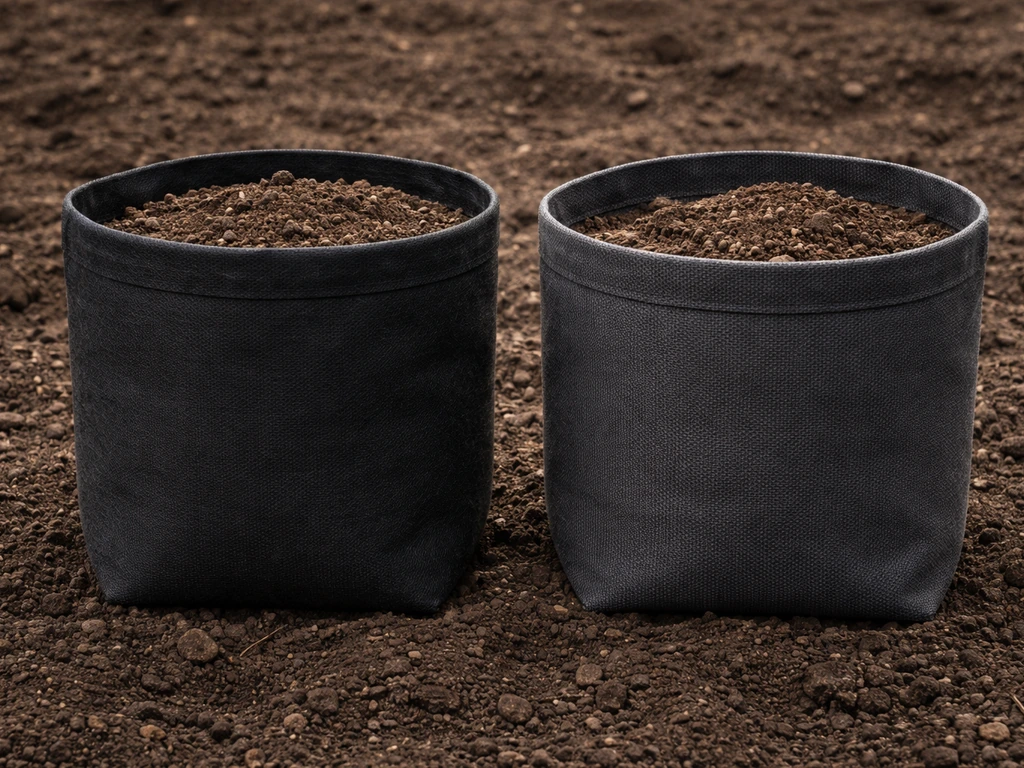
For most home growers in warm climates or full-sun sites, tan (light-colored) grow bags are the better default choice because they reflect more solar radiation, keep root-zone temperatures several degrees cooler, and reduce plant stress during summer. University and extension sources for home growers routinely recommend light‑colored or reflective exterior surfaces (white, light tan, white/black laminated) for containers in hot, sunny sites to reduce peak root‑zone temperatures and water demand University and extension sources recommend light‑colored or reflective exterior surfaces for containers in hot/sunny sites. Black grow bags are not a bad product, but in direct sun above roughly 27°C (80°F) ambient, their dark fabric can push substrate temperatures into the 35–50°C range, well above the 18–26°C sweet spot where most vegetables and flowers do their best root work. That said, if you're growing in a cool climate, a short season, or a sheltered spot, black bags can actually help by warming the root zone earlier in spring. Climate and placement matter far more than color alone.
Are Black or Tan Grow Bags Better? Choosing the Right Color
When color actually matters (and when it doesn't)
Color is not the most important variable in grow bag selection, fabric weight, construction, size, and watering habits all play a bigger role in overall plant health. But color becomes a meaningful factor the moment your bags are sitting in direct sun for most of the day. Here's a quick read on when to care about it.
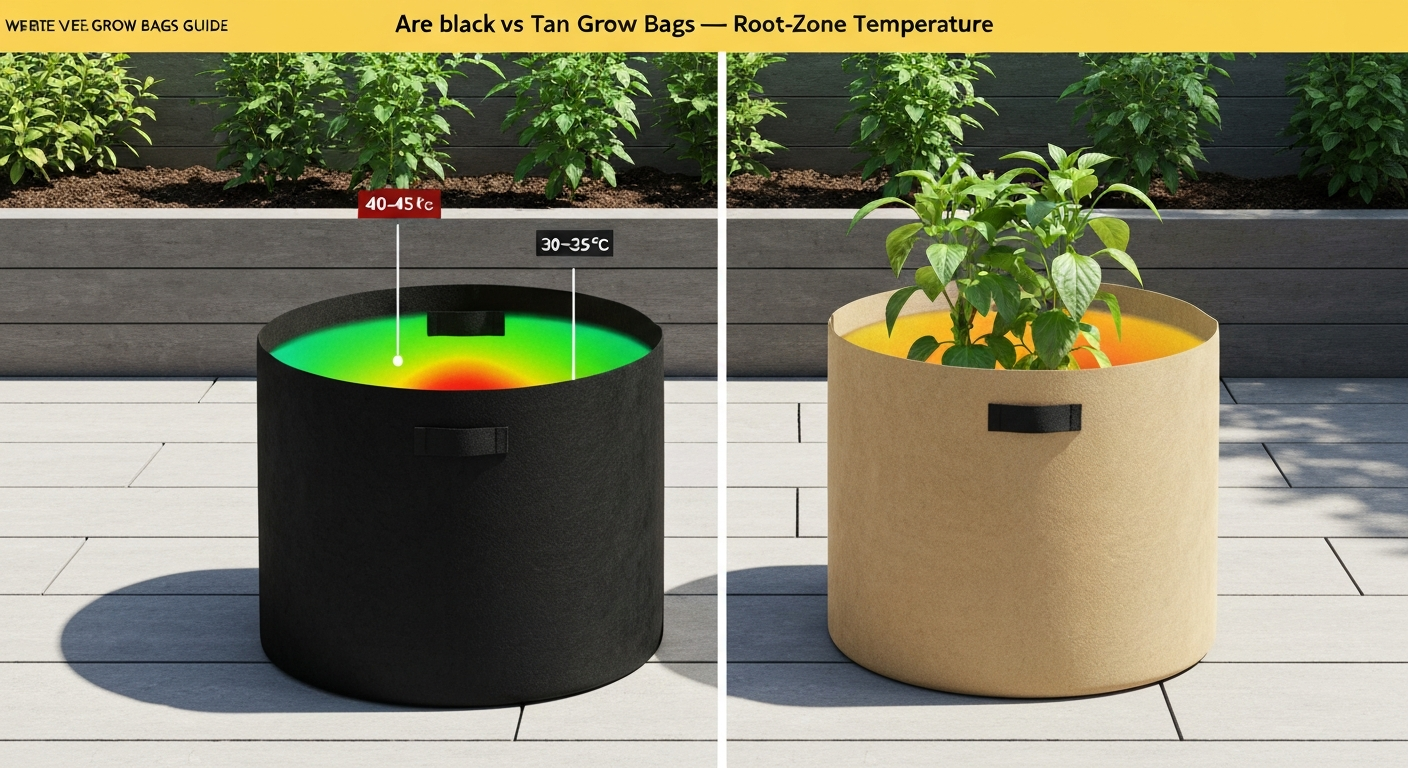
- Full sun, hot summers (sustained highs above 27°C / 80°F): color matters a lot. Black bags can raise substrate temps by 5–15°C over reflective exteriors, pushing roots into heat-stress territory.
- Partial shade or indoor setups: color makes very little practical difference. Either works fine.
- Cool or short-season climates (average highs below 20°C / 68°F): black bags are actually helpful — they absorb warmth and speed up early-season root activity.
- Growing mushrooms: light exclusion matters more than exterior color; either color works if the bag is opaque enough.
- Growing trees or large shrubs in containers long-term: durability and UV resistance become important alongside color.
- You're using shade cloth, mulching the surface, or placing bags against a wall: bag color becomes largely irrelevant because you're managing temperature externally.
- Budget is tight: don't pay a premium purely for color. A tan bag with thin fabric is not necessarily better than a well-made black bag in a shaded spot.
Black vs. tan: side-by-side comparison
| Factor | Black Grow Bags | Tan / Light-Colored Grow Bags |
|---|---|---|
| Solar heat absorption | High — absorbs most visible + NIR radiation | Low — reflects substantial solar radiation |
| Root-zone temperature in full sun | Can reach 45–50°C in studies; routinely 5–15°C warmer than reflective exteriors | Stays several degrees cooler; typically remains closer to ambient |
| Cool-season / early-spring warming | Beneficial — warms soil faster | Less effective at capturing early warmth |
| UV durability | Excellent — carbon black is both a UV stabilizer and absorber; typically rated 1,000–2,000+ QUV hours | Varies by UV additive package; often rated similarly but some cheaper tan bags degrade faster |
| Light penetration to roots | Very low — effectively light-proof at typical fabric weights | Low at standard GSM but can be slightly higher in lightweight fabrics |
| Watering demand in summer | Higher — heat absorption increases evaporation | Slightly lower in exposed sites |
| Aesthetic / visibility | Clean, professional look; hides soil stains | Can show algae or salt stains more visibly over time |
| Best climate match | Cool, temperate, short seasons | Warm, subtropical, full-sun gardens |
| Best crop match | Cool-season crops, spring starts, mushrooms | Warm-season vegetables, fruiting crops, long-season trees in hot climates |
How color drives root-zone temperature
This is the core science behind the whole debate. Dark fabrics absorb nearly all incoming solar radiation across the visible and near-infrared spectrum, that energy converts to heat and conducts straight into the substrate. Peer-reviewed field trials have measured black container exteriors raising substrate temperatures by 5–15°C compared with white or high-reflectance exteriors in full sun, with substrate peaks in black containers exceeding 45–50°C in some studies. Tan or light-colored fabrics reflect a meaningful fraction of that radiation, keeping the root zone materially cooler.
What makes this particularly important for fabric grow bags is that they have no insulating air gap the way a thick ceramic pot does. The fabric wall itself is the only barrier between the sun and your roots, so the exterior color has a direct and relatively fast effect on the internal temperature. One controlled nursery trial found that container color had a larger effect on root-zone temperature than irrigation frequency, meaning you can't simply water more often to compensate for a hot black bag in full sun. Most warm-season vegetables and flowers do their best root work between 18–26°C; sustained temperatures above 30–35°C suppress root growth, reduce nutrient uptake, and can lower fruit set in crops like peppers and tomatoes.
To put concrete numbers on it: in direct summer sun, a standard single-layer black fabric bag can reach substrate temperatures in the upper 30s to low 40s°C on a hot afternoon, while a tan or white-exterior bag under identical conditions will often stay 5–10°C cooler. That gap is the difference between a thriving root system and one that's shutting down. Pepper (Capsicum) trials have shown that plants with root zones held at a stable ~20°C produce better growth and stomatal function than those experiencing high, fluctuating root temperatures in the 25–40°C range, the exact scenario a black bag creates on a sunny patio.
Light penetration and its effect on roots and seedlings
Nonwoven polypropylene fabric, the material most grow bags are made from, is not fully opaque at every weight. Laboratory measurements on lightweight spunbond nonwovens (around 17–20 g/m²) show visible-spectrum (400–700 nm) transmittance of roughly 65–85%. Most grow bags are heavier than that, typically in the 100–300 g/m² range for 3- to 25-gallon sizes, and at those weights transmittance drops substantially. Still, a tan or white bag at lower GSM can pass slightly more light to the substrate than a black bag of equal weight.
For most established plants this is not a meaningful problem, roots don't need darkness to function and a small amount of diffuse light reaching the substrate won't hurt them. The exceptions are: seedlings and young transplants, where algal growth on the surface can compete for moisture and nutrients; and mushroom cultivation, where light exposure can trigger premature pinning or inhibit certain growth stages. If you're growing mushrooms, choose the most opaque bag available regardless of color, or use a dedicated mushroom grow bag designed to exclude light. For every other use, don't lose sleep over slight light penetration differences between a tan and a black bag at typical GSM ratings.
UV durability: which color lasts longer outdoors
Black grow bags have a genuine durability advantage here that often gets overlooked. The carbon black pigment used to make black polypropylene is itself one of the most effective UV stabilizers known for polymers. Carbon black absorbs UV radiation before it can break down the polymer chains, which is why black plastic products tend to outlast colored or natural plastic equivalents outdoors. Many manufacturers cite accelerated weathering test results in the 1,000–2,000+ QUV hours range (ASTM G154) for UV-stabilized black PP fabric, and field experience generally backs this up.
Tan and light-colored grow bags can match black bags in UV durability if they contain proper UV-stabilizer additives (HALS compounds, UV absorbers), but not all budget tan bags do. If you're buying tan or white bags, check whether the product is labeled UV-stabilized or UV-treated. A low-quality tan bag may start cracking or shredding at the seams within a single season outdoors, while a quality black bag in the same spot might last three to five years. This is one category where the carbon-black construction of cheaper black bags often beats equivalent-price tan alternatives. If longevity matters to you, especially for trees or perennial plantings, either choose a reputable brand's tan bag with documented UV protection, or default to black.
How fabric material and construction interact with color
Color doesn't exist in isolation, it's a property of the fabric itself, and the fabric's construction determines how strongly the color effect plays out. Most grow bags are made from nonwoven or woven polypropylene, with some using felt-like recycled PET fabric. If you want a quick primer on what grow bags are made of, see the section describing common materials like nonwoven polypropylene and recycled PET fabrics. The GSM (grams per square meter) rating, whether the fabric is spunbond or needle-punched, and whether it uses a single or double layer all change how much heat the bag absorbs and retains, how much water it loses through the sidewall, and how much light reaches the substrate.
A heavier, denser fabric (say, 300 g/m²) in tan will reflect more solar energy and hold structural shape better than a thin 100 g/m² black bag. Some manufacturers have gone further and produced double-layer bags with a white or reflective outer layer and a dark inner layer, a design that reflects solar radiation from the outside while still excluding light from the root zone on the inside. These white-laminated constructions can offer measurable substrate cooling benefits over single-layer black bags in identical growing conditions. If you grow in a hot climate and want the best of both worlds, this construction is worth the extra cost.
Higher GSM fabrics also reduce evaporative water loss through the sidewall compared with lighter fabrics, which matters in summer when all fabric bags dry out faster than rigid containers. Growing Vegetables in Containers and Salad Tables (University of Maryland Extension) reports that fabric pots evaporate water faster than rigid plastic pots because of porous sidewalls and increased surface area, so they usually require more frequent irrigation in hot, windy, or full‑sun sites. If you're already choosing a tan bag for heat management in a hot site, go for at least 150–200 g/m² fabric weight to avoid spending your whole summer watering. The material and construction details for grow bags go deeper than this article covers, they're worth understanding if you're shopping for specific crops or climates.
Recommendations by plant type and climate
Warm-season vegetables (tomatoes, peppers, cucumbers, squash)
These are probably the most common grow bag crops and also the most sensitive to root-zone overheating. Peppers especially, research on Capsicum confirms that high, fluctuating root temperatures reduce growth and stomatal function even in otherwise well-managed plants. In any climate where summer highs consistently exceed 27°C (80°F) and your bags will be in direct sun, choose tan or light-colored bags. If you already own black bags, move them to a partially shaded position or wrap them in a reflective outer cover during peak summer.
Cool-season vegetables (lettuce, kale, chard, broccoli)
Cool-season crops are usually grown in spring and fall when ambient temperatures are lower and the sun angle is shallower. Black bags can actually help here by warming the root zone a few degrees above ambient, extending the growing window at both ends of the season. They're a reasonable choice for cool-season crops in temperate or northern climates.
Flowers and ornamentals
Most flowering annuals and perennials benefit from the same cooler root-zone conditions as warm-season vegetables. University nursery trials on ornamentals like holly showed improved root dry weight and shoot growth when containers were switched from black to white or high-reflectance exteriors in warm climates. For patio or deck flowers that will sit in full sun from May through September, tan or white bags are the better choice. In partial shade or cooler regions, color makes little difference.
Mushrooms
Mushroom cultivation has almost no overlap with the color debate as it applies to vegetable growing. Mushrooms don't photosynthesize, so root-zone warming from solar absorption is irrelevant (most mushroom growing happens in controlled indoor environments anyway). What matters is light exclusion during certain growth stages. Choose the most opaque bag available. If growing outdoors, black bags may actually help exclude light better at typical fabric weights, but a purpose-made mushroom grow bag with a filter patch is always the right tool here regardless of color.
Trees and large shrubs
For trees, fruit trees, ornamental shrubs, dwarf conifers, the bags will be outdoors for multiple years. UV durability becomes a primary concern. Black bags have a natural edge here due to carbon black construction, but a quality tan bag with UV stabilizer additives will hold up comparably. For trees in hot climates (think fig, citrus, pomegranate on a south-facing patio), the root-zone cooling benefit of tan bags outweighs the minor UV durability difference. Choose a heavy fabric (200 g/m² or more), a tan or white-exterior color, and look for welded or reinforced handles that won't tear when you move a 25+ gallon bag.
Hot climates vs. cool climates: a climate-first view
| Climate / Growing Condition | Recommended Color | Reason |
|---|---|---|
| Hot summers, full sun (USDA zones 8–13) | Tan / light / white-exterior | Keeps root zone 5–10°C cooler; prevents heat stress in fruiting crops |
| Temperate, mixed sun/shade (zones 5–7) | Either; tan preferred in sunny spots | Color effect moderate; tan is safer default |
| Cool/short season (zones 3–5) | Black | Absorbs warmth, speeds soil heating in spring |
| Indoor / controlled environment | Either | Color has negligible effect indoors |
| Partial shade, any climate | Either | Reduced solar input makes color difference minimal |
| Full sun, cool climate (e.g., coastal) | Black or tan | Low ambient temps mean black bags rarely overheat roots; either works |
Managing temperature regardless of bag color
If you already have black bags and you're heading into a hot summer, you're not without options. Several practical techniques can reduce peak substrate temperatures by 5–10°F (3–6°C) without replacing your bags.
- Shade cloth: a 30–50% shade cloth over or around the bag in afternoon hours (when solar angle is lowest and radiation most intense) can meaningfully reduce heating.
- Mulch the surface: 5–7 cm (2–3 inches) of straw, wood chips, or coco coir on top of the substrate reduces evaporation and buffers surface temperature.
- Raise bags off hot pavement: placing bags on a wooden pallet or mesh stand creates an air gap beneath the bag and reduces heat transfer from hot concrete or asphalt.
- White reflective outer wrap: wrapping the bag in a white fabric or reflective foil cover effectively turns a black bag into a light-colored one for solar absorption purposes.
- Cluster bags together: grouping bags reduces the surface area exposed to direct sun and creates a modest mutual shading effect on sidewalls.
- Water in the morning: watering before peak heat cools the substrate evaporatively and ensures roots are hydrated before stress peaks.
- Double-wall or white-laminated bags: if buying new bags, these constructions offer a built-in solution — reflective outer layer, dark inner layer.
Actionable buying guide: choosing by crop and site
Here's how I'd approach the purchase decision if I were standing in front of a grow bag product page or retailer shelf right now. For prioritized picks, sizing guidance, and crop-specific recommendations, see our grow bags best buying guide.
- Start with climate. If your summer highs routinely exceed 27–30°C (80–86°F) and bags will be in full sun, choose tan or light-colored bags. If you're in a cool or short-season climate, black is fine and may help.
- Match to your crop. Fruiting vegetables (tomatoes, peppers, cucumbers) and most flowers: go tan in warm climates. Cool-season crops, mushrooms (indoors): black is fine or preferred. Trees for long-term use: prioritize UV stability and fabric weight over color, but choose tan in hot climates.
- Check the fabric weight. For any warm-season outdoor use, aim for at least 150 g/m². Heavier fabric (200–300 g/m²) reduces both heat absorption and sidewall evaporation, meaning less watering and more stable root conditions.
- Look for UV stabilization labeling on tan/white bags. If the bag doesn't specify UV-stabilized or UV-treated, the carbon-black construction of a quality black bag will almost certainly outlast it outdoors.
- Consider double-layer or white-exterior/dark-interior bags if budget allows. This construction gives you root-zone cooling from the outside plus effective light exclusion on the inside.
- Check handles and drainage. For anything above 10 gallons, you want reinforced or double-stitched handles. Make sure the bottom fabric is porous (or has drain holes if it's a woven base) — color has zero bearing on drainage.
- Size for the crop, not convenience. Color is secondary to getting the volume right: at least 5 gallons for tomatoes and peppers, 10 gallons for indeterminate tomatoes, 15–25+ gallons for trees. An undersized tan bag is worse than a correctly sized black one.
What about other container types?
The black vs. tan debate is specific to fabric grow bags, but it's worth briefly noting that alternative containers handle this problem differently. Air pots use a rigid-wall design with open-sided protrusions that prevent root circling and promote air pruning, like fabric bags, but their rigid structure creates an inherent air gap between the container wall and the substrate, which provides some passive insulation against heat. Rigid plastic containers in dark colors have the same overheating problem as black fabric bags, sometimes worse because they don't lose heat through sidewall evaporation the way fabric does. If you're torn between container types and heat management is a key concern, fabric bags in a light color are a strong choice, but worth comparing against the alternatives for your specific setup. For a broader comparison of fabric grow bags and other container types, see our guide on grow bag vs container. The comparison between grow bags and air pots, and grow bags versus traditional rigid containers, is a larger topic in its own right and digs into root architecture and drainage differences as well.
Quick selection checklist
Before you buy, run through this checklist. Color is one item on the list, not the only one.
- Color: tan/light for hot climates and full-sun sites; black for cool climates or spring warming.
- Fabric weight (GSM): 150 g/m² minimum for outdoor warm-season use; 200–300 g/m² for trees or high-heat sites.
- UV stability: verify UV-stabilized label on tan/white bags; black bags with carbon black construction have this built in.
- Construction: single-layer (adequate for most uses), double-layer or white-exterior/dark-interior (best for hot full-sun sites).
- Size: correctly sized for root volume of the target crop — don't compromise here for any reason.
- Handles: reinforced or double-stitched for anything 7 gallons and above.
- Drainage: confirm porous base or drain holes before filling.
- Watering plan: all fabric bags dry faster than rigid containers; have a consistent watering schedule ready, especially in summer.
FAQ
Short answer — are black or tan grow bags better for home growers?
It depends on your climate, site and crop. Black grow bags absorb more solar energy and warm the root zone (helpful in cool spring/short-season sites, risky in hot/sunny sites). Tan (or light‑colored/white‑laminated) bags reflect more sunlight, keep substrate cooler and reduce heat stress and water demand in hot, full‑sun locations. Choose black for early‑season warming or cool climates; choose tan/light for hot climates, long warm seasons, or heat‑sensitive crops.
How much does color actually change root‑zone temperature?
Measured differences are substantial in full sun: dark exteriors can raise substrate temperatures by several °C up to 5–15+ °C at peak compared with light/reflective exteriors. In extreme midday sun, black containers have been observed to push substrate peaks above 45 °C in some trials, while light colors keep peaks much lower. The exact effect varies with fabric construction, insulation, exposure and climate.
Why does black heat up more than tan?
Dark pigments (carbon black) absorb more visible and near‑infrared solar radiation; light/tan/white surfaces reflect more of that energy. That optical difference drives higher surface temperatures on black materials and transfers heat into the substrate through the sidewalls.
Does the fabric material or construction matter more than color?
Both matter. Fabric type (nonwoven polypropylene, woven PP, cotton blends), GSM/weight, single vs double layer and laminated constructions change how much light and heat pass through and how much water or vapor escapes. For example, white‑laminated or double‑layer bags reflect sunlight while still blocking light into the root zone. Heavier or laminated fabrics reduce PAR transmission and evaporative cooling; lightweight nonwovens transmit more light and vapor. Color interacts with these properties — a light laminated bag will cool more than a single‑layer black bag.
Which crops benefit from black grow bags?
Use black or dark bags when you want earlier or faster root‑zone warming: cool climates, early spring starts, short growing seasons, or for warm‑season crops that benefit from warmer roots (e.g., some tomatoes, peppers, melons) provided daytime peaks won’t exceed crop tolerances. Black can speed germination and early growth but watch for midday heat stress later in the season.
Which crops are better in tan or light‑colored grow bags?
Heat‑sensitive crops and anything with optimal root temperatures in the mid teens to mid‑20s °C (many vegetables, ornamentals, some fruit crops) do better with cooler root zones in hot conditions. In hot climates or full‑sun rooftops, choose tan/light/white bags for tomatoes, leafy greens, many herbs, ornamentals and potted trees to avoid root overheating, reduced fruit set or increased irrigation demand.
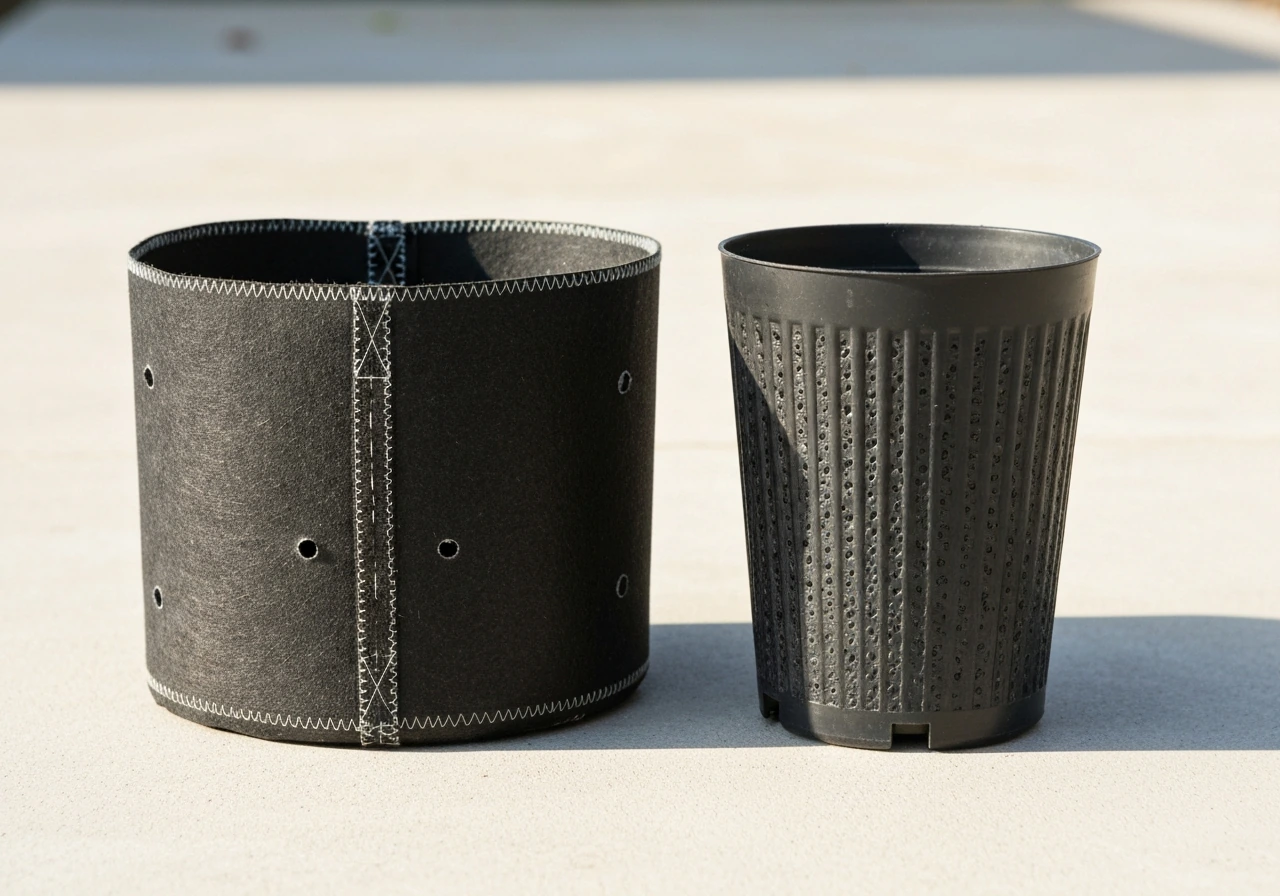
Compare grow bags and air pots for root health, watering, yield, and plant fit, with clear buying and care guidance.
Learn what fabric grow bags use, key components, and how materials affect drainage, airflow, heat, durability, and food
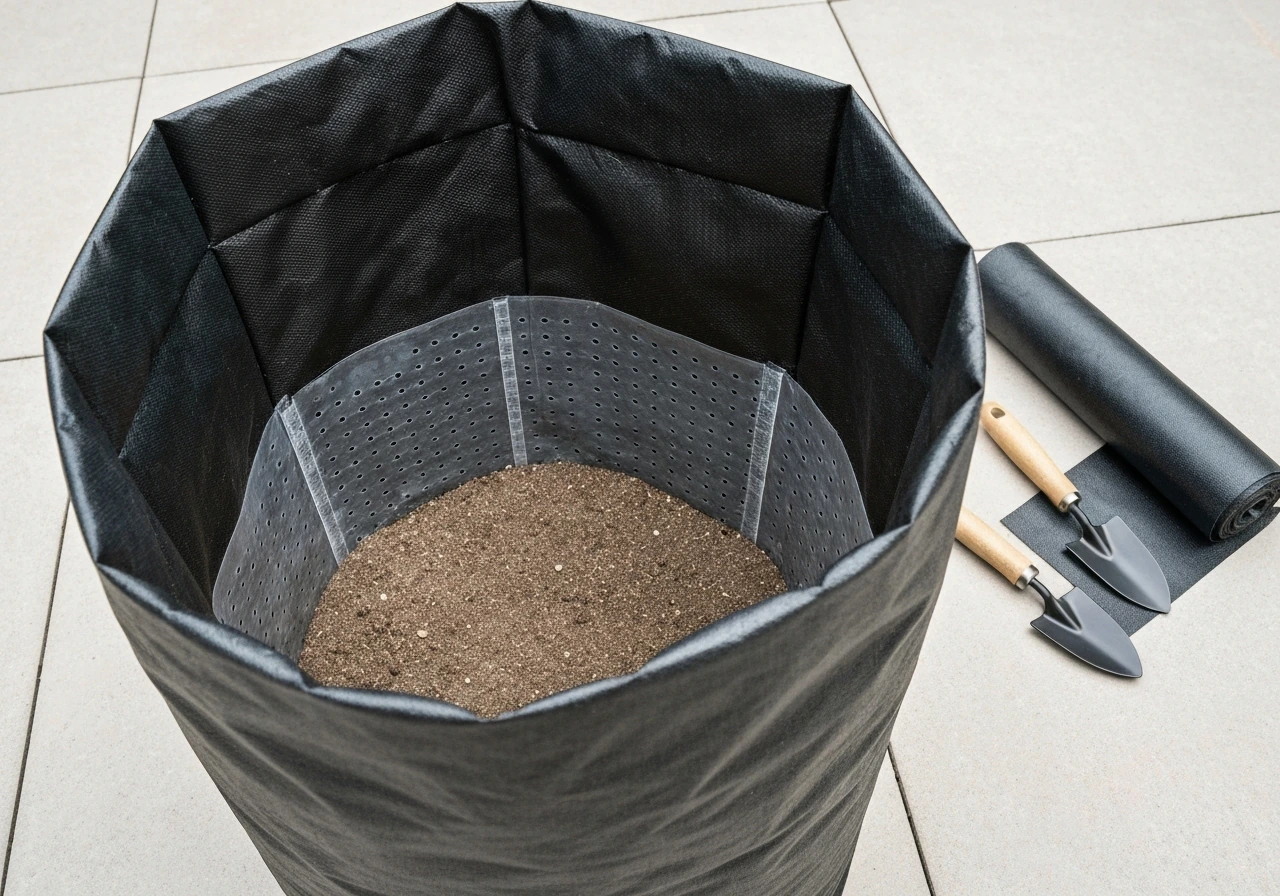
Choose the best landscape fabric for grow bags with weed-blocking, drainage and aeration tips plus DIY install steps.