
Grow bags don't need saucers to function, they're designed to drain freely through the fabric without them. But if you're placing a grow bag on a wooden deck, a balcony with a waterproof membrane, inside your home, or anywhere runoff could cause staining or damage, a saucer or drip tray is genuinely worth using. Think of it less as a drainage requirement and more as surface protection.
Do Grow Bags Need Saucers? Drainage, Setup & Best Picks
Marcus Holloway
19 Jul 2026
How fabric grow bags actually work
Fabric grow bags, the kind made from nonwoven or woven polypropylene felt, are fundamentally different from rigid plastic pots. The fabric itself is porous, so excess water doesn't pool at the base and wait for a drainage hole to let it out. Instead, water moves through the fabric walls and base continuously, a bit like wringing out a sponge. This is also what enables air pruning: roots that reach the bag wall encounter air, dry out slightly, and stop elongating rather than circling the pot.
That combination of drainage and aeration is why fabric bags have become a legitimate growing tool for tomatoes, potatoes, herbs, dwarf fruit trees and more, not just a novelty. Home growers use them on patios, balconies, porches, greenhouses and indoors near windows or under grow lights. Each setting has different runoff considerations, which is where the saucer question becomes practical.
How grow bags drain compared to plastic pots
The drainage mechanism in a fabric bag is passive and distributed. Water exits through the entire surface area of the fabric, the sides and the base, rather than through one or two holes at the bottom. In independent testing by Garden.com (seasonal trial of seven grow bags, 2026), nonwoven fabric bags drained within roughly 90 seconds after a heavy watering. A woven polypropylene bag in the same test held standing water for four to six minutes. That's a meaningful difference if your goal is preventing root-zone saturation.
Fabric also promotes evaporation from the side walls, which keeps the root zone cooler and slightly drier between waterings compared to a solid plastic pot of the same volume. The tradeoff is that fabric bags dry out faster, so you'll water more frequently, especially in warm weather or low-humidity environments. Root-zone oxygen matters here: research on containerized tomatoes shows that saturated pore spaces reduce oxygen availability and can cause measurable growth setbacks, while work on root-rot pathogens (including Pythium and Phytophthora) consistently links prolonged saturation to disease risk. Good drainage isn't just about dry feet, it's about keeping the root zone aerobic.
Do grow bags leak, and where does the water go?
Yes, grow bags leak, intentionally. Fabric bags release water through both the base and the side walls, so runoff doesn't only appear directly beneath the bag; it can seep laterally from the lower sides too. Manufacturers including VIVOSUN and Smart Pots acknowledge this in their product literature and FAQs. On a surface like bare soil, gravel, or an open-slatted deck, this lateral and base seepage disperses harmlessly. On a sealed balcony, timber decking, or indoor flooring, it shows up as wet patches, staining, or pooling. For more on whether grow bags leak and how to manage the runoff, see our guide on do grow bags leak water.
A saturated 10-gallon (38 L) nonwoven fabric bag weighs around 22 kg fully wet, according to Garden.com's testing. That's a significant volume of water to manage if you're on a balcony with a drainage membrane or in an upstairs apartment. The fabric won't hold it all, that's the point, so you need to plan for where it ends up.
Do grow bags need drainage holes?
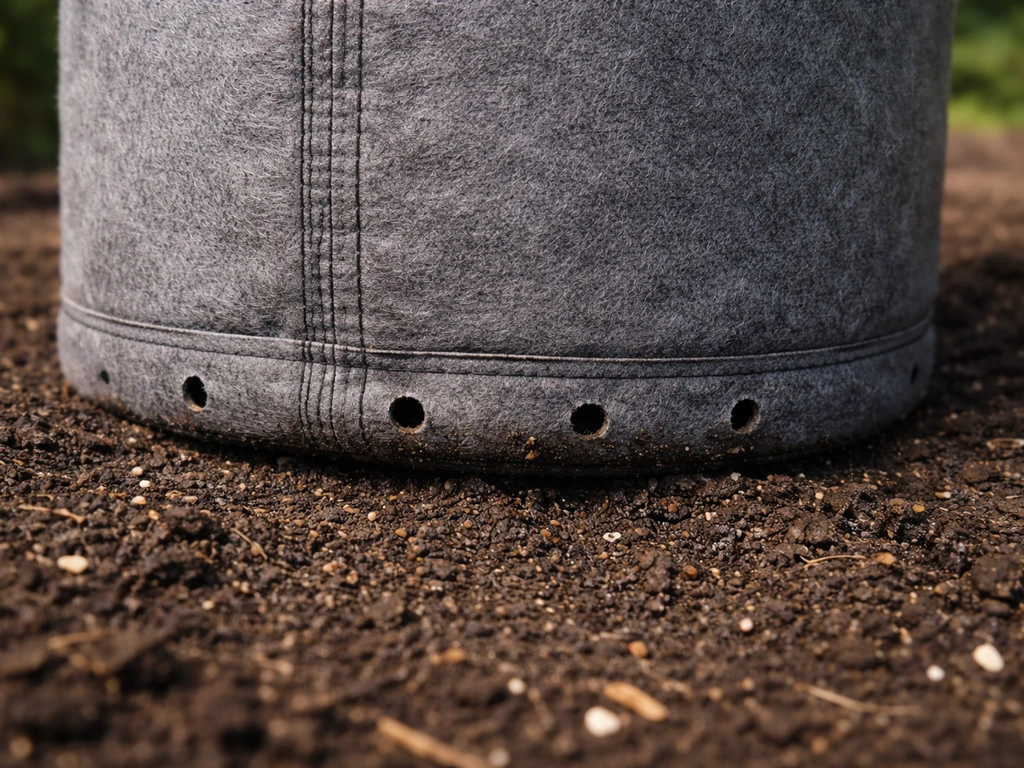
Standard nonwoven fabric grow bags don't need extra drainage holes. The fabric itself handles drainage, adding holes to the base of a fabric bag is unnecessary and can weaken the structure. Smart Pots and other major brands are explicit about this: drainage happens through the fabric, not through punched holes. If you're using an open-top grow bag (a bag with a rigid or semi-rigid base and open top designed to behave more like a raised bed), the drainage design may differ, check whether the base is solid or porous. For a focused FAQ on whether grow bags need holes in the bottom, see our guide 'Do grow bags need holes in the bottom'. If you’re wondering do grow bags need drainage holes, the short answer is no, the fabric provides the drainage so extra holes aren’t necessary.
The exception worth knowing: some DIY or budget bags made from thicker woven fabric or with a denser weave may drain more slowly than you'd expect. If you notice standing water on the surface after watering and it's taking several minutes to absorb, that's a sign the mix may be too dense (compacted or peat-heavy without enough perlite) rather than a fabric drainage problem. Adjusting the soil mix usually resolves it faster than adding holes.
How full should you fill a grow bag?
Fill fabric grow bags to within about 5 cm (roughly 2 inches) of the rim. That headspace serves two purposes: it gives you room to water without immediate overflow running down the sides before the soil can absorb it, and it leaves space for a thin mulch layer if you want to slow evaporation. For a quick refresher on recommended fill levels, see our guide on how full to fill grow bags. The Garden.com test recommends this fill level specifically to maximize root volume while keeping watering manageable, filling all the way to the top means water pours over the edge on nearly every watering session, which is messy and wastes nutrients if you're fertigating. If you're asking "do you fill grow bags to the top", the short answer is no, leave about 5 cm (2 inches) of headspace to avoid overflow, reduce mess, and prevent nutrient loss.
On larger bags (15 gallon / 57 L and above), that 2-inch headspace becomes more important because the bag holds more water per watering cycle. Leaving adequate headspace also reduces the chance of oversaturating the upper root zone during heavy rain events, which matters most for crops sensitive to root rot like tomatoes and strawberries.
What saucers, trays and liners actually do for grow bags
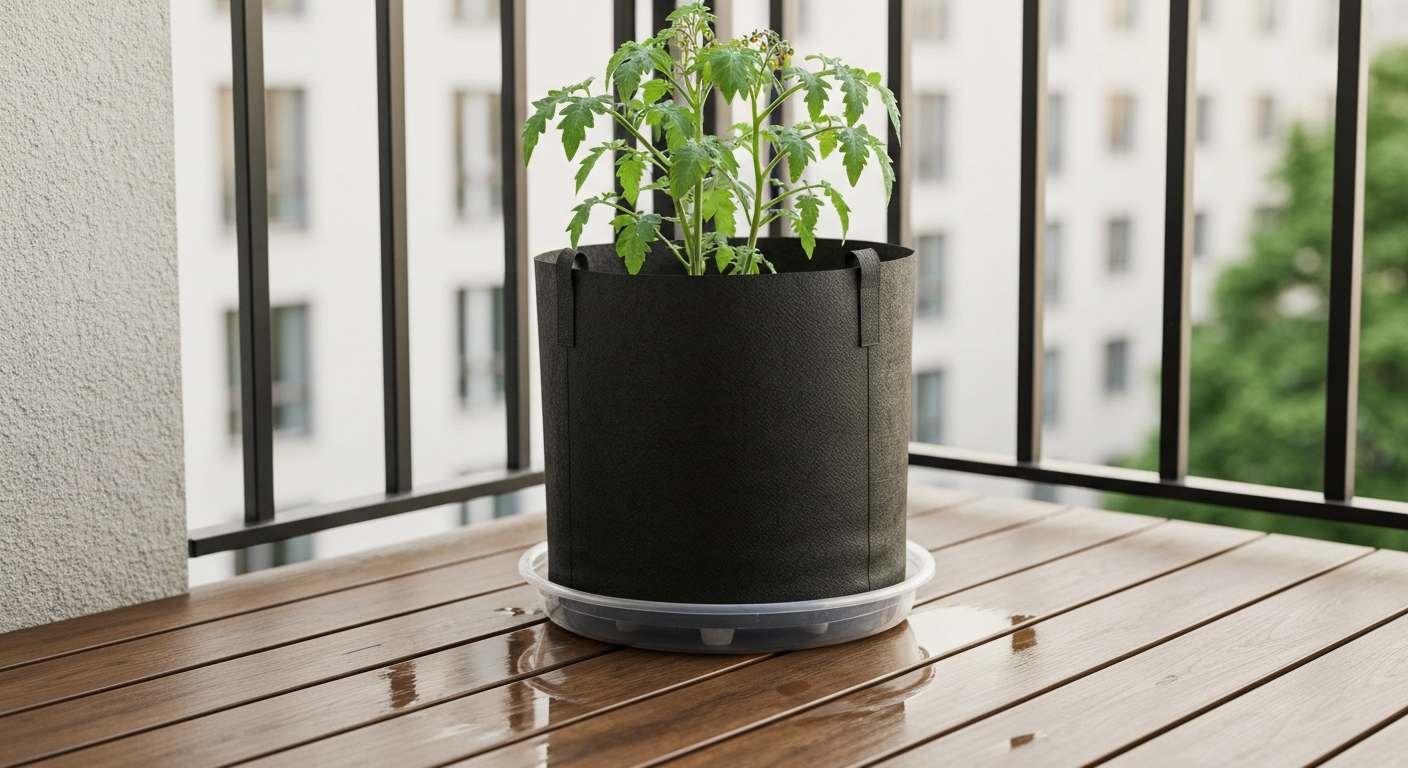
A saucer or drip tray doesn't improve drainage, it catches drainage. That's an important distinction. If the goal is protecting your deck, balcony membrane, or indoor floor from seepage and staining, a saucer solves the problem cleanly. If you're on bare ground or a surface where runoff disperses naturally, a saucer is optional and mostly a matter of convenience.
Smart Pots' own FAQ recommends using a drainage saucer for indoor use or on surfaces that could be damaged by water. That's good practical advice. What it doesn't say, but university extension guidance does, is that saucers create their own risks if you ignore them. Standing water in a saucer invites root hypoxia (the bag base sits in pooled water, restricting drainage exactly where you want it to flow freely), promotes mold and fungus gnats indoors, and can breed mosquitoes outdoors. The University of Maryland Extension specifically flags this: catch trays left with standing water are a mosquito habitat, and the fix is routine emptying or elevating the pot so the saucer water sits below the bag's exit level.
The cleaner solution is elevation: pot feet, risers, or a plant caddy that lifts the bag 2–3 cm above the saucer surface. Extension and gardening guidance consistently recommend pot elevation (pot feet, risers, plant caddies) or placing bags on a grate so the bag’s base does not sit in pooled saucer water, this preserves drainage, reduces root hypoxia risk and prevents damage to balcony/deck surfaces. This keeps the bag's base out of pooled water while still containing runoff. VIVOSUN's self-watering fabric pot base takes this further, it's an elevated drain plate with a built-in reservoir (rated at about 1.3 gallons / 4.9 L) that holds overflow while keeping the bag elevated, which is a practical setup for indoor and balcony growing where you want to minimize trips to empty trays.
When a waterproof liner makes more sense than a saucer
For balconies where runoff policies apply (many condos and HOAs prohibit uncontrolled drainage onto common areas or neighboring units below), a saucer may not be enough if water is also seeping from the bag's sides. In those situations, a waterproof liner or tray that wraps the base and lower sides of the bag catches lateral seepage too. Some growers place the grow bag inside a slightly larger rigid container or a lined wicker basket for this reason. It's not the most elegant solution for large bags, but it works. If you're in a multi-unit building, it's worth checking your building's policies before you plant, no amount of saucer engineering fixes a staining dispute after the fact.
Situations vs. what to do: a practical comparison
| Growing situation | Runoff risk | Recommended action |
|---|---|---|
| Bare ground or garden bed | None | No saucer needed; water drains into soil naturally |
| Gravel or slatted wooden deck (open gaps) | Low | No saucer needed; monitor for wood discoloration over time |
| Sealed timber or composite deck | Medium: staining, swelling | Use saucer or tray; elevate bag on pot feet above saucer water |
| Balcony with waterproof membrane (owned unit) | Medium: pooling, membrane damage | Saucer or drip tray; elevate; empty regularly or use self-watering base |
| Balcony in apartment/condo building | High: seepage to neighbors below, HOA rules | Saucer plus lateral liner or wrap; check building rules before planting |
| Greenhouse with floor drain | Low | No saucer needed; drain handles runoff directly |
| Greenhouse with solid floor, no drain | Medium: pooling, humidity | Saucer or grated tray; elevate to maintain airflow |
| Indoors on hard floor (tile, wood, laminate) | High: water damage, staining | Saucer required; elevate bag; empty saucer within 30 minutes of watering |
| Indoors on carpet | Very high | Saucer plus waterproof liner; caddy for mobility; consider moving outdoors |
Choosing the right saucer for your grow bag
The key sizing rule is simple: saucer diameter should be at least equal to the bag's base diameter, and ideally 1.5 to 4 inches (roughly 4–10 cm) wider. Grow bags aren't perfectly round when filled and weighted, they spread slightly, so a saucer that's just the theoretical diameter of the bag will often have water run past the edge. Erring wider is almost always the right call.
Material options at a glance
| Material | Durability outdoors | Weight capacity | Best for | Notes |
|---|---|---|---|---|
| UV-stabilized polypropylene / resin | Good (UV-rated) | Adequate for most sizes up to 10 gal | Patios, balconies, indoors | Common, affordable; brands like Bloem use this; check UV rating for outdoor longevity |
| Heavy-duty plastic (thicker gauge) | Moderate | Up to 15–20 gal bags | Outdoor and greenhouse | Thicker than standard saucers; less likely to crack under large saturated bags |
| Terracotta / clay saucer | Fair (can crack in frost) | Low-medium | Small indoor bags only | Heavy itself; porous — will stain surfaces; not ideal for large fabric bags |
| Galvanized steel tray | Excellent | High; handles 20+ gal | Large outdoor bags, greenhouse | Rust-resistant if galvanized; heavy; good for permanent setups |
| Self-watering reservoir base (e.g., VIVOSUN) | Good (indoor/sheltered) | Matched to bag size | Indoor, balcony, greenhouse | Holds ~1.3 gal; elevates bag; best overall for grow bags used indoors |
| Plant caddy / rolling saucer combo | Moderate | Check weight rating | Large indoor or balcony bags | Adds mobility; confirm waterproof base before use on wood floors |
Weight capacity matters more than most growers expect. A 10-gallon fabric bag with saturated growing mix weighs around 22 kg (48 lbs). A cheap thin-plastic saucer designed for a 10-inch nursery pot will flex and potentially crack under that load. If you're running 15- or 20-gallon bags, look at heavy-duty resin saucers, galvanized steel trays, or a purpose-built self-watering base that's matched to the bag size. The caddy option is worth considering for large bags indoors, being able to roll a 20 kg pot to check underneath it or move it for cleaning is genuinely useful.
Mold, root rot and keeping everything healthy
The biggest risk with saucers isn't the saucer itself, it's leaving water sitting in it. Fabric bags promote excellent aeration through the side walls, but that benefit disappears if the base is submerged in pooled saucer water. Pythium and Phytophthora, the pathogens responsible for most container root rot, thrive in oxygen-poor, saturated conditions. University extension guidance is consistent on this: saucers should catch overflow, not store it. Empty them within 30 minutes of watering, or elevate the bag so water drains below the bag's base level.
Indoors, the same standing water that threatens roots also raises humidity around the bag's lower sides, which can encourage mold on the fabric exterior. This doesn't usually harm the plant directly, but it's worth monitoring. Good airflow around the bag (don't push it flush against a wall), a well-draining growing mix with adequate perlite, and a disciplined watering schedule, water when the top inch is dry, not on a rigid daily schedule, keep these problems away. If you're curious about mold specifically on the fabric, that's a topic worth exploring in more depth on its own. For more detail, see do grow bags get moldy for causes, prevention tips, and how to clean fabric bags safely.
Practical setup checklist for grow bags with saucers
- Measure the base of your filled grow bag — not the nominal diameter, the actual spread — and choose a saucer at least 1.5 to 4 inches wider.
- Check the saucer's weight rating against your expected bag weight when saturated (roughly 2–2.2 kg per liter of bag volume as a rough guide).
- Elevate the bag on pot feet, risers, or a caddy so the bag base sits 2–3 cm above the saucer floor, not resting in collected water.
- For balcony or indoor use, consider a self-watering base or reservoir tray that combines elevation and water collection in one unit.
- Fill the grow bag to within 5 cm (2 inches) of the rim to leave watering headspace and reduce overflow during heavy watering sessions.
- Empty saucers or trays within 30 minutes after each watering — don't let water sit overnight.
- Check saucers weekly for algae or mosquito larvae during warm months; clean with a dilute bleach solution and rinse thoroughly.
- If you're on a shared balcony or in a condo, add a waterproof liner or tray that covers the bag's lower sides, not just the base, to capture lateral seepage.
Alternatives to saucers worth knowing
Saucers aren't the only option. If you want runoff control without the saucer maintenance overhead, a few alternatives work well depending on your setup. Pot feet or grated platforms on a balcony direct water toward a floor drain rather than pooling it. A plant caddy with an integrated waterproof tray gives you mobility and containment together. For larger outdoor setups on open decks, a layer of landscape gravel underneath the bag lets water drain through and evaporate without pooling. And for indoor growers who want the least intervention, self-watering bases with a visible reservoir indicator (like the VIVOSUN system) effectively automate the overflow management so you're not checking saucers manually after every watering session.
The bottom line is straightforward: grow bags are designed to drain well on their own, and in many outdoor settings no extra hardware is needed at all. If you want a concise answer to the common question “do grow bags drain well,” there’s a short FAQ that summarizes drainage performance and practical tips. Where your surface matters, wood, membrane, tile, carpet, a saucer or tray is the easiest fix. Pair it with elevation to keep the bag base out of standing water, size it generously, and empty it promptly. That's really all it takes.
FAQ
Quick answer: Do grow bags need saucers?
Short, evidence‑based answer: Yes — with nuance. Fabric/open‑top grow bags are designed to drain freely through the fabric, so they do not strictly require added bottom holes. However, on patios, balconies, porches or indoors you should use a saucer, tray, liner or other runoff control to protect the surface and prevent standing water under the bag. University extension guidance and major manufacturers agree: allow free drainage but manage the runoff.
How do grow bags drain (fabric vs other materials)?
Fabric (nonwoven/porous) bags drain through the sides and bottom fabric by wicking and direct flow — they typically shed excess water much faster than some woven/polypropylene bags. Independent tests show nonwoven fabric bags often stop free-draining within ~90 seconds after heavy watering, while woven polypropylene types can hold standing water several minutes longer. Rigid plastic or ceramic pots rely on discrete bottom holes for drainage and hold more standing water before it exits.
Do grow bags leak and where does the water go?
Yes — properly functioning fabric bags will seep or drip water out of the base and lower sides. Water leaves via lateral seepage through the fabric, gravity through the lowest point and any seams, and evaporation from the bag surface. That runoff can soil or stain decking, soak a balcony membrane, or collect beneath the bag unless caught by a saucer or liner.
Should I add drainage holes to a fabric grow bag?
No—don’t add holes to purpose‑made fabric bags. Fabric pots are designed to breathe and drain through the material; cutting extra holes can weaken the structure, increase soil loss and reduce the fabric’s aeration benefits. Only add holes to rigid or thick-walled containers that lack openings. If a bag is a hybrid (woven plastic liner inside fabric) follow the manufacturer’s instructions.
How full should I fill a grow bag?
Fill fabric grow bags to about 2 in (≈5 cm) below the rim. This headspace makes top watering easier and lowers the risk of overflow during heavy watering or rain. Extension and product tests recommend this fill level to maximize root volume while leaving space for water and mulch.
How do saucers/trays/drip pans or liners solve runoff and protect surfaces?
Saucers and trays collect the drained water so it doesn’t contact or stain surfaces. A properly sized saucer catches routine runoff, while a waterproof liner or tray under multiple bags protects larger areas. Saucers also let you visually check how much water is leaving the pot, but they must be managed so plants are not left sitting in stagnant water (which raises disease and mosquito risks).
Next Articles
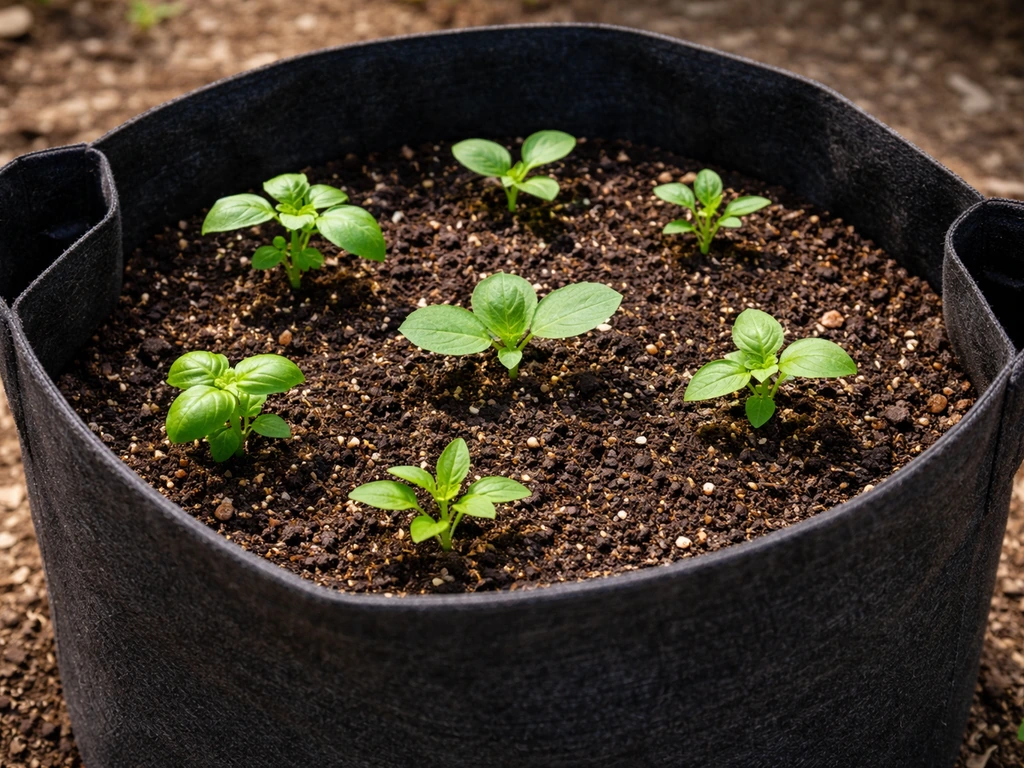
Open Top Grow Bags Guide: Setup, Soil, Watering, and Troubleshooting
Learn how to choose, set up, soil, water, and troubleshoot open top grow bags for vegetables, flowers, shrubs, and mushr
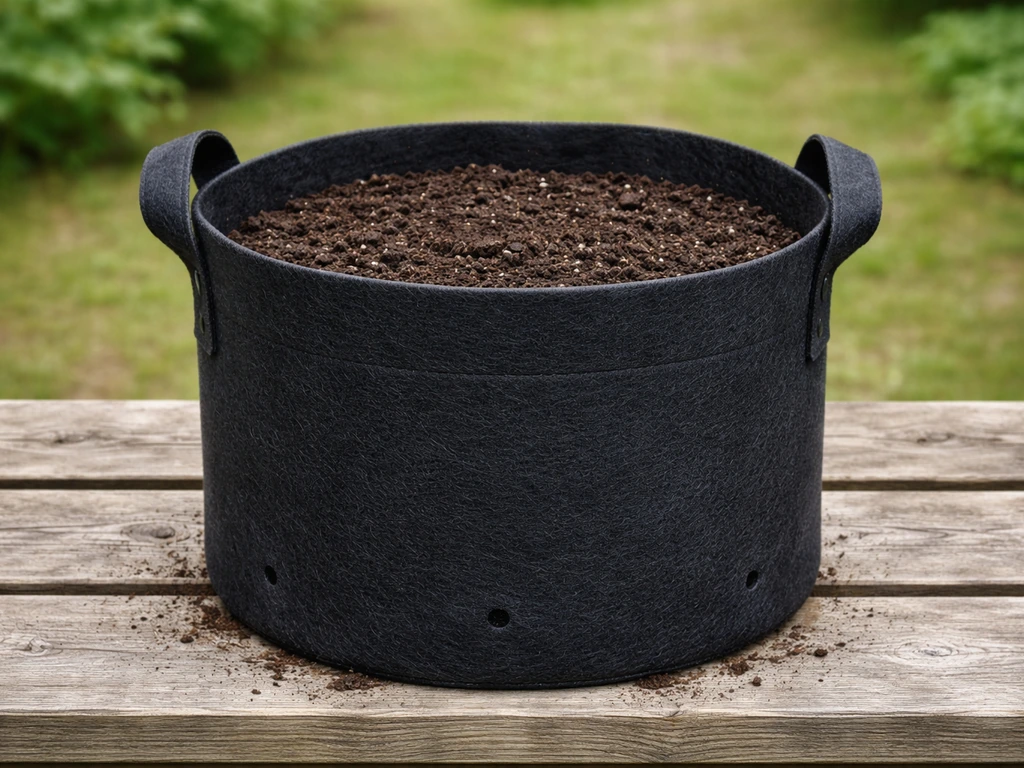
Do You Fill Grow Bags to the Top? Correct Fill Level
Learn the right fill height for fabric grow bags, avoid overfilling or underfilling, and plant at the right depth.
Do Grow Bags Need Holes in the Bottom? How to Decide
When to add drainage holes to fabric grow bags, how many to cut, and what to do if they stay too wet.