
Fabric grow bags do not strictly need to be off the ground, but elevation genuinely helps in most real-world setups. Whether you actually need to raise yours depends on your surface, your climate, and how you water. If your bags are sitting on wet soil, grass, or a surface where water pools, get them up. If they are sitting on concrete, a dry patio, or a well-draining gravel bed and you are watering thoughtfully, leaving them on the ground is usually fine with the right saucer or spacing setup.
Do Grow Bags Need to Be Off the Ground? A Clear Guide
Marcus Holloway
26 Jun 2026
What 'off the ground' actually means for fabric grow bags
When people ask about raising grow bags, they are usually thinking about one of three things: lifting the bag off a surface completely (using a stand or bricks), placing it on a saucer or catch tray so the base is not in direct contact with the ground, or simply keeping it spaced away from surrounding soil or grass. All three matter for different reasons, and they are not the same fix.
Fabric grow bags are porous geotextile containers. Excess water drains through the fabric itself, not just from holes in the base. That is a big part of what makes them work well: roots get air-pruned at the sides and bottom, the mix stays aerated, and overwatering is harder to do than with a sealed plastic pot. The downside is that they will wet whatever surface is underneath them. If that surface is already damp, cannot drain, or traps moisture against the bag, you lose most of those advantages fast.
Elevation, then, is really about protecting that drainage and airflow. It is not about height for its own sake. Even an inch or two of clearance under the bag makes a measurable difference in how quickly the base dries between waterings and how much air reaches the bottom of the root zone.
When you should elevate grow bags (and why)
There are clear situations where elevation stops being optional and starts being genuinely important for plant health.
- Sitting on soil or grass: Grass and bare soil stay moist, and a fabric bag pressed against them can wick that moisture back up. Worse, roots can push through the bag base and into the ground below, which defeats the whole point of container growing. Insects, fungus gnats, and other soil-dwelling pests can also move up through the base.
- Standing water or poor drainage: If water pools on your surface after rain or watering, your bags are effectively sitting in a shallow dish of water. Fabric's drainage advantage disappears completely here. Even a few hours of that can set off root rot.
- Humid climates or rainy seasons: When the bag exterior stays wet for extended periods, you get fungal growth, mold, and algae on the fabric. Bob Vila specifically flags moisture-related fungus and mold as a known risk when bags stay wet from rain. Elevation and airflow under the bag help the fabric dry faster.
- Air pruning needs maximizing: The air-pruning mechanism that makes fabric pots special works at the sides and base. Roots reaching the bottom of the bag need air contact, not damp soil contact, to get pruned. Elevating the bag so air circulates underneath maximizes that benefit and produces a denser, more fibrous root system.
- Decks or treated wood surfaces: Smart Pots' own guidance flags this directly: drainage runoff from fabric bags can damage or stain treated wood decks. A saucer or raised stand protects your surface while also keeping the bag base off a surface that can stay damp.
When it's OK to keep grow bags on the ground
Not every setup needs a stand or bricks. There are conditions where leaving your bags directly on a surface works fine and adding elevation just creates extra complexity without a real benefit.
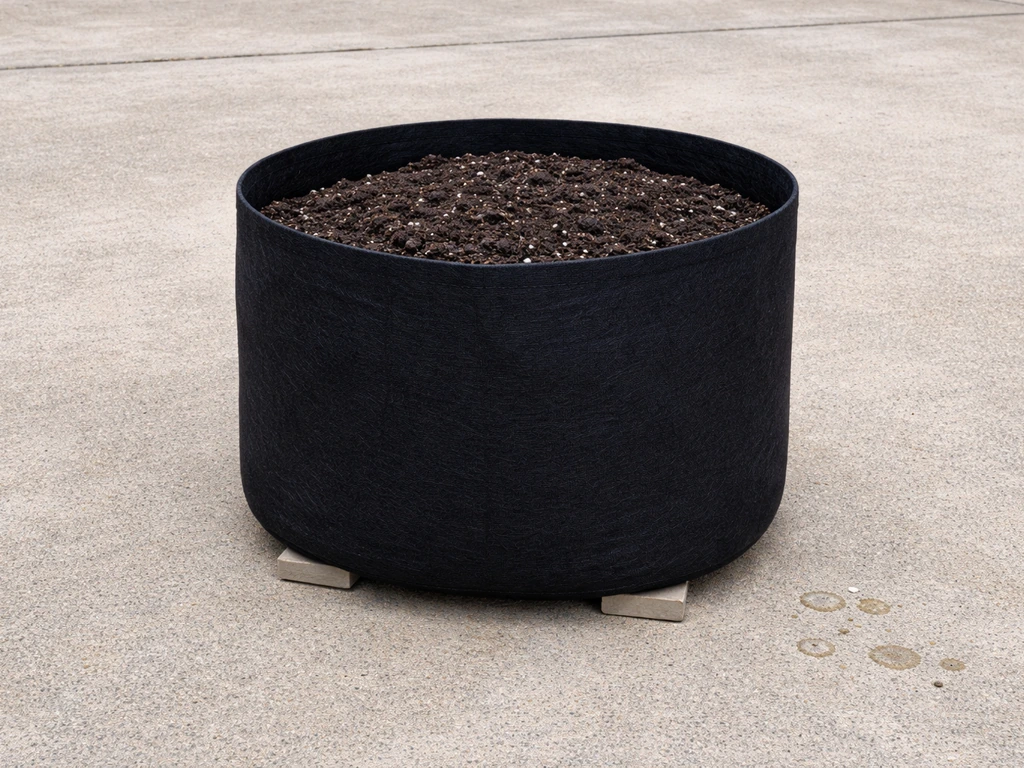
- Concrete or paved patios in dry climates: A concrete surface drains quickly and does not trap moisture against the bag base. In a dry climate where you are controlling all the water input yourself, bags can sit directly on concrete without issue.
- Gravel, decomposed granite, or permeable surfaces: Grassroots Fabric Pots specifically recommends permeable surfaces like these under fabric pots. They drain instantly and allow air movement under the bag even without physical elevation.
- Controlled indoor or greenhouse growing: If you are watering on a schedule and the runoff drains away freely, there is no pooling risk. Many indoor growers use trays and just manage the water that collects.
- Short-term or seasonal use: If your bags are only out for a growing season and conditions are dry and well-draining, the risk is low enough that elevation is a nice-to-have, not a must.
- Using proper saucers with gravel: A gravel-filled tray under the bag keeps the base just above any collected water. Bob Vila recommends exactly this setup as an effective way to reduce moisture contact without fully elevating the bag.
How to raise them properly
You have a few practical options depending on your setup, budget, and how many bags you are managing. None of them need to be complicated.
Bricks or wooden slats
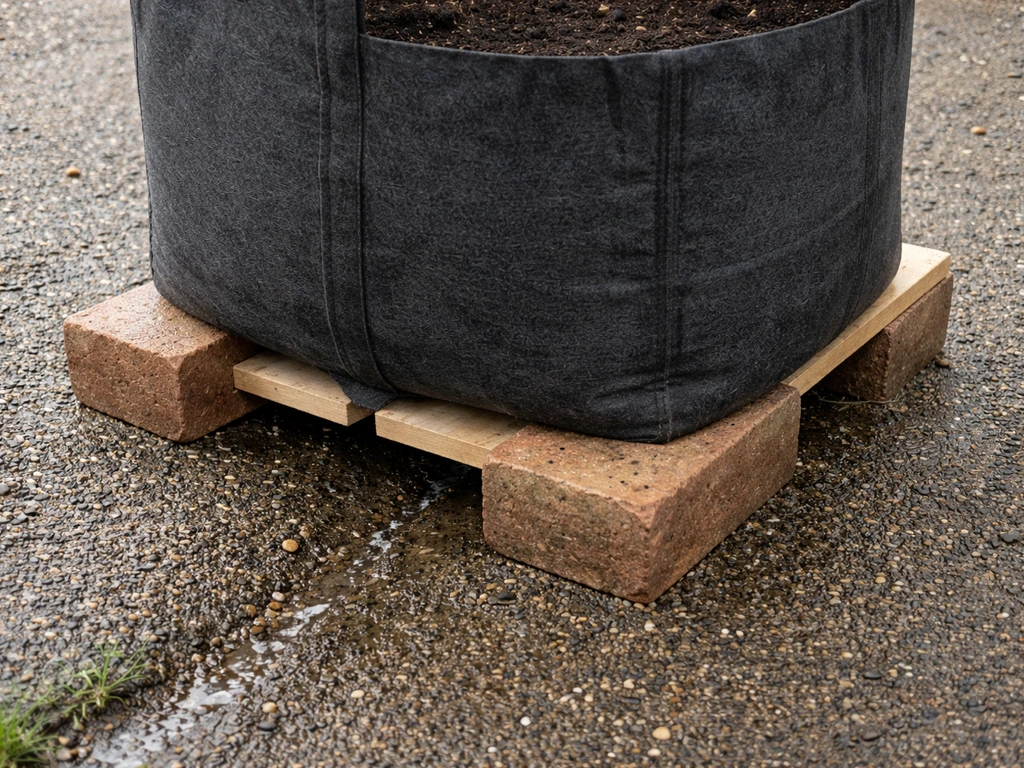
Oregon State University Extension recommends this exact approach: place bricks or wooden slats under the container so it is not sitting directly on concrete or soil. Two bricks, one on each side, lifts the bag enough to allow air and drainage.
Oregon State University Extension also recommends elevating containers slightly, using bricks or wooden slats, so they are not sitting directly on concrete or in a saucer of water, which improves drainage Two bricks, one on each side, lifts the bag enough to allow air and drainage. .
This is the cheapest and most accessible option, and it works well for most bag sizes. Just make sure the bag is stable and will not tip if it is a larger bag with a heavy plant.
Pot stands and risers
Dedicated pot stands or plant risers give more clearance and look tidier. They work especially well on patios and decks. For large grow bags (20 gallons and up), look for stands rated for the weight. A filled 20-gallon grow bag with wet soil can weigh 50 pounds or more, so a flimsy riser will not hold up long. There are also purpose-built fabric pot stands designed to cradle the round shape of grow bags, which helps them keep their form rather than flopping.
Pallets
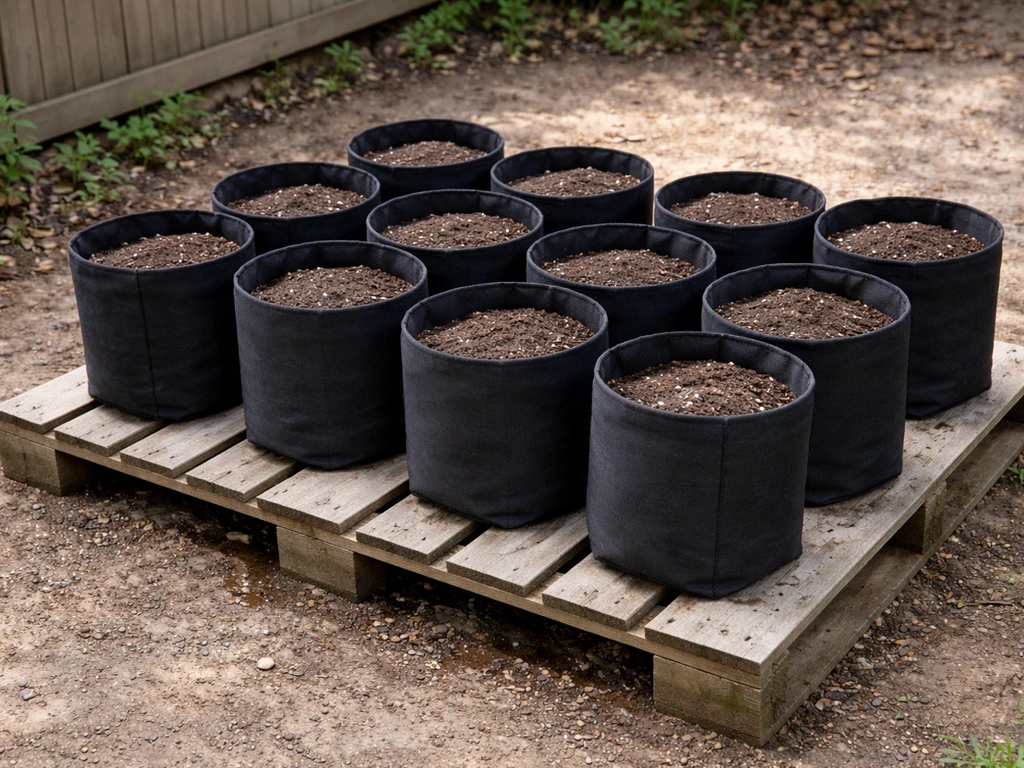
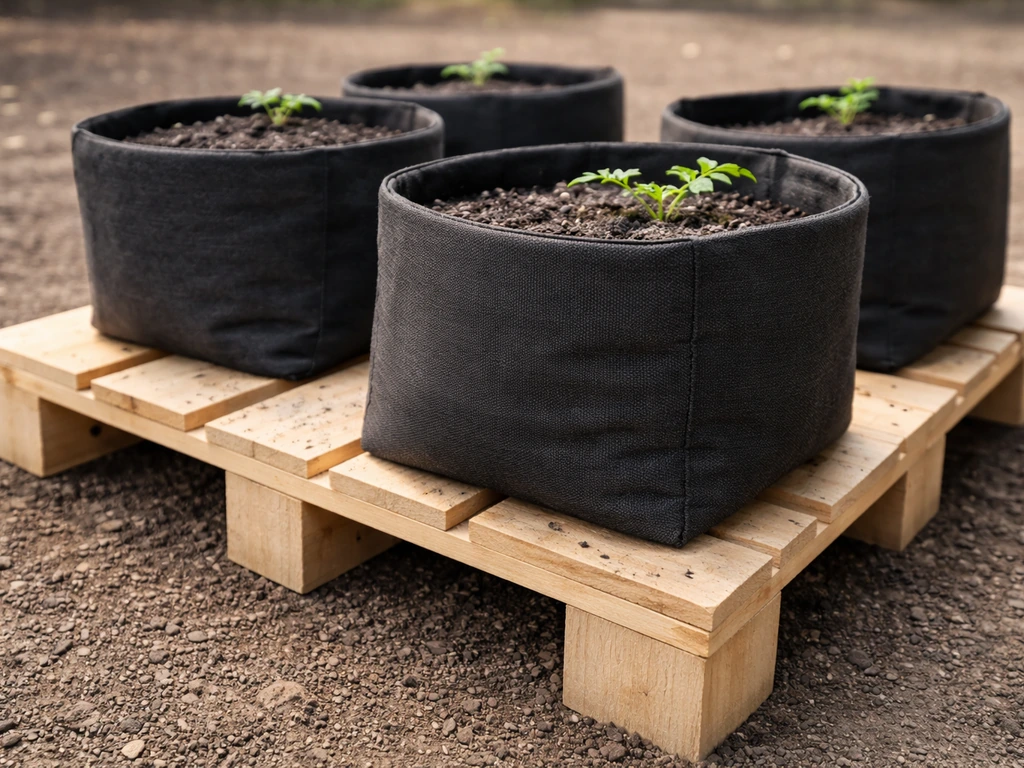
A single wooden pallet works well for multiple bags at once. The slatted surface allows drainage and airflow under every bag on it. This is practical for small patios or balcony gardens where you are running several bags side by side. Make sure the pallet is untreated or food-safe if you are growing edibles, since some pallets are treated with chemicals you do not want near food crops.
Saucers and gravel trays
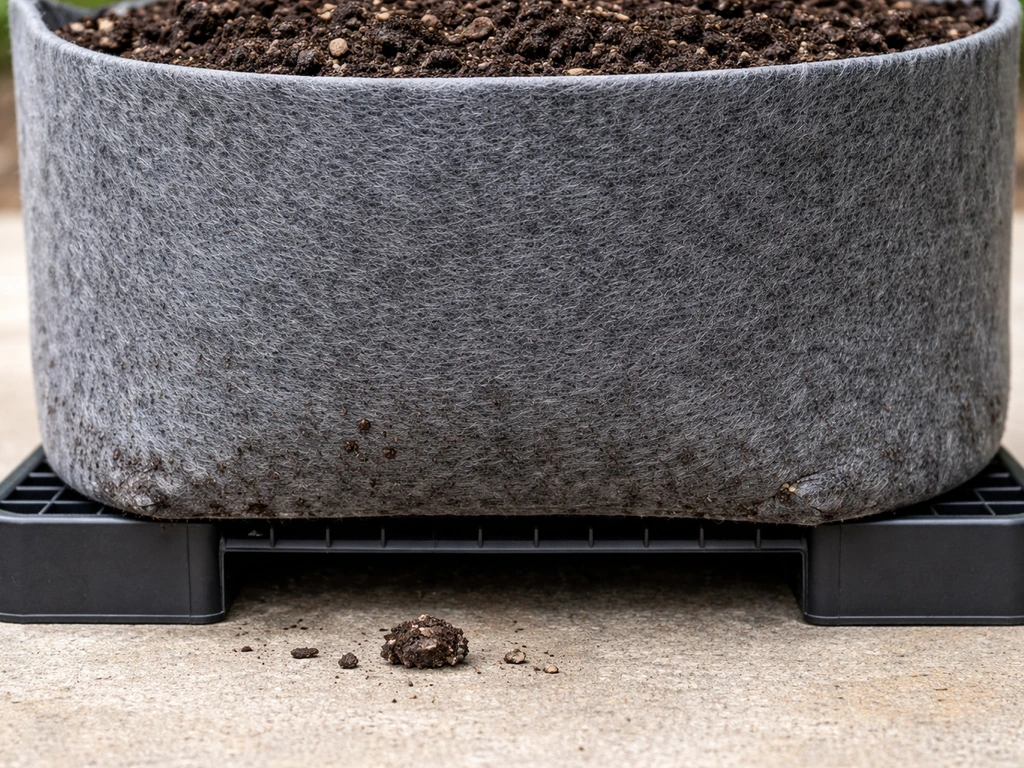
A saucer alone does not elevate the bag, but a saucer filled with a layer of pebbles or gravel does. The bag sits on the gravel, drainage collects below the gravel surface, and the bag base stays above the water line. This is the lowest-effort approach for someone who just wants to avoid direct wet-surface contact without buying any hardware. For decks, Smart Pots specifically suggests using a saucer to protect the surface and manage runoff.
Spacing between bags
Elevation is not just vertical. Bags pressed tightly together trap moisture at their sides and restrict airflow. Giving bags a few inches of breathing room on all sides improves drying between waterings and reduces the chance of mildew on the fabric exterior.
Watering and drainage checklist to prevent root problems
Elevation alone will not save a plant from bad watering habits, and good watering habits can compensate for imperfect elevation. These two things work together. Run through this checklist before assuming elevation is the problem.
- Check if water is draining freely through the bag. After watering, you should see moisture coming through the fabric sides and base within a minute or two. If the bag just sits wet on top and nothing drains, your mix may be too dense or compacted. Avoid straight garden soil in grow bags: it compacts badly in containers and blocks aeration, as Purdue Extension notes.
- Check if the saucer or tray is pooling. A little collected water after watering is normal. Water sitting in a saucer 24 hours later is not. Either empty it manually or switch to a gravel-filled tray so the bag base is not submerged.
- Water when the top inch or two of mix is dry. Fabric bags dry out faster than plastic pots, especially in heat, so you will water more frequently than you expect. But water only when the mix actually needs it. Lift the bag if you are unsure: a noticeably lighter bag needs water; a heavy one does not.
- Do not block the bag base. If the bag is sitting on a solid saucer with no gravel and the base is in constant contact with standing water, drainage stops working. The bag base becomes waterlogged even though the upper mix feels fine.
- Watch runoff destination. Make sure drainage water has somewhere to go. On a balcony or deck, clogged drains or trays that cannot empty between waterings create the same waterlogging effect as sitting on wet soil.
- In hot weather, water more often but check first. Fabric bags in full sun can dry out twice as fast as plastic containers. More frequent watering is often necessary in summer, but each time, verify the mix actually needs it rather than watering on a rigid schedule.
Crop-by-crop considerations
The right elevation setup is not the same for every plant. Different crops have different root behaviors, moisture tolerances, and size requirements that should influence how you set things up.
Vegetables (tomatoes, peppers, potatoes, herbs)
Most fruiting vegetables are sensitive to wet feet. Tomatoes and peppers especially will show stress quickly if roots are sitting in poor drainage conditions. These crops benefit most from elevation, particularly in humid climates or on surfaces that stay damp. A 5-gallon bag for peppers or a 10 to 15-gallon bag for tomatoes sitting on bricks or a stand with good airflow underneath will almost always outperform the same bag sitting directly on wet soil. Herbs are somewhat more forgiving but still prefer good drainage. Potatoes in grow bags need consistent moisture but also need the fabric's natural drainage to prevent rot in the tubers, so keep the base free of standing water.
Flowers and ornamentals
Annual flowers in grow bags are generally more forgiving than vegetables about elevation, but anything prone to powdery mildew or fungal issues (petunias, zinnias, certain dahlias) benefits from the improved airflow that elevation provides. Perennials or plants you are overwintering in bags need particular attention: if the bag sits on wet ground all winter, root rot is a real risk even for dormant plants. For terrace or balcony gardens with ornamentals, a saucer setup that keeps the bag base dry is usually enough.
Trees and large shrubs
Trees in large fabric bags (25 gallons and up) present a stability challenge that changes the elevation conversation. A 45-gallon fabric bag with a young fruit tree in it is extremely heavy and needs a very stable base. Full elevation on a stand becomes impractical at this size. Instead, focus on the surface: place these large bags on gravel, decomposed granite, or a permeable paved surface.
Avoid letting them sit on lawn or bare soil for long periods, especially if you are watering regularly. Roots will find their way through the base and into the ground quickly, which may anchor the tree but defeats the containment purpose. Keep the base of the fabric off saturated soil, and that is usually sufficient.
Comparison at a glance
| Crop type | Elevation priority | Best base setup | Key risk if skipped |
|---|---|---|---|
| Tomatoes, peppers | High | Bricks, stand, or gravel tray | Root rot, poor fruit set |
| Potatoes | Medium-high | Gravel or elevated stand | Tuber rot from waterlogging |
| Herbs | Medium | Gravel tray or paved surface | Fungal issues, overwatering |
| Annual flowers | Medium | Saucer with gravel or patio | Mildew on wet fabric |
| Perennial flowers | Medium-high (off-season) | Gravel or raised surface | Root rot over winter |
| Trees and large shrubs | Medium (stability dependent) | Permeable gravel surface | Root escape into ground |
Troubleshooting: symptoms that mean you need to change elevation
If your plants are already showing problems, here is how to read the symptoms and know what elevation-related change to make today.
Yellowing lower leaves, slow growth, or wilting despite wet soil
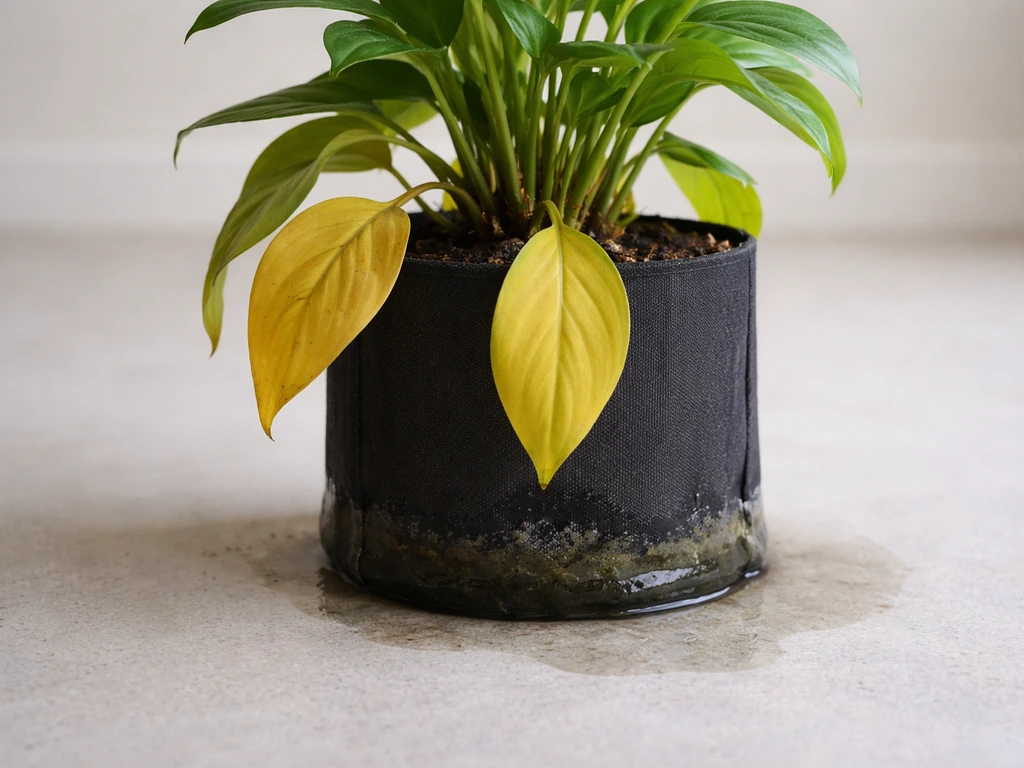
This is the classic waterlogging pattern. The roots are stressed from lack of oxygen, which looks almost identical to drought stress from above. Check the base of the bag: if the bottom few inches of mix are constantly soggy and the bag is sitting on a damp surface, move it now. Lift it onto bricks or a gravel tray, let it dry out for a day or two before watering again, and reassess in a week.
Mold, mildew, or algae on the outside of the bag
This is a moisture and airflow problem at the bag surface, not just the roots. The fabric is staying wet too long between waterings. Elevating the bag off a damp surface and spacing bags apart so air can move between them addresses this directly. You can also scrub the exterior with a diluted hydrogen peroxide solution to deal with what is already there, but if you do not change the airflow situation, it will come back.
Fungus gnats or other soil-dwelling pests
Fungus gnats thrive in moist conditions and can move through the base of a bag sitting directly on soil. If you are seeing a surge of them, get the bag off the ground immediately, let the top inch of mix dry out completely before watering again, and consider a BTi (Bacillus thuringiensis israelensis) drench to kill larvae already in the mix. Elevation removes the direct soil-to-bag pathway that makes this problem worse.
Roots visibly escaping through the base into the ground
If you pick up the bag and roots have grown through the base and into the soil below, you have lost container control. Cut those roots cleanly, elevate the bag immediately onto a surface where air contact will air-prune future root growth, and refresh the base layer of mix if it is heavily compacted. Going forward, check the base of your bags every few weeks if they are sitting on soil or grass.
Standing water in the saucer after 24 hours
The saucer is there to catch runoff, not store it. If water is still sitting in the tray a full day after you watered, either the drainage through the bag is blocked (check your mix) or the tray cannot empty. Add a gravel layer to the tray so the bag base is above the water line, empty the tray manually after watering, or switch to a different surface. Do not just leave it sitting there.
The bottom line is that fabric grow bags handle drainage and aeration better than almost any other container type, but they need the right conditions underneath to do their job. Elevation is one of the most practical ways to give them those conditions. Whether you go with bricks, a purpose-built stand, a gravel-filled saucer, or a pallet setup depends on your space and your plants, but the principle is the same: keep the base off saturated surfaces, let air move underneath, and your bags will perform the way they are designed to.
FAQ
If my fabric grow bag is on concrete, do I still need to raise it off the ground?
Usually no, as long as the concrete stays dry and you water with a light, consistent cadence. Concrete can still become damp if runoff pools or you water heavily, so check the saucer or tray area, and confirm the bottom of the bag is not sitting in a puddle after watering.
Can I use a saucer under a fabric grow bag without elevating the bag’s base above the water line?
Only if the saucer drains fast and does not hold standing water. If the tray is still wet the next day, add gravel inside the saucer so the bag base sits higher, or empty the tray after watering, because a waterlogged tray negates the fabric’s airflow benefit.
How high should I raise a grow bag for it to actually help?
Even small clearance helps, roughly an inch or two, because it lets the base dry faster and improves airflow underneath. If you are seeing mildew, soggy bottoms, or persistent fungus, aim for more clearance and also separate bags from each other to reduce trapped humidity.
What’s the best option if my grow bags are on wet grass or a lawn that stays damp?
Raise them immediately off the grass, for example using bricks or wooden slats under each bag, or place the bags on a gravel tray or pallet with airflow underneath. Also avoid long periods of the bag sitting on saturated ground, because roots can exploit that moisture and the drainage advantage is lost.
Will elevation alone fix overwatering problems?
No. If the mix is staying wet because watering volume or frequency is too high, raising the bag may only slow the problem. Use elevation plus a watering schedule based on how quickly the top inch dries, and ensure the mix drains freely.
How can I tell whether I need to elevate the whole bag or just change my watering?
Check two places after watering: the base region and the fabric exterior. If the bottom few inches stay soggy and the surface is damp, elevation is the fix. If the top dries slowly but the base is not constantly wet, your watering amount or mix may be the real issue.
If roots are growing through the bottom, is it too late to save the containment?
Not necessarily, but you should act quickly. Cut the roots cleanly, elevate the bag onto a more air-pruning surface, and refresh the bottom layer of mix if it has compacted. After that, inspect the base every few weeks when bags sit on soil or grass.
Is it okay to place multiple grow bags tightly together on a stand?
Avoid tight packing. Even if the bags are elevated, touching sides reduces airflow and keeps the fabric wet longer, which increases mildew risk. Leave a few inches of breathing room around each bag so both sides and the bottom can dry between waterings.
What should I do for fungus gnats if my bag is already off the ground?
Elevation helps because it reduces the soil-to-bag pathway, but you still need to manage moisture in the mix. Let the top inch of potting mix dry fully before watering again, and if the problem persists, consider a BTi drench to target larvae in the substrate.
Are larger fabric grow bags treated differently regarding elevation and stability?
Yes. For very large bags, full stands can become impractical and unsafe due to weight when wet. Prioritize a stable base and place the bag on gravel or a permeable paved surface, keeping the fabric base off saturated soil rather than relying on a high stand.
Should I avoid elevation for certain plants that like consistent moisture?
Not automatically. Some crops need consistent moisture, but they still should not have the fabric base sitting in standing water. For examples like potatoes, keep moisture steady while ensuring the bottom is not trapped in a damp environment that promotes rot.
Next Articles
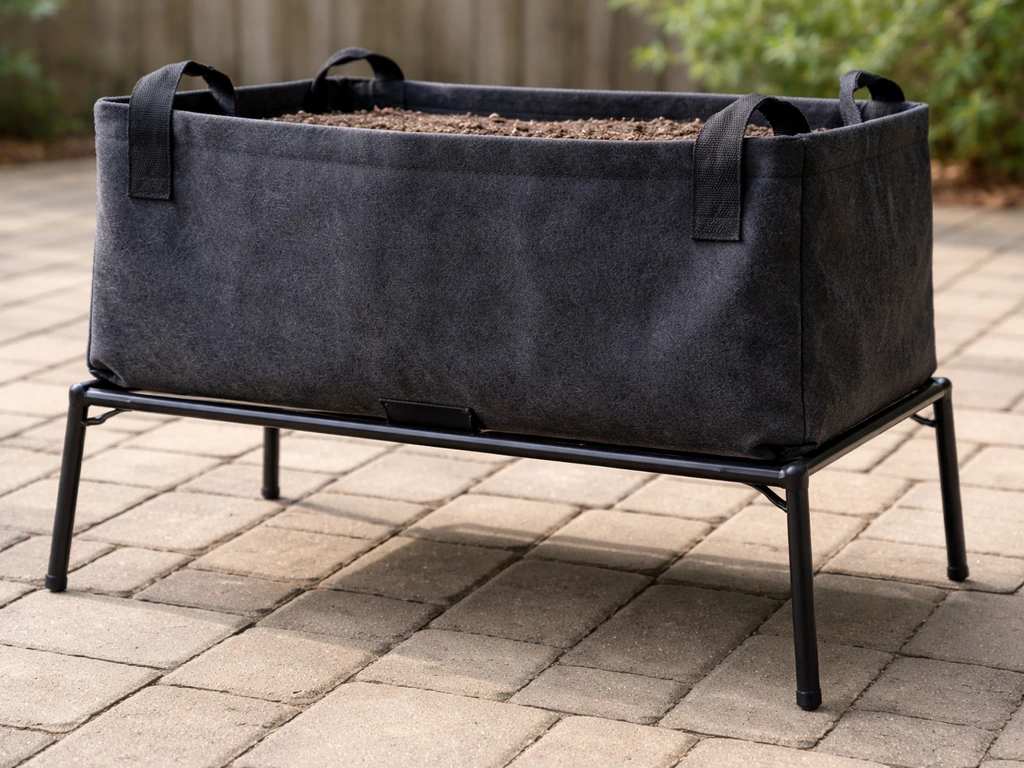
How to Keep Grow Bags Off the Ground: Practical Tips
Practical ways to keep grow bags off the ground using stands, blocks, barriers, and drainage bases to prevent rot and pe
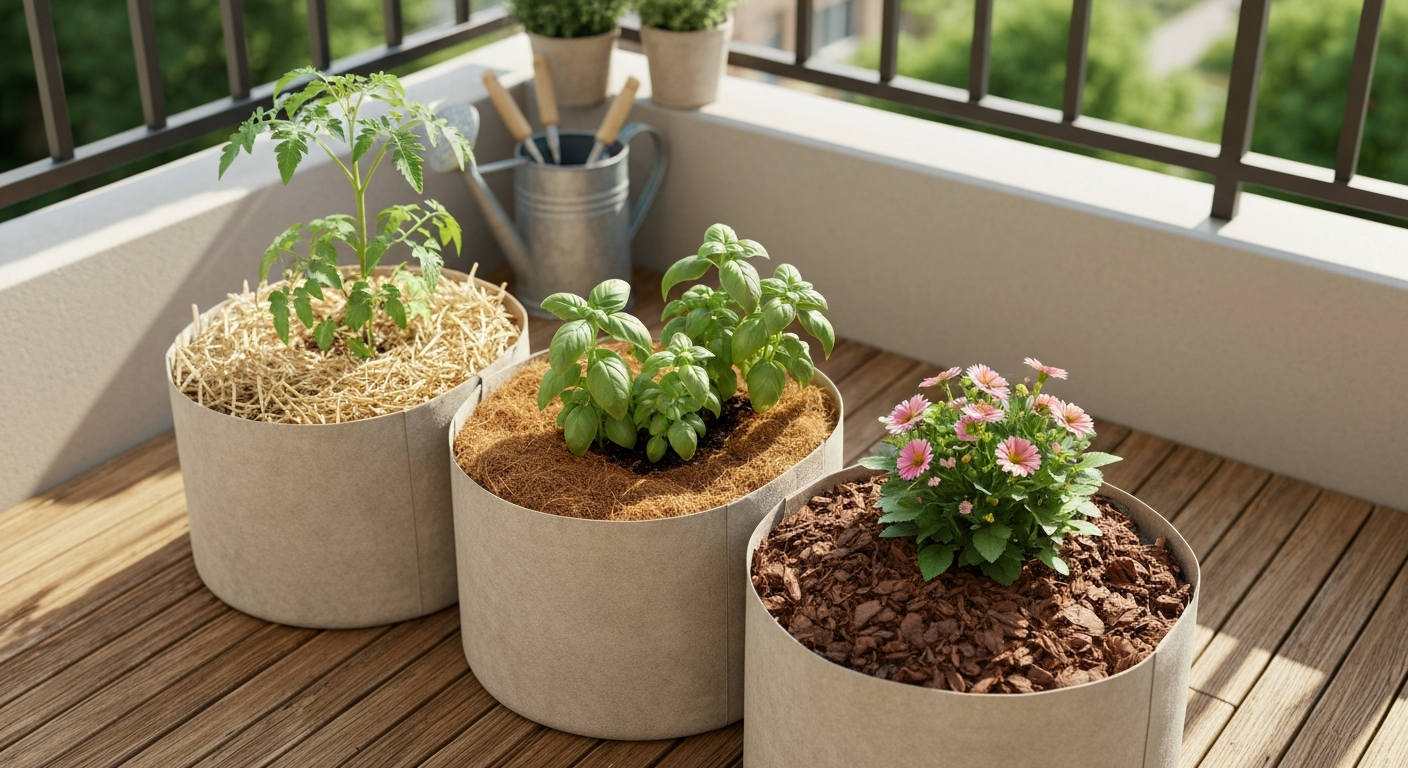
Best Mulch for Grow Bags: Top Picks for Vegetables & Flowers
Find the best mulch for fabric grow bags: top picks, how-to apply, crop & climate advice, and troubleshooting.
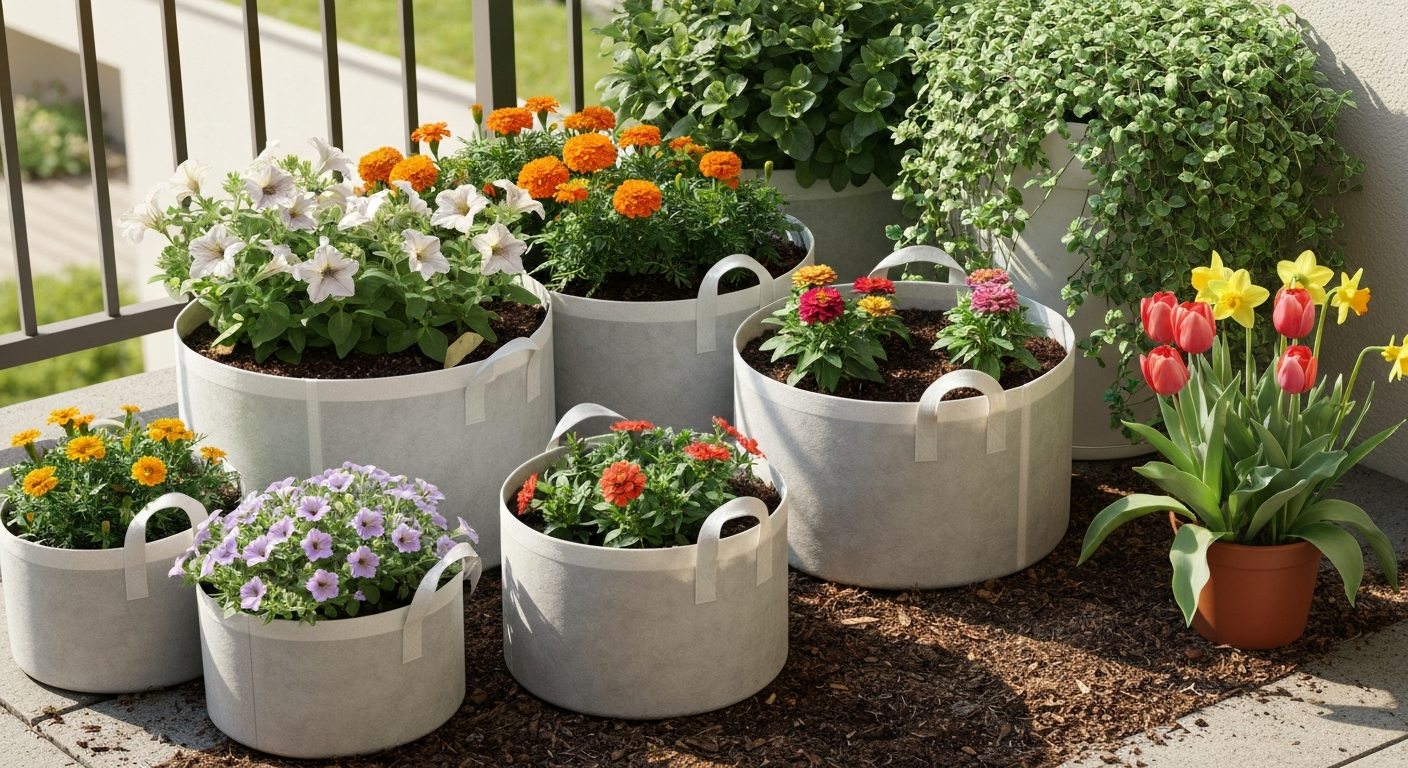
Best Flowers for Grow Bags: Top Picks, Soil & Care Guide DIY
Best flowers for grow bags: top annuals, perennials, bulbs & trailers; soil, fertilizer, planting and care checklists.