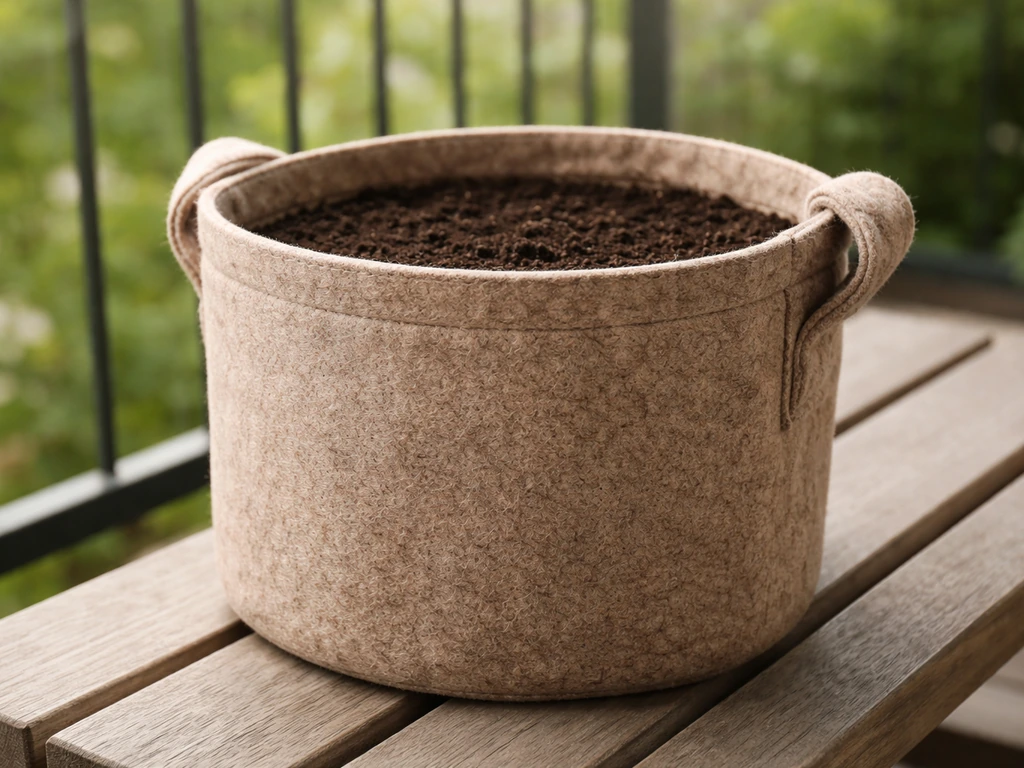
For most home growers, the safest non-toxic fabric grow bags are made from natural or minimally processed materials like untreated felt (recycled PET or natural wool), BCI cotton, or thick polypropylene that carries an OEKO-TEX STANDARD 100 certification. That certification is the closest thing to a reliable independent safety guarantee you can get right now. If you're growing food and you can't find certification, prioritize bags with no visible dye (natural tan/grey), no chemical smell out of the package, and reinforced seams with no synthetic adhesive coatings. A thorough rinse before first use rounds out the basics.
Best Non Toxic Grow Bags: How to Choose Safely
Marcus Holloway
16 May 2026
What "non-toxic" actually means for fabric grow bags
"Non-toxic" isn't a regulated label for grow bags. Any manufacturer can print it on packaging without any testing to back it up. What you actually need to look at is the material, how it was dyed or finished, whether it has any liner or coating, and whether those components were evaluated by an independent body. So let's break down each of those.
Base materials
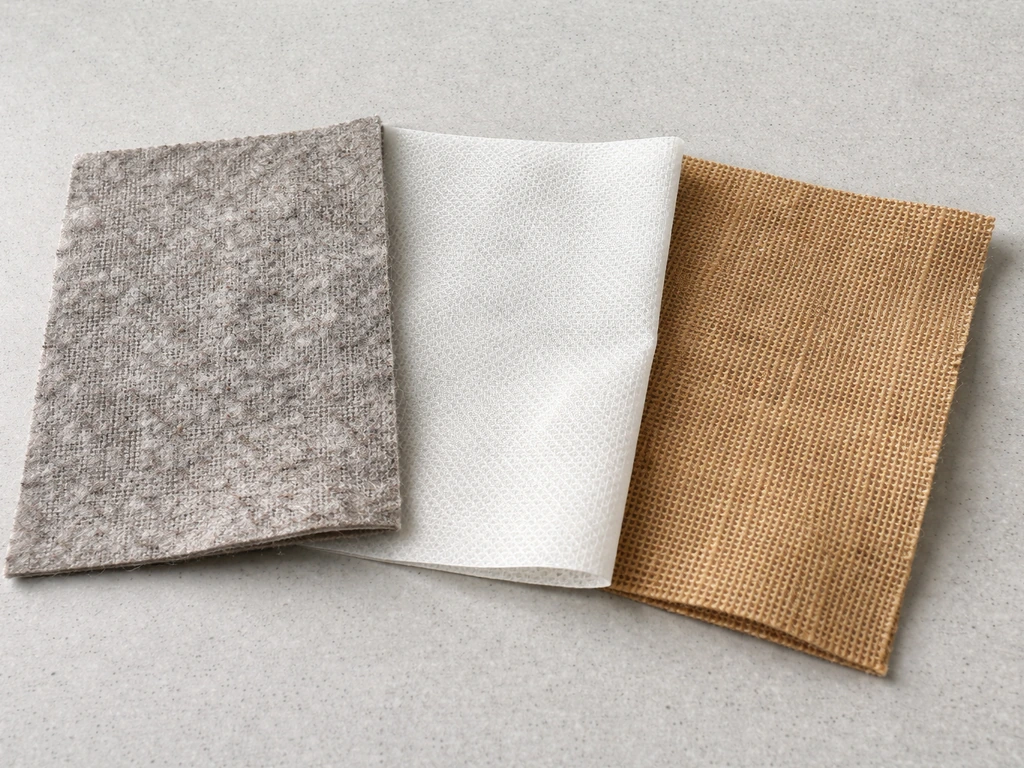
Most fabric grow bags are made from one of three core materials: felt (usually recycled PET polyester), polypropylene (PP) nonwoven fabric, or natural fabrics like cotton or jute. All three can be non-toxic in their raw state. The problem is what gets added during manufacturing. Polypropylene nonwoven geotextiles, for example, are sometimes treated with UV stabilizers, carbon black, surfactants, and other processing chemicals. A 2024 study identified anionic surfactants leaching from geotextile materials in lab tests, and Monash University researchers detected ultrashort-chain PFAS compounds in both woven and nonwoven polypropylene geotextiles at concentrations up to roughly 10. A Monash University publication reports detecting ultrashort-chain PFAS compounds such as pentafluoropropionic acid in woven and nonwoven polypropylene geotextiles, with measured concentrations up to about 10.84 micrograms per gram. 84 micrograms per gram. That doesn't mean every PP grow bag leaches harmful amounts into your soil, but it's why sourcing matters.
Dyes, finishes, and coatings
Dark-colored bags, especially cheaply produced ones in black or green, often use azo dyes or synthetic colorants. Some azo dyes break down into carcinogenic aromatic amines, which is exactly why OEKO-TEX certification explicitly tests for banned azo dye compounds. Finishes are another concern: some bags are coated or treated for water repellency (which would actually counteract the drainage you want anyway) or for antimicrobial properties. Both water-repellency coatings and some antimicrobial treatments may involve PFAS or other chemistry you don't want near your food roots. Uncoated, undyed, or naturally pigmented bags skip most of these risks entirely.
Liners and laminations
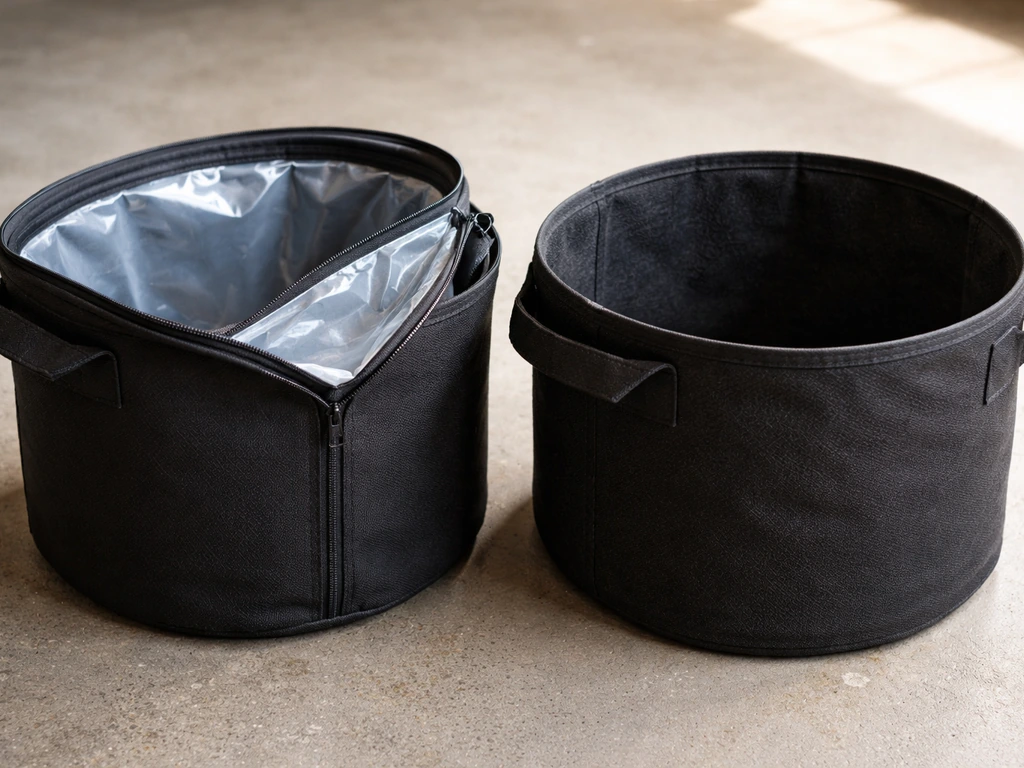
Some grow bags, particularly those marketed for moisture retention or indoor use, have a plastic liner or laminated inner layer. For non-toxic growing, this is a red flag unless the liner is explicitly food-grade and certified. A plastic liner changes the whole dynamic of the bag anyway: it blocks the air pruning and drainage that make fabric bags worthwhile in the first place. Avoid lined bags for food growing unless the liner is independently verified and removable.
How to verify a bag is actually safe before you buy
Certifications worth trusting
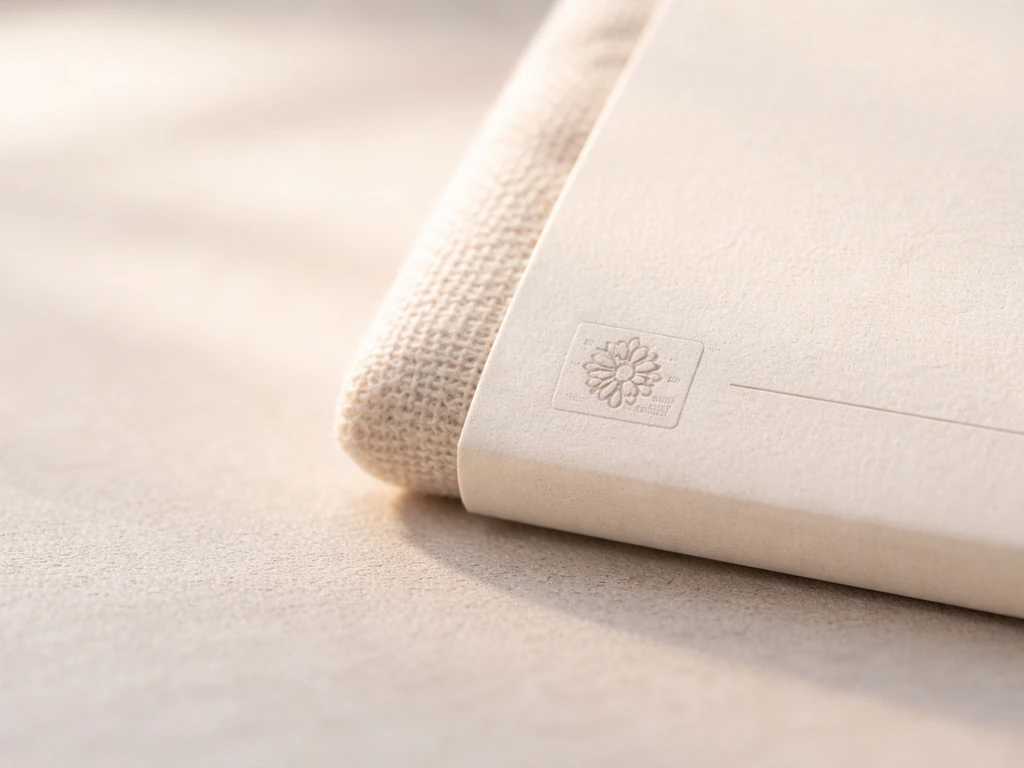
OEKO-TEX STANDARD 100 is the most rigorous independent certification available for textile products. If you want a quick shortcut, the best grow bags for food use are typically the ones with OEKO-TEX STANDARD 100 on the finished bag. It tests finished products (not just raw materials) against a restricted substance list that includes formaldehyde, heavy metals, banned azo dyes, PFAS-related compounds, and dozens of other chemical categories. The stricter the skin contact class tested under, the better. Some manufacturers also reference OEKO-TEX ECO PASSPORT, which applies to the chemicals used during production rather than the finished product. It's a useful supply-chain signal, but it's not a substitute for STANDARD 100 on the final bag. When you see STANDARD 100 on a grow bag, you can verify the certificate number directly blank" rel="noopener noreferrer">on the OEKO-TEX website.
Dye and finish cues you can assess yourself
- Natural or undyed bags (tan, off-white, grey) are lower risk than vivid or dark colors
- A sharp chemical smell out of the packaging is a red flag, especially if it doesn't dissipate after 24 hours of airing out
- Bags that feel stiff or waxy may have a finish or coating applied
- Dye that rubs off when the bag is wet suggests a low-quality colorant that could leach into soil
- Stitching that uses a different, shinier thread may indicate a synthetic fiber that was treated separately
Red flags to avoid
- "BPA-free" labeling only (this is almost always a deflection from other chemical concerns, not a comprehensive safety claim)
- "Food-safe" or "non-toxic" printed on the bag with no certification number or third-party reference
- Very cheap bags from unknown suppliers with no country-of-origin or material transparency
- Bags with a strong plastic or petroleum smell
- Bags marketed as "waterproof" fabric grow bags (the whole point of these containers is drainage)
- Laminated or coated interiors without explicit food-grade certification
The best non-toxic materials and design features to prioritize
Material comparison
| Material | Non-Toxic Potential | Air Pruning | Durability | Best For |
|---|---|---|---|---|
| Recycled PET felt (certified) | Good with OEKO-TEX cert | Excellent | 3-5+ seasons | Vegetables, herbs, flowers |
| Natural/organic cotton | Very good if undyed | Good | 2-3 seasons | Indoor growing, herbs, sensitive crops |
| Polypropylene nonwoven (certified) | Good with OEKO-TEX cert | Excellent | 3-5 seasons | Outdoor vegetables, trees |
| Jute | Very good, naturally undyed | Moderate | 1-2 seasons | Short-season crops, biodegradable use |
| Coated/lined fabric | Poor unless food-grade certified | Poor | Varies | Not recommended for food growing |
Design features that matter
Beyond material, the construction details determine how well the bag performs and holds up without introducing contamination risks. The best bags have double-stitched or reinforced seams (single seams fail under heavy soil loads), handles that are stitched through rather than glued, a flat bottom with adequate drainage surface area, and fabric weight of at least 300 GSM for outdoor use. Heavier fabric retains moisture slightly longer, which helps in hot climates, while lighter fabric dries faster and is better for high-humidity environments where root rot is a concern.
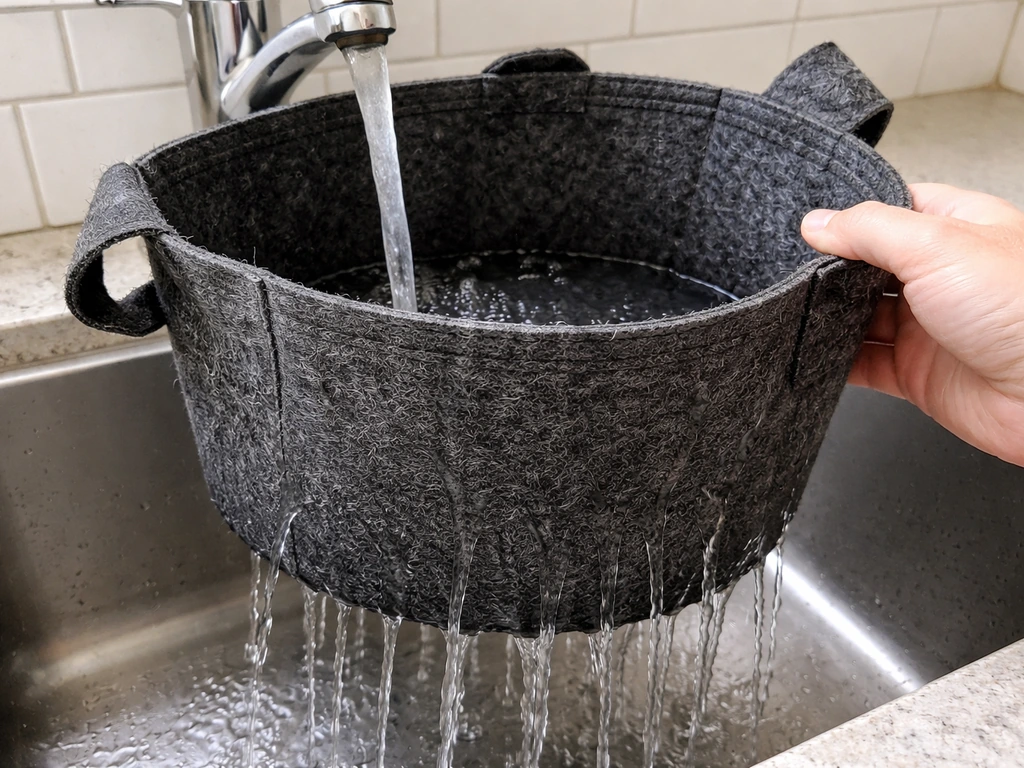
Air pruning is the core functional advantage of fabric grow bags. When roots reach the container wall, they encounter oxygen and the tip desiccates naturally, stopping circular root growth and triggering branching behind the tip. Studies comparing fabric containers to plastic pots show significantly more root tips per plant in air-pruned containers. To actually get this benefit, the fabric needs to stay breathable: don't double-bag, don't sit the bag inside a solid container, and don't let the outer surface stay persistently wet from standing on a saturated surface.
Matching bag size and design to your specific plants
Getting the size right matters more than most growers realize. Undersized bags lead to fast-drying soil, frequent watering, and stressed plants. Oversized bags can stay waterlogged and promote anaerobic root conditions. Here's a practical breakdown by plant category.
Vegetables and herbs
| Crop | Recommended Size | Notes |
|---|---|---|
| Lettuce, spinach, shallow herbs (basil, cilantro) | 1-3 gallon | A 3-gallon bag runs roughly 10" diameter x 8" deep; ideal for single plants or a small cluster |
| Tomatoes (determinate/compact) | 5-7 gallon | 5-gallon bags are about 11.5" diameter x 10" deep; sufficient for bush varieties |
| Tomatoes (indeterminate), peppers, eggplant | 10-15 gallon | Indeterminate tomatoes need real root depth; don't go smaller |
| Potatoes | 10-15 gallon (tall profile preferred) | Height matters more than diameter for hilling; look for bags taller than wide |
| Zucchini, cucumbers | 10 gallon minimum | Heavy feeders that need space; 10-gallon is the practical floor |
| Garlic, onions | 3-5 gallon | Can be grown in rows within a wider, shallower bag |
Flowers
Annual flowers (marigolds, petunias, zinnias) do fine in 3-gallon bags. Perennials and larger ornamentals like dahlias or cannas need 7-10 gallons to support tuber development and root mass over a full season. The benefit of grow bags for ornamentals is the same as for vegetables: cleaner root structure means easier division at season's end and less transplant shock if you're overwintering indoors.
Trees and fruiting shrubs
Dwarf fruit trees, blueberries, and container-grown specimens need at minimum 20-25 gallons, and 30-45 gallons is better for anything you want to keep in the bag for multiple years. Root control bags designed specifically for tree production use a flat-bottom, straight-sided design that encourages downward root growth and prevents girdling, which is critical for long-term tree health. These bags also make transplanting much easier because the root ball retains its structure after removal.
Mushrooms
Mushroom cultivation is a different use case entirely. Most mushroom growers use polypropylene bags specifically because PP can withstand autoclave sterilization temperatures. For non-toxic mushroom growing, you want certified PP bags without added dyes or coatings, and you'll be sterilizing them before use anyway which handles most surface contamination concerns. Bag size depends on substrate volume: a standard 5-pound substrate block fits comfortably in a standard mushroom grow bag (roughly quart-sized), while larger bulk grows use 10-pound or bigger bags.
Using your grow bags safely from the very first day
Prep before planting
Rinse every new grow bag thoroughly with clean water before filling it, even certified bags. This removes any manufacturing residue, fiber dust, or surface treatments that might have been applied. Let the bag air dry completely in the sun for a few hours if possible. Some growers do a quick soak in plain water for 30 minutes, then wring and dry. You don't need to use any cleaning agents for brand-new bags.
Soil selection
Use a well-draining potting mix, not garden soil or dense compost alone. Fabric grow bags drain and dry out faster than ground soil or plastic containers, so a mix that stays workable when moisture drops is important. A good starting point is a high-quality peat or coco coir-based potting mix cut with 20-30% perlite. Avoid heavy, clay-dense mixes in grow bags: they compact under the weight of watering, restrict the air pruning effect, and make it harder for roots to reach the bag walls.
Watering strategy
Grow bags lose moisture through both the bottom and the sides, so they dry out faster than you might expect, especially in heat or wind. Check soil moisture at least once a day during summer for outdoor bags. Lift the bag slightly to judge weight if you're unsure: a bag that feels light is almost certainly dry. Drip irrigation or soaker setups work very well with grow bags. Avoid standing water under the bag because persistent bottom moisture interferes with the drainage and can promote algae or fungal growth on the bag exterior.
Cleaning, caring for, and knowing when to retire your bags
End-of-season cleaning
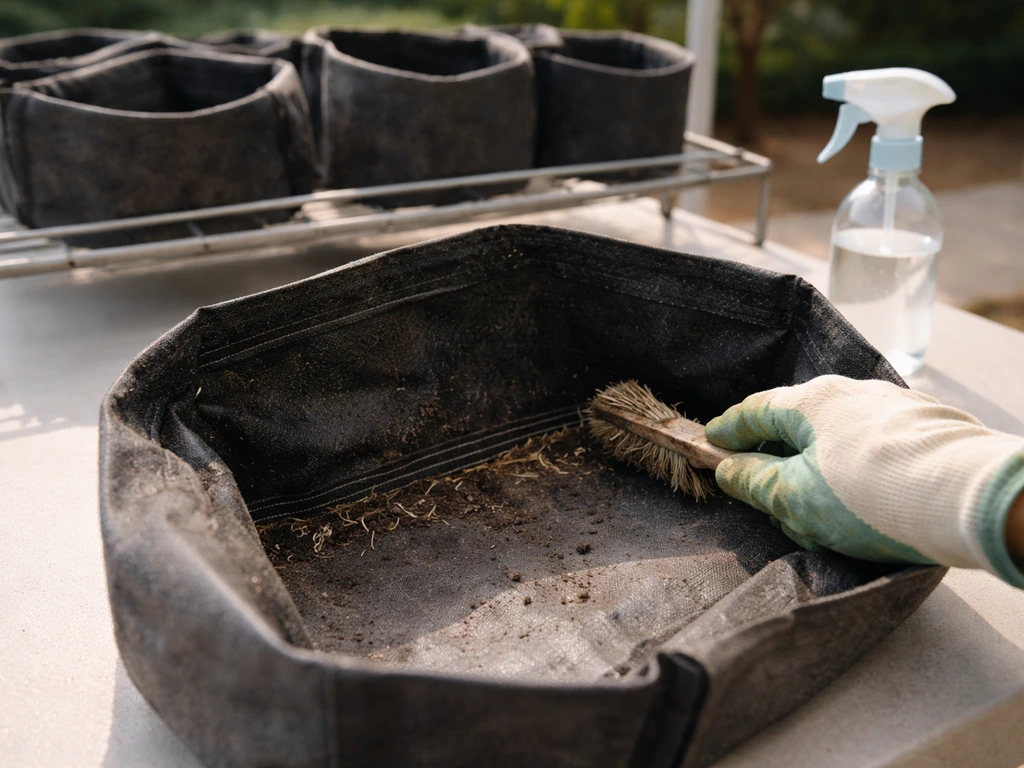
After each season, shake out all the spent soil, then turn the bag inside out and brush off root debris. A 3% hydrogen peroxide solution sprayed on the bag and left for 10-15 minutes before rinsing is effective for sanitizing without introducing harsh chemicals. Diluted hydrogen peroxide breaks down into water and oxygen, so there's no residue concern. Quaternary ammonium compounds and bleach-based disinfectants are effective against pathogens in commercial greenhouse settings, but they leave residues that can persist in fabric and aren't worth the risk for home food growing when peroxide works fine.
After rinsing thoroughly, dry the bags completely before storage. Storing damp bags causes mold to colonize the fabric over winter, and that mold can transfer to next year's root zone. Hang bags or lay them flat in a dry area with airflow. Don't store them compressed in a sealed plastic bin.
How long grow bags last
A well-made, properly cared-for felt or polypropylene grow bag should last 3-5 seasons with reasonable outdoor use. Bags exposed to intense UV without any UV stabilization in the fabric will degrade faster, which is why low-cost bags sometimes fall apart after a single season. Certified polypropylene nonwovens with UV stabilizers built into the fiber are significantly more durable. Natural fabric bags like cotton or jute have shorter lifespans (1-3 seasons) but biodegrade rather than fragmenting into microplastics.
When to stop using a bag
- The fabric is thinning, fraying at seams, or has visible holes that weren't there originally
- The bag develops a persistent smell that doesn't clear after washing and airing
- The fabric has become stiff or brittle, especially at fold lines (UV degradation indicator)
- You've had a confirmed soilborne disease (fusarium, pythium) in the bag and can't guarantee full sanitization
- The bag has been used for more than 5 seasons in outdoor conditions with heavy UV exposure
Troubleshooting: is it the bag or something else?
A lot of problems that growers attribute to "toxic" grow bags are actually caused by common growing mistakes. Here's how to tell the difference and fix what's actually wrong.
Unusual odors
A strong chemical smell from a new bag is a material concern, especially if it doesn't fade after 24-48 hours of airing. But a sour or rotten smell from an in-use bag is almost always anaerobic soil conditions caused by overwatering or poor drainage, not the bag itself. Fix this by improving drainage (add more perlite to future mixes), watering less frequently, and making sure the bag isn't sitting in a water-retaining tray.
Discoloration of the bag or soil
White mineral deposits on the outside of a fabric grow bag are salt accumulation from fertilizer and hard water, not a contamination issue. Flush the bag with plain water until it runs clear to reduce salt buildup. Brown staining on the outside of the bag is usually tannins from soil or organic matter and is harmless. Green or black staining on the exterior is algae or mold, which needs to be addressed.
Algae and mold on the bag exterior
Green algae on a bag's outer surface means the bag is staying too wet for too long, usually from being placed in a low-light, high-moisture spot or sitting in a tray with standing water. Algae doesn't directly harm roots but it can block the fabric's breathability over time. Clean the bag at season end with 3% hydrogen peroxide, move it to a sunnier or better-ventilated location, and avoid overwatering. Fuzzy white or grey mold on the soil surface is a separate issue: it indicates poor air circulation in the growing medium, and adding more perlite and watering less frequently usually resolves it.
Nutrient and water problems that mimic toxicity
Yellowing leaves, leaf tip burn, or stunted growth often get blamed on bag materials but are almost always fertilizer burn, nutrient deficiency, pH imbalance, or water stress. Because grow bags dry faster than other containers (as documented in university extension guidance on grow bag gardening), underwatering is one of the most common mistakes. If your plants look stressed, check soil moisture and pH first. Fertilizer burn from over-application shows as brown leaf edges, not discoloration in the bag itself. If you genuinely suspect something is leaching from the bag into your soil, the most reliable next step is to test the soil directly with a home soil test kit or send a sample to your local extension service.
Quick-reference picks by use case
If you want a straightforward buying decision, here's how to match your situation to the right type of bag. For food growing on a patio or balcony, prioritize OEKO-TEX STANDARD 100 certified felt bags in the 5-10 gallon range for most vegetables. If you are specifically shopping for the best felt grow bags, aim for OEKO-TEX STANDARD 100 certified felt with undyed, no-odor packaging. For indoor herb growing, undyed natural cotton bags in 1-3 gallon sizes keep things simple and low-risk. For outdoor trees and fruiting shrubs, look for heavier-duty certified polypropylene bags in 20+ gallon sizes with reinforced flat bottoms. For mushrooms, certified PP bags designed for autoclave use are the standard. If you're comparing these options to other bag categories covered on this site (including felt-specific options, general best picks, or USA-made bags), the non-toxic angle narrows the field considerably but doesn't eliminate good options in any of those categories. If you also want the best grow bags made in USA, focus on brands that publish their manufacturing location and use independently tested materials like OEKO-TEX STANDARD 100 fabric USA-made bags. If you're also searching for the best grow bags for weed plants, the same non-toxic, breathable material rules and the right size for healthy root growth still apply.
The single most useful thing you can do before buying any grow bag for food use: look up the brand name plus "OEKO-TEX" and verify the certificate number on the OEKO-TEX website. If you want a shortcut to compare options, you can also check the best grow bags on amazon, but still verify any safety claims with OEKO-TEX on the certificate number. Takes two minutes and tells you more than any marketing claim on the packaging. If you want the easiest path, check for OEKO-TEX STANDARD 100 verified options that suit your plant size and growing conditions in India best grow bags in india.
FAQ
If my grow bag is OEKO-TEX STANDARD 100 certified, do I still need to rinse it before using it for food crops?
Yes. Even certified bags can have residual manufacturing dust or trace finishes on the surface. Rinse thoroughly, then let the bag air dry completely before filling so you reduce the chance of off odors and uneven first-watering effects.
How can I tell whether a dark-colored grow bag’s dye is a bigger risk than its material?
Color is usually the main clue, not the base fabric. If the bag is black or deep green and you still notice a chemical or sharp odor after airing for 24 to 48 hours, treat it as a higher risk and switch to undyed or naturally pigmented options.
Is a plastic liner always unsafe, or can some lined bags still be used for edible plants?
Lined bags are only a reasonable option when the inner layer is explicitly food-grade and independently verified, and ideally removable. If the liner blocks breathability and drainage, you can get worse root air pruning and higher disease risk even when the materials are non-toxic.
What should I do if my bag smells “chemical” when I open it?
First, air it out for 24 to 48 hours. If the odor remains strong, don’t use it for food growing. For non-food plants, you can still rinse and test with a small batch of soil, but for edible crops it’s safer to replace the bag.
Can I use a non-toxic grow bag for vegetables but sanitize it using bleach or quaternary ammonium?
For home food growing, avoid residue-prone disinfectants on reusable fabric. The article’s 3% hydrogen peroxide approach is preferred because it breaks down into water and oxygen, reducing the chance of lingering chemical residues in the fabric.
My bag has white crust on the outside. Is that a sign the bag is leaching something toxic?
Not usually. White deposits are commonly salt from fertilizers or hard water. Flush with plain water until runoff runs clearer, then adjust your fertilizer frequency or switch to a less concentrated feeding schedule.
What if I see algae or mold on the exterior, but the roots seem fine?
Exterior growth usually means the bag is staying too wet too long, which can eventually reduce breathability. Improve ventilation, increase light exposure, prevent standing water under the bag, and do a peroxide clean at season end.
Does a larger grow bag always mean healthier plants?
No. Oversized bags can stay waterlogged longer, increasing the chance of anaerobic conditions. Use the size ranges as a starting guide, then adjust based on how quickly the bag dries in your heat and wind, especially outdoors.
I used a very dense potting mix in a felt grow bag and my plants struggled. Is that related to “toxicity”?
It’s usually a drainage and aeration problem. Dense mixes can compact under watering, limiting air pruning and slowing oxygen access to root tips. Switch to a lighter, breathable mix (like coco or peat-based with added perlite) and water based on soil moisture rather than a fixed schedule.
How do I confirm a manufacturer claim like “food safe” or “non-toxic” if OEKO-TEX is missing?
Use a risk-reduction checklist: look for undyed, low-odor packaging, no chemical smell after airing, no visible coatings or liners, and look for independent certification instead of relying on printed claims. If you can’t find any independent evaluation, prioritize natural, undyed felt or certified textile options.
If I suspect a bag is leaching chemicals, what’s the most reliable next step?
Test the soil directly. Use a home soil test kit for basic indicators, or send a sample to your local extension service. Also compare with the same soil mix in another untreated bag to isolate whether the issue is container-related or mix-related.
Will a reused grow bag transfer anything harmful to next season, even if I rinsed it?
It can. Residual salts, organic debris, and any surface mold spores can carry over. After each season, remove spent soil, brush and rinse, sanitize with 3% hydrogen peroxide, and dry the bag fully before storage to prevent winter mold.
Next Articles
Best Grow Bags for Weed Plants: Setup, Sizes, Care Guide
Choose the best fabric grow bags for weed, pick sizes, prevent root issues, and water right with care and troubleshootin
Best Grow Bags: How to Choose, Sizes, and Top Picks
Buyer guide to the best grow bags: choose sizes and materials for vegetables, flowers, trees, and mushrooms with value t
Best Landscape Fabric for Grow Bags: Buy and Install Guide
Choose the best landscape fabric for grow bags with weed-blocking, drainage and aeration tips plus DIY install steps.