
For most home growers in India, a 400 GSM UV-stabilised polypropylene geo fabric grow bag with reinforced handles and double-stitched seams is the best all-round choice. You can also look for the best grow bags made in USA if you want consistent quality and reliable materials. It handles the heat, survives monsoon humidity, drains well enough to avoid root rot, and lasts two to four seasons if you store it properly. The right size depends entirely on what you're growing: 12 to 15 litres for most vegetables, 25 to 45 litres for fruiting plants like tomatoes and brinjal, and 100 litres or more for small trees. What follows is a practical breakdown of what to look for, what to buy for each plant type, and how to avoid the low-quality bags flooding the Indian market right now.
Best Grow Bags in India: Buying Guide for Healthy Roots
How to choose the right grow bag: fabric, drainage, size, and durability
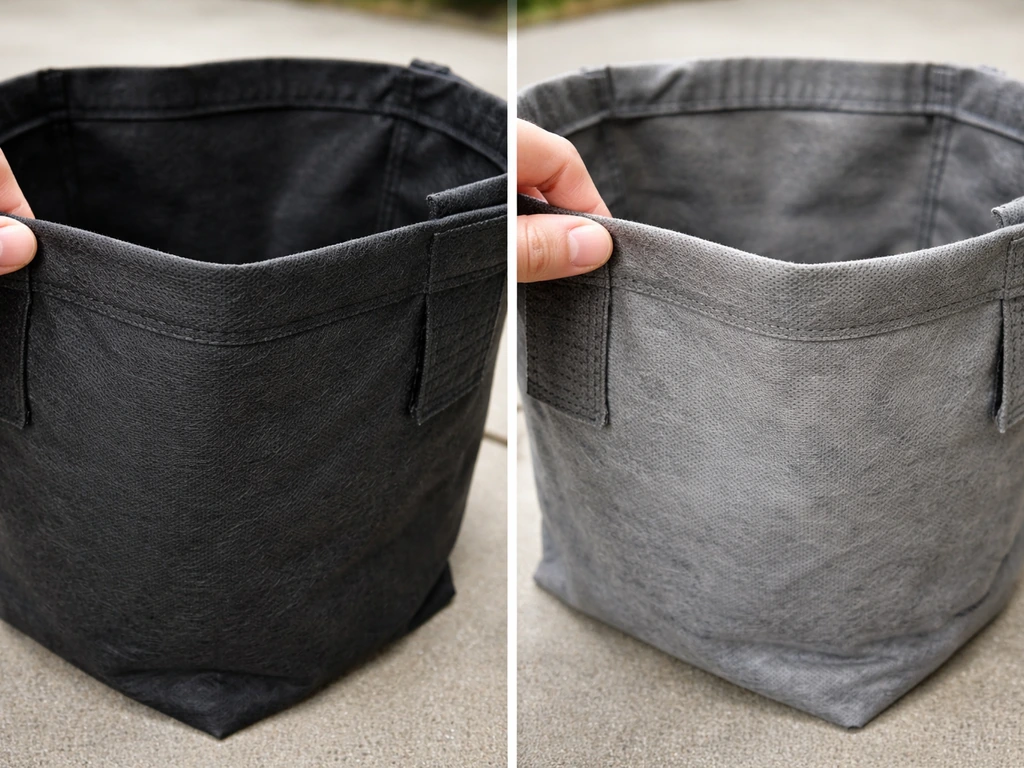
The single most important number on any Indian grow bag listing is GSM, or grams per square meter. This tells you how dense the fabric is. Thin bags (under 200 GSM) fall apart within a season in direct sun. Bags in the 300 to 400 GSM range hit the sweet spot: porous enough for good air exchange and root air-pruning, but thick enough to resist the UV and physical wear of a rooftop terrace or balcony. Go above 500 GSM and you start sacrificing the breathability that makes fabric bags better than plastic pots in the first place.
Air pruning is the real reason to use a fabric grow bag over a regular plastic container. When root tips grow outward and touch the fabric wall, they hit drier air, stop elongating, and trigger the plant to send out fresh lateral roots instead. The result is a dense, fibrous root ball rather than a circling, girdling mess. This only works if the fabric is genuinely breathable, so check that listings mention breathable or porous fabric, not just a fabric or cloth pot. Laminated inner liners or thick wax coatings destroy this function entirely.
For Indian conditions, UV stabilisation is non-negotiable. Polypropylene fabric breaks down in sunlight, and terrace gardens get brutal exposure from March through September. A bag without a UV stabiliser can crack, fray, and lose structural integrity within one summer. Geotextile specialists in India note that even industrial fabric exposed to open UV should be covered within about 14 days in critical applications. Your grow bag is sitting out there all season, so buy UV-rated stock. Many sellers use terms like geo fabric or geotextile on their listings, which is fine as long as the GSM and UV protection are stated.
What to check beyond the fabric
- Seams and stitching: double-stitched or heat-fused seams hold much longer than single-thread stitching, especially when the bag is heavy with wet soil
- Handles: look for bags with fabric handles stitched all the way under the base of the bag, not just looped over the rim; rim-only handles tear off under load
- Base drainage: the base should be the same breathable fabric as the walls, not a solid panel or a laminated sheet; a solid base traps water and kills roots
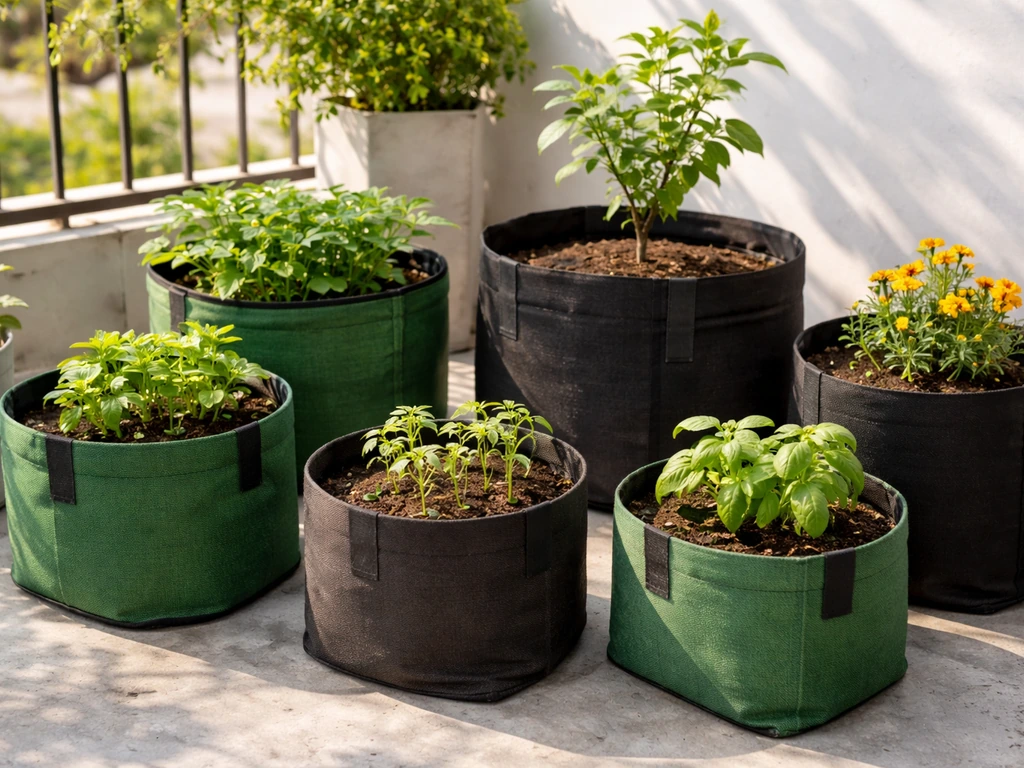
- Colour: black absorbs more heat (bad on rooftops in May and June); tan, grey, or green bags run noticeably cooler; white bags reflect the most heat but show soil stains fast
- Size labelling: Indian sellers often list volume in gallons OR litres inconsistently; always confirm the litre volume, and check physical dimensions (diameter and height) if available
Best grow bag choices by plant type
Vegetables
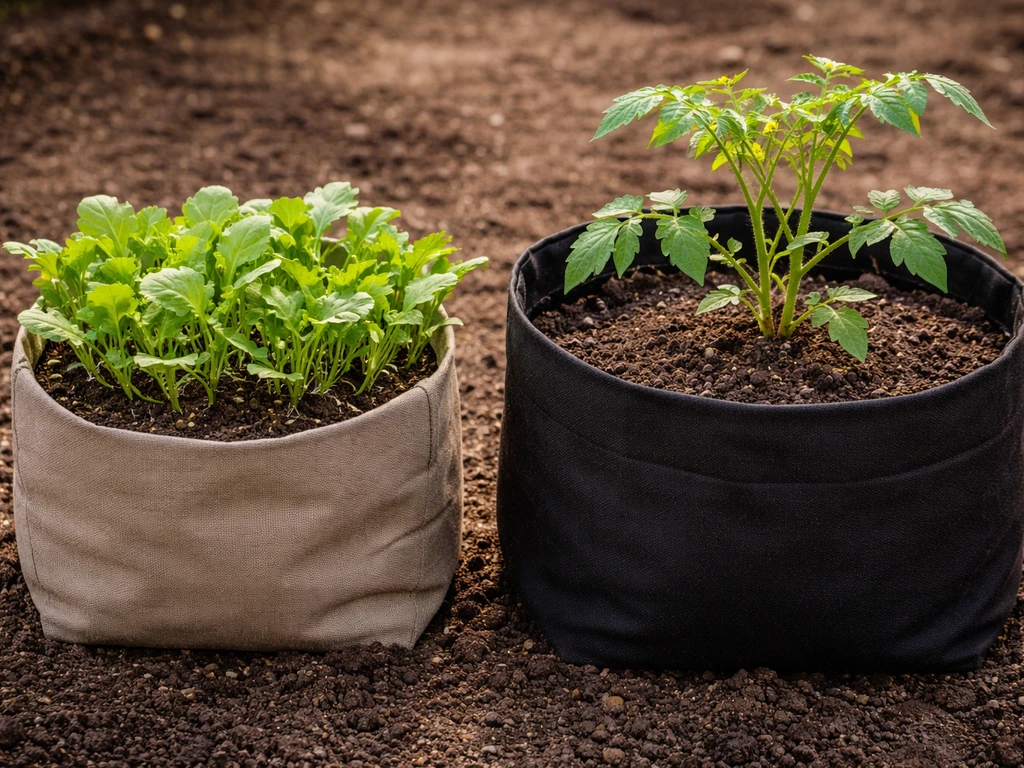
Most Indian kitchen garden staples fall into two size brackets. Leafy greens (spinach, fenugreek, coriander, lettuce) do fine in 8 to 12 litre bags because their roots stay shallow. Fruiting vegetables need more volume. Tomatoes, brinjal, capsicum, and chillies want at least 20 to 25 litres; 40 litres is better for indeterminate tomato varieties like Namdhari or Hybrid Pusa. Cucumbers and bottle gourds need 25 to 40 litres and benefit from bags that are taller than they are wide, since these plants send roots deep. Potatoes are best grown in 40 to 50 litre bags so you can hill up compost as the plant grows. The fabric sides let you feel the soil moisture through the wall, which helps enormously with potato watering.
Flowers
Most flowering annuals and perennials grown in Indian home gardens, including marigolds, petunias, zinnias, and gerbera, grow well in 10 to 15 litre bags. Roses are a bigger commitment: a hybrid tea rose wants 25 to 30 litres of root space to flower reliably through the season. For flowering climbers like bougainvillea in a container, 40 to 50 litres is the minimum if you want repeat blooming. Flowers on terraces in Mumbai, Chennai, or Delhi benefit especially from lighter-coloured bags since root zone heat suppresses flowering in summer.
Mushrooms
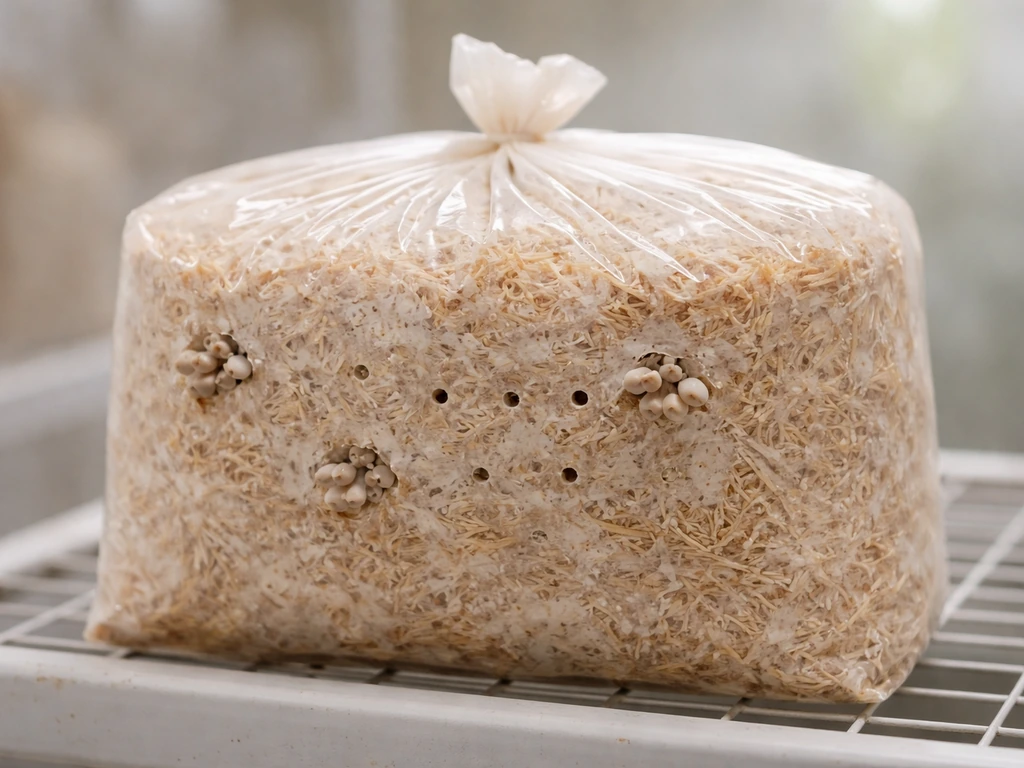
Mushroom cultivation in grow bags is a specific use case that is quite different from plant growing. Here, the bag acts as a sealed growing chamber for substrate (usually pasteurised straw or wood shavings), not an open container. For oyster mushrooms, standard polypropylene mushroom bags (typically 30 to 50 micron thick autoclavable PP bags, not geo fabric) are used. Geo fabric bags are not appropriate for mushroom cultivation because they are porous and cannot maintain the humidity or sterility that fruiting mushrooms need. If you are growing mushrooms, you need dedicated mushroom cultivation bags, which are a separate product category from what this guide covers.
Trees and fruit plants
Dwarf fruit trees and large shrubs (curry leaf, lemon, guava, dwarf mango, papaya, moringa) can genuinely thrive in large fabric grow bags because air pruning prevents the root circling that stunts trees in plastic pots. Lemon and lime need at least 40 to 50 litres. Curry leaf and moringa grow fast and do better in 75 to 100 litres. Dwarf mango or guava varieties need 100 litres minimum, with 200 litres giving much better results. At these sizes, check that the bag has reinforced base seams and strong side handles, because a 100-litre bag fully loaded with wet soil weighs over 60 kg.
Size guide: matching grow bag volume to your space
| Growing space | Recommended bag size | Best for |
|---|---|---|
| Small balcony (under 50 sq ft) | 8 to 15 litres | Herbs, leafy greens, chillies, flowers |
| Medium balcony or window ledge | 15 to 25 litres | Tomatoes (determinate), capsicum, marigolds |
| Large balcony or terrace corner | 25 to 50 litres | Indeterminate tomatoes, brinjal, cucumbers, roses |
| Open terrace with structural clearance | 50 to 100 litres | Lemon, curry leaf, moringa, dwarf papaya |
| Ground-level terrace or garden bed | 100 to 200 litres | Dwarf mango, guava, large fruiting shrubs |
One practical note for balcony growers: fabric bags are lighter than clay or ceramic pots by a significant margin, which matters if your balcony has load-bearing limits. A 25-litre fabric bag with soil weighs around 12 to 15 kg compared to 20 to 25 kg for an equivalent clay pot. On terraces without load restrictions, you can go larger, but always position big bags (75 litres and up) near structural walls or pillars rather than in the centre span.
Quality checks and buying tips for India
Whether you are buying from a local nursery, a hardware store, or an online platform, the checklist is the same. Most problems come from skipping these steps when a price looks attractive. For a quick comparison of options, check the best grow bags shortlist next and match the GSM, drainage, and UV rating to your plants and balcony conditions.
- Ask for or look up the GSM rating: anything below 300 GSM is disposable-grade for Indian outdoor use; 350 to 400 GSM is the target
- Confirm UV stabilisation is explicitly mentioned: generic fabric or heavy-duty fabric without UV mention is a red flag in warm-climate use
- Check stitch density on seams: hold a sample up to light; you should not see light easily through the seam lines; stitching should be tight and even
- Pull the handles: give a firm tug in the store or request a photo of the handle attachment point from an online seller; the handle attachment should extend several centimetres down the side wall
- Examine the base fabric: it should match the sidewall fabric in texture and permeability, not feel smoother or more rigid
- For online purchases: avoid listings with no GSM or dimension specs; sellers who list this data are more likely to be manufacturing consistently
- Brands like Indigrow, Jain Irrigation (Jain Garden range), and a few regional geo-fabric suppliers list verified GSM and UV specs; these are safer bets than unbranded bulk bags sold in packs of 10 or 20 at very low prices
A word on liners: some bags come with a thin plastic or felt inner liner, marketed as moisture retention. The best felt grow bags are designed to hold steady moisture while still allowing enough airflow for healthy roots felt inner liner. In India's heat, this is usually counterproductive. A liner reduces breathability, defeats air pruning, and traps heat around the root zone. Unless you are growing in a climate-controlled environment or dealing with an extremely dry desert climate, skip lined bags and manage moisture through watering frequency instead.
Common grow bag problems in India and how to fix them
Root zone overheating
This is the most common complaint from Indian terrace gardeners using black grow bags in summer. When the bag surface gets direct afternoon sun and ambient air temperatures are above 38 to 40 degrees Celsius, root zone temperatures can climb above 35 degrees Celsius, which stresses most vegetables. The fix is straightforward: switch to a light-coloured bag or wrap your existing black bag in jute, coir matting, or even newspaper. Elevating bags on a wooden pallet or a few bricks so air can circulate under the base also helps significantly. Mulching the top of the soil with dry leaves or coir pith reduces heat entry from above.
Watering too often or not often enough
Fabric bags dry out faster than plastic or clay pots because moisture escapes through the sidewalls as well as the base. In peak Indian summer, a 20-litre bag with a tomato plant may need watering twice a day. The trick is to use the squeeze test on the fabric wall: if the fabric feels completely dry and stiff, the root zone is dangerously dry. If it feels cool and damp, you are in good shape. Overwatering is less common with fabric bags than with plastic pots, but it does happen with low-quality bags that have a solid or near-solid base. If water pools on the surface for more than 30 seconds after watering, drainage is compromised and you need to check the base or add perlite to your mix.
Nutrient leaching
Because fabric bags drain fast and you water frequently, nutrients wash out of the root zone faster than in a sealed container. This shows up as yellowing leaves (nitrogen loss), poor flowering (phosphorus and potassium loss), and stunted growth despite regular watering. The solution is to fertilise more often in smaller doses rather than one large monthly application. Use a balanced water-soluble fertiliser every 10 to 14 days during the growing season, and supplement with vermicompost top-dressing monthly. Coated slow-release granules also work well because they release nutrients gradually regardless of watering frequency.
Pests and disease in fabric bags
Fabric bags do not eliminate pests, but the improved drainage and aeration reduce fungal root diseases significantly compared to plastic pots. Fungus gnats, which breed in consistently moist topsoil, are the most common pest specific to container growing. Let the top 2 to 3 cm of soil dry out between waterings to break their breeding cycle. Aphids, mealy bugs, and spider mites treat fabric containers the same as any other pot, so routine neem oil sprays (5 ml per litre of water, applied every 10 days) handle most of these. If you reuse bags, wash them with diluted bleach solution (1 part bleach to 9 parts water) between seasons to prevent soil-borne disease carryover.
Structural failure: handles tearing and seam splitting
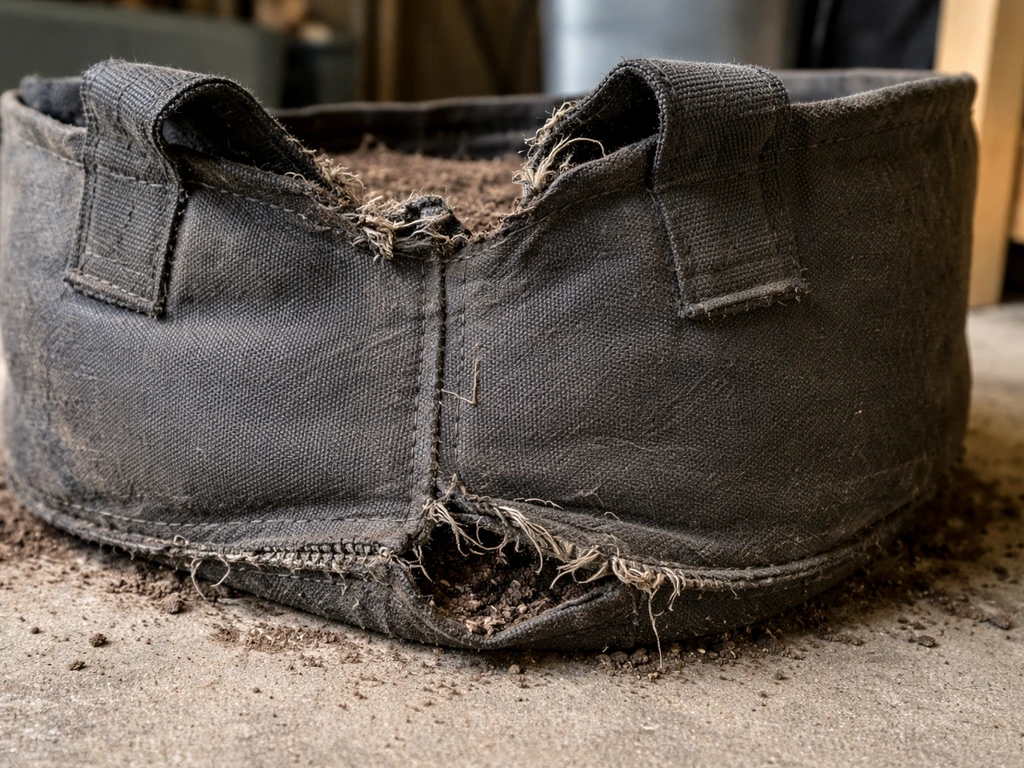
Low-quality bags fail at the handles and base seams, usually when you try to move a fully loaded bag. If you have bags where the handles are already attached only at the rim, stop moving them while full. Drain and partially empty before lifting. If a seam is splitting, you can extend the bag's life by wrapping it with a strip of jute cloth tied around the outside. For future purchases, this is exactly why handle attachment style and seam stitching matter at the buying stage.
Are grow bags worth the cost in India, and how do you make them last?
A decent 400 GSM UV-stabilised 20-litre grow bag in India costs between 80 and 200 rupees depending on where you buy it. A comparable-capacity clay or ceramic pot costs 300 to 800 rupees and is fragile. Plastic pots are cheaper per unit but degrade in UV, leach chemicals, and do not air-prune roots, so plant health over two to three seasons is noticeably worse. From a cost-per-season standpoint, a quality fabric bag that lasts three to four seasons is excellent value compared to replacing cheap plastic annually.
That said, grow bags are not always the right answer. If you want the best grow bags for weed plants, prioritize breathable fabric, strong UV protection, and the right size for deep root growth. If you are growing in a shaded balcony where heat is not an issue and you water infrequently, a good plastic pot with drainage holes performs nearly as well and retains moisture longer between waterings. Fabric bags reward growers who are present and attentive; they punish neglect faster than plastic or clay.
Extending bag lifespan
- At the end of each season, empty the bag, shake out roots, and wash with diluted bleach or neem water; let it dry completely in shade before folding
- Store folded bags in a dry spot away from direct sunlight; UV continues to break down polypropylene even during off-season storage if left exposed
- Do not leave empty bags sitting outside through summer; UV-stabilised fabric still degrades faster when there is no soil mass shielding the interior wall
- Avoid dragging loaded bags across rough concrete or gravel; the abrasion shreds the fabric base faster than anything else
- If a small hole or tear appears, patch it on the outside with a strip of similar fabric or a piece of shade net stitched or tied in place; this slows the spread significantly
- Rotate bags every season so the same side is not always facing the harshest afternoon sun
If you want to go deeper on specific material comparisons, felt bags behave somewhat differently from polypropylene geo fabric in terms of water retention and texture, and non-toxic certifications matter if you are growing edible crops and want assurance about what the plastic is made from. The core buying framework here applies across all fabric bag types, so the same GSM, UV, seam, and handle checks will serve you no matter which variation you end up choosing.
FAQ
Which GSM is the safest choice when I cannot verify the exact fabric type on the listing?
If the listing does not clearly state polypropylene geo fabric, prioritize GSM over marketing terms. For most Indian balcony and terrace conditions, choose at least 300 to 400 GSM, avoid anything under 200 GSM, and skip bags that only say “thick fabric” without giving GSM.
Do I need to punch extra holes or modify drainage when using grow bags?
Usually no, quality bags have breathable walls and a drainage base, but you should inspect the base before filling. If the bottom is sealed or feels “solid,” that defeats drainage, and adding holes is risky because it can create weak points. Better to choose a bag with an open, well-draining base design or add perlite only if drainage is the real issue.
How do I know if a bag will actually air-prune roots (not just look like a fabric pot)?
Look for explicit claims about breathability or porosity, not just “geo fabric” or “geotextile.” Also avoid bags with inner laminated liners or thick wax coatings, because those block the dry-air trigger needed for air pruning.
What watering schedule should I expect in Indian summer with fabric grow bags?
Plan for faster drying on hot rooftops. In peak summer, some 20-litre bags may need watering twice a day for tomatoes. Use the fabric squeeze test described in the article, and if the bag feels completely dry and stiff, water immediately rather than waiting for soil-only cues.
Should I use a mulch layer inside or only on top of the bag?
Stick to top mulching (dry leaves, coir pith, or similar) rather than packing materials against the sides. Top mulch reduces heat entry and surface evaporation, while side coverage can reduce airflow and partially weaken air-pruning behavior.
How often should I fertilize in a grow bag, and what if leaves turn yellow even after regular watering?
Because nutrients wash out more quickly, feed more often in smaller doses. A practical approach is water-soluble fertilizer every 10 to 14 days during active growth, then add vermicompost top-dressing monthly. If yellowing happens despite that, check drainage first, then consider slightly increasing nitrogen within a balanced fertilizer program.
Can I reuse grow bags next season, and what is the safest cleaning method?
Yes, but clean between seasons to reduce disease carryover. Wash and scrub thoroughly, then disinfect with a diluted bleach solution (1 part bleach to 9 parts water) as mentioned. Let the bag dry completely before storing, because trapped moisture can cause odor and mold.
Are black grow bags a bad idea in India?
Not automatically, but they can overheat the root zone in strong afternoon sun. If your balcony gets direct sun and temperatures regularly exceed 38 to 40°C, switch to a lighter-coloured bag or insulate the outside with jute or coir matting, and elevate the bag so air can move under it.
What is the right bag shape for deep-root plants like cucumbers and gourds?
Choose bags that are taller than they are wide for plants that naturally send roots downward. A taller profile supports deeper rooting and reduces the likelihood of root crowding near the base, which can affect flowering and fruiting.
When are grow bags the wrong choice, even if they are “best” quality?
If you cannot water consistently or you are growing in a shaded area where heat is not a problem, plastic pots with drainage holes may perform close to grow bags. Grow bags reward attention, they punish neglect faster, especially when nutrient and moisture cycles become irregular.
What is a quick way to estimate whether a large bag will exceed my balcony load limits?
Do a loaded-weight check. Use the fact that a fully loaded 100-litre fabric bag can weigh over 60 kg, and always place large bags (75 litres and up) near structural walls or pillars rather than the center span to reduce risk.
Can I use a grow bag for mushrooms?
No, typical fabric grow bags for plants are not suitable. Mushroom cultivation needs dedicated substrate-growing bags that can maintain humidity and sterility (commonly autoclavable polypropylene mushroom bags), while polypropylene geo fabric is porous and breaks the controlled growing conditions.
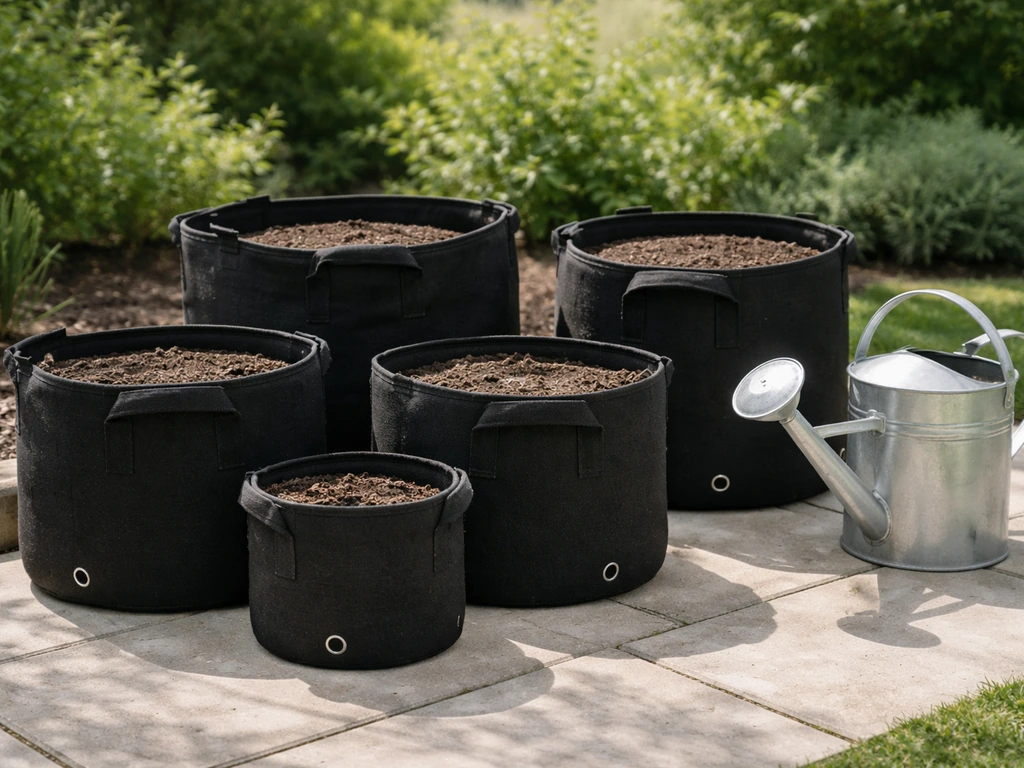
Buy the best grow bags on Amazon fast: size, fabric, drainage, features, red flags, and picks by plant type.
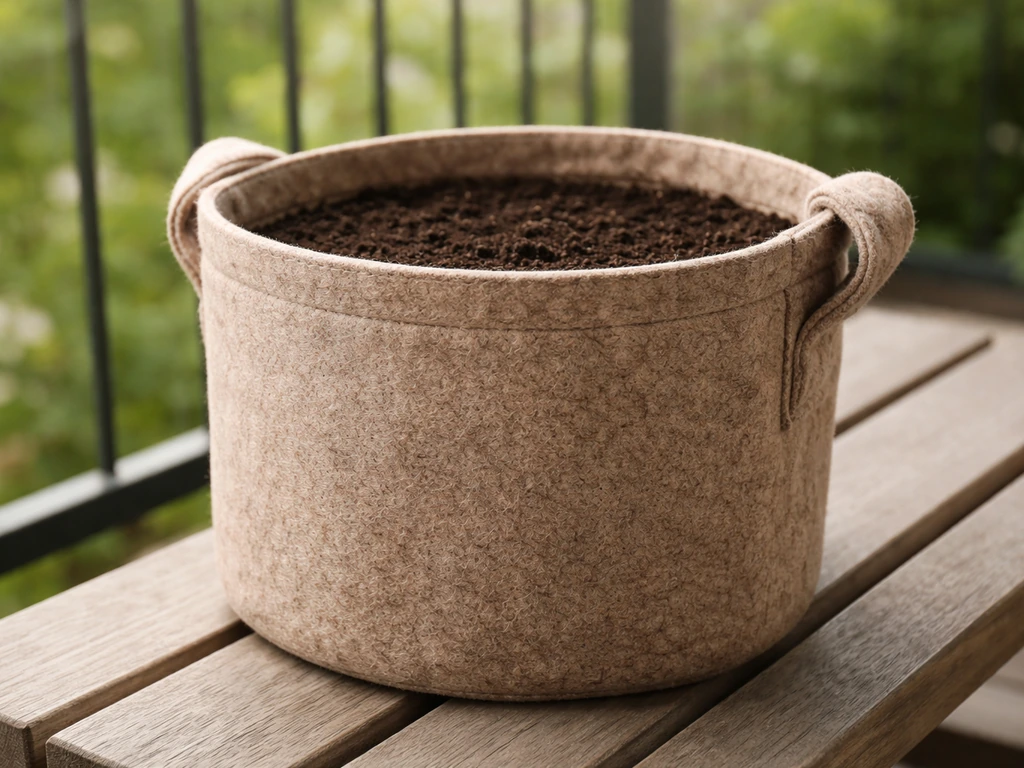
Choose the best non toxic grow bags safely with material checks, red flags, feature comparisons, and care tips
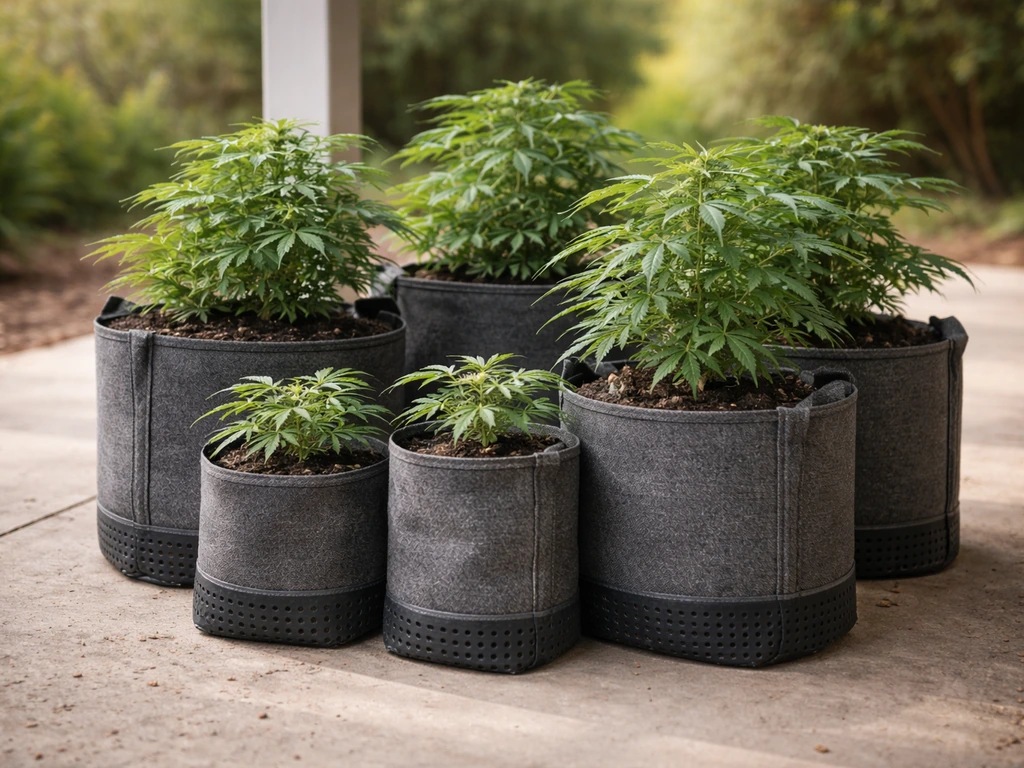
Choose the best fabric grow bags for weed, pick sizes, prevent root issues, and water right with care and troubleshootin