
For most home cannabis growers, a 3- to 5-gallon fabric grow bag works well for a single plant in a tent or on a patio, while outdoor plants in full sun benefit from 7- to 15-gallon options. If you want a quick way to choose the best felt grow bags, focus on felt density, drainage, and how well the fabric supports air pruning 3- to 5-gallon fabric grow bag.
Best Grow Bags for Weed Plants: Setup, Sizes, Care Guide
Marcus Holloway
5 May 2026
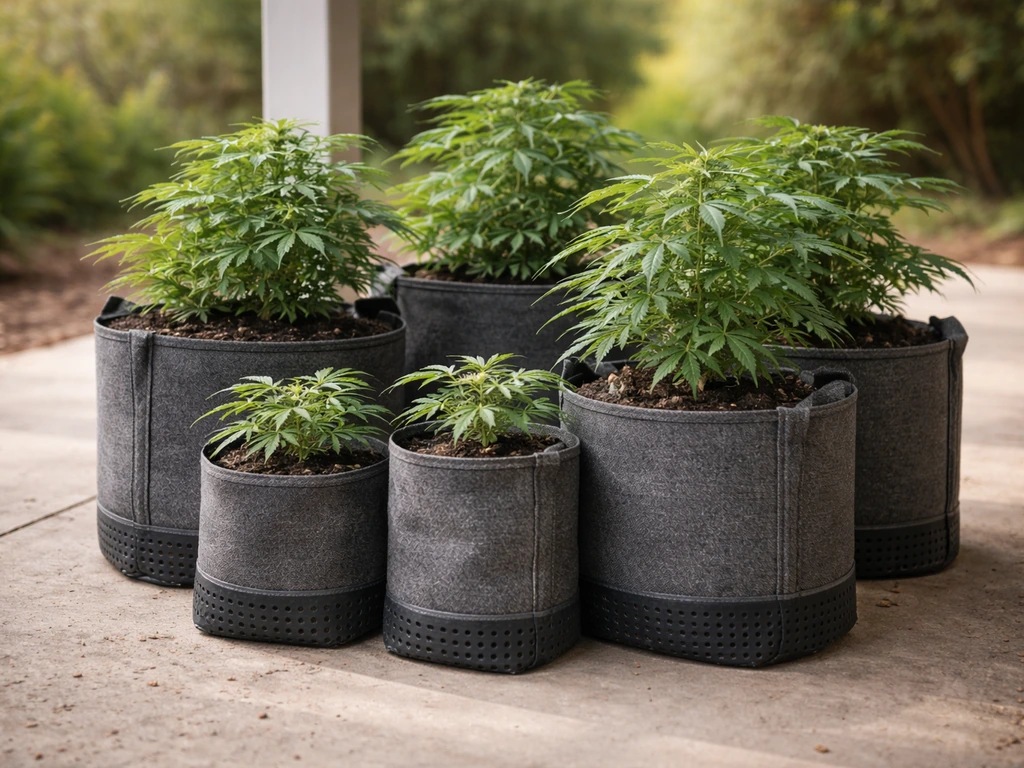
If you want a quick starting point, compare the best grow bags by material, size, and use case before buying. If you are trying to narrow it down fast, the best grow bags are the ones that match your size, material, and drainage needs for your setup. The best materials are non-woven polypropylene or polyester felt in the 150–300 gram weight range. Brands like AC Infinity, Smart Pot, Gorilla Grow Tent, HTG Supply's FeltPots, and Phat Sacks all deliver solid air pruning, good drainage, and enough durability for multiple runs if you clean them properly between harvests.
What to look for in grow bags for cannabis
Cannabis is more demanding than most container plants. Roots need genuine oxygen exchange, not just 'breathable' fabric used as a marketing term. The single most important feature is air pruning: when roots hit the fabric wall and encounter drier, more aerated conditions at the edge, the root tip stops extending and the plant sends out multiple new lateral roots behind it. That branching effect means more surface area to absorb water and nutrients, which directly affects yields. A bigger, denser root system inside the bag almost always means a bigger plant above it.
Beyond air pruning, here is what actually matters for weed plants specifically:
- Drainage: Fabric bags drain from the sides and bottom simultaneously, which nearly eliminates overwatering and root rot compared to plastic pots. That said, the mix you put inside still needs to be fast-draining.
- Breathability: Thicker fabric (150g and above) maintains structure while still allowing adequate air exchange. Anything under 100g tends to collapse under its own weight when wet.
- Stability: A bag that tips over in a tent or on a deck is a problem. Look for wide, flat-bottomed designs with reinforced base seams.
- Handles: Essential for moving plants during training, defoliation, or harvest. Double-stitched handles are worth paying for.
- Single vs. multi-layer: A single-layer non-woven fabric is standard and works well. Some premium bags add an inner liner to slow moisture loss, which can help in hot outdoor climates but reduces air pruning slightly.
- Non-toxic materials: Cannabis absorbs what is in its root zone. Stick with BPA-free, food-safe certified, or clearly labeled non-toxic polypropylene or polyester fabrics.
One often-overlooked trick: elevate your grow bag slightly off the ground or off the tent floor so air can reach the underside. Research from AirBottomBags shows that adding air access to the bottom of a fabric bag increases the available air-pruning surface area by about 33% versus bags that only prune through the vertical sides. A simple wire rack or a few bricks under the bag is all it takes.
Best grow bag materials and features
Fabric types compared
Most grow bags on the market use one of three materials: non-woven polypropylene felt, woven geotextile fabric, or recycled cotton/polyester blends. Each behaves differently in a cannabis grow.
| Material | Air Pruning | Durability | Dry-Out Speed | Best For |
|---|---|---|---|---|
| Non-woven polypropylene felt (150–300g) | Excellent | High (rot-resistant, UV-stabilized) | Moderate to fast | Indoor tents, outdoor patios, general use |
| Woven geotextile (heavier gauge) | Good | Very high, longest lifespan | Slower (denser weave) | Long-term outdoor growing, repeated reuse |
| Recycled cotton/polyester blend | Good | Lower (degrades faster, mold risk) | Fast | Budget grows, single-season outdoor use |
| Multi-layer with inner liner | Moderate (liner slows pruning) | High | Slow | Hot climates where rapid dry-out is a problem |
Non-woven polypropylene is the sweet spot for most cannabis growers. It is chemically inert, rot-resistant, and when properly manufactured can last many seasons. Quality non-woven geotextiles, when protected from prolonged direct UV exposure, are extremely durable. That said, for cannabis specifically, the rot-resistance and consistent porosity of 150–200g non-woven poly felt is hard to beat at a reasonable price. Recycled fabric blends are cheaper but carry a real mold risk at the seams and base, especially in humid tents, and they tend to break down faster.
Drainage and airflow details
Fabric porosity means water drains through the walls and base rather than pooling at the bottom. If you want a quick way to compare options, check the best grow bags on amazon for airflow, drainage, and build quality. This is a genuine structural advantage over plastic pots: the root zone stays oxygenated even right after watering because gravity and fabric wicking work together to move water out fast.
The trade-off is that fabric bags dry out significantly quicker than plastic, which means cannabis in fabric bags often needs watering more frequently, especially during late flower when plants are drinking hard. In a hot outdoor setup, a 5-gallon fabric bag in direct sun may need water once or even twice a day. Plan your watering schedule around this.
Handles, seams, and construction quality
Look for reinforced double-stitched handles and a flat, reinforced base. The seams are the first place bags fail, and they are also where mold tends to develop first because moisture lingers in the folds. Bags with sealed or heat-bonded seams rather than just sewn edges hold up better over multiple grows. If a bag's handles are just loops of the same fabric material sewn with a single stitch, they will eventually tear under the weight of a fully grown, watered plant.
Sizing guide for different growth stages
Choosing the wrong size is the most common mistake growers make with fabric bags. Too small and roots get cramped, yield suffers, and you are watering constantly. Too large and the excess soil stays wet for too long, inviting root rot and nutrient issues even in fabric bags.
| Growth Stage | Recommended Size | Notes |
|---|---|---|
| Seedling / Early veg (weeks 1–3) | 0.5–1 gallon | Small containers dry out at the right rate for tiny root systems; prevents overwatering |
| Mid veg (weeks 3–6) | 3 gallon | Good size for topping, training, and establishing structure before flip |
| Late veg / Pre-flower | 5 gallon | Most common indoor size; suits a single main-lined or LST plant well |
| Full flower (indoor tent) | 5–7 gallon | 5 gallon is the standard; 7 gallon if you run longer veg or grow large strains |
| Outdoor / Patio (auto or photo) | 7–15 gallon | More root volume = larger plant; 15 gallon for big outdoor photos in full season |
| Large outdoor photos, full season | 20–25 gallon | Yields can be dramatic; watering demand is high but manageable with drip systems |
The 5-gallon size has become the industry standard for indoor cannabis grows for good reason: it fits a standard 2x2 or 2x4 tent footprint, holds enough medium to buffer watering frequency, and keeps the plant manageable for training. For autos specifically, going larger does not always improve yield the way it does for photoperiods, since autos flower on a fixed timeline regardless of root volume. A 3-gallon auto in a well-filled fabric bag often outperforms the same strain in a 10-gallon pot that was never fully colonized by roots.
When to upsize: transplant when you can see roots beginning to emerge from the fabric wall, or when the plant dries out within 12–18 hours of a full watering. With fabric bags, transplanting is gentle because you can gently squeeze the bag to loosen the root ball without damaging it the way you would with a rigid plastic pot.
Top recommended grow bags for weed by use case and budget
Best overall for indoor tents: AC Infinity fabric pots
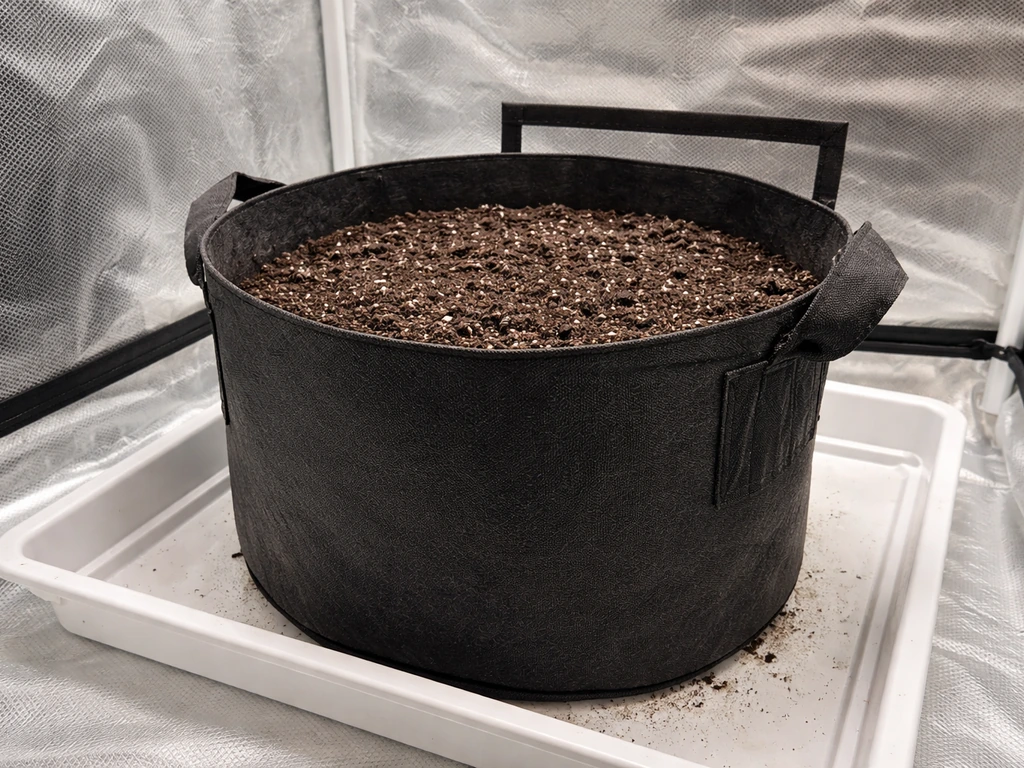
AC Infinity's heavy-duty reusable fabric pots are made from thick non-woven fabric and are consistently well-reviewed for indoor tent grows. They drain excess water reliably, promote air pruning, come with handles, and are priced reasonably for multi-packs. If you already run AC Infinity fans or controllers, their pots are a natural fit and the quality control is consistent.
Best for reliability and reuse: Smart Pot
Smart Pot is the original fabric grow bag brand and still one of the best. Their fabric walls air-prune roots effectively and the evaporative cooling effect helps keep root zone temperatures stable, which matters in a hot tent or on a sun-baked patio. Smart Pot's 5-gallon is the benchmark for indoor soil grows. They are a bit pricier per unit than generic alternatives but hold up for many seasons, and the brand's cleaning guidance (more on that below) makes reuse straightforward.
Best budget option: HTG Supply FeltPots or Phat Sacks
HTG Supply's FeltPots use 150-gram felt woven material and are a solid entry-level choice for growers who want to try fabric bags without spending much. Phat Sacks from HTG are similarly priced and use fabric that provides solid air exposure to the growing medium. Both work well for a first grow or for someone running multiple plants on a budget. Just check the seam quality on each bag before filling, since batch consistency can vary on lower-priced products.
Best for outdoor and patio grows: Gorilla Grow Tent bags
Gorilla Grow Tent's fabric bags are built with an emphasis on breathability and wall-to-air surface area, which makes them a strong choice for outdoor plants where maximizing air pruning and drainage in larger sizes matters. Their construction is robust enough to handle direct sun and the weight of large soil volumes in 10- to 15-gallon sizes. For outdoor photos that need a full season in a large container, these hold up well.
Quick cost comparison
| Brand / Product | Material | Typical Price (5 gal) | Best Use Case |
|---|---|---|---|
| Smart Pot | Non-woven polypropylene | $5–8 per unit | Indoor soil, reliable multi-season reuse |
| AC Infinity Fabric Pots | Non-woven fabric | $4–7 per unit (multi-pack) | Indoor tents, all-in-one grow setups |
| Gorilla Grow Tent Bags | Heavy non-woven | $6–9 per unit | Outdoor/patio, larger sizes |
| HTG FeltPots / Phat Sacks | 150g felt / fabric | $2–4 per unit | Budget indoor, beginner grows |
| Generic non-woven (Amazon multi-packs) | Non-woven poly | $1.50–3 per unit | Testing, high-plant-count grows on a budget |
If you are hunting specifically for non-toxic options or bags manufactured in the USA, those are worth researching as separate criteria since not every brand is transparent about sourcing. You can use the same buying checklist here to narrow in on the best non-toxic grow bags that fit your setup and budget. The site also covers best non-toxic grow bags and best grow bags made in USA for growers who prioritize those factors. You can compare options side by side to find the best grow bags made in USA for your specific setup and budget.
How to fill, plant, and water in fabric grow bags
The right soil mix for cannabis in fabric bags
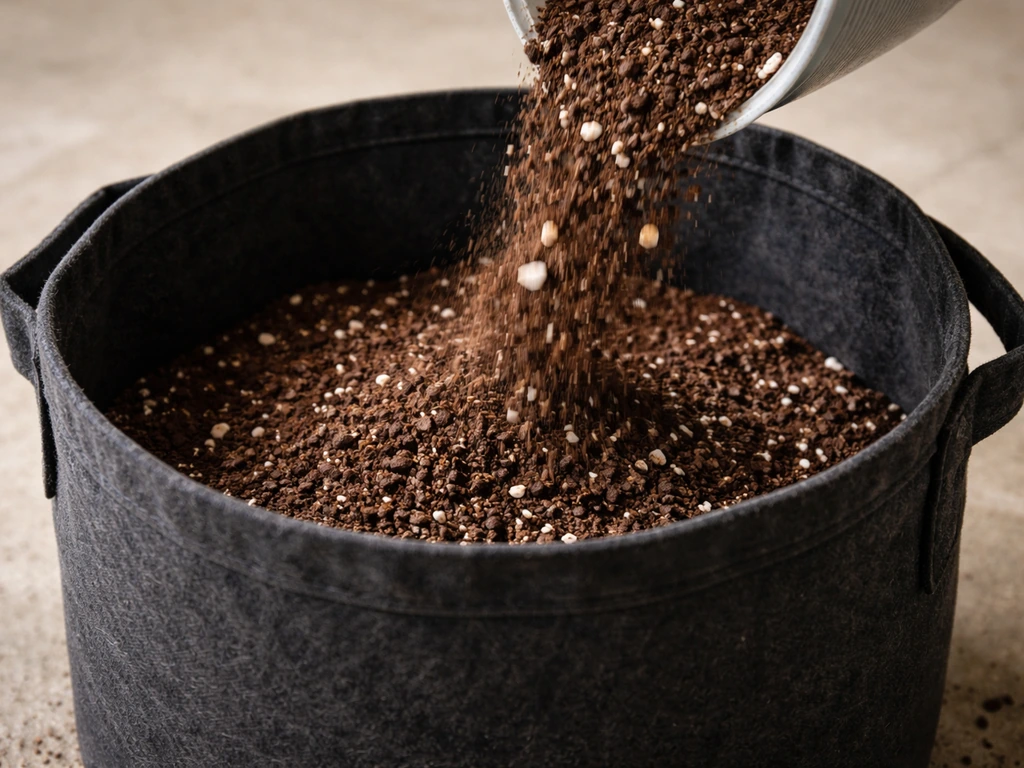
Cannabis in fabric bags thrives in a fast-draining, airy mix. A standard recipe that works well: 50–60% high-quality potting soil or amended living soil, 20–30% perlite, and 10–20% coco coir. The perlite is the key ingredient here. It dramatically improves drainage and aeration throughout the root zone, not just at the fabric walls. Coco coir adds water retention and a slight buffering effect, but it needs to be properly hydrated before mixing or it will pull moisture unevenly from the root zone.
For coco-only or coco-dominant grows (a popular method in fabric bags), use a 70/30 coco-to-perlite ratio and feed with a full nutrient solution at every watering. Coco does not hold nutrients between feeds the way soil does, so you need to water to runoff more frequently and keep pH in the 5.8–6.2 range for coco-based media. The fabric bag's drainage properties pair excellently with coco because excess solution drains fast and the medium re-aerates quickly.
How to fill and plant
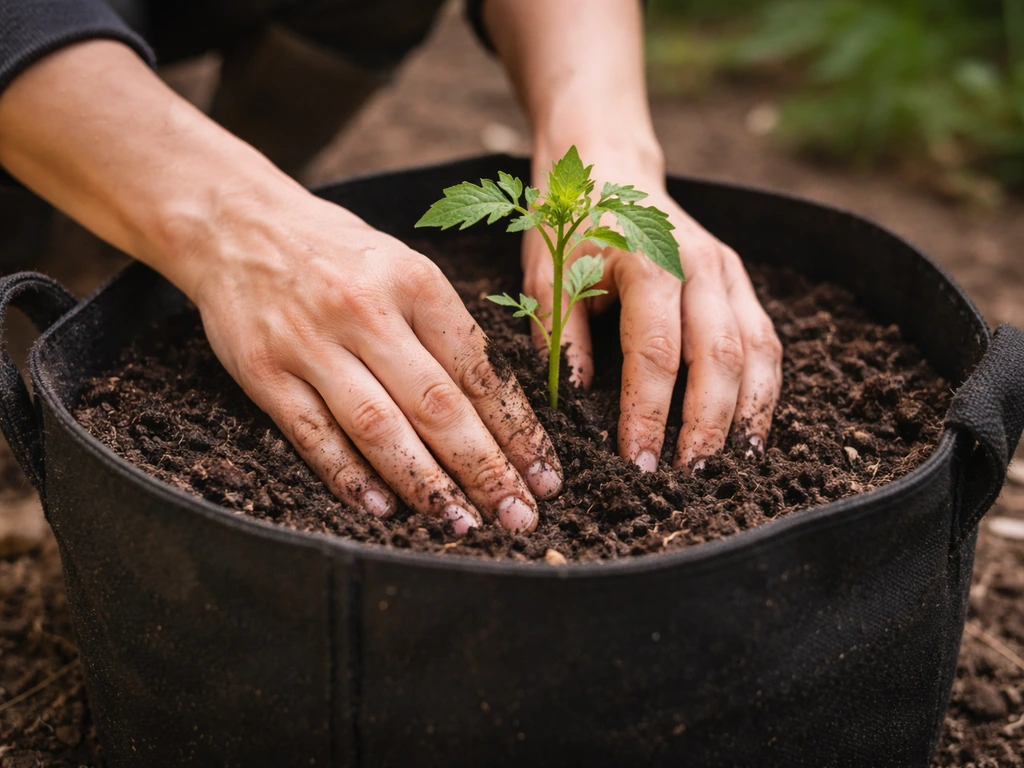
- Set the bag on its final location before filling (it will be much heavier once loaded). If you plan to elevate it for bottom air pruning, place the rack first.
- Fill to about 80% of the bag's height, not completely to the top. Leave a few inches at the rim to create a water reservoir when you irrigate.
- Pre-wet your mix before filling if possible. Dry coco and perlite mixes can be hydrophobic at first and water will run straight through the sides without wetting the root zone.
- Transplant your seedling or rooted clone into a shallow hole in the center. Fabric bags are forgiving during transplant since you can squeeze them gently to loosen the existing root ball.
- Water lightly around the base of the stem immediately after planting to settle the medium around the new roots.
Watering in fabric bags: what changes vs. plastic
The biggest adjustment for growers switching from plastic pots is frequency. Fabric bags dry out faster because moisture evaporates through the walls, not just from the top surface. In a 5-gallon fabric bag under a 600W-equivalent LED, you may be watering every 1–2 days in flower. The standard lift test still works: pick up the bag and judge weight. A dry bag feels noticeably lighter than a watered one, and you will get a feel for it within a week.
Always water until you get about 10–20% runoff from the base of the bag. This flushes any salt buildup and ensures the entire root zone is wetted, not just the top layer. In coco grows this is even more important: skipping runoff lets salts accumulate and locks out nutrients. With fabric bags, runoff happens fast and the bag stops holding excess water quickly, so there is minimal risk of the plant sitting in standing water as long as your mix is not too dense.
Avoid underwatering due to the faster dry-out rate. Some growers assume the fabric bag 'takes care of itself' and water less often, but under-watering in flower causes stress and stunted bud development. Check moisture levels at least once daily during peak summer outdoor grows or heavy feeding stages indoors.
Common problems and how to troubleshoot them
Roots coming through the fabric wall
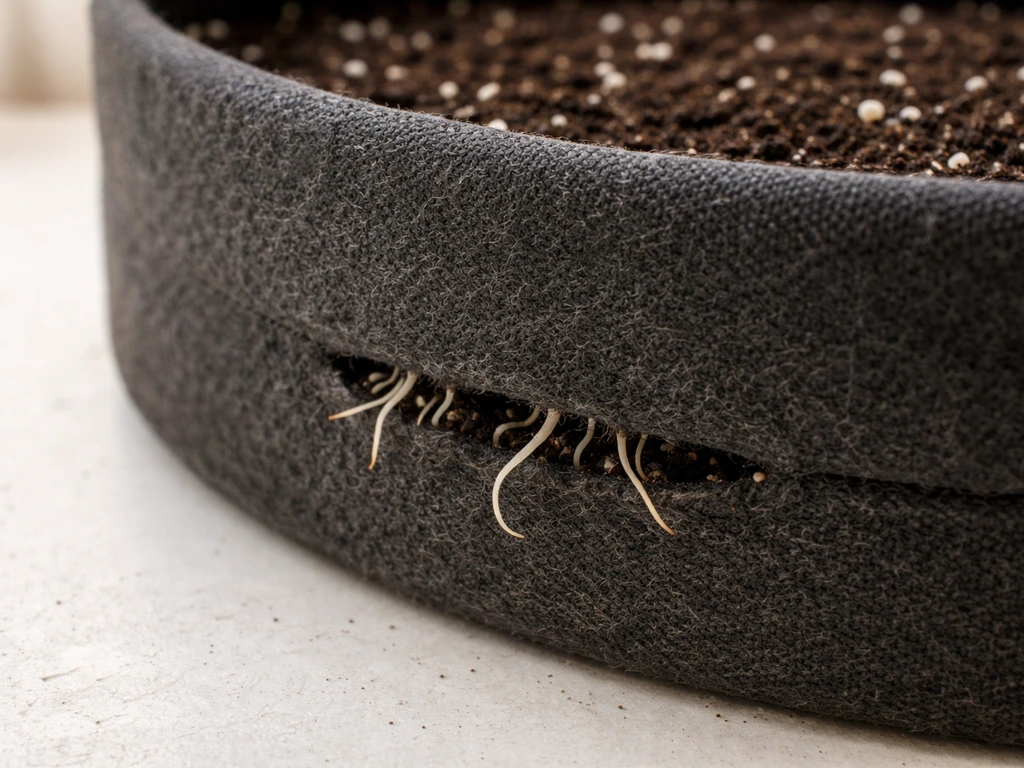
This is normal and is actually the air-pruning mechanism working as intended. A USDA Forest Service publication on root pruning (including air-pruning concepts such as slit air pruning) describes this kind of mechanism as a way to prevent root circling and direct root behavior [the air-pruning mechanism working as intended](https://www. fs. usda.
gov/rm/pubsseries/wo/woah732. pdf). When root tips reach the fabric wall, the lower moisture and higher air exposure at the edge causes the tip to dry out and stop extending. Smart Pot describes this air-pruning behavior in fabric containers, where roots that reach the container wall are intended to prune and branch instead of continuing to grow in a circling pattern [roots reaching the fabric wall cause the root tip to stop extending](https://smartpots.
com/pages/how-it-works). The plant sends lateral offshoots behind the tip, creating a denser, more branched root system. You might see small white root tips poking through the outer surface of the bag. That is fine.
What you do not want is roots wrapping around outside the bag in a spiral, which usually means the bag is sitting on solid ground that is wet and roots are chasing moisture outside the bag. Elevate the bag to prevent this.
Fabric drying out too fast
If you are watering daily or more and the bag still feels dry, consider: Is the bag in direct sun or under a hot light with low humidity? Is the mix too perlite-heavy? Try adding a small amount of coco to the mix to improve water retention, or use a multi-layer bag with a liner for outdoor hot-climate grows. A light-colored bag also helps: dark bags absorb more radiant heat and dry the outer medium faster.
Nutrient washout and lockout
Fast drainage is great for root health but means nutrients can wash through quickly, especially in coco. If you see signs of nutrient deficiency (yellowing leaves, slow growth) despite feeding regularly, check that your pH is in range (5.8–6.2 for coco/hydro, 6.0–6.8 for soil), that you are feeding with every watering in coco, and that you are not over-flushing the bag. In coco, plain water-only feeds should be rare exceptions, not routine.
Mold on the outside of the bag
Mold on fabric grow bags typically forms first at the seams, the base, and any area with low airflow. In a tent, this usually means poor circulation around the lower canopy. First response: increase circulation with a small oscillating fan directed at the base of the plants. Treat visible mold spots on the bag exterior with a diluted 3% hydrogen peroxide spray. Do not let mold sit unchecked because it can work its way into the root zone if the bag's integrity is compromised.
Bag collapsing or losing shape
This usually points to fabric that is too thin (under 100g) or a recycled-material bag that has degraded. A bag that cannot hold its shape when wet creates uneven root distribution and makes watering inconsistent. If this happens mid-grow, carefully slide the bag into a rigid pot or bucket of the same volume to support it for the rest of the run, then replace it with a heavier-gauge bag for the next cycle.
Care, yields, and reusing your grow bags
What fabric bags do for your yield
The honest answer is that fabric bags do not magically increase yield compared to a well-managed plastic pot. What they do is lower the floor on mistakes. Overwatering, heat stress in the root zone, and root circling are all dramatically less likely in a good fabric bag. The result is plants that spend more time in their growth window rather than recovering from stress events. If you are switching from plastic to fabric and your grows improve, it is usually because the fabric bag eliminated a consistent stressor you were not fully aware of, not because the fabric itself is magic.
The aeration and air-pruning benefits described by cannabis cultivation experts like Kevin Jodrey emphasize that it is the oxygen access to the root zone that drives the real benefit, not just the prevention of root circling. Root circling in plastic is a symptom, not the disease. The disease is poor aeration, and fabric bags solve it structurally.
Cleaning and sterilizing between runs
Fabric bags can absolutely be reused, but only if you clean them properly. After harvest, empty the bag, shake out as much old root material as possible, and rinse it with water. For disinfection between runs, you have a few solid options:
- Hydrogen peroxide soak: A 2:1 water-to-hydrogen-peroxide solution (or 3% H2O2 straight) works well. Soak the bag for 20–30 minutes, agitate gently, then rinse thoroughly and hang to dry completely.
- OxyClean or enzyme wash: Smart Pot and other brands specifically recommend OxyClean for cleaning fabric containers. A warm OxyClean soak breaks down organic matter and root debris stuck in the fabric weave.
- Dilute bleach: A 10% bleach solution (1 part bleach to 9 parts water) for at least 30 minutes kills pathogens effectively. Rinse very thoroughly afterward, since bleach residue can harm roots. Let the bag air out fully before reuse.
- Avoid boiling water on recycled-fabric bags: The heat can break down synthetic fibers in lower-quality materials. Hot water is fine for rinsing quality poly felt bags, but do not submerge them in boiling water.
After cleaning, always dry the bags completely before storing them. Storing damp bags in a dark environment is how mold colonizes the fabric. Hang them in a well-ventilated spot or set them outside on a dry day. Once fully dry, store flat or loosely folded in a clean container away from light and moisture.
How many grows can you get from a fabric bag?
A quality non-woven polypropylene bag cleaned and dried properly between runs can realistically last 5–10 grows or more before the fabric degrades noticeably. Non-woven geotextile materials are rated for extremely long lifespans in industrial settings when protected from UV exposure. In a home grow context, UV degradation from HID lights or direct outdoor sun is the main accelerant of fabric breakdown. Indoor bags stored and cleaned properly last much longer than bags left outside in the sun for multiple seasons. Inspect bags between runs: if the fabric is thinning, the seams are fraying, or the bag no longer holds its shape when empty, retire it.
A quick pre-grow checklist
- Choose the right size for your current growth stage (seedling in 1 gal, veg in 3 gal, flower in 5–7 gal for indoors).
- Inspect the bag for seam integrity and fabric thickness before filling.
- Pre-wet your soil or coco-perlite mix before loading the bag to avoid hydrophobic dry pockets.
- Fill to 80% height and leave a watering rim at the top.
- Elevate the bag off the ground or floor to enable bottom air pruning.
- Set up a fan to maintain airflow around the base of the bag to prevent mold at the seams.
- Plan your watering schedule: check daily and water when the bag feels light, always with enough volume to produce 10–20% runoff.
- After harvest, clean and dry the bag thoroughly before storing or reusing.
FAQ
What should I check if a grow bag’s listing is vague about material and thickness?
Do not buy based on “felt” or “airflow” alone. Pick a bag with a target felt/weight range (about 150–300g mentioned in the guide), confirmed drainage holes or open base construction, and reinforced seams. If you plan to reuse for multiple runs, prioritize heat-bonded or sealed seams over simple stitching because seams are the most common failure point.
How do I know whether I should downsize or upsize the bag based on watering speed?
Plan to water more often, but also watch the mix, not just the calendar. After full watering, a practical rule is to transplant when the bag dries within about 12 to 18 hours (from the guide’s upsize trigger) or when roots show at the fabric wall. If it’s drying too fast early in the cycle, reduce perlite percentage or blend in some coco to buffer moisture.
Can I put a fabric grow bag on the floor or inside a saucer to protect my tent from runoff?
If you want to run a bag in a tent for long cycles, use a rigid plant saucer or drip tray only for catching runoff. Do not place the fabric bag directly on a water-trapping tray, keep it elevated with a rack so the underside can air-prune. A standing tray below the bag can encourage roots to chase moisture and reduces the benefit of underside airflow.
Can I switch from soil in the grow bag to coco mid-grow?
Yes, but do it carefully. Coco-dominant mixes often require feeding at every watering and keeping pH roughly 5.8 to 6.2. If you switch mid-grow, start by adjusting pH and gradually changing the mix over 1 to 2 waterings to avoid shocking roots, then commit to runoff and full nutrient feeding once it stabilizes.
Is it normal to see roots outside the bag, and what signs mean something is wrong?
Bags can show “white root tips” on the outer surface and that is normal. The red flag is roots that spiral or form a tight mat around the outside. That usually means the bag is sitting on consistently wet ground, so fix underside airflow (elevate it), and check that the base is draining rather than pooling.
When is bigger actually better for autos in fabric grow bags?
Don’t assume more volume always gives better yields, especially with autos. If your plants are staying small because roots are limited, upsize can help, but the guide’s key point is that autos have a fixed timeline. Use 3 to 5 gallon as the practical starting range, and only go larger if the plant is consistently drying too fast and roots clearly show confinement.
Can I use a liner to stop the bag from drying out too fast outdoors?
Avoid liner materials that block breathability. If you add a liner for outdoor hot climates, make sure it still allows drainage and does not create a sealed bottom that traps water. A safer approach is using a reflective light-colored bag, elevation, and a slightly more water-retentive mix, then only add a liner if you can confirm underside airflow is maintained.
If my plant looks stressed in a fabric bag, what troubleshooting steps should I try first?
In a tent, nutrient and pH problems often look like “watering issues.” Because fabric drains quickly, verify pH first (especially if using coco), then confirm you are watering to about 10 to 20% runoff. If runoff is too low, salts can build up; if runoff is too high with a dense mix, the bag may not rehydrate evenly.
What is the best way to clean and store fabric grow bags between harvests to prevent mold?
Use cleaning that matches the goal: removing organic debris first (empty, shake, rinse), then disinfection if you’re reusing. Make sure the bag is fully dried before storage, otherwise mold will colonize the fabric. A practical check is storing the bag only after it is dry to the touch and inside looks dry, not just “mostly dry.”
What should I do if my fabric bag starts to deform or the seams weaken during a run?
Yes. If a bag loses shape when empty, seams fray, or it becomes noticeably thinner after a few cycles, it can create uneven root zones and inconsistent watering. The guide’s recommendation is to support it mid-grow by sliding it into a rigid pot of the same volume, then replace it for the next run.
Next Articles
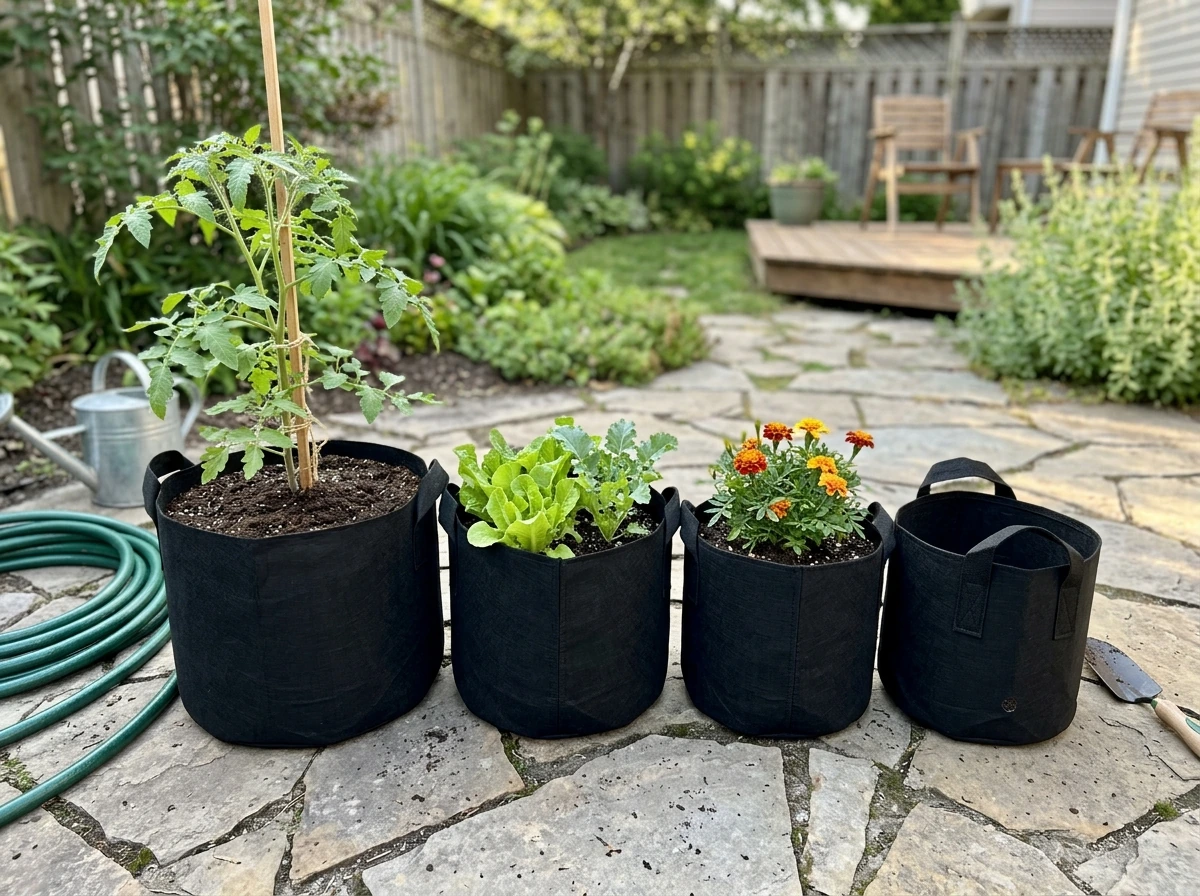
Best Grow Bags: How to Choose, Sizes, and Top Picks
Buyer guide to the best grow bags: choose sizes and materials for vegetables, flowers, trees, and mushrooms with value t
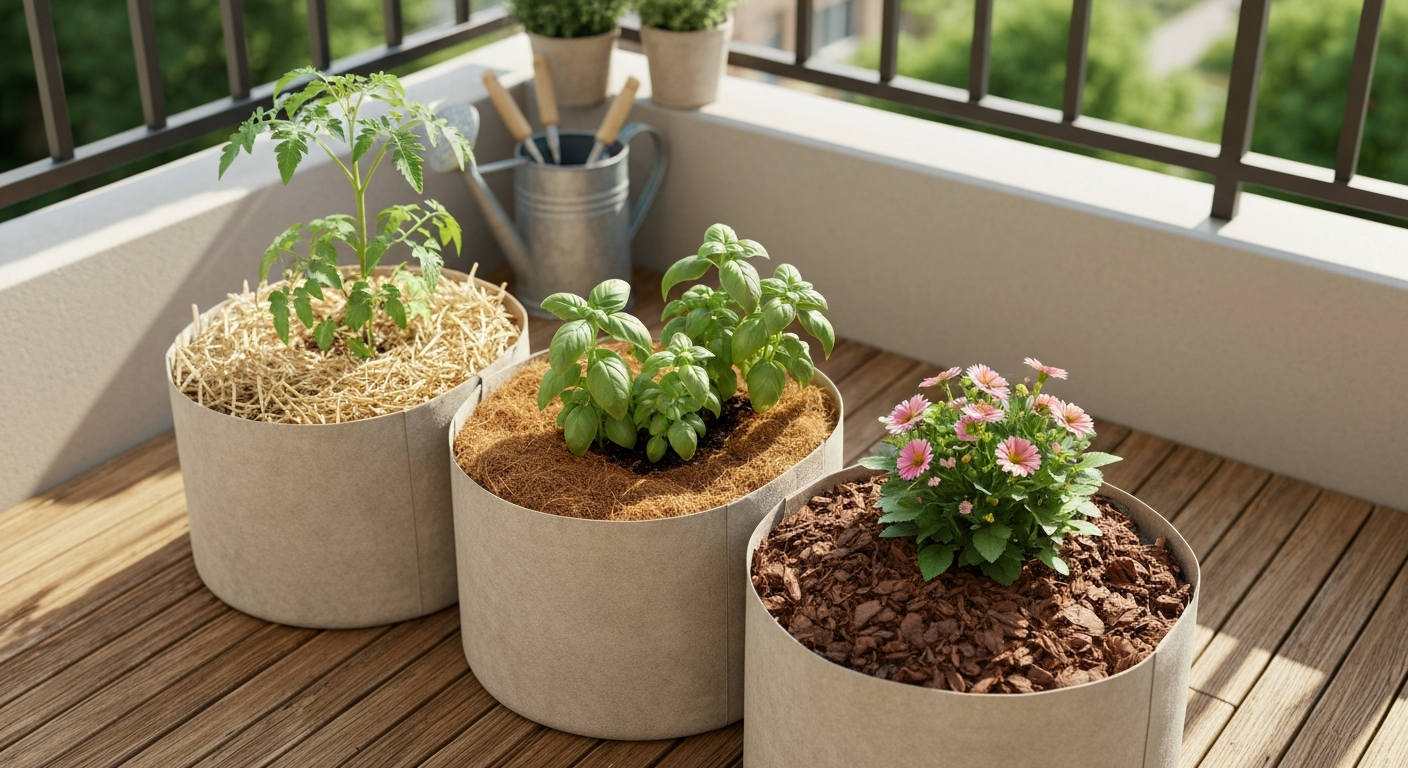
Best Mulch for Grow Bags: Top Picks for Vegetables & Flowers
Find the best mulch for fabric grow bags: top picks, how-to apply, crop & climate advice, and troubleshooting.
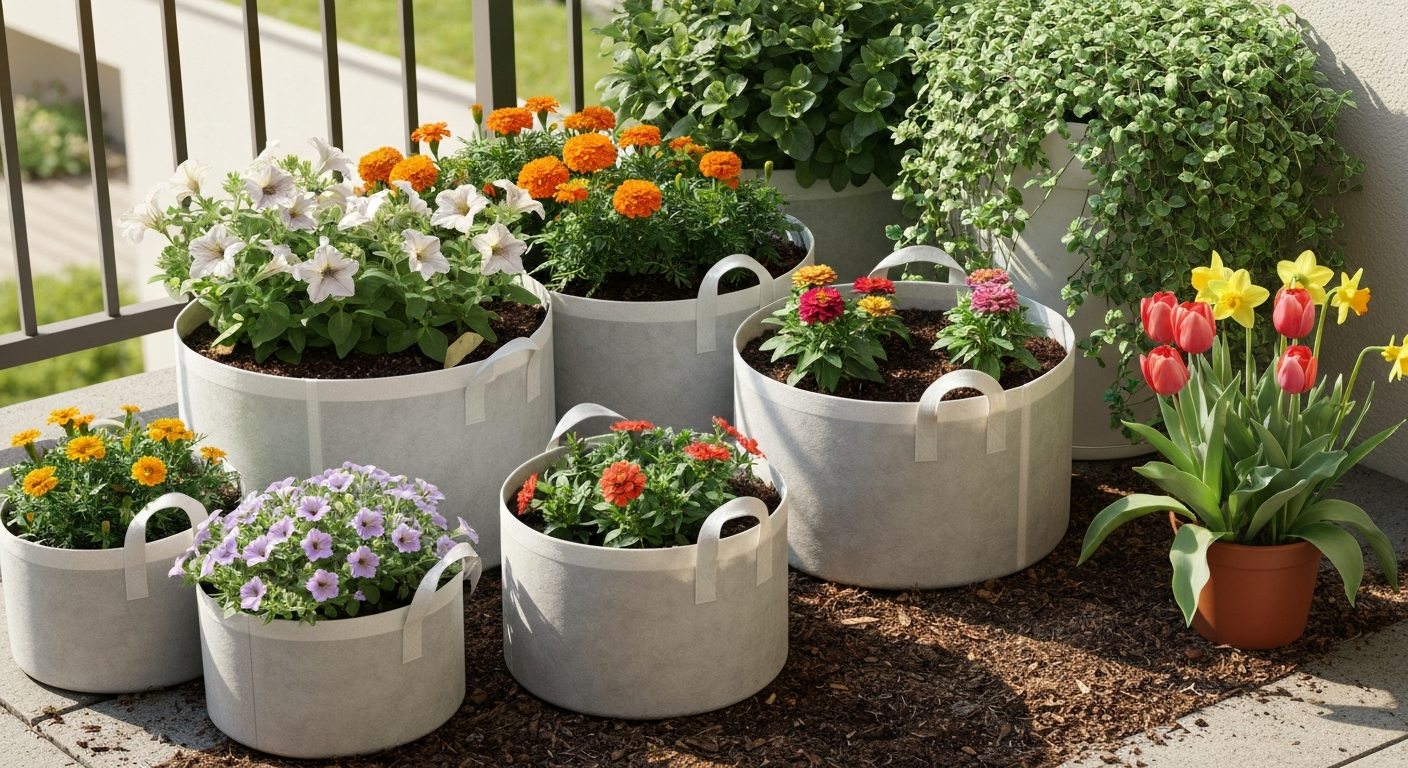
Best Flowers for Grow Bags: Top Picks, Soil & Care Guide DIY
Best flowers for grow bags: top annuals, perennials, bulbs & trailers; soil, fertilizer, planting and care checklists.