The best fabric grow pot for your situation is a heavy-duty nonwoven polypropylene bag in the right size for your crop, with reinforced handles and well-sewn seams. For most vegetable growers, that means a 5-gallon to 15-gallon bag from a brand like Smart Pot or VIVOSUN. But 'best' shifts quite a bit depending on what you're growing, where you live, and how often you're around to water. This guide walks through all of it: fabric type, sizing by crop, real troubleshooting issues, and how to keep your bags going for multiple seasons.
Best Fabric Grow Pots: Buyer Guide, Sizes, and Fixes
Marcus Holloway
11 Jul 2026
What 'best' actually means for your setup
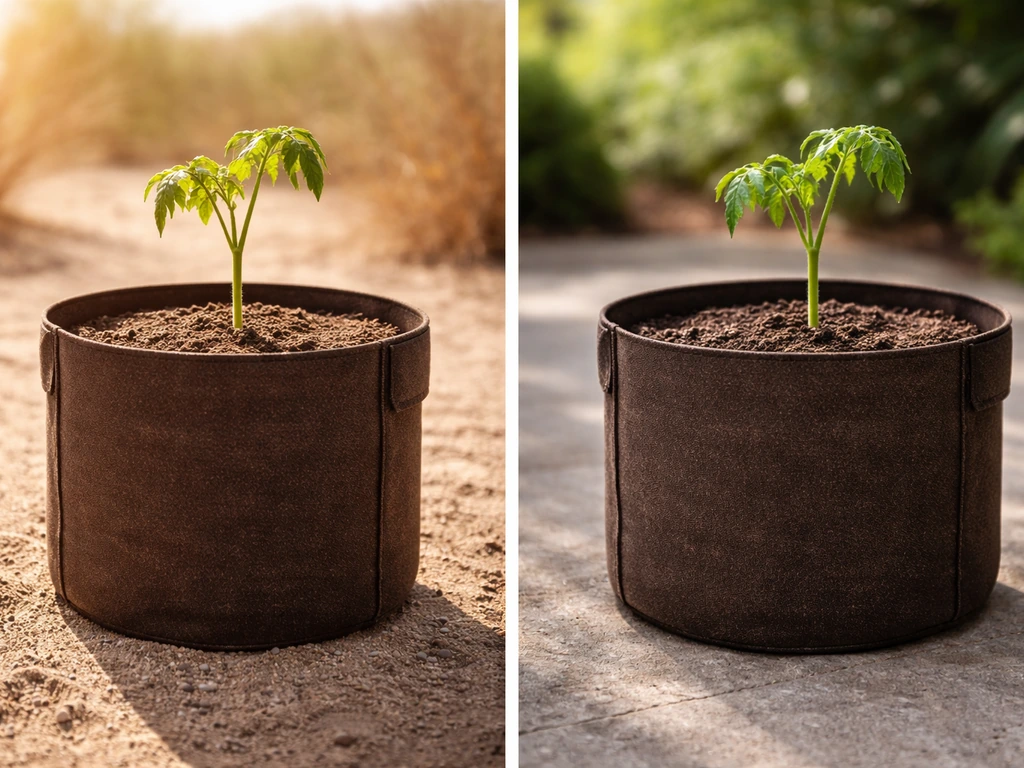
There's no single best fabric grow pot. The right choice depends on three things: what you're growing, what your climate is like, and how you water. A gardener in Phoenix who hand-waters every day has completely different needs than someone in the Pacific Northwest running drip irrigation. Get those three variables right before you start comparing products.
Fabric pots dry out faster than plastic ones, full stop. That's partly a feature (air pruning, better drainage, cooler root zones) and partly a risk (overwatering is harder to do, but underwatering is easier). In hot, dry climates or on exposed rooftops, fabric bags can drop to dry within 24 hours in summer. In cool, humid environments they'll stay moist for two or three days between waterings. That drying rate should influence both the fabric thickness and the pot size you choose, since larger containers hold more moisture buffer and thicker fabric slows surface evaporation slightly.
Your watering style matters too. If you're using a timer-based drip system, fabric pots are extremely forgiving because you can dial in frequency. If you're watering by hand and sometimes miss a day, a slightly larger container than minimum gives you a little insurance. Fabric pots reward consistent watering and penalize neglect more than plastic pots do.
Fabric type and construction: what to look for before you buy
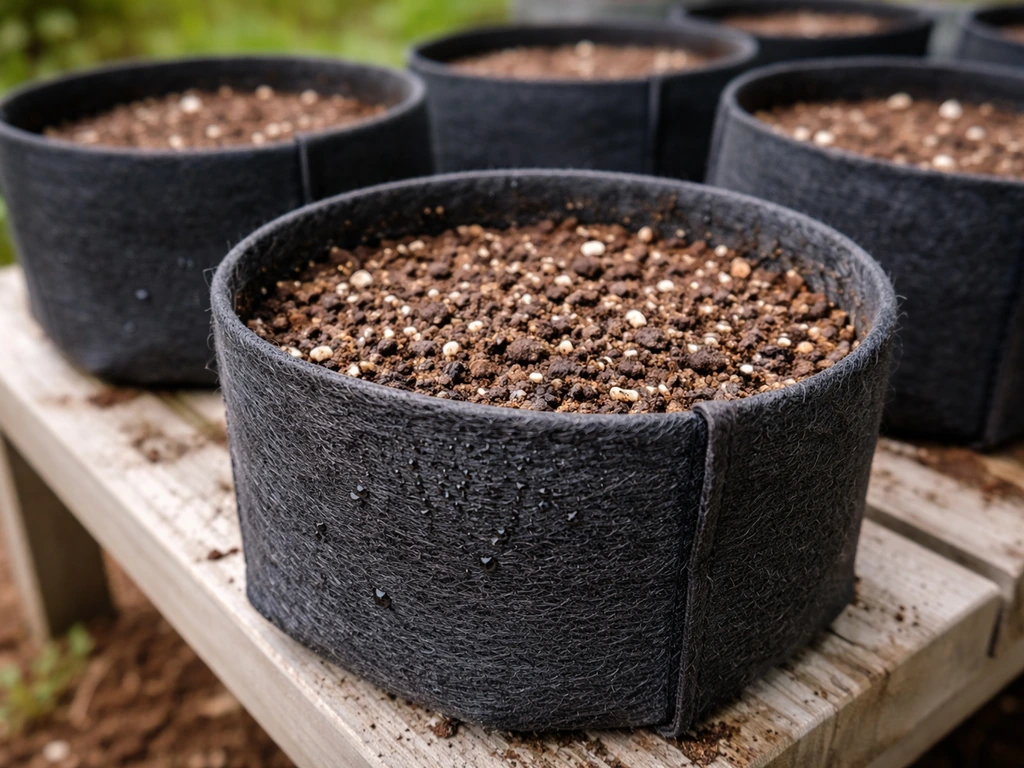
Almost every fabric grow pot on the market is made from nonwoven polypropylene felt. Nonwoven fabric is more breathable than woven fabric, which is why it supports the air-pruning effect and helps soil dry out between waterings. Woven fabric does exist (some premium tree bags and specialty pots use it), but for everyday growing, nonwoven is the standard. The key difference between a good bag and a bad one isn't the material type, it's the quality and thickness of that material.
Cheap bags use thin, flimsy fabric that tears when you try to move a fully loaded pot. Thicker, heavier fabric holds up through multiple seasons, resists punctures, and doesn't degrade as quickly under UV exposure. Smart Pot explicitly points out that competitor bags can be so thin they rip quickly, and that difference is real. When you're comparing products, look for bags described as 300GSM or heavier. Anything under 200GSM is likely a single-season product.
Handles are the second thing to check. A lot of bags have handles that are just folded fabric stitched on at the top. That's fine until you try to carry a 15-gallon pot full of wet soil, and the handle tears free. VIVOSUN uses serger stitching to attach handles to the body of the pot rather than just the rim, which distributes load more evenly. Whatever brand you choose, look for double-stitched or serger-stitched handles that connect to a reinforced panel, not just a strip of fabric at the top edge.
Drainage in a well-made fabric pot is built in, not added on. Smart Pot describes 'excellent drainage by design' and notes that no extra holes are needed because the entire sidewall and base are porous. You should not need to cut or punch holes in a properly made fabric grow pot. If a bag you're using seems to hold water at the bottom, that's usually a soil mix problem rather than a fabric problem.
One other feature worth thinking about: lined vs. For a quick decision, compare how much side-wall evaporation you want to slow down with how well you need the bag to breathe lined vs. unlined. unlined bags. Some fabric grow pots include a plastic or fabric liner (usually on the sides but not the bottom), which slows side-wall evaporation while keeping base drainage open. These are useful in very hot or very windy climates where a standard unlined bag loses moisture too quickly. In mild climates, they're unnecessary and may slightly reduce the air-pruning effect.
Sizing by crop: matching volume and depth to what you're growing
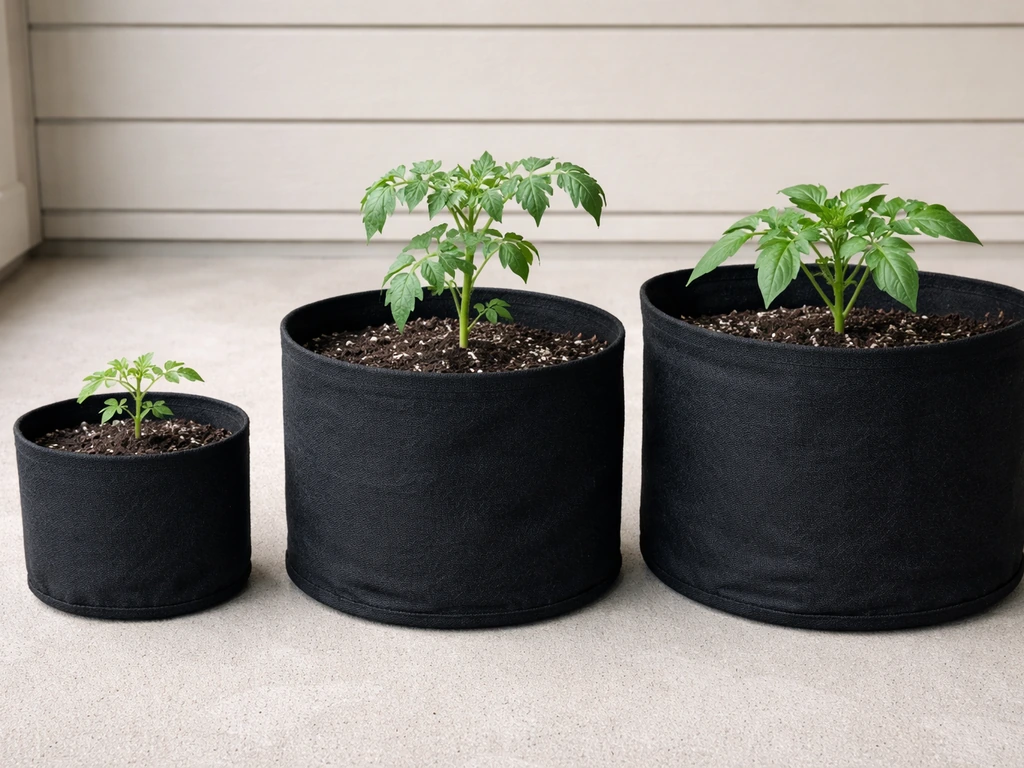
Gallon labels on fabric pots are a useful starting point but they don't tell the whole story. Root depth matters as much as total volume for many crops. A wide, shallow 5-gallon bag suits herbs differently than a tall, narrow 5-gallon bag suits tomatoes. The guidance from university extension programs is consistent: match both the volume and the depth of your container to the rooting behavior of the crop.
Vegetables
Tomatoes and peppers need at least 5 gallons, and 7-10 gallons is better for indeterminate tomato varieties. Shallow-rooted crops like lettuce, spinach, and herbs do fine in 1-3 gallons. Root vegetables like carrots or beets need depth more than volume, so check the bag's actual height, not just the gallon rating. Texas A&M AgriLife Extension guidance puts green beans at a minimum of 2 gallons as a baseline. SDSU Extension provides a helpful table of minimum container sizes and rooting depths by crop, which is worth consulting before you order bags in bulk.
| Crop | Minimum Size | Recommended Size | Key Consideration |
|---|---|---|---|
| Lettuce / Herbs | 1 gallon | 2-3 gallons | Shallow roots; prioritize width |
| Green beans / Peas | 2 gallons | 3-5 gallons | Moderate depth needed |
| Peppers | 3 gallons | 5 gallons | Good drainage critical |
| Tomatoes (determinate) | 5 gallons | 7 gallons | Needs consistent moisture |
| Tomatoes (indeterminate) | 7 gallons | 10-15 gallons | More volume = more buffer |
| Potatoes | 10 gallons | 15-20 gallons | Depth for hilling |
| Cucumbers / Squash | 5 gallons | 10 gallons | Frequent watering required |
| Carrots / Beets | 5 gallons (tall) | 10 gallons (tall) | Prioritize depth over width |
Flowers and ornamentals
For annuals like petunias, marigolds, or zinnias, 2-5 gallon bags are usually plenty. Perennials and flowering shrubs need more room, and OSU Extension's guidance to choose a container slightly larger than the combined root ball size is a good rule of thumb here. If you're growing multiple plants in one bag, add volume for each additional plant. Don't crowd flowers into undersized bags expecting them to 'sort it out,' they won't.
Trees and shrubs
Dwarf fruit trees, blueberries, and larger shrubs need 15-25 gallons at minimum, with some growers using 45-65 gallon bags for multi-year tree production. Research on shrub roses in fabric pots vs. conventional containers found that plants in fabric pots developed more fibrous small-diameter roots distributed throughout the substrate, with less root circling. This is the air-pruning effect in action. For trees you plan to keep in containers for multiple seasons, that root quality difference matters a lot for long-term plant health.
Mushrooms
Fabric grow pots aren't the typical setup for mushroom cultivation, which usually relies on fully enclosed bags that control humidity and gas exchange precisely. Standard open-top fabric grow pots lose moisture too quickly for most mushroom species and don't provide the anaerobic or semi-anaerobic environment that colonization requires. If you're growing mushrooms, purpose-built mushroom grow bags with filter patches are the right tool, not fabric pots designed for soil-based growing.
Fabric grow pots vs. alternatives: is fabric actually worth it?
Fabric pots have real, measurable advantages over standard plastic containers. Research shows they can reduce root-zone temperatures versus plastic pots, which matters because dark plastic pots sitting in direct sun can heat substrate well above air temperature, stressing roots. Fabric pots dissipate heat through evaporation and airflow. The air-pruning effect is also well documented: porous container walls cause root tips to desiccate at the wall rather than wrapping around the container, which produces more branched, fibrous root systems.
The trade-off is water use. One published study found that fabric containers required more irrigation than conventional plastic pots, though they also lost less nitrogen and phosphorus through leachate. So you'll water more, but you'll lose fewer nutrients with each watering, which is a meaningful benefit if you're fertilizing regularly.
Compared to terra cotta, fabric pots are lighter and easier to move, though both share the trait of drying out quickly. Compared to plastic smart pots or air pots with punched holes, a well-made fabric bag performs similarly for air pruning at a lower cost. The honest answer is that fabric grow pots are worth it for most container gardeners, especially in warm climates, as long as you're willing to water more frequently or set up drip irrigation.
They're not the right choice for everyone. If you're growing in a windy rooftop garden where evaporation is extreme, if you travel often and can't water consistently, or if you're growing plants that prefer consistently moist soil (like some tropical species), a plastic container with drainage holes may serve you better. Fabric pots reward attentive growers. For a deeper look at how the materials stack up side by side, the plastic vs. If you’re deciding between plastic vs fabric grow bags, the biggest factor is how often you can water and how fast your chosen setup dries out plastic vs.. fabric grow bags comparison and the woven vs. nonwoven grow bags breakdown cover those trade-offs in detail.
How to set up and use fabric grow pots correctly
Soil mix
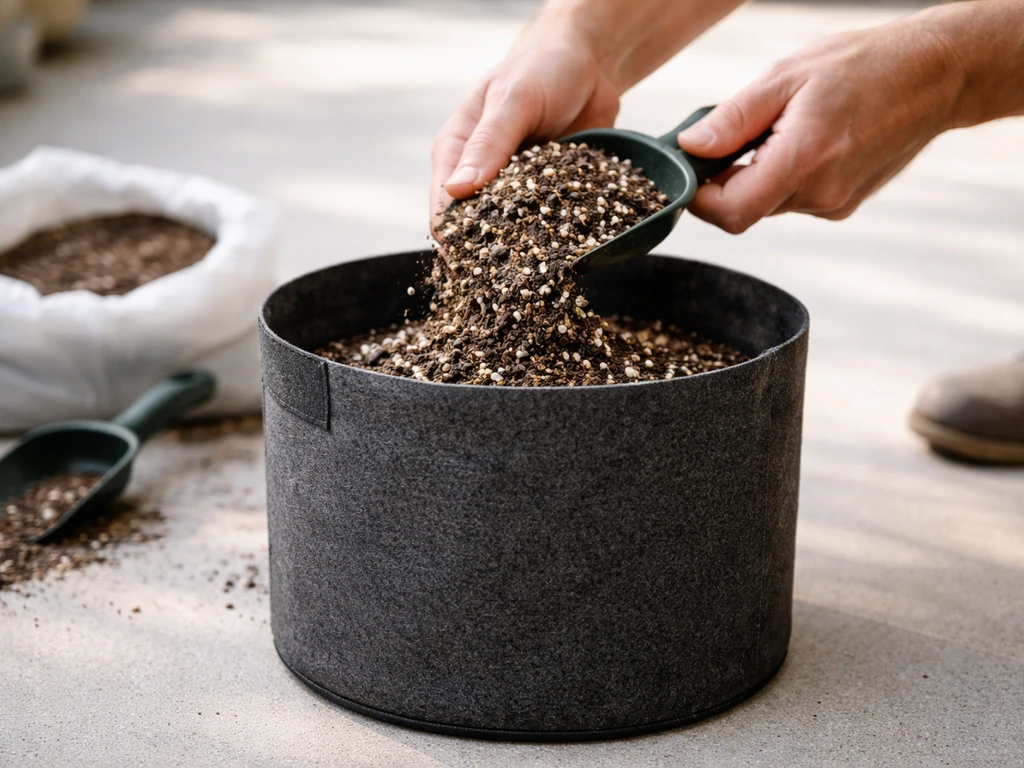
Never fill a fabric grow pot with straight garden soil. Garden soil compacts in containers, kills drainage, and defeats the purpose of the porous fabric. Use a well-draining potting mix, ideally one designed for containers, with added perlite (about 20-30% by volume) to maintain airflow and drainage. Coco coir blends work well too and hold moisture slightly longer than peat-based mixes, which helps offset the faster drying rate of fabric pots. Avoid heavy, water-retentive mixes marketed for moisture control, those work against you in fabric bags.
Watering
Check moisture by sticking your finger 2 inches into the soil. Water when it's dry at that depth. In summer heat, fabric grow pots may need daily watering, sometimes twice daily for smaller containers. Water slowly and thoroughly until you see runoff from the base, which tells you the entire root zone is saturated. Drip irrigation works especially well with fabric pots because it maintains more even moisture without saturating the surface. If you're hand watering, a slow, deliberate pass beats a quick surface soak every time.
Drainage and placement
Elevate fabric pots off the ground or off solid surfaces when possible. When a fabric pot sits flat on concrete or wood, the bottom stays damp and airflow to the base is blocked. This leads to soggy bottoms, slowed drainage, and sometimes mold on the outside of the bag. Placing pots on pavers, wooden slats, pot feet, or wire racks keeps the base dry, improves drainage, and reduces the chance of the bag wicking moisture back up from a wet surface. If you're using saucers under pots (for water-catching or aesthetics), empty them within a few hours of watering so roots don't sit in standing water.
Fertilizing
Because fabric pots drain well and require frequent watering, nutrients flush out of the soil faster than in plastic containers. You'll need to fertilize more often than you would with conventional containers. A balanced slow-release fertilizer worked into the soil at planting gives a baseline, supplemented with liquid fertilizer every one to two weeks during active growth. Watch for yellowing lower leaves on heavy feeders like tomatoes and peppers, that's usually the first sign that nutrients are running low rather than a disease or watering issue.
Troubleshooting common problems
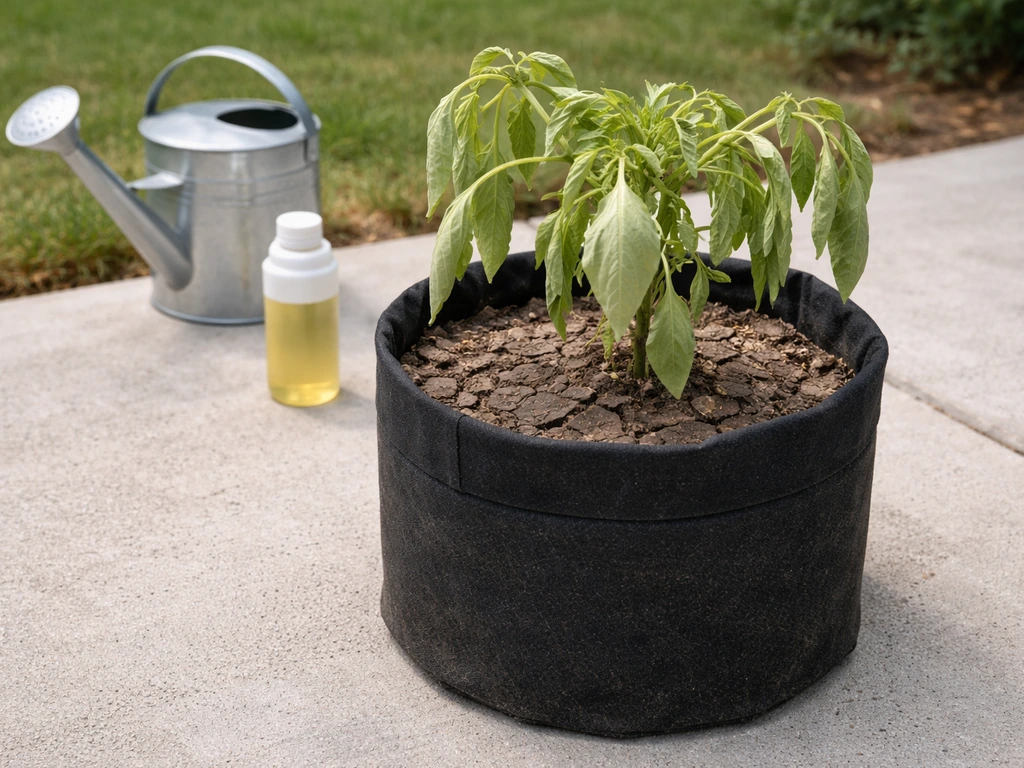
Drying out too fast
If your fabric pot dries out within 12-18 hours of watering in moderate weather, something is off. The most common causes are: a pot that's too small for the plant, a soil mix that drains too aggressively (too much perlite, not enough organic matter), or environmental exposure like direct wind or intense afternoon sun. The fix is usually going up one size in pot volume, adjusting your soil mix to include more coco coir or compost, or moving the pot to a spot with afternoon shade. In very hot climates, a lined fabric pot or wrapping the outside of the bag with reflective material can help reduce side-wall evaporation without sacrificing base drainage.
Nutrient loss
Frequent watering flushes nutrients, especially nitrogen. If your plants look pale or growth slows mid-season despite regular watering, nutrient depletion is the likely culprit. Increase your fertilizing frequency before you start adjusting watering. Slow-release granular fertilizers help buffer this somewhat, but liquid feeds applied weekly during peak growing season are often necessary for heavy feeders in fabric pots.
Algae and mold on the outside
Green algae or white mold on the outside of a fabric pot is common, especially in shaded spots or when pots sit on wet surfaces. It's usually cosmetic and doesn't harm the plant directly, but it can indicate that the pot isn't drying out enough between waterings, which can eventually affect root health. Move the pot to a brighter spot, improve airflow around the base, and let the soil dry slightly more before the next watering. Epic Gardening recommends placing grow bags on pavers or stands to help them dry out and reduce mold buildup, which is solid practical advice.
Root health and air pruning
One of the selling points of fabric pots is air pruning, where root tips dry out at the porous wall instead of circling the container. This does work, and research confirms that plants in fabric pots develop more fibrous, distributed root systems. But it requires the fabric to actually breathe and dry. If your pot is sitting in a saucer of water, on a wet surface, or packed into a tight space with no airflow, you lose the air-pruning benefit and start creating conditions similar to a plastic container. Root circling is less common in fabric pots, but it's not impossible if the bag is badly undersized or airflow is blocked.
Overwatering signals
It's harder to overwater in a fabric pot than in plastic, but it can still happen. The sign is fabric that stays visibly damp on the outside for extended periods, or standing water seeping slowly from the bottom long after watering. If that's happening, check your soil mix first. Heavy, dense soil with low perlite content can hold water even in a porous bag. Also check placement: a pot sitting in a depression or on a solid surface with no drainage outlet will hold more water than intended.
Care, reuse, and how long fabric pots actually last
Good fabric grow pots can last three to five seasons if you take care of them. Thin, cheap bags often fail after one season, which is a real cost argument for buying higher quality upfront. Reusing fabric pots is straightforward with the right approach.
At the end of the season, shake out as much old soil as you can and remove any root debris. Rinse the bag with water to remove loose material. For disinfection, wash with a 10% bleach solution (1 part bleach to 9 parts water), scrub lightly, and rinse thoroughly. OSU Extension recommends this same approach for reusable containers generally. Don't use boiling water to clean fabric bags, as it can degrade and disintegrate the fibers depending on the bag's construction.
Drying completely before storage is non-negotiable. Storing a damp fabric pot even for a week or two can lead to mold growth inside the fabric weave, which is harder to clean out and can affect future plants. Hang bags to dry in a well-ventilated spot or lay them flat in the sun. Once dry, stack or fold them and store in a cool, dry place away from direct sunlight, which degrades polypropylene over time.
Watch for signs that a bag needs replacing: fraying at the handles, thinning fabric at the base corners, or persistent mold smell that doesn't go away after cleaning. Bags that have developed holes or significant weak spots won't hold soil structure properly and should be retired. For more detail on what reuse actually looks like across seasons, the can-you-reuse-fabric-grow-pots guide covers the specifics of multi-season bag maintenance. Can you reuse fabric grow pots? Yes, and the right cleaning and storage steps help them stay usable for multiple seasons.
Quick decision checklist and recommendations by plant type
Before you order, run through these questions. Your answers will narrow the field fast.
- What are you growing? Match the pot volume and depth to your crop using the sizing table above.
- What's your climate? Hot and dry means go one size up and consider a lined bag. Mild and humid means standard unlined nonwoven fabric is fine.
- How do you water? Drip or automated irrigation makes smaller bags workable. Hand watering inconsistently means go bigger for moisture buffer.
- How many seasons do you need? One season on a budget: 200GSM bags are fine. Multi-season: spend more on 300GSM+ bags with reinforced handles.
- Where will the pots sit? On pavers or a stand: any bag works. On a flat solid surface: plan for drainage elevation or algae/mold on the base.
| Plant Type | Recommended Size | Fabric Grade | Best Pick Type |
|---|---|---|---|
| Herbs / Lettuce | 2-3 gallons | 200GSM+ | Standard nonwoven, any brand |
| Tomatoes (determinate) | 7 gallons | 300GSM+ | Smart Pot or VIVOSUN with serger handles |
| Tomatoes (indeterminate) | 10-15 gallons | 300GSM+ | Smart Pot or equivalent heavy-duty bag |
| Peppers | 5 gallons | 300GSM+ | Standard nonwoven, heavier grade |
| Potatoes | 15-20 gallons | 300GSM+ | Tall design or dedicated potato bag |
| Cucumbers / Squash | 10 gallons | 300GSM+ | Heavy-duty with strong handles |
| Blueberries / Small shrubs | 15-25 gallons | 300GSM+ | Smart Pot fabric planter |
| Dwarf fruit trees | 25-45 gallons | Heavy-duty woven or nonwoven | Treebag or Smart Pot large series |
| Annuals / Flowers | 3-5 gallons | 200-300GSM | Any quality nonwoven bag |
If you're starting out and want one bag type that covers most vegetables, a 5-pack of 5-gallon and a 5-pack of 10-gallon bags in 300GSM nonwoven fabric from Smart Pot or VIVOSUN will handle the majority of what a home garden needs. Scale up from there once you know which crops you're committed to. And if you're weighing whether to go fabric or stick with plastic containers, the plastic vs. fabric grow bags comparison lays out the full trade-off so you can make that call with confidence.
FAQ
Are lined fabric grow pots worth it, or should I buy unlined bags?
Unlined bags usually give you the strongest breathing and air-pruning benefits. Choose a lined bag if you are in extreme heat, strong wind, or you reliably miss watering, because side-wall evaporation is slower. If you run drip and can water consistently, unlined is often the better root-quality option.
What soil mix should I use specifically to prevent “dry too fast” or “soggy bottom” problems?
Use a container potting mix that drains well, then add perlite (about 20 to 30% by volume). If you’re seeing rapid dry-down, increase organic matter slightly (like more compost or a coco coir component) rather than just adding more perlite, because too much perlite can swing the mix from dry too fast to nutrient-thin.
Do I ever need to cut holes or remove the bottom layer to improve drainage?
No, you generally should not modify a properly made fabric bag. If water pools at the bottom, the fix is usually the mix and placement (more airflow under the pot, correct saturation watering, and avoiding dense soil), not punching extra holes into the fabric.
How can I tell whether my pot is too small versus my mix or watering schedule is wrong?
If the pot dries quickly within about a day but the mix is correct and placement is exposed, it often means volume or root depth is limiting. A common diagnostic is to go one size up and keep everything else the same for two to three weeks. If the problem improves, sizing was the main issue.
Can I plant multiple plants in one fabric grow pot, and how do I calculate the sizing?
Yes, but size for the number of plants. A simple approach is to add volume for each additional plant and avoid crowding, especially for heavy feeders like tomatoes. If you must use one bag for multiple plants, spread them out so each has its own watering zone and roots have airflow around the wall.
Do fabric grow pots cause more fertilizer loss, and should I change my feeding schedule?
Expect nutrients to move through the mix faster because frequent watering flushes more out of the root zone. Use a baseline slow-release fertilizer at planting, then plan for liquid fertilizer more often during active growth (commonly every one to two weeks, sometimes weekly for heavy feeders). Watch lower-leaf yellowing as an early nutrient cue.
Is it normal to see algae or white mold on the outside of the bag?
Yes, it’s often cosmetic, especially in shade or when the pot sits on damp surfaces. It can still signal that the bag is not drying between waterings. The practical fix is to improve base airflow, move to a brighter spot, and ensure you empty saucers quickly after watering.
Will roots still air-prune if I put the pot on concrete, use a saucer, or grow in a tight corner?
Air-pruning depends on drying and airflow around the sides and base. If the pot sits on concrete, inside a tray with standing water, or in a tight non-airflow spot, the drying rate drops and root circling becomes more likely. Use pavers or pot feet, and avoid leaving water in saucers for more than a short window after watering.
How do I store fabric grow pots between seasons without ruining them?
Let them dry completely before storage. Hanging or laying in sun and airflow works, then store in a cool, dry place away from direct sunlight because polypropylene degrades over time. If you store them even slightly damp, mold can grow inside the weave and be difficult to fully clean out later.
How long should I expect a fabric grow pot to last, and what signs mean I should retire it?
Good quality bags often last multiple seasons, roughly three to five, with thicker fabric and reinforced handles holding up best. Replace the bag if you see fraying where the handles attach, thinning at base corners, persistent bad odor after cleaning, or any holes that let the mix escape.
Are fabric grow pots a good idea for tomatoes and peppers if I only water by hand?
They can be a good fit if you can maintain consistent moisture, because hand watering is where fabric pots are most demanding. For tomatoes and peppers, choose at least a 5-gallon bag and often 7 to 10 gallons for indeterminate types, then water slowly until you see runoff so the entire root zone saturates.
Why might my fabric grow pot dry out within 12 to 18 hours, even in moderate weather?
Common causes are undersizing, an overly fast-draining mix (too much perlite, too little organic matter), or environmental exposure like afternoon sun and wind. A lined pot, reflective wrapping, or moving to afternoon shade can help, but first confirm you’re using an appropriate mix and pot size.
Next Articles
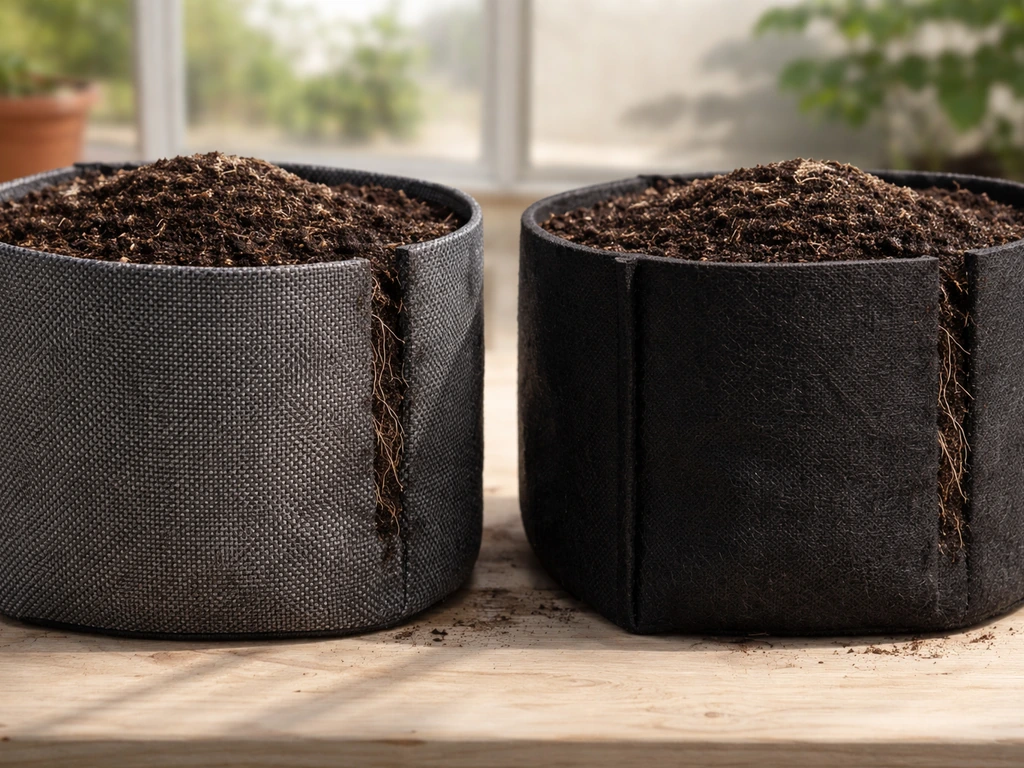
Woven vs Non-Woven Grow Bags: How to Choose for Plants
Compare woven vs non-woven grow bags: drainage, airflow, heat, durability, root growth, and which to buy for your plants
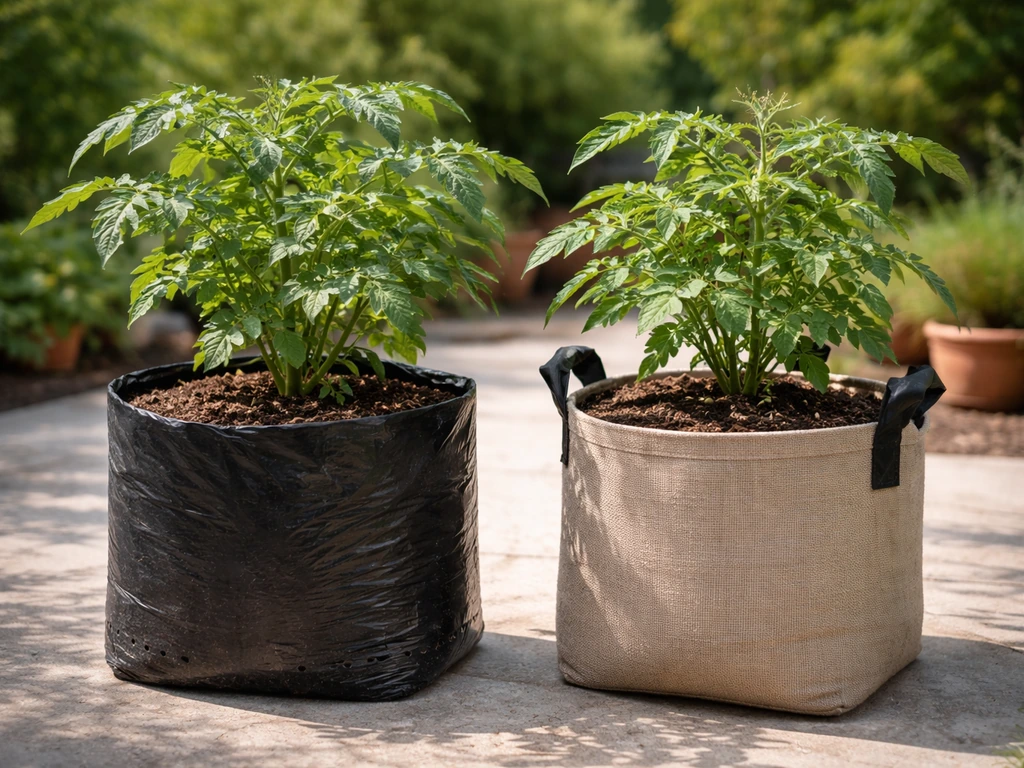
Plastic vs Fabric Grow Bags: Which One to Choose Now
Compare fabric and plastic grow bags for root health, watering, drainage, nutrients, and reuse to pick the best option n
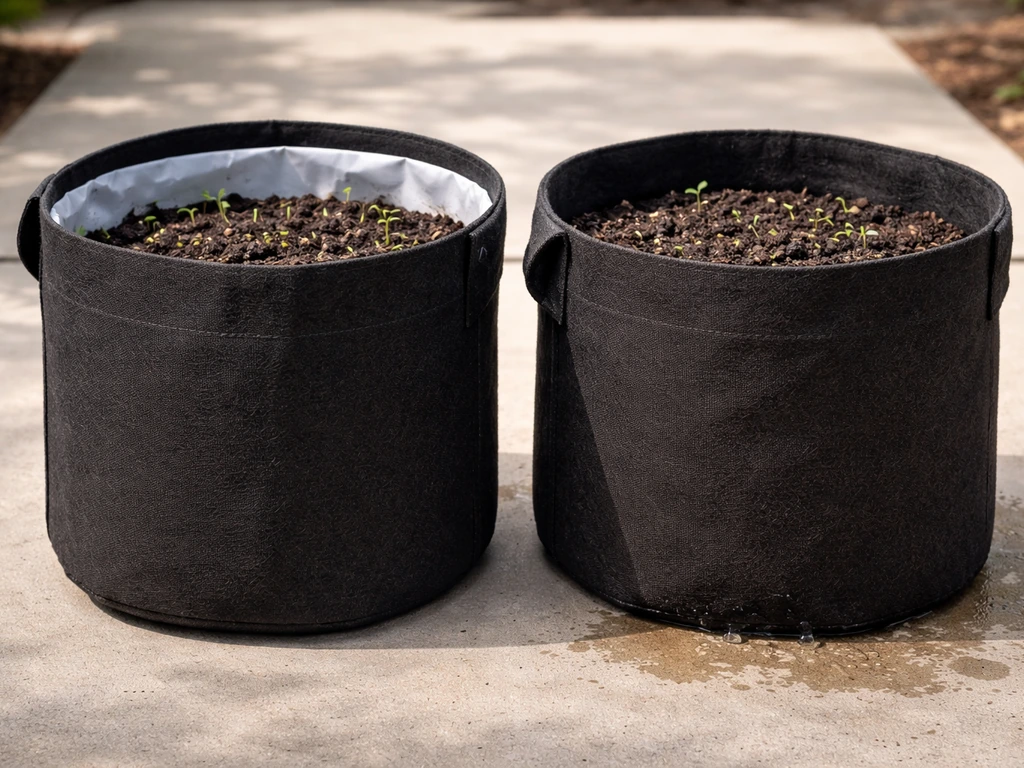
Lined vs Unlined Grow Bags: Which to Buy and Why
Compare lined vs unlined grow bags: water retention, drainage, root aeration, best uses, and how to water correctly.