For most home growers, non-woven grow bags are the better default choice. They drain faster, aerate roots more effectively, and are easier to find in the right sizes and thicknesses. Woven grow bags have their place, especially where durability and structural hold matter more than maximum airflow, but if you're growing vegetables, flowers, or small trees in containers on a patio or balcony, non-woven is almost always what you want. The rest of this guide breaks down exactly why, and tells you when to flip that recommendation.
Woven vs Non-Woven Grow Bags: How to Choose for Plants
Marcus Holloway
4 Jul 2026
What woven and non-woven grow bags actually are
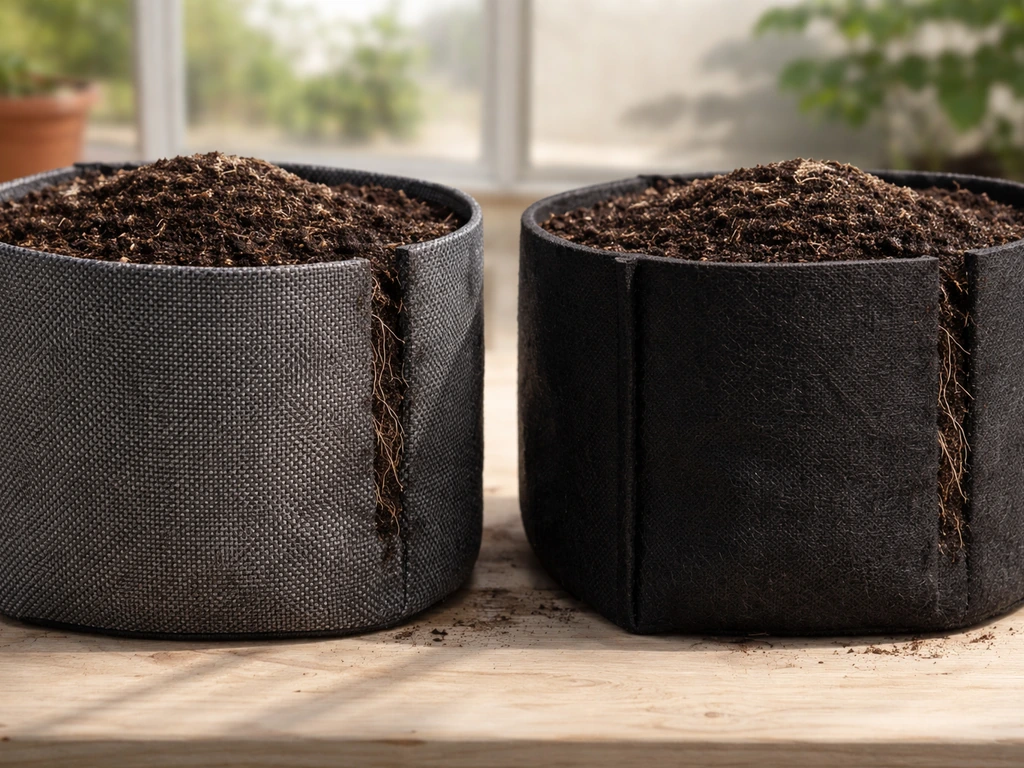
Construction is what separates these two fabrics, and construction is what drives every performance difference you'll notice in your garden. Woven grow bags are made from interlaced polypropylene filaments or strips, the same basic structure as burlap but made from synthetic UV-stabilized plastic. You can see the crosshatch pattern when you hold one up to light. Non-woven grow bags, sometimes called felt grow bags, are made by needle-punching or thermally bonding polypropylene fibers into a dense, felt-like sheet. There's no weave pattern, just compressed fibers. Most of the fabric grow bags sold for home gardening, the round pots that come stacked in packs of five or ten, are non-woven.
Why does this matter in practice? The microstructure of each fabric type determines how water moves through it, how much air reaches your root zone, and how quickly the bag dries out between waterings. Woven fabrics have consistent, relatively large gaps between threads, which means water and air pass through freely but in a somewhat channeled way. Non-woven fabrics have a more random, tortuous pore structure, meaning water has to navigate through a matrix of fibers rather than defined gaps. Research on geotextile hydraulics confirms this difference is measurable and significant. It also means non-woven fabric behavior can shift over time as fine particles from your potting mix accumulate in the fiber matrix, something worth knowing if you're reusing bags season after season.
Fabric thickness, measured in grams per square meter (GSM), matters just as much as weave type. A thin 100 GSM non-woven bag and a thick 300 GSM version are both 'non-woven' but they perform very differently in heat retention, durability, and how aggressively they dry out. When you're comparing grow bags, always check the GSM, not just the fabric type.
Watering behavior and drainage
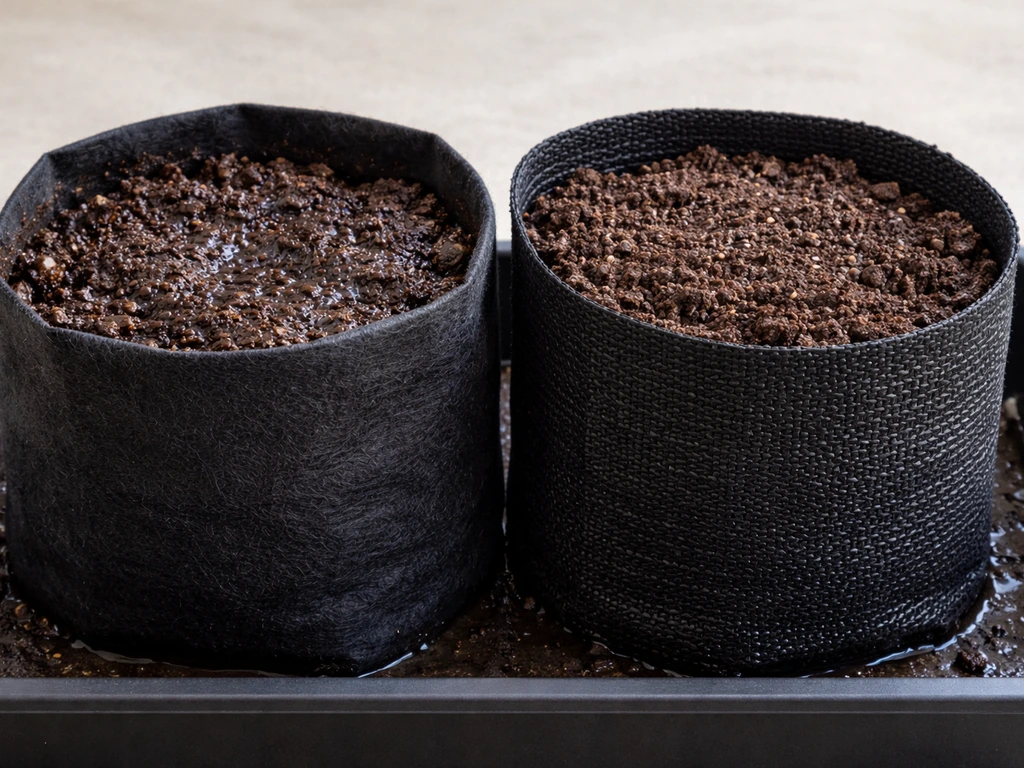
Non-woven grow bags dry out faster. That's the defining practical difference for most growers, and it cuts both ways. If you're watering by hand every day in summer, that rapid moisture loss keeps roots from sitting in soggy soil, which is genuinely helpful. But if you're growing in a hot, dry climate or you go away for a weekend, a small non-woven bag can go bone dry in 24 to 48 hours. Woven bags lose water more slowly because the tighter, more channeled structure holds more moisture at the fabric wall rather than wicking it away as aggressively.
The science behind this comes down to how each fabric handles what researchers call 'through-plane' hydraulic flow. ScienceDirect notes that nonwoven geotextiles can show anisotropic permeability, with different hydraulic behavior through-plane versus in-plane that reflects microstructure and porosity through-plane' hydraulic flow. Non-woven geotextile fabric moves water both through the fabric and somewhat laterally within it, which creates the evaporative surface effect you see on the outside of a felt bag after watering. That moisture on the outside isn't wasted, it's actually helping cool the root zone, but it is moisture leaving the bag faster than it would from a woven or plastic container.
One thing growers often miss: bag size dramatically changes how often you need to water. A 3-gallon non-woven bag in full sun may need water twice a day in peak summer. A 15-gallon bag of the same fabric in a shadier spot might go a week or more without needing water. The math here is about soil volume relative to surface area, larger bags have proportionally less fabric surface per unit of soil, so they dry slower. If rapid drying is a persistent problem with your current bags, upsizing is often more effective than switching fabric types.
Woven bags do have a meaningful drainage advantage in one specific scenario: heavy, clay-amended soils or mixes that tend to compact. The open weave provides consistent drainage channels that stay open even as soil settles. In non-woven bags, fine particles can gradually clog the fiber matrix, which is why older, frequently reused non-woven bags sometimes start holding water longer than when they were new.
Airflow, root growth, and what happens when you transplant
Air pruning is the headline benefit of fabric grow bags over plastic pots, and both woven and non-woven fabrics deliver it, but not equally. When roots reach the fabric wall, they encounter air and dry out at the tip, which triggers the plant to produce new lateral roots rather than continuing to circle the container. This gives you a dense, branching root system instead of the spiraling root ball that's common in plastic pots. Research comparing container types, including non-woven black fabric bags, consistently shows reduced root circling compared to hard-sided containers.
Non-woven bags generally produce more aggressive air pruning because the felt surface creates more consistent air contact across the entire wall. Woven bags still prune roots, but the gaps between threads create slightly less uniform air exposure. In practice, the difference is noticeable mainly in long-season crops grown in larger containers, not in a quick summer tomato planting.
Transplanting is where this air pruning benefit really pays off. When you pull a plant from a fabric bag, the root ball is typically firm, well-branched, and doesn't need detangling or pruning before going into the ground. Plants transplanted from fabric bags establish faster because they have more active root tips ready to explore new soil. One important note from UF/IFAS research: even in fabric containers, roots can grow through the fabric wall into surrounding soil if the bag is placed directly on the ground. If you're using bags as a temporary nursery step before in-ground planting, elevating them on a rack or hard surface prevents this.
Heat retention and how your climate should affect your choice
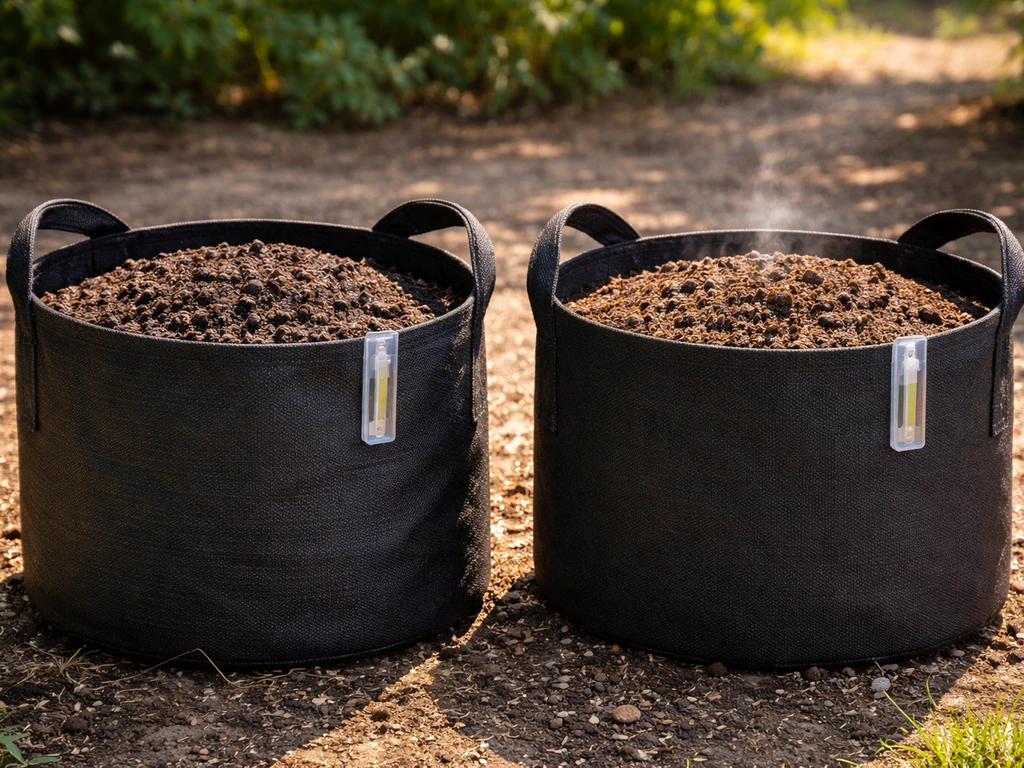
Black plastic pots sitting in full sun can push root zone temperatures above 38°C (100°F), which actively stunts growth and stresses plants. Fabric bags run significantly cooler because the evaporation from the fabric surface acts like passive cooling. This is one of the strongest practical arguments for using fabric over plastic in hot climates.
Between woven and non-woven, non-woven bags typically run slightly cooler because their higher evaporative surface area removes more heat. Thicker non-woven bags (240 GSM and above) can also provide more insulation during cool nights or unexpected cold snaps, making them a better choice for growers in climates with wide temperature swings. Woven bags offer less thermal buffering, which may be fine in mild climates but can be a disadvantage in places with hot summers.
If you're in a hot, dry climate like the American Southwest or Southern Europe, non-woven bags at 200 GSM or higher give you the best combination of root cooling and heat protection. In cooler, wetter climates like the Pacific Northwest or the UK, the rapid drying of non-woven can work against you, and a woven bag or a thicker non-woven may be a better fit to retain more moisture between rain events.
Durability, lifespan, and the reuse reality
Woven grow bags generally outlast non-woven ones, sometimes significantly. The interlocked thread structure is more resistant to tearing from handling and holds structural integrity longer under UV exposure. Polypropylene woven geotextiles are used in civil engineering applications precisely because of this durability. Non-woven polypropylene fabrics do degrade under UV over time, with fiber embrittlement and loss of tensile strength measurable after prolonged outdoor exposure. In practical terms, a decent-quality non-woven bag used seasonally and stored indoors during winter might last 3 to 5 seasons. A comparable woven bag, treated similarly, can last longer.
That said, most home growers aren't buying industrial-grade fabric. The thin 100 to 150 GSM non-woven bags sold in multipacks for a few dollars are often single-season items. The handles rip, the seams split, and the felt degrades. If you're buying quality non-woven bags at 200 GSM or more, and you rinse them after each season and store them out of direct sun, you'll get several years of use from them. The reuse topic comes up a lot in this space, and the practical answer is that fabric type matters less for reuse than how well you clean and store the bags. If you want to reuse fabric grow pots, focus on cleaning them thoroughly and storing them out of direct sun so they keep performing well season after season.
One durability issue specific to non-woven bags worth flagging: the fiber matrix can harbor fungal spores and pathogens after a disease cycle if you're not washing thoroughly. This matters less for ornamentals but is a real concern if you're growing tomatoes, peppers, or squash in the same bags year after year. A diluted hydrogen peroxide soak followed by sun-drying goes a long way.
Which fabric to choose for your specific crop
Crop type should drive your decision as much as anything else. Here's how to think through it.
Vegetables
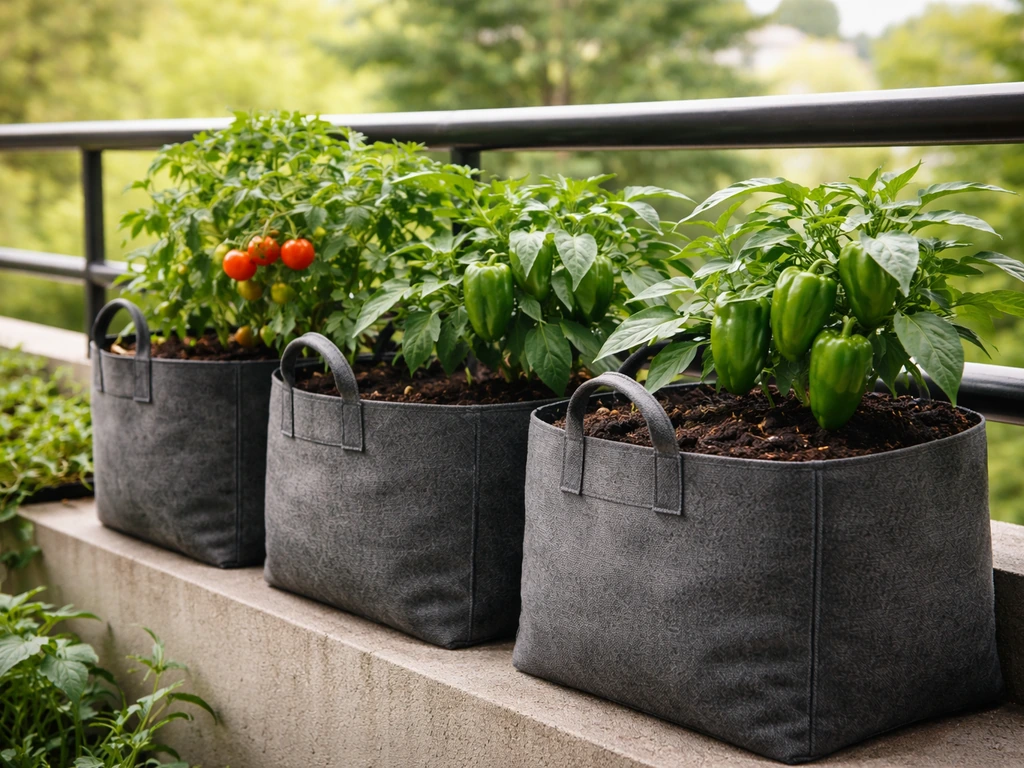
Non-woven bags at 200 to 240 GSM are the standard recommendation for most vegetables and are what you'll find in the hands of experienced container growers. Tomatoes, peppers, cucumbers, and squash all benefit from the aggressive air pruning and drainage that non-woven provides. For root vegetables like carrots and potatoes, the soil needs to stay evenly moist and workable, and a 200 GSM non-woven bag in a size that fits the crop (7 to 10 gallons for potatoes, at least 12 inches deep for carrots) works well. Avoid very thin bags (under 150 GSM) for any vegetable you're growing past a single season.
Flowers and herbs
Most annual flowers and herbs do well in standard non-woven bags. Herbs in particular thrive in the well-drained, air-rich environment fabric provides. For perennial flowers you plan to overwinter in the bag, a heavier non-woven or even a woven bag provides more protection against temperature swings and physical wear from repeated handling. Woven bags also look slightly more finished aesthetically, which matters to some growers with visible patio setups.
Trees and shrubs
For small fruit trees (dwarf apple, fig, citrus), blueberries, and shrubs, the higher GSM non-woven or woven options are worth considering. You're looking at a container that will be in use for multiple years, holding a significant root mass, and potentially being moved. A 200 to 240 GSM non-woven or a quality woven bag in the 20 to 45 gallon range provides the structural support needed. The air pruning benefit is particularly valuable for trees, where root circling in hard-sided pots can cause long-term structural problems. UF/IFAS research on fabric-container-grown trees specifically highlights air pruning as a key advantage for root form.
Mushrooms
Mushroom cultivation uses a completely different type of 'grow bag.' Mushroom grow bags are autoclavable polypropylene or polyethylene filter-patch bags designed for sterilization under pressure and controlled gas exchange. They are not woven or non-woven fabric bags in the horticultural sense. If you've arrived here researching mushroom grow bags, the woven vs. non-woven comparison doesn't apply. Mushroom bags are sealed systems optimized for contamination control, not root aeration. The filter patch controls fresh air exchange after colonization, and the bag itself needs to withstand autoclave temperatures around 121°C (250°F).
Quick selection guide by crop
| Crop | Recommended Fabric Type | Suggested GSM | Size Range |
|---|---|---|---|
| Tomatoes, peppers | Non-woven | 200–240 GSM | 5–10 gallon |
| Potatoes | Non-woven | 200 GSM | 7–15 gallon |
| Root vegetables (carrots, beets) | Non-woven | 200 GSM | 7–10 gallon, 12"+ deep |
| Herbs | Non-woven | 150–200 GSM | 1–3 gallon |
| Annual flowers | Non-woven | 150–200 GSM | 3–5 gallon |
| Perennial flowers, shrubs | Non-woven or woven | 200–240 GSM | 5–15 gallon |
| Dwarf fruit trees, citrus | Non-woven or woven | 200–240 GSM | 20–45 gallon |
| Blueberries | Non-woven | 200–240 GSM | 5–15 gallon |
| Mushrooms | Polypropylene filter-patch bag | N/A | Crop-specific |
Common problems and how to fix them by fabric type
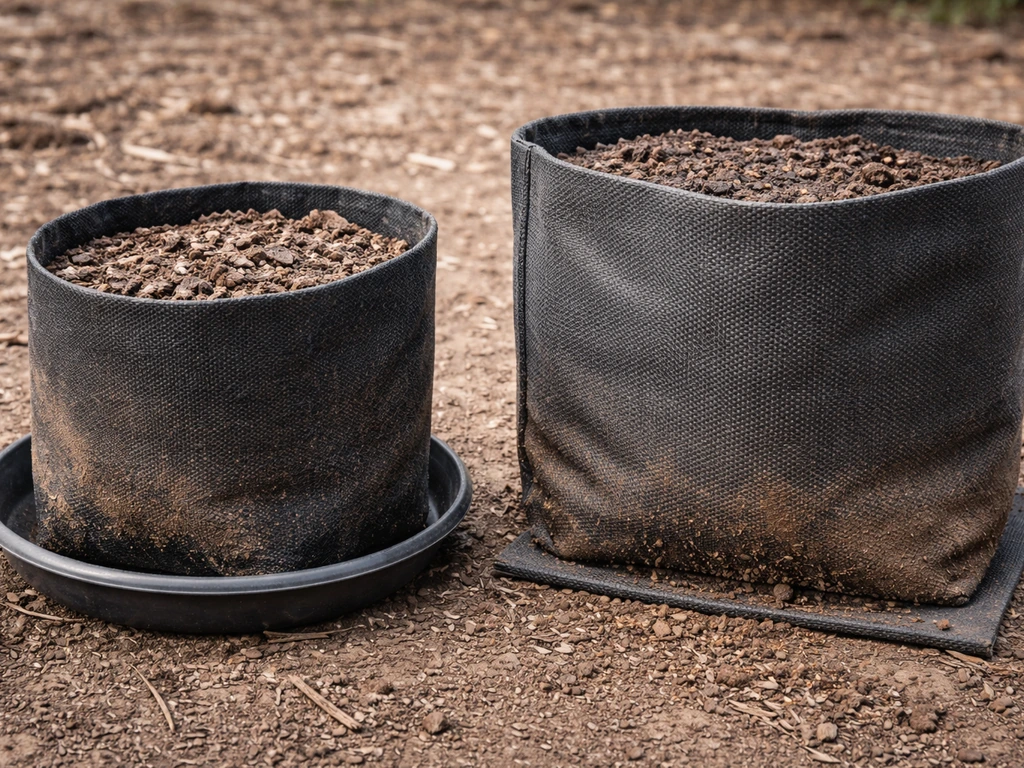
Non-woven bags: typical issues
- Drying out too fast: Add a saucer under the bag to slow evaporation from the base, switch to drip irrigation, or move to a larger bag size. In hot climates, grouping bags together reduces exposed surface area and slows drying for all of them.
- Roots growing through the bag wall: This is air pruning working correctly, not a problem. The visible white root tips at the fabric surface will air-prune and stop. If the bag is sitting on soil, elevate it to prevent roots anchoring into the ground below.
- Mold or algae on the outside of the bag: Normal in humid conditions. The exterior fiber matrix stays damp and can support surface growth. It doesn't harm the plant. Improve airflow around the base, and avoid overwatering. If it persists, a diluted neem solution sprayed on the exterior surface helps.
- Nutrient runoff after heavy watering: Fabric bags drain fast, which means liquid fertilizers exit quickly too. Apply fertilizer at lower volume but higher frequency, and always water before fertilizing to slow leaching. Slow-release granular fertilizers work better here than liquid feeds.
- Bag losing structural integrity after one season: Usually a GSM issue. If your bag is caving in when filled or tearing at the handles after a single season, the fabric grade is too low. Upgrade to 200 GSM or higher.
- Clogged drainage after multiple seasons: Fine potting mix particles can accumulate in the fiber matrix over time. Before reuse, rinse bags thoroughly with a hose under pressure, then soak in a bucket with a small amount of hydrogen peroxide and rinse again.
Woven bags: typical issues
- Soil escaping through the weave: Some woven bags have weave gaps large enough for fine potting mix to sift through. Use a coarser mix, or line the bottom 2 to 3 inches of the bag with newspaper before filling.
- Root circling at thread rows: Woven bags can sometimes allow roots to follow the horizontal thread lines around the container rather than pruning cleanly. If you see banded or ringed roots at transplant, consider moving to non-woven for that crop.
- Slower response to overwatering problems: Woven bags drain less aggressively than non-woven, so if you're a heavy waterer, root rot risk is higher. Make sure your potting mix has good perlite content (20 to 30%) and allow the top inch of soil to dry before watering again.
- UV degradation and fraying: Woven polypropylene does degrade under sustained UV exposure. Seams and edges start to fray first. Store woven bags out of direct sun when not in use. If handles or seams are showing significant fraying, retire the bag rather than risk losing a container mid-season.
Putting it all together: how to make the final call
If you're still on the fence, here's the simplest way to decide. If you're growing edibles on a patio or balcony, starting with container gardening, or want the best root development for transplanting later, go with non-woven at 200 GSM or higher. If you're in a cool, wet climate where moisture retention matters more than maximum drainage, or you need bags that will physically hold up to years of heavy use and frequent moving, woven bags are worth considering. If you're investing in long-term fruit tree containers or you want something with a more polished appearance for a visible outdoor space, heavier woven or high-GSM non-woven options are both reasonable.
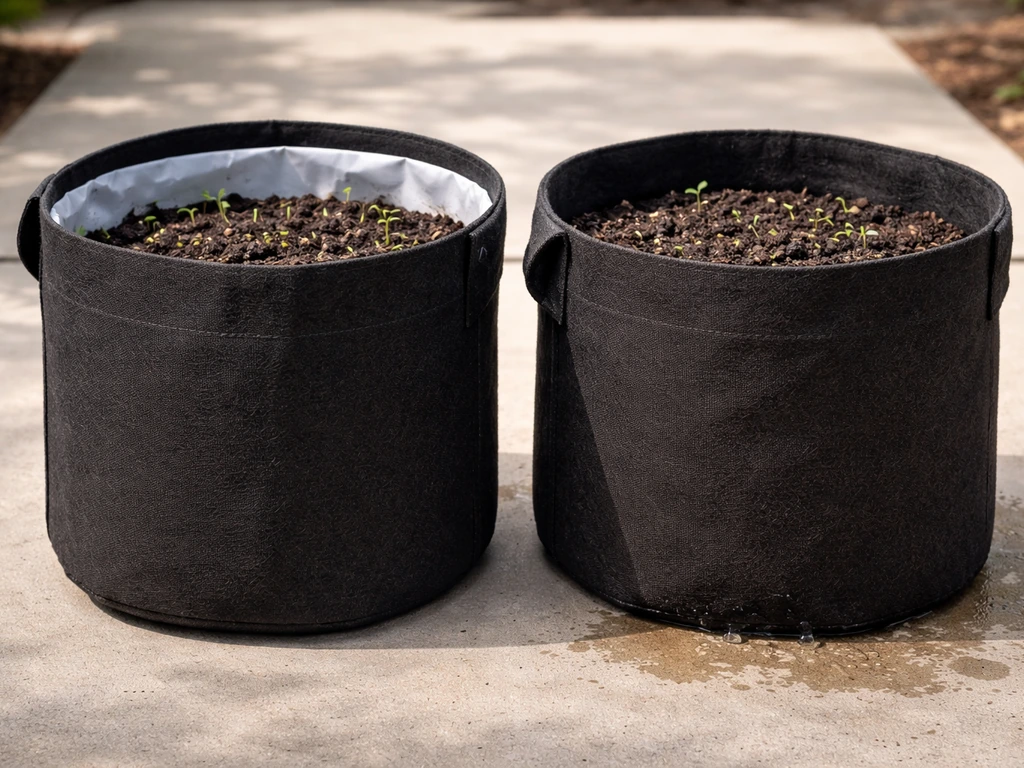
A few other practical decisions connect closely to this one. If you're weighing the broader choice between fabric and plastic containers, that's a related question worth thinking through separately, since fabric wins on root health but plastic has real advantages for moisture retention in certain growing setups. The lined vs. unlined debate is also worth understanding if you're growing in a very hot climate and want to reduce evaporation from the bag walls without giving up air pruning entirely. And if you're trying to decide how long your bags will realistically last before needing replacement, the actual maintenance steps you take between seasons matter as much as which fabric you buy.
The bottom line is that fabric type is one variable among several, and it interacts with bag size, GSM, your climate, your watering habits, and the crop you're growing. Get the fabric type approximately right, pay more attention to GSM than the label, choose the correct size for your crop, and you'll be in good shape.
FAQ
How long do woven vs non-woven grow bags really last outdoors? (I want multi-year use.)
Check the GSM and also the bag’s stated dimensions, because a thin 100 to 150 GSM non-woven bag is much more likely to fail early from handling and UV than a heavier 240 to 300 GSM one. For long-season crops in outdoor visibility, prioritize 200 to 240 GSM non-woven or a quality woven with reinforced seams.
Will switching from woven to non-woven affect how fast my potting mix breaks down or clogs?
Most of the time, it’s the drainage and aeration that change, not the air-pruning mechanism. Still, avoid putting a fresh plant directly into a compacted mix in a small non-woven bag, because fines can clog the matrix faster than expected and increase the chance of uneven wetting. Using a looser, well-structured potting mix slows that down.
What’s the best watering schedule adjustment when I move from woven to non-woven grow bags?
In general, don’t rely on the fabric alone. For non-woven, plan for more frequent checking, especially in full sun, and consider mulching on top of the mix to slow evaporation. If you use drip irrigation, use frequent short cycles or add a moisture sensor, since the fabric wall dries faster than a plastic pot.
Do I need to do anything special to make air pruning work if I’m transplanting later?
If roots are meant to stay in the bag for the season, air pruning is beneficial even if you don’t see pruning occur immediately. For seedlings going to the ground, keep the bag slightly elevated and avoid letting roots establish through the bottom into native soil. That prevents transplant shock and unwanted “escape” roots.
If fabric bags dry fast, should I change my potting mix or just water more? (What actually works?)
Yes, and it’s a common mistake. Fabric bags can wick moisture out of the mix and cool roots, but the top layer can still dry quickly. Mulch, and if the bag is on a hard surface, add a drip tray or elevation stand that lets the exterior dry without leaving the bottom sitting in runoff.
Can I reuse the same grow bags and potting mix safely after plant disease (tomatoes, peppers, squash)?
Usually, no. For most edibles, you can compost or re-use the potting mix components, but discard or fully refresh mix that was used for fungal disease cycles. For non-woven, cleaning matters more because the fiber matrix can retain pathogens if it’s not washed thoroughly and sun-dried before storage.
Which fabric is better for hot days versus cold nights, woven or non-woven?
For heat-prone locations, fabric bags are often cooler than plastic, but woven vs non-woven changes the margin. Non-woven typically cools more due to higher evaporative surface area, while thicker non-woven gives additional insulation during cold nights. Choose based on whether your main stress is midday heat or temperature swings.
Should I keep fabric grow bags off the ground, or is contact with soil okay?
If the bag sits directly on soil or grass, roots can grow through and the bag can become harder to remove. Elevate the bag on a stand or rack for nursery phases, and keep it off-ground if you want a clean transplant and to prevent root mingling with surrounding plants.
My non-woven bag dries too quickly, should I switch to woven or just change size and GSM?
Don’t choose solely by fabric type, because bag size and watering frequency dominate outcomes. A larger non-woven bag or a thicker GSM non-woven can solve “drying too fast,” while a woven bag helps if you consistently overheat the fabric wall or you need a bag that tolerates rough handling over multiple moves.
Is air pruning always good for every crop, including carrots and potatoes?
Yes, but the goal is practical sizing. Non-woven can drive more aggressive air pruning, which benefits plants like tomatoes and leafy crops, but root vegetables need steady moisture and a workable depth. Use the right pot depth for the crop, and avoid very thin non-woven under 150 GSM if you’re growing beyond a single season.
Next Articles
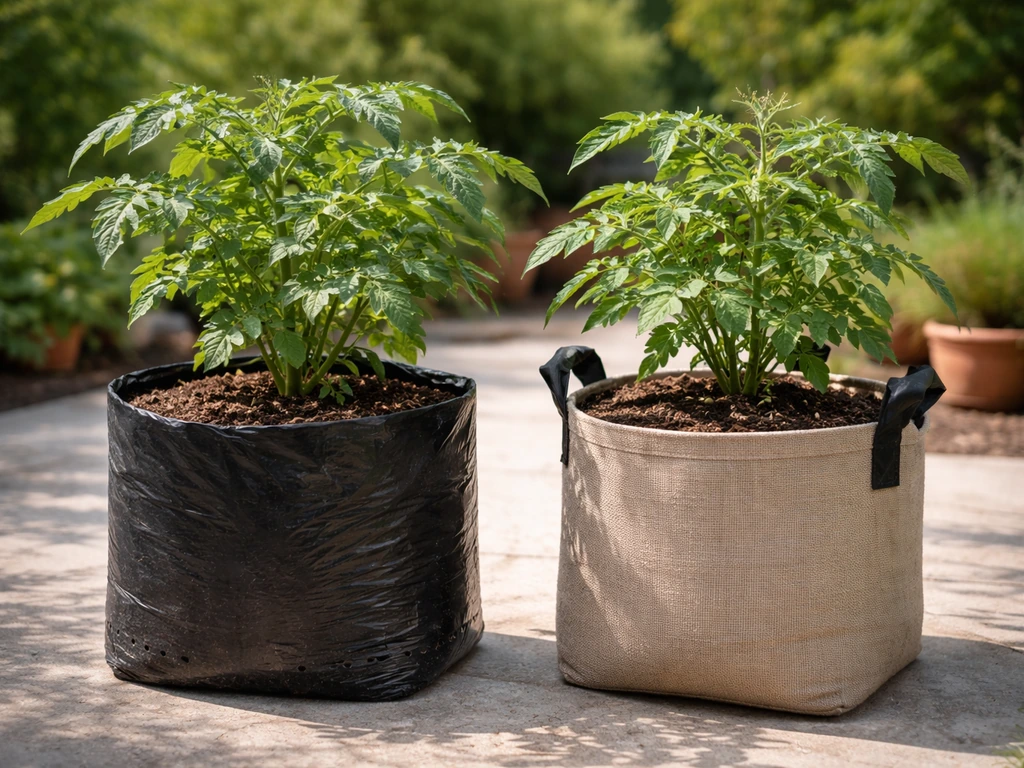
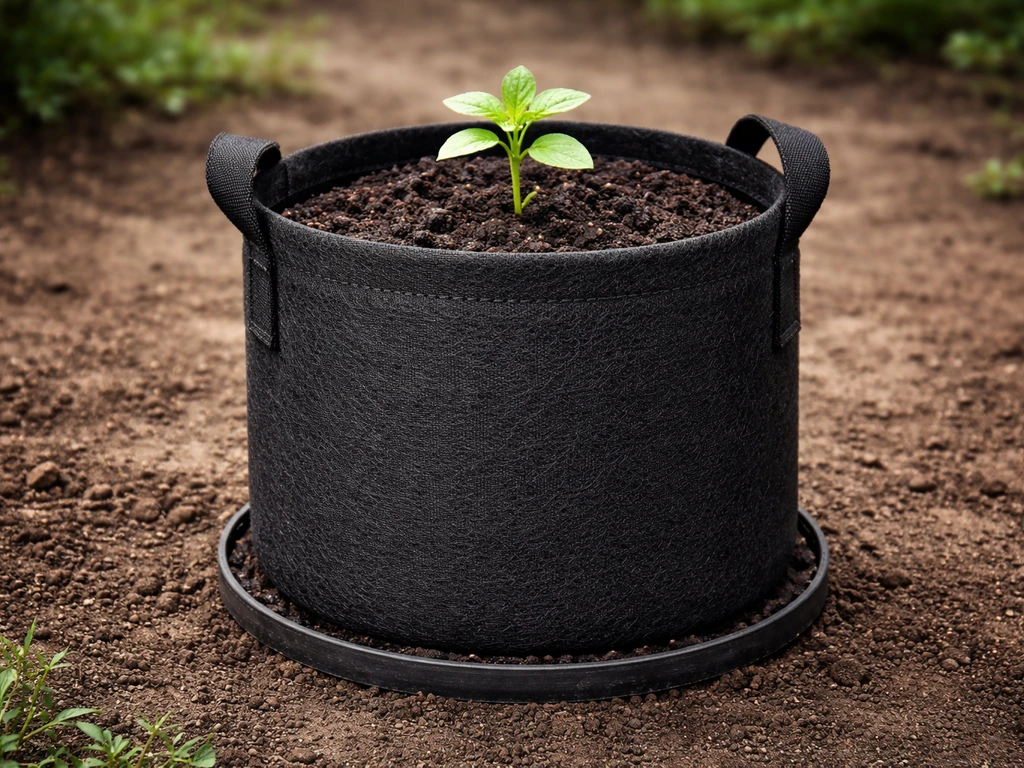
Plastic vs Fabric Grow Bags: Which One to Choose Now
Compare fabric and plastic grow bags for root health, watering, drainage, nutrients, and reuse to pick the best option n
Lined vs Unlined Grow Bags: Which to Buy and Why
Compare lined vs unlined grow bags: water retention, drainage, root aeration, best uses, and how to water correctly.
Best Fabric Grow Bags: Choose Material, DIY, and Fit
Compare the best fabric for grow bags, DIY fabric tips, drainage and durability tradeoffs, plus sizing for each crop.