
VIVOSUN fabric grow bags deliver solid real-world drainage and air-pruning performance for the price, especially in the thickened nonwoven line. The fabric breathes well, roots do get air-pruned rather than circling, and the double-stitched handles hold up to repeated lifting better than many budget competitors. That said, they're sold as consumables with no warranty, they dry out fast in heat, and the stated gallon sizes can run smaller than you'd expect. If you pick the right size for your crop and set them up with a proper soil mix, they work well. Buy the wrong size or skip the perlite, and you'll fight problems all season.
Vivosun Grow Bags Reviews: Build Quality, Use Tips, and Best Sizes
Marcus Holloway
4 May 2026
What VIVOSUN grow bags are and who they're for
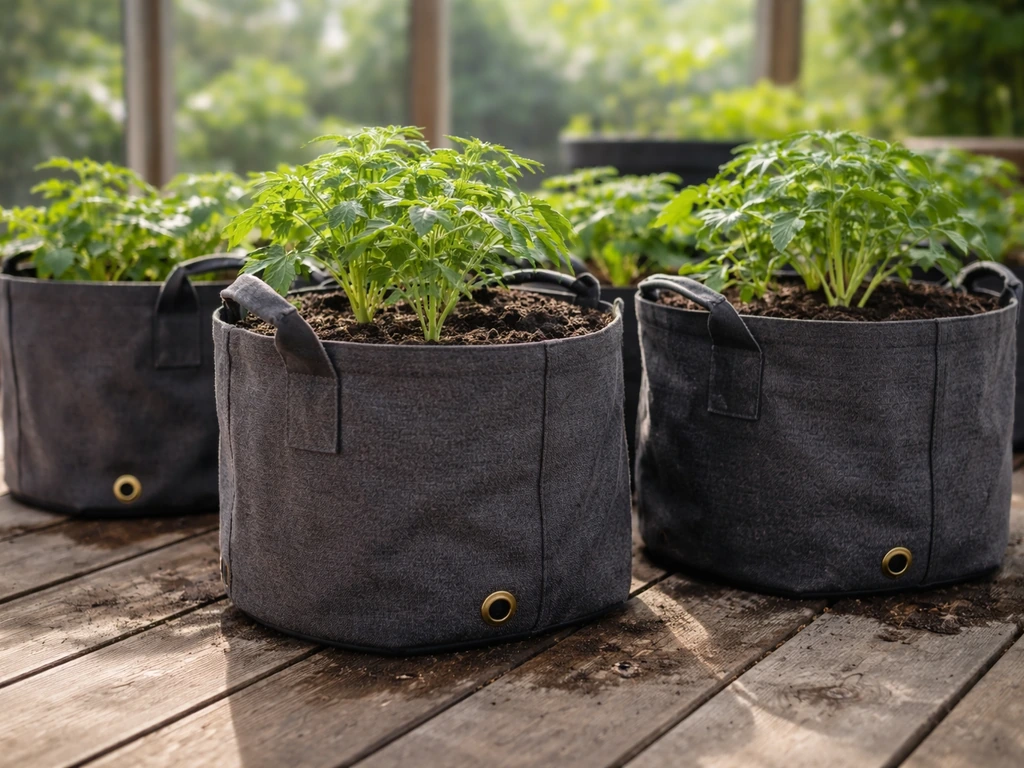
VIVOSUN makes two main lines of fabric grow bags. The first is their thickened nonwoven fabric line, which runs from 1 gallon up to 30 gallons and uses a polyester nonwoven fabric rated by weight (the 15-gallon bags, for example, spec out at 300g of fabric). The second is their AeroBase line, which adds a breathable, air-cushion-style bottom panel designed to boost airflow and drainage underneath the root zone. Both lines come in multi-packs, typically 5-packs, which keeps the per-bag cost low enough that replacing them after a few seasons doesn't sting.
These bags are built for home growers who want better root health than a standard plastic pot offers without spending serious money on premium containers. Because they are breathable fabric planters, the biggest safety factors are proper drainage and watering, since standing moisture and poor airflow can contribute to mold or root issues fabric grow bags. They work best for people growing vegetables, herbs, flowers, or small trees on patios, decks, balconies, or in grow tents where traditional garden beds aren't an option. Beginners do well with them because the fabric makes overwatering much harder to sustain. Experienced growers appreciate the root-pruning effect and the ability to pack and store the bags flat in the off-season.
They're not the best fit for every situation. If you're growing in a very hot, dry climate and can't water daily or set up drip irrigation, the fast-draining fabric can work against you. And if you need warranty protection on your containers, be aware that VIVOSUN explicitly classifies grow bags as consumables sold as-is, meaning durability claims like 'use it for years' are marketing language, not a guarantee.
Build quality, materials, and durability: what to inspect
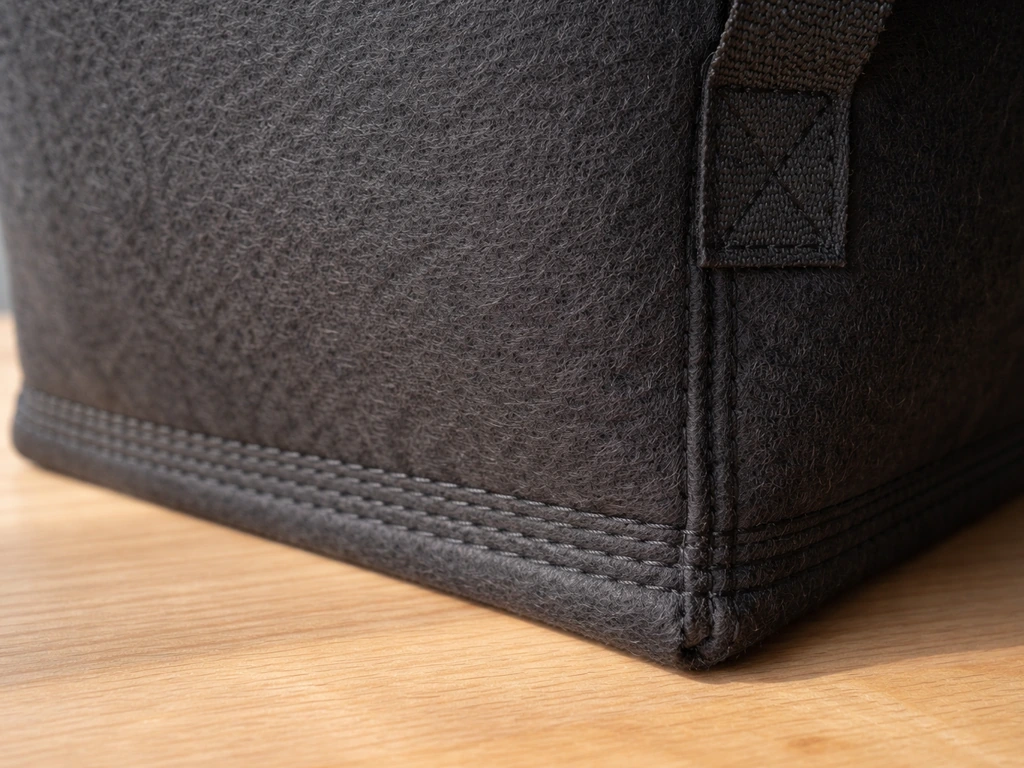
The thickened nonwoven fabric is the most important thing to evaluate when you open the box. A heavier fabric weight means more structure, better durability across seasons, and a bag that holds its shape when full of wet soil. VIVOSUN's use of 300g-rated fabric on larger bags like the 15-gallon is meaningful: lighter-weight bags from budget competitors often feel thin and papery, which translates to tearing at stress points within a season or two.
Check the handles before you fill the bag. VIVOSUN claims double-stitched handles with serger stitching rather than a single strip of the same fabric sewn flat, and in practice this holds up better when you're moving a fully loaded 10- or 15-gallon bag. Run your finger along the seam where the handle attaches to the bag wall. If the stitching is tight and the attachment point feels reinforced, you're in good shape. If the thread looks loose or the handle fabric is already fraying out of the box, that's a red flag.
Realistic durability expectation: with proper care, VIVOSUN grow bags typically last 2 to 4 growing seasons. Fabric degrades with UV exposure, and the base is the first area to thin out from soil weight and moisture. Rinsing them between seasons and storing them dry and out of direct sunlight extends their life noticeably. But don't expect them to last indefinitely, and don't rely on VIVOSUN's warranty to cover wear, because there isn't one for grow bags.
Drainage and airflow performance: how well they actually work
This is where fabric bags genuinely outperform plastic pots, and VIVOSUN's nonwoven fabric does what it promises. Water moves through the walls and base freely, so there's no standing water pooling at the root zone the way it can in plastic containers with inadequate drainage holes. Roots hitting the air at the bag's edge stop elongating and branch back into the soil, which is the air-pruning effect.
Gardening Know How explains that air pruning works by stopping root growth at the container wall so roots send out offshoots instead of wrapping around, producing a stronger, more dispersed root structure air-pruning effect.
Wellco Industries describes fabric root bags as using airflow through breathable walls to create air pruning, which helps prevent circling and promotes a fibrous root structure air-pruning effect. You end up with a denser, more fibrous root system that absorbs water and nutrients more efficiently than a root-bound plant in plastic.
The AeroBase line takes this further with its breathable bottom panel. If you're placing bags on a surface where airflow under the bag is limited (a solid concrete patio, for example), the standard nonwoven base can stay damp longer and reduce the air-pruning effect at the bottom of the root zone. The AeroBase design addresses this directly. For bags sitting on open wire shelving or raised surfaces, the standard thickened nonwoven bags work fine.
The tradeoff is that good drainage means fast drying. In hot, dry weather, a 5-gallon fabric bag with a heavy-feeding plant like a tomato can dry out enough in a single day to stress the plant. Community growers in warm climates report needing to water twice daily in peak summer heat. This isn't a defect, it's just the physics of breathable fabric. Knowing this upfront lets you plan for it: add a saucer, switch to drip irrigation, group bags together to reduce wind exposure, or bump up to a larger bag size to increase your soil volume and water retention.
Best sizes and crop pairings
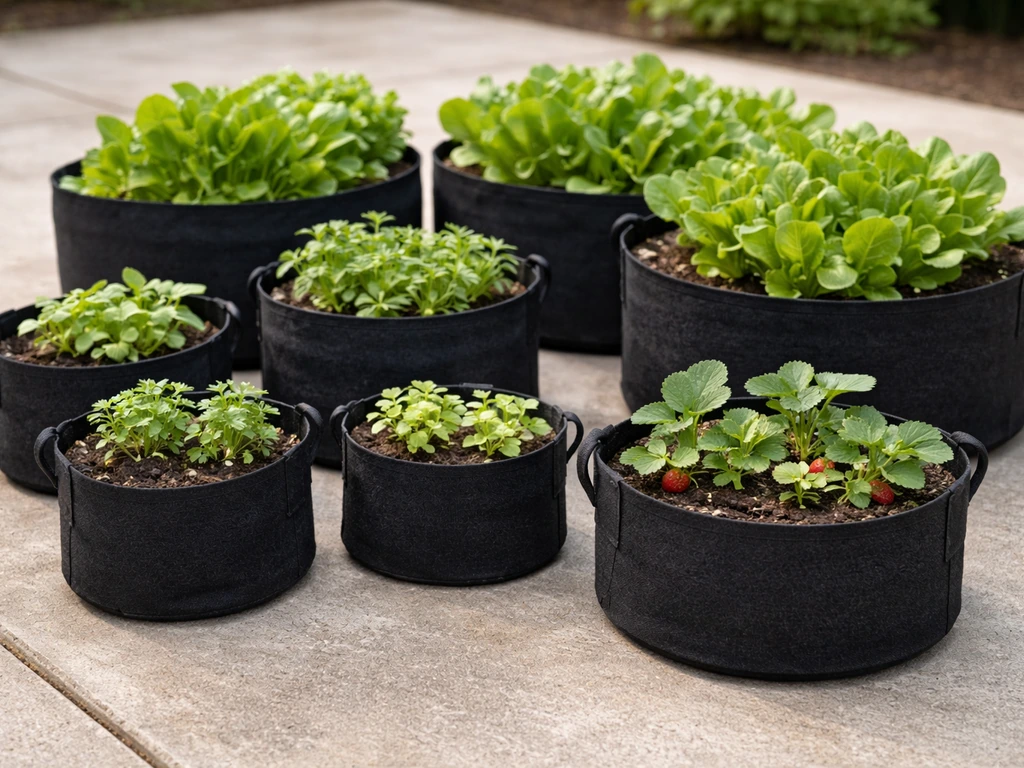
One thing worth flagging before you look at this table: VIVOSUN's stated gallon sizes can run smaller than you might expect visually, particularly in the 5-gallon range. This has come up repeatedly in grower communities comparing bag appearance to stated volume. When in doubt, size up by one or two gallons for heavy feeders and deep-rooted crops.
| Bag Size | Best Crops | Notes |
|---|---|---|
| 1–2 gallon | Herbs (basil, cilantro, mint), lettuce, strawberries | Great for balconies and windowsill setups; dries fast so check moisture daily |
| 3–5 gallon | Peppers, compact bush beans, flowers (marigolds, zinnias), garlic, onions | Sweet spot for most medium plants; size up if growing in full summer heat |
| 7–10 gallon | Tomatoes (determinate/bush types), eggplant, cucumber, squash, larger flowers | Ideal for most vegetable crops; 10-gallon is the most versatile all-around size |
| 15–20 gallon | Indeterminate tomatoes, blueberries, dwarf citrus, potato towers, kale | Gives deep-rooted crops enough room; reduces watering frequency vs. smaller bags |
| 25–30 gallon | Dwarf fruit trees (apple, fig), large shrubs, multi-plant potato bags | Heavy when full, so position before filling; handles essential for any movement |
| Mushroom-specific | Oyster, shiitake (substrate blocks, not soil) | Use smaller bags (1–3 gallon) as substrate containers; fabric allows gas exchange for fruiting |
For vegetables specifically, the 10-gallon size is the one I'd recommend to almost any home grower as a starting point. It gives most crops enough root volume, doesn't dry out as aggressively as a 5-gallon in heat, and still fits on a standard patio or deck without taking over the space. If you're growing indeterminate tomato varieties that climb all season, go straight to the 15- or 20-gallon.
Setup and care instructions to prevent common failures
Getting the soil mix right
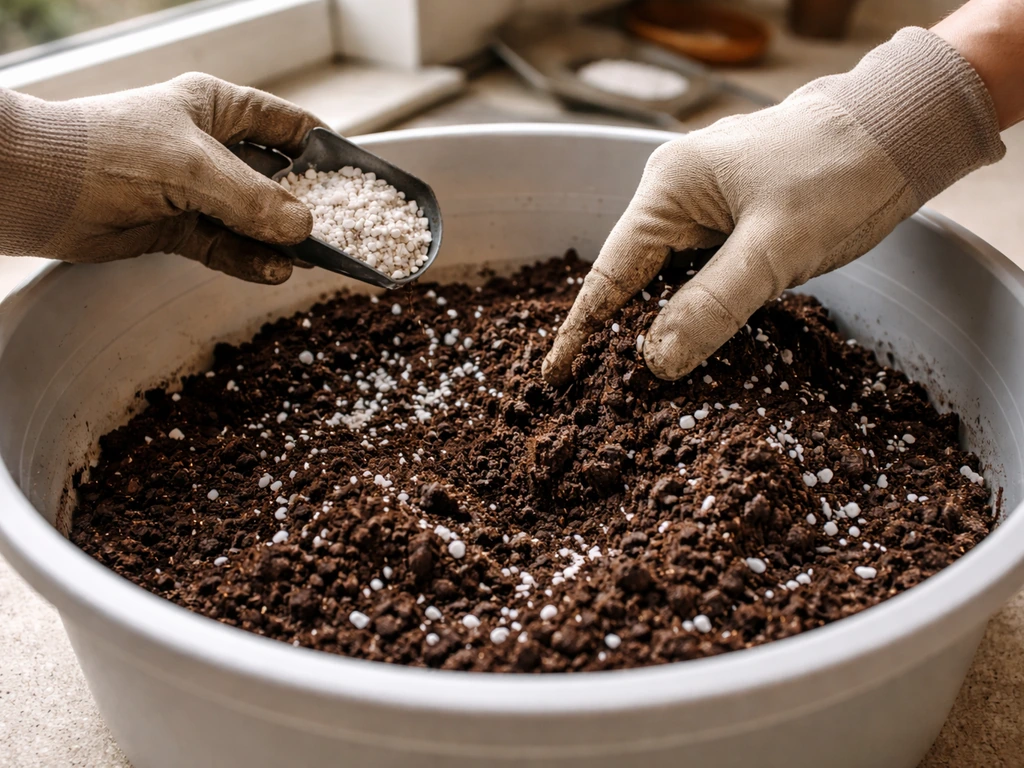
The single biggest setup decision you'll make is your soil mix. VIVOSUN's own growing guidance recommends 30 to 50 percent perlite in the mix to support air pruning and drainage. In practice, I'd target 30 to 35 percent perlite for most vegetable crops. Going higher than 50 percent perlite makes it harder to retain nutrients and water, which forces you to water and feed more frequently, not less. A standard potting mix cut with 30 percent perlite gives you good airflow, reasonable water retention, and a stable structure that won't compact badly over the season.
Filling and placement
- Place the bag where it's going to live before you fill it. A 15-gallon bag with wet soil is very heavy, and moving it is awkward even with reinforced handles.
- Fill to about 2 to 3 inches below the bag's rim. This gives you space to water without overflow spilling soil over the edge, and keeps the top of the soil surface from drying out as fast in wind.
- Set the bag on a saucer or shallow tray if you're on a deck or patio surface you want to keep clean. A saucer also lets you catch runoff and bottom-water during dry spells, which reduces how often you need to top-water.
- If placing on solid concrete or pavers, consider raising the bag slightly on a pot riser or wire trivet. This lets air circulate under the base and improves the bottom-zone drainage and air-pruning effect.
- Group bags together if wind is a concern. Single bags in exposed locations tip more easily, especially when the top-heavy with large plants. Clustering them provides mutual support.
Watering strategy
Water when the top inch or two of soil feels dry, or when the bag itself feels noticeably lighter when you lift one side. Fabric bags give you a useful tactile signal that plastic pots don't: you can feel the weight difference between a well-watered bag and one that needs water. In summer heat, check daily. In cooler conditions or for larger bags, every 2 to 3 days may be sufficient. Bottom-watering via a saucer works well for herbs and smaller bags and reduces moisture loss from the surface, but make sure the saucer doesn't hold standing water for more than an hour or two after watering or you'll create the same root-zone saturation problems you're trying to avoid.
Troubleshooting common problems in fabric grow bags
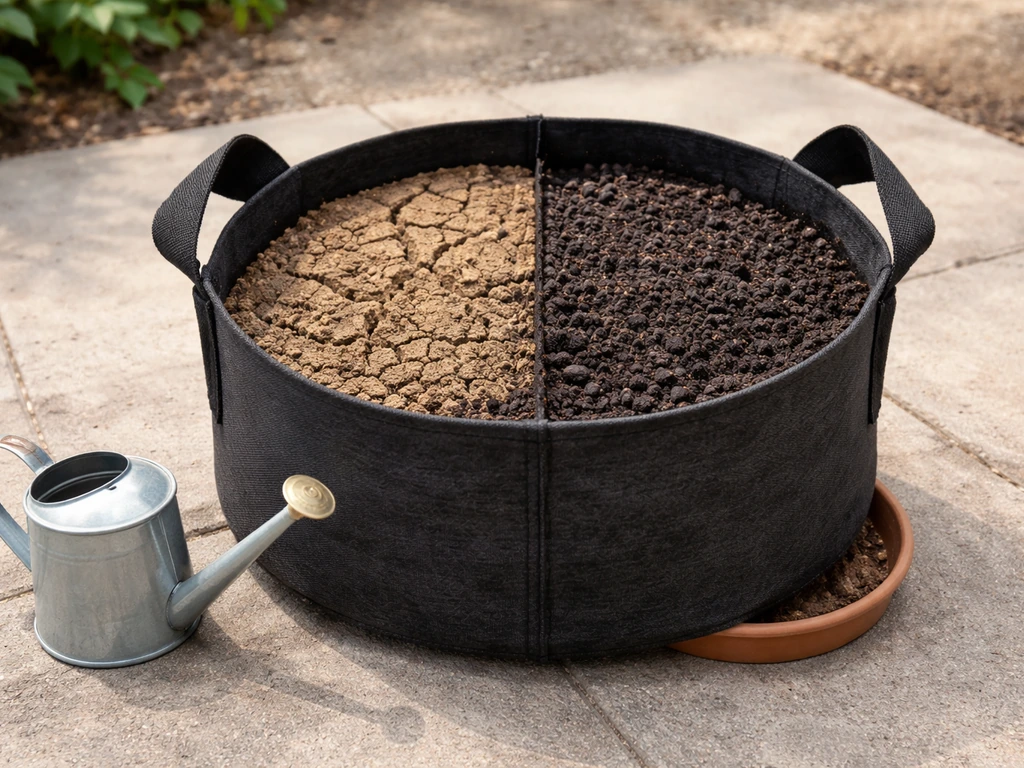
Drying out too fast
This is the most common complaint with fabric bags in general, and VIVOSUN bags are no exception. If your soil is bone dry within 24 hours of watering in warm weather, you have a few options: size up to a larger bag to increase soil volume, add a water-retaining amendment like coco coir to your mix, place a saucer underneath and let the bag bottom-water between waterings, or add a layer of mulch on top of the soil surface to reduce evaporation. Drip irrigation on a timer is the most reliable long-term fix for growers in hot climates.
Water pooling or slow drainage
If the bottom of the bag stays damp for more than a day after watering, you're either overwatering, using a soil mix that's too dense, or the bag is sitting on a surface that's blocking drainage. Check your soil mix first. Heavy garden soil or dense potting mixes without perlite will hold too much moisture in a fabric bag, and the fabric can't overcome a mix that doesn't drain. Add perlite to improve structure. If the mix is fine, reduce watering frequency and let the bag dry down more between sessions. Elevating the bag off a flat surface almost always helps.
Mold or mildew on the bag exterior
Surface mold on the outside of a fabric grow bag usually means moisture is staying on the fabric rather than evaporating. This happens most often when bags are crowded together with no airflow, placed in shaded areas with poor air circulation, or sitting on a surface that holds water against the bag base. Spread the bags out if you can, move them to a spot with better airflow, and make sure they're not sitting in pooled water. The fabric itself doesn't encourage mold growth, but consistently wet conditions will.
Plant instability and tipping
Tall plants in fabric bags are more vulnerable to wind tipping than plants in heavy ceramic or plastic pots. Fabric bags are light when dry, and a large tomato or pepper plant creates a high center of gravity. Stake the plant, place the bag against a wall or fence, or cluster bags together so they support each other. For very large plants, you can partially bury the bag in a tub of gravel to add ballast and stability without reducing drainage.
Roots not air-pruning (circling instead)
If you pull a plant at the end of season and see roots circling the inside wall rather than stopping cleanly at the fabric, the air-pruning mechanism wasn't working properly. This usually means the fabric wasn't breathable enough at the root contact zone, the soil mix was too wet and dense (reducing air exchange), or the bag was kept in conditions where airflow around it was very limited. Using a higher perlite percentage, improving airflow around the bag, and avoiding chronic overwatering all support proper air-pruning function.
Should you buy VIVOSUN grow bags? Verdict and buying checklist
For most home growers, yes, VIVOSUN fabric grow bags are worth buying. They're priced accessibly, the thickened nonwoven fabric is a genuine step up from the thinnest budget bags on the market, the handles hold up, and they do what fabric bags are supposed to do: drain well and promote healthier root development than plastic pots.
In a related r/VIVOSUN thread, growers also note that VIVOSUN bags with drainage or “let holes” do not include an extra support ring or grommets for tie-down points no extra support ring or grommets for tie-down points. They're not premium containers, and you shouldn't treat them like a long-term capital investment.
Think of them as consumables that last a few seasons if you take care of them, which is exactly how VIVOSUN classifies them in their warranty policy anyway.
If you're trying to decide between VIVOSUN and other fabric grow bag brands, the honest comparison comes down to fabric weight, handle construction, and price per bag. VIVOSUN's 300g fabric rating and serger-stitched handles put them ahead of many same-price competitors. They're not quite at the level of premium brands like Smart Pots in terms of fabric longevity and brand track record, but they cost significantly less per bag. For a beginner who wants to try fabric containers without a large upfront investment, or an experienced grower who wants to run a large number of bags across a season, VIVOSUN hits a solid value point.
It's also worth knowing that questions about material safety come up regularly in the grow bag community. If you’re wondering are grow bags safe for newborns, it’s best to treat grow bags as a garden product and avoid using them in any baby-related context or for storage where they could contact infants or food material safety. VIVOSUN's nonwoven fabric is BPA-free polyester, which is generally considered food-safe for vegetable growing. Are grow bags safe for vegetables?
In most cases, materials like BPA-free polyester are considered a food-safe option for edible growing, but it is still smart to confirm the specific product claims before planting. Because you are growing edible vegetables, it is also worth checking whether the specific grow bag materials and any dyes or coatings are safe for food use before planting BPA-free polyester. If material safety for edible crops is a priority for you, that's worth researching further before you buy.
Before you buy: answer these questions
- What are you growing, and how deep do those roots need to go? Match bag size to root depth, not just plant height.
- How hot and dry is your growing environment? If you're in a hot climate without drip irrigation, size up and plan your watering schedule before the season starts.
- Where will the bags sit? Solid concrete or pavers benefit from the AeroBase line or a pot riser under standard bags. Open wire shelving or raised surfaces work fine with the standard thickened nonwoven bags.
- Do you need a 5-pack, or fewer bags? VIVOSUN's multi-pack pricing is where the value is. Buying singles is less cost-effective.
- Are you okay replacing them every few seasons? If you want containers that last 10 or 15 years, fabric bags aren't the right tool. If 2 to 4 seasons per bag works for you, VIVOSUN is a practical choice.
- Have you confirmed the actual dimensions on the specific listing? Stated gallon sizes don't always match expectations. Check the listed bag dimensions, not just the gallon number, before ordering.
The bottom line is this: VIVOSUN grow bags are reliable, practical fabric containers that work well when you match the size to the crop, use a properly amended soil mix, and account for their faster drainage in your watering routine. They're not a premium product, but they don't need to be. Set them up correctly and they'll do the job well for multiple seasons.
FAQ
Are VIVOSUN grow bags reusable year after year, or should I plan to replace them each season?
Plan on reuse for about 2 to 4 growing seasons if you rinse off old soil, store them completely dry out of direct sun, and avoid letting the bag sit in pooled water between uses. They will thin and weaken first at the base and near stress points like the handle seams, so inspect those areas at the start of each season.
What’s the fastest way to tell if I’m using the wrong soil mix for these bags?
Look for two signals: the bag stays damp on the bottom for more than a day after watering, or the exterior stays moldy in shaded, humid conditions. Either points to a mix that’s too dense or too low in aeration. If you’re unsure, mix in more perlite (or start with a lighter potting mix), then retest your watering schedule rather than adding more frequent fertilizer.
Do I need to use perlite, or can I swap it for something else?
You can reduce perlite only if you replace its role, which is structure and drainage at root-contact depth. Common swaps include increasing coarse mineral amendments or using a chunkier substrate, but if you eliminate aeration entirely, fabric can’t overcome a water-retentive mix. If your soil dries in less than a day, that’s usually a watering issue or too much drainage, not a perlite shortage.
How do I size up correctly if the stated gallon size seems smaller than expected?
If you’re growing heavy feeders or deep-rooted crops, size up by one to two bag sizes compared to what you’d use in rigid pots. Also factor in how tall your plant will get and whether you plan to stake, because tall plants dry and tip more easily in smaller bags.
Should I put a saucer under VIVOSUN grow bags, and how do I avoid overwatering?
A saucer helps in hot weather and for herbs in smaller bags, but it must not become a standing-water reservoir. Empty or drain after about an hour or two, especially after heavy watering, since prolonged contact recreates the saturated root zone that fabric bags are meant to avoid.
What’s the best irrigation method if the bags dry out quickly in summer?
Drip irrigation on a timer is the most reliable long-term approach because it delivers water in smaller doses without soaking the fabric for long periods. If you use a hose, water early in the day, then recheck by lifting the bag, not just by surface dryness, since the inside can lag behind the top layer.
Can I use VIVOSUN grow bags indoors or in a tent, or will mold become a problem?
Yes, but you need airflow. Indoors or in tents, mold risk rises when bags are crowded, humidity is high, or air circulation under and around the fabric is limited. Space them out, keep them off surfaces that trap moisture, and consider a small fan to move air across the bag exteriors.
Why did my roots still circle when I pulled plants at the end of the season?
This usually means the air-pruning conditions were weak. The most common causes are chronic overwatering (soil stayed too wet), too-dense mix with poor oxygen exchange, and limited airflow around the root contact area. Increase aeration (including perlite), reduce watering frequency, and ensure the bags are not packed tightly or placed in stagnant-air corners.
Are AeroBase bags worth it compared with the standard thickened nonwoven line?
AeroBase is most useful when airflow under the bag is limited, like on a solid concrete patio or anything that keeps the base from drying and venting. If you’re placing bags on open surfaces with good under-airflow, the standard thickened nonwoven option is usually sufficient and simpler.
How should I store VIVOSUN bags between seasons to maximize lifespan?
Dry them thoroughly, shake out loose soil, and store them flat or loosely folded in a shaded, dry area. Avoid long-term storage while damp, and keep them out of direct sunlight because UV accelerates fabric degradation, especially on the base.
Next Articles
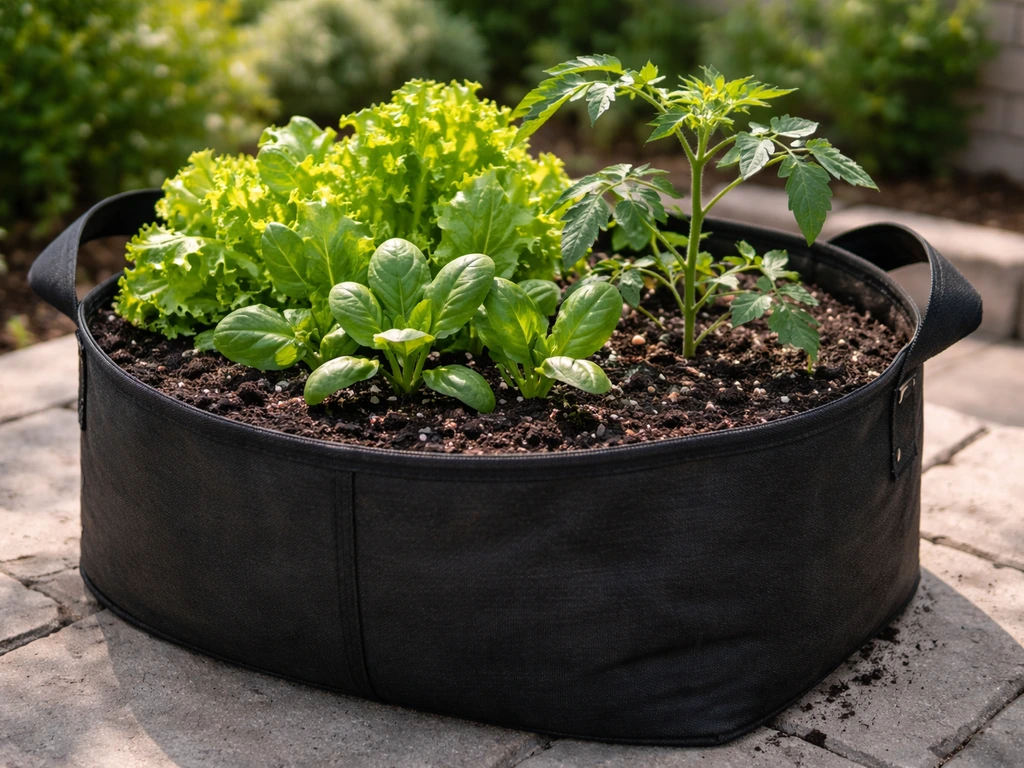
Are Grow Bags Safe for Vegetables? Food-Safe Guide
Learn if grow bags are safe for vegetables, what certifications to check, and how to line, rinse, and prevent leaching.
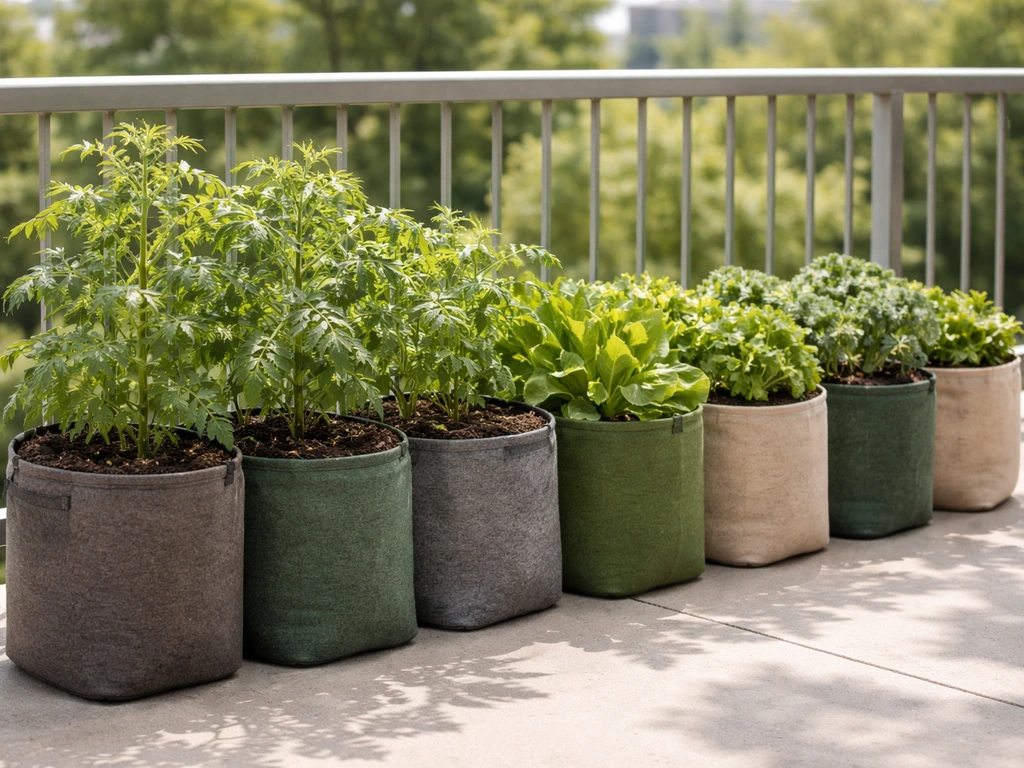
Best Grow Bag for Vegetables: How to Choose and Plant
Choose the best grow bag for vegetables: size, features, and top container crops with planting and troubleshooting tips.
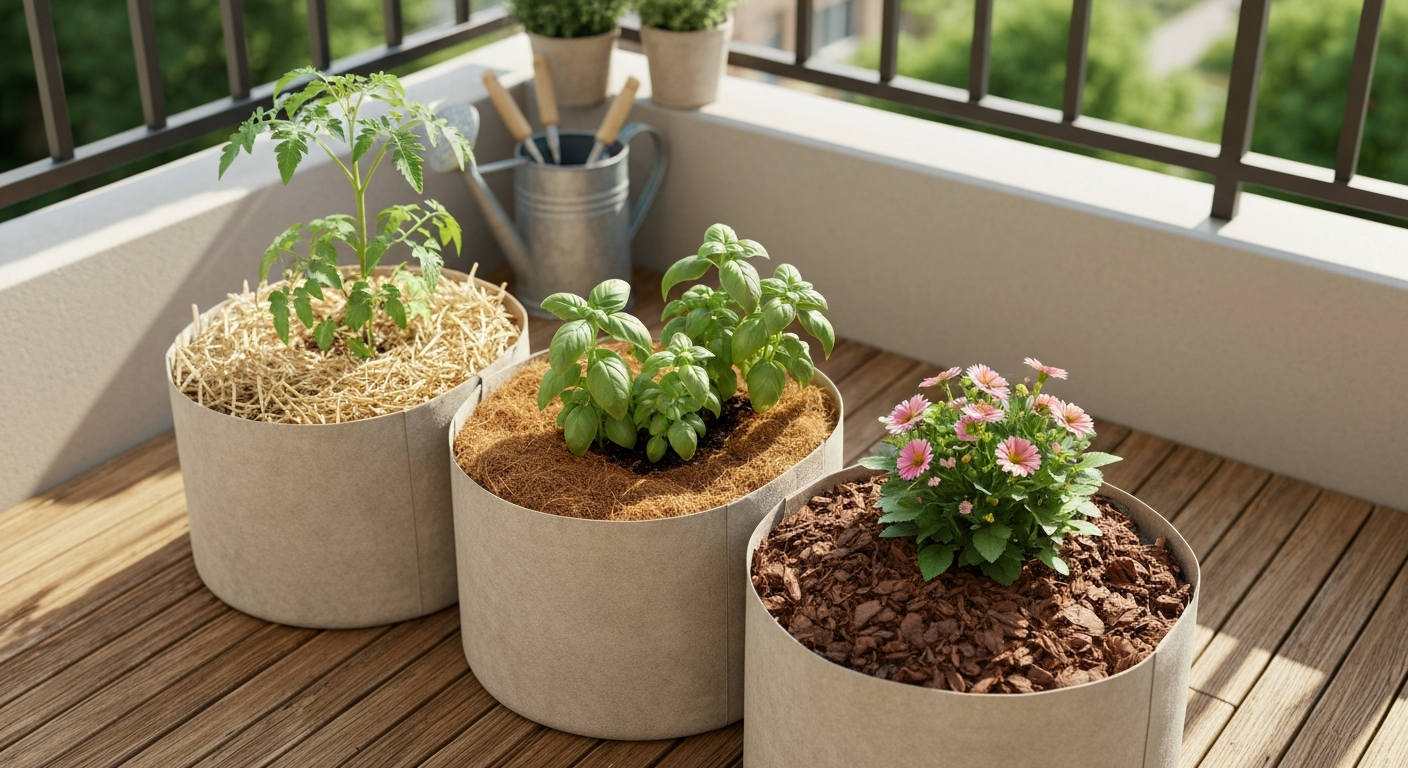
Best Mulch for Grow Bags: Top Picks for Vegetables & Flowers
Find the best mulch for fabric grow bags: top picks, how-to apply, crop & climate advice, and troubleshooting.