If you're trying to decide between a monotub and a grow bag today, the honest answer is: it depends on what you're growing, see also where to buy mushroom grow bags. For mushrooms, a monotub is a dedicated fruiting chamber that gives you precise control over humidity, CO2, and fresh air exchange. For vegetables, herbs, flowers, or trees, a fabric grow bag is a container growing system that promotes healthy roots through air pruning and drainage. These are two completely different tools, and picking the right one comes down to your crop, your experience level, your budget, and how much hands-on maintenance you want to do. This guide will walk you through both options clearly so you can make the call and get started today.
Monotub vs Grow Bag: Which Works Best for Your Setup
Marcus Holloway
24 Mar 2026
Quick decision: monotub or grow bag?
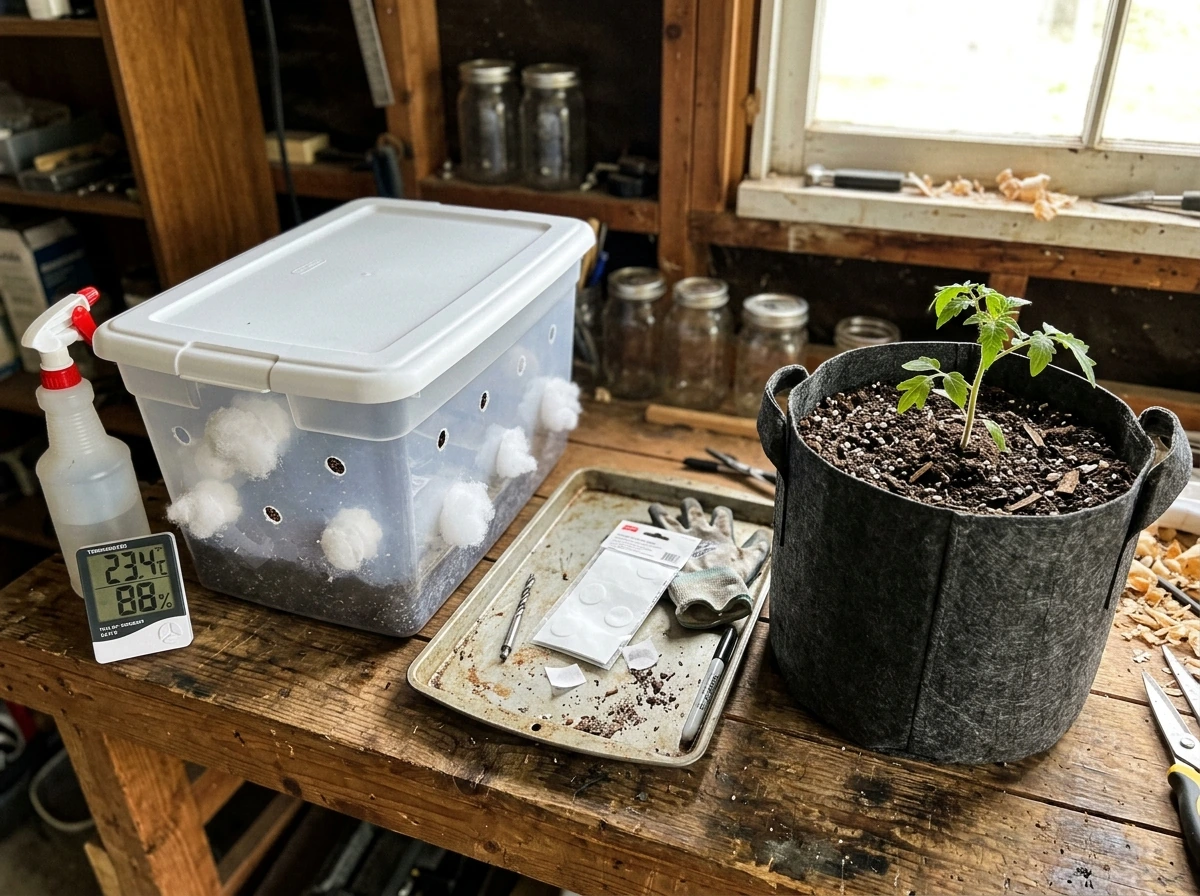
Before diving into the details, here's a direct answer based on the most common scenarios home growers run into.
| Your situation | Best choice |
|---|---|
| Growing mushrooms at home for the first time | Monotub |
| Growing mushrooms and want maximum simplicity | All-in-one mushroom grow bag |
| Growing tomatoes, peppers, herbs, or potatoes in containers | Fabric grow bag |
| Limited space, balcony, or patio growing | Fabric grow bag |
| Want reusable setup and plan to do multiple mushroom grows | Monotub |
| Growing trees, shrubs, or larger perennials in containers | Fabric grow bag (larger size) |
| Mushroom growing on a tight budget with minimal gear | Grow bag (mushroom-specific) |
| Want consistent mushroom yields with controlled environment | Monotub |
One important note: if you've been reading about monotubs in a mushroom cultivation context and are wondering whether to use one versus a grain-spawn grow bag, that comparison is covered in depth below. If you found this page while researching container gardening for plants, the grow bag section is what you need.
What each system actually is
The monotub
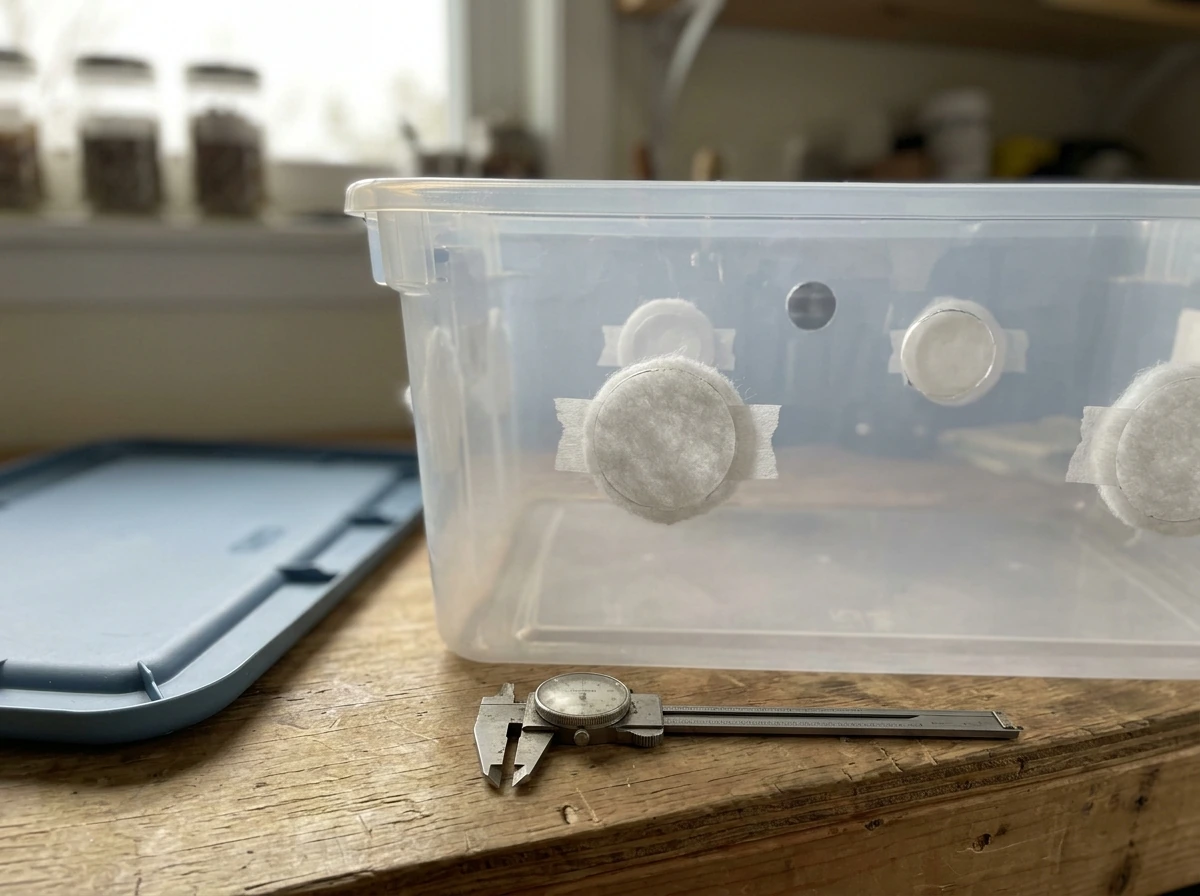
A monotub is a large, opaque plastic storage tub (typically 56 to 106 quarts) that's been modified to serve as a self-contained mushroom fruiting chamber. You drill holes in the sides, cover them with polyfill filter discs or tub filter patches, and the whole thing becomes a humidity-stabilized environment where colonized grain spawn and a casing layer produce mushrooms. The holes allow fresh air exchange (FAE) while the filters keep contaminants out. The setup is called 'mono' because it's meant to house a single, unified grain-to-fruiting block without transfers between containers.
The key mechanisms in a monotub are humidity retention, CO2 management, and filtered fresh air exchange. Fruiting mushrooms need humidity at 90% or higher, and the closed tub environment makes that achievable with daily misting. Automated versions take this further by controlling humidity, CO2 levels, and FAE automatically, which is why products like North Spore's Boomr Bin are marketed specifically at beginners who want reliability without constant monitoring.
The fabric grow bag
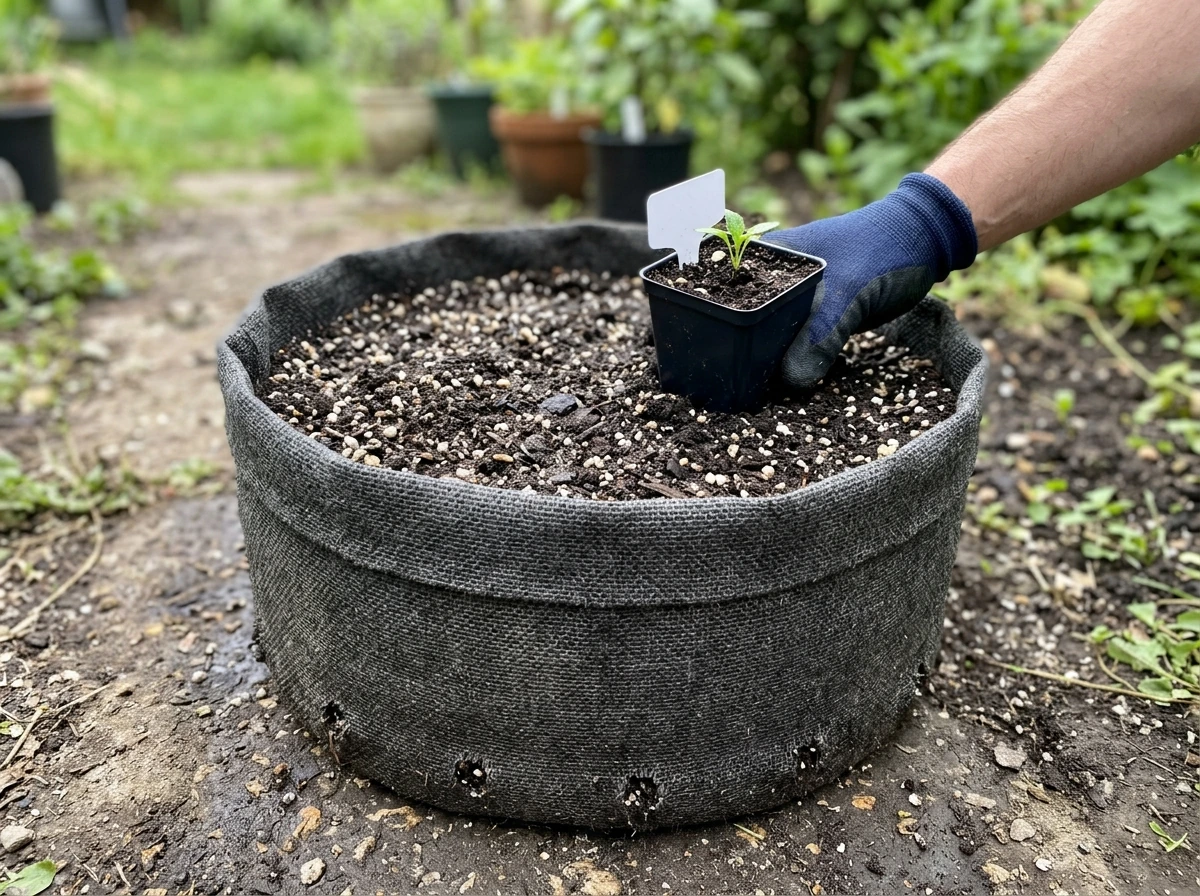
A fabric grow bag is a porous, usually felt or nonwoven polypropylene container used in place of a plastic pot for growing plants. The fabric walls allow air to reach the root zone, which triggers a process called air root pruning: when roots hit the air at the bag wall, they stop elongating and branch back inward, producing a denser, healthier root structure. The same porosity releases excess water, which dramatically reduces the risk of overwatering and root rot. Brands like Smart Pot, MIgardener, and HTG Supply's FeltPots all work on this same principle.
In a mushroom context, 'best psilocybe cubensis grow bag' usually refers to a pre-sterilized bag filled with grain or a substrate blend (like the all-in-one mushroom grow bags covered separately on this site). These are single-use or limited-use bags that handle both colonization and sometimes fruiting in a contained format. They're a different animal from the monotub, and the comparison between them for mushroom growing is a real decision growers face. mushroom grow bag vs monotub
Setup differences: what you're actually building
Setting up a monotub
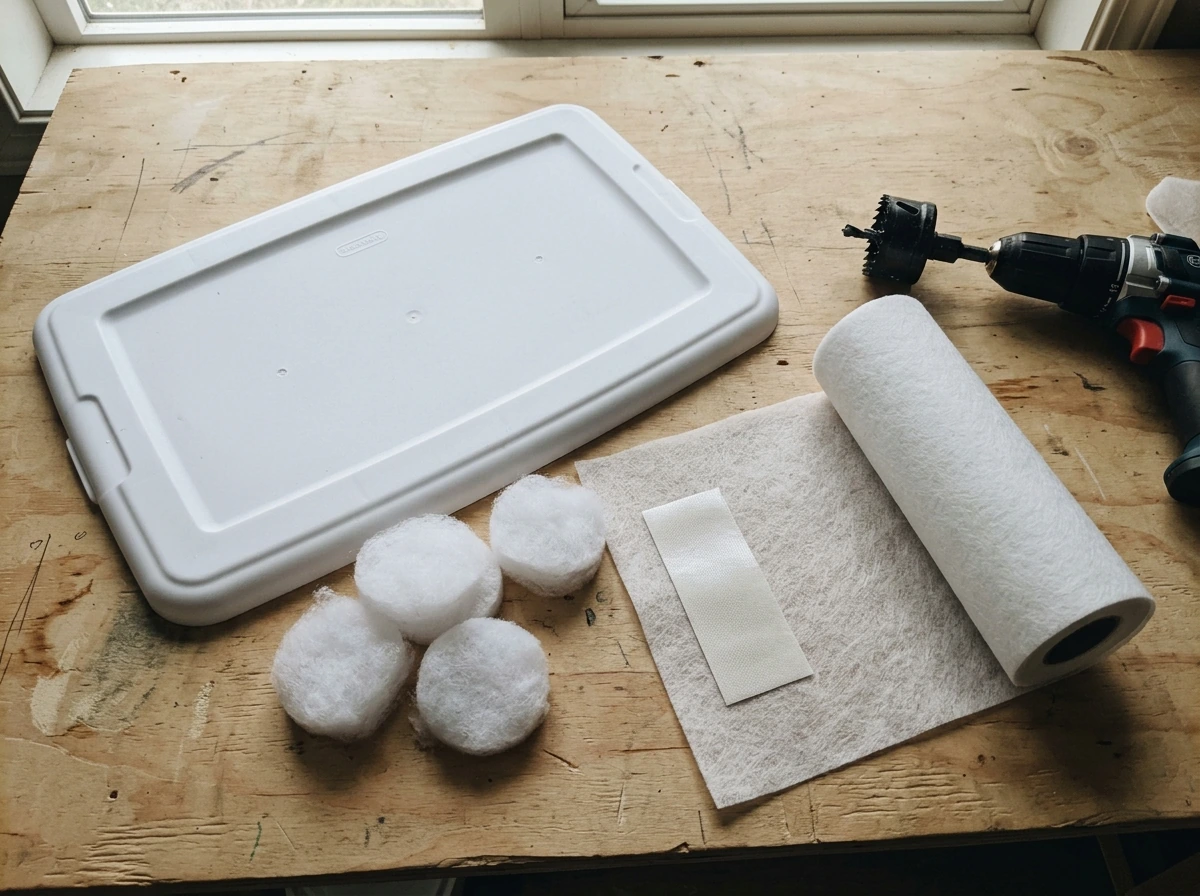
A basic monotub build requires a large plastic tub, a drill with a hole saw bit (typically for 2-inch holes), polyfill filter discs or adhesive tub filter patches to cover the holes, colonized grain spawn, and a bulk substrate like coco coir and vermiculite. You mix and pasteurize the substrate, add it to the tub along with the colonized grain, seal it up, and wait. Colonization of the grain spawn typically takes a few weeks to a month before the block is ready to fruit. After that, you fan and mist daily to maintain humidity and trigger pinning.
The critical thing to get right with a monotub is the balance between fresh air and humidity. Increasing FAE dries the tub out faster, so you have to compensate with more misting. Filter discs made of polypropylene polyfill material sit over the drilled holes and filter incoming air while slowing moisture loss. Get this balance wrong and you'll either get leggy, CO2-stressed mushrooms (too little FAE) or a dried-out block that won't pin (too much airflow without humidity compensation).
Setting up a fabric grow bag for plants
Setting up a fabric grow bag is genuinely straightforward. You fill it with an appropriate potting mix (with amendments for your specific crop), plant your seedling or seed, water it in, and you're done. The bag handles drainage and aeration passively through its fabric walls. There's no drilling, no filter media to buy, and no environment to calibrate. This is one of the main reasons experienced container gardeners prefer fabric bags over plastic pots: less maintenance infrastructure.
For mushroom-specific grow bags (grain or all-in-one substrate bags), setup is similarly hands-off compared to a monotub. You inoculate the bag through an injection port or by mixing in agar cultures, seal it, and let it colonize at room temperature. For mushroom-specific grow bags (grain or all-in-one substrate bags), setup is similarly hands-off compared to a monotub. You inoculate the bag through an injection port or by mixing in agar cultures, seal it, and let it colonize at room temperature. Many growers use these bags as a middle step, then transfer the colonized block into a monotub for fruiting. That workflow is actually one of the most common paths in home mushroom cultivation, and it's worth understanding if you're comparing the two methods.
Yield, performance, and what to realistically expect
For mushrooms, a properly managed monotub consistently outperforms a standalone grow bag in total yield, mostly because the controlled environment keeps humidity and FAE optimal across multiple flushes. A single monotub block can produce two to four flushes before the substrate is exhausted, and with good technique, each flush can yield a substantial harvest, especially if you start with the <a data-article-id="303CE89E-ACB1-4706-A2A6-65570111F98D">best all-in-one mushroom grow bag concept</a> and then move to a monotub for fruiting. The tradeoff is that you're managing that environment manually (or paying for automation), and one contamination event can wipe the whole tub.
All-in-one mushroom grow bags are more forgiving for beginners and often produce a solid first flush, but they're harder to push to multiple flushes because the sealed bag format makes it difficult to rehydrate and re-fruit the block without opening it up and risking contamination. If you want the most beginner-friendly option, consider choosing the best all-in-one mushroom grow bag approach since it focuses on easier colonization and a first flush. Many growers treat the bag as a colonization vessel and move the block to a monotub or other fruiting chamber for better long-term yield.
For plant growing, fabric grow bags consistently produce better root health and therefore better above-ground yields compared to same-size plastic containers, especially for crops that are sensitive to overwatering or root binding like tomatoes, peppers, and potatoes. The air pruning effect means the plant puts more energy into a dense, functional root ball rather than circling roots. For trees and shrubs grown in containers, this makes a genuine difference in long-term plant health.
Cost, convenience, and space
A basic DIY monotub build costs between $30 and $60 for the tub, filter media, and substrate ingredients if you're sourcing components yourself. Pre-built or semi-automated monotub kits run significantly higher. Filter discs are a recurring consumable, typically sold in 6-packs, and you'll replace them between grows. The tub itself is reusable for many cycles if you sterilize properly between runs.
Fabric grow bags are among the most affordable container options on the market. Basic felt grow bags in 3-gallon and 5-gallon sizes are available from multiple suppliers at low per-unit cost, and packs of five from brands like HTG Supply in sizes from 1 to 7 gallons make it easy to stock up without a big upfront investment. The bags are also lightweight, foldable when empty, and easy to store, which matters a lot on a balcony or in a small growing space.
Space-wise, a standard monotub takes up a fixed footprint (roughly the size of a large storage bin) and needs to be in a stable indoor location away from direct sunlight. Fabric grow bags are more flexible: you can line them up on a patio, stack them when empty, or hang smaller ones vertically. For growers with limited square footage, a set of fabric grow bags for plants is almost always easier to accommodate than a dedicated mushroom monotub setup.
Moisture, aeration, contamination, and maintenance
Monotub: the humidity and contamination challenge
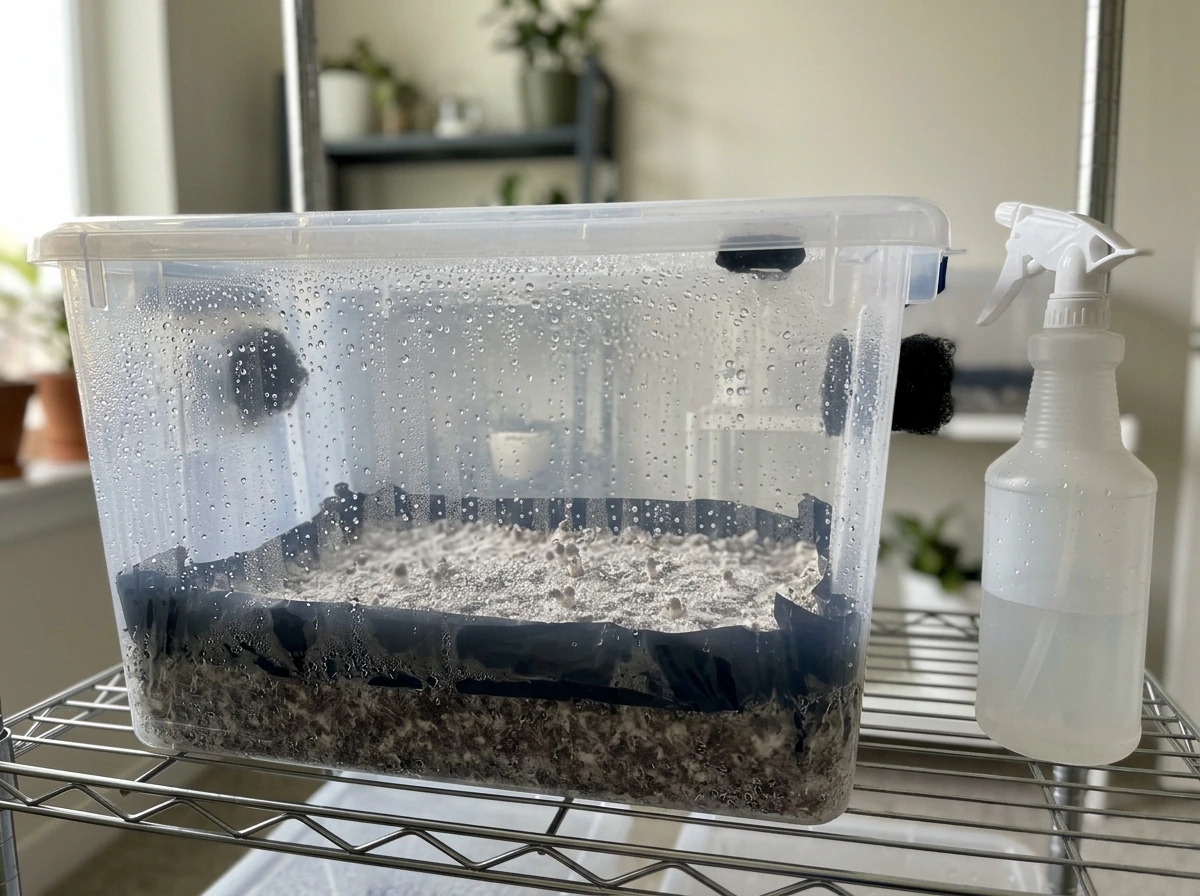
Mushroom growing inside a monotub requires maintaining 90% or higher humidity during fruiting. You achieve this by misting the walls and substrate surface once or twice daily and fanning briefly to exchange CO2-heavy air for fresh air. The filter patches over the drilled holes help buffer this exchange, allowing passive FAE while slowing moisture loss. During earlier stages (incubation and colonization), the targets are different: humidity can run around 60 to 80% and you want to minimize disturbance.
Contamination is the biggest risk in a monotub. Because the substrate is nutrient-rich and moist, any break in sterile technique during setup or a compromised filter patch can introduce mold or bacteria that compete with or kill your mushroom mycelium. Keeping the monotub sealed during colonization, sterilizing tools, and replacing filter media between grows are the core contamination-prevention habits. If you see green, black, or pink patches in your tub, it's almost always a contamination event and the grow needs to be disposed of safely.
Fabric grow bags: drainage and root health
The fabric walls of a grow bag handle moisture and aeration passively. Excess water drains through the bottom and sides, which means it's genuinely difficult to overwater a healthy fabric bag with good potting mix, as long as the bag isn't sitting in standing water. The same air permeability that enables drainage also keeps the root zone oxygenated, which is a major advantage over plastic containers where anaerobic conditions develop quickly if drainage is blocked.
The main maintenance consideration for plant-focused fabric bags is that they dry out faster than plastic pots, especially in hot or windy conditions. This means you may need to water more frequently during summer, and mulching the top of the bag helps retain moisture. Some fabric bags, like the RootMaker RootTrapper design, use a bi-layer construction with felt only at the bottom 2 inches to balance drainage and moisture retention, which is useful for water-sensitive crops. For most home vegetable or herb growing, standard felt bags work well with just consistent watering.
Choosing the right size and materials
Monotub sizing and filter media
Standard monotubs for home growing are typically 56-quart to 106-quart storage totes. Larger tubs produce more surface area for pinning and bigger harvests per flush but require more substrate and are heavier to handle. For a first grow, a 56-quart tub is manageable and forgiving. Holes are usually drilled at 2 inches in diameter and covered with adhesive tub filter patches or polypropylene polyfill discs. Midwest Grow Kits and similar suppliers sell replacement filter discs in 6-packs, so buy extras when you set up the first time.
Fabric grow bag sizing for plants
Sizing a fabric grow bag correctly makes a big difference in plant performance. Here's a practical guide for common crops:
| Crop | Recommended size | Notes |
|---|---|---|
| Herbs (basil, cilantro, mint) | 1–3 gallon | Small bags, easy to move indoors/outdoors |
| Lettuce, spinach, greens | 2–3 gallon | Shallow roots, no need to oversize |
| Peppers, eggplant | 3–5 gallon | 5 gallon preferred for full-season growing |
| Tomatoes (determinate) | 5 gallon | Minimum; larger is better for indeterminate |
| Tomatoes (indeterminate) | 7–10 gallon | Roots need space for full production |
| Potatoes | 7–10 gallon | Deep bags allow hilling and better yields |
| Dwarf fruit trees / shrubs | 15–25 gallon | Root pruning extends container lifespan significantly |
For fabric material, standard nonwoven felt (like MIgardener's bags or HTG FeltPots) works well for most vegetable and herb growing. If you're in a very hot climate or growing in direct sun, bags that also allow heat to escape through the fabric walls are worth prioritizing. GRO PRO's round fabric pots publish actual volume and dimensions in their spec sheets, which helps when you're trying to match bag size to a specific space or raised bed setup.
Step-by-step: starting with a monotub
- Choose a 56-quart opaque plastic storage tote with a lid. Avoid clear tubs, as light can interfere with mycelium growth.
- Drill four to six 2-inch holes around the sides of the tub, roughly halfway up. Drill two holes in the lid as well for passive FAE.
- Attach polypropylene polyfill filter discs or adhesive tub filter patches over every hole, inside and out if recommended by the product. Make sure they're fully sealed around the edges.
- Prepare your bulk substrate: a 50/50 mix of coco coir and vermiculite is a beginner-friendly choice. Pasteurize by field-capacity hydrating and placing in a sealed bag at 160–180°F for 1–2 hours, or use boiling water and let it soak and cool.
- Inoculate your grain spawn (rye grain or wheat berries in sterilized mason jars, or purchase pre-colonized grain spawn). Wait for full white mycelium colonization, which takes a few weeks to a month.
- In a clean space, mix colonized grain spawn with your cooled, pasteurized bulk substrate at roughly a 1:2 ratio by volume. Transfer into the monotub and level the surface.
- Place the lid on loosely or fully closed depending on your FAE setup. Move to a stable indoor location with indirect light and temperatures around 70–75°F.
- During colonization (7–14 days), minimize disturbance. Look for white mycelium spreading across the surface.
- Once the surface is 50–100% colonized, begin daily FAE: briefly fan the tub for 30–60 seconds and mist the walls lightly. Maintain humidity at 90% or higher during fruiting.
- Harvest mushrooms by twisting and pulling when caps are almost fully open but before they flatten out. After the first flush, mist more heavily, let the block rest for 5–7 days, and repeat for subsequent flushes.
Step-by-step: starting with a fabric grow bag for plants
- Choose the right bag size for your crop (see the sizing table above). For a first grow, a 5-gallon bag is the most versatile starting point for most vegetables.
- Select a quality potting mix appropriate for your plant. Avoid heavy garden soil, which compacts in containers. A mix with perlite or vermiculite improves drainage and aeration.
- Place the bag on a saucer or tray if you're growing indoors or on a surface that can't get wet. On a patio, direct ground contact is fine.
- Fill the bag to about 2–3 inches below the top rim. Leave this space to prevent soil from washing out during watering.
- Plant your seedling at the same depth it was in its original container, or direct sow seeds at the recommended depth for your crop.
- Water thoroughly until water drains freely from the sides and bottom. This confirms the fabric is working correctly.
- Place in an appropriate light location for your crop. Most vegetables need 6–8 hours of direct sun.
- Water when the top inch of soil feels dry. Fabric bags drain and breathe faster than plastic pots, so check moisture more frequently in hot weather.
- Fertilize regularly starting 4–6 weeks after planting, as nutrients leach through the fabric faster than in plastic containers. A balanced slow-release fertilizer or regular liquid feeding works well.
- At end of season, dump the spent soil, rinse the bag, and store flat. Most quality felt bags can be reused for multiple seasons.
Side-by-side comparison
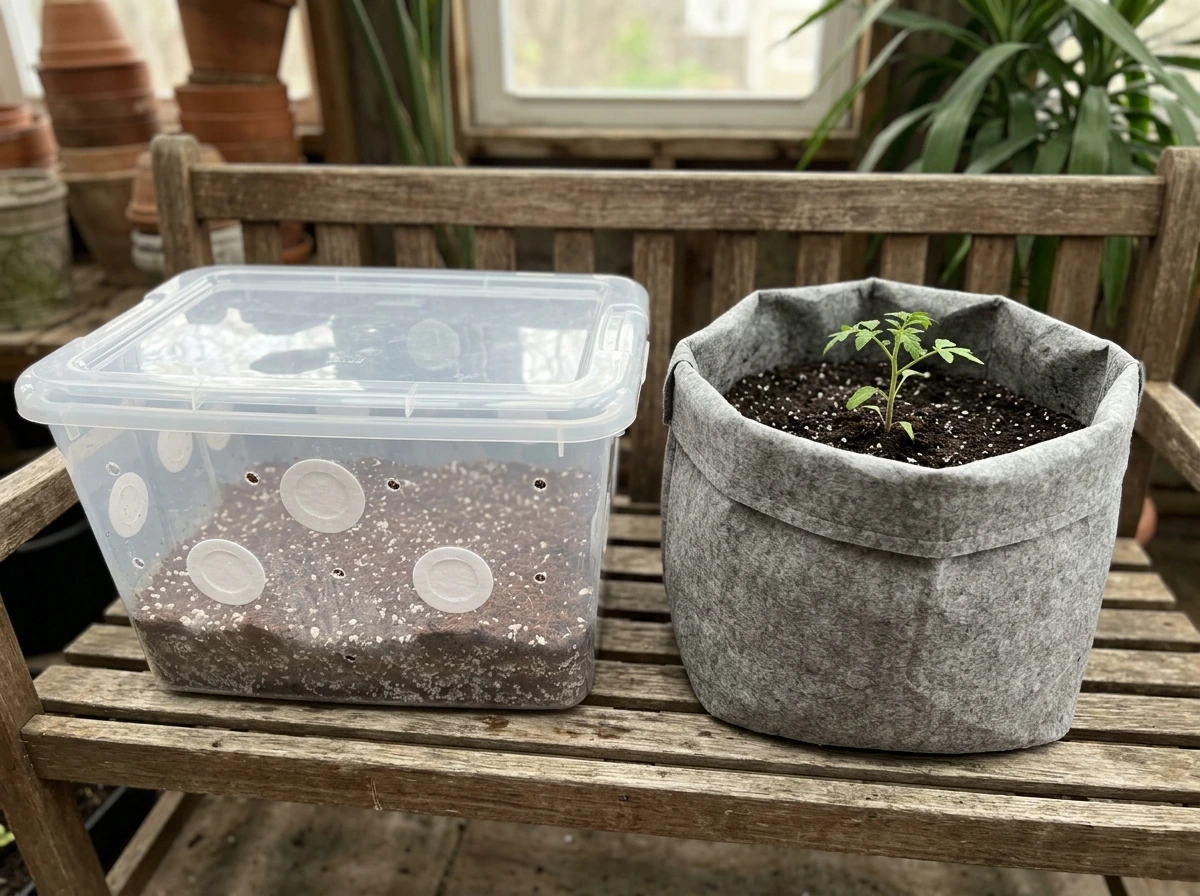
| Factor | Monotub | Fabric grow bag (plants) |
|---|---|---|
| Primary use | Mushroom fruiting chamber | Container growing for plants |
| Setup complexity | Moderate (drilling, filter media, sterile technique) | Low (fill, plant, water) |
| Cost to start | $30–$60+ DIY; higher for kits | Low; bags available in multi-packs under $20 |
| Reusability | Yes, with cleaning between grows | Yes, multiple seasons with basic care |
| Maintenance intensity | High (daily misting, FAE management) | Low to moderate (regular watering, feeding) |
| Contamination risk | High if sterile technique is poor | Low (no sterile technique needed) |
| Space required | Fixed indoor footprint | Flexible, scalable, outdoor or indoor |
| Yield reliability | Consistent with good technique | Consistent with correct sizing and watering |
| Best for beginners | With a kit or guided setup | Yes, very beginner-friendly |
Which one should you actually start with?
If you're growing mushrooms and you want the most control and the best long-term yields, start with a monotub. It has a steeper learning curve than a mushroom grow bag, but once you've nailed the humidity and FAE balance, it's the most reliable way to get consistent flushes at home. If you're newer to mushroom cultivation, consider starting with an all-in-one mushroom grow bag first to understand how mycelium grows and then transfer that colonized block into a monotub for fruiting. If you are wondering can you reuse mushroom grow bags, the answer depends on the bag type and whether it was kept sterile through the process. That hybrid approach is covered in more depth in the guide on how to transfer a mushroom grow bag to a monotub. That hybrid approach is covered in more depth in the guide on how to transfer a mushroom grow bag to a monotub.
If you're growing vegetables, herbs, flowers, or trees in containers, a fabric grow bag is the straightforward, practical choice. There's no scenario where a monotub is relevant for plant container growing; it's the wrong tool entirely. Pick your bag size based on the crop (the table above covers the most common ones), use a quality potting mix, and you'll be in good shape from the first grow.
The biggest mistake people make in this comparison is thinking the two are interchangeable or that one is universally better. They solve different problems for different crops. Match the tool to the crop, get the size and materials right, and follow the starter steps above. That's all you need to get producing results quickly.
FAQ
Can I use a monotub to grow plants in place of a fabric grow bag?
No, they are not interchangeable. A mushroom monotub is designed around sterile substrate, filtered fresh-air exchange, and high humidity fruiting, while a plant fabric grow bag relies on passive drainage and air pruning for root health. Trying to “use one for the other” usually fails because the environmental targets and handling steps are different.
If I really want to, what would I need to change to grow plants in a monotub?
You can grow plants in a monotub only if you modify it with true drainage (large holes, a tray to manage runoff, and breathable conditions). Even then, many monotubs are not ideal because their design focuses on sealed humidity control, not oxygenating roots or preventing waterlogging.
How do I know whether my monotub needs more fresh air or more humidity?
In a monotub, the faster you increase fresh air exchange, the more moisture you will lose. Many growers find a practical rhythm is to mist after you fan, not before, and adjust by watching the block surface (if it looks dry or cracked, reduce airflow or increase misting; if it stays too wet, reduce misting and shorten fanning).
How often should I replace monotub filter discs or patches, and what happens if I don’t?
Monotub filter patches should be treated as consumables that degrade with use and handling. If a patch becomes loose, tears, or gets saturated with substrate moisture during cleaning, you increase contamination risk and uncontrolled evaporation. Replace them after each full run, especially if you saw any contamination.
What should I troubleshoot first if my monotub pins but doesn’t develop into healthy mushrooms?
For monotubs, most fruiting problems come from imbalance rather than “bad spawn.” If pins stall or stop, first check humidity stability and whether the surface is drying between misting. If you consistently under-mist and the block desiccates, you will often see poor pin development even with otherwise healthy-looking mycelium.
Does using filter patches mean I can skip sterilizing between grows in a monotub?
Filtration helps, but it does not make sterile technique optional. If your incubation stage is contaminated, the tub may look “sealed and fine” until later when faster-growing contaminants overtake. The fresh-air holes and patches are barriers, they are not a guarantee.
When should I open a mushroom grow bag, if my plan is to fruit in a monotub?
If a mushroom grow bag is intended as a colonization vessel, opening it early to “improve airflow” usually increases risk. A safer approach is to keep it closed during colonization, then move the fully colonized block into your fruiting chamber (like a monotub) where humidity and FAE are easier to manage.
Can fabric grow bags still cause root rot if drainage is good?
For plant grow bags, the main edge case is sitting in water. If the bag bottom is in a tray that never drains, roots can still suffocate even though the fabric is porous, and you can get anaerobic conditions. Always empty the runoff tray after watering.
How do I reduce drying out in hot, windy weather when using fabric grow bags?
Fabric bags dry faster because airflow and heat move through the fabric. A practical fix is scheduling watering based on bag weight (lift and learn the difference between dry and watered) and adding mulch on top to slow evaporation. In hot windy spots, you may also need shorter, more frequent waterings rather than one long soak.
Is one of these setups better for long-term production cycles versus short first harvests?
For mushrooms, a monotub generally supports multiple flushes better because you control humidity and FAE across the same fruiting chamber. For plant crops, fabric bags can also be used long-term, but you must manage fertilization and repotting or top-dressing, since the bag can dry out and the potting mix will break down over time.
Next Articles
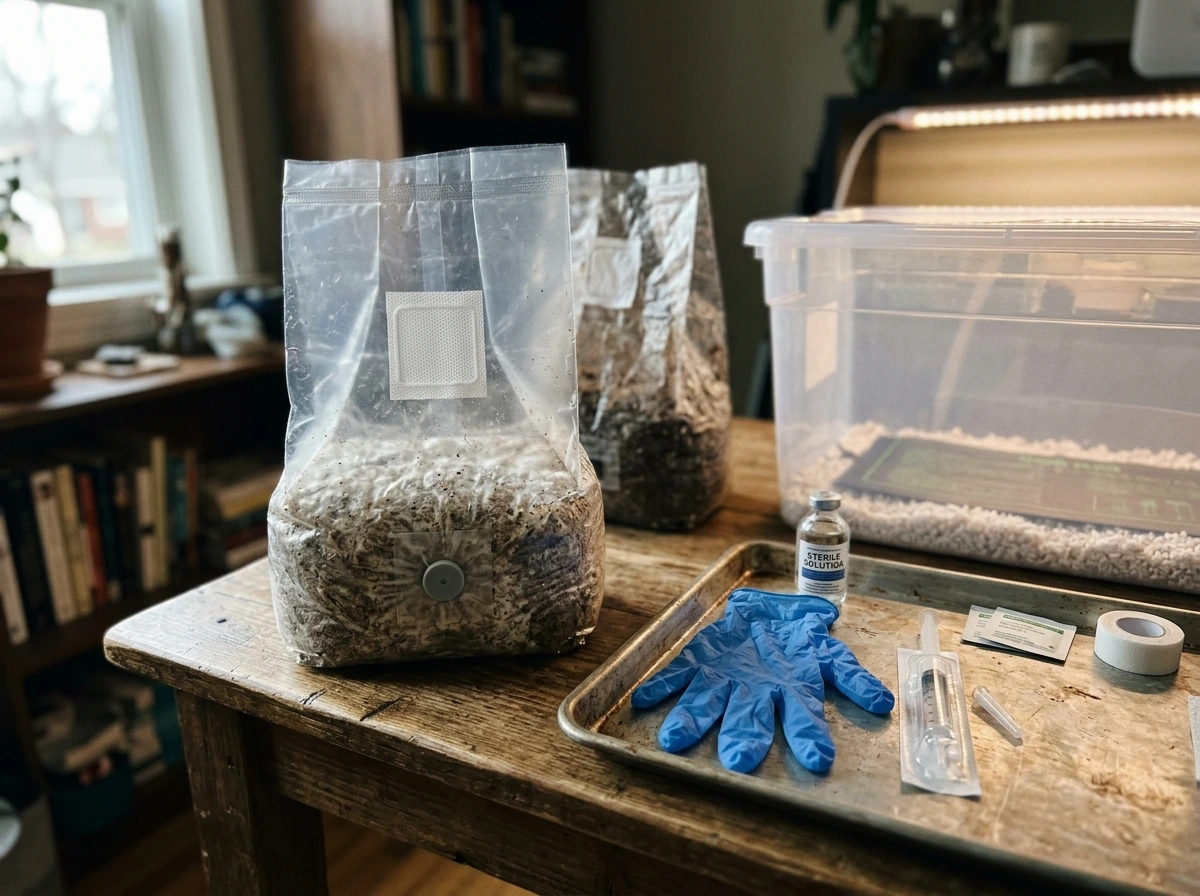
Best All-in-One Mushroom Grow Bag: How to Choose and Start
Pick the best all-in-one mushroom grow bag for your species, space, humidity, and experience. Start, maintain, troublesh
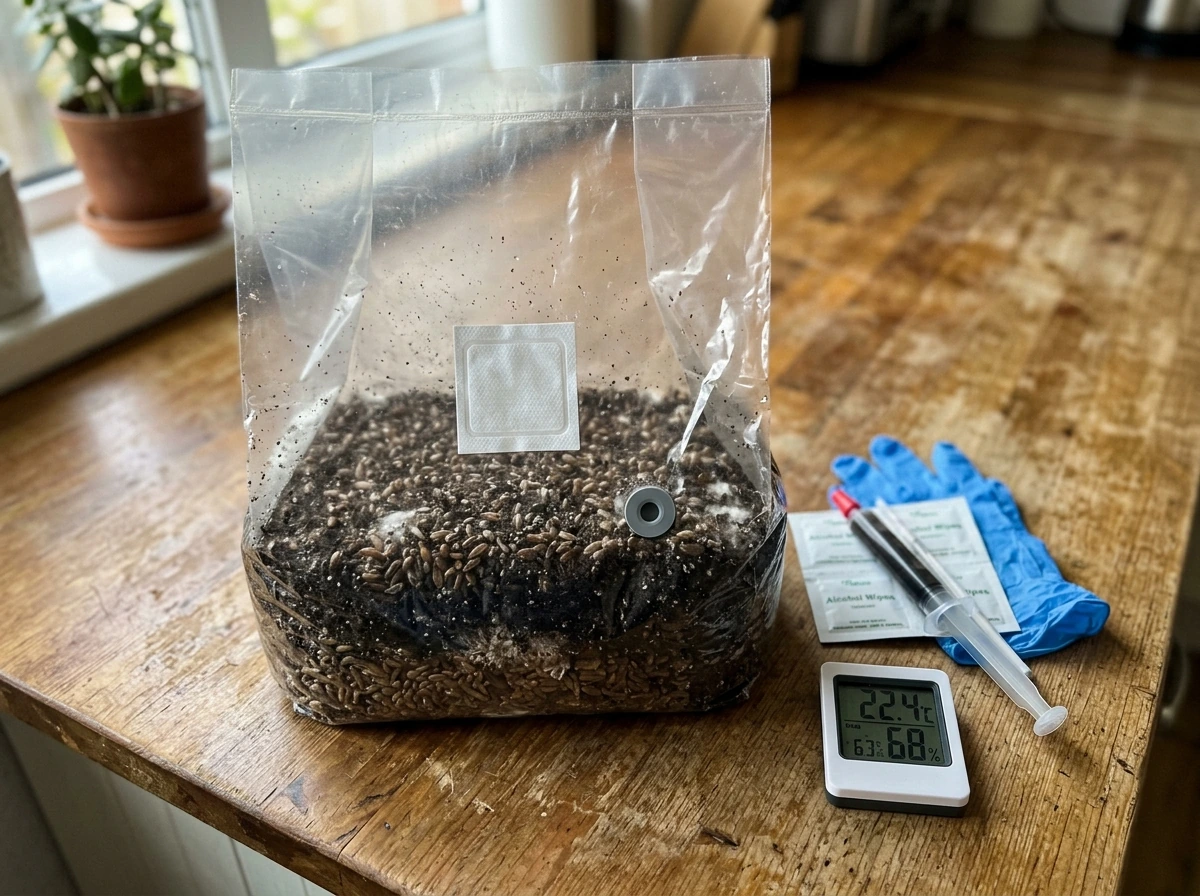
Best All-in-One Mushroom Grow Bag Reddit Picks and How-To
Reddit-style picks for the best all-in-one mushroom grow bag, plus step-by-step use and troubleshooting for better yield
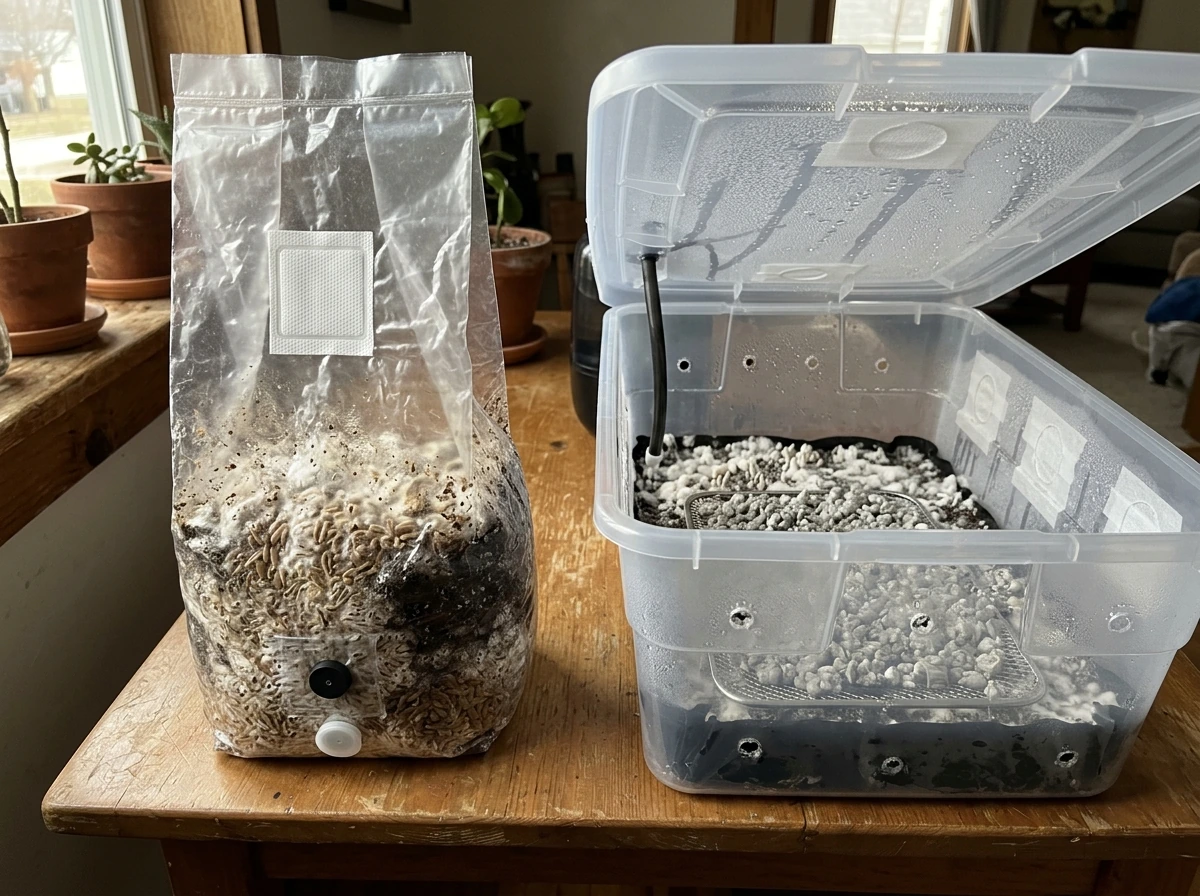
Mushroom Grow Bag vs Monotub: Which Setup Wins?
Grow bag vs monotub comparison for home mushroom growing: costs, workflow, contamination risks, yields, and how to choos