
You can buy grow bags in Bangalore from local nurseries and garden centres, open plant bazaars like the one at Lalbagh, hardware and packing wholesale markets, government channels like Krishi Bhavan and Krishi Vigyan Kendras, and online retailers like Ugaoo, NurseryLive, Amazon India, and Flipkart that deliver to most Bangalore pin codes within 3–7 working days. Each channel has a different price point, minimum quantity, and inspection opportunity, so the right choice depends on how many bags you need, how quickly you need them, and whether you want to feel the fabric before you buy.
Where to Buy Grow Bags in Bangalore: Guide & Top Vendors
Marcus Holloway
4 Aug 2026
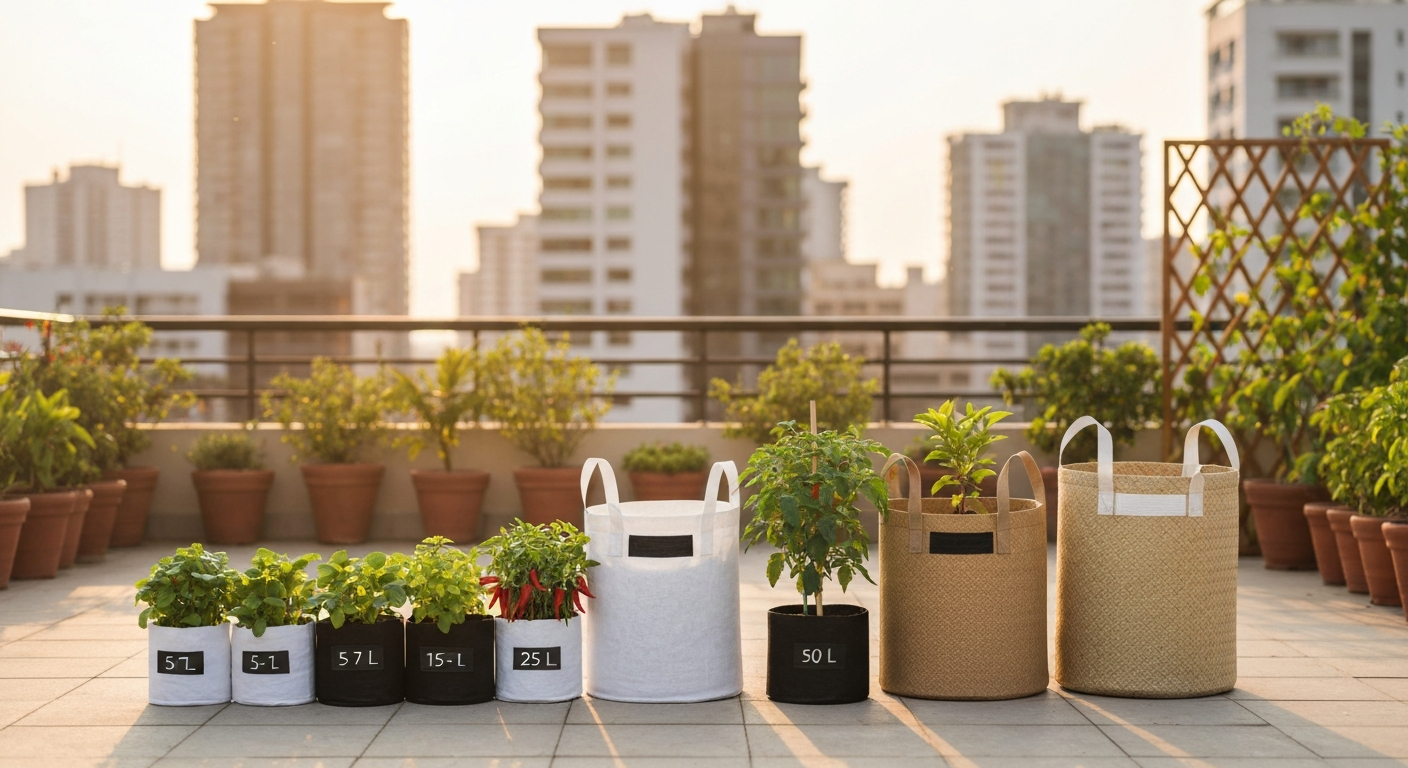
This guide walks you through every serious option in Bangalore, from buying a single 12-litre bag at a neighbourhood nursery to placing a bulk order with a local packaging manufacturer. Along the way you will find size-to-crop recommendations, a buying checklist, potting mix suggestions, placement advice for Bangalore's climate, and care and troubleshooting tips. If you are completely new to fabric containers, the sections on what grow bags are and their benefits will set the context before you spend a rupee.
What are grow bags?
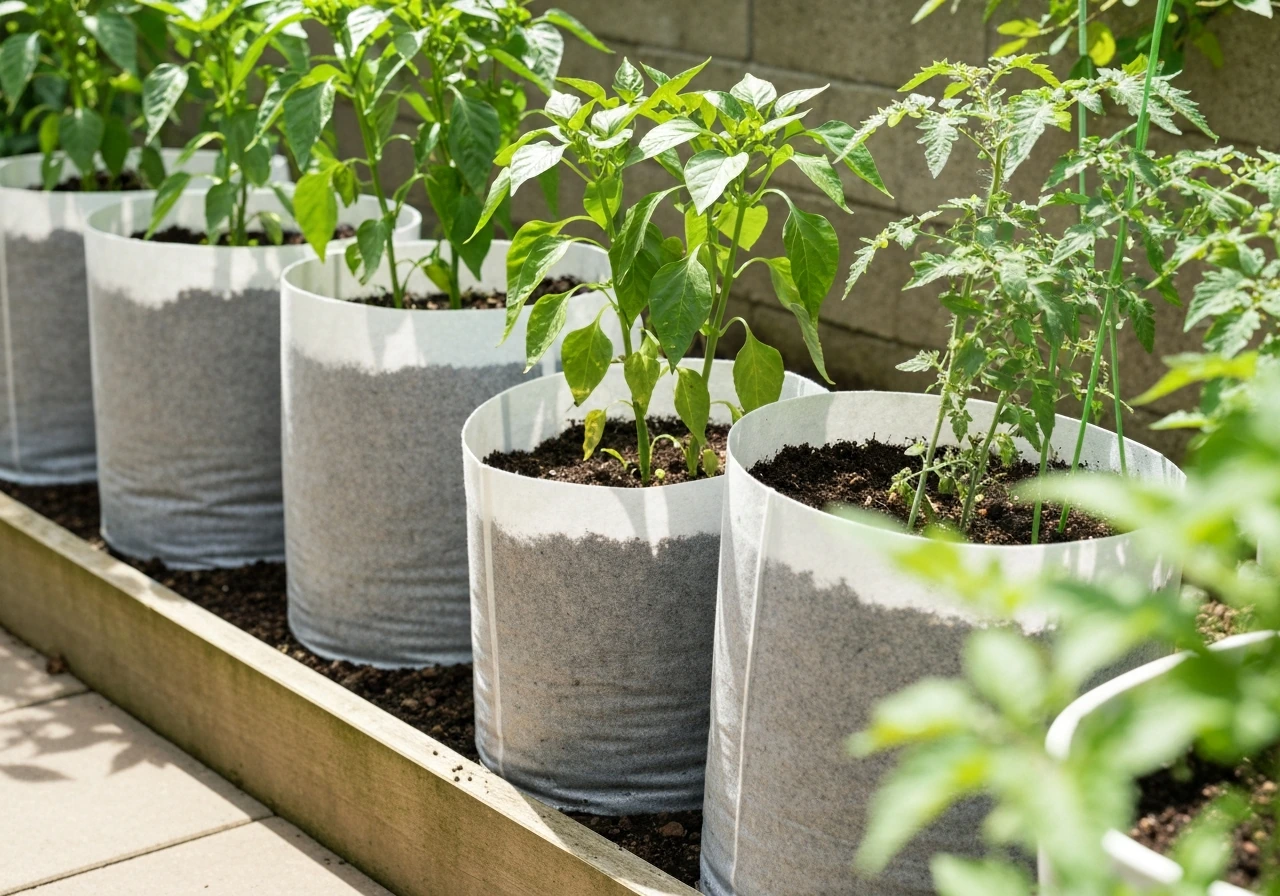
A grow bag is a flexible, freestanding container filled with growing medium and used in place of a traditional pot or raised bed. Unlike rigid pots, grow bags are usually made from permeable fabric, which allows excess water to drain freely and lets air reach the root zone. This air-pruning effect, where roots meeting the fabric wall stop elongating and instead branch back inward, is the defining functional difference between a fabric grow bag and a standard plastic pot. The result is a denser, more fibrous root system that uptakes water and nutrients more efficiently.
The three main types you will encounter in Bangalore are non-woven fabric bags (the most common for home use, typically 100–400 GSM polypropylene), HDPE woven bags (heavier-duty, reinforced with woven tapes, covered by the BIS HDPE grow bag standard), and PE or plastic grow bags (semi-rigid, opaque polyethylene, often used in nurseries and commercial horticulture for saplings). Cocopeat grow bags are a niche variant, pre-filled with compressed coir and used mainly for hydroponic or coco-based cultivation.
Why use grow bags? Benefits and honest trade-offs
The main reasons home growers in Bangalore reach for grow bags are portability, drainage, and the air-pruning effect. See the benefits of grow bags article for a deeper look at how fabric containers improve root health, drainage, and portability. On a concrete terrace that gets 5–6 hours of direct sun, a fabric bag dries out faster than a ceramic pot and keeps roots from cooking in a sun-baked container wall. They are also lighter than clay or concrete planters, which matters a great deal when your terrace has a weight limit. That said, they are not perfect for every situation, and going in with clear expectations saves disappointment.
| Factor | Grow Bags | Plastic Pots | Raised Beds |
|---|---|---|---|
| Air pruning | Yes — prevents root circling | No | Partial |
| Drainage | Excellent through fabric walls | Depends on hole size | Good if well-built |
| Portability | High — fold flat when empty | Moderate | Fixed |
| Lifespan (Bangalore sun) | 2–5 years (fabric); 5–8 years (HDPE woven) | 5–10 years | 10+ years |
| Waterlogging risk | Very low | Moderate–high | Low–moderate |
| Upfront cost | Low–moderate | Low | High |
| Aesthetics | Functional; not decorative | Wide variety | Can be attractive |
| Best for | Vegetables, herbs, fruiting crops, mushrooms | Flowers, small ornamentals | Permanent crops, large gardens |
The honest trade-off is that fabric bags dry out faster, meaning watering frequency doubles or triples in Bangalore's April–June heat compared to a glazed ceramic pot of the same volume. They also degrade in UV over time, with cheaper non-woven bags sometimes becoming brittle after one or two summers. Spending a little more on 300 GSM+ bags with a UV-stabilized rating is worth it for anything you plan to grow year after year.
Grow bag materials and construction, what to look for
GSM (grams per square metre) is the single most useful number when comparing non-woven fabric bags. Under 150 GSM feels thin and papery; 200–250 GSM is adequate for a single season; 300–400 GSM is the sweet spot for reusable home-garden bags; anything above 400 GSM starts to behave more like a geotextile and is used for tree planting and heavy-root crops. Ugaoo, for example, sells a 350 GSM geo-fabric round bag and Anandi Greens lists 400 GSM options on Flipkart, these are good reference points when comparing listings.
For HDPE woven bags, the BIS standard (for HDPE woven grow bags) prescribes minimum fabric mass of 200 g/m2 for Type-1 and 250 g/m2 for Type-2, stitch density of 14 ±2 stitches per decimetre, tape linear density of at least 700 denier, and a minimum hem width of 30 mm with 2 mm jute or PP rope beading. Bottom drainage holes should be 13 mm diameter (±3 mm). The standard also requires UV retention of at least 85% breaking-strength after UV exposure. These are real, verifiable specs you can ask any supplier to confirm.
Stitched seams are more common and generally fine for home use, but make sure thread density is high and there is no puckering at corners. Welded (heat-bonded) seams appear on some premium HDPE bags and are more resistant to tearing under load. Always check for sturdy handles stitched with reinforcing patches at attachment points, not handles that are just a looped extension of the main fabric. UV stabilization should be stated explicitly by the seller; if it is not mentioned, assume the bag will degrade faster in Bangalore's intense sun.
Sizes and approximate price ranges in Bangalore
Grow bags are sold by volume (litres) or by diameter and height dimensions. The table below covers the most practical size range for home growers, with approximate retail price ranges you can expect in 2026 across Bangalore nurseries and online platforms. Bulk orders from wholesale or packaging suppliers will be meaningfully cheaper on a per-unit basis.
| Size | Approx. Volume | Typical Dimensions (D×H) | Retail Price Range (per bag) | Common Use |
|---|---|---|---|---|
| Small | 5–7 L | 20×20 cm | ₹30–₹80 | Herbs, microgreens, seedlings |
| Medium | 10–15 L | 30×25 cm | ₹60–₹150 | Leafy greens, chilies, small herbs |
| Standard | 20–25 L | 35×30 cm | ₹100–₹250 | Tomatoes, eggplant, capsicum |
| Large | 35–50 L | 45×35 cm | ₹180–₹450 | Potatoes, cucumbers, dwarf fruit trees |
| Extra Large | 75–100 L | 55×45 cm | ₹350–₹900 | Papaya, banana, large shrubs, trees |
| Bulk/wholesale (per unit) | Any size | Custom | ₹6–₹50+ (MOQ applies) | Commercial growers, community gardens |
The ₹150–₹3,000 range cited in ToolsVilla's July 2026 price digest for HDPE grow bags covers everything from a single small bag to a multi-pack of larger ones. Online prices are generally lower per unit than nursery retail, but nurseries let you inspect before buying. For first-time buyers, spending ₹150–₹300 on a couple of medium bags to test at home before ordering in quantity is a sensible approach.
Which size for which crop?
Getting the size right matters more than most first-time buyers realize. An undersized container stresses roots, reduces yield, and increases watering frequency dramatically. The recommendations below are practical minimums, if you can go one size up, your plants will generally thank you for it.
| Crop / Plant Type | Minimum Volume | Recommended Size | Notes |
|---|---|---|---|
| Herbs (basil, coriander, mint) | 3–5 L | 5–7 L | Mint spreads — keep in separate bags |
| Leafy greens (spinach, methi, lettuce) | 5–7 L | 10–12 L | Can multi-plant in wider shallow bags |
| Chilies & capsicum | 10 L | 15–20 L | Deeper bags better for root development |
| Tomatoes (indeterminate) | 15 L | 20–25 L | Support stake or cage needed alongside |
| Eggplant / brinjal | 15 L | 20 L | Standard 12×12 inch bags work well |
| Potatoes | 25 L | 35–50 L | Fill progressively as plants grow (hilling) |
| Cucumbers / bitter gourd | 20 L | 25–35 L | Needs trellis; place near wall or railing |
| Mushrooms (oyster, button) | 3–10 L | Substrate bag (PP) | Use polypropylene autoclave bags, not fabric |
| Flowers (marigold, zinnia, petunia) | 5–10 L | 10–15 L | Good drainage essential for flowering |
| Dwarf fruit trees (lemon, pomegranate) | 50 L | 75–100 L | Geo-fabric or heavy HDPE woven; stake firmly |
| Large shrubs / banana | 75 L | 100 L+ | Check terrace load capacity before placing |
Mushroom cultivation is worth a separate note. Fabric grow bags are not used for mushroom fruiting blocks, that requires polypropylene autoclave bags that can withstand sterilization temperatures. The bags sold at nurseries are for soil-based growing, not mushroom substrate. If you are growing oyster or button mushrooms, look specifically for mushroom cultivation bags at agro-supply stores or online vendors who specialize in mushroom equipment.
Buying checklist before you order
Whether you are buying in person or online, run through this checklist before committing. It takes two minutes and prevents you from ending up with bags that fall apart after one monsoon.
- GSM rating: confirm the stated GSM (300 GSM minimum for reusable bags; 200 GSM acceptable for single-season use)
- UV stabilization: ask explicitly or look for it on the product label or spec sheet — this is non-negotiable for Bangalore's sun exposure
- Drainage: check that bottom drainage holes are present (BIS standard specifies 13 mm ±3 mm diameter holes); fabric bags drain through walls but bottom holes matter for HDPE woven types
- Stitching quality: at least 14 stitches per decimetre; no loose threads or puckering at seams and corners
- Handles: two reinforced handles with stitched-on patches at attachment points, rated for the bag's filled weight
- Dimensions and volume: match the stated size to your crop's root volume requirements (see crop table above)
- BIS marking (for HDPE woven bags): manufacturer name, dimensions, mass per m2 and year of manufacture should be printed or tagged
- Return or exchange policy: especially important when buying online — check the window (most platforms offer 7–10 days)
- MOQ for bulk: wholesale suppliers typically require a minimum order quantity; confirm before negotiating price
- Material type: confirm non-woven fabric vs HDPE woven vs plain PE — they behave differently in heat and water retention
Where to buy grow bags in Bangalore: all your options
Local pickup vs. online delivery: how to choose
Local pickup makes sense when you need one to ten bags quickly, want to inspect fabric quality in person, or are buying for an immediate planting window (before the monsoon in June, for example). Online delivery suits larger orders, comparison shopping across brands, and buying sizes or GSM ratings that local nurseries do not consistently stock. If you are ordering online for the first time, try a small pack of two to five bags before committing to a bulk order, this lets you feel the fabric weight and check stitching before you are stuck with fifty inferior bags. For a consolidated list of vendors and buying tips, see where to buy grow bags.
When you do pick up bags in person, inspect the seams at the corners, tug the handles, hold the bag up to light (pin-hole gaps in thin non-woven fabric show up clearly), and check that drainage holes are present and clean-cut. Reject bags that smell strongly of chemicals, have faded or brittle fabric (indicating prior UV exposure), or have handles that are just folded fabric with no reinforcing patch.
1. Local nurseries and garden centres
Neighbourhood nurseries are the easiest first stop. Most garden centres of reasonable size in Bangalore stock at least a basic range of non-woven grow bags in 10–50 litre sizes, typically sourced from regional wholesalers. Prices are higher than wholesale or online, but you get immediate availability and can inspect quality. Areas with a concentration of nurseries include Sadashivanagar, Yelahanka, Whitefield Road, Bannerghatta Road, and around Lalbagh's perimeter. When you visit, ask specifically for 'fabric grow bags' or 'non-woven grow bags', many nurseries also stock plain plastic nursery bags, which are not the same thing. Ask about GSM if the bags are not labelled, and check whether they have UV-stabilized options.
2. Hardware, packing and wholesale suppliers
Bangalore has a functioning packaging and polysack wholesale ecosystem, and some of these suppliers sell grow bags or the materials used to make them. Marudhar Polysacks (local Bengaluru contact: 080-4381-5678) trades in PP woven sacks and HDPE products. blank" rel="noopener noreferrer">Vikranta Trading and Exports, located at Veerasandra Village, Electronic City Post, Anekal (contact: +91 90354 24527), handles PP and HDPE woven bags for packaging. Susheel Poly Sacks and Fabric (contact: +91 96207 51092) is a Sultanpete-area manufacturer of woven and non-woven fabric rolls and bulk bags. blank" rel="noopener noreferrer">Susheel Poly Sacks & Fabric – Bengaluru listing includes a Sultanpete/Bengaluru contact and WhatsApp link (+91 96207 51092) and shows they supply PP woven and non‑woven fabric rolls and bulk bags suitable for grow bags and custom orders/printing. These suppliers are not marketing to home gardeners, they are B2B, but if you are buying 50+ bags or want a custom order, calling or WhatsApping them to ask whether they supply grow bags or can cut and stitch to a dimension you specify is entirely reasonable. Expect MOQs of 50–500 units and prices that can be significantly lower than retail.
3. Open markets and plant bazaars
The Lalbagh plant nursery and the government plant outlets on the Lalbagh grounds are worth visiting, particularly during Krishi Melas or garden fairs where vendors sell growing supplies alongside plants. The area around Lalbagh's main gates typically has a cluster of informal plant and accessory vendors, and grow bags do appear here, especially in planting season (pre-monsoon June and the September–October cool-down). KR Market and the Srirampura vegetable/agro market area also have hardware and agro-supply stalls where sacks and grow bags come up. Prices at open markets can be low but quality is inconsistent, always inspect the seam work and fabric weight before buying a large quantity.
4. Online retailers and brands that deliver to Bangalore
Several national platforms ship reliably to Bangalore pin codes and offer a reasonable range of grow bag types and sizes. NurseryLive sells fabric and geo-fabric grow bags in retail packs (sets of 5–20) including 12-inch (30 cm) round bags and rectangular sizes, with in-stock availability listed on product pages. Ugaoo lists a 350 GSM geo-fabric round bag (12×12 inch) and ships nationally. Both platforms have customer reviews that are useful for checking real-world durability. Amazon India and Flipkart aggregate a wider range of brands including Anandi Greens (400 GSM geo-fabric bags in 12×12 in and 18×9×9 in sizes) and OrganicBazar, with Flipkart listings showing Cash on Delivery options and short return windows, useful if you want to inspect on arrival. GrowBag.in, an Indian manufacturer covering HDPE, non-woven and cocopeat grow bags, ships factory-direct pan-India with an estimated 3–7 working day delivery; bulk or catalog requests can go to [email protected]. For most home growers in Bangalore, ordering a starter pack from NurseryLive, Ugaoo, or Flipkart is the most convenient entry point.
5. Krishi Bhavan, cooperatives and Krishi Vigyan Kendras
Government agricultural channels in Karnataka occasionally distribute grow bags, especially non-woven poly bags, as part of horticulture promotion schemes, subsidized input programs, or kitchen garden initiatives. The Krishi Bhavan (local agricultural extension office, present in each taluk) is your first point of contact. The University of Agricultural Sciences' Gandhi Krishi Vignana Kendra (GKVK) in Bengaluru (GKVK campus, Bengaluru 560065; Registrar: +91-80-23330153 / 23330984) runs Krishi Mela events and maintains contact with extension scientists who can point you to current schemes. Krishi Vigyan Kendras (KVKs) are the district-level agricultural knowledge centres and sometimes have demo or training materials including grow bags. These channels are not guaranteed sources, availability depends on current schemes, but when they do distribute, prices are subsidized or free for eligible farmers and urban horticulture participants.
6. Social sellers, Facebook/Instagram/WhatsApp groups and custom fabricators
Bangalore has a thriving community gardening social media scene. Facebook groups dedicated to Bangalore urban farming and terrace gardens, Instagram sellers, and WhatsApp-based plant and input trading groups are active channels where individuals and small-batch sellers offer grow bags, sometimes in small quantities and at negotiable prices. These are good for sourcing unusual sizes, testing a new brand, or connecting with local fabricators who can stitch custom-dimension bags. If you need a specific size not available commercially, say a wide shallow bag for strawberries or an unusually tall bag for deep-rooted crops, a local tailor or small textile fabricator can produce them from non-woven PP fabric rolls; suppliers like Susheel Poly Sacks can provide the raw fabric. Approach custom orders with a written spec (dimensions, fabric weight, handle type, drainage hole placement) and ask for a sample piece before placing a full order.
How to get grow bags from Krishi Bhavan: step by step
Krishi Bhavan is the taluk-level agricultural office under the Karnataka Department of Agriculture and Horticulture. Getting grow bags or related inputs through this channel takes patience, but the prices can be significantly subsidized. Here is how to approach it.
- Identify your taluk's Krishi Bhavan office — there is one per taluk in Bengaluru Urban and Rural districts. Search 'Krishi Bhavan [your area] Bangalore' or ask at your local gram panchayat or ward office for the address.
- Visit in person during working hours (typically 10 am–5 pm, Monday–Saturday) and ask to speak with the Agriculture Officer or Horticulture Assistant.
- Bring your Aadhaar card, a copy of your land/property document or ration card, and if applicable your farmer registration (PM-Kisan or state farmer ID). Urban terrace gardeners may qualify under kitchen garden or urban horticulture schemes — ask explicitly.
- Ask the officer about current schemes: 'Is there any input distribution or subsidy scheme for grow bags or poly bags under horticulture or kitchen garden programs?'
- If a scheme is active, fill in the application form provided, attach required documents, and ask for the expected timeline and pickup/delivery arrangement.
- Follow up. Officers are often overloaded; a polite follow-up visit or phone call one to two weeks after application is normal and expected.
- If no scheme is currently active, ask the officer about upcoming Krishi Mela events at GKVK or other venues — these often have vendor stalls and government distribution counters where inputs including grow bags are sold at subsidized rates.
Ordering bulk or custom grow bags: what to tell your supplier
If you are equipping a community garden, school kitchen garden, rooftop farm, or simply want 50+ bags at wholesale prices, going direct to a manufacturer or packaging supplier makes financial sense. When placing a bulk or custom order, give your supplier the following specifications in writing to avoid miscommunication and ensure you receive bags that match your requirements.
- Dimensions: diameter and height in cm (or length × width × height for rectangular bags)
- Volume: state the intended litre capacity as a cross-check
- Fabric type: non-woven PP (specify GSM), HDPE woven, or geotextile — and whether UV stabilized
- Seam/stitch type: stitched (specify thread type and stitch density) or heat-welded
- Handle configuration: two reinforced handles with patch reinforcement (specify handle length and load rating if known)
- Drainage: number and diameter of bottom drainage holes (13 mm is the BIS standard for HDPE woven bags)
- Printing or branding: if you want a logo, school name, or project name printed, specify ink type (UV-resistant) and placement
- BIS compliance: ask whether the bags meet or are produced to the BIS HDPE woven grow bag standard if ordering HDPE type
- Sample requirement: always request 2–5 sample pieces before committing to a large run
- Lead time: standard small batches often take 1–2 weeks; custom printing or large volumes may take 3–4 weeks
DIY and custom grow bag options
Making your own grow bags is genuinely practical if you have access to non-woven PP fabric (available by the metre from packaging suppliers like those listed above) and basic sewing skills. A heavy-gauge sewing machine with a thick needle (size 18–21) handles 200–300 GSM non-woven fabric well. The simplest design is a cylinder: cut a rectangle of fabric, fold and stitch the vertical seam, then cut and stitch a circular or square base. Add two fabric handles with a reinforcing rectangle at each attachment point, and cut two drainage holes at the base. For a 20-litre bag (roughly 30 cm diameter, 30 cm tall), you need approximately 60 × 95 cm of fabric plus a 30 cm diameter circle for the base.
If sewing is not your thing, approach a local tailor or small garment workshop and bring a sample bag as a reference. Most tailors in Bangalore who handle canvas, tarpaulin, or heavy synthetic work can produce grow bags from fabric rolls, agree on a per-piece rate and confirm they will use reinforced stitching at seams and handles. An alternative is to approach small fabricators through Susheel Poly Sacks or similar contacts, who can produce finished bags from their own rolls at lower unit prices than retail but with MOQs.
Potting mixes, soil amendments and accessories for grow bags
Grow bags work best with a light, fast-draining medium, garden soil alone is too heavy and compacts badly in fabric containers. The standard home-grower mix in Bangalore that consistently works well is one-third cocopeat, one-third vermicompost, and one-third perlite or coarse river sand. For fruiting vegetables like tomatoes and chilies, add a slow-release organic fertiliser (neem cake at roughly 50 g per 20-litre bag works well). For flowering plants, swap some vermicompost for perlite for extra drainage. Mushrooms use completely different substrates (sterilized straw, sawdust, or grain) and are not grown in standard potting mix.
Useful accessories to buy at the same time as your bags: drip trays or saucers (especially if growing on a tiled terrace or balcony where drainage water causes problems), bamboo stakes or metal cage rings for climbing and tall crops, shade netting (50% shade cloth is useful during Bangalore's peak summer), and drip irrigation emitters if you are setting up more than a dozen bags. Most of these are available at the same nurseries and online platforms where you buy grow bags.
Where to put grow bags in Bangalore's climate
Bangalore's climate is more forgiving than many Indian cities, temperatures rarely exceed 37°C and rarely drop below 12°C, but the combination of intense direct sun in March–May and heavy monsoon rain from June–September requires some thought about placement. For a focused guide on where to put grow bags in Bangalore, see where to put grow bags. Most vegetables and fruiting crops need a minimum of 5–6 hours of direct sunlight, which means a south or southwest-facing terrace or balcony is ideal. East-facing positions get gentler morning sun and suit herbs and leafy greens.
Fabric bags on concrete absorb heat from below as well as above, so raising them on wooden pallets, bricks, or purpose-made grow bag stands keeps roots cooler and improves drainage. In monsoon months, grouping bags near a drainage point or placing them where standing water does not accumulate avoids waterlogging of the outer fabric. Rooftop placement works well in Bangalore but check your building's load capacity, a 100-litre bag of wet growing medium can weigh 60–80 kg. Spread the load across multiple bags rather than clustering very heavy bags in one spot.
Watering, feeding and basic care
Grow bags dry out faster than pots of equivalent volume, and in Bangalore's summer (March–May) most vegetable bags need watering once or even twice daily. The finger test, push your finger 2 cm into the medium; if it feels dry, water thoroughly until water runs from the drainage holes, is the most reliable guide. During monsoon season, natural rainfall usually handles moisture needs for outdoor bags but monitor closely during a dry spell within the rains. In winter (November–February), watering every 2–3 days is typically sufficient.
Fertilising grow bags more frequently than in-ground planting is necessary because nutrients leach with each watering. A fortnightly application of diluted liquid fertiliser (fish emulsion, seaweed extract, or a balanced NPK liquid) during the active growing period, combined with a top-dressing of vermicompost once a month, keeps most vegetables performing well. Reduce fertiliser frequency in monsoon months when plants are under stress from humidity and reduced sun.
Troubleshooting common grow bag problems
| Problem | Likely Cause | Quick Fix |
|---|---|---|
| Waterlogging / soggy medium | Too much cocopeat, blocked drainage holes, or overwatering | Improve drainage hole clearance; add perlite to mix; reduce watering frequency |
| Salt crust on fabric surface | Fertiliser salt buildup from hard water or overfeeding | Flush bag with plain water deeply for 2–3 waterings; reduce fertiliser dose |
| Root circling (visible roots at bag base) | Normal in fabric bags — roots self-prune at the wall; excessive in pots | This is expected; roots will stop elongating when they contact the permeable wall |
| Plants wilting despite wet medium | Root rot from poor drainage or fungal infection | Check drainage; remove and inspect roots; apply neem-based fungicide drench |
| Bag fabric tearing or handle detaching | Low-quality stitching; UV degradation; overloading | Replace bag; switch to 300+ GSM UV-stabilized bags for next planting |
| Pests (aphids, whitefly, spider mites) | Dry conditions and stressed plants attract pests | Neem oil spray (5 ml/litre water); improve watering; check undersides of leaves |
| Leggy, pale plants | Insufficient direct sunlight | Move bags to a sunnier spot; 5–6 hours minimum for fruiting crops |
Transport, pickup and checking quality on arrival
When picking up bags locally, transport is simple, fabric bags fold flat and stack. For online or shipped orders, check the outer packaging for any signs of moisture or compression damage before signing the delivery receipt. Open the parcel in front of the delivery agent if possible and flag visible defects (torn seams, misshapen bags) before they leave. For bulk orders, negotiate with the supplier to pack bags in bundles separated by size with count labels on the outside; this makes receiving and checking far easier. Most online retailers and marketplaces allow a 7–10 day return or exchange window, so document any quality issues with photos immediately on receipt.
Grow bags vs. pots and raised beds: when to choose what
Grow bags are genuinely the best choice for most terrace and balcony vegetable growing in Bangalore, they are lighter, drain better, and the air-pruning effect meaningfully improves root health and yield for fruiting crops. Where grow bags are not the right answer: for permanent ornamental plantings where aesthetics matter, for crops that need very large volumes of stable, slow-draining medium (some large fruit trees do better in heavy ceramic or concrete planters once established), or where budget is extremely tight and you can only afford one container (a good clay pot will outlast a cheap fabric bag by many years).
- Choose grow bags for: seasonal vegetables, herbs, potatoes, portable kitchen gardens, rooftop farms, any situation where weight and drainage matter
- Choose rigid pots for: permanent ornamentals, long-lived decorative plants, situations where you need a specific aesthetic, or very slow-draining crops
- Choose raised beds for: permanent in-ground or patio installations, large-scale growing, situations where multiple crops share a bed and you want stable soil structure
Accessories worth buying at the same time
A few accessories make grow bag gardening noticeably more convenient and none of them are expensive. Drip trays prevent drainage water from staining terraces or causing damp patches near building walls. Bamboo canes (8 mm diameter, 90–120 cm) or tomato cage rings are essential for tomatoes, eggplant, and climbing crops. A soil moisture meter costs under ₹200 and removes the guesswork from watering schedules. A basic drip irrigation kit (pressure compensating emitters and 6 mm tubing) is the single most impactful upgrade if you have more than about eight bags, it saves time and significantly reduces the risk of uneven watering during busy weeks. Shade netting (50%) is worth having on hand for the March–May heat period to protect young transplants.
How long do grow bags last in Bangalore's sun?
Non-woven fabric bags in the 150–200 GSM range typically last one to two seasons in Bangalore before the fabric becomes brittle and tears at seams. A 300–400 GSM UV-stabilized non-woven bag, properly cleaned and stored dry between seasons, can realistically last three to four years. HDPE woven bags meeting the BIS standard (85% UV retention after exposure) are the most durable option at five to eight years or more. Between seasons, empty bags fully, wash off soil residue, dry completely in shade (not direct sun), fold and store in a dry location. Leaving filled bags in direct sun through the summer without any cover will shorten their life regardless of GSM rating.
Your next steps: choosing where to buy today
If you need bags this week, visit the nearest nursery with a reasonable garden supplies section and pick up two to four bags in the size that matches your first crop, use the crop table above as your guide. Inspect seam quality and ask for UV-stabilized options. If you have a few days and want better value, order a starter pack from NurseryLive, Ugaoo, or Flipkart and use the delivery time to prepare your potting mix. For bulk orders of 50 bags or more, contact a local packaging supplier directly (the contacts listed in the wholesale section are a practical starting point) and negotiate based on GSM, size, and print requirements. And if you want to explore subsidized options, a visit to your taluk's Krishi Bhavan and a call to GKVK (+91-80-23330153) will tell you quickly whether any active scheme applies to you.
Keep exploring: more from Grow Bags Guide
If this is your first time working with fabric containers, the Grow Bags Guide has deeper coverage on the topics touched on here. The guide to what grow bags are covers material science and construction in more detail. The benefits of grow bags article expands on the agronomic case for fabric containers versus conventional pots. The pros and cons of grow bags resource gives a more thorough decision framework if you are still weighing the choice. For placement strategy, where to put grow bags goes into light, wind, and structural considerations more thoroughly. And if you are specifically navigating the government channel, the dedicated guide on how to get grow bags from Krishi Bhavan walks through the process in full detail.
FAQ
Where can I buy grow bags in Bangalore (quick overview)?
Buy grow bags in Bangalore from local nurseries (e.g., Lalbagh-area nurseries, Jayanagar, Malleshwaram), wholesale packaging suppliers in industrial areas (Veerasandra/Electronic City, Sultanpete), open markets, national online retailers that deliver to Bangalore (Nurserylive, Ugaoo, Flipkart, ToolsVilla), direct manufacturers (GrowBag.in and local fabricators) and government/community channels (contact your local Krishi Bhavan/KVK or UAS‑GKVK for guidance or bulk schemes). For profiles and web ordering check Nurserylive, Ugaoo, Flipkart and GrowBag.in product pages.
Which online brands reliably deliver grow bags to Bangalore?
Reliable online sellers delivering to Bangalore include Nurserylive, Ugaoo, Flipkart (marketplace brands like Anandi Greens, OrganicBazar, Visik), ToolsVilla and direct manufacturer sites such as GrowBag.in. Product pages list sizes, GSM and delivery/lead times—use them to compare.
Are there local manufacturers or wholesalers in Bangalore I can contact for bulk or custom orders?
Yes. Local suppliers and fabricators include Vikranta Trading & Exports (Veerasandra/Electronic City), Marudhar Polysacks and Susheel Poly Sacks & Fabric (Bengaluru listings). These firms supply PP/HDPE woven rolls and can handle bulk or custom-printed grow bags—contact them for MOQ, lead time and freight.
Can Krishi Bhavan or the KVK help me source grow bags? How do I request them?
Yes—Krishi Bhavan/KVK (UAS‑GKVK in Bangalore) can advise on inputs and sometimes facilitate bulk procurement or community schemes. To request grow bags: 1) Identify your local Krishi Bhavan/KVK contact (UAS‑GKVK contact details on the UAS Bangalore site). 2) Prepare a short letter or email stating quantity, sizes, purpose (demonstration/household distribution), and beneficiary list. 3) Ask for recommended suppliers or assistance for bulk purchase. 4) Follow up by phone and attend any scheduled field/extension meeting. Keep specifications ready (material, GSM, dimensions) to speed approval.
What typical sizes and price ranges should I expect in Bangalore?
Common retail sizes: 12" (30 cm) round, 18" (45–46 cm) round or rectangular, larger 24"–36" for small trees. Retail packs vary (single bags to sets of 5–20). Price ranges depend on material, GSM and pack size: small retail bags often in the low-rupee range per piece; mid-sized fabric bags typically ₹150–₹3,000 per pack depending on size and GSM (market examples from ToolsVilla/Flipkart). For bulk woven/HDPE bags, unit costs drop—request quotes from local manufacturers for current pricing.
What are the main grow bag materials and how do they differ?
Main materials: 1) Non‑woven / geo‑fabric (breathable, good root pruning, common GSM 250–450). 2) HDPE / PP woven (durable, water-resistant, available in laminated UV‑stabilized versions). 3) Cocopeat or jute composite grow bags (biodegradable options). Differences: non‑woven gives better aeration and root health; HDPE is tougher, cheaper and reusable; cocopeat/jute are eco-friendly but shorter-lived. Check GSM (fabric weight) and UV treatment for outdoor durability.
Next Articles
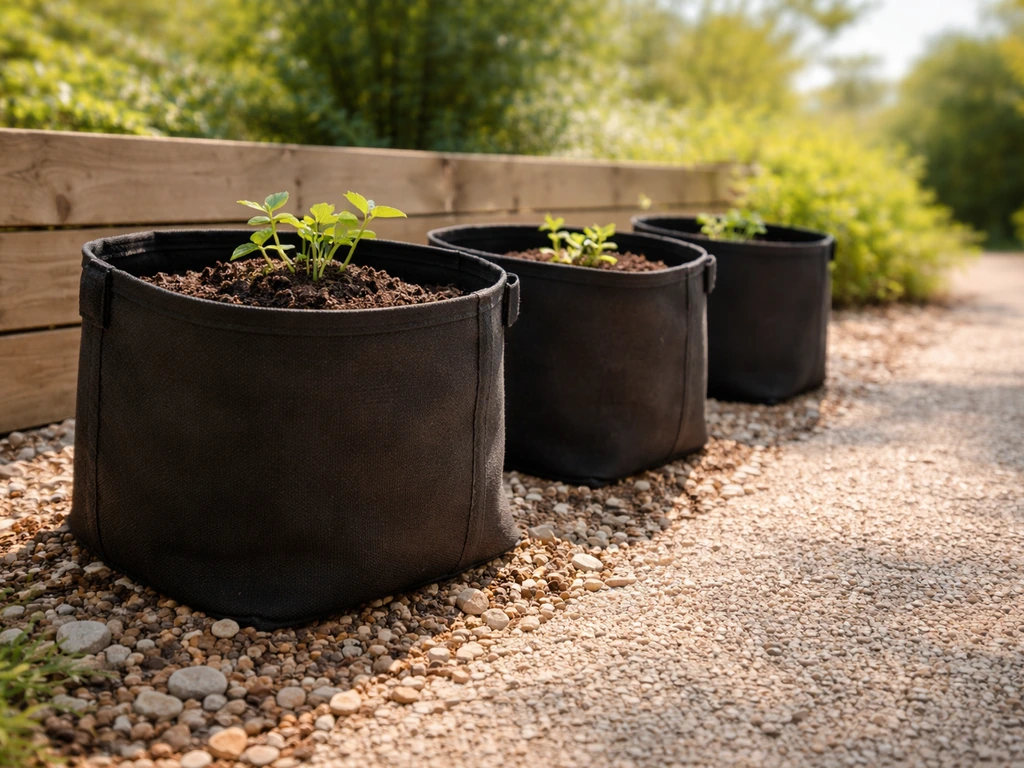
Where to Put Grow Bags: Best Location, Sun, Drainage
Find the best spot for fabric grow bags: sun, wind, drainage, spacing, surfaces, and fixes for heat and root-rot issues.
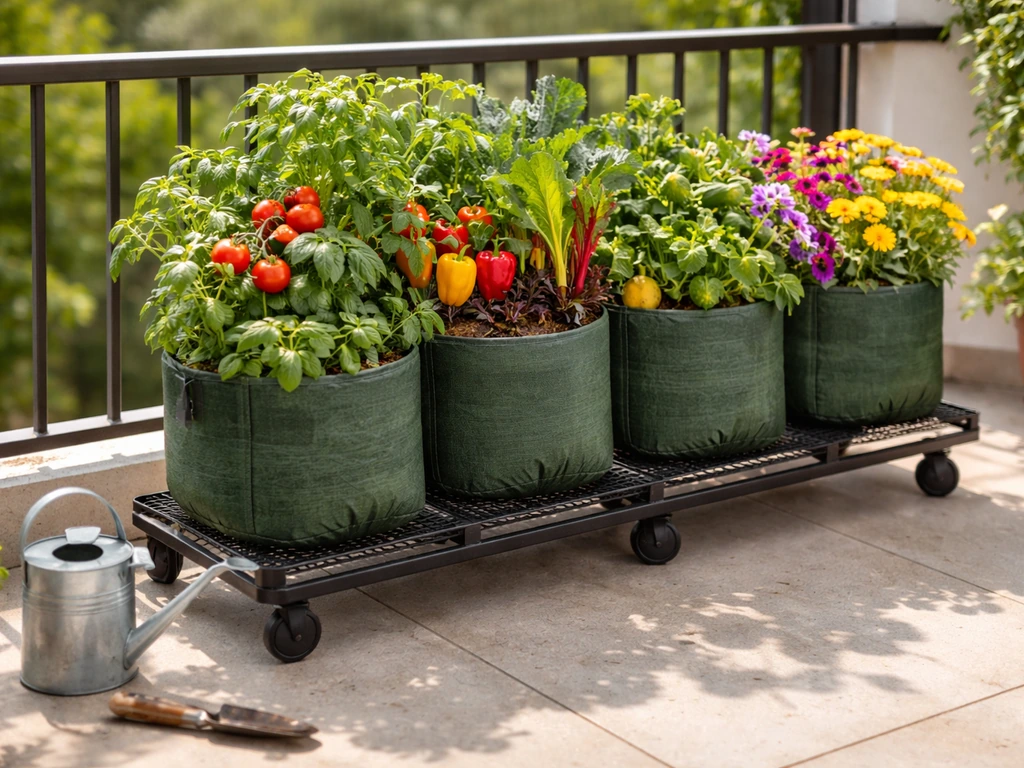
Pros and Cons of Grow Bags for Vegetables and Flowers
Grow bag pros and cons for veg, flowers, trees, and mushrooms: aeration, mobility, and watering plus fixes for common is
Benefits of Grow Bags: A Practical Guide for Home Growing
Discover the benefits of grow bags: better drainage and aeration, healthier roots, easier plant care, and how to choose