
Fabric grow bags genuinely improve how plants grow by promoting healthier root systems, better drainage, and more consistent soil conditions than most plastic pots. For growers, they add real convenience: they're portable, space-efficient, and often cheaper than rigid containers of the same size. The catch is that you need to manage watering more attentively, because the same breathable fabric that helps roots also dries the soil out faster. Get that part right, and grow bags are one of the most practical tools available for home gardening in any space.
Benefits of Grow Bags: A Practical Guide for Home Growing
Marcus Holloway
6 May 2026
Why people use grow bags
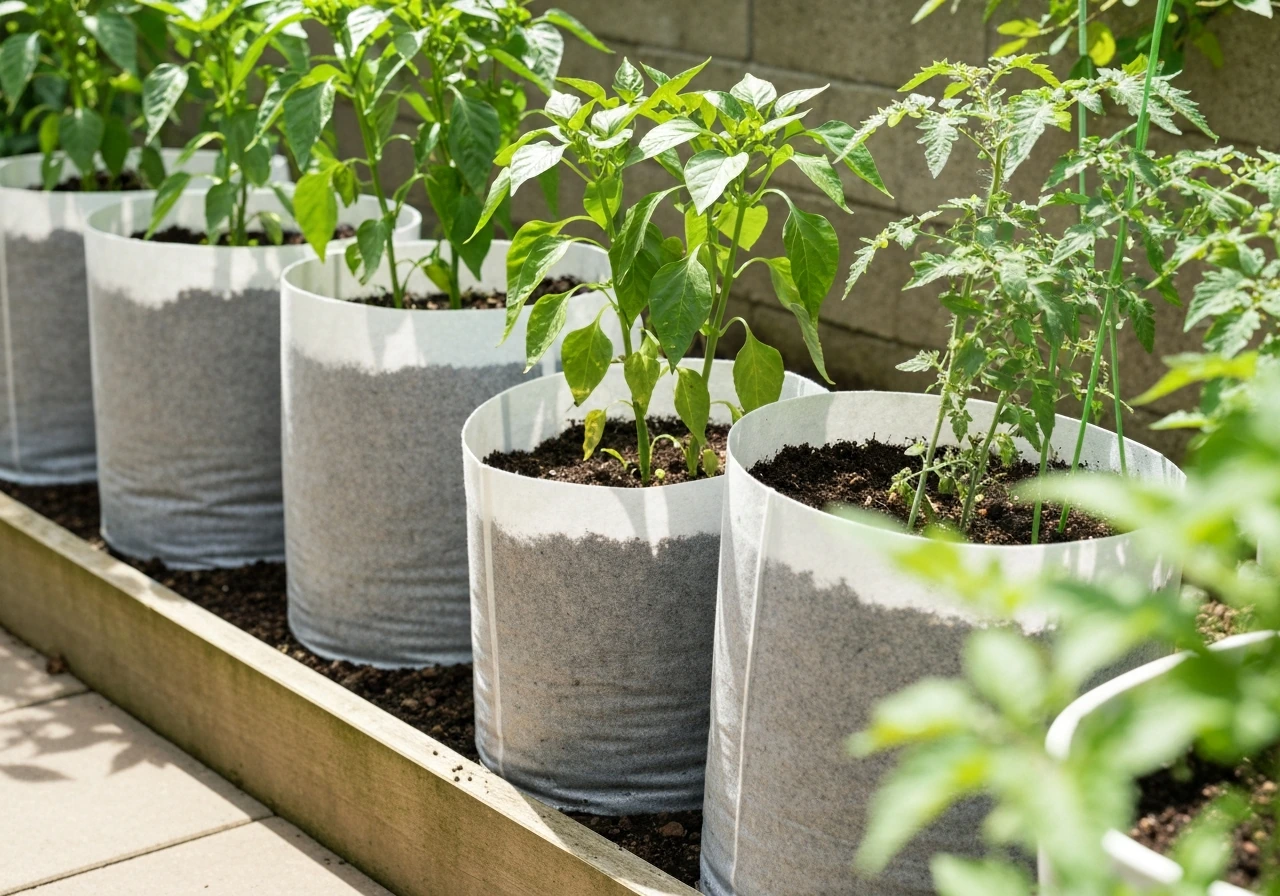
Grow bags became popular with home growers for a simple reason: they solve several common container gardening frustrations at once. Overwatered roots, rootbound plants, heat-stressed soil, and the sheer awkwardness of moving large plastic pots are all problems that fabric containers either eliminate or significantly reduce. They work on patios, balconies, rooftops, driveways, and rental properties where digging isn't an option. Oklahoma State University Extension describes them as a "lightweight, mobile option" that's especially useful for renters who need to take their garden with them. Beyond convenience, there's real science behind why fabric performs better than solid-walled plastic for root health, and that's where the most important advantages live.
What grow bags actually do for your plants
Air pruning: the root health mechanism that matters most
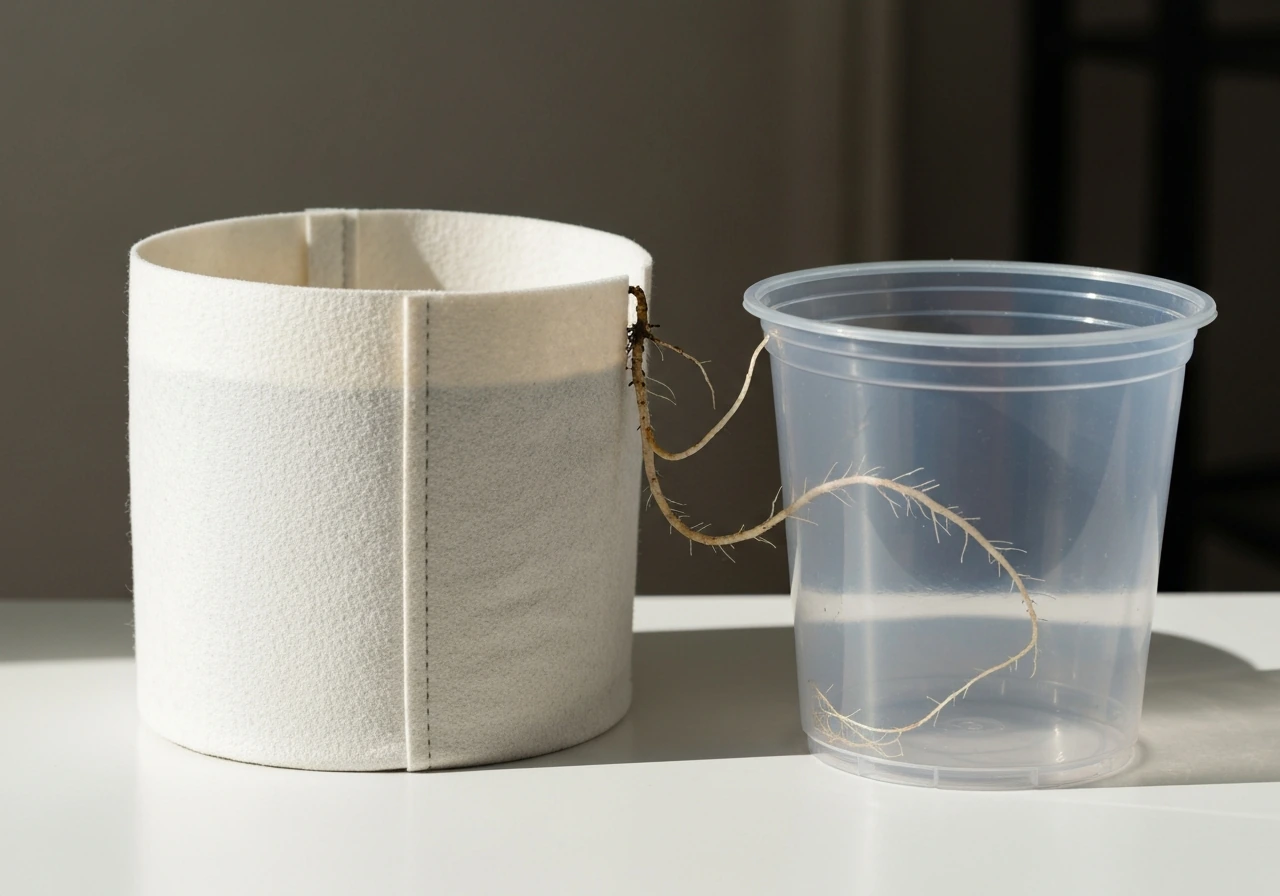
In a solid plastic pot, roots hit the wall and spiral around the container. That circling is a problem that compounds over time, eventually strangling the plant. Fabric containers stop this through air pruning: when a root tip reaches the porous fabric wall and contacts air, it stops growing and the plant redirects energy into producing more lateral root tips instead. Research published in Acta Horticulturae found that porous fabric containers showed little to no root growth along container sides, compared to standard plastic containers where circling was common. A 2025 study in ScienceDirect found that air-pruning container systems promoted taller growth, increased biomass and branching, and reduced root circling in containerized plants. The result is a dense, fibrous root network rather than a few thick circling roots, which dramatically increases the root surface area available to absorb water and nutrients.
Drainage and aeration
The breathable fabric walls release excess water instead of holding it. Smart Pot describes their fabric as porous enough to release excess moisture and reduce water channeling, which is the tendency in solid pots for water to run straight down one path while the rest of the soil stays dry. With fabric, moisture distributes more evenly through the root zone, and excess water escapes through the sides and bottom rather than sitting and rotting roots. This makes waterlogging almost impossible in a fabric grow bag, which is one of the most common killers of container plants.
Temperature control
Because the entire root system is above ground in any container, temperature swings are more extreme than in-ground planting. Dark plastic pots can cook roots on hot days. Fabric helps here: the porous walls allow heat to escape rather than building up. University of Maryland Extension recommends adding a straw mulch layer on top of large fabric grow bags to reduce evaporation and maintain more even growing-media temperatures. That's a practical step worth doing, especially in summer. The same mulch also reduces weed pressure and can cut how often you need to water.
Benefits that matter to you as the grower
Portability and space efficiency
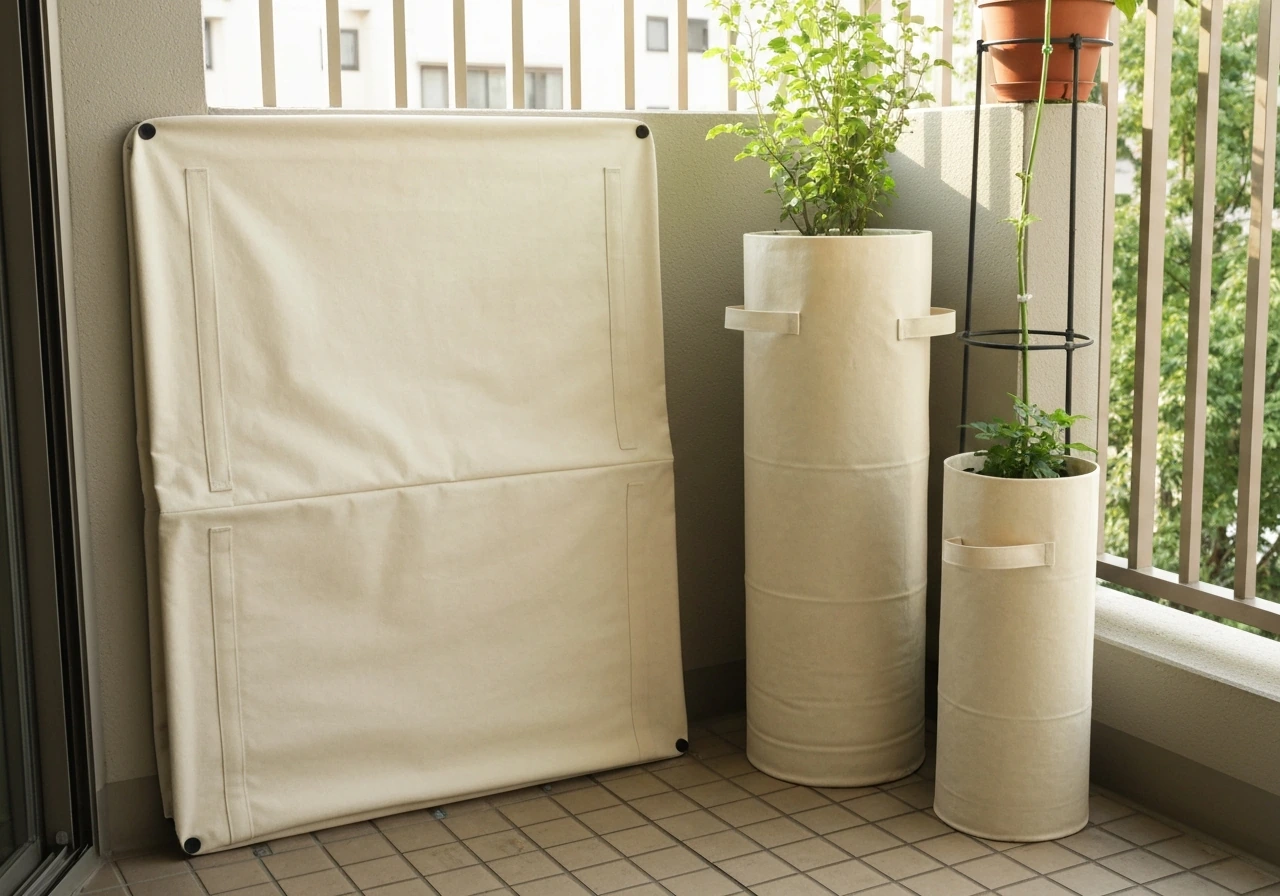
Most fabric grow bags fold flat when empty. That alone is a big deal if you're working with a small balcony or storing pots between seasons. When full, bags with sewn handles are easy to move, which means you can chase sunlight, bring plants inside before a frost, or rearrange your space without significant effort. This portability also means you're not locked into a permanent location the way raised beds or in-ground planting requires.
Cost and reusability
Fabric grow bags are generally less expensive upfront than equivalent-sized rigid plastic or ceramic containers, and quality non-woven fabric bags are designed to last multiple growing seasons. Manufacturers like Gorilla Grow Tent specifically market their bags as durable and reusable, and Smart Pot describes their fabric as built to withstand the elements season after season. Some lower-cost felt options like HTG Supply's FeltPots are technically disposable but durable enough for multiple uses. If you're calculating value, a bag you reuse three to five times starts looking like a very sound investment compared to a cheap plastic pot that cracks after one winter.
Easier soil management
Because you fill grow bags yourself, you control exactly what the roots are growing in. There's no legacy compacted soil, no old disease pathogens from previous plantings (if you refresh the mix), and no guessing about drainage quality. You can dial in the soil mix precisely for whatever you're growing. That's a level of control you simply don't have when planting in the ground.
Choosing the right grow bag to actually get these benefits
The benefits above don't happen automatically. They depend on using the right size and material for your situation. A bag that's too small will crowd roots and dry out dangerously fast. Cheap non-woven fabric that degrades after one season costs you money instead of saving it. Here's how to make smart choices.
Size selection
| Plant Type | Recommended Bag Size | Notes |
|---|---|---|
| Herbs (basil, cilantro, parsley) | 2–5 gallon | Compact roots; smaller bags fine |
| Lettuce, spinach, greens | 3–5 gallon | Shallow roots; prioritize width over depth |
| Peppers | 5–7 gallon | Need room for root expansion |
| Tomatoes (bush varieties) | 7–10 gallon | Larger is better; avoid undersizing |
| Tomatoes (indeterminate) | 15–20 gallon | More soil = more water buffer, higher yield |
| Potatoes | 10–15 gallon | Need depth for tuber development |
| Blueberries / dwarf fruit trees | 20–30 gallon | Long-term plantings need root volume |
| Mushrooms | Varies by block size | Usually small bags or specialized substrate bags |
When in doubt, go up a size. A bigger bag holds more moisture, gives roots more room, and is more forgiving if you miss a watering. Larger pots generally need less frequent watering than smaller ones when using the same plants and container location A bigger bag holds more moisture, gives roots more room, and is more forgiving if you miss a watering.. Iowa State University Extension notes that watering frequency depends on container size, potting mix, plant species, and weather, so larger containers naturally offer a wider margin for error.
Fabric type and features
Non-woven polypropylene fabric (the thick, felt-like material most quality bags use) is the standard for good reason: it's breathable, structurally stable, and holds up to multiple seasons. Thinner woven fabric bags are cheaper but tend to degrade faster and may not air-prune as effectively. Look for reinforced stitching at the seams and sturdy handles if you plan to move the bags regularly. Bags with a separate drainage layer at the base or a slight taper to help water exit are worth the modest price premium for heavy-moisture crops.
The soil mix is non-negotiable
Never use garden soil in grow bags. It compacts, restricts air and water movement, and defeats the purpose of the fabric. Use a quality soilless potting mix with perlite for drainage. University of Minnesota Extension recommends soilless mixes made with peat moss, compost, perlite, and vermiculite, noting that heavy soils compact in containers and restrict the air and water movement roots need. NC State Extension advises limiting compost to between 15% and 40% of the total container mix, because many composts have a pH over 7.0 that can cause problems for most vegetables.
Best crops for fabric grow bags
Vegetables
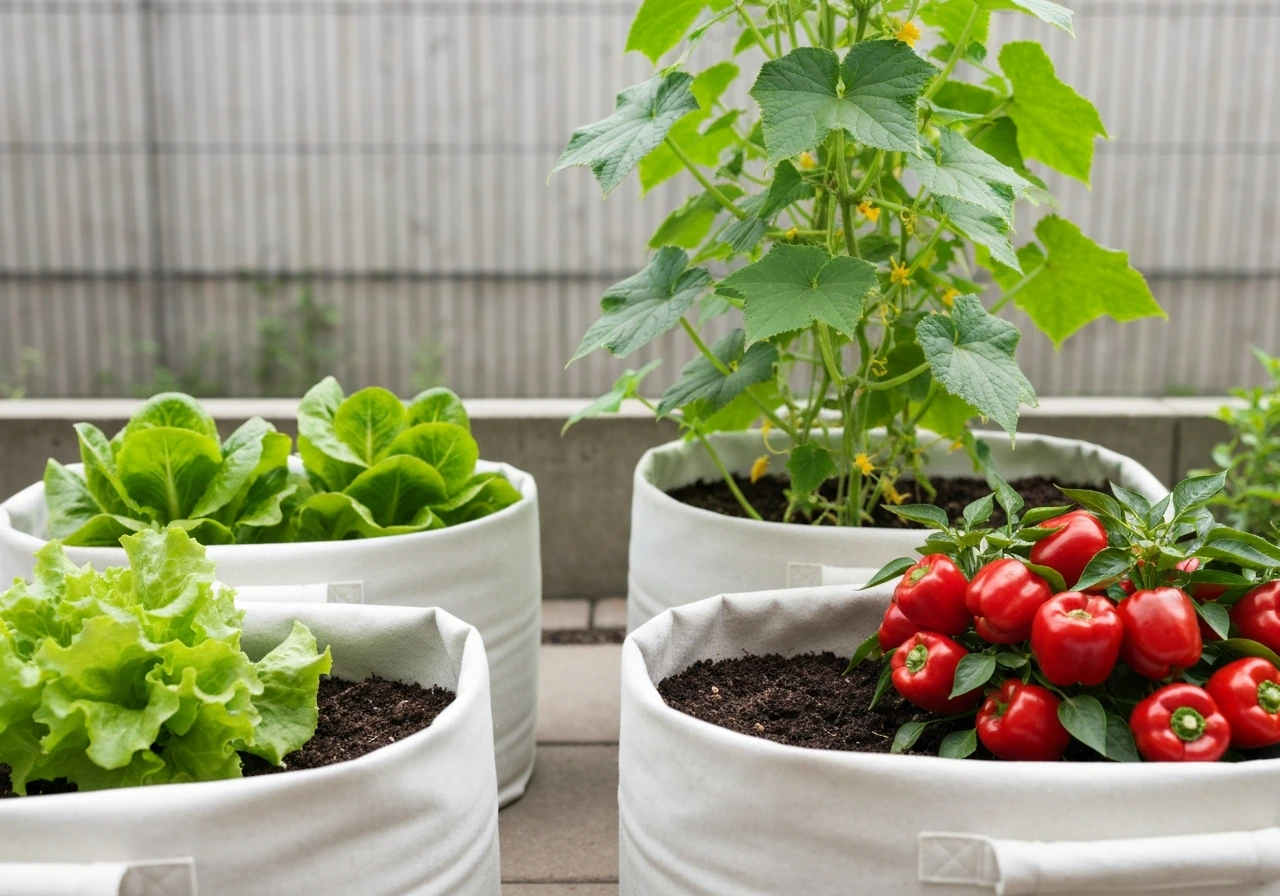
Vegetables are where grow bags shine most reliably. Tomatoes, peppers, cucumbers, potatoes, and leafy greens all perform well because their root systems respond positively to air pruning and the well-drained environment. Tomatoes in particular benefit from the temperature-releasing properties of fabric walls, since root-zone heat stress is a real yield limiter for them in dark plastic pots during summer. Potatoes are a classic grow bag crop because you can simply open or cut the bag at harvest instead of digging.
Flowers
Annual flowers like zinnias, marigolds, petunias, and nasturtiums grow happily in 3–7 gallon bags. The drainage benefits help prevent the root rot that can devastate flowers in poorly draining pots. Perennial flowers in grow bags are also viable, though you'll want larger volumes and may need to overwinter the bags carefully in cold climates.
Trees and woody plants
This is where the research gets genuinely interesting. USDA Forest Service studies on air-root pruning for oak trees found that repeatedly air-pruned container stock produced well-balanced root systems that performed competitively even in challenging planting conditions. MDPI research on bench-grafted apple plants in air-pruning containers showed markedly increased fine root production compared to field-grown plants in the initial nursery year. UF/IFAS Extension notes that trees grown in fabric bags have most of their roots contained within the bag, with small roots growing through the fabric at the bottom that are easily shaved off before planting. For home growers, this means dwarf fruit trees, blueberries, and ornamental shrubs are genuinely good candidates for large (25–30 gallon) fabric bags, especially if you need the flexibility to move them.
Mushrooms
Fabric bags designed for mushroom cultivation are a different category: they're usually clear or semi-clear polypropylene bags used to hold sterilized substrate (grain, straw, or sawdust) rather than soil. The bag's role here is containment and sterility management rather than aeration. If you're growing mushrooms, use bags specifically rated for autoclave sterilization. Don't use standard garden grow bags for mushroom substrate.
The trade-offs and how to handle them
Drying out fast
This is the most common complaint with grow bags and the most manageable. Kentucky State University Extension is direct about it: grow bags drain and dry out, so regular watering is essential. UNH Extension's practical rule is to water thoroughly when soil dries to about 1/4 inch depth. In hot weather, that might mean watering once or even twice a day for larger bags. Adding a mulch layer (straw works well) on top of the bag reduces surface evaporation significantly. University of Minnesota Extension confirms that mulch helps soil hold water and can meaningfully reduce watering frequency. Mulching can help soil hold water and meaningfully reduce how often you need to water, according to University of Minnesota Extension blank" rel="noopener noreferrer">mulching helps soil hold water and can reduce watering frequency. If a bag dries out completely, Iowa State University Extension recommends placing it in a tub of water for 20 to 30 minutes to fully remoisten the mix, since bone-dry soilless media can become hydrophobic and reject water poured from above. A Reddit thread on grow bags also discusses the same issue, noting that bone-dry potting mix can become hydrophobic and needs thorough re-wetting so it absorbs water again blank" rel="noopener noreferrer">bone-dry soilless media can become hydrophobic and reject water poured from above..
Stability in wind
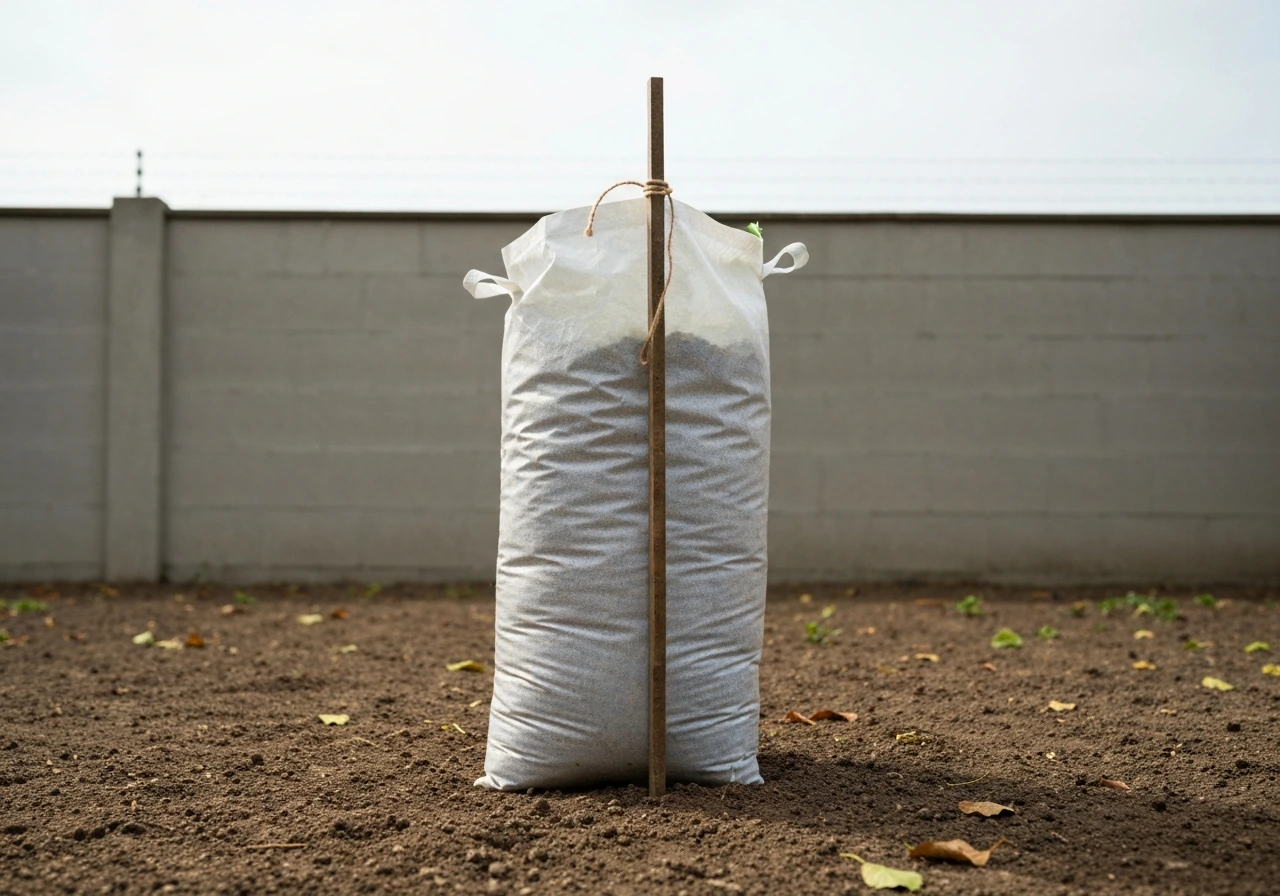
Fabric bags, especially tall ones, can tip over in wind, particularly when the soil is dry and lightweight. Place them near a wall or fence if your space is exposed. Heavier soil mixes and fully saturated bags are more stable, but that's not always practical. Some growers put a layer of gravel in the base of the bag for ballast, which also helps drainage. For trees or tall plants, staking is worth doing regardless of pot type.
Root crowding in undersized bags
Air pruning prevents circling, but it doesn't prevent roots from completely filling a bag that's too small. A rootbound grow bag still restricts plant performance. Size up from what you think you need, especially for vigorous growers like tomatoes and peppers. If you notice stunted growth or rapidly increasing watering demands mid-season, the bag may be too small for the plant.
Watering and drainage best practices
- Water thoroughly until water runs freely from the sides and bottom, not just until the surface looks wet.
- Let the mix dry to about 1/4 inch depth before watering again to avoid chronic over or under-watering cycles.
- Add 2–3 inches of straw mulch on the surface to slow evaporation, especially in summer.
- Use a well-draining soilless mix with perlite, not garden soil or heavy compost-dominant mixes.
- If the bag dries out completely, soak it in a tub of water for 20–30 minutes to fully rehydrate the media.
- Elevate bags slightly (a few inches) on a rack or bricks to allow full drainage from the bottom and improve airflow.
Are there situations where grow bags aren't the right call?
Yes. If you're growing deep-rooted plants in a hot, dry climate and can't water frequently, a larger in-ground or raised bed planting will outperform a bag. Some research, including a Colorado State University study on pine, found slower root and canopy growth in air-pruning containers compared to other methods for certain species, which is a reminder that air pruning isn't universally superior for every plant type. For most home vegetable and flower growing situations, though, the advantages strongly outweigh the trade-offs, especially when you match bag size to plant, use good potting mix, and stay on top of watering.
If you're still deciding whether fabric grow bags are the right choice for your setup, it's worth thinking through where you'll place them and what you'll grow before buying. If you're also figuring out where to buy grow bags in bangalore, compare local options by size and fabric type so you can match the bag to where you'll place it and what you'll grow. A practical next step is learning where to put grow bags so they get the right sun, wind protection, and watering access where you'll place them. If you are wondering where to buy grow bags, start by checking local garden centers and then compare sizes and material types online before buying. If you are wondering what is grow bags and how they compare to plastic pots, the basics come down to breathable fabric, better drainage, and air-pruning roots. Once you know what you're working with, sizing and material selection become straightforward, and you'll be set up to get the real benefits these containers offer rather than running into the avoidable problems. Before you buy, it also helps to review the pros and cons of grow bags so you can judge the trade-offs like faster drying and watering frequency. If you’re wondering where to pick up grow bags locally, check how to get grow bags from Krishi Bhavan before you order online how to get the real benefits these containers offer.
FAQ
Can I leave grow bags outside year-round, especially for shrubs or fruit trees?
Yes, but only if you manage the bag like a container, not like ground planting. In general, larger volumes (for example 20 to 30 gallons for shrubs or dwarf fruit trees) tolerate less frequent watering, use mulch to slow evaporation, and plan on protecting from wind and cold because the whole root system is exposed above ground.
How often should I replace or refresh the potting mix in grow bags?
A simple way to avoid root problems is to use a consistent potting-mix recipe and refresh it each season. After harvest, empty the bag, shake out remaining mix, and either replace the media or top-dress with fresh soilless mix, since old media can accumulate nutrient imbalances and salts even if drainage is good.
What’s the best way to tell when my grow bag actually needs water?
Don't water by the calendar if you can avoid it. Instead, check moisture 1/4 inch down, then water slowly until it drains from the bottom and sides. With grow bags, partial top watering can leave the deeper mix dry, even when the surface looks wet.
Why does my grow bag sometimes resist water after it dries out?
That can happen if the mix is too water-repellent or if it dried completely before re-wetting. If the bag has gone bone dry, remoisten by placing the bag in a tub of water for 20 to 30 minutes, then resume with smaller, more frequent waterings to prevent another full dry-out cycle.
Are grow bags easy to move, and what’s the safest way to do it?
If you need to move the bag, lift by the handles only when the mix is evenly moist, and support the bottom. Avoid dragging, especially on dry days, because you can tear seams or stretch the fabric and cause leaks that increase drying.
How should I fertilize plants in grow bags?
You can, but choose foods carefully. For edible crops, stick to a balanced fertilizer or a veg-specific soluble feed and follow label rates, since nutrient levels in soilless mixes change faster in containers than in ground. Also, stop over-fertilizing if you see crusty white deposits or leaf-tip burn, those are common container overfeed signs.
Does mulching a grow bag change how I should water?
Yes, and it’s often beneficial, but keep the mulch thin enough that water can still penetrate. Use straw or a similar light mulch on top for evaporation control, but avoid piling it against the plant stem where moisture can invite rot or fungal issues.
Can I use the same fabric grow bags for mushrooms as I do for vegetables?
No, not for typical gardening purposes. Standard garden grow bags can be damaged by high heat and may not be sterile. If you’re growing mushrooms, use bags rated for autoclave sterilization and designed for substrate containment and sterility management.
What are early signs that my grow bag is too small?
For tomatoes, peppers, and other vigorous plants, plan to size up beyond your first guess. Signs the bag is too small include rapidly rising watering frequency mid-season, stunted growth, and roots circling tightly enough to reduce vigor, even with good soil and fertilizer.
Do grow bags truly prevent overwatering and root rot, or can I still cause problems?
It depends on what you mean by “avoid.” Grow bags can reduce waterlogging, but they can still suffer root stress from either drought or overwatering when the mix stays soggy for too long. Use a well-draining soilless mix with perlite, water thoroughly, then let the top 1/4 inch dry before watering again.
How do I prevent tall grow bags from tipping over in wind?
Yes, but stability planning matters. Place tall bags near a wall or fence for wind protection, stake the plant early, and consider ballast if your space is exposed. Very lightweight, dry bags are the ones most prone to tipping, especially with tall fruiting crops.
Next Articles
Where to Buy Grow Bags Near Me: Online and Local Guide
Find where to buy fabric grow bags near you or online, compare sizes, drainage, and best prices for veggies, trees, and
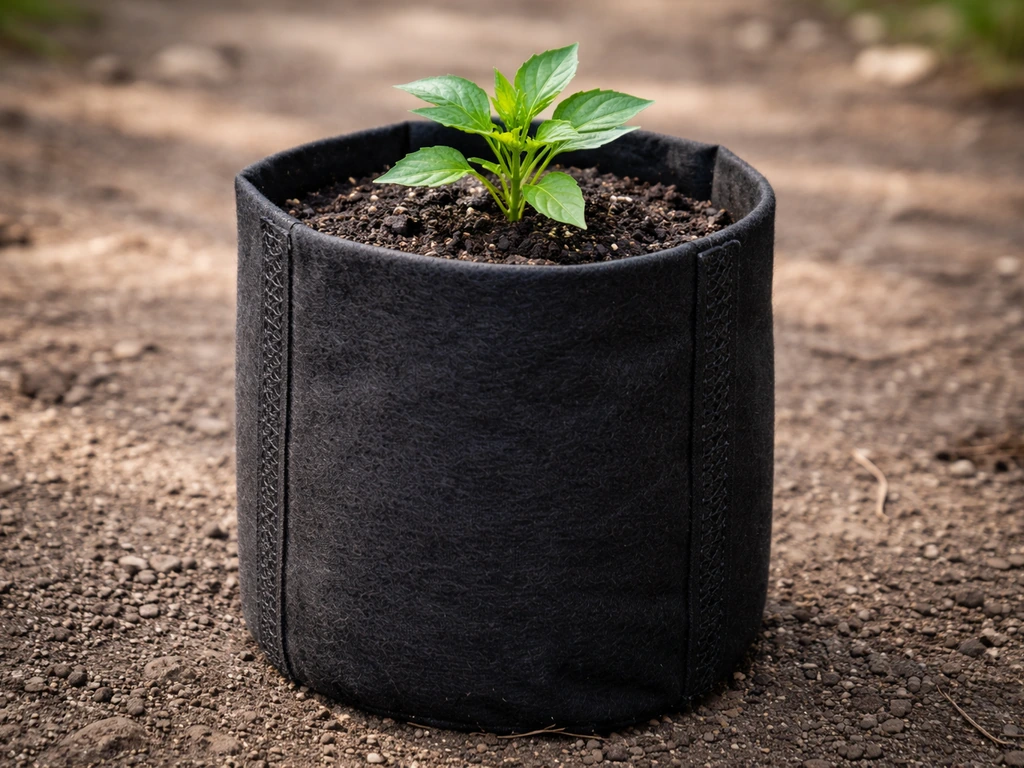
What Is Grow Bags? Types, Materials, and How to Use Them
Learn what grow bags are, what they contain, how fabric type affects drainage, and how to choose and use them.
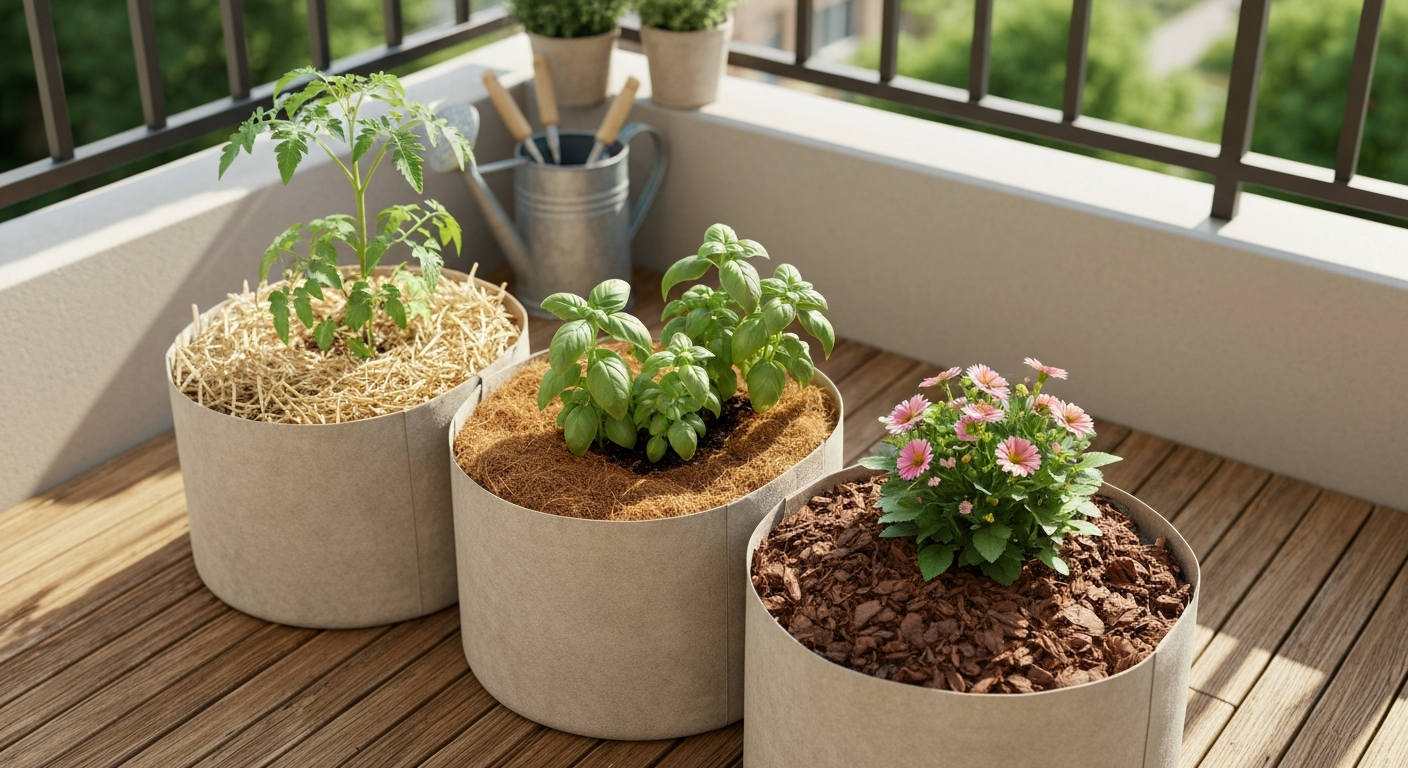
Best Mulch for Grow Bags: Top Picks for Vegetables & Flowers
Find the best mulch for fabric grow bags: top picks, how-to apply, crop & climate advice, and troubleshooting.