Fabric grow bags are genuinely better than buckets for most home growing situations, especially for vegetables, herbs, and anything where root health drives yield. The main reason is air pruning: when roots hit the breathable fabric wall and contact air, they stop circling and branch back inward instead of spiraling into a tangled, pot-bound mess. That alone gives grow bags a real edge over standard plastic buckets. That said, buckets aren't useless. They're more stable, hold moisture longer, and can be the smarter pick for certain crops, climates, or growers who water infrequently. The choice comes down to what you're growing, how often you can water, and what problem you're trying to solve grow bags vs 5 gallon bucket. The choice comes down to what you're growing, how often you can water, and what problem you're trying to solve.
Grow Bags vs Buckets: Which Is Better for Root Health?
When grow bags beat buckets (the quick answer)
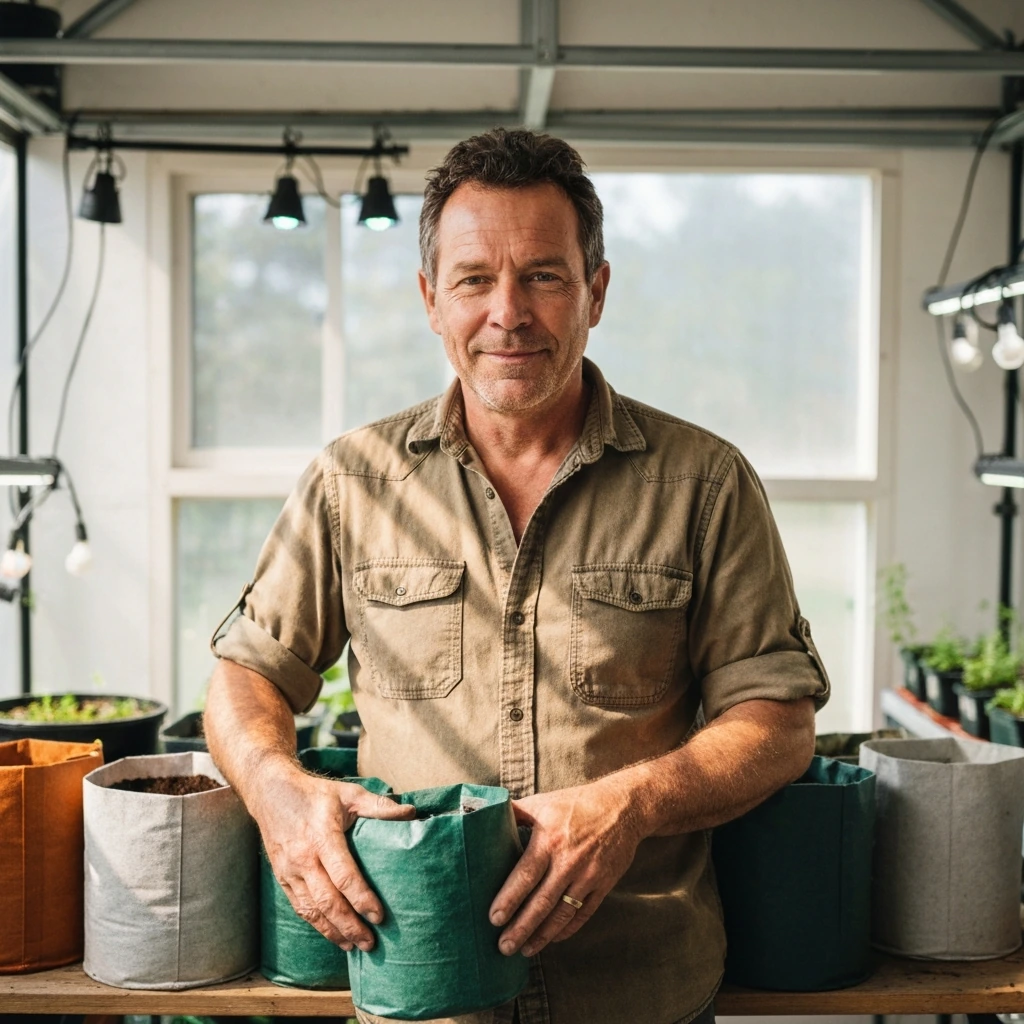
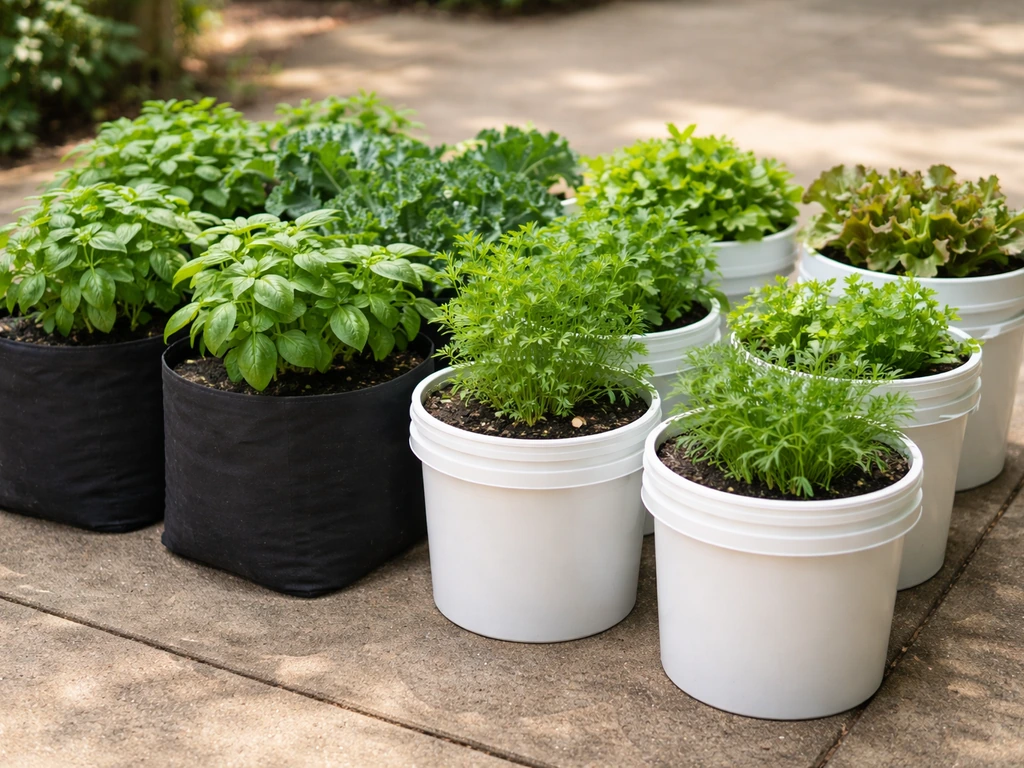
Grow bags win in most warm-weather, high-production vegetable scenarios. If you're growing tomatoes, peppers, cucumbers, or anything that roots aggressively and needs strong drainage, fabric bags consistently outperform plastic buckets. The breathable walls prevent waterlogging, improve oxygen levels at the root zone, and eliminate the circling root problem that quietly throttles yields in smooth-wall containers. They also shed heat better than dark plastic buckets, which can cook roots on a hot patio in mid-summer.
Buckets hold their own when you need stability (think tall plants in windy spots), when you're growing something that prefers consistent moisture (like moisture-loving flowers or certain tropical plants), or when you're in a very dry, hot climate and struggling to keep soil from drying out too fast. A 5-gallon bucket with drainage holes isn't a bad container. It's just not optimized for root health the way a fabric bag is.
- Choose grow bags for: tomatoes, peppers, potatoes, herbs, cannabis, most vegetables, dwarf trees, and anything where yield and root health matter most
- Choose buckets for: tall or top-heavy plants in windy areas, moisture-sensitive plants, situations where you water every few days or less, or when budget is extremely tight and you already own buckets
- Either works for: flowers, ornamentals, and container growing in general, as long as you match size and watering habits to the container type
Root zone performance: drainage, aeration, and air pruning explained
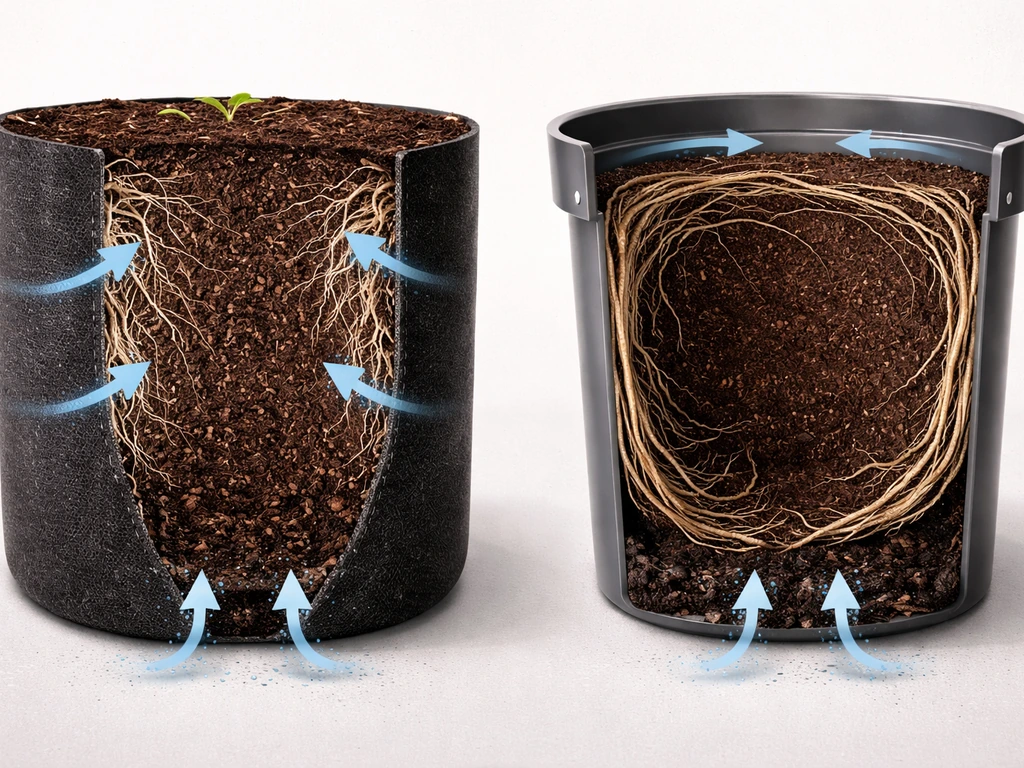
The biggest functional difference between grow bags and buckets is what happens at the root wall. In a solid plastic bucket, roots grow outward until they hit the wall, then follow it downward and around. Over weeks, this creates a circling root system that competes with itself, restricts water and nutrient uptake, and ultimately stunts the plant. Fabric bags interrupt that cycle at the wall itself. When root tips reach the breathable edge and encounter air, they desiccate slightly and stop elongating in that direction. The plant responds by branching new root tips behind the stopped tip, which means more total root mass, more fine feeder roots, and a denser, healthier root architecture overall. Research on air-pruning containers has confirmed this: containers with air-pruning properties consistently produce less root circling and fewer root defects compared to standard smooth-wall containers.
Drainage works differently too. Fabric bags drain from the entire wall surface, not just the bottom holes. This means excess water exits faster, oxygen moves back into the medium sooner, and you're far less likely to drown roots in a heavy rain or after an overwatering mistake. Excess water in prolonged waterlogged conditions reduces oxygen available to roots, which can contribute to root rot and plant death oxygen moves back into the medium sooner. A plastic bucket drains only from the bottom, and if those holes are even partially blocked by soil compaction or roots, water can sit in the lower zone and cause rot. That said, the same drainage speed that makes grow bags so good for root health also means they dry out faster, and if your irrigation isn't consistent, water stress becomes a real risk, especially in hot weather.
Watering and maintenance: what's actually different day to day
This is where grow bags require the most adjustment if you're used to buckets. Because fabric breathes through the walls, moisture evaporates faster, and you'll typically water grow bags more frequently than equivalent buckets, sometimes daily in summer. A standard 5-gallon fabric grow bag in full sun on a hot day in July can dry out to the wilting point within 24 hours if it's planted with a high-demand crop like tomatoes. That's not a flaw, it's just the tradeoff for better drainage and aeration. If you're watering by feel and checking your plants every day, grow bags are easy to manage. If you're a set-it-and-forget-it grower who waters every few days, buckets will be more forgiving.
One practical fix for faster drying: set fabric grow bags inside a slightly larger plastic tray or catch basin. This slows surface evaporation from the bottom, and on very hot days the plant can wick a little residual moisture from the tray. You can also double-bag (a fabric bag inside a slightly larger fabric bag) to add a bit of insulation. For buckets, the main maintenance task is checking that drainage holes stay clear. Push a finger or skewer through the holes every few weeks during the season, especially if you're growing in a rich organic mix that tends to compact.
Cleaning at end of season is easier with fabric bags. Most can be emptied, shaken out, rinsed with a hose, and left to dry flat. Some are machine washable. Buckets need scrubbing to remove root residue and biofilm from the smooth interior, and disinfecting if you had any disease or pest problems. Both can be reused for multiple seasons, though fabric bags do degrade faster than quality HDPE buckets.
Which container fits which crop
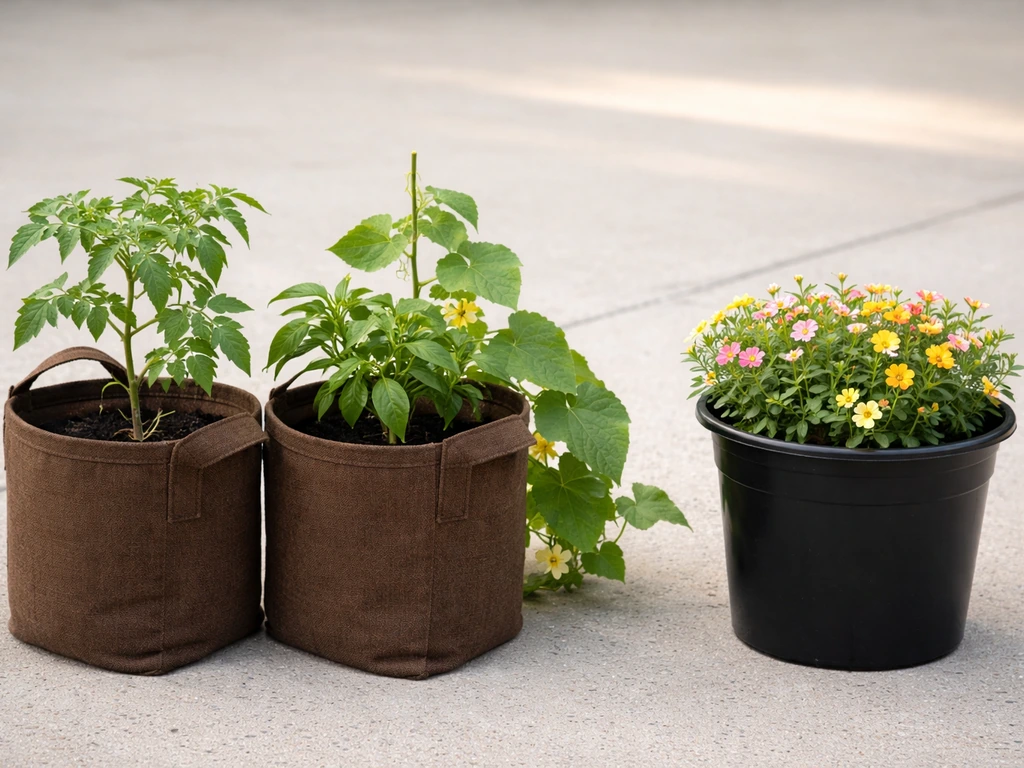
Vegetables
Most vegetables do better in grow bags than buckets. Tomatoes, peppers, cucumbers, eggplant, and squash all have aggressive root systems that benefit from air pruning and the fast drainage that prevents root rot. Potatoes are one of the clearest wins for fabric bags: the breathable walls make it easy to feel when soil is drying, harvesting is as simple as tipping the bag over or rolling it down, and the consistent aeration prevents the anaerobic soil conditions that cause tuber rot. Leafy greens and herbs can go in either container, but shallow fabric bags (2 to 5 gallons) work well and dry out at a rate that suits fast-growing crops you're harvesting frequently.
Flowers and ornamentals
For container flowers, either option works. If you're growing annuals like petunias, marigolds, or zinnias for a season, a bucket is perfectly fine and you won't notice a meaningful yield difference. If you're growing perennials in containers or anything you're keeping long-term, fabric bags become the better pick because they prevent the circling root buildup that, over years, can girdle and kill a plant in a smooth container. Fabric also lets you size up without repotting trauma: just cut the fabric open when it's time to transplant.
Dwarf trees and shrubs
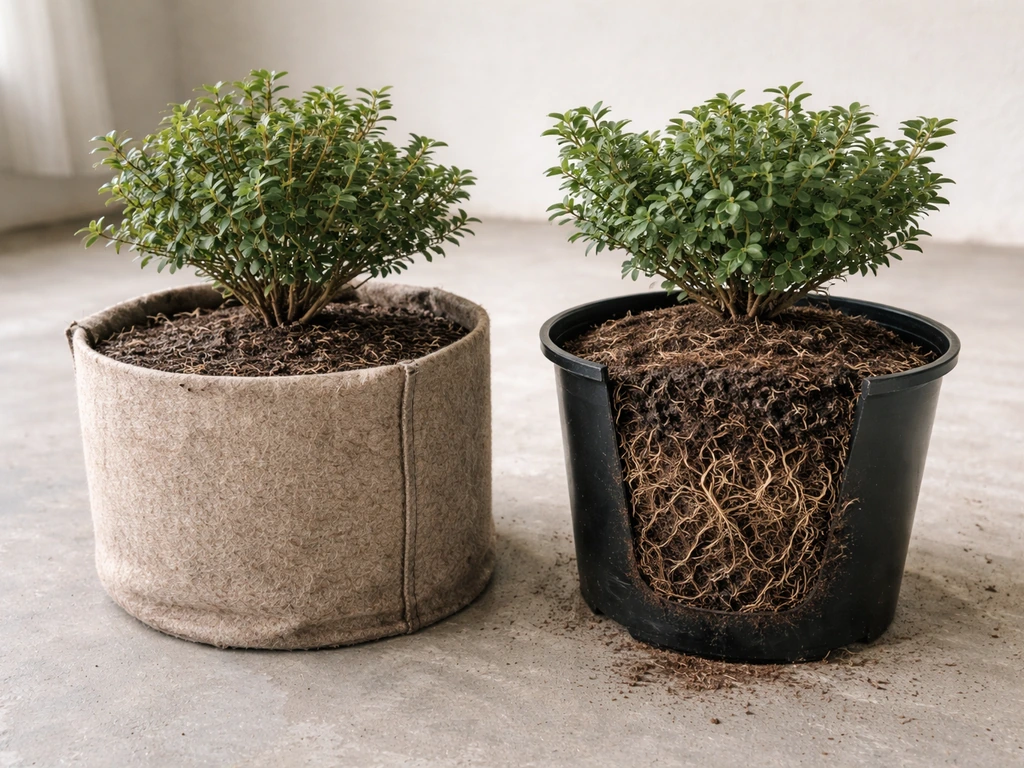
Container fruit trees and ornamental shrubs are one of the strongest use cases for fabric bags. Root circling in a hard-sided container can eventually strangle a tree's own root flare, weakening or killing it over years. Fabric bags used in larger sizes (15, 25, or 45 gallons) prevent this entirely while keeping the tree manageable and portable. The breathable walls also make it easier to know when to water a large container, since you can feel moisture level through the fabric and the soil dries more evenly. Stability matters more with tall trees, so situate large bags in a sheltered spot or use a low tray underneath to widen the base.
Mushrooms
Mushroom cultivation is a different use case entirely. Most substrate-based mushroom growing (oyster mushrooms, lion's mane, shiitake) is done in polypropylene filter patch bags rather than the felt-type fabric bags used for soil growing. These are designed for autoclave sterilization and gas exchange, not drainage or air pruning. Standard fabric grow bags are not the right tool for most mushroom cultivation methods. If you're growing mushrooms, look specifically at mushroom substrate bags, not the same bags you'd use for tomatoes or herbs.
Sizing, materials, and budget: what to actually buy
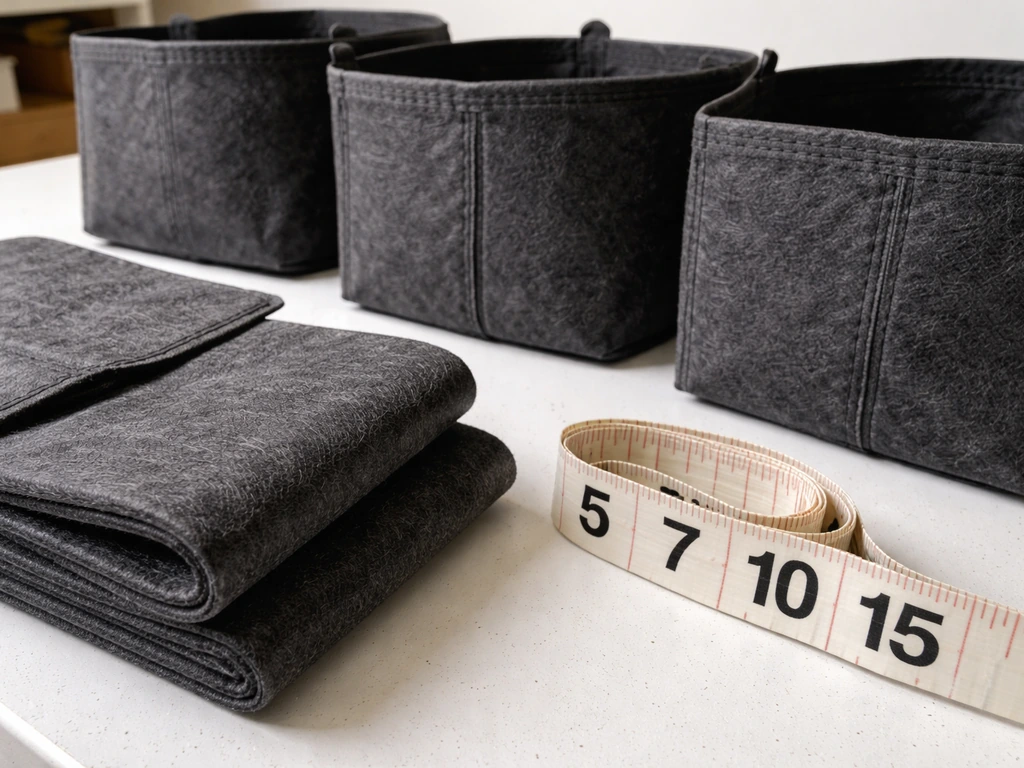
Fabric grow bags are typically made from nonwoven polypropylene felt, BPA-free fabric, or occasionally jute or coco fiber. Nonwoven polypropylene is the most common and most durable for multi-season use. Thicker fabric (around 300 gsm or labeled as 'heavy duty') lasts longer and handles more waterings without breaking down. Cheap thin bags may only last one season before the seams split or the fabric tears. For most vegetables and flowers, 5-gallon bags are the standard go-to size. Tomatoes, peppers, and cucumbers do better in 7- to 10-gallon bags. Potatoes thrive in 10- to 15-gallon bags. Dwarf trees need at minimum 15 gallons, and often 25 to 45 gallons for multi-year growing.
| Crop | Recommended Grow Bag Size | Bucket Equivalent | |
|---|---|---|---|
| Herbs, lettuce, greens | 2 to 5 gallons | 3 to 5 gallons | |
| Tomatoes, peppers, cucumbers | 7 to 10 gallons | 5 gallons (minimum, crowded) | |
| Potatoes | 10 to 15 gallons | 5-gallon bucket (limited yield) | |
| Squash, eggplant | 10 gallons | 5 gallons (tight) | |
| Dwarf fruit trees | 15 to 45 gallons | 15+ gallon tub (not a standard bucket) | |
| Flowers (annuals) | 2 to 5 gallons | 3 to 5 gallons |
On price: fabric grow bags are often cheaper than quality buckets at the same volume. A 10-pack of 5-gallon fabric bags typically runs $10 to $20. A single 5-gallon food-grade HDPE bucket with lid runs $5 to $10. At larger sizes (10 gallons and up), fabric bags are clearly more economical. The cost-per-use comparison evens out over multiple seasons, since a good bucket can last a decade while fabric bags may need replacing every 2 to 4 years depending on quality and UV exposure.
Common problems and how to fix them
Grow bag problems
- Drying out too fast: Water more frequently, use a catch tray underneath, add water-retaining amendments (like coco coir or perlite at a 20% ratio) to the soil mix, or move bags to partial shade during peak heat
- Roots poking through the fabric: Normal and expected. Trim any roots that poke through to the outside; they won't damage the bag and the plant is healthy
- Bag tipping over: Place in a tray, use a wire tomato cage that sits around the base, or plant in a heavier soil mix rather than a very light peat-based one
- Algae or mold on the outer fabric: Cosmetic only in most cases. Improve airflow around the bag and reduce puddling underneath
- Soil washing out through fabric: Usually means the fabric is too loose or coarse; switch to a finer-weave bag or use a liner of landscape fabric at the bottom
Bucket problems
- Root circling and binding: Repot into a larger container before roots fully circle; once they've girdled the root ball, the plant rarely fully recovers
- Waterlogging: Check that all drainage holes are open and unobstructed; add a layer of coarse perlite or gravel at the very bottom only if using a very dense mix (note: gravel layers can sometimes backfire with fine media due to perched water tables; perlite is safer)
- Overheating: Light-colored buckets reflect heat better than black ones; wrap dark buckets in burlap or reflective tape in very hot climates
- Soil compaction: Top-dress with compost each season and work it in gently; heavy organic mixes compact more in smooth-sided containers over time
- Disease carryover between seasons: Disinfect buckets with a diluted bleach solution (1 part bleach to 9 parts water) and rinse thoroughly before reuse
Decision checklist and setup steps for your first grow
Before you buy anything, run through these questions. They'll tell you exactly what to get and how to set it up.
- What are you growing? Vegetables, herbs, and fruit trees: go with fabric bags. Flowers and ornamentals: either works. Mushrooms: skip both and get proper substrate bags.
- How often can you water? Daily or every other day: grow bags are fine. Every 3 to 5 days: buckets will be more forgiving, or use larger fabric bags with more soil volume to buffer drying.
- What's your climate like? Hot, sunny patio in summer: grow bags handle heat better; avoid dark plastic buckets. Cool or mild climate: less difference; go by crop preference.
- Do you need to move containers? Both bags and buckets move easily at smaller sizes. At 10 gallons and above, fabric bags with handles are much easier to reposition than heavy buckets.
- What's your budget? For multi-plant setups, fabric bags win on cost per container. For 1 to 3 containers, the price difference is negligible.
Setup steps: fabric grow bag
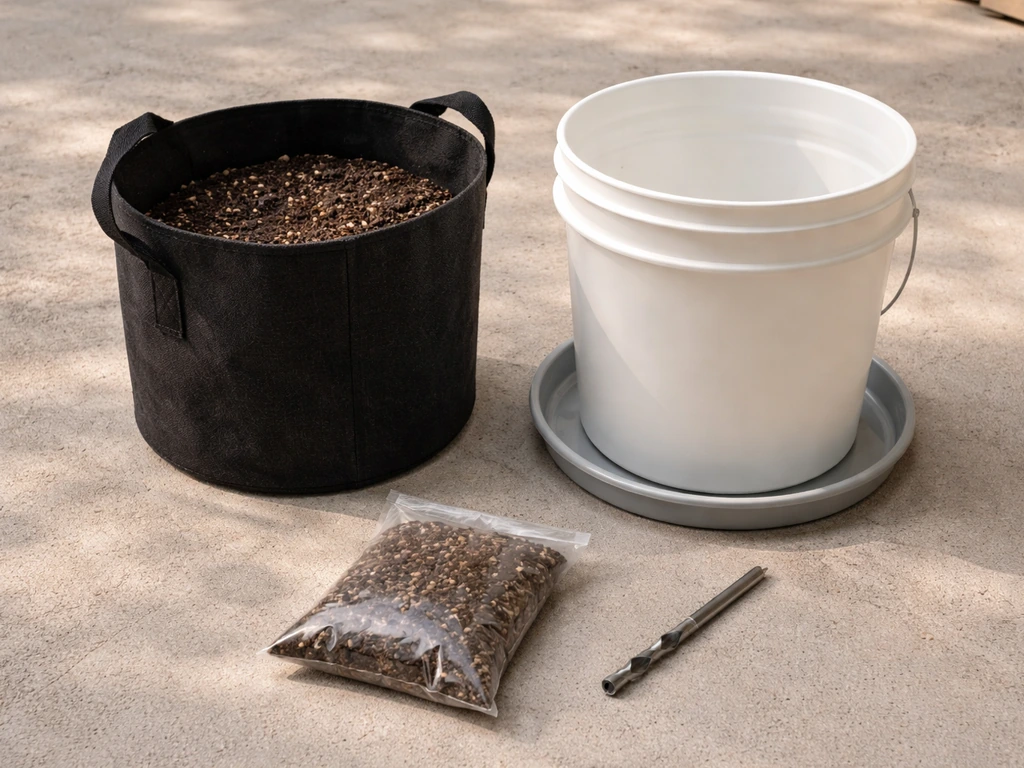
- Choose the right size: 5 gallons for herbs and small vegetables, 7 to 10 gallons for tomatoes and peppers, 10 to 15 gallons for potatoes, 15+ gallons for trees
- Mix your growing medium: A blend of quality potting mix, 20 to 30% perlite for drainage, and optional 10 to 20% coco coir for moisture retention works well for most vegetables
- Fill and settle the bag: Fill to about 2 to 3 inches below the top rim. Gently settle the medium by lifting and tapping the bag, not by pressing down hard
- Water thoroughly before planting: Saturate the medium completely to check drainage and eliminate dry pockets; water should run through the walls and bottom within 30 to 60 seconds
- Plant at the right depth: Same depth as you would in ground (tomatoes can go deeper to encourage stem rooting), and firm in gently
- Set up a watering schedule: Plan to check moisture daily in warm weather. Stick a finger 2 inches in; if dry, water. In peak summer, that may mean watering every day
Setup steps: bucket
- Use food-grade HDPE buckets if growing edibles: Look for HDPE (recycled plastic symbol #2) and confirm BPA-free labeling
- Drill drainage holes: At minimum 4 to 6 holes (3/8-inch diameter) in the bottom; add a ring of holes at the very bottom of the sidewall for extra drainage in heavy rain
- Fill with a well-draining mix: Same potting mix and perlite ratio as for grow bags; in a smooth-wall container, drainage is even more critical so don't skip the perlite
- Check drainage before planting: Pour water in and confirm it exits quickly from all holes
- Monitor for root binding: At least once mid-season, tip the bucket and check if roots are circling visibly at the bottom; if they are, size up sooner rather than later
- End-of-season disinfection: Empty, scrub clean, soak in diluted bleach solution for 10 minutes, rinse well, and dry before storing
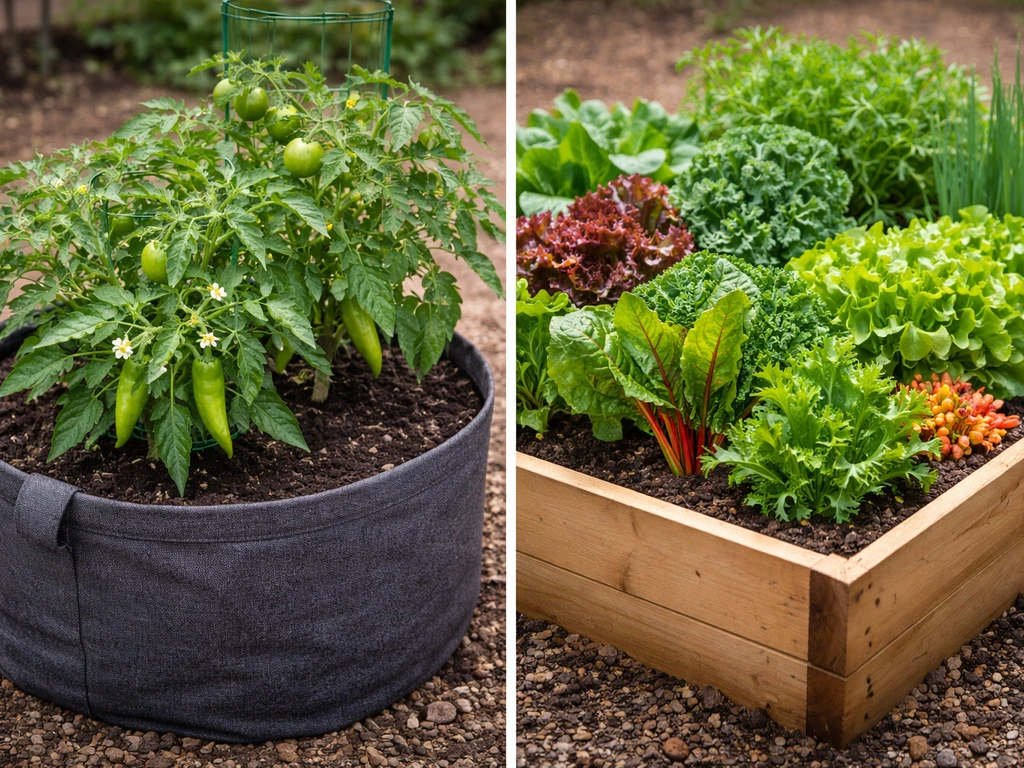
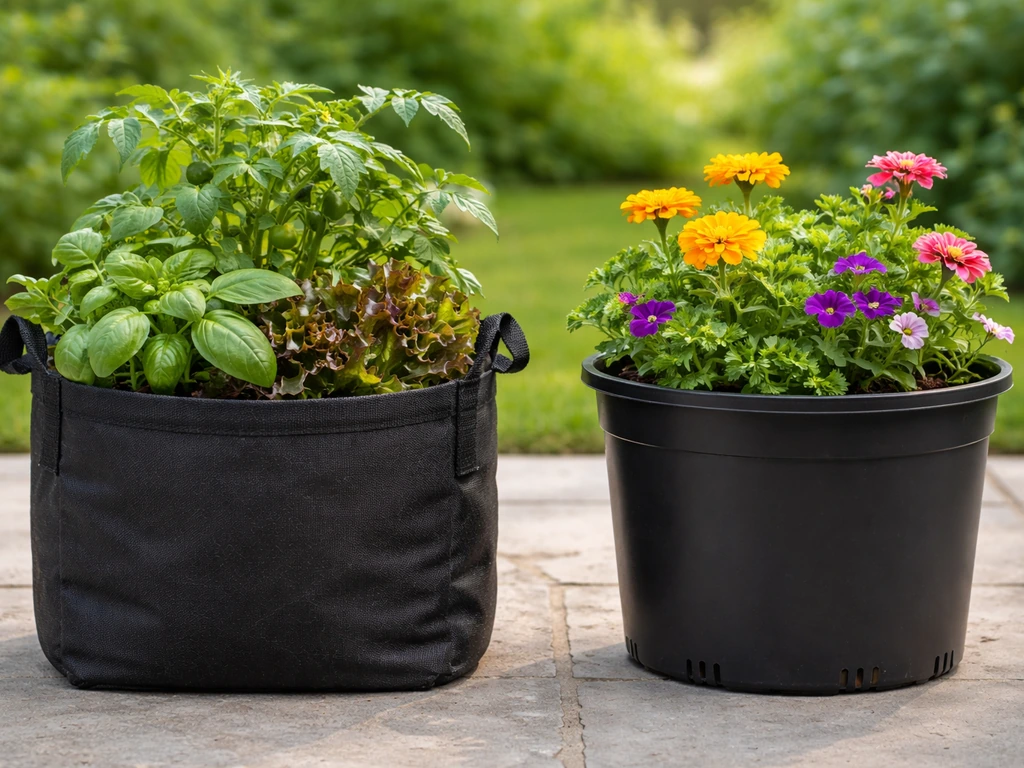
If you're still on the fence, start with a 5-pack of quality 7-gallon fabric bags and grow tomatoes or peppers in them this season. Compare them to a bucket you already own planted with the same crop. Most growers who do this comparison don't go back to buckets for vegetables. For more on how fabric bags stack up against other container types, the comparisons between grow bags and pots, grow bags and raised beds, and the specific 5-gallon bucket question are all worth reading together. Raised beds share some benefits with fabric grow bags, but they use a different setup for drainage and root control grow bags and raised beds. If you're comparing grow bags vs pots, the same root-health and watering tradeoffs usually apply, just with different sizes and drainage behavior. The pattern is consistent: the more root-aggressive the crop and the hotter the climate, the more clearly fabric wins.
FAQ
How do I prevent root circling when I only have buckets?
Use buckets with a rougher inner surface, size up (larger diameter slows the pot-bound spiral), and repot or refresh the root zone earlier. For long crops, prune back visible circling roots during midseason checks, then top-dress with fresh mix to restore fine feeder roots.
Will a grow bag dry out too fast if I work long days and cannot water daily?
It can, especially in full sun with high-demand crops. If you cannot water at least every day in peak heat, choose larger bag sizes (more soil volume equals slower drying) and use a wicking setup like a reservoir tray or drip line to reduce the swings that cause wilting.
Do I need drainage holes in a grow bag like I do with buckets?
Most fabric grow bags are already designed to release excess water through the breathable walls, so extra holes are usually unnecessary and can weaken the bag. If you set a grow bag into a tray, ensure runoff can escape the tray, so you are not trapping water against the bottom.
What soil mix works best for grow bags versus buckets?
For grow bags, lean slightly lighter and more aerated because excess water clears quickly, but you still need moisture retention to offset faster drying. A common approach is high-quality potting mix plus some compost and perlite, then adjust with extra moisture-holding amendments if your plants wilt quickly.
How can I tell whether my grow bag is overwatered or underwatered?
Underwatering shows drooping and dry edges, and the bag feels light and warm quickly. Overwatering often looks like slow growth plus persistently wet, heavy feel even after a day, sometimes with yellowing and a sour-smelling medium. Use the weight test by lifting the bag before and after watering.
Is there a difference between plastic buckets and food-grade HDPE buckets for growing?
Yes. HDPE is generally inert, but some buckets have coatings or lids that can affect heat buildup and drainage behavior. Also, if the bucket has a smooth interior and narrow diameter, circling can develop sooner, so drainage-hole diameter and bucket width matter.
Can I use grow bags for plants in raised beds or on patios with limited airflow?
You can, but you should watch for slower evaporation and reduced oxygen movement around the root zone. If your patio or bed area traps humidity, increase spacing between containers, ensure the tray drains freely, and avoid heavy compost-dominant mixes that stay wet.
How long should grow bags last compared with buckets, and what affects their lifespan?
Fabric bags commonly last 2 to 4 seasons for many home gardeners, while quality buckets can last a decade or more. UV exposure, bag thickness, and how harsh your cleaning is (scrubbing, ripping seams, repeated drying in direct sun) are the biggest lifespan drivers.
Do grow bags make fertilizer schedules different than buckets?
Often yes. Because grow bags drain faster, soluble nutrients can leach more quickly, especially after hot-weather irrigation. You may need more frequent, smaller feedings (for example, via diluted liquid fertilizer) and a mix that includes slow-release nutrients or careful top-dressing.
What size should I choose for grow bags versus buckets for tomatoes and peppers?
If you are comparing apples to apples, go bigger when using grow bags only because they dry faster. Many growers succeed with 7 to 10 gallon fabric bags for tomatoes and peppers, while buckets at the same volume can work but may show more variability if watering frequency drops.
Are grow bags safe for edible crops year after year?
They generally are, especially when made from polypropylene felt and labeled BPA-free, but you should still inspect them each season. Replace bags with seam splits or significant fabric thinning, since damaged fabric can hold less soil and may allow uneven drainage.
Can I compost the used potting mix and reuse it in the next season?
You can, but reuse is risky if pests or diseases were present. For bags, the faster drainage and frequent watering can concentrate salts, so consider refreshing with new mix each season or at least remove and replace the top portion and add amendments based on how your plants performed.
What about planting potatoes, do I need to hill them differently in grow bags?
You usually hill more easily in a grow bag because you can add soil as the plant grows without the same rigid wall constraints. Use the bag size to your advantage, keep the growing medium consistently moist but not waterlogged, and avoid letting the bag stay soggy during cool spells.
Can I grow perennials in buckets instead of grow bags?
Yes, but be more proactive about root management. Perennials in smooth containers can accumulate circling roots over years, so plan on occasional root refreshing (at least every few seasons) or choose a container with a shape and drainage that slows girdling.
Are fabric grow bags ever the wrong choice?
They can be if you rely on infrequent watering, need maximum container stability (for example, windy locations without anchoring), or if your climate stays persistently cool and wet, which can keep soil too wet despite good drainage. In those cases, a stable bucket plus a more moisture-stable mix may perform better.
Compare grow bags vs raised beds for cost, setup, soil, watering, drainage, roots, and plant performance with choosing t
Grow bags vs pots comparison for vegetables, flowers, trees: drainage, aeration, watering, heat, size tips and best choi
Find the best mulch for fabric grow bags: top picks, how-to apply, crop & climate advice, and troubleshooting.