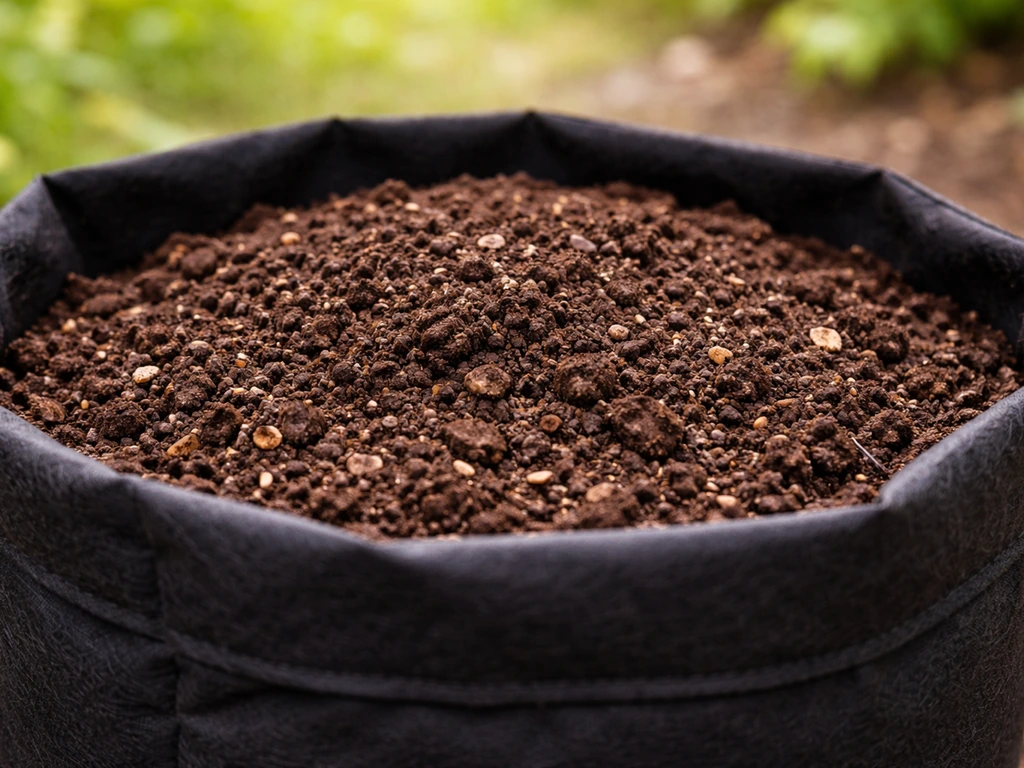
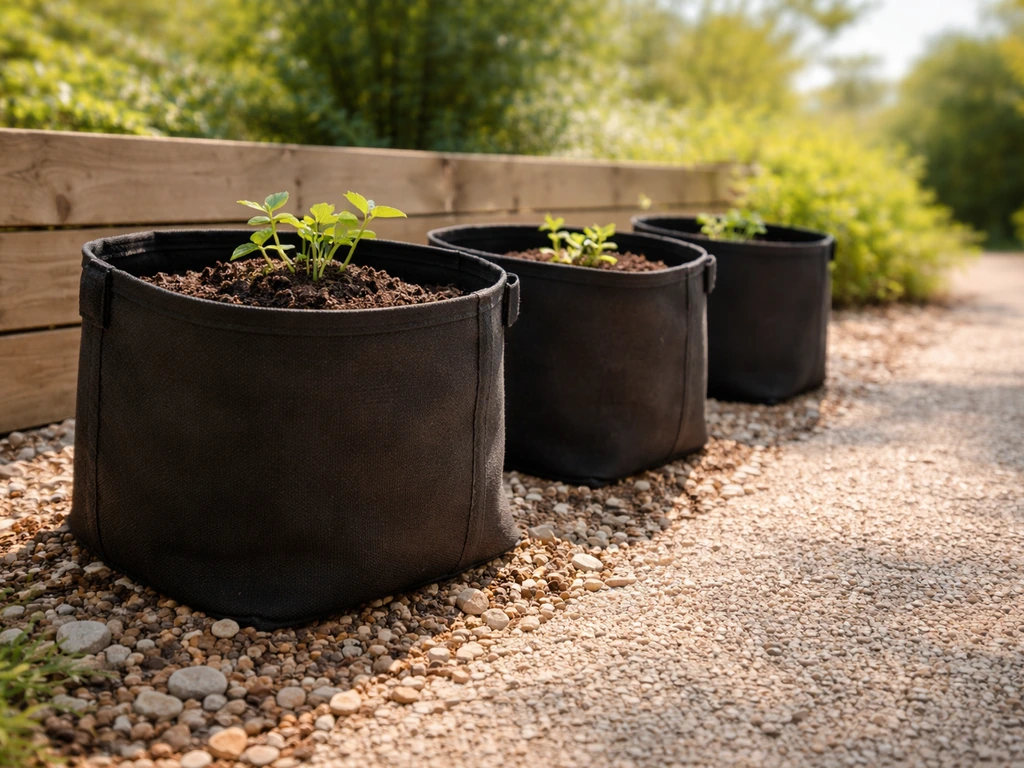
If you're growing tomatoes, peppers, potatoes, or herbs outdoors in warm weather, go with fabric grow bags. If you're growing ferns, tropical houseplants, or anything that struggles with dry soil, a plastic or glazed pot is probably the smarter call. And if you're weighing even more options, the grow bag vs raised bed comparison is worth reading too, especially if you're thinking about scaling up.
Material comparison: fabric grow bags vs plastic and nursery pots
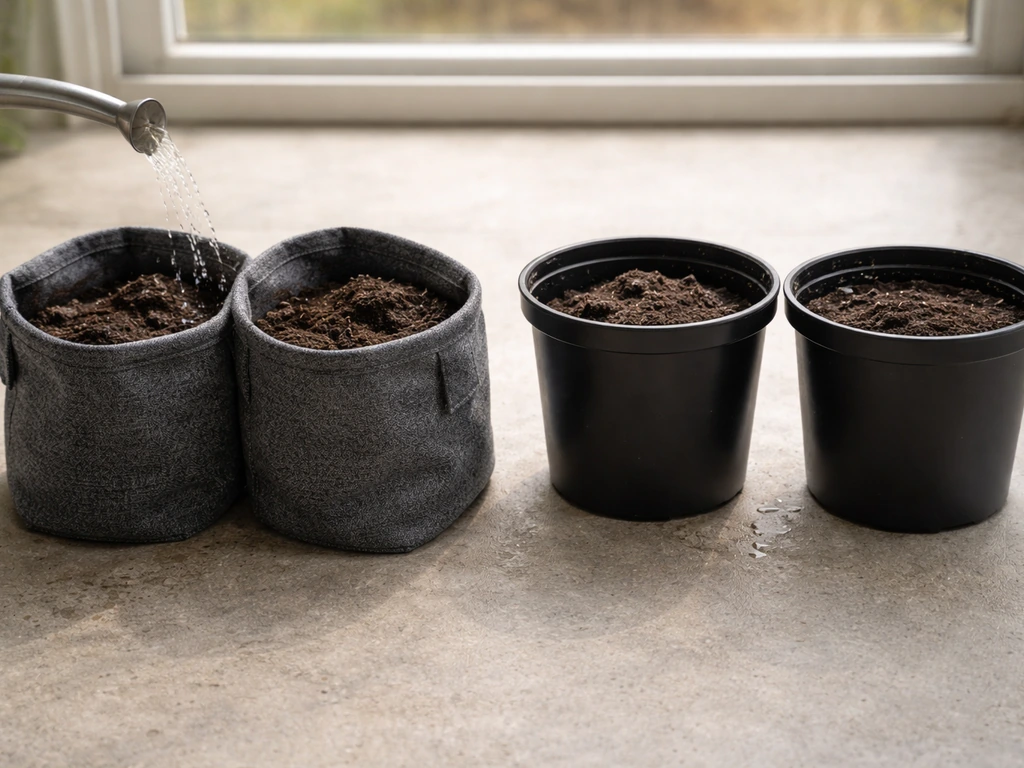
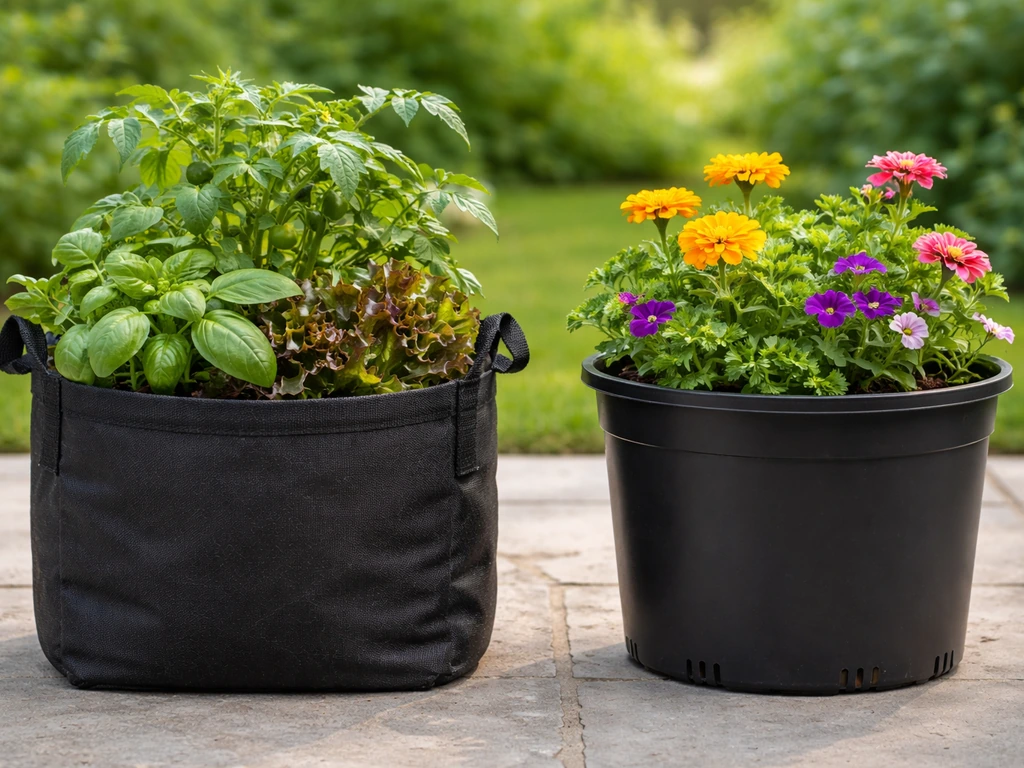
The core difference between a fabric grow bag and a plastic pot isn't just looks, it's how each material interacts with roots, water, and air. Plastic is non-porous, which means water can only leave through the drainage holes at the bottom. That keeps soil moist longer, which is convenient, but it also creates a closed environment where roots have nowhere to go once they hit the wall. Instead of stopping, they keep circling inside the container, which eventually leads to a root-bound plant with stunted growth.
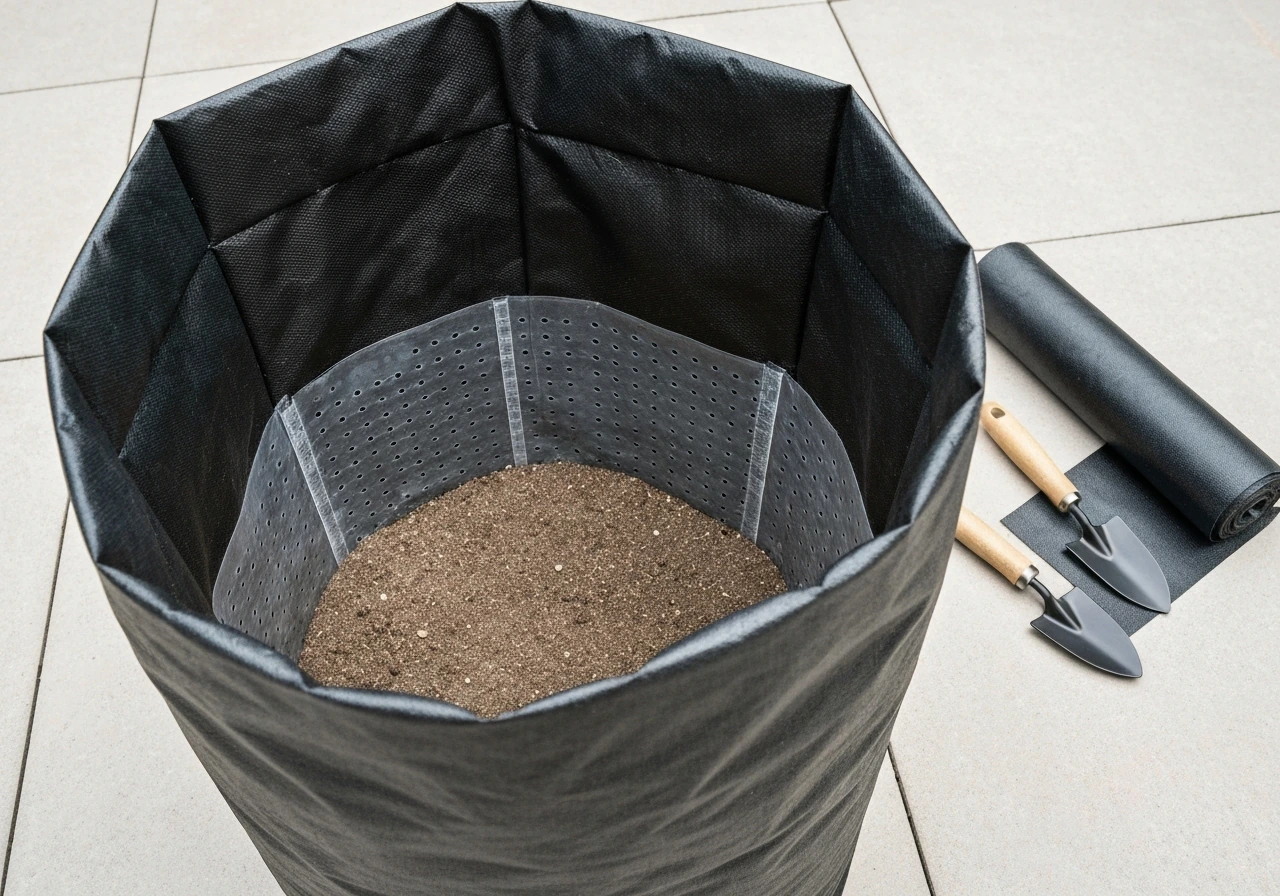
Fabric containers work differently. The entire wall of the bag is permeable, so air reaches the root zone from every direction. When a root tip hits the fabric wall, the drier air outside the bag causes the tip to stop growing and branch back inward, a process called air pruning. The result is a dense, fibrous root system instead of a few long circling roots. Mississippi State University Extension research confirms that plants grown in fabric bags are significantly less likely to become pot-bound compared to those grown in rigid plastic containers.
The tradeoff is moisture. Fabric loses water through evaporation from every surface, not just the bottom. That means grow bags dry out faster, sometimes much faster than plastic pots of the same volume. Virginia Tech Extension notes that blank" rel="noopener noreferrer">porous containers such as terra cotta dry out faster than nonporous containers, and that judging container soil moisture by weight can help determine when to irrigate. Virginia Tech Extension research is direct about this: porous containers require more frequent watering than non-porous ones, sometimes two or more times per day during hot, dry spells. Plastic pots are non-porous and accumulate fewer salts over time, making them lower-maintenance in some ways. So while fabric gives you better root structure, it does cost you more watering attention.
| Feature | Fabric Grow Bags | Plastic/Nursery Pots |
|---|
| Root behavior | Air pruning, fibrous roots, no circling | Roots circle wall, pot-bound risk over time |
| Drainage | Through entire wall and base, excellent | Bottom holes only, can waterlog if clogged |
| Watering frequency | More frequent, daily in summer heat | Less frequent, retains moisture longer |
| Heat management | Breathable, stays cooler | Can exceed 120°F inside dark plastic in sun |
| Salt buildup | Flushes out more readily | Can accumulate in non-porous walls |
| Durability | 1–5 seasons depending on fabric quality | Many years if not cracked by frost |
| Storage | Fold flat, very compact | Stack but take up significant space |
| Cost | Generally lower upfront | Low to moderate, varies widely |
| Stability | Can tip if top-heavy, no rigid structure | More stable on hard surfaces |
| Pest/disease risk | Better airflow reduces some fungal issues | Standing water risk if drainage is poor |
How each container type handles roots, water, and heat
Root zone temperature is a bigger deal than most growers realize. Inside a dark plastic pot sitting in full sun, temperatures can exceed 120°F according to Smart Pots' own testing data. Roots exposed to that kind of heat stop functioning efficiently, which shows up as wilting, slow growth, and nutrient uptake problems even when you're watering consistently. Fabric bags stay cooler because heat escapes through the walls. UC Agriculture and Natural Resources also points out that dark-colored containers create higher temperatures that can injure tender roots and prevent full root system development, which is another reason to be careful with black plastic pots in sunny spots.
Drainage behavior is another real difference. With plastic pots, all the water has to find its way to the drainage holes at the bottom. If you pack in too much dense media, or if roots block those holes, you can get waterlogging right at the root level. UConn Extension specifically warns that even well-intentioned container setups can result in water collecting near the bottom where it won't drain, creating anaerobic conditions that suffocate roots. Grow bags drain through the entire base and walls, so that pooling problem is much less common.
That said, grow bags set on solid concrete patios can wick moisture out too fast from the base, or in very wet conditions, sit in puddles. Virginia Tech recommends placing containers on pallets or structures that allow airflow underneath and prevent direct contact with hot cement. That advice applies equally to grow bags and plastic pots, but it matters more for bags where the base is part of your drainage system.
Vegetables
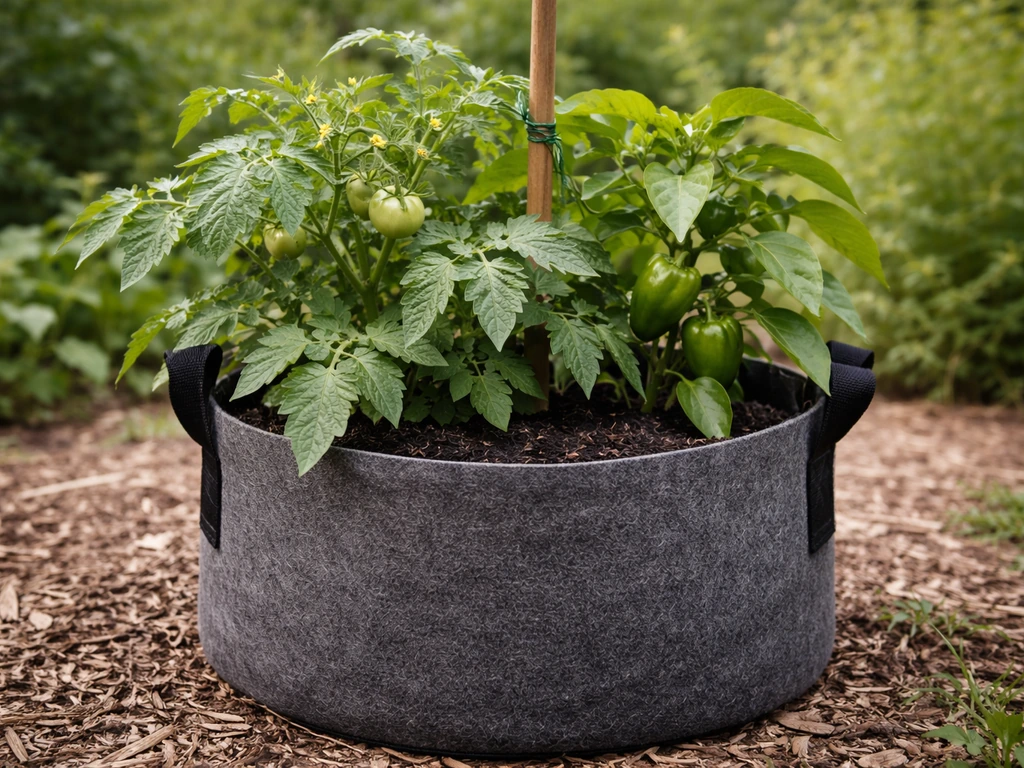
Fabric grow bags are genuinely excellent for warm-season vegetables. Tomatoes, peppers, cucumbers, eggplant, zucchini, and potatoes all respond well to the air-pruned root environment because they develop dense root systems that explore the full volume of the bag rather than circling the walls. The improved oxygen levels at the root zone boost nutrient uptake, which translates to faster early growth and better yields. For potatoes especially, the ability to fold down the sides of a bag as you hill up soil, and then unfold and dump at harvest, makes the whole process dramatically easier than digging from a fixed pot.
The catch with vegetables in grow bags is watering. Rutgers NJAES container gardening guidance is clear that containers may need irrigation one to two times per day during hot, dry periods, and that you should never water on a fixed calendar schedule since moisture needs change with the weather. If you're not home to water consistently, or you don't have a drip system set up, a grow bag full of tomatoes in July can go from perfect to wilted in a few hours. In that case, a larger plastic pot might actually serve you better because it holds moisture longer.
Flowers and ornamentals
For flowering plants, the right container depends on the type. Annual flowers like petunias, marigolds, and impatiens that prefer consistent moisture often do better in plastic or glazed pots where soil stays evenly moist between waterings. Grow bags can work but require more attention. Perennials with more robust root systems, like canna lilies or ornamental grasses, benefit from the air-pruning effect and do well in fabric. Rutgers NJAES notes that potting mixes in containers can support extended-release fertilizer more effectively when moisture levels are consistent, which is another small point in favor of plastic for ornamental displays where you want reliable feeding over a long season.
Trees and shrubs
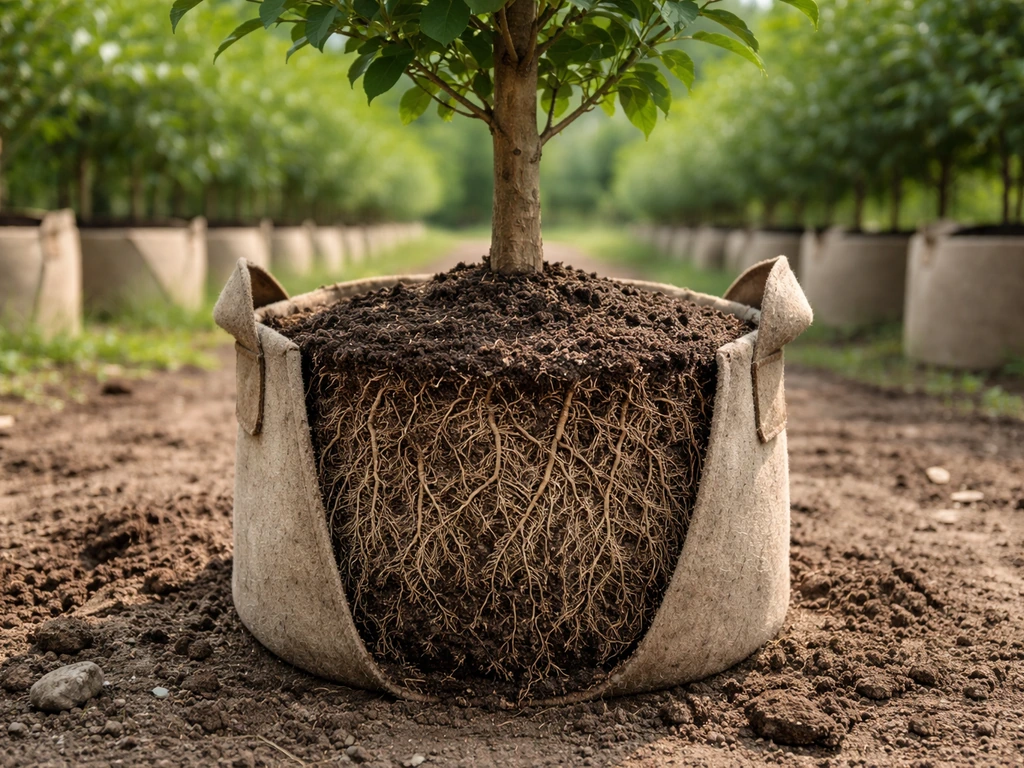
This is where grow bags have a well-established track record in nursery production. Trees grown in fabric containers develop root balls that are dense and fibrous, with minimal circling. UF/IFAS research on fabric container-grown trees notes that fabric-grown root balls can be more compact than field-grown specimens while still supporting healthy establishment after transplant. For home growers, this means a dwarf fruit tree or ornamental tree started in a fabric bag will transplant more successfully into the ground or a larger container because the roots haven't been deformed by circling. If you're growing a tree you eventually plan to plant out, a fabric grow bag is strongly preferred over a plastic nursery pot.
Watering, drainage, and root zone tradeoffs in practice
The watering math changes significantly between container types. Plastic pots hold moisture much longer because the only evaporation happens from the soil surface and the drainage holes. That's useful in cooler climates or for plants that don't like to dry out, but it also means you have to be more careful not to overwater. Fabric grow bags lose moisture from every surface, so the soil profile stays better aerated, but you need to check soil moisture much more frequently, especially in summer.
One practical rule that applies to both: don't water by the calendar. Rutgers NJAES is explicit that cool, wet periods may require no watering at all, while hot, dry days can push even large containers to need water twice daily. The only reliable method is checking the soil directly, either by lifting the container to feel the weight, sticking a finger two inches into the soil, or using a cheap moisture meter. Wilting every day despite regular watering is a sign the soil is drying out too fast, and Virginia Tech recommends grouping containers together or providing afternoon shade to moderate root-zone temperatures when this happens.
For grow bags specifically, the drainage is so efficient that using a well-draining potting mix is non-negotiable. Virginia Tech Extension emphasizes that container media must be porous because roots need both air and water simultaneously. A dense, water-retaining garden soil in a grow bag will either drain poorly and cause root rot, or compact over one season into something that restricts airflow. Use a quality peat- or coir-based mix with added perlite, and you'll get the best of both worlds: good drainage and enough moisture retention to keep up with the bag's evaporation.
Practical considerations: stability, mess, pests, durability, and cost
Stability is one area where plastic pots have a clear advantage. A rigid pot on a flat surface is stable even when the plant gets large and top-heavy. Grow bags, especially when the soil dries out and becomes lighter, can tip over in wind. This is a real problem with tall crops like tomatoes or sunflowers unless you use a cage or stake system that anchors into the ground or a nearby fence, not just into the bag itself.
Mess and leakage are something to plan for with grow bags. Water and some fine particles can seep through the fabric onto your deck or patio, leaving stains over time. Placing bags on a saucer, tray, or raised platform solves the staining problem but can also trap water underneath if you're not careful. Plastic pots with good drainage holes and a saucer underneath give you more control over where the water goes.
On pests and disease, grow bags have a slight edge. The improved airflow around the root zone reduces the likelihood of fungal problems like root rot, which thrive in waterlogged, poorly aerated soil. Fungus gnats, which love consistently moist soil surfaces, are also less of an issue in fast-drying grow bags. However, the fabric itself can harbor some pests between seasons if not cleaned properly. Washing bags with diluted hydrogen peroxide or a mild bleach solution before reuse is a good habit.
Durability is where plastic pots win outright. A quality plastic nursery pot can last a decade or more if kept out of prolonged UV exposure. Grow bags, depending on fabric quality and how they're stored, typically last one to five seasons. Cheaper bags with thin, non-woven polypropylene can degrade in a single summer of intense sun. Better quality bags made from thicker fabric or UV-stabilized material last longer, but they do cost more upfront. Over multiple seasons, you'll likely replace grow bags more often than plastic pots.
Cost comparison depends on volume. For smaller containers (under 5 gallons), fabric and plastic pots are similarly priced. For large containers (15 to 30 gallons and above), fabric grow bags are almost always cheaper than equivalent rigid plastic planters or fabric-lined wood planters. Storage is also a big advantage for bags: they fold completely flat, so you can store a dozen bags in the space one plastic pot takes up. If you're seasonal growing with limited storage space, that matters.
How to choose the right size and setup
Sizing is where a lot of growers go wrong, usually by going too small. The restricted volume of any container, bag or pot, forces more frequent watering and faster nutrient depletion. As a general starting point for fabric grow bags, use 3 to 5 gallons for herbs, lettuce, and smaller flowering annuals; 7 to 10 gallons for peppers, bush tomatoes, and eggplant; 15 to 20 gallons for indeterminate tomatoes, cucumbers, and squash; and 25 gallons or more for dwarf fruit trees and large ornamentals. Going bigger is almost always the right call if space and budget allow.
For plastic pots, the same size logic applies, but because moisture retention is higher, you have a bit more forgiveness with smaller volumes. A 5-gallon plastic pot can support a pepper plant reasonably well, whereas the same plant in a 5-gallon grow bag will need more frequent watering and may underperform in peak summer heat. If you want to understand how bags compare to similar-volume rigid containers before deciding, the grow bags vs buckets comparison covers that territory in more detail.
Setup choices also depend on what you're trying to accomplish. If you're on a balcony or rooftop with weight limits, grow bags filled with a lightweight peat-perlite mix are far lighter than the equivalent plastic pot filled with denser media. If you're on a wood deck worried about water damage, a plastic pot with a well-sized saucer gives you cleaner moisture control. For raised bed-style setups where you want a large growing area without building permanent infrastructure, you might find the grow bag vs raised bed analysis more directly useful than a single-container comparison.
One setup question that comes up often is whether to use liners or saucers with grow bags. A saucer under a grow bag helps protect your surface and can act as a small water reservoir during hot days, but if the bag is sitting in standing water for hours, you're defeating the purpose of the fabric's drainage. Elevating bags slightly on a small rack or pot feet solves this, letting water drain freely while still protecting the surface below.
Smart Pots and branded fabric containers: worth the upgrade?
If you've spent any time researching grow bags, you've probably encountered Smart Pots, which are among the most recognized branded fabric containers. They're made from a thicker, higher-quality non-woven polypropylene than most budget bags, and they hold their shape better season to season. The smart pots vs grow bags comparison goes into the real differences in material quality and longevity if you're trying to decide whether the premium is worth it. Short version: for casual seasonal growing, a mid-range generic bag works fine. For multiple-year perennial use or tree growing, investing in a better-quality bag pays off.
Common problems and how to fix them
Problems you'll run into with grow bags
- Wilting despite regular watering: The bag is drying out too fast. Move it to a spot with afternoon shade, group it with other containers to reduce wind exposure, or switch to a larger bag. Virginia Tech specifically recommends grouping containers to moderate root-zone temperatures when daily wilting is a problem.
- Roots growing through the fabric: This usually means the bag is overdue for a size upgrade or the plant has been in the same bag too long. It's less common than circling in plastic but can happen with very fine-rooted plants near the end of the season.
- Fabric degrading or tearing: Low-quality bags break down fast in UV. Store bags out of direct sun when not in use and look for bags with UV stabilization for outdoor use.
- Leaching and staining on deck surfaces: Place bags on saucers, fabric trays, or pot feet to protect surfaces. Avoid solid trays that hold water for more than an hour or two after watering.
- Soil settling and becoming compacted: Grow bags are more susceptible to media settling than rigid containers because the walls flex. Use a high-quality, chunky potting mix with perlite and refresh the top layer mid-season if needed.
Problems you'll run into with plastic and nursery pots
- Root circling and pot-bound plants: The most common long-term problem in plastic containers. Check roots annually by gently removing the plant. If roots are circling the outer edge of the root ball, it's time to pot up or root-prune.
- Waterlogging and root rot: Happens when drainage holes are blocked or when soil media is too dense. Rutgers NJAES recommends adding holes along the sides near the bottom of containers that drain slowly to improve outflow. Never use pure garden soil in a pot.
- Overheating in dark containers: A black plastic pot in direct summer sun can become lethally hot at the root zone. Wrap pots in burlap or light-colored material, move them to partial shade during peak heat, or switch to light-colored containers. UC ANR research links dark container color directly to root injury and restricted root development.
- Salt buildup on the soil surface: White crusty deposits on soil or pot rims indicate salt accumulation from fertilizer and tap water. Flush the pot thoroughly with clean water every few weeks, or leach it completely every month during the growing season.
- Tipping in wind: Larger plastic pots filled with lightweight potting mix can also tip. Use a pot clip, stake system, or group pots together for mutual support.
When to pick a grow bag, when to pick a pot
Choose a fabric grow bag when you're growing warm-season vegetables outdoors, when root health is a priority (especially for plants you plan to transplant later), when storage space is limited between seasons, or when you're growing in a hot climate and want to keep the root zone cooler. Also consider bags when you're scaling up to large container sizes, since large fabric bags are much cheaper than equivalent rigid planters.
Choose a plastic or nursery pot when you're growing moisture-loving plants, when you can't water frequently, when you need a stable, long-lasting container that doesn't need replacing every few seasons, or when you're growing indoors where dripping and mess from a breathable fabric wall would be a problem. Some growers find that the grow bag vs 5 gallon bucket decision is the most practical comparison for their setup, especially if they already have buckets on hand and are wondering whether switching to bags is worth the effort.
Neither container type is universally better. The best choice depends on your plant, your climate, your watering habits, and your practical setup. But for most outdoor home growers working with vegetables and herbs in spring and summer, fabric grow bags consistently outperform plastic pots where it counts most: root health, heat management, and drainage. Start there, and adjust based on what you observe after one season.