If you are trying to decide between grow bags and raised beds right now, here is the short answer: grow bags win when you need flexibility, low upfront cost, and excellent root aeration in a limited or temporary space. If you are comparing container sizes, the same idea behind a grow bag versus 5 gallon bucket applies: more soil volume usually means fewer watering surprises grow bags win when you need flexibility. Raised beds win when you want a permanent, high-volume growing setup that needs less frequent watering and handles a wider range of crops with less day-to-day attention. Neither is universally better. The right call depends on your space, budget, climate, and what you are growing. Everything below will help you figure out which one fits your situation.
Grow Bag vs Raised Bed: Which Is Better for You?
Quick verdict: when to choose grow bags vs raised beds
Think of grow bags and raised beds as tools that solve slightly different problems. Grow bags are containers, just like pots or buckets, but made from breathable fabric. Raised beds are essentially bottomless (or lined) frames filled with a deep column of soil. The core difference is soil volume, permanence, and how each manages roots, water, and temperature.
| Factor | Fabric Grow Bags | Raised Beds |
|---|---|---|
| Upfront cost | Low ($2–$15 per bag) | Moderate to high ($50–$300+ per bed) |
| Setup time | Minutes | Hours to a full day |
| Permanence | Portable, seasonal, storable | Semi-permanent to permanent |
| Soil volume | Limited (1–100+ gallons) | High (typically 6–12+ inches deep) |
| Root aeration | Excellent (air pruning) | Good (depends on soil mix) |
| Watering frequency | High (dries fast) | Moderate (retains more moisture) |
| Temperature swings | Higher (heats and cools faster) | More stable but warms earlier than in-ground |
| Mobility | Easy to move | Fixed in place |
| Weed pressure | Very low | Low to moderate |
| Best for | Herbs, tomatoes, peppers, potatoes, small trees | Full gardens, mixed crops, long-season vegetables |
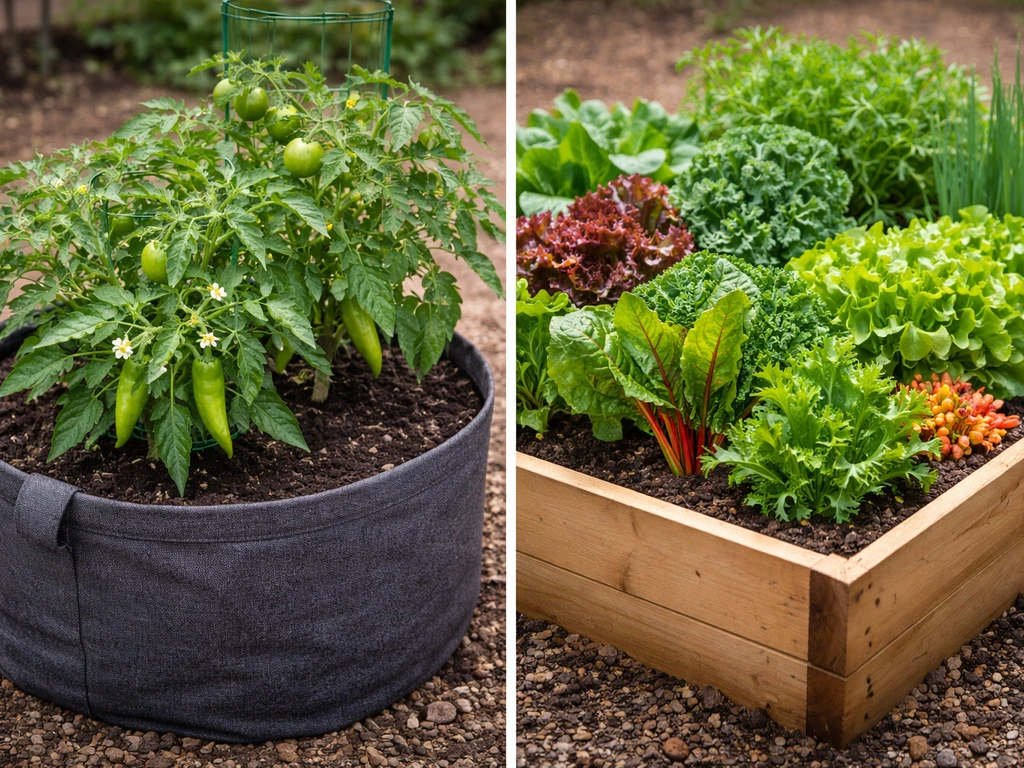
Choose grow bags if you rent, have a patio or balcony, want to start fast, or need to move your setup around. Choose raised beds if you have a permanent outdoor space, want to grow a lot of plants in one footprint, and prefer a lower-maintenance watering routine once the bed is established.
Container differences that actually affect how your plants grow
Soil volume and root space
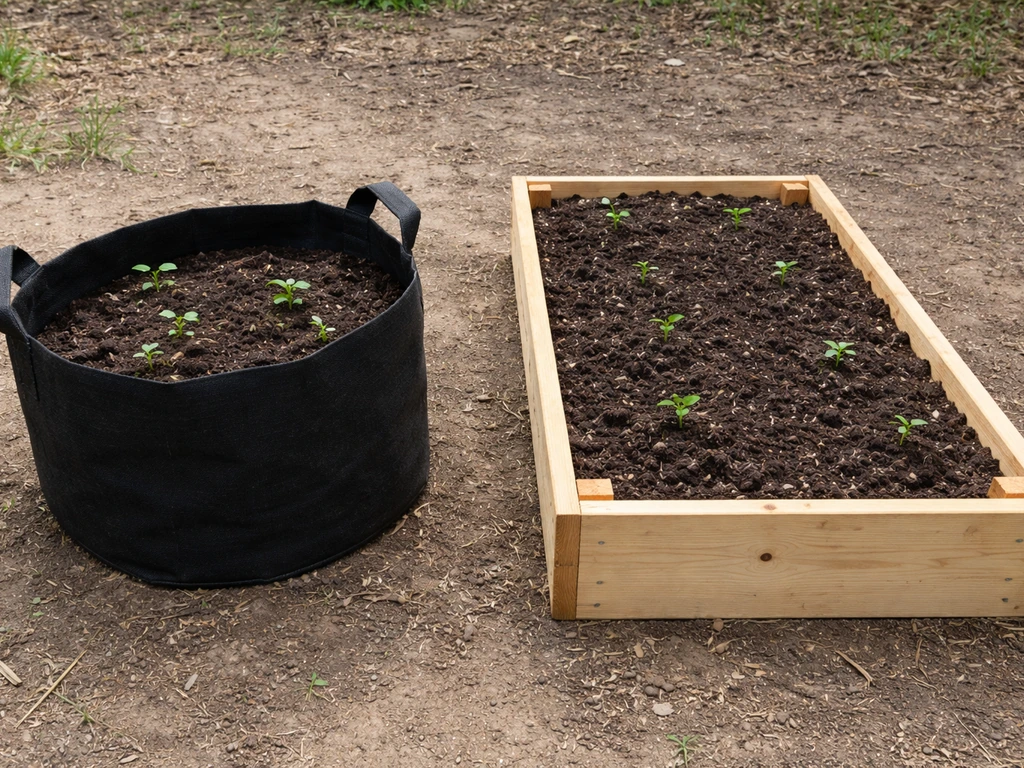
This is the biggest practical difference. A standard 4x8 raised bed filled 10–12 inches deep holds roughly 30–40 cubic feet of soil. A 15-gallon grow bag holds about 2 cubic feet. That gap matters because root space directly limits how large a plant can get and how long it can go between waterings and feedings. Larger containers improve plant performance, and with grow bags you need to be deliberate about sizing up for bigger plants. A tomato that will thrive in a 30-gallon grow bag will struggle in a 5-gallon one. In a raised bed, that same tomato has essentially unlimited lateral root room.
Aeration and the air-pruning advantage of fabric
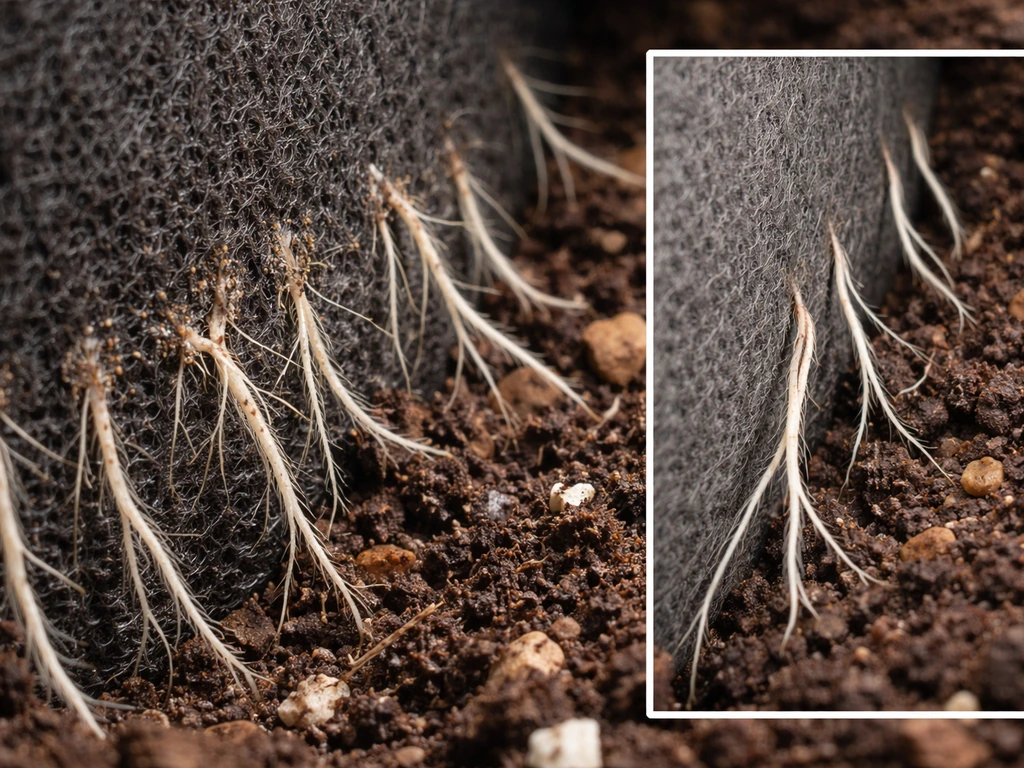
Fabric grow bags do something no raised bed can replicate: air pruning. When roots reach the porous fabric wall, they are exposed to air and the tip desiccates naturally, triggering the plant to grow denser, more branched roots throughout the soil volume. The result is a more efficient root system that absorbs water and nutrients better. Raised beds can develop compaction over time, especially in the top few inches after repeated watering. Good drainage and air exchange in the root zone matter for both methods, and shallow containers (wide but not tall) drain less effectively than taller ones, which can reduce oxygen in the root zone. Fabric bags sidestep this issue by allowing air exchange through the sidewalls.
Soil mix requirements
Both methods need well-draining soil, but for different reasons. Grow bags drain aggressively through the fabric, so you want a mix that retains some moisture while still draining fast: a blend of quality potting mix, perlite (around 20–30%), and compost works well. Straight garden soil will compact and drain poorly in a grow bag. Raised beds give you more flexibility. The classic Mel's Mix (1/3 compost, 1/3 peat or coco coir, 1/3 coarse vermiculite) works great, but many growers use a 50/50 blend of compost and quality topsoil with good results. Because raised beds sit above grade, they drain better than in-ground gardens, and the soil tends to warm earlier in spring, which is a real advantage for getting transplants in the ground sooner.
Watering and temperature: how each method changes your daily routine
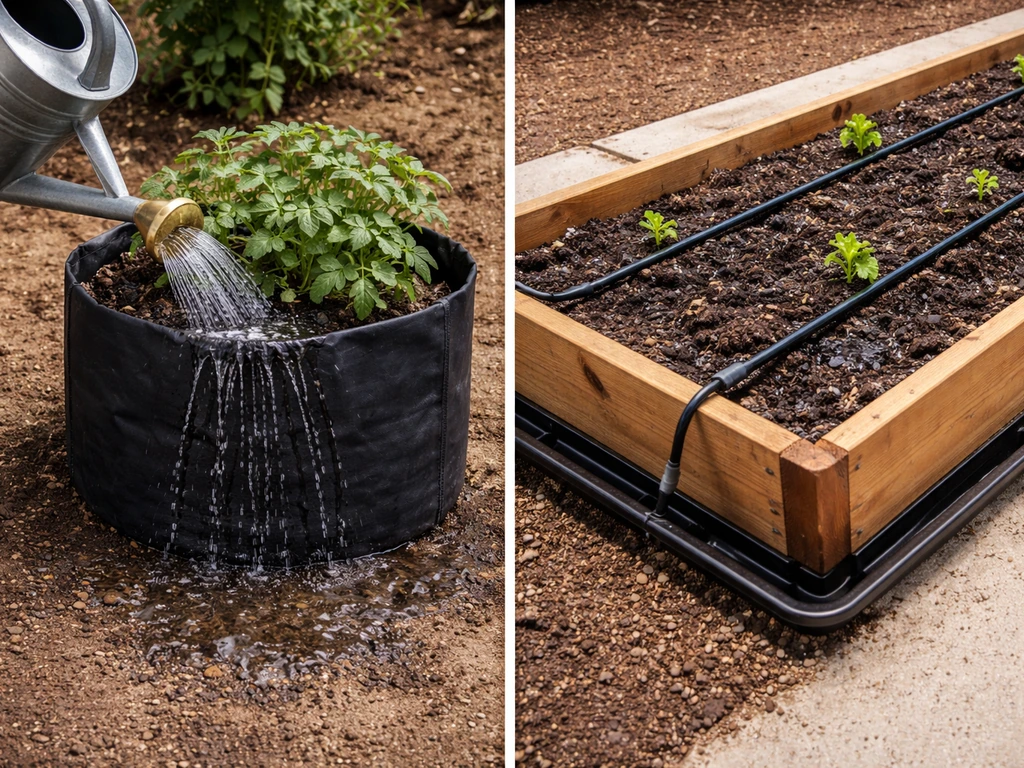
Watering is where grow bags demand the most from you. Because the fabric is breathable on all sides, moisture evaporates faster than in any rigid container or raised bed. In hot summer weather, a 5-gallon grow bag with a tomato in it can need water once or even twice a day. A raised bed with the same tomato in a 4x8 footprint might only need watering every two to three days if mulched. Research from University of Maine Extension confirms what most growers figure out quickly: raised bed gardens dry out faster than surrounding yard soil, so you need to check moisture frequently and water based on what the soil actually feels like rather than a fixed schedule. For grow bags, that guidance is even more critical. Improper watering, both too much and too little, is consistently cited as the number one reason container plants fail.
Temperature behavior is the other big factor. Grow bags heat up fast when the sun hits them and cool down fast at night. In spring, that warming can jump-start root growth. In summer heat, dark-colored grow bags can cook roots if the bags are sitting on a reflective surface or in full southern exposure. Light-colored bags, or bags with insulating properties, help here. Raised beds warm earlier than in-ground gardens in spring because their drainage characteristics and soil profile are different from native soil, which gives you an earlier planting window. OSU Extension notes that raised beds can warm earlier in spring, helping with earlier planting and faster plant growth compared with surrounding ground. However, the thermal mass of a raised bed is higher than a grow bag, so they stay warmer at night and do not swing as dramatically during the day. For growers in short-season climates, this is a genuine advantage.
If you want to automate watering, drip irrigation works well for both options. A raised bed is easier to set up on a timer and forget because the soil volume buffers variation. Grow bags benefit enormously from drip irrigation because the stakes are higher when they dry out, but you still need to dial in the frequency carefully since each bag size and plant combination behaves differently.
Cost, effort, and what to expect over the season
Upfront investment
Grow bags are genuinely cheap to start. A pack of ten 5-gallon fabric bags typically runs $10–$20. A single 25-gallon bag for a large tomato or pepper might cost $8–$15 on its own. You can start a productive patio garden for under $50 in bags alone. Raised beds are a different story. A simple 4x4 cedar bed kit runs $60–$120, and a proper 4x8 bed can cost $150–$300 depending on materials. Fill soil for a 4x8 bed (roughly 20–30 cubic feet) adds another $50–$150 depending on your source. The total first-year investment for a single raised bed is often $200–$400 or more. If you are on a tight budget or just testing the waters, grow bags let you start growing with almost no risk.
Long-term cost and maintenance
Raised beds pay off over time. The structure lasts years (cedar typically 10–20 years, galvanized steel even longer), and the soil improves each season if you top-dress with compost. You spend money upfront but very little after that beyond amendments and seeds. Grow bags degrade faster. Quality 300 GSM or heavier fabric bags can last 3–5 seasons with care, but cheaper bags may only survive one or two. You will also spend more on potting mix every year because you are essentially replacing or refreshing a much smaller soil volume per bag. Nutrients wash out of containers faster than raised beds because of higher watering frequency, so you will be feeding container plants more consistently. Budget for a slow-release granular fertilizer plus a liquid supplement if you go the grow bag route.
Seasonal maintenance comparison
- Grow bags: refill or refresh potting mix each season, check bag integrity and handles, store flat when empty (they fold down to almost nothing), watch for salt buildup from regular fertilizing
- Raised beds: top-dress with 1–2 inches of compost each year, check for structural integrity (wood rot or loose fasteners), add amendments based on soil test, control weeds in early spring before mulching
- Both: monitor for pests and disease, adjust watering as temperatures change, and recheck drainage if plants show signs of stress
Which crops do best in each method
Grow bags: where they shine
Fabric grow bags are excellent for any plant that benefits from air-pruned roots, needs good drainage, or where you want control over soil composition per plant. Tomatoes, peppers, eggplant, and cucumbers all do very well in 15–30 gallon bags. Potatoes are one of the most popular grow bag crops because you can hill up soil as the plant grows, harvest is easy (tip the bag over), and the bags naturally prevent the drainage problems that rot potato tubers. Herbs like basil, mint, and rosemary thrive in 3–5 gallon bags. Dwarf citrus, olive trees, and fig trees can be grown in 25–65 gallon bags and moved indoors for winter, which is a use case that raised beds simply cannot match.
Mushroom growing is a specialized application where fabric grow bags are the standard choice. Sterilized substrate bags used in mushroom cultivation are a different product from garden grow bags, but the principle of breathable containment applies. For growers interested in oyster or shiitake cultivation, fabric bags designed for that purpose are purpose-built and not interchangeable with typical horticultural bags.
Raised beds: where they shine
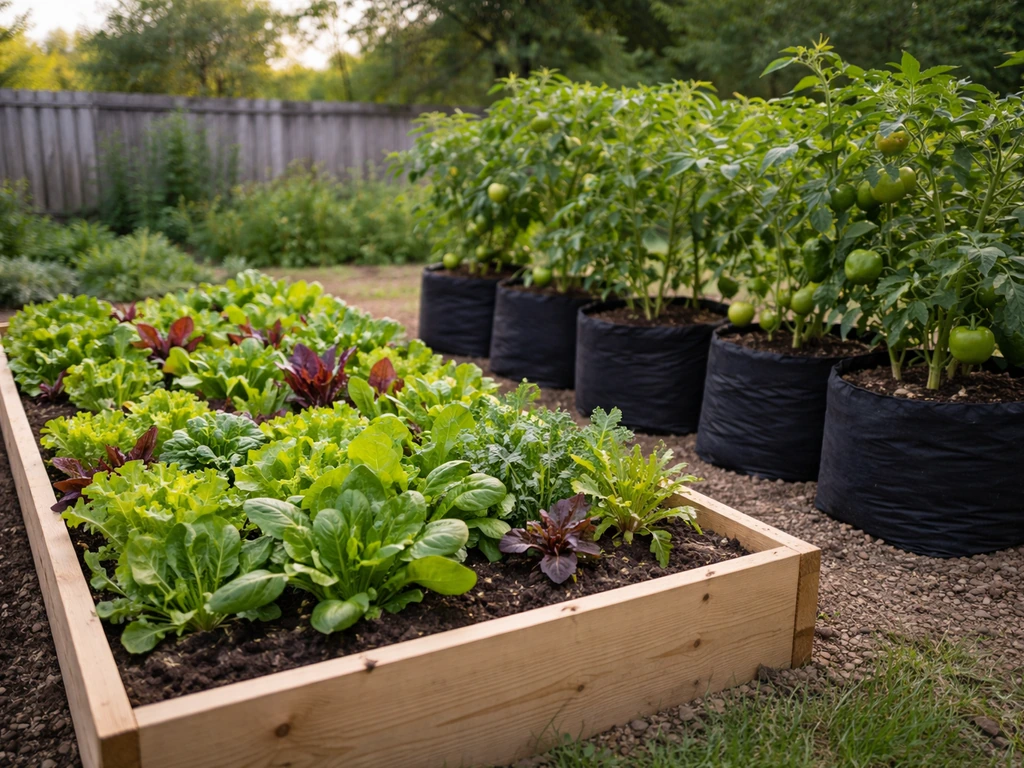
Raised beds handle high-volume, mixed plantings better than any array of individual containers. Salad greens, spinach, kale, chard, brassicas, root vegetables like carrots and beets, and sprawling plants like winter squash all perform better in a raised bed than in grow bags because they need consistent moisture, space to spread, or deep loose soil for root development. Carrots need at least 12 inches of loose, stone-free soil, which is easy to achieve in a properly built raised bed but awkward to replicate in grow bags. Strawberries work in both, but a raised bed lets you plant enough for a real harvest without buying dozens of individual bags.
Flowers
Annual flowers like zinnias, marigolds, and petunias do well in grow bags of 3–7 gallons, especially for patio displays you want to rearrange or move to shelter in bad weather. Perennials and cutting garden beds are better suited to raised beds, where root systems can establish over multiple seasons without being disturbed. Dahlias are a middle ground: they can be grown in large (15–25 gallon) bags and dug easily at the end of the season, which many growers actually prefer for tuber storage.
Trees and perennials
This is where grow bags make a compelling case that surprises a lot of people. Dwarf and semi-dwarf fruit trees, blueberry bushes, and even young standard-sized trees can be grown in 25–100 gallon fabric bags for years. The air-pruning keeps roots from circling, which is the main cause of long-term decline in potted trees. Raised beds are not ideal for trees because the roots will eventually find their way through the bottom and into native soil, which defeats the containment purpose and makes the bed impossible to move.
Troubleshooting common problems with each method
Grow bag problems and fixes
- Drying out too fast: size up your bag (more soil volume = slower drying), switch to a lighter-colored bag to reflect heat, add a moisture-retaining amendment like coco coir to your mix, mulch the top of the bag with an inch of straw or wood chips, or set bags inside a larger container to insulate the sides
- Salt buildup and nutrient lockout: flush the bag with plain water every few weeks if you are feeding regularly with liquid fertilizer; yellowing leaves with crispy edges are a classic sign of salt stress
- Bag tipping over: use heavy bags (wider base helps), set them inside a decorative pot or crate for stability, or group bags together so they support each other
- Root circling: with quality fabric bags this rarely happens, but if you reuse bags without refreshing the soil, old roots left in the bag can create matted layers; always clear out old root material before refilling
- Fabric degrading: store bags dry and out of UV when not in use; cheaper bags can break down in a single season in intense sun; invest in 300 GSM or heavier fabric for multi-year use
Raised bed problems and fixes
- Soil compaction over time: avoid stepping in the bed (design beds no wider than 4 feet so you can reach the center from either side), top-dress annually with compost, and use a broadfork lightly each spring rather than deep tilling
- Overwatering or poor drainage: raised beds drain better than in-ground gardens, but if the soil mix is too dense or the bed sits on an impermeable surface, waterlogging can still occur; mix in extra perlite or coarse grit, and make sure the base layer is not blocked
- Weed pressure: raised beds block most weed pressure from below, but airborne seeds still land; mulch heavily (2–3 inches of straw or wood chips) to suppress surface weeds, especially in gaps between plants
- Pest pressure (voles, gophers): add a hardware cloth liner to the bottom of the bed before filling; this is an easy step when building and nearly impossible to retrofit
- Wood rot: cedar and redwood last longest untreated (10–20 years); avoid using railroad ties or pressure-treated lumber near food crops; galvanized steel beds have become popular for durability
Problems common to both
- Nutrient depletion: containers lose nutrients faster than in-ground gardens because watering flushes them out; feed regularly with a balanced slow-release fertilizer and supplement with liquid feeds every two to three weeks during peak growth
- Root-bound plants: less of an issue in raised beds, but grow bag growers should size correctly from the start; a plant that has clearly outgrown its bag (roots pushing through the bottom, wilting daily despite watering) needs to move up to a larger bag
- Inconsistent watering: water thoroughly every time rather than lightly and often; partial watering leaves dry pockets in the root zone and causes uneven growth; water until it drains from the bottom
How to decide for your situation and what to do next
Walk through these questions honestly and the answer usually becomes clear. Do you own your space or rent? If you rent, grow bags are the obvious choice: you can take them with you and they leave no trace. Do you have ground you can build on, or only a patio, balcony, or driveway? Grow bags work on any hard surface; raised beds generally need level ground and a stable base. How much time do you want to spend watering? If you are away frequently or just do not want to water every day in summer, a raised bed's larger soil volume gives you more margin. What are you growing? If your list includes a mix of root vegetables, greens, and fruiting crops, a raised bed handles that variety better. If your list is mostly tomatoes, peppers, potatoes, or container-friendly fruit trees, grow bags fit perfectly. What is your budget right now? If it is limited, start with grow bags. You can always add a raised bed later when the budget allows.
It is also worth noting that grow bags versus raised beds is not an either/or decision for most growers. Many gardeners also weigh grow bags versus buckets when choosing the right fabric container for their space. If you are still weighing grow bags versus pots, the same tradeoffs apply: size, drainage, and how often you will water. Many people run a raised bed for greens and root vegetables while using grow bags for tomatoes, peppers, and potatoes alongside it. The methods complement each other well. If you have compared grow bags to pots or buckets before, the calculus here is different: raised beds offer more soil volume and permanence than any container option, while grow bags beat rigid containers on aeration and portability.
Next-step setup checklist for grow bags
- Choose bag size based on your main crop: 3–5 gallons for herbs and small flowers, 7–10 gallons for peppers and dwarf varieties, 15–25 gallons for tomatoes and eggplant, 25–45 gallons for potatoes, and 45–65+ gallons for dwarf fruit trees
- Select fabric quality: look for 300 GSM or heavier for multi-season use; bags with reinforced handles and a flat stable base are worth the small extra cost
- Mix your soil: blend quality potting mix with 20–30% perlite and a scoop of compost per bag; do not use straight garden soil
- Set up your watering plan before you plant: drip irrigation on a timer is ideal; if hand-watering, plan to check bags daily in warm weather
- Start feeding two to three weeks after planting with a balanced slow-release granular fertilizer, then supplement with a diluted liquid feed every two weeks
- Mulch the top of the bag with 1 inch of straw to slow moisture loss and reduce surface temperature
Next-step setup checklist for raised beds
- Choose your material: cedar or redwood for natural rot resistance, galvanized steel for long-term durability, or pine if budget is tight (expect 3–5 years before rot becomes an issue)
- Size the bed for reachability: no wider than 4 feet if accessible from one side, 4 feet if accessible from both sides; 8 feet long is a common and manageable length
- Fill depth: aim for at least 10–12 inches of soil; 18 inches is better for root vegetables like carrots and parsnips
- Add a hardware cloth liner on the bottom if gophers or voles are a problem in your area
- Mix your fill: a 50/50 blend of quality compost and topsoil works well; for a premium mix, use equal parts compost, peat or coco coir, and coarse vermiculite
- Mulch the surface with 2–3 inches of straw or wood chips after planting to retain moisture and suppress weeds
- Plan a watering schedule based on your soil type and climate; check moisture with a finger test 2 inches deep before watering, and water thoroughly until drainage occurs from the base
Either way you go, the fundamentals are the same: good soil, consistent watering, regular feeding, and the right size container for your plants. Grow bags make it easy to start today with almost no commitment. If you want a quick comparison of smart pots versus grow bags, focus on how each manages moisture, air flow, and how often you’ll need to check or adjust smart pots vs grow bags. Raised beds are an investment that pays off every season for years. Know what you are optimizing for, and you will not go wrong with either choice.
FAQ
Can I put grow bags on the ground instead of on a patio or stand?
Yes, but treat drainage and watering like separate design problems. If you line a raised bed with plastic, it usually reduces oxygen exchange and can trap moisture, especially in heavy soils. A better approach is to use breathable landscape fabric only where you need weed control, and keep the bottom open so excess water can escape and air can reach the roots.
What’s the best way to prevent root overheating in dark grow bags?
You can, but don’t skip the “heat and drainage” checks. On bare ground, grow bags may wick moisture unevenly and can also overheat faster on dark surfaces or heat-trapping gravel. Put a waterproof tray or risers under the bag if you notice pooling, and choose a lighter color bag or insulate the bottom during hot months.
How do I water a grow bag correctly if there’s no fixed schedule?
Yes, and it changes your failure rate. Use a moisture meter or, simpler, the finger test at 2 to 3 inches deep, then water thoroughly until you see some runoff. After that, avoid “top-ups,” because frequent small waterings train shallow roots and increase blossom end rot risk in tomatoes and peppers.
Do I need different fertilizer strategies for grow bags vs raised beds?
In most cases, yes, but verify the nutrient source. Raised beds often benefit from repeated top-dressing, because the larger soil volume buffers nutrient swings. Grow bags tend to lose nutrients faster, so even if you use compost, plan on a pot-specific feeding approach (for example, a slow-release base plus periodic liquid feed) rather than relying on one-time amendments.
Will mulching reduce the extra watering needs of grow bags?
It helps, but you need to match mulching to the container. In grow bags, thick mulch can slow evaporation at the surface, but it won’t stop the fabric’s side evaporation. Use mulch mainly to reduce surface swing, and still check moisture more often than you would in a bed.
When should I upsize a plant from a smaller grow bag to a bigger one?
Usually yes, especially for seedlings and delicate transplants. Start with a 5 to 10 gallon bag for medium plants, but move up before roots become crowded, typically when you see roots circling inside the bag, stalled growth, or extremely fast drying. For larger fruiting crops, many people jump to 15 to 30 gallons early rather than waiting too long.
Are grow bags good for strawberries, or is a raised bed better?
For strawberries, raised beds are easier for consistent moisture and larger yields, but grow bags can still work if you pick the right height and spacing. Use a bag width that allows runners to spread, keep the crown above the soil line, and watch for faster drying in the outer edges of the fabric.
Why are carrots harder in grow bags than in raised beds?
If you want to plant deep-rooted crops like carrots reliably, choose enough depth and looseness. Raised beds generally make this easier because you can build 12 inches or more of stone-free soil and maintain structure over time. In grow bags, you must use a tall, deep bag and avoid compacting the mix, otherwise carrots fork or stay short.
Can I move raised beds, and if not, what’s the best alternative?
In general, yes, especially if you anticipate moving, replanting, or adjusting crop layouts year to year. However, the base matters. A grow bag can shift when the soil is wet, so use level ground, risers for airflow if needed, and secure trellises so wind doesn’t tip tall bags.
Does choosing grow bags or raised beds significantly reduce pests and disease?
Yes, but set expectations for pest and disease management. Raised beds can still get pests, but fabric containers change the microclimate and can reduce some soil contact issues. Use a consistent approach, for example, spacing for airflow, sanitation between seasons, and row cover when plants are small, regardless of container type.
Is it smart to use both grow bags and raised beds together?
For many gardeners, the “best” path is mixed planting rather than a full commitment. A common setup is raised beds for greens and root vegetables (stability and moisture consistency) and grow bags for tomatoes, peppers, potatoes, and pot-tree starts (portability, air pruning). This reduces how often you manage watering peaks across your whole garden.
Which option is more cost-effective over 3 to 5 years?
Plan based on how long you want the setup to last and what you are willing to refresh. If you want a long-term soil base with less frequent re-filling, a raised bed usually wins. If you want a low-risk experiment or a season-by-season reconfiguration, grow bags win, but budget for replacing mix more often and possibly the bags themselves after a few seasons.
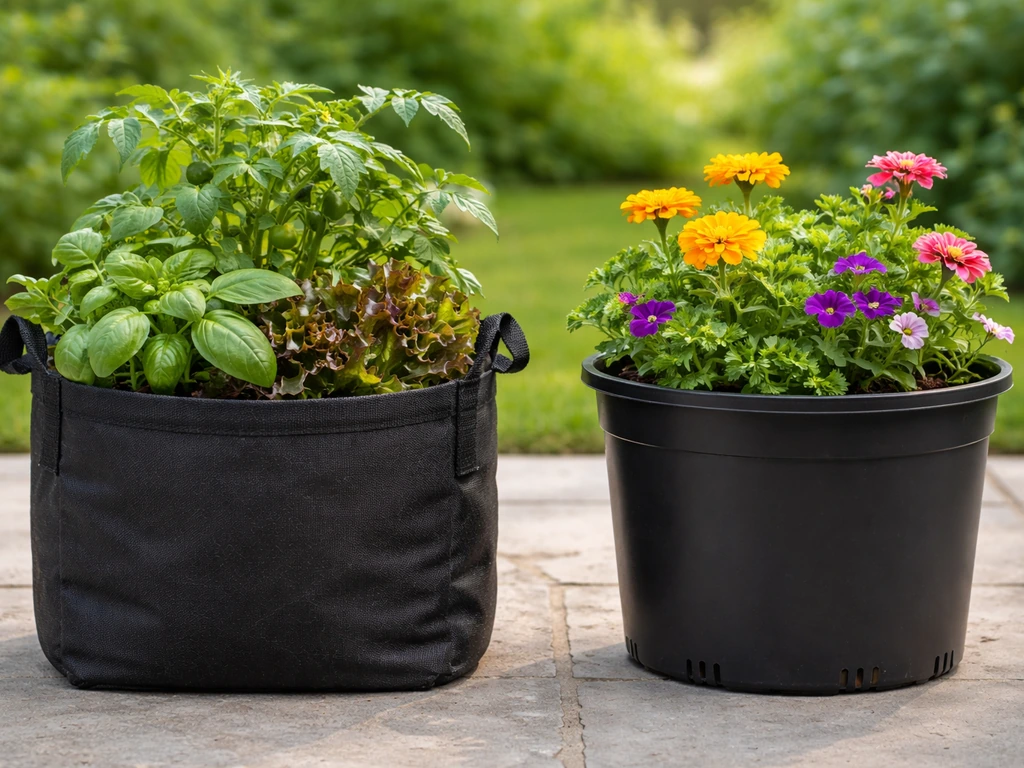
Grow bags vs pots comparison for vegetables, flowers, trees: drainage, aeration, watering, heat, size tips and best choi
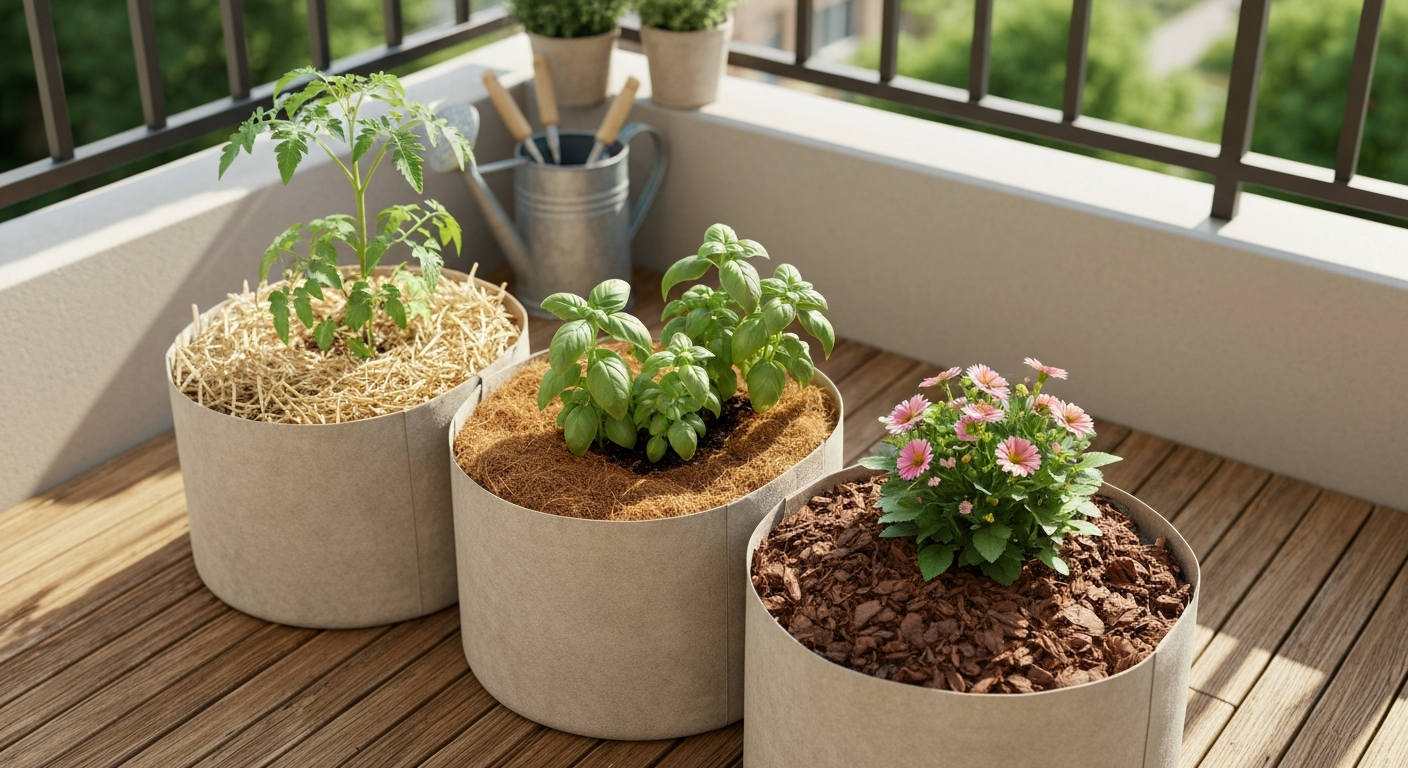
Find the best mulch for fabric grow bags: top picks, how-to apply, crop & climate advice, and troubleshooting.
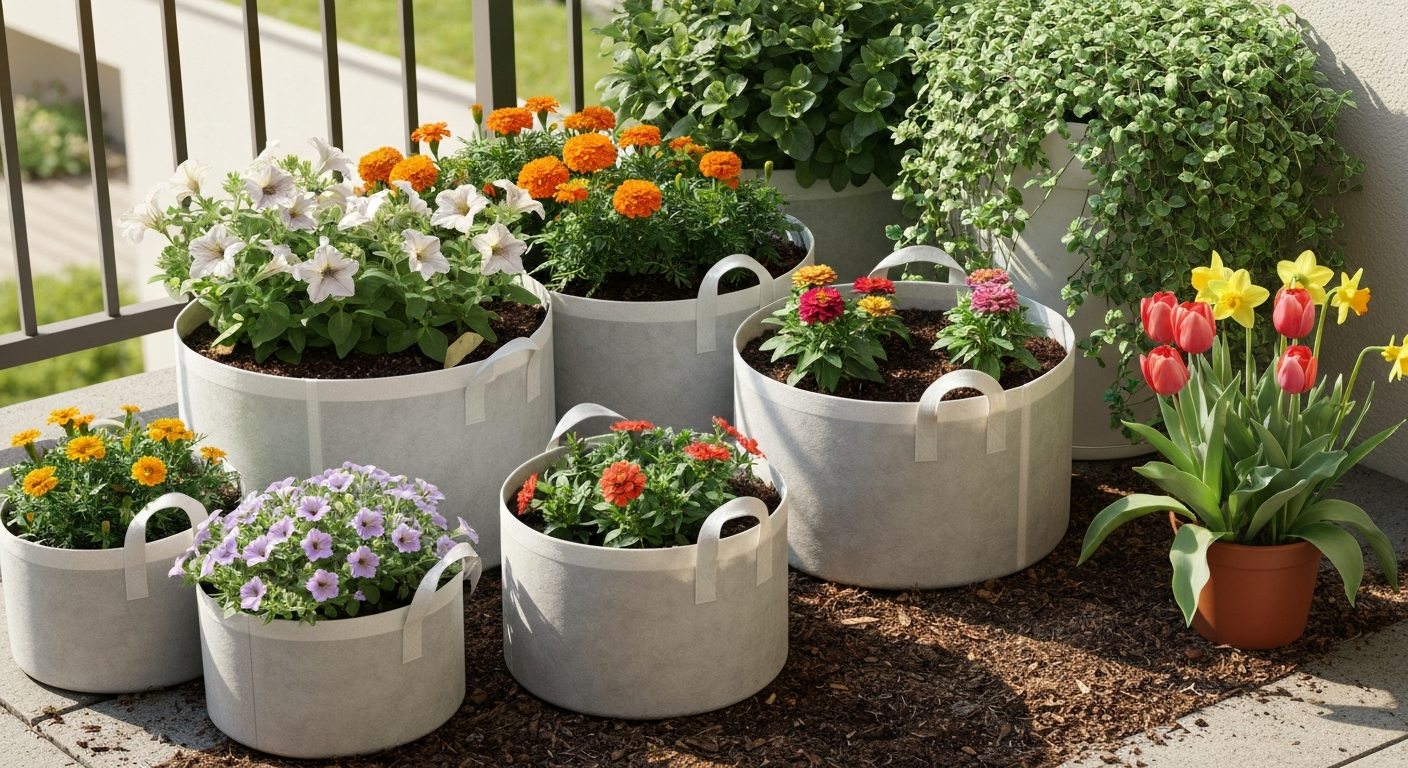
Best flowers for grow bags: top annuals, perennials, bulbs & trailers; soil, fertilizer, planting and care checklists.