Grow bags work brilliantly for a wide range of plants, but the key to getting it right is matching the crop to the correct bag size and understanding why fabric containers behave differently from pots or raised beds. The short answer: tomatoes, peppers, potatoes, lettuce, herbs, strawberries, and most annual flowers are all excellent candidates. Larger roots like carrots and beets do fine with the right depth. Even mushrooms have a place in the grow-bag world. Below I'll walk you through exactly which plants thrive, which bags to use, and what to watch out for so you're set up from day one.
What to Plant in Grow Bags: Best Plants by Size
Marcus Holloway
8 Apr 2026
Best plants for grow bags by category
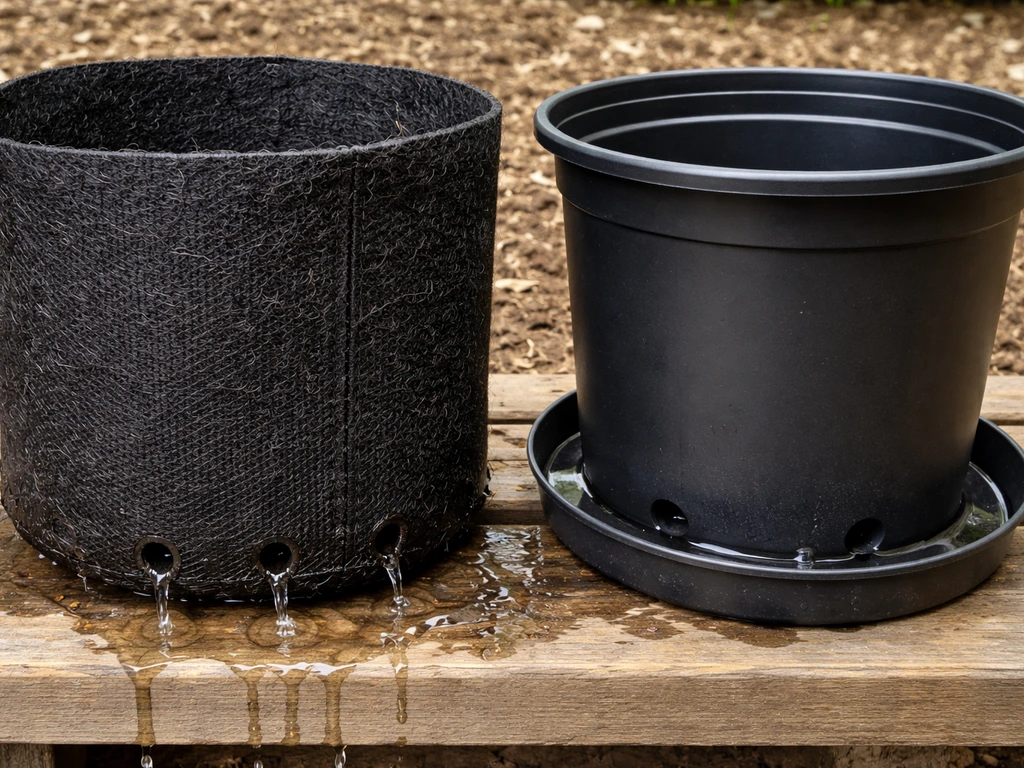
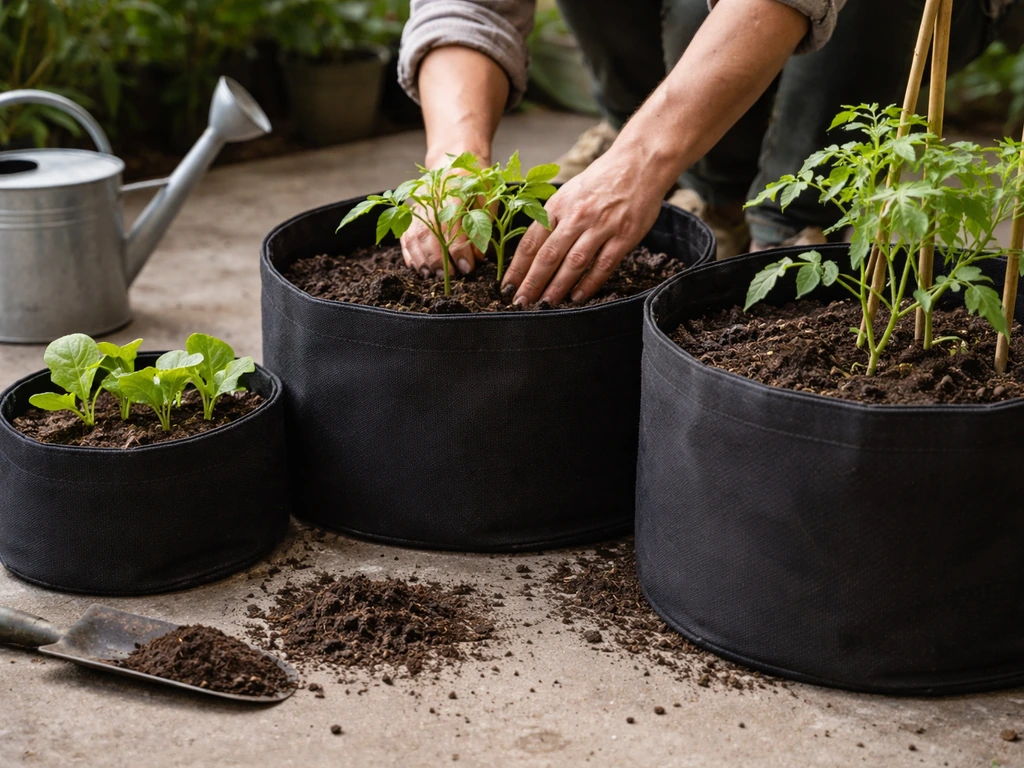
Fabric grow bags excel because their porous walls air-prune roots instead of letting them spiral, and they drain far faster than hard-sided pots. That combination suits plants that want warm, well-oxygenated root zones and hate sitting in waterlogged soil. Here's a quick breakdown before we get into specifics.
| Category | Top picks | Minimum bag size |
|---|---|---|
| Vegetables (fruiting) | Tomatoes, peppers, eggplant, cucumbers | 10–20 gal |
| Vegetables (leafy) | Lettuce, spinach, kale, chard | 5–7 gal |
| Root crops | Potatoes, carrots, beets, radishes, turnips | 10–15 gal |
| Herbs | Basil, mint, parsley, thyme, rosemary | 1–3 gal |
| Flowers (annual) | Petunias, marigolds, nasturtiums, zinnias | 3–5 gal |
| Fruits | Strawberries, dwarf blueberries, dwarf citrus | 5–25 gal |
| Mushrooms | Oyster, shiitake (via substrate bags) | 3–5 gal filter-patch bag |
If you're still deciding whether grow bags are the right move for your situation at all, it helps to first think broadly about what to grow in a grow bag before narrowing down to specific plant lists. Once you've confirmed they fit your space and goals, the sections below will get you into the details.
How to choose the right grow bag for each plant
Bag size matters more than most beginners expect. Too small and the roots get air-pruned so aggressively that the plant stalls; too large and the excess soil stays wet between waterings, which can lead to root rot. The general rule I follow: match the bag volume to what you'd expect in a conventional container, then go one size up if you're in a hot climate where the fabric dries out fast.
The Smart Pot sizing guide is a useful reference point here. It maps 10-gallon bags to peppers, onions, beets, turnips, carrots, and radishes, while reserving 20-gallon bags for tomatoes and melons. Broccoli and cabbage also land in the 10-gallon range, and eggplant sits there too. Those numbers reflect the actual root mass these plants develop at maturity, not just seedling needs, so they're worth taking seriously.
Beyond volume, think about fabric weight and handle quality. A 20-gallon bag full of moist soil weighs 50 pounds or more, so reinforced handles aren't optional if you ever need to move it. Thicker nonwoven polypropylene (typically 300g or heavier) insulates roots better and holds shape longer than thin, budget versions. If you're placing bags on a hard surface, what to put under grow bags is worth thinking through, because standing water and surface heat from concrete can undermine the drainage benefits you're paying for.
Best vegetables to grow in grow bags
Vegetables are where grow bags really shine, especially in small yards, patios, and balconies where raised beds aren't practical. If you want a deeper breakdown of which specific crops deliver the best return in fabric containers, the guide on the best veg to grow in grow bags goes into variety-level detail worth reading alongside this one.
Tomatoes
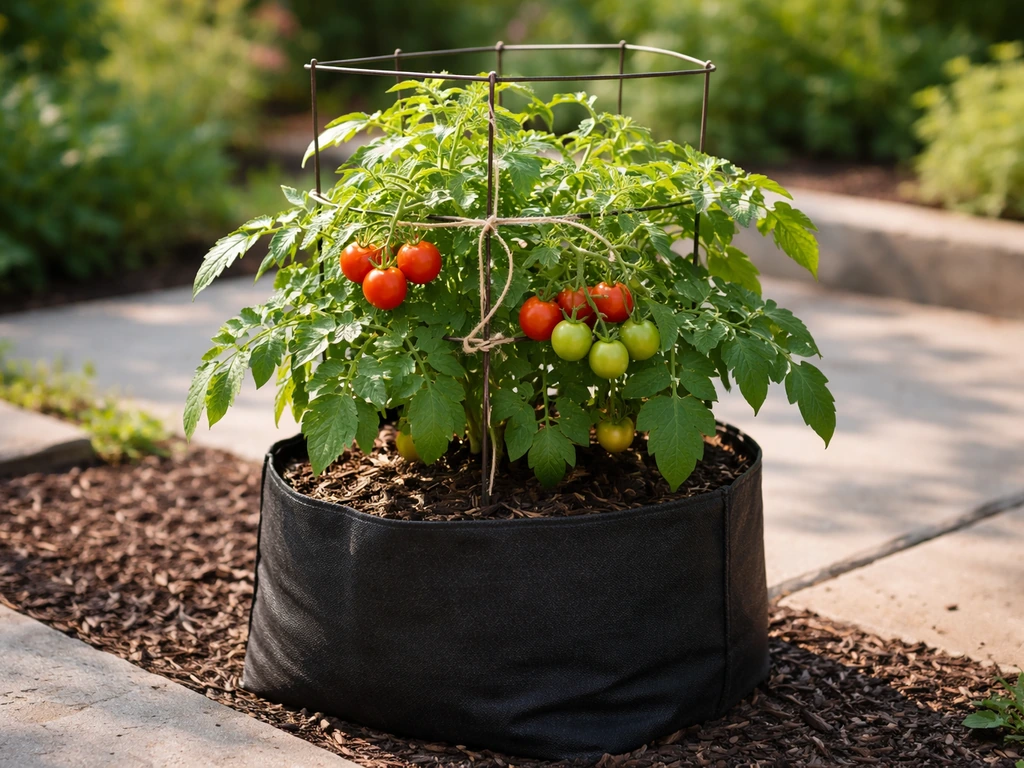
Tomatoes are probably the most popular grow-bag crop, and for good reason. The warm root zone fabric bags create speeds up early-season growth, and determinate (bush) varieties do especially well since they don't grow indefinitely. Use a 20-gallon bag for indeterminate varieties like Cherokee Purple or Sungold, and you can get away with a 15-gallon for compact determinates. One plant per bag, no exceptions. Support the plant with a cage or stake anchored into the bag itself or tied to an external structure.
Peppers and eggplant
Both thrive in 10-gallon bags. Peppers are spaced 12 inches apart in ground beds, which translates to one plant per 10-gallon bag comfortably. Eggplant has a similar root footprint. These crops love heat, and the fabric bag's ability to warm up quickly in spring gives them a real head start. Feed them with a balanced fertilizer every two weeks once fruiting begins, since the faster drainage of fabric containers leaches nutrients more quickly than traditional pots.
Lettuce, spinach, and leafy greens
Leafy greens are ideal for smaller bags (5 to 7 gallons) and are some of the easiest crops to manage. You can fit four to six lettuce plants in a 7-gallon bag, which gives you a near-continuous harvest if you cut outer leaves and leave the center. Kale and chard are a bit bigger and appreciate a 7 to 10-gallon bag with two plants maximum. In warmer months, the one downside is that fabric bags dry out faster, so you may need to water every day. A drip line solves this entirely.
Potatoes
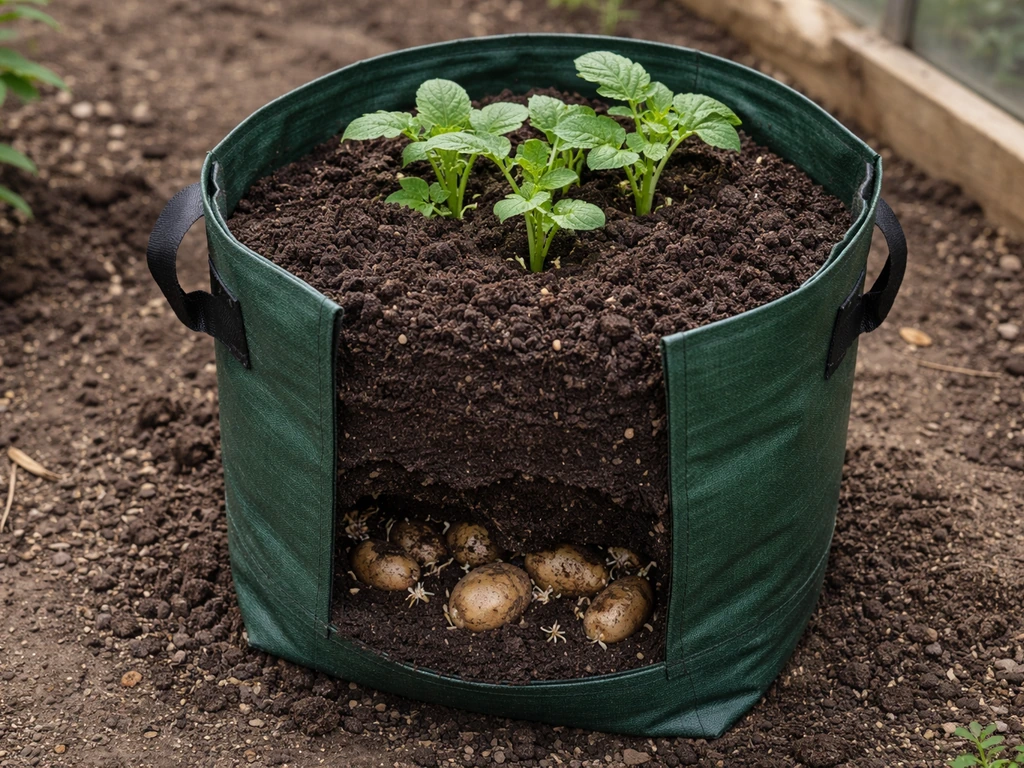
Potatoes are one of the classic grow-bag success stories. You fill the bag partway, plant your seed potatoes, then add more mix as the vines grow (a technique called hilling). A 10 to 15-gallon bag works for early varieties; 20 gallons gives late-season varieties enough room to bulk up. At harvest you just dump the bag, which beats digging in the ground by a wide margin. Expect around 1.5 to 3 pounds of potatoes per 10-gallon bag under good conditions.
Best flowers and herbs for grow bags
Herbs and annual flowers are low-maintenance, fast-rewarding crops for fabric bags. They don't need large volumes, they tolerate the faster drying that comes with fabric, and they look good on a patio or deck while pulling double duty as companion plants near your vegetables.
For herbs, mint is the one I'd always put in its own bag (1 to 3 gallons) because it spreads aggressively and will take over any shared container. Basil loves warmth and does well in a 3-gallon bag; plant three to four starts per bag for a productive clump. Rosemary, thyme, and oregano are drought-tolerant and actually prefer the faster-drying conditions of fabric bags over the moist soil of glazed ceramic pots. A 3-gallon bag with good drainage handles all three. Parsley needs a bit more depth, so bump it up to a 5-gallon bag.
For flowers, petunias and marigolds both work well in 3 to 5-gallon bags. Marigolds are especially useful near tomatoes and peppers as a natural pest deterrent. Nasturtiums are compact, edible, and happy in even a 2-gallon bag. Zinnias and cosmos can get tall, so give them a 5-gallon bag and a light stake if your spot is windy. The key with any flower in a grow bag is fertilizing regularly (every 10 to 14 days with a bloom-focused formula), since the fast-draining medium strips nutrients quickly.
Fruiting crops, roots, and larger plants in grow bags
Strawberries and small fruits
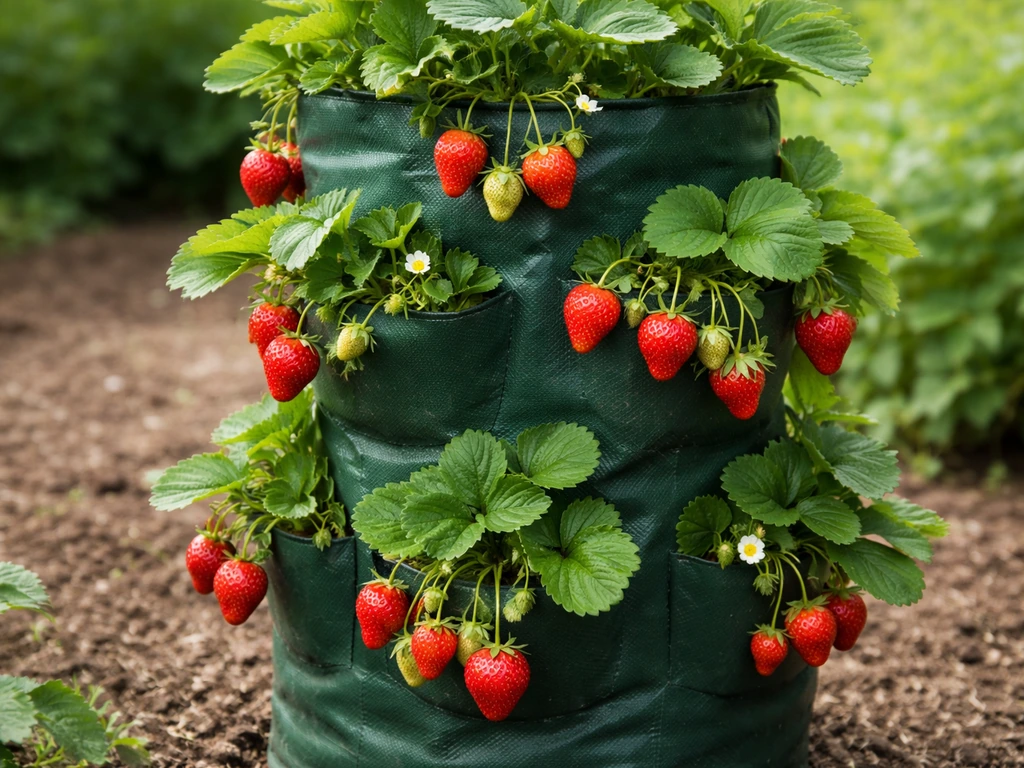
Strawberries are one of my favorite grow-bag crops because the bags can be hung or stacked, turning a tiny space into a serious producer. Everbearing varieties work best for containers; plant one per gallon of volume (so six plants in a 5 to 7-gallon bag). Dwarf blueberry varieties like Sunshine Blue or Top Hat will do well in a 15 to 25-gallon bag with acidic mix (aim for pH 4.5 to 5.5). Dwarf citrus trees in 25-gallon bags are doable, though they need consistent watering and protection from hard freezes.
Carrots, beets, and root crops
The biggest mistake with root crops in grow bags is choosing a bag that's too shallow. Biology Insights notes that carrots typically need about 12, 15 inches of vertical depth in a grow bag, with deeper bags for long-rooted varieties blank" rel="noopener noreferrer">choosing a bag that's too shallow. blank" rel="noopener noreferrer">Carrots need at least 12 inches of depth; short varieties like Chantenay or Danvers 126 top out around 6 to 7 inches and are the smart pick for a 10-gallon bag. Beets and turnips have a similar requirement and fit comfortably in 10-gallon bags at about 3-inch spacing. Radishes are the easiest root crop: they mature in 25 to 30 days and work fine in a 5-gallon bag. Use a loose, well-amended mix with good drainage for all root crops, since compacted soil in a bag causes forked or stunted roots just as it does in the ground.
Cucumbers, squash, and melons
Cucumbers are surprisingly well-suited to grow bags when trained vertically. A 10-gallon bag with one plant and a trellis produces well throughout the season. Summer squash and zucchini need 15 to 20-gallon bags because of their large leaf canopy and root spread, and I'd limit to one plant per bag. Melons are the most demanding: a 20-gallon bag per plant is the minimum, and compact varieties like Bush Sugar Baby watermelon make this much more manageable than full-sized types. A common question here is whether corn fits the same category, and the honest answer is that it's marginal in bags. If you're curious, the article on whether you can grow corn in a grow bag covers the specific challenges and workarounds in detail.
Mushrooms and other non-plant uses for grow bags
Mushroom cultivation is a genuinely popular use for grow bags, though the bags used for this are different from standard fabric planters. Mushroom grow bags are typically made of polypropylene film (not fabric) with a self-healing injection port or a filter patch to allow gas exchange while keeping contaminants out. They're filled with sterilized substrate (usually hardwood sawdust for oyster or shiitake, or supplemented grain for more demanding species), inoculated with spawn, and then colonized in a warm, dark space before fruiting under higher humidity and indirect light.
For home growers, oyster mushrooms (both blue and pink varieties) are the easiest starting point because they colonize fast (7 to 14 days) and tolerate a wider humidity range than shiitake. A 3 to 5-pound substrate bag typically produces two to three flushes of mushrooms before exhaustion. If you're using fabric grow bags for outdoor mushroom beds (burying spent substrate or wood chips), the fabric helps retain moisture while letting excess water drain, which suits wood-loving species like wine caps.
Outside of mushrooms, fabric grow bags are also used for composting (a small bag with drainage works as a compact worm bin), for rooting cuttings, and for hardening off seedlings before transplant. These are niche uses, but they show how versatile the format is beyond standard vegetable growing.
Common mistakes and next-step setup checklist
Most grow-bag problems come down to a handful of recurring issues: underwatering (fabric bags dry out faster than you expect, especially in heat or wind), underfeeding (nutrients leach quickly through the porous walls), using heavy or poorly draining soil mix, choosing a bag that's too small, and placing bags in inadequate light. Here's how each one typically shows up and what to do.
- Wilting in the afternoon despite morning watering: the bag has dried out. Increase watering frequency or add a layer of mulch over the surface to slow evaporation. Consider a drip system for bags in full sun.
- Yellowing lower leaves and slow growth mid-season: nutrient deficiency from leaching. Switch to a weekly liquid feed at half strength rather than a monthly slow-release application.
- Roots showing through the bag wall or circling the inside: the plant has outgrown the bag. Air-pruning should prevent circling, but if roots emerge at the base the bag is too small for the remaining season.
- Bag tipping over in wind or when top-heavy: anchor with a stake through the bag into the ground, use a wider base bag style, or cluster bags together for mutual support.
- Soil compaction and slow drainage after a few weeks: the mix has settled and lost air pockets. Use a mix with at least 30% perlite or coarse material, and avoid pure compost or native soil in bags.
Getting the growing medium right from the start prevents most of these issues. If you haven't sorted out your soil mix yet, the detailed guide on what to fill grow bags with is the logical next read, because the wrong mix will undermine even the best plant selection and bag size choices.
Your setup checklist before you plant
- Choose your plants first, then select bag size based on mature root mass (use the sizing table above as your guide).
- Pick a location that gets at least 6 hours of direct sun for fruiting crops; 4 hours is enough for leafy greens and herbs.
- Decide what you'll place under the bags: a saucer, gravel tray, or wooden pallet to protect the surface and keep airflow under the bag.
- Mix your growing medium: a blend of quality potting mix, compost, and perlite (roughly 60/20/20) works for most vegetables and herbs.
- Fill the bag to about 2 inches below the top rim, leaving room for watering without overflow.
- Plant at the spacing recommended for the crop (for example, 12 inches per pepper plant), and water in well with a diluted liquid fertilizer to reduce transplant stress.
- Set up your watering routine immediately: check the bags daily in warm weather, and consider drip irrigation if you have more than four or five bags.
- Mark your planting date and start a simple feeding schedule: most crops benefit from a balanced feed every 10 to 14 days through the growing season.
Grow bags reward growers who pay attention to the basics. They dry fast, they drain well, and they create the warm root zone that most warm-season vegetables love. Get the plant-to-bag match right, keep up with watering and feeding, and you'll find that fabric containers consistently outperform traditional pots for productivity per square foot of space.
FAQ
Can I plant more than one type of vegetable in the same grow bag?
Yes, but treat it as a “one crop per bag” container system. If you want mixed crops, keep them in separate bags or pair only with a companion that matches the same watering and fertilizer needs, for example basil with peppers. Avoid combining heavy feeders with light feeders, because faster nutrient leaching in fabric makes the imbalance show up quickly.
What happens if I put extra plants in a grow bag that is the right size?
For most fruiting crops listed (tomatoes, peppers, eggplant), you should plan on at least one plant per recommended bag size, not per “seedling.” If you crowd, air-pruning and root competition reduce yield even if the bag size is large. For leafy greens, crowding is different since you harvest outer leaves, so it still follows the lettuce or kale spacing guidance in the article.
If my climate is hot or windy, should I choose a bigger bag than the size recommendations?
Use bag size plus your irrigation method to decide. If you are hand-watering, pick a slightly larger bag than the minimum to reduce dry-out spikes, especially for warm-season crops. If you install drip irrigation, you can usually stay within the recommended size ranges because the root zone stays evenly moist.
How can I prevent carrots or other roots from forking in grow bags?
Not exactly. The article covers depth for root crops, but you also need to ensure the top portion of the medium is loose. If you pack the mix tightly or leave it crusted, roots can fork even when depth seems adequate. Aim for a loose, airy mix and avoid compressing the soil when planting.
When should I start fertilizing tomatoes and peppers in grow bags, and how strict should the schedule be?
For tomatoes and peppers, start feeding after fruit set rather than immediately after transplant, because young plants still rely on the initial mix nutrients. Use a consistent schedule every 2 weeks as described, and if you switch fertilizers, match the ratio and do not double-dose. In fabric bags, sudden nutrient changes often cause leaf yellowing before you notice reduced fruiting.
Do dwarf or patio varieties of tomatoes work well in grow bags?
Yes, but only for varieties that stay compact and use the correct bag size. Determinate tomatoes are the most reliable option because they stop growing, which keeps them manageable in smaller bags. For indeterminate types, the article specifies a larger bag and one plant per bag, and you should still provide support.
Can I use the same fabric grow bags for mushrooms as I use for vegetables?
Mushroom grow bags are a different system, they are usually film-based with an injection port or filter patch, and they use sterilized substrate and controlled humidity and light. Do not try to use regular fabric grow bags with lawn-and-garden soil, or you will struggle with contamination and poor yields.
Are grow bags good for rooting cuttings or hardening off seedlings?
You can root cuttings or harden off seedlings, but do it only with the right medium and drainage. Use a lighter, fast-draining mix for rooting and keep the bags out of harsh midday sun during hardening off. Fabric containers dry fast, so watch for wilting within the first few days.
How do I prevent tall grow-bag plants from tipping in wind or rain?
Yes, but choose support carefully. For tall crops, anchor cages or stakes into the bag or tie to a sturdy external structure, then confirm the bag is on a stable surface. Wind can tip both the plant and the bag once foliage fills in, so place bags where you can secure them and use reinforced handles if you need to move them.
What are the most common mistakes when growing strawberries or blueberry-type plants in grow bags?
Strawberries can be very productive, but two common pitfalls are overwatering and insufficient chilling for certain cultivars. Keep the medium evenly moist, not soggy, and for dwarf blueberry types use acidic mix at the target pH the article mentions. If you live in a mild winter area, you may need varieties that perform in your local chill conditions.
How do I troubleshoot whether my grow bag problem is watering, soil mix, or fertilizing?
Most issues come from the basics the article lists, but one practical diagnostic is to check the medium moisture 1 inch below the surface. If it feels dry and the plant is wilting, increase watering frequency or add drip. If it stays wet and plants look stunted or yellow, the issue is usually soil mix density, drainage, or an oversized bag.
Next Articles
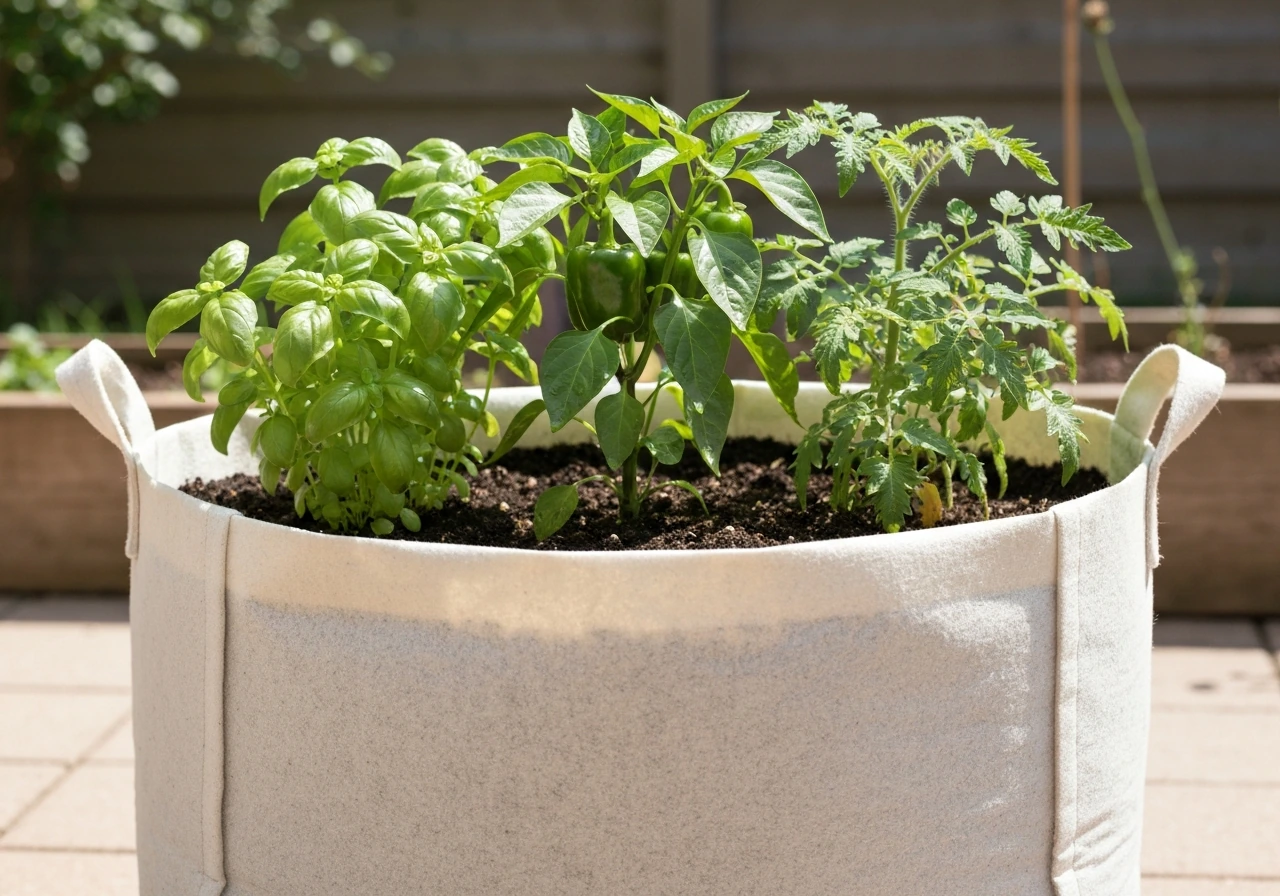
What to Grow in a Grow Bag: Best Crops by Category
Best crops for grow bags by category plus bag size, soil, depth, watering, feeding, and fixes for common problems.
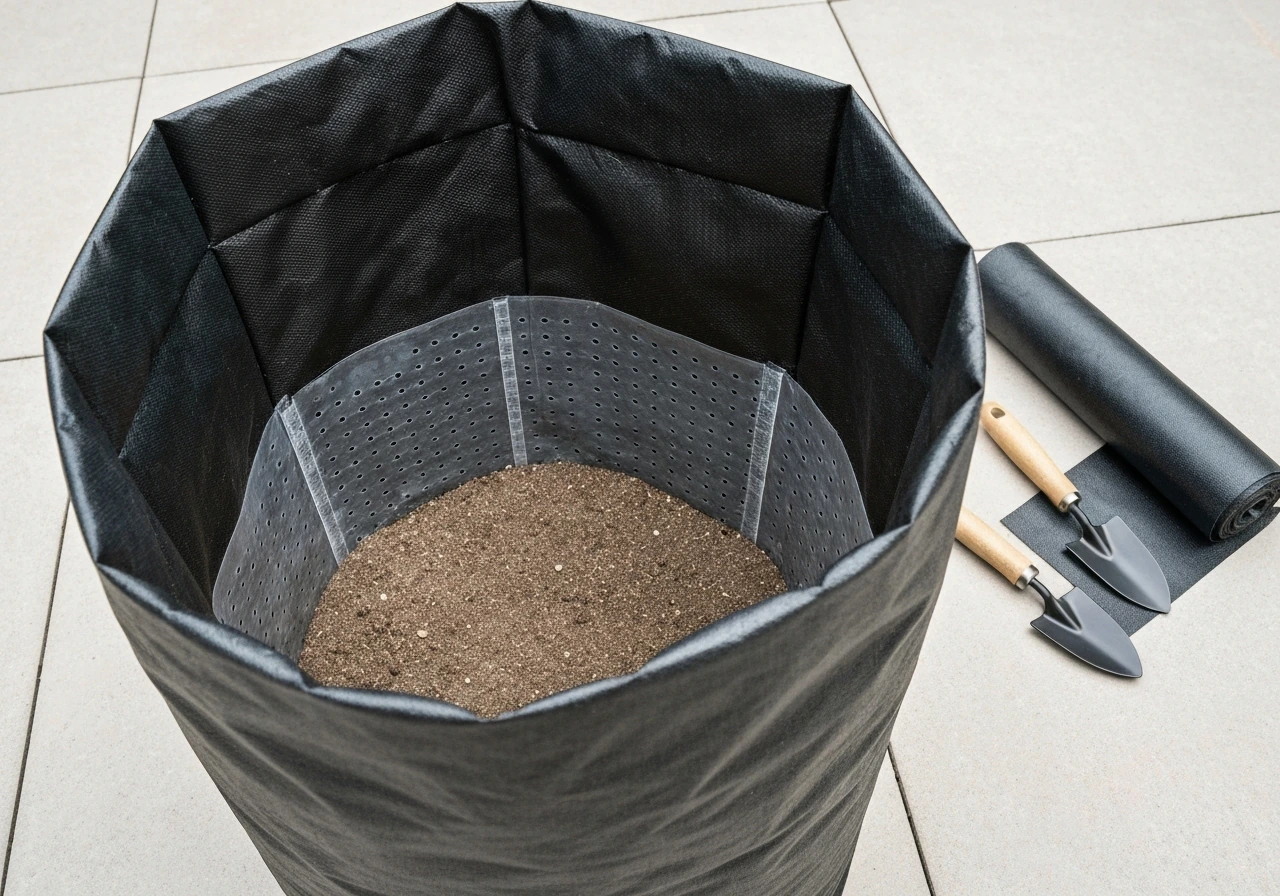
Best Landscape Fabric for Grow Bags: Buy and Install Guide
Choose the best landscape fabric for grow bags with weed-blocking, drainage and aeration tips plus DIY install steps.
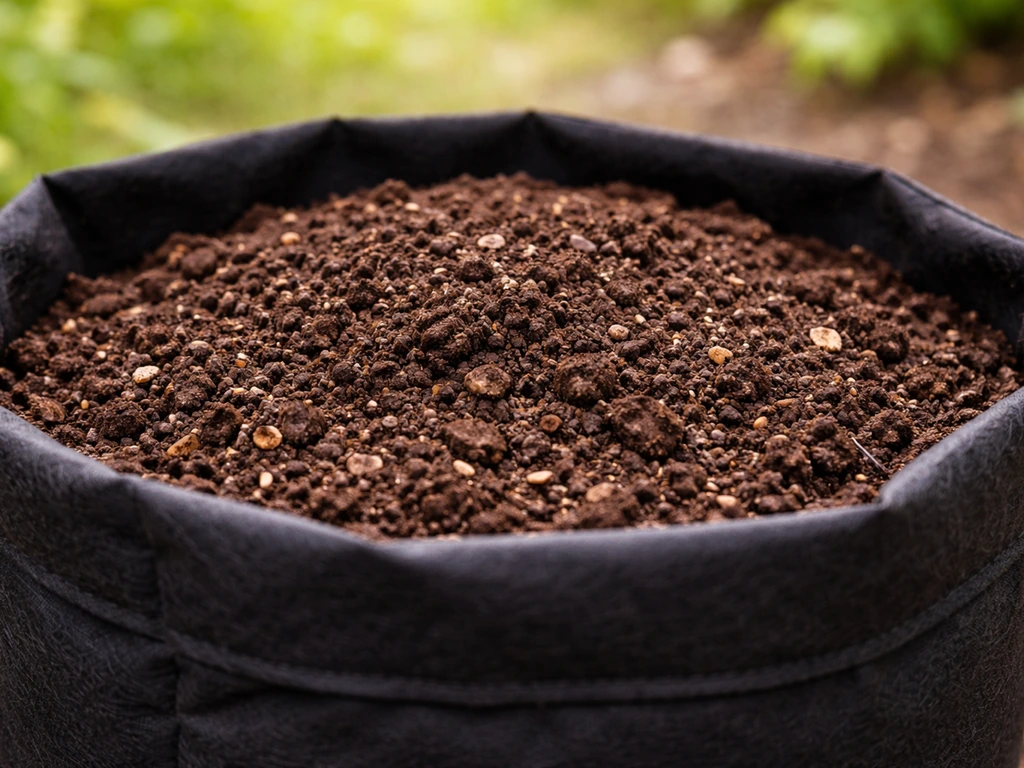
Best Soil for Grow Bags: Mix Recipes and How Much to Add
Best soil for grow bags: mix recipes, how much to add by bag size, and vegetable tweaks for strong drainage and yield.