Grow bags work well for a surprisingly wide range of plants, but the quick wins are tomatoes, peppers, potatoes, herbs, lettuce, and strawberries. These crops thrive in fabric containers because the air-pruning effect keeps roots healthy, the drainage is excellent, and most of them fit comfortably into 5- to 20-gallon bags that are easy to manage on a patio, balcony, or in a greenhouse.
What to Grow in a Grow Bag: Best Crops by Category
Marcus Holloway
7 Apr 2026
If you want to start today, grab a 10-gallon bag for tomatoes or peppers, a 5-gallon for herbs or greens, and a 20-gallon if you're going for potatoes. That's the short answer. The rest of this guide gives you the details by crop category so you can match the right plant to the right bag and actually get a harvest.
Best plants for grow bags (quick picks)
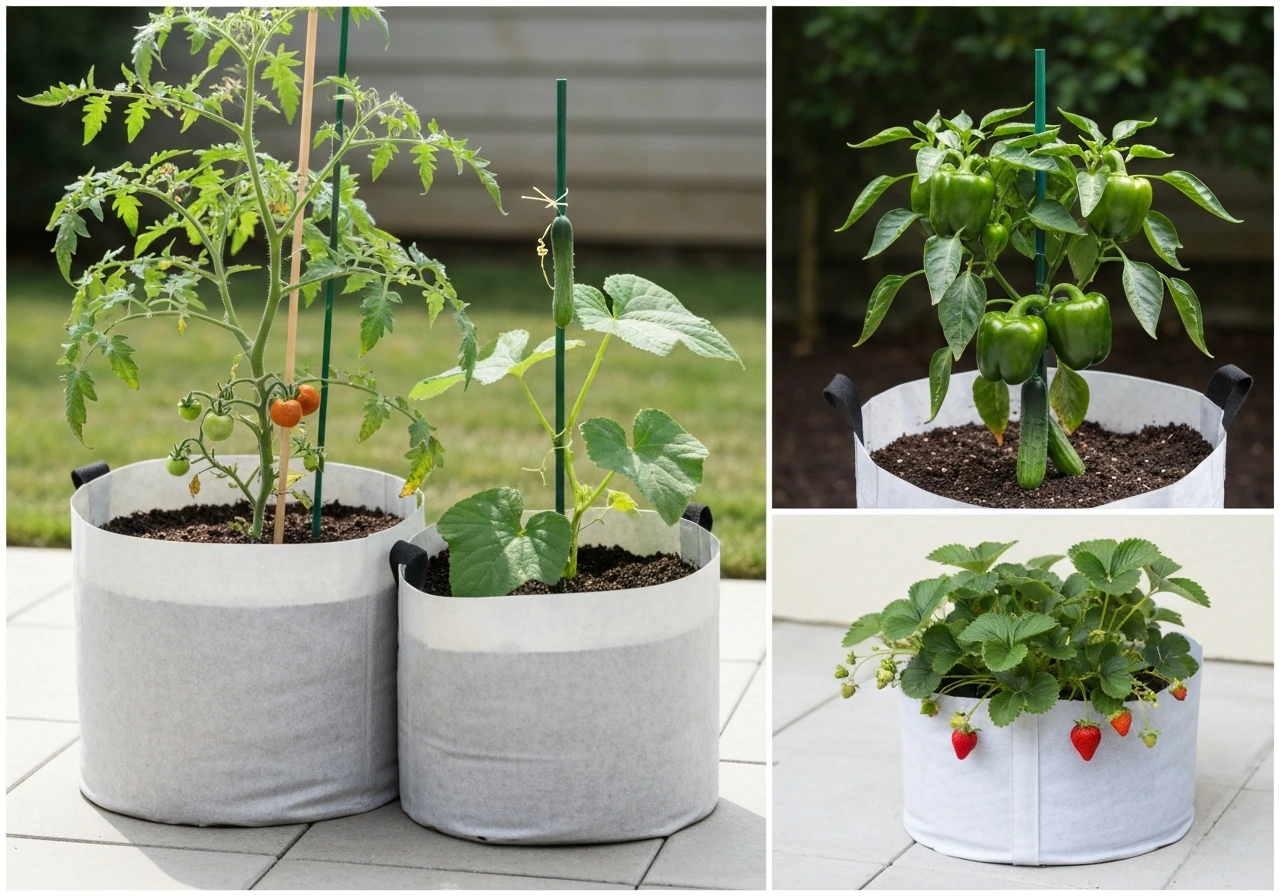
These are the crops that consistently perform well in fabric grow bags, whether you're a first-timer or you've been growing in containers for years. They suit the way fabric bags behave: fast drainage, steady airflow to roots, and a tendency to dry out faster than plastic pots.
- Tomatoes (determinate and indeterminate varieties) — 10 to 20 gallons
- Peppers (bell, chili, sweet) — 5 to 10 gallons
- Potatoes — 10 to 20 gallons
- Strawberries — 5 gallons
- Basil, cilantro, thyme, oregano, and mint — 2 to 5 gallons
- Lettuce, spinach, kale, and arugula — 5 to 10 gallons
- Zucchini and summer squash — 15 to 20 gallons
- Beans (bush varieties) — 5 to 10 gallons
- Marigolds, nasturtiums, and petunias — 3 to 5 gallons
These plants share a few traits that make them naturally suited to grow bags: moderate-to-deep root systems that benefit from air pruning, a preference for well-drained soil, and a growth habit that doesn't demand enormous volumes of soil to produce a worthwhile crop. If you want a broader look at the full range of options, the guide on what to plant in grow bags covers the topic from multiple angles, including some crops people overlook.
Vegetables that thrive in grow bags
Tomatoes are the grow-bag poster child for good reason. They need deep, well-drained soil, respond well to the air-pruning that fabric walls provide, and the portability of a bag means you can chase sunlight or bring plants in before a frost. Use a minimum of 10 gallons per plant for determinate varieties and go up to 20 gallons for indeterminate types that keep growing all season. University of Arkansas extension guidance suggests 5 to 6 gallons of soil volume per tomato plant as a minimum, so treat 10 gallons as a practical floor, not a ceiling.
Peppers are similarly well-suited. A single pepper plant does well in a 5-gallon bag, though moving up to 7 or 10 gallons gives the roots more room and reduces how often you need to water. Potatoes are one of the most rewarding grow-bag crops because you can add soil in layers as the plants grow, then dump the bag at harvest instead of digging. A 10- to 20-gallon bag gives you enough depth to hill properly and a decent harvest per plant.
Zucchini and summer squash can be grown in bags, but they need 15 to 20 gallons and consistent watering because their large leaves lose moisture fast. Bush bean varieties do well in 5- to 10-gallon bags and are particularly good for beginner growers because they're forgiving and fast. Radishes, being quick-maturing root crops, work in bags as shallow as 8 to 10 inches deep, making them great for smaller containers. The best veg to grow in grow bags goes deeper on which vegetable varieties perform best within each category, including which tomato and pepper types are worth prioritizing for container growing.
One vegetable people often ask about is corn. The honest answer is that it's possible but tricky: corn needs to be planted in blocks for pollination, which means you need several large bags clustered together. Growing corn in a grow bag is a full topic on its own, and it's worth reading before you commit to it, because the setup requirements are more involved than most container crops.
Herbs, salad greens, and compact crops
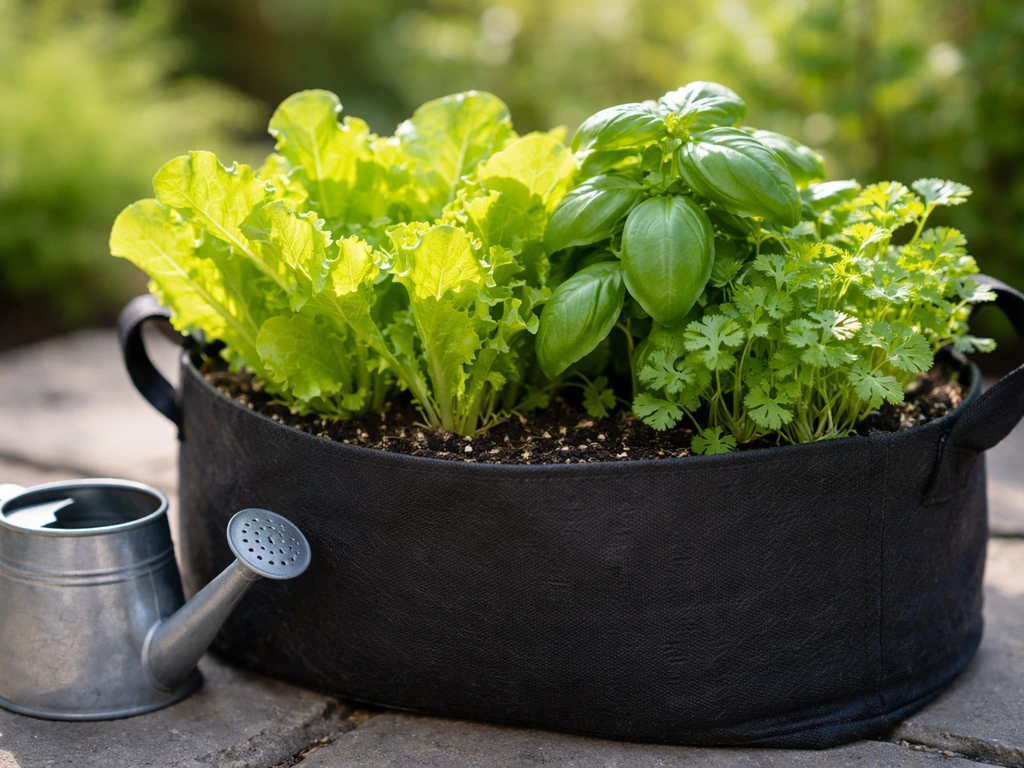
This is arguably where grow bags shine most for everyday home growers. Herbs are low-maintenance, fast-growing, and don't need much space. Basil, cilantro, thyme, oregano, and mint all grow well in 2- to 5-gallon bags, according to University of Maryland Extension guidelines for small-statured herbs in containers. Mint is worth keeping in its own bag because it spreads aggressively and will crowd out anything else sharing the space. Basil's roots reach 8 to 12 inches deep and cilantro 8 to 18 inches, so even a modestly sized bag gives them what they need.
Lettuce and other salad greens are excellent grow-bag crops. Leaf lettuce, spinach, baby greens, kale, and arugula can all be direct-seeded or transplanted into 5- to 10-gallon bags and harvested using a cut-and-come-again approach. University of Maryland Extension notes that lettuce and similar greens can be cut twice each growth cycle before the plant needs replacing, which is ideal for anyone who wants a steady supply of fresh greens without replanting constantly. Kale, mustard greens, and arugula are all in the Brassicaceae family and adapt well to container salad-table systems, so they're naturally suited to grow bags too.
For spacing, tighter is fine with baby leaf crops. Utah State University Extension recommends tighter spacing for leaf lettuce, spinach, baby greens, kale, and arugula compared to heading crops, so you can sow more densely in a single bag and still get a full harvest. A 10-gallon bag can realistically support a mix of cut-and-come-again greens for one or two people through a season.
Flowers and annuals in grow bags
Grow bags aren't just for edibles. Annual flowers do very well in fabric containers, and they serve double duty if you grow them near your vegetables: marigolds repel aphids and whiteflies, nasturtiums attract pollinators and are edible, and both adapt happily to 3- to 5-gallon bags. Petunias, pansies, and snapdragons are other solid options for containers where you want color on a balcony or patio without permanent planting.
The main consideration with flowers in grow bags is sun exposure and watering frequency. Annual flowers that prefer full sun will push the bag to dry out quickly, especially in summer heat. Position the bags where they get the right light, and check moisture daily during warm spells. Fabric bags lose moisture through their walls as well as the base, so flower-filled bags in full sun may need watering once or even twice a day in peak summer. Grouping several bags together slightly reduces evaporation from the sides by creating a little microclimate between containers.
Trees, shrubs, and other larger plants (when to use them)
Yes, you can grow trees and shrubs in grow bags, but this works best in specific scenarios. Dwarf citrus (lemon, lime, kumquat), dwarf apple trees, blueberry bushes, and fig trees are all commonly grown in large fabric containers. The key word is large: you're looking at 25- to 45-gallon bags for established trees and shrubs, and even then, you'll need to repot or refresh the root ball every few years as the plant grows.
The reason to choose a grow bag over a hard plastic pot for trees comes down to root health. Smart Pot's research references university and nursery trials showing that fabric containers produced larger, more balanced root systems and plants reached marketable size sooner than those grown in plastic, specifically because of the air-pruning effect. When roots hit the fabric wall and are air-pruned instead of circling around the container, the plant responds by sending out more lateral feeder roots, which means better nutrient uptake and a healthier plant overall.
The practical downside with trees and shrubs is weight and watering. A 25-gallon bag filled with moist soil is heavy and hard to move. And unlike a smaller herb bag where you can miss a watering day without disaster, a large tree in a fabric bag during a hot summer can suffer quickly if the soil dries out completely. These plants work best in a permanent or semi-permanent location with a drip irrigation setup. If you're growing blueberries or citrus specifically, it's also worth using an acidic potting mix formulated for those plants rather than a generic container mix.
How to choose the right grow bag size and type for each crop
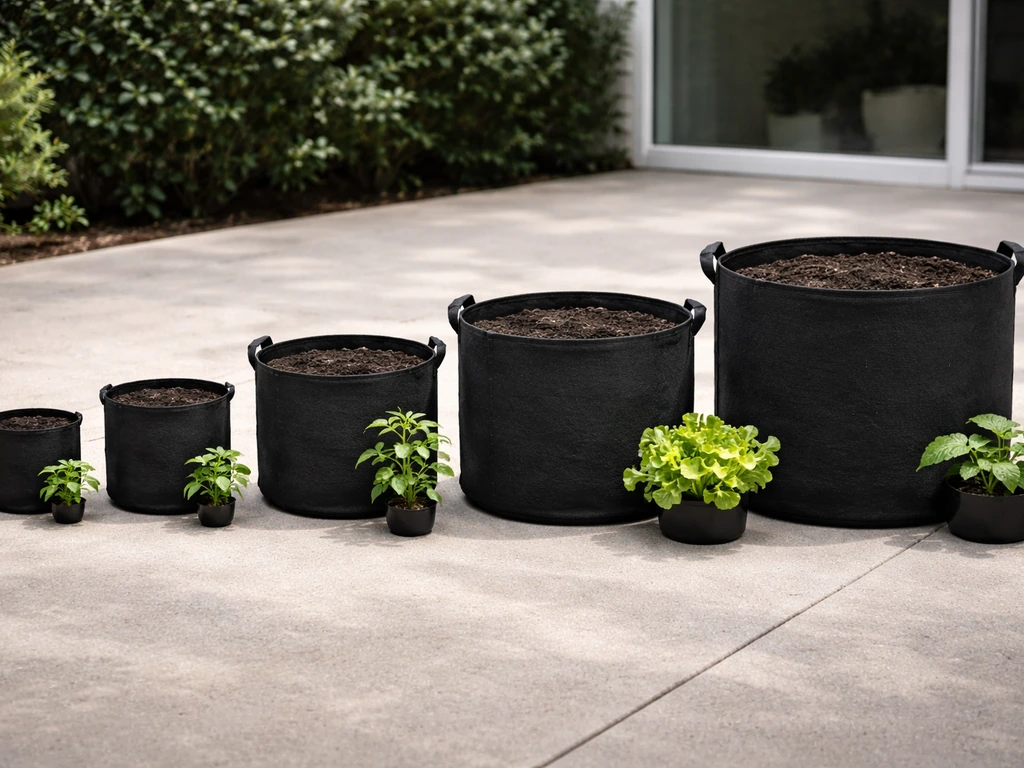
Size is the most important decision you'll make when choosing a grow bag. Too small and the plant runs out of root space, dries out between waterings, and underperforms. Too large and you're wasting potting mix and the bag becomes hard to manage. Here's a practical size reference based on common crop categories:
| Plant Type | Recommended Bag Size | Approximate Diameter (5-gal reference: 12 in) | Notes |
|---|---|---|---|
| Herbs (basil, cilantro, mint, thyme) | 2–5 gallons | 10–12 inches | One herb type per bag; mint especially needs its own space |
| Lettuce, arugula, spinach, baby greens | 5–10 gallons | 12–16 inches | Can grow several plants per bag; great for cut-and-come-again |
| Peppers (all types) | 5–10 gallons | 12–16 inches | One plant per bag; go larger for hotter climates |
| Bush beans, radishes, strawberries | 5–10 gallons | 12–16 inches | Beans: several plants per bag; strawberries: one to two per 5-gal |
| Tomatoes (determinate) | 10–15 gallons | 16–18 inches | Minimum 10 gallons; one plant per bag |
| Tomatoes (indeterminate), zucchini | 15–20 gallons | 18–20+ inches | One plant per bag; needs staking or support structure |
| Potatoes | 10–20 gallons | 16–20 inches | Larger bags allow better hilling; dump to harvest |
| Dwarf trees, blueberries, shrubs | 25–45 gallons | 22–30+ inches | Plan for permanent placement; consider drip irrigation |
For fabric type, most standard nonwoven polypropylene fabric bags (the kind you'll find from brands like Smart Pot or Gro Pro) work well for all the crops listed above. Gro Pro publishes actual diameter and height specs for each gallon size, which is useful because "5 gallons" from different manufacturers can mean slightly different physical dimensions. For example, a Smart Pot 5-gallon bag has a listed diameter of 12 inches, which is a helpful reference point when you're planning how many bags will fit in a given space. If you're growing root vegetables or anything that needs extra depth, look at the height spec, not just the gallon volume, and choose a taller bag over a wider, shallower one.
Before you set your bags down, think about what's going underneath them. On concrete or gravel, drainage is usually fine but bags can leave rust-colored stains as minerals leach out with the water. On wood decking or grass, you want air circulation underneath so the roots at the base don't get waterlogged. The guide on what to put under grow bags covers this well and is worth a quick read before you set up your growing area.
Planting tips, soil mix, watering, and troubleshooting by plant type
Getting your soil mix right
Don't fill grow bags with garden soil. For container gardening, MSU Extension recommends using potting mix (purchased or made) rather than field soil in containers [use a proper potting mix](https://www. canr. msu.
edu/resources/containergardeningwithvegetablesherbs). It compacts, drains poorly, and will suffocate roots. You need a proper potting mix. Penn State Extension recommends a soilless mix built around peat moss plus vermiculite or perlite, with added compost or organic fertilizers.
Penn State Extension also notes that a suitable container mix of peat moss, vermiculite or perlite, and compost or organic fertilizers supports water-holding capacity, nutrient content, and aeration peat moss plus vermiculite or perlite with added compost or organic fertilizers. This combination gives you water-holding capacity, nutrients, and the aeration that roots need, particularly in a fabric container where you're already encouraging air pruning.
University of Vermont Extension advises using 20% to 50% compost by volume in organic potting mixes, with the exact amount depending on crop type, container size, and conditions. For heavy feeders like tomatoes, lean toward the higher end of that compost range.
If you're mixing your own, a solid starting recipe is: roughly 50% peat moss or coco coir, 25 to 30% perlite or vermiculite, and 20 to 25% compost. Adjust toward more perlite for herbs that prefer drier conditions (thyme, oregano) and more compost for heavy feeders like tomatoes and squash. If you're buying premixed, look for a container-specific potting mix rather than a general-purpose garden soil. Knowing what to fill grow bags with in more detail will help you plan quantities and avoid common mix mistakes, especially if you're filling several large bags at once.
Watering fabric grow bags
This is where most beginners get surprised. Fabric bags dry out faster than plastic pots because moisture evaporates through the walls, not just from the soil surface. Washington State University Extension advises checking moisture by poking into or pulling at the mix to feel how dry it is, then saturating the potting mix thoroughly with excess water draining freely. Missouri Extension reinforces the same principle: water deeply and thoroughly rather than lightly and frequently. The goal is to fully wet the entire root zone, let it drain, and then let the top inch or so dry before watering again.
In practice, this means checking your bags daily during warm weather. Small bags with herbs may need watering every day in summer. Large bags with tomatoes may need watering every one to two days. Some commercial fabric systems (like GardenSoxx kits) are designed around automated drip irrigation running multiple times per day, which shows just how water-hungry fabric containers can be in a production setting. For home growers, the simplest solution is a drip irrigation timer on your most water-hungry crops and daily manual checks on smaller herb and greens bags.
Feeding your plants in grow bags
Container plants need regular feeding because nutrients flush out with every watering. Use a water-soluble fertilizer with a balanced NPK formula rather than a high-nitrogen fertilizer designed for lawns, as recommended by UC Cooperative Extension. Balanced formulas support root, stem, leaf, and fruit development without pushing excessive leafy growth at the expense of flowers and fruit. For most vegetable crops, start fertilizing about two to three weeks after planting and continue every one to two weeks through the season. University of Vermont Extension specifically advises not giving vegetables high-nitrogen fertilizers mid-season, which can delay or reduce fruiting in crops like tomatoes and peppers.
Troubleshooting common grow bag problems
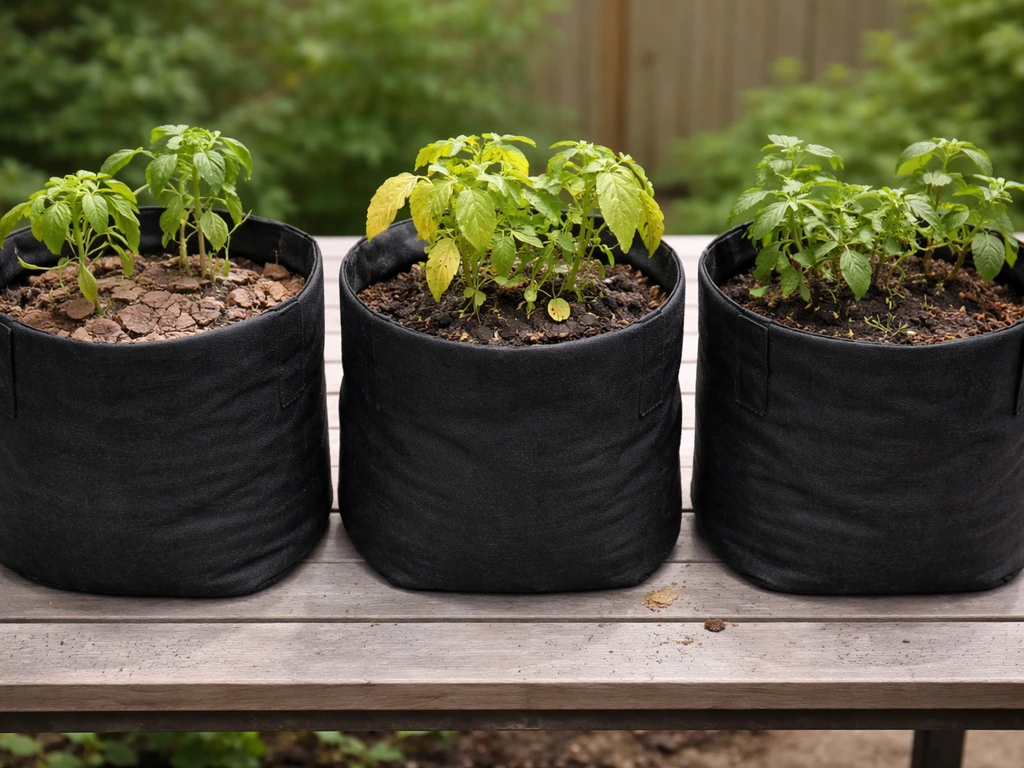
The most common issue is the bag drying out too fast. If you're watering daily and the soil still seems bone dry by evening, you have a few options: group bags together to reduce evaporation from sidewalls, add a layer of mulch on top of the soil surface, or move the bag to a spot with afternoon shade during the hottest part of the day. You can also consider double-potting (slipping the grow bag inside a slightly larger container) to reduce sidewall moisture loss, though this reduces some of the air-pruning benefit.
Poor growth despite regular watering and feeding usually points to one of three things: compacted or poorly draining soil, not enough sunlight, or a bag that's too small for the plant. Check your potting mix to make sure it still has structure and isn't turning into a dense, waterlogged mass. If it is, work in more perlite when you repot next season.
Root health issues are less common with fabric bags than with plastic because the air-pruning effect prevents roots from circling. But if you're seeing roots poking through the bag walls or the plant is wilting despite moist soil, the plant has outgrown the container. Move it up to a larger bag. For pests, fabric grow bags don't offer any special protection from common problems like aphids, spider mites, or fungus gnats. Fungus gnats in particular are attracted to moist organic matter, so if you're overwatering or using a mix with a lot of fine organic material, you may see them. Letting the top inch of soil dry between waterings is usually enough to break their cycle.
Drainage problems in grow bags are rare if you're using a proper potting mix, but they can happen if garden soil or heavy compost gets packed into the bag. If water sits on the surface for more than a few seconds after watering, the mix has compacted or the perlite ratio is too low. The fix is repotting with a lighter mix. Fabric bags rarely cause standing water issues on their own since the walls are permeable, but a clogged or heavily compacted mix can defeat even the best fabric.
FAQ
Can I plant more than one crop in the same grow bag, or should I use one plant per bag?
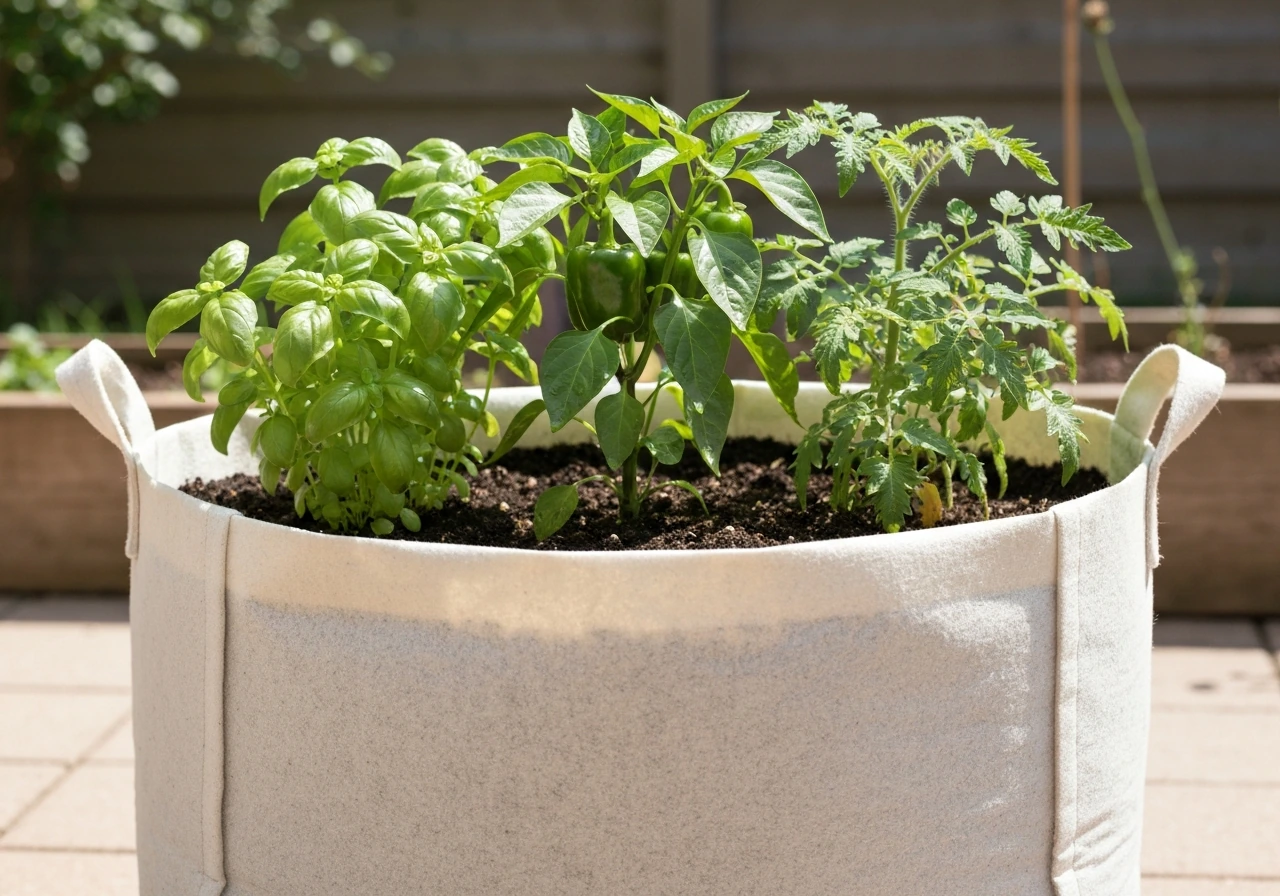
Most beginners should start with 1 plant per bag, then move to pairs or mixes only for compatible, shallow-root crops. If you want to combine plants, keep them from competing for the same soil depth and water needs, for example basil with peppers in separate bags, or multiple cut-and-come-again greens only if they share similar watering and light requirements.
What’s the safest grow bag size to choose if I’m not home every day to water?
Sizing is crop-specific, but a good rule is to base decisions on water demand, not just growth speed. Large-leaf plants (like squash) and fruiting vegetables (like tomatoes) lose moisture faster and transpire more, so if you are away often, choose a larger bag than the minimum and add mulch on top.
How soon after planting or transplanting should I water and fertilize in a grow bag?
Do it slowly and deliberately. After transplanting, keep the first week on the drier side of “normal” (so the roots seek moisture) but never let the mix fully dry out, then gradually return to your regular watering rhythm. Sudden heavy feeding right after transplanting can stress roots, especially in fabric containers that dry fast.
Can I use regular garden soil in a grow bag?
No, because it can compact and reduce aeration in fabric containers. Use a soilless potting mix (peat or coco based) with perlite or vermiculite for structure. If you only have garden soil, you can still use it as a small portion, but keep the majority as container mix, otherwise you risk slow drainage, poor root growth, and failed harvests.
My plant looks unhealthy, how do I tell if the problem is light, water, soil, or bag size?
It depends on the symptom. If the plant is small and leaves look pale but the mix stays wet, suspect insufficient light rather than fertilizer. If the top is dry and the plant wilts even though you watered recently, the bag may be too small or the mix may be draining too quickly.
What watering approach helps prevent issues like blossom-end rot in grow-bag tomatoes?
For tomatoes, peppers, and other fruiting plants, consistent moisture beats frequent light watering. Water until excess drains freely, then wait until the top inch feels dry before watering again. This approach reduces blossom-end rot risk in tomatoes by preventing wide swings in soil moisture.
Can I set up automatic watering for grow bags, and will drip irrigation eliminate the need for manual checks?
Yes, but the system matters. Drip irrigation often works best when paired with a timer and at least one pressure regulator if your water source fluctuates. Even with drip, you should still do manual moisture checks, because fabric bags can dry differently depending on wind, sun, and bag fabric.
When is it better to move to a bigger grow bag versus adjusting the watering or potting mix?
If the bag is the problem, you typically see roots reaching through the fabric and the plant wilting quickly even right after watering. In that case, moving up a size is usually the fix. If the plant is wilting with consistently wet mix, check for a too-dense soil mix or clogged drainage rather than simply watering more.
How do I keep lettuce and other greens producing for as long as possible in grow bags?
To keep salad greens producing, cut often and re-sow or replenish before the plants bolt. Use cut-and-come-again harvesting, remove only what you need, and keep soil moisture steady so leaves stay tender. When growth slows or stems elongate, it’s time to replace plants rather than forcing more harvests from aging crowns.
Where should I place grow bags to avoid stains or water damage, especially on concrete, decking, or grass?
Watch for mineral staining and mess. If the bags are on concrete, place them on a water-absorbing mat or use a catch system designed for containers, and rinse any stained spots periodically. On wood or grass, ensure airflow underneath and avoid standing-water trays unless you can manage drainage so the roots are not sitting in runoff.
Can I grow in grow bags year-round, and what usually needs protection in winter?
Yes, but there are practical limits. In most climates, you can over-winter hardy herbs with protection, but full-season fruiting crops like tomatoes will not survive frosts unless you bring them inside or use a greenhouse and supplemental heat. Choose crops that match your cold tolerance, and if you overwinter, keep watering minimal and light protection ready for sudden cold snaps.
Which herbs should not be mixed together in the same grow bag, and why?
Mint is the main “must-have its own bag” plant because it spreads through runners and will overwhelm nearby containers. Other plants can share a bag if they have similar root depth and watering needs, but mint should not be mixed. If you do want mint with other herbs, keep it separate even if it is the same herb blend.
How do I prevent fungus gnats in grow bags, especially when I’m using a mix with compost?
Fungus gnats usually show up when the mix stays consistently damp, especially with fine compost. Let the top inch dry between waterings, reduce organic fines if you’re mixing your own, and consider sticky traps to break the adult cycle. If you frequently see larvae, adjust watering first before adding more fertilizer, because wet conditions worsen both gnats and root stress.
How do I choose between two bags that both claim the same gallon size but seem different in shape?
For best results, check the physical bag dimensions from the manufacturer, because “5 gallons” can mean different diameters and heights. Then match the plant’s depth requirement, for example radishes and greens can work with shallower bags, while potatoes benefit from taller bags for hilling and layered harvests.
Next Articles
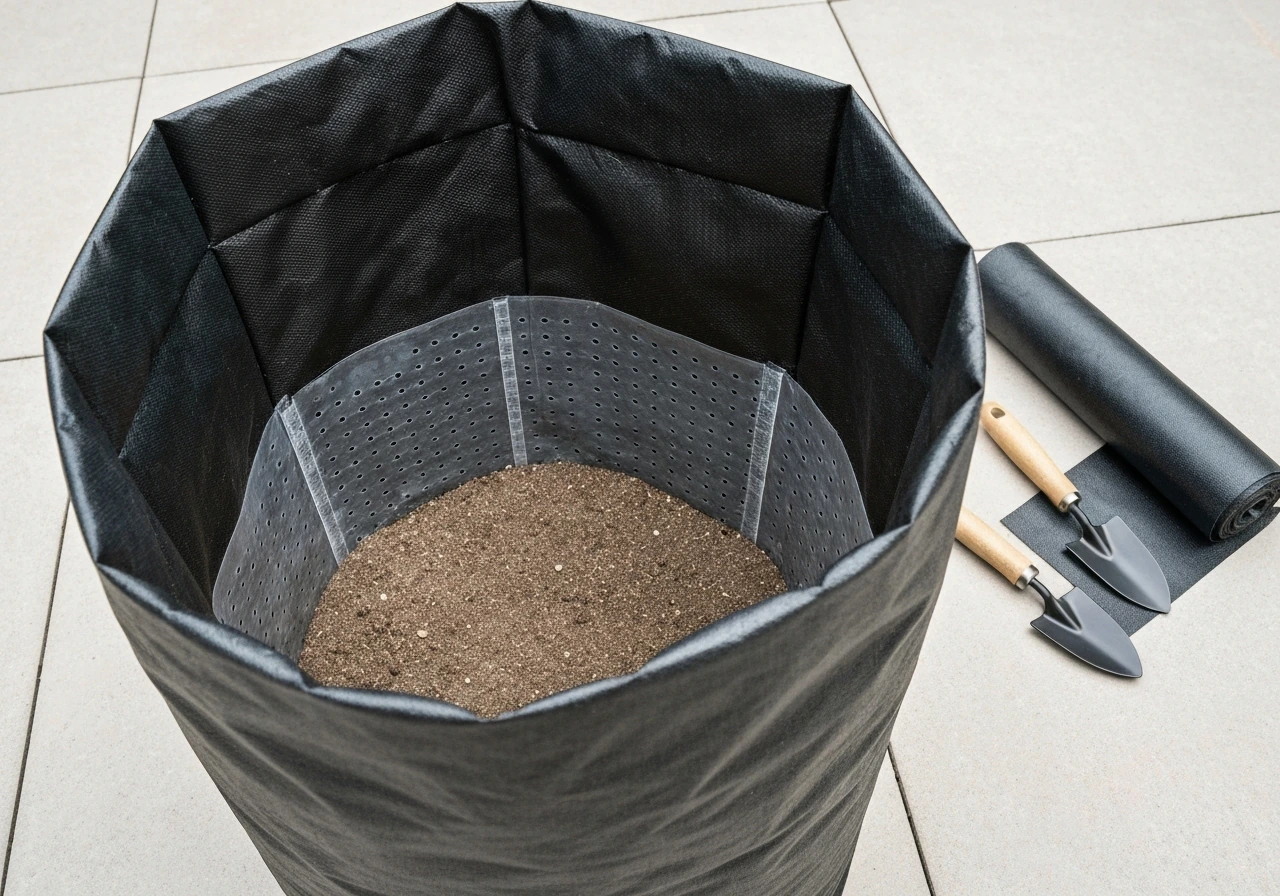
Best Landscape Fabric for Grow Bags: Buy and Install Guide
Choose the best landscape fabric for grow bags with weed-blocking, drainage and aeration tips plus DIY install steps.
Best Soil for Grow Bags: Mix Recipes and How Much to Add
Best soil for grow bags: mix recipes, how much to add by bag size, and vegetable tweaks for strong drainage and yield.
Where to Put Grow Bags: Best Location, Sun, Drainage
Find the best spot for fabric grow bags: sun, wind, drainage, spacing, surfaces, and fixes for heat and root-rot issues.