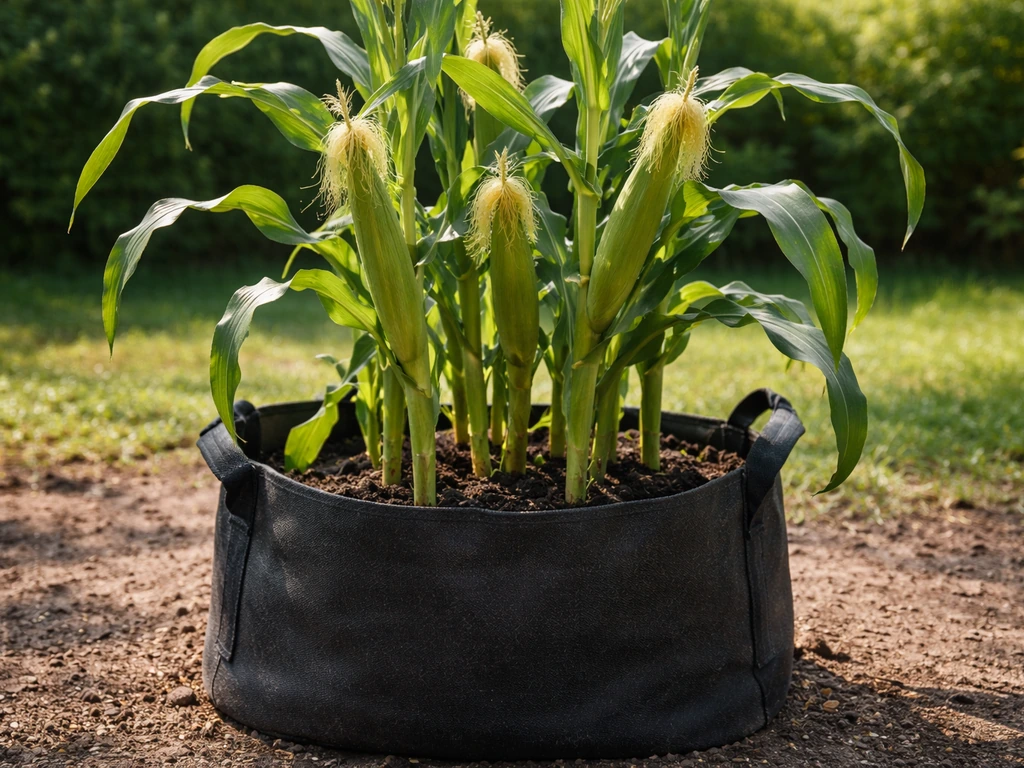
Yes, you can grow corn in a fabric grow bag, and sweet corn specifically does surprisingly well in them when you get the setup right. The catch is that corn has two big needs that don't naturally suit container growing: it wants deep, rich soil and it needs to be planted in a block for wind pollination to work. Nail both of those, and you can pull real, harvestable ears from bags on a patio or balcony. Skip either one, and you'll get tall plants with no ears, which is the most common disappointment people run into.
Can You Grow Corn in a Grow Bag? Sweet Corn Guide
Marcus Holloway
24 Apr 2026
Is growing corn in a grow bag actually feasible?
Corn is a large, hungry, deep-rooted plant, and that makes it one of the more ambitious things you can grow in a container. But fabric grow bags have some real advantages here. They air-prune roots so plants don't get root-bound the way they do in plastic pots, they drain well so you avoid the waterlogged soil that stunts corn, and you can move them around to maximize sun. The limiting factors aren't the bag itself, they're volume, nutrition, and pollination. Get those three things right and corn in grow bags is absolutely doable.
Sweet corn is the variety most home growers are chasing, and it's a good candidate because you're harvesting it young (at the milk stage, before the sugars convert to starch), so the plants don't have to support as long a growing season as field corn. That said, every corn plant still needs its own space, consistent moisture, and enough neighboring plants to pollinate well. This is a project that rewards planning up front.
Choosing the right grow bag size and material for corn
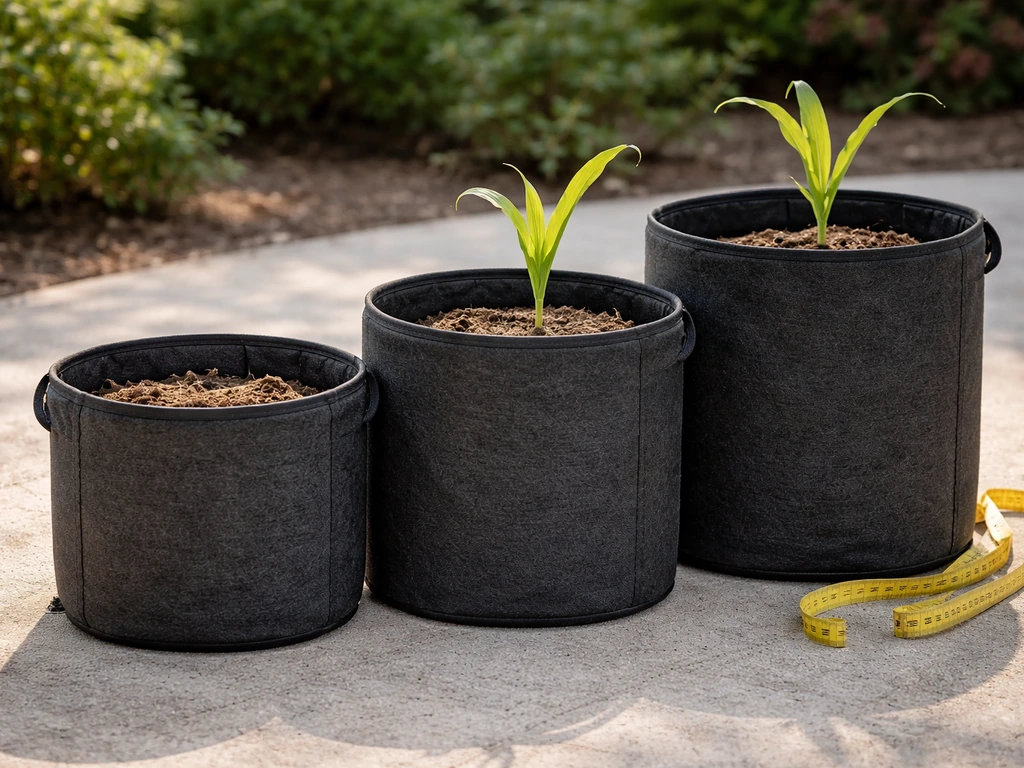
Size is the most important decision you'll make. Corn roots want depth, at least 12 inches, and ideally closer to 18 inches. Width matters too because you'll be planting multiple plants per bag for pollination. For a single corn plant, you technically need a minimum of a 5-gallon bag, but a single plant almost never produces usable ears because of the pollination problem (more on that below). In practice, you want large bags that let you grow 4 to 6 plants in a cluster.
A 25-gallon to 30-gallon fabric grow bag is the sweet spot for a corn cluster. These bags are typically wide enough to fit 4 to 6 plants at the right spacing and deep enough (usually 14 to 18 inches) to support a full root system. If you can find tall, narrow bags rather than short, wide ones, those are even better for corn because they give the taproot room to go down. You can also use two or three 10-gallon bags side by side as a block, that's a perfectly valid approach and gives you more flexibility.
For fabric type, standard nonwoven polypropylene grow bags (the most common type on the market) work well. Look for bags rated at 300g/m² or heavier if you're buying by weight, lighter bags dry out faster, which is already a challenge with corn in containers. Felt-style bags are fine too. Avoid plastic pots or thin fabric that doesn't breathe; the air-pruning and drainage that fabric provides are genuine advantages for a plant as thirsty and root-heavy as corn.
What to fill your grow bags with for corn
Corn is a heavy feeder, so the mix you fill your bags with matters a lot. If you're wondering what to fill grow bags with for corn, focus on a potting mix base plus compost, and then keep up with fertilizer as the plants get established. For more detail on what to put under grow bags, follow the guide on what to put under grow bags.
A standard potting mix alone won't cut it for a full growing season. Start with a high-quality potting mix as your base, then blend in roughly 30% compost by volume. That compost layer does two things: it adds slow-release nutrients and it improves moisture retention, both of which corn needs badly in a container environment.
Before you fill the bag, mix in a slow-release granular fertilizer with a balanced NPK ratio (something like 10-10-10 or a balanced organic option). Follow the label rate for the volume of your bag. This gives you a baseline nutrition layer that kicks in as the plants establish. Once plants are knee-high, switch to a nitrogen-heavy liquid feed every 10 to 14 days to push leafy growth. When you see tassels forming, shift to a phosphorus and potassium-heavier feed (lower nitrogen) to support ear development. A tomato-type liquid fertilizer works well at this stage.
If your plants show yellowing from the bottom leaves up, that's a classic sign of nitrogen deficiency and a very common issue in bags where nutrients leach out faster than in ground soil. Don't wait, feed immediately with a liquid nitrogen source. The feeding schedule is probably the most hands-on part of growing corn in bags, but it's manageable.
How to plant corn in grow bags
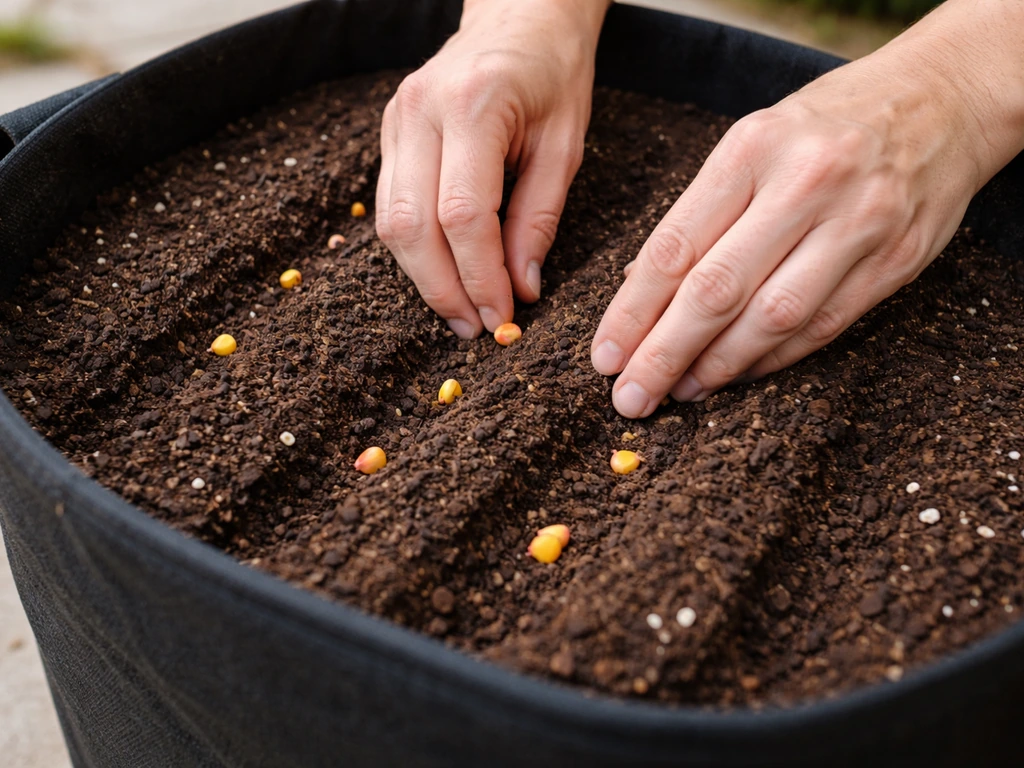
Direct sowing vs. starting indoors
Corn generally prefers to be direct-sown because it doesn't transplant especially well, the roots are sensitive and any disruption sets the plants back. If you're in a warmer climate or starting in late spring, direct sow into your filled grow bags once soil temperature is consistently above 60°F (ideally 65°F). Sow seeds about 1 inch deep.
If you want a head start in a cooler climate, you can start seeds indoors in biodegradable pots or root trainers about 3 to 4 weeks before your last frost date. The key is to disturb the roots as little as possible when transplanting, ideally the biodegradable pot goes straight into the grow bag soil. Avoid bare-root transplanting corn if you can help it.
Spacing and the block planting rule
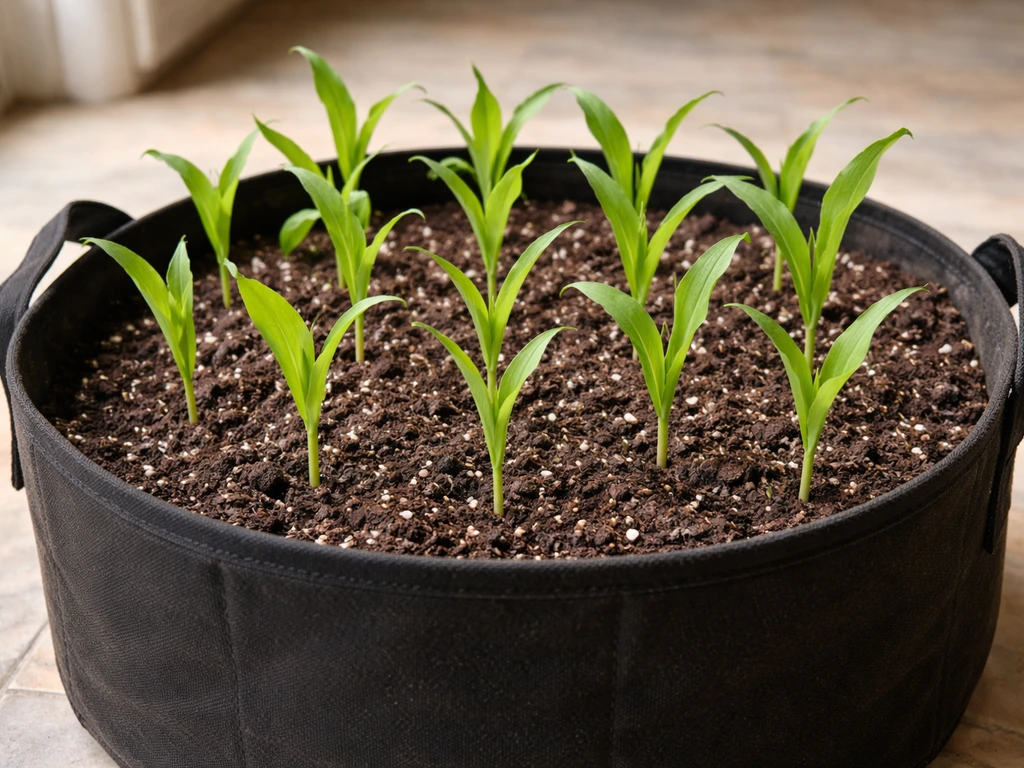
This is the most important thing to understand about growing corn, in bags or anywhere else. Corn is wind-pollinated, and it needs to be planted in a block or grid, not a single row, not one or two isolated plants. The University of Maryland Extension recommends a minimum of three rows side by side, and preferably four, to ensure adequate pollination. The RHS makes the same point: a block arrangement dramatically improves the chance that pollen from the tassels (the male flowers at the top) will fall onto the silks (the female flowers at the ear) on neighboring plants.
In a grow bag context, that means you want a minimum of 9 plants arranged across multiple bags in a tight cluster, with plants spaced roughly 12 inches apart. A 3x3 block across three 10-gallon bags, or four to six plants in a single large 25 to 30-gallon bag with two or more bags sitting close together, both work. The key is that the bags are grouped together, not spread out across different parts of your garden or patio. Think of it as recreating a mini-field block, just in containers.
Light, temperature, watering, and helping pollination along
Sun and temperature
Corn is a full-sun crop, no negotiation. It needs at least 6 to 8 hours of direct sunlight daily, and more is better. One advantage of grow bags is that you can position them to chase the best sun on your patio or terrace. The RHS recommends placing container-grown sweetcorn in a sunny but sheltered spot, sheltered means out of strong winds that can topple tall plants or prevent pollen from falling properly. Don't confuse sheltered with shaded; you need both sun and protection from strong wind, not shade.
Corn grows actively when temperatures are between 60°F and 95°F. Below 50°F at night, growth stalls. If you get a late cold snap after transplanting, consider moving your bags to a protected spot, another advantage of the grow bag format.
Watering frequency
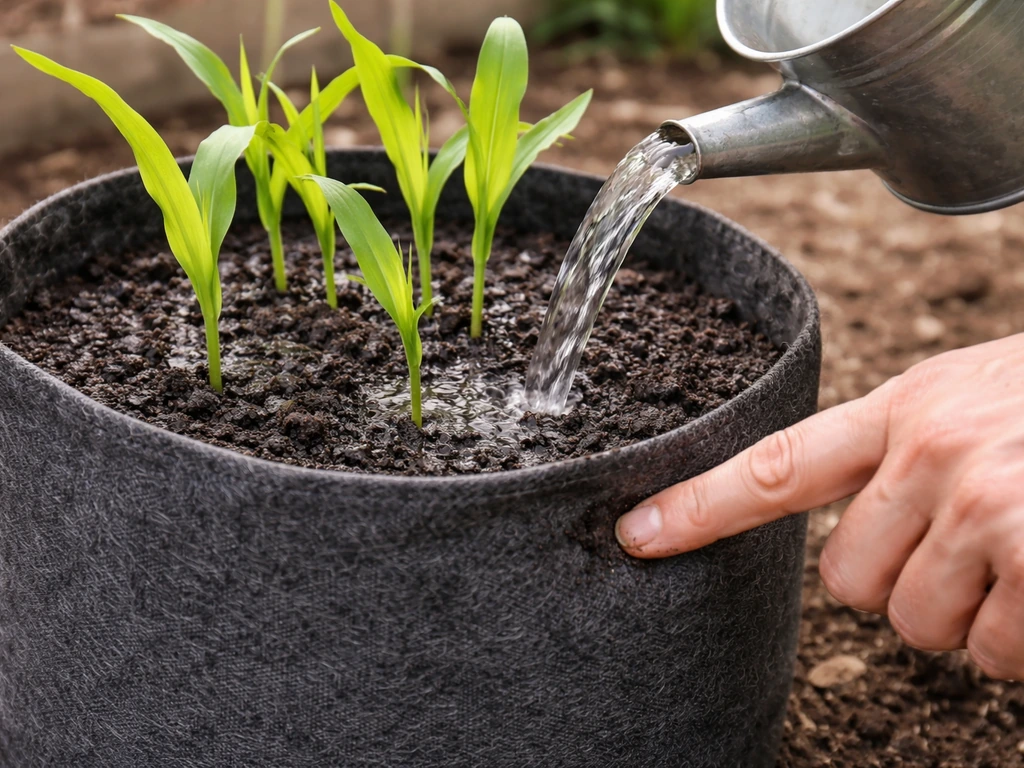
Watering is where grow bag corn can go wrong fast. Fabric bags drain and breathe well, which is generally a feature, but corn is extremely thirsty, and in warm weather a large grow bag can dry out in a day or two. Check the soil moisture daily once plants are established. Corn in bags typically needs watering every 1 to 2 days in warm weather, and potentially every day during hot spells.
The most critical period is when silks emerge, dry conditions at that point kill the pollination process and you'll get ears with missing kernels or no kernels at all. UGA Cooperative Extension specifically flags dry weather during silking as one of the main causes of poor ear set. UGA Cooperative Extension lists [dry weather during silking](https://extension. uga.
edu/publications/detail. html? number=C905&title=growing-home-garden-sweet-corn), too few plants causing poor pollination, and poor fertility, along with high temperatures and poor water management during tasseling, as common causes of poor kernel development in sweet corn.
A simple moisture meter or the finger-test (stick your finger 2 inches into the soil, if it's dry, water) works well. Consider adding a layer of compost or straw mulch on top of the bag to slow evaporation if you're in a hot, sunny position.
Helping pollination when you're growing in a small block
Even with a block arrangement, container growers often benefit from giving pollination a little assistance. When the tassels at the top of each plant open and release pollen, gently shake or tap the stems on dry, calm mornings. This dislodges pollen and helps it fall onto the silks below. The RHS specifically recommends this technique. OSU Extension also notes that hand-pollination assistance can be useful for small plantings where natural wind movement may be limited.
Another option is to cut a tassel from one plant and physically brush it over the silks of neighboring plants, like a paintbrush. It sounds fussy, but it takes about two minutes and makes a real difference in kernel set if you have a small block of plants. Do this every morning for a week or so while silks are fresh and green.
When to harvest and how to fix common problems
Harvest timing for sweet corn
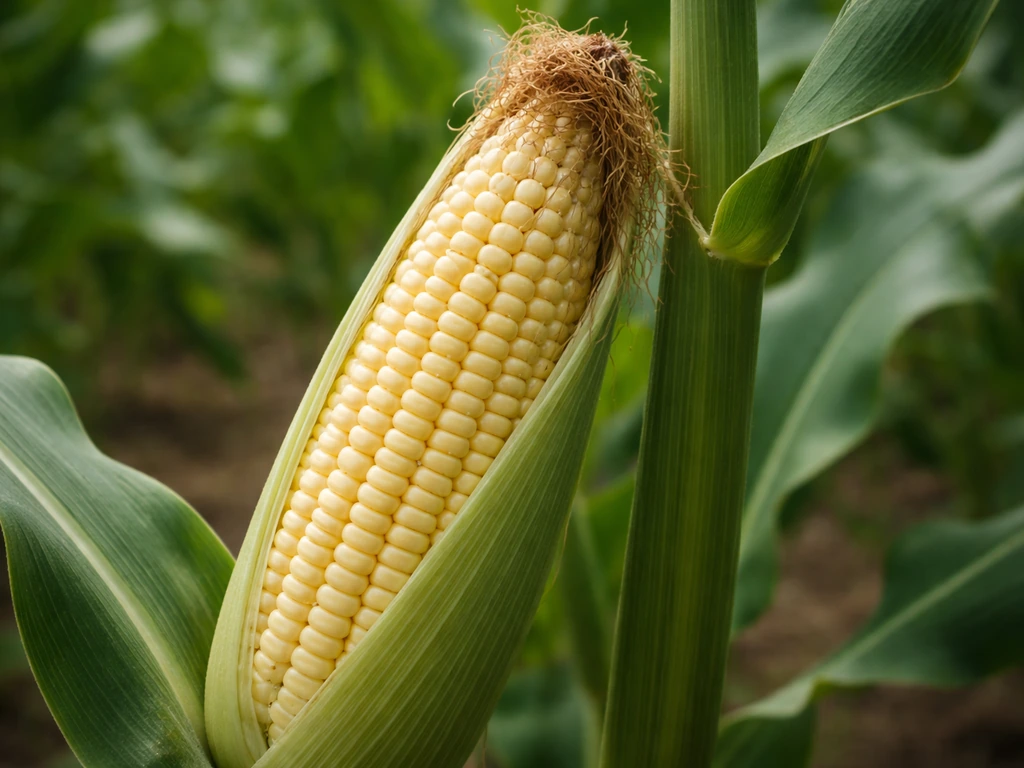
Sweet corn is ready to harvest at the milk stage, roughly 18 to 24 days after the silks first appear. The silks will have dried and turned brown, but the ear itself should feel plump and firm when you squeeze it. Pull back a small section of the husk and pierce a kernel with your fingernail, if a milky liquid comes out, it's ready. If the liquid is clear, wait a few more days. If there's no liquid and the kernel is doughy or starchy, you've waited too long, and the sugars have already converted. Sweet corn has a narrow harvest window, so check daily once silks start browning.
To harvest, grip the ear firmly and pull downward with a twisting motion. Sweet corn is best eaten within hours of picking, the sugars start converting immediately after harvest, which is the whole reason home-grown corn tastes so much better than store-bought.
Troubleshooting the most common grow bag corn problems
| Problem | Likely cause | Fix |
|---|---|---|
| No ears or ears with missing kernels | Poor pollination from too few plants or insufficient block size | Hand-pollinate by shaking tassels and brushing pollen onto silks; ensure at least 9 plants in a tight cluster next time |
| Stunted, slow growth | Underpowered soil mix or insufficient nitrogen | Feed immediately with a liquid nitrogen fertilizer; check that your mix includes compost and slow-release granules |
| Yellowing leaves (bottom-up) | Nitrogen deficiency | Apply a liquid high-nitrogen feed; increase feeding frequency to every 7 to 10 days |
| Wilting despite watering | Roots overheating or drying out too fast | Move bags to partial afternoon shade; add mulch on top of the bag; water more frequently |
| Tall plants with no ears at all | Poor pollination combined with low phosphorus/potassium during flowering | Shake tassels daily; switch to a low-nitrogen, high-PK fertilizer when tassels appear |
| Dry, poorly filled ears | Drought stress during silking stage | Water daily (or twice daily in heatwaves) from silk emergence to harvest; maintain consistent moisture |
The single most common failure mode for corn in grow bags is planting too few plants in an isolated spot and getting zero or poor pollination. It's frustrating because the plants look healthy, they grow tall, tassel, and silk, but the ears just don't fill out. If that happened to you last season, the fix is almost always more plants in a tighter block plus active hand-pollination. Everything else is solvable with better watering and feeding habits.
Quick setup checklist before you start
- Choose large bags: 25 to 30 gallons per cluster, or multiple 10-gallon bags grouped together
- Fill with a mix of quality potting soil, 30% compost, and a slow-release balanced fertilizer
- Plan for a minimum block of 9 plants (3x3 grid) across your bags, spaced 12 inches apart
- Position bags in a full-sun, sheltered spot with at least 6 to 8 hours of direct sunlight
- Water daily in warm weather; never let the soil dry out completely once silks appear
- Feed with nitrogen-heavy liquid fertilizer every 10 to 14 days; switch to high-PK when tassels form
- Hand-pollinate by shaking stems or brushing tassels over silks every morning for about a week
- Harvest at the milk stage, 18 to 24 days after silks emerge
Corn is one of the more involved things you can grow in fabric bags, but it's far from impossible, and the reward of genuinely fresh sweet corn picked minutes before eating is hard to beat.
If you're new to grow bags and thinking about what else to plant alongside your corn project, the same bags and soil approach works well for many other vegetables, and the lessons you learn about watering and feeding frequency in fabric containers will carry over to everything else you grow. If you're wondering what to grow in a grow bag besides corn, start with plants that have shallow roots and similar sun and watering needs.
If you're new to grow bags and thinking about what else to plant alongside your corn project, the same bags and soil approach works well for many other vegetables, and the lessons you learn about watering and feeding frequency in fabric containers will carry over to everything else you grow what to plant in grow bags.
If you are deciding what else to plant, the best veg to grow in grow bags is usually the fast, shallow-rooted types that can handle frequent watering. If you're wondering what to grow in a grow bag beyond corn, start by matching plants to the bag size, sun, and watering needs.
FAQ
How many corn plants should I put in one grow bag for a good chance of ears?
Aim for a tight block rather than “one plant per bag.” In practice, plan on 4 to 6 plants in a 25 to 30 gallon grow bag, or 3x3 plants spread across multiple bags grouped closely together. Spreading bags far apart on a patio often results in weak pollination even if the plants look healthy.
Can I grow sweet corn in a smaller grow bag, like 5 gallons, instead of 25 to 30 gallons?
You can technically fit one corn plant in a 5 gallon bag, but it is unlikely to produce usable ears because the plant will still need neighboring plants for pollination. If you must use smaller bags, combine them into a clustered block (for example, multiple 10 gallon bags touching) so pollen can reach silks effectively.
Do I need to fertilize corn in grow bags the whole season, or can I rely on the compost and starter feed?
You will usually need ongoing feeding because nutrients leach faster from fabric containers, especially once watering becomes frequent. A common approach is slow-release at planting, then add liquid feed in stages (higher nitrogen for leafy growth, then lower nitrogen for ear formation). If leaves start yellowing from the bottom up, treat it as a nitrogen issue and adjust quickly.
What should I do if my corn plants grow tall but the ears never fill in?
First check pollination. Corn needs a clustered block and may require morning assistance in containers. Gently shake plants when tassels shed pollen, and if your planting is small, brush pollen between plants or increase plant count next season. Also confirm you maintained consistent moisture during silking, because drought at that window can prevent kernel set.
How often should I water corn in a grow bag if I have a hot balcony?
Check moisture daily once plants are established, because fabric bags can dry quickly, sometimes within 1 to 2 days in heat. During silking, do not allow the root zone to dry out, even briefly. If the top layer feels dry but soil 2 inches down is still moist, you can wait, but if it is dry, water immediately.
Is it okay to grow corn in partial shade if I can’t get 8 hours of sun?
Partial shade often reduces ear size and can delay development, because sweet corn is a full-sun crop. If you cannot get at least 6 to 8 hours of direct light, you may get tassels and silks but weaker ear fill. Rotate or relocate grow bags to keep the best sun exposure, while still protecting from strong winds.
Can I transplant corn into a grow bag, or should I direct sow?
Direct sow is usually best because corn roots dislike disturbance. If you start indoors, use biodegradable pots or root trainers and set the whole root mass into the grow bag so you minimize root disruption. Bare-root transplanting more often causes setback and can affect final ear size.
What is the best way to protect corn in grow bags from wind?
Choose a sheltered spot that still gets direct sun, sheltered means protected from gusts that can topple tall plants and interfere with pollen movement. If your balcony is very windy, consider staking the cluster and grouping bags close together so plants support each other and airflow is not overly turbulent.
Should I use mulch on top of a grow bag for corn?
Yes, a light top mulch such as compost or straw can reduce evaporation, which is helpful because corn needs consistent moisture in fabric bags. Keep mulch from burying stems and tassel area, and avoid thick mats that block water penetration. Reapply as it breaks down during the season.
How do I know exactly when sweet corn is ready to harvest in a grow bag?
Harvest at the milk stage, when kernels release a milky liquid when punctured and the ear feels firm and plump. Check daily once silks start turning brown, because the harvest window is short. If the liquid is clear, wait a bit, and if kernels are doughy or starchy with no milky juice, it is past peak sweetness.
Can I succession plant corn in grow bags for a longer harvest?
Yes, but do it thoughtfully because pollination requires a block at each sowing. Start a new small cluster every 1 to 2 weeks rather than spreading plants too far apart in time within the same area. Staggered clusters also help you avoid a single day where every ear is ready and you cannot harvest quickly.
Next Articles
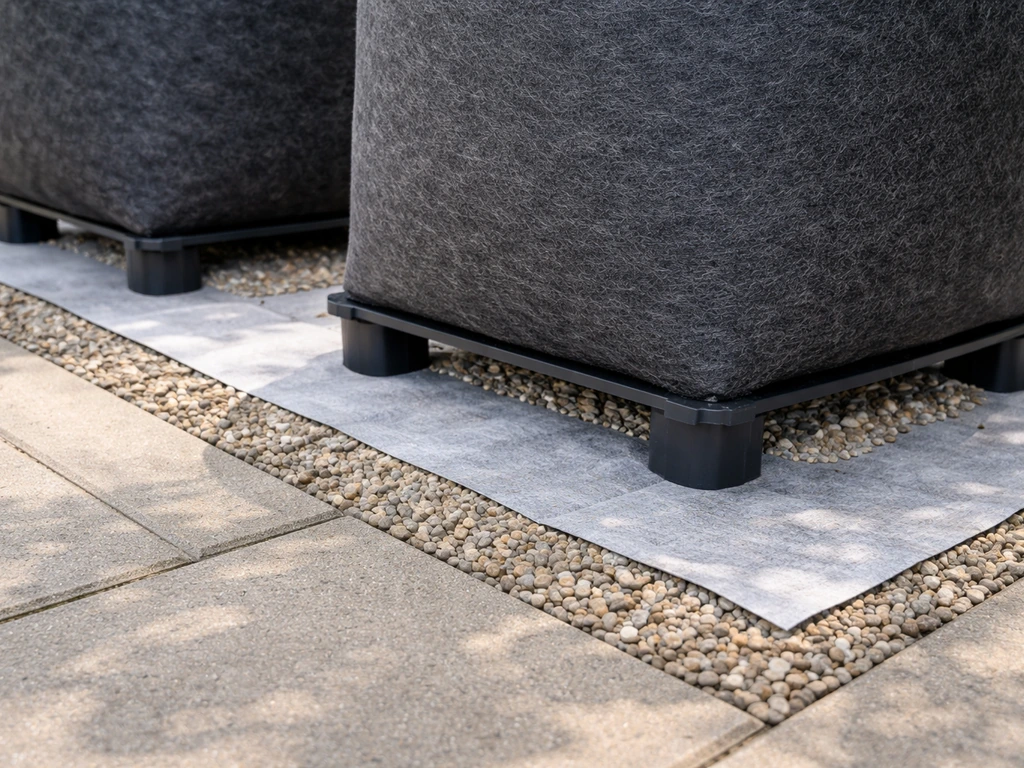
What to Put Under Grow Bags for Vegetables
Best materials for under vegetable grow bags: trays, gravel, raised bases and liners for drainage, airflow and no poolin
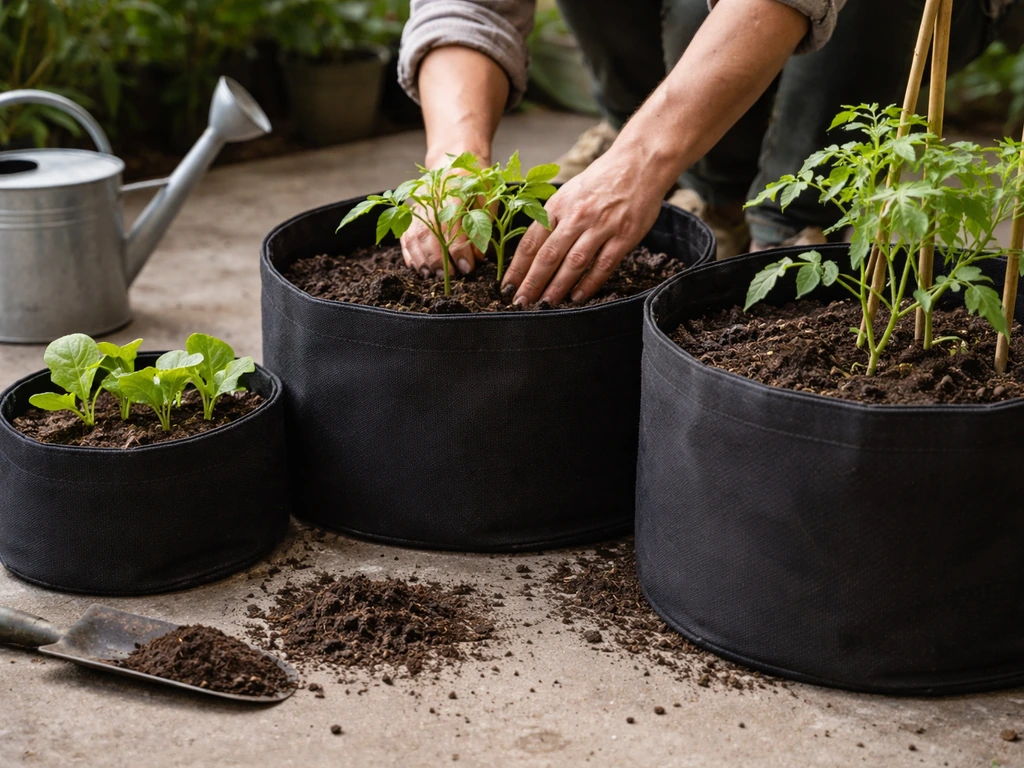
What to Plant in Grow Bags: Best Plants by Size
Best plants for grow bags by size, plus bag choice, setup tips, and troubleshooting for watering, feeding, and root heal
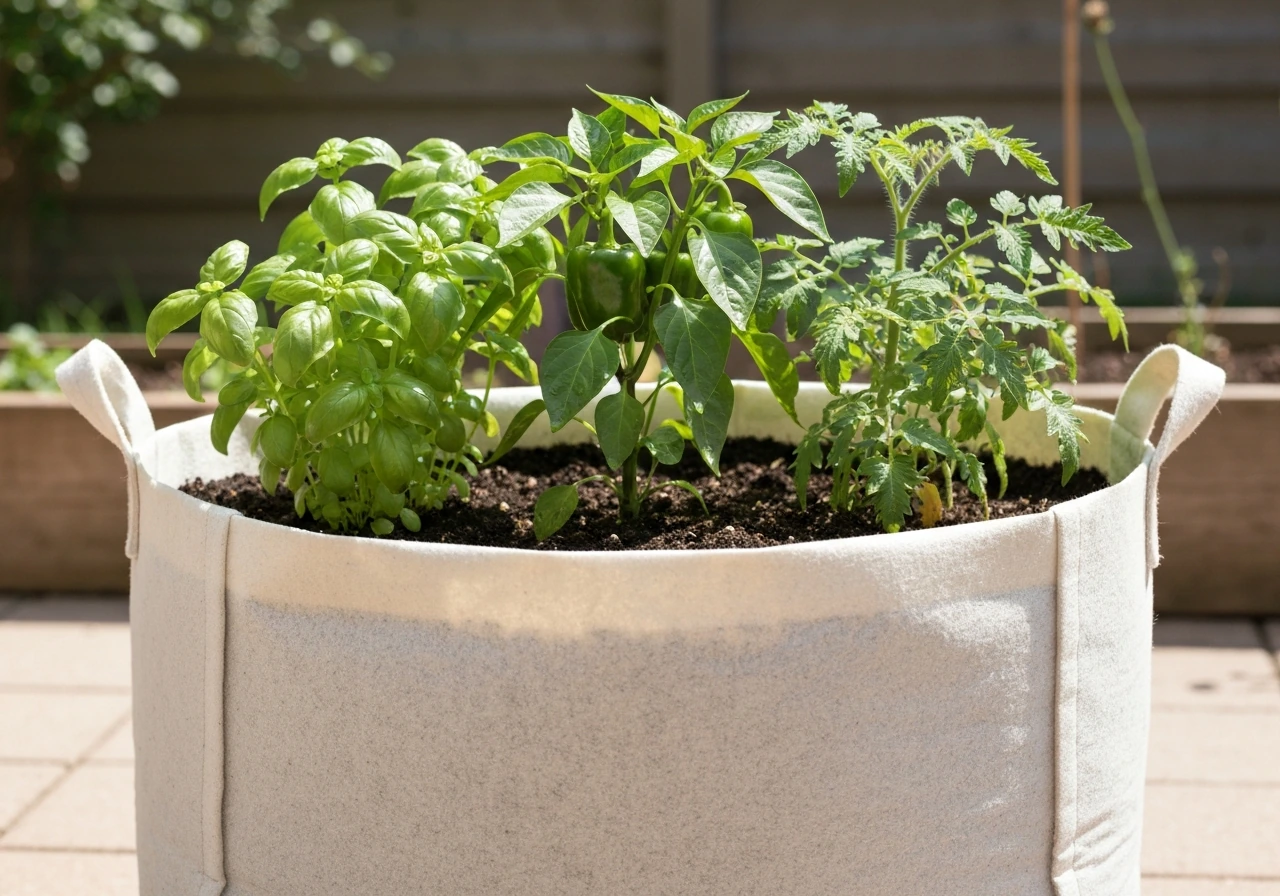
What to Grow in a Grow Bag: Best Crops by Category
Best crops for grow bags by category plus bag size, soil, depth, watering, feeding, and fixes for common problems.