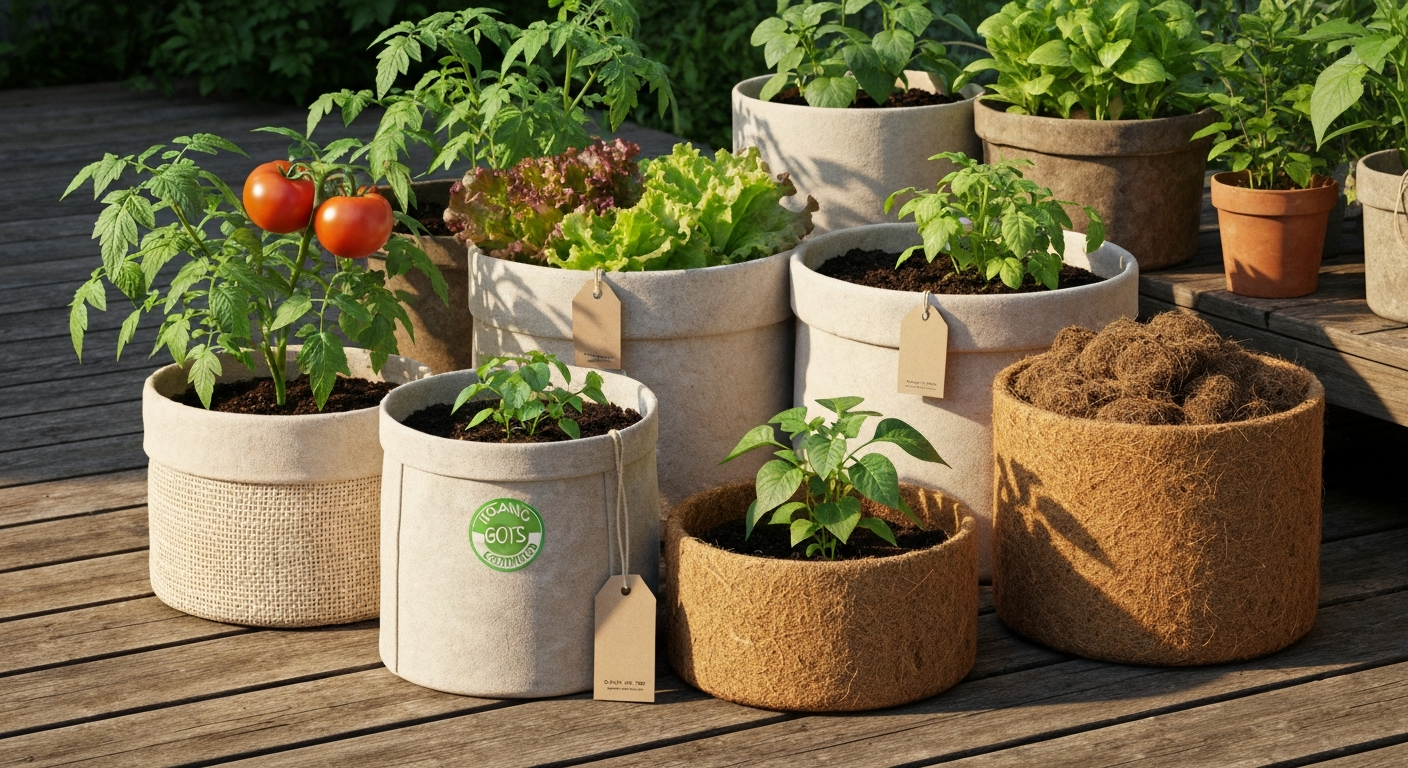
The best organic grow bags are made from GOTS-certified organic cotton, natural jute, hemp, or coir-blend fabrics that avoid synthetic dyes and chemical binders. They give you the same air-pruning and drainage benefits as any quality fabric pot, but without the off-gassing concerns of recycled-PET or virgin polypropylene bags sitting in your vegetable root zone. If that trade-off matters to you, the options are real and worth the small price premium. This guide walks you through exactly what 'organic' means on a grow bag label, which materials actually hold up in the garden, and which sizes to use for every major crop.
Best Organic Grow Bags: Top Picks & Buyer’s Guide for Home Growers
Marcus Holloway
9 Aug 2026
Who this guide is for and what you'll learn
Whether you're a first-time container gardener trying to grow tomatoes on a balcony or an experienced grower building out a larger setup, this guide is built to answer one specific question: which grow bags are genuinely organic, and how do you pick the right one for your plants? You'll learn how to read organic labels and certifications, how the main natural fabric materials compare to each other and to synthetic options, which products are worth buying, how to size bags correctly for different crops, and how to maintain and eventually dispose of organic grow bags responsibly. Canada-specific buying and climate considerations are included throughout, and wherever relevant, the guide points to crop-specific resources on Grow Bags Guide for deeper dives.
What 'organic' actually means on a grow bag label
The word 'organic' on a textile product like a grow bag is not regulated the same way it is on food. A bag can be labeled organic only if the underlying fibers and processing meet a recognized textile standard. The two most important ones to know are GOTS and OEKO-TEX, and they cover different things.
GOTS (Global Organic Textile Standard) is the most rigorous and comprehensive standard. It covers the entire supply chain from raw fiber to finished product, including chemical inputs, dyeing processes, wastewater treatment, and social criteria. A GOTS-certified grow bag must contain at least 70 percent certified organic natural fibers, and all processing must meet strict limits on harmful substances. If you're buying for a vegetable garden and want genuine assurance, look for GOTS certification first.
OEKO-TEX operates several separate programs that cover different attributes. STANDARD 100 by OEKO-TEX tests for harmful substances in the finished product but does not certify the fiber as organically grown. The OEKO-TEX ORGANIC COTTON standard certifies organic cotton content specifically. MADE IN GREEN adds supply-chain traceability and social compliance. A bag carrying only STANDARD 100 is tested for chemical safety but is not an 'organic' product in the fiber sense. Understanding which OEKO-TEX mark a product carries tells you exactly what is and is not being claimed.
In the United States, the USDA National Organic Program (NOP) acknowledges GOTS as an accepted textile standard for products making organic label claims. In Canada, the Competition Bureau updated its guidance in June 2025 requiring that environmental and organic claims be specific, clear, and backed by adequate testing or third-party substantiation. This means a Canadian seller calling a bag 'organic' without GOTS certification or equivalent documentation is making a claim that may not hold up to scrutiny. When you're evaluating products, ask the seller which specific certification applies to which specific component of the bag.
- GOTS certification: confirms organic fiber content (minimum 70%) and clean processing throughout the supply chain — the strongest claim for grow bags
- OEKO-TEX ORGANIC COTTON: confirms organic cotton content but not always full supply-chain processing
- OEKO-TEX STANDARD 100: confirms absence of harmful substances in the finished product — not an organic-fiber claim
- OEKO-TEX MADE IN GREEN: adds supply-chain transparency and social criteria on top of substance testing
- USDA NOP: primarily a food standard; references GOTS for textile products making organic claims
- No certification, just 'natural': means the seller is using a marketing term with no third-party verification — ask for documentation
Organic fabric materials up close: cotton, jute, hemp, and coir
Not all natural-fiber grow bags perform the same way in the garden. Each material has a different weight, breathability profile, moisture behavior, and lifespan. Here's what you're actually getting with each one.
Organic cotton
Organic cotton is the most common material in certified organic grow bags and the easiest to find with GOTS or OEKO-TEX ORGANIC COTTON certification. It's woven or non-woven into a medium-weight fabric that breathes well, holds its shape over a full growing season, and is soft enough to handle without tearing. The main limitation is longevity: untreated organic cotton bags typically last two to four seasons before the fabric begins to degrade from UV exposure and repeated wet-dry cycles. That's actually a positive for composting purposes, but it means replacing bags more often than you would a polypropylene option.
Jute
Jute is one of the most naturally biodegradable materials available for grow bags. It degrades faster than cotton, so most pure-jute bags are designed for single-season use, which makes them genuinely compostable at the end of the year. They're a good choice for crops like potatoes and garlic where you're only growing one cycle per bag. Jute is also relatively inexpensive, which helps when you're buying in bulk. The downside is that it becomes structurally weak when wet, so heavier soil mixes can cause bags to sag or lose their shape mid-season. Double-layered jute or jute-cotton blends address this but vary widely by manufacturer.
Hemp
Hemp is the most durable of the natural-fiber options. It's naturally resistant to mold and UV degradation, which gives hemp grow bags a lifespan closer to three to five seasons. Hemp fibers also have good tensile strength when wet, so bags hold their shape better under heavy soil loads than jute does. The downside is cost: certified organic hemp fabric is more expensive than cotton or jute, and GOTS-certified hemp grow bag products are harder to find in large retail channels. If you can source them, hemp bags are the most practical long-term organic option for perennial plantings or trees.
Coconut fiber (coir) blends
Pure coir grow bags are less common, but coir-blend fabrics that combine coconut fiber with cotton or jute are used in some products marketed as organic or natural. Coir has excellent moisture-wicking properties and resists mold well, making it appealing for high-humidity growing environments. However, raw coir can have a naturally high salt content (depending on processing), so look for washed or low-EC coir when it's used as a bag material. Coir-blend bags are generally not eligible for GOTS certification on the coir component unless the full processing chain is verified, so check certifications carefully.
| Material | Typical Lifespan | Breathability | Biodegradable | Certification Available | Best For |
|---|---|---|---|---|---|
| Organic cotton | 2–4 seasons | High | Yes (2–5 years in soil) | GOTS, OEKO-TEX Organic Cotton | Most crops, multi-season use |
| Jute | 1–2 seasons | Medium-high | Yes (1–2 years) | Less common; look for organic-sourced | Potatoes, single-season crops |
| Hemp | 3–5 seasons | High | Yes (3–6 years) | GOTS available; harder to find | Trees, perennials, long-season crops |
| Coir blend | 2–3 seasons | Medium-high | Partial (coir slow to break down) | Varies; check individual certification | High-humidity crops, moisture-sensitive plants |
Organic fabric bags vs synthetic fabric vs plastic: an honest comparison
Fabric grow bags made from recycled PET or virgin polypropylene (like many of the most popular commercial brands) perform very well in terms of air pruning and drainage. The Root Pouch product listing and size chart (Root Pouch) shows composition options, non‑woven blends of recycled PET and natural fibers, available sizes from pint equivalents up through 25+ gallons/litres, and notes how these mixes balance breathability and strength. Research from Texas A&M found that fabric containers reduced root circling and root-zone temperatures compared to black plastic pots, which is a genuine functional benefit regardless of material. But that research applies to fabric in general, not specifically to organic or natural-fiber bags.
The relevant question is whether the material in contact with your root zone matters for your specific growing goals. If you're growing edibles and want to minimize synthetic material in the root environment, organic cotton or hemp bags are the logical choice. If you're growing ornamentals or non-edibles, a high-quality polypropylene bag may be just as good and considerably more durable. Plastic containers (rigid pots) remain the weakest option for root health, drainage, and overheating, regardless of what you're growing.
| Feature | Organic Fabric (cotton/hemp/jute) | Synthetic Fabric (polypropylene/PET) | Plastic Containers |
|---|---|---|---|
| Air pruning | Yes | Yes | No |
| Root zone temperature | Lower than plastic; similar to synthetic fabric | Lower than plastic | Highest — absorbs heat |
| Chemical inputs near roots | Minimal (if GOTS certified) | Recycled PET or PP present | BPA-free options available but still plastic |
| Biodegradability | Yes (material dependent) | No (landfill or recycle) | No |
| Lifespan | 1–5 seasons (material dependent) | 3–7+ seasons | 5–10+ seasons |
| Price | Moderate to high | Low to moderate | Low to moderate |
| Certification options | GOTS, OEKO-TEX | None organic | None organic |
| End-of-life options | Home compost (jute/cotton), landfill (coir blends) | Landfill or specialist recycling | Landfill or recycling |
One honest drawback of organic bags worth flagging for Canadian growers: shipping costs from U.S. or international suppliers can significantly increase the per-bag price. Shorter seasons in many Canadian provinces also mean you may get fewer growing cycles out of a bag before you're composting it anyway, which can work in your favor with single-season jute bags but makes high-end hemp bags harder to justify financially unless you're running a multi-year perennial setup.
Top organic grow bag options compared
The organic grow bag market is smaller than the general fabric pot market, so the product list is shorter than you'll find in a general grow bag roundup. The bags below represent the strongest options available in 2026, selected based on material transparency, available certification documentation, size range, and verified grower feedback.
| Product | Material | Certification | Sizes Available | Best Use | Notes |
|---|---|---|---|---|---|
| VIVOSUN Organic Cotton Grow Bags | Non-woven organic cotton | OEKO-TEX STANDARD 100 | 1, 2, 3, 5, 7, 10, 15, 20, 25 gal | Vegetables, herbs, flowers | Widely available; confirm organic-cotton spec on current SKU |
| Bootstrap Farmer Fabric Pots (natural fiber line) | Cotton/jute blend | Natural fiber; check current GOTS status | 3, 5, 7, 10, 15, 20, 25, 45 gal | General vegetables, tomatoes | Good structural integrity; sold in bulk packs |
| Grassroots Fabric Pots (Living Soil) | BPA-free recycled fabric; natural fiber line available | Varies by product line | 1–200+ gal | Living soil builds, trees, large containers | Verify 'natural fiber' line separately from standard line |
| Radicle Bags (organic cotton) | Organic cotton canvas | GOTS certified (verify current batch) | 1, 3, 5, 7, 10 gal | Edible crops, balcony gardens | Premium price; strongest GOTS documentation |
| Jute grow bags (generic/bulk) | Natural jute | Varies; often uncertified — ask supplier | 3, 5, 7, 10 gal common | Potatoes, single-season crops, composting cycle | Best value for single-use organic growing |
| Smart Pot (standard polypropylene) | Polypropylene fabric | None (included for comparison) | 1–300+ gal | All crops; not organic-certified | Best-researched fabric pot brand; not organic material |
A note on verifying certifications: product listings change, and certification documents can expire or apply only to certain production batches. Before purchasing, download the certification document from the seller's product page or request it directly. For GOTS, the certificate can be verified against the GOTS public database by searching the certified facility name. This takes two minutes and is worth doing if the organic status matters to your growing goals.
Sizing your grow bag: a practical guide by plant type
Getting the size right matters more than most growers expect. Too small and your plant gets root-bound before the season ends, reducing yield and requiring more frequent watering. Too large and you're dealing with waterlogged soil in the outer zones where roots haven't yet colonized, which creates anaerobic pockets that hurt root health. The general rule: match the bag volume to the mature root mass of the plant, not the canopy size.
| Plant Type | Minimum Bag Size | Recommended Size | Notes |
|---|---|---|---|
| Leafy greens (lettuce, spinach, kale) | 1 gal | 2–3 gal | Can plant 2–4 per 3-gal bag; shallow roots |
| Herbs (basil, parsley, cilantro) | 1 gal | 2 gal | Good starter size for beginners; high drainage |
| Peppers (sweet and hot) | 3 gal | 5–7 gal | Compact root system; 5 gal is the sweet spot |
| Determinate tomatoes | 5 gal | 7–10 gal | Bush varieties; deeper bag preferred |
| Indeterminate tomatoes | 7 gal | 10–15 gal | Larger root mass; needs consistent moisture |
| Cucumbers | 5 gal | 5–7 gal | Vertical support needed; roots are moderate |
| Potatoes | 5 gal | 10 gal (deep) | Tall bags allow hilling; 10 gal yields more |
| Carrots / deep root veg | 7 gal (tall) | 10–15 gal (tall) | Depth matters more than volume for root veg |
| Dwarf fruit trees | 15 gal | 25–45 gal | More root volume extends time before repotting |
| Standard trees (long-term) | 25 gal | 45–100 gal | Hemp bags recommended for lifespan match |
A simple field check: if you're unsure between two sizes, go up. Organic cotton and jute bags breathe so well that slightly oversized bags don't cause the overwatering problems you'd see in plastic. The air pruning at the sides keeps outer roots from rotting even when the center soil holds moisture longer. For trees and perennials especially, undersizing is the more common and more damaging mistake. The Grow Bags Guide sizing calculator can help you match bag diameter and depth to specific root depths for unusual crops.
Best organic grow bags for vegetables
Vegetables are the most common reason home growers switch to organic grow bags, and it's a natural fit. You're growing food, you care about what's in the root zone, and you want a container you can compost at the end of the season rather than stockpile in a shed.
Leafy greens
Lettuce, spinach, arugula, kale, and Swiss chard all have shallow, fibrous root systems that don't need more than 6–8 inches of depth. A 2–3 gallon organic cotton bag is ideal: it keeps the root zone warm in spring (important in Canadian climates), drains fast enough to prevent rot in heavy rain, and can be planted densely. Four lettuce plants per 3-gallon bag is workable, though three is more comfortable for heads rather than cut-and-come-again varieties. At end of season, a jute bag with the spent soil can go directly into a compost pile.
Tomatoes
Tomatoes are one of the best crops for fabric grow bags because root health directly translates to fruit set. Air-pruned roots produce more lateral feeder roots, which improves nutrient uptake and consistency. For determinate (bush) varieties, a 7-gallon organic cotton bag is the minimum I'd recommend; 10 gallons is better. For indeterminate varieties like Sungold, Black Krim, or any vining heirloom, go to 15 gallons if you can. One plant per bag, no exceptions. Staking works the same as in-ground: bamboo canes, tomato cages, or a trellis attached to the bag's handles.
Peppers
Sweet peppers and hot peppers both do well in 5-gallon organic bags. Their root systems are more compact than tomatoes, and they actually prefer the warmer root zone that a slightly smaller bag creates when placed in a sunny spot. One plant per bag. If you're in a cooler Canadian climate, placing 5-gallon pepper bags on a heat-absorbing surface like a dark patio slab helps extend the season. GOTS-certified cotton bags in darker natural tones (undyed cotton tends to be off-white, which reflects heat) are a trade-off to be aware of: they run cooler than black polypropylene bags in direct sun.
Root vegetables
Potatoes are the easiest root vegetable for grow bags and among the most satisfying. A 10-gallon tall bag gives you enough depth to hill up twice during the season, which is how you maximize tuber production. For carrots and parsnips, depth is more important than total volume: look for bags that are at least 12 inches deep, and ideally 15–18 inches. Standard-width 7–10 gallon bags that are cut taller work better than squat wide bags for these crops. Jute bags are a good match for potatoes specifically because the single-season lifespan aligns perfectly with the growing cycle: harvest the potatoes, dump the bag into your compost, and start fresh next year.
Growing flowers in organic grow bags
Annual flowers like zinnias, marigolds, and nasturtiums grow well in 2–5 gallon organic bags and are a practical choice for patio color. More importantly, many edible-flower growers and organic market gardeners want to avoid synthetic fabric near flowers they're harvesting for food use. A 3-gallon GOTS-certified cotton bag works well for a single zinnia or marigold cluster; 5-gallon bags support larger cutting-flower varieties. Perennial flowers and ornamental grasses do better in hemp bags that will last across multiple seasons without needing replacement.
Organic grow bags for trees
Fruit trees, dwarf ornamental trees, and shrubs grown in containers benefit enormously from the air-pruning effect of fabric bags. The Texas A&M research on shrub roses in fabric containers found reduced root circling and lower root-zone temperatures compared to standard black plastic pots, and the same principles apply to fruit trees. For trees, the organic material question is worth weighing against longevity: a 25-gallon hemp bag will outlast two or three organic cotton bags over the years an established tree stays in a container. Hemp is the recommended organic material for trees specifically because the lifespan matches the growing timeline. For Canadian growers bringing trees indoors over winter, lighter-weight hemp bags are also easier to handle than rigid containers of equivalent volume. For a deeper look at sizing and species recommendations, the Grow Bags Guide resource on best grow bags for trees covers the full range from dwarf citrus to containerized maples.
Mushroom cultivation and grow bags: what you need to know
Grow bags used in mushroom cultivation are a completely different application from container growing. Mushroom bags (also called substrate bags or filter patch bags) are typically made from food-grade polypropylene, not organic fabric, because they need to be sterilized at high temperatures (typically 121°C / 250°F in a pressure cooker or autoclave) without degrading. Natural fiber bags cannot withstand sterilization and are not appropriate for mushroom substrate applications.
For edible mushroom growing (oyster mushrooms, shiitake, lion's mane), Penn State Extension and Cornell Small Farms Program both provide research-backed guidance on substrate preparation, spawn ratios, and bag cultivation methods. The core principle is that the bag itself is a sterile incubation vessel, not a planting container in the grow-bag sense. Sanitation is the critical variable: contaminated substrate is the number-one cause of failure, and natural-fiber bags introduce contamination risk that purpose-built polypropylene mushroom bags eliminate.
A note on Golden Teacher and other psilocybin-containing mushroom strains: in Canada, psilocybin and psilocin are controlled substances under the Controlled Drugs and Substances Act (CDSA). Cultivation, possession, and distribution are illegal except under specific authorizations through Health Canada (clinical trial exemptions or the Special Access Program). This guide covers only legal edible mushroom cultivation. For anyone interested in legal mushroom growing, the Cornell and Penn State extension resources are the appropriate starting points for both the science and the regulatory context. The Grow Bags Guide resource on grow bags for Golden Teacher addresses the legal and practical framework in more detail. For specific product recommendations, see our guide to the best grow bag for Golden Teacher.
Autoflowering cannabis and organic grow bags
In Canada, the federal Cannabis Act permits adults to grow up to four non-medical cannabis plants per residence, subject to provincial, territorial, and municipal restrictions (some provinces, including Quebec and Manitoba, have restricted home cultivation, so check your local rules before proceeding). For home growers working within legal limits, organic fabric grow bags are a popular choice because they offer excellent drainage and air pruning for the short, dense growth cycles of autoflowering strains.
Autoflowering strains typically have compact root systems and short cycles of 60–90 days, making 3–5 gallon bags the standard recommendation. A 3-gallon organic cotton bag works well for smaller autoflowers; 5 gallons is the more common choice for larger-yielding strains. GOTS-certified cotton bags are a reasonable organic option here, and their 2–4 season lifespan aligns well with an annual cycle of multiple shorter grows. For more detail on strain-specific sizing and setup, the Grow Bags Guide resource on best grow bags for autoflowers covers the full range of recommendations.
Buying in Canada: what to know before you order
Canadian growers have fewer domestic sources for certified organic grow bags than U.S. growers, and cross-border shipping adds cost and sometimes import duties on textiles. A few practical points to navigate this. First, check whether the certification document provided by a U.S. seller is valid for the Canadian market. Canada's Competition Bureau requires that environmental and organic claims be substantiated with adequate, specific evidence; a GOTS certificate from a verified facility meets that bar, but a vague 'organic' claim without documentation does not. Second, consider the shipping weight and packaging: larger bags (25 gal and up) shipped from the U.S. can approach or exceed the per-bag material cost in shipping fees. Buying in bulk (packs of 5–10) significantly reduces the per-unit shipping cost and is worth doing if you're setting up more than a handful of containers.
Seasonality matters in Canada as well. In provinces with shorter growing windows (much of BC's interior, the Prairies, Ontario north of the shield), a 2–3 season organic cotton bag effectively gives you the same number of growing cycles as a 5-season hemp bag because you're only running one cycle per year and composting at season's end anyway. In that context, the lower cost of organic cotton bags or single-use jute bags may make more sense than investing in premium hemp products. For full coverage of Canadian-specific sourcing and shipping options, the Grow Bags Guide resource on best grow bags Canada goes into regional supplier recommendations.
Buying wholesale and evaluating bulk suppliers
If you're setting up a larger garden, market garden, or community growing space, buying organic grow bags in bulk significantly reduces the per-unit cost. A few things to evaluate carefully when going wholesale. First, request the actual certification document (not just a logo on a product listing) and verify the certifying body's database directly. GOTS certificates include the facility name, certificate number, and expiry date, all of which can be checked at the GOTS public database. Second, ask specifically whether the certification applies to the bag as a finished product or only to the raw fiber. Some suppliers certify the fiber but not the full manufacturing process, which is a weaker claim.
Third, order a sample pack before committing to a large quantity. Evaluate the seam stitching (double-stitched seams hold far longer than single-stitched under wet soil weight), the handle attachment method (reinforced handles prevent the most common failure point), and the fabric weight (heavier-weight fabric resists UV degradation longer). For sourcing platforms and vetted wholesale supplier options, the Grow Bags Guide resource on best grow bags wholesale online covers evaluation criteria and currently active suppliers.
Caring for organic grow bags: watering, drainage, and root pruning
Organic fabric bags dry out faster than plastic containers, which is usually a benefit but requires more attentive watering in hot weather. The simplest check: lift the bag. If it feels light, water it. If it feels heavy, skip a day. Most problems with fabric pots come from overwatering, not underwatering, despite the breathability. Placing a saucer under the bag slows drying in hot weather and captures nutrients from drainage water, which you can pour back on. Avoid standing water in the saucer for more than a few hours.
Root pruning happens passively when roots reach the air at the bag wall and stop growing outward. This is a healthy process and requires no intervention. After harvest or at season's end, you may find a dense mat of fine roots around the inside of the bag wall: this is exactly what you want. The roots are working efficiently and the plant was never root-bound.
Cleaning reusable organic cotton or hemp bags at the end of the season extends their lifespan. Shake out spent soil, rinse the bag with a hose to remove remaining soil from the fabric, and allow it to dry completely before storage. Do not store damp bags: mold will degrade the fabric faster than UV exposure will. For mushroom substrate bags (polypropylene, not organic fabric), sterilization between uses is non-negotiable; a pressure cooker at 15 PSI for 2.5 hours is the standard approach.
Reusing, composting, and end-of-life disposal
One of the genuine advantages of organic grow bags is that end-of-life disposal is straightforward. GOTS-certified organic cotton bags can go into a home compost pile when they're too degraded to reuse; they'll break down within 2–5 years depending on your composting conditions and the bag weight. Jute bags will break down in 1–2 years and can go into compost even with some residual soil in them. Hemp bags take longer (3–6 years) but will eventually fully decompose.
For sellers or growers making compostability claims in Canada, the Competition Bureau's 2025 guidance is clear: claims like 'compostable' or 'biodegradable' must be specific and substantiated. If a bag is compostable only under industrial composting conditions (per ASTM D6400, ISO 14855, or EN 13432), that's a different claim from home-compostable, and both should be stated clearly. ASTM D6400 - Standard Specification for Compostable Plastics (ASTM) sets test and acceptance criteria for industrial compostability claims used to substantiate 'compostable' product labeling ASTM D6400 - Standard Specification for Compostable Plastics (ASTM) sets test and acceptance criteria for industrial compostability claims used to substantiate 'compostable' product labeling.. For organic cotton and jute bags without synthetic binders, home composting is a reasonable claim. For coir-blend bags with synthetic thread reinforcement, the claim is more complicated.
Grow bag selection checklist
Use this checklist when evaluating any organic grow bag purchase. It covers the key questions that separate genuinely organic products from marketing claims.
- Is the bag certified by GOTS, OEKO-TEX Organic Cotton, or an equivalent recognized standard? Request the certificate document, not just the logo.
- Does the certification cover the finished product or only the raw fiber? Finished-product certification is the stronger claim.
- What is the primary material: organic cotton, hemp, jute, or coir blend? Match material lifespan to your growing timeline.
- What is the bag capacity in gallons, and does it match the mature root mass of your intended crop?
- Are seams double-stitched and handles reinforced at attachment points?
- What is the fabric weight (in oz/sq yd or GSM)? Heavier fabric lasts longer under UV and wet-dry cycling.
- Does the seller provide clear end-of-life guidance: home compostable, industrial compostable, or neither?
- If buying from a Canadian or international supplier, is the certification documentation valid under Canadian Competition Bureau standards for environmental claims?
- For bulk purchases: has a sample been physically inspected before the full order is placed?
- Is the price per bag reasonable for the material and certification level, or is the premium primarily marketing?
FAQ
Which textile standards and certifications must I reference to substantiate "organic" claims for grow bags?
Use GOTS (Global Organic Textile Standard) as the primary authoritative standard for labeling textiles "organic"—it defines organic‑fiber content, processing and supply‑chain criteria. Complement with OEKO‑TEX references (STANDARD 100 for harmful substances; MADE IN GREEN for tested and traceable production) to address chemical safety and supply‑chain transparency. For U.S. label interactions cite USDA AMS/NOP guidance which references GOTS for textile claims. (Sources: GOTS Implementation Manual; OEKO‑TEX standards; USDA AMS/NOP labeling guidance.)
What evidence supports claims that fabric/organic grow bags benefit plant roots and container-grown crops?
Rely on peer‑reviewed and extension research showing breathable fabric containers reduce root circling, improve root architecture and lower root‑zone temperatures versus rigid black plastic pots. Cite university studies (example: Texas A&M research on Smart Pots) and extension literature to explain mechanisms (air‑pruning, improved aeration/drainage) rather than untested marketing claims.
How should I verify compostability or biodegradability claims for natural‑fiber grow bags?
Require third‑party test reports using recognized standards: ASTM D6400 (U.S. industrial compostability tests), ISO 14855 (biodegradability under controlled composting; CO2 evolution), or EN 13432 (European industrial compostability for packaging). Also evaluate whether the claim is for industrial composting versus home composting and request lab certificates or certification marks tied to specific standards.
What regulatory considerations apply to environmental/compostability claims in Canada?
Reference the Competition Bureau of Canada guidance on environmental claims and greenwashing: claims like "biodegradable" or "plastic‑free" must be clear, specific and supported by adequate testing/substantiation. Keep evidence (lab reports, certification) on file and avoid vague language. (Source: Competition Bureau — Environmental claims and the Competition Act/Greenwashing pages.)
What legal and ethical constraints must the guide include when covering mushrooms such as Golden Teacher?
Avoid providing step‑by‑step instructions for cultivating psilocybin‑containing mushrooms. State that psilocybin and psilocin are controlled substances in Canada (Controlled Drugs and Substances Act; Health Canada guidance) and that production, possession and sale are illegal except under authorized clinical or licensed programs. For legal edible/culinary mushrooms (e.g., oyster, shiitake) cite extension resources (Cornell Small Farms, Penn State Extension) for safe, sanitation‑focused cultivation methods.
What Canada‑specific legal context should I cite for home cannabis (including autoflower recommendations)?
Cite the Government of Canada federal framework allowing adults to grow up to four non‑medical cannabis plants per residence, and note provincial/territorial or municipal limits may be stricter. Emphasize that container selection should consider legal plant counts and local regulations. (Source: Government of Canada cannabis pages.)
Next Articles
Best Grow Bags Wholesale Online: How to Buy Right
Choose durable fabric grow bags for vegetables, flowers, trees and mushrooms with the right size, drainage, and wholesal
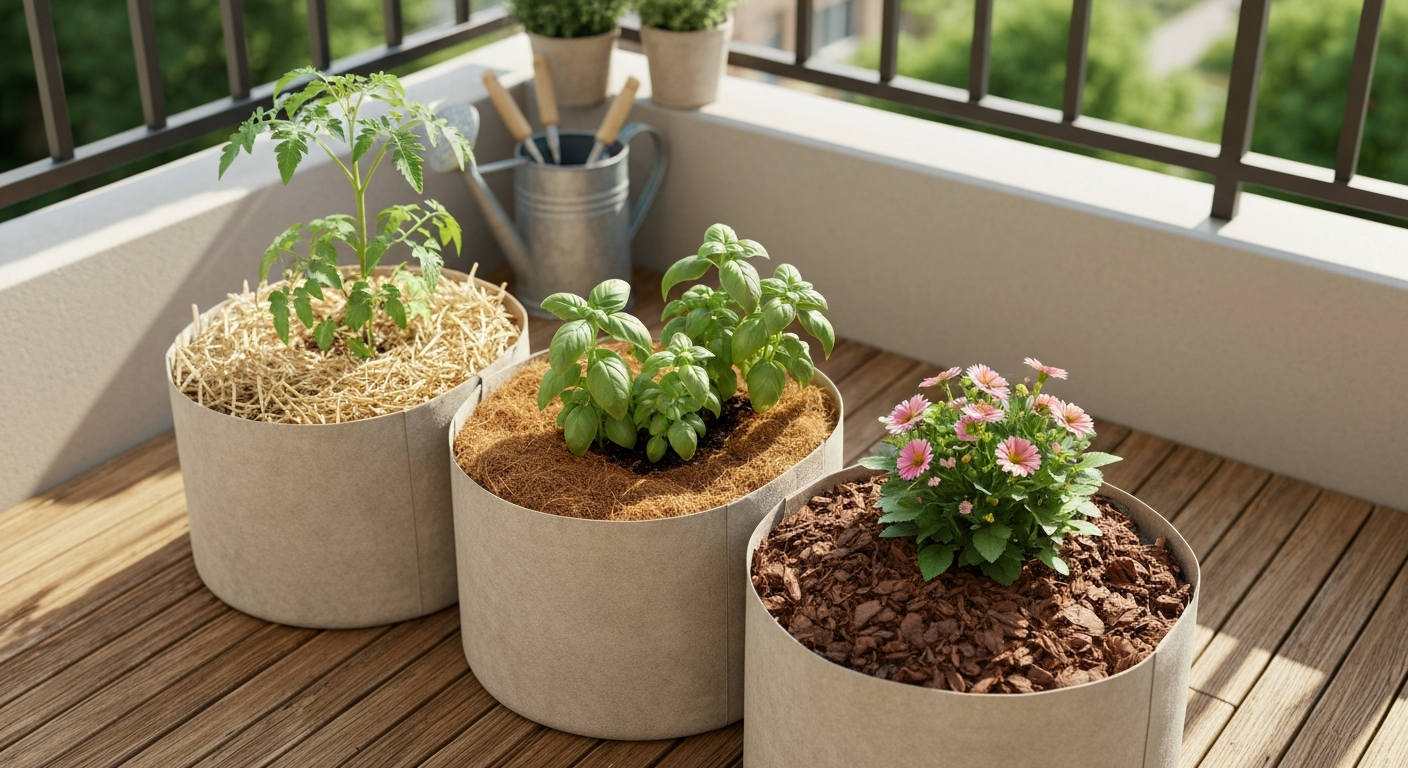
Best Mulch for Grow Bags: Top Picks for Vegetables & Flowers
Find the best mulch for fabric grow bags: top picks, how-to apply, crop & climate advice, and troubleshooting.
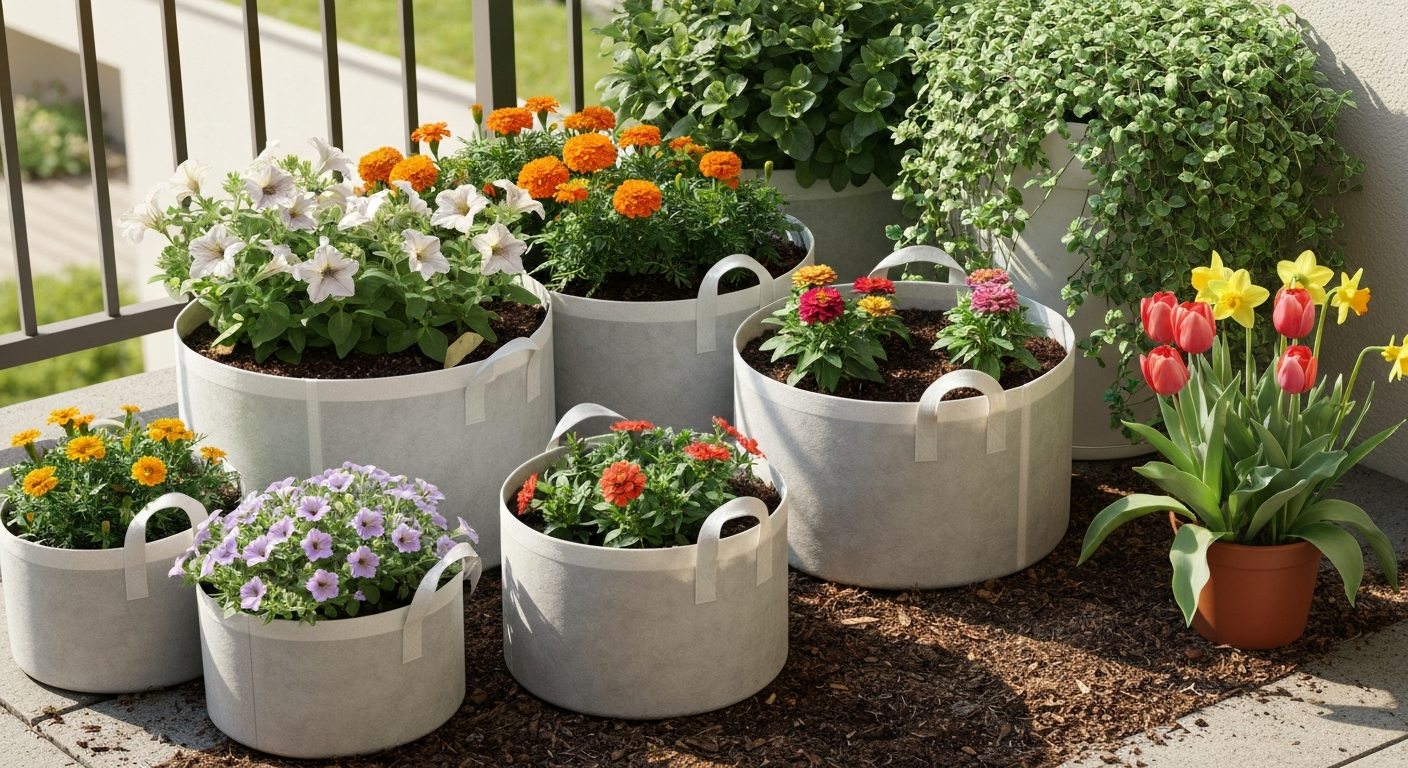
Best Flowers for Grow Bags: Top Picks, Soil & Care Guide DIY
Best flowers for grow bags: top annuals, perennials, bulbs & trailers; soil, fertilizer, planting and care checklists.