If you want to buy fabric grow bags wholesale online, the best approach is to identify your crop types and size needs first, then shortlist suppliers who publish actual GSM ratings (aim for 270–300 GSM or higher), real dimensions, and transparent return policies before you commit to a bulk order. Buying a sample batch of 5–10 bags before going large is the single most important step you can take to avoid an expensive mismatch.
Best Grow Bags Wholesale Online: How to Buy Right
Marcus Holloway
3 Jul 2026
What 'best' actually means when you're buying at wholesale scale
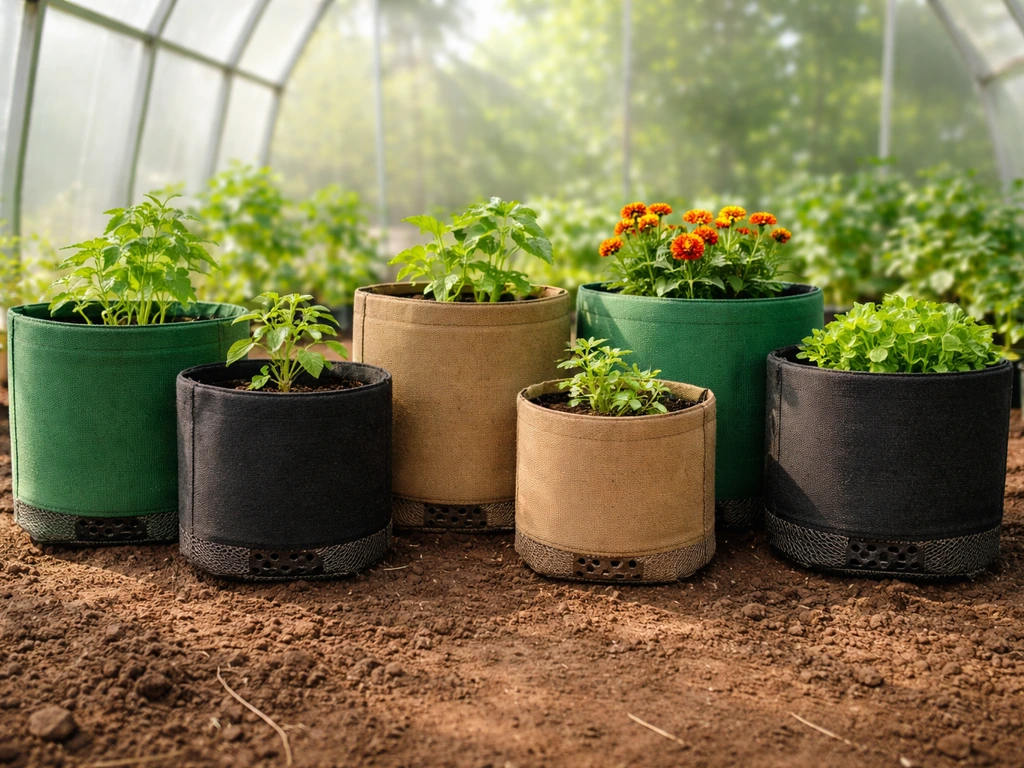
When you're buying one or two bags, 'best' is mostly about price and convenience. At wholesale scale, it means something more specific: durability across multiple growing seasons, consistent sizing across the whole batch, and a supplier relationship that doesn't leave you stuck if 20% of your order arrives damaged. Here's how I break it down:
- Fabric density (GSM): The single most important spec. Non-woven polypropylene rated at 270–300 GSM holds structure through UV exposure, washing, and repeated fill-and-empty cycles. Bags marketed as 'thin' or 'lightweight' (often under 150 GSM) will degrade faster, sometimes within 12–18 months of soil contact on both sides.
- Seam and handle integrity: Seams are where bags fail first. A well-built bag has seam tensile strength that matches or exceeds the fabric body itself. Handles should be double-stitched and attached at reinforced points, not just stitched into the main seam.
- True drainage and aeration: Porous fabric walls allow air-pruning, which stops roots from circling and produces a denser, finer root architecture. This is the core horticultural advantage over plastic pots, and it's only reliable if the fabric maintains its porosity over time — another reason GSM and fabric quality matter.
- Accurate sizing: A '5-gallon' label doesn't mean much unless you see actual diameter and height. EcoYard's 300G 5-gallon bag, for example, measures 12.6 × 10 inches. GroPro's 7-gallon is 14 × 12 inches. At wholesale scale, a half-inch difference across 100 bags affects your spacing, media volume, and plant performance.
- Reusability and cost per cycle: A 300 GSM bag that lasts 4–5 seasons costs far less per use than a 150 GSM bag you replace every year. Run the math before buying on price alone.
- Certifications and safety claims: BPA-free and non-toxic claims should be accompanied by documentation, not just marketing copy. For food crops and mushrooms especially, this matters.
One honest caveat: not every grower needs the most durable bag. If you're growing one season of annuals and aren't planning to reuse, a thinner, cheaper bag may be fine. But if you're scaling up perennials, trees, or running a multi-season operation, buy for durability from the start.
Matching grow bag sizes to your crops
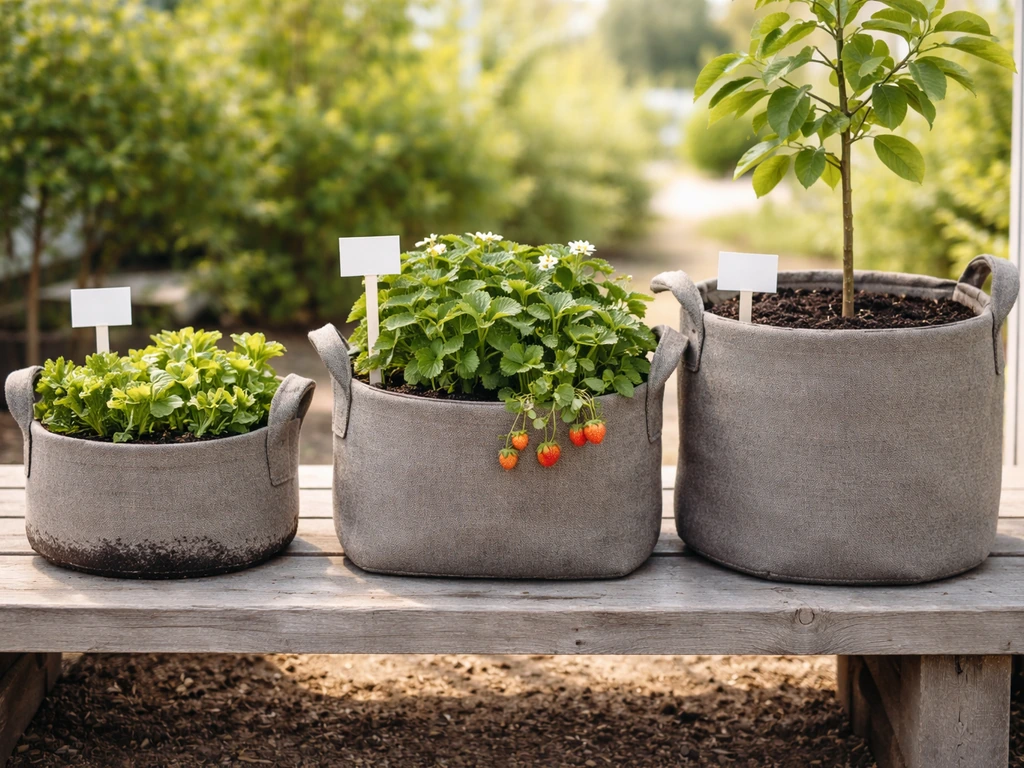
Size is where most wholesale buyers go wrong. People order what sounds right, not what the plant actually needs. Here's a practical breakdown by crop type, based on real root zone requirements and container growing research:
| Crop Type | Recommended Size | Why |
|---|---|---|
| Leafy greens, herbs, strawberries | 1–3 gallon | Shallow roots, high density planting; smaller bags allow more plants per square foot |
| Tomatoes, peppers, eggplant | 5–7 gallon (minimum) | Indeterminate tomatoes do better in 10-gallon; root mass is substantial by mid-season |
| Potatoes | 10–15 gallon | Need vertical soil depth for tuber development; 15-gallon preferred for larger varieties |
| Cucumbers, squash, zucchini | 5–10 gallon | Aggressive feeders; go bigger if you're in a hot, dry climate where bags dry out fast |
| Flowers (annuals) | 1–5 gallon | Depends on species; most annuals do fine in 3-gallon bags |
| Shrubs, small perennials | 7–15 gallon | Size up if overwintering in the bag |
| Trees (fruit, ornamental) | 25–100 gallon | Air-pruning is especially valuable for tree root development; fabric containers reduce circling significantly |
| Mushrooms (substrate blocks) | Not a fabric bag — see note below | Mushroom grow bags are polypropylene filter-patch bags, not soil fabric pots |
A quick note on mushrooms: if you're growing mushrooms, the term 'grow bag' means something completely different. Mushroom cultivation uses autoclavable polypropylene bags with a filter patch for gas exchange, not the non-woven fabric bags used for soil gardening. These are two separate product categories. If that's your focus, look for food-contact compliant PP bags (certified under frameworks like FDA 21 CFR 177.1520 or EN 1186), and expect minimum order quantities of 1,000 or more per bag type from dedicated mushroom supply wholesalers. Keep that distinction in mind as you search.
For trees specifically, fabric containers are one of the most research-supported use cases. University extension studies confirm that porous fabric walls produce little to no root circling compared to standard plastic containers, and the air-pruning effect creates a healthier, more transplant-ready root system. If you're buying wholesale for tree production or large-scale container gardening, 25-gallon and up is where most tree work happens.
Fabric and build quality: what to actually check before buying in bulk
Marketing language is everywhere in this space. 'Heavy duty,' 'premium quality,' 'long-lasting', none of that tells you anything useful. Here's what to actually look for: If you’re searching for the best grow bags in Canada, start by comparing GSM, UV testing, and return policies so you don’t pay more for weaker fabric best grow bags canada.
GSM rating
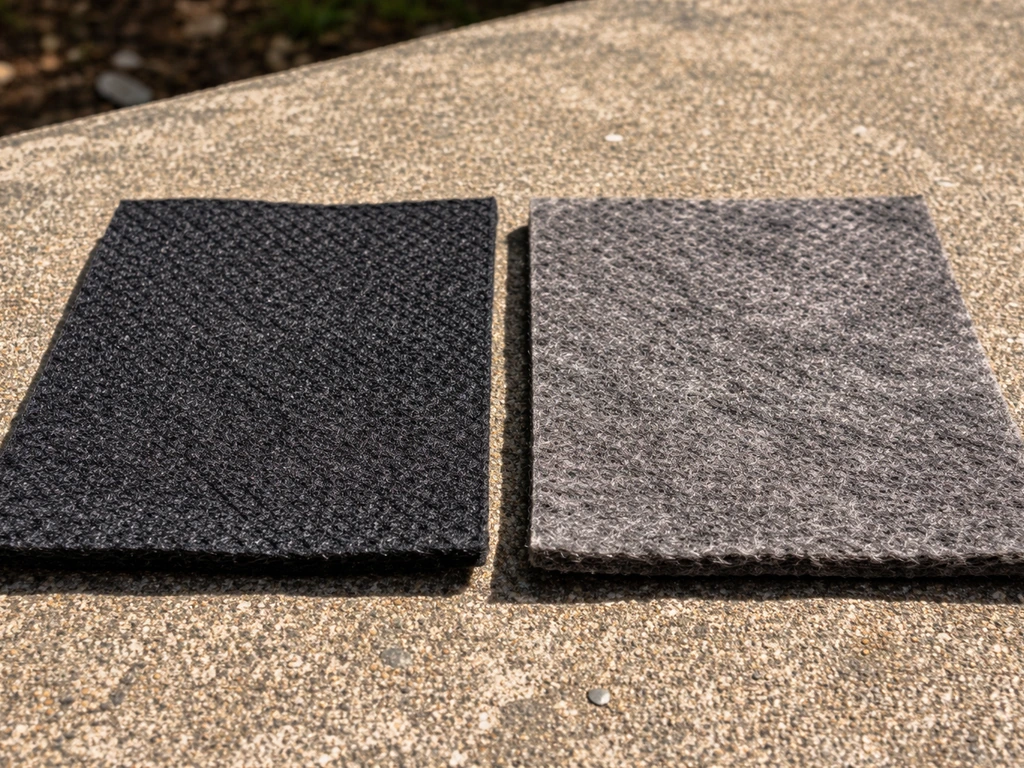
This is the fabric density measured in grams per square meter. Anything under 200 GSM is going to be thin. The sweet spot for reusable, durable fabric grow bags is 270–300 GSM non-woven polypropylene. At 300 GSM, the fabric maintains structural integrity through UV exposure and holds its shape when filled with wet media. If a supplier can't tell you the GSM, that's a red flag.
UV resistance
UV degradation is the main reason outdoor fabric bags fail prematurely. Suppliers worth working with should be able to reference ASTM G154 testing, a standardized accelerated UV weathering test using fluorescent UV lamps, to back up UV-resistance claims. If a supplier just says 'UV resistant' without any testing methodology, push for documentation or move on.
Seam and handle construction
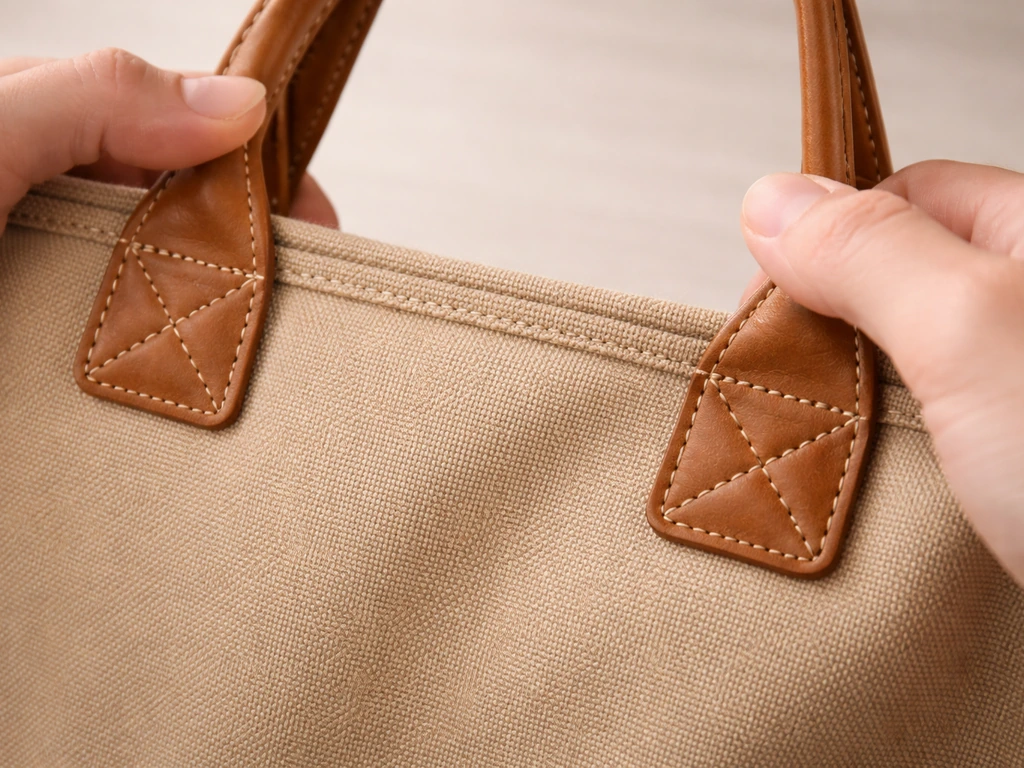
Ask for photos of the seam stitching, or order a sample and tug hard on the handles. Good bags have seams where the stitch tensile strength equals or exceeds the surrounding fabric, meaning the fabric tears before the seam does. Reject any bag where you can pull handle stitching loose by hand, or where the seam shows loose threads, skipped stitches, or glued (rather than sewn) construction.
Liner options and certifications
Some bags include an inner liner or are marketed as having a moisture-retention layer. For most vegetables, you don't need this, the whole point of fabric is drainage and aeration. For trees and long-season crops in very hot climates, a partial liner can slow water loss. On certifications: BPA-free and non-toxic claims should come with documentation, especially if you're growing edibles. Ask the supplier directly what their material safety data sheets say.
Finding wholesale suppliers online: how the market actually works
The wholesale fabric grow bag market online falls into a few categories: direct manufacturers (often based in China, with MOQs of 500–1,000+), domestic distributors (like Growers' Goods, HTG Supply, or Left Coast Wholesale, which carry branded products like Root Pouch), and hybrid e-commerce sellers that sell 'wholesale packs' of 10–50 bags at a slight discount. Here's what to know about each:
| Supplier Type | Typical MOQ | Price Point | Key Consideration |
|---|---|---|---|
| Direct manufacturer (overseas) | 500–2,000+ units | Lowest per-unit cost | Long lead times (4–8 weeks), higher shipping costs, harder to resolve quality disputes |
| Domestic distributor | 10–100+ units | Mid-range | Faster shipping, established return policies, branded product consistency |
| E-commerce wholesale packs | 10–50 units | Slightly above retail | Good for testing; not true wholesale pricing but lower commitment |
| Mushroom bag specialists | 1,000–1,200+ units | Varies by bag spec | Entirely different product category; specialized suppliers only |
Pricing structures vary a lot. Most domestic distributors use tiered pricing: buy 25 bags and pay X, buy 100 and pay 0.7X, buy 500 and pay 0.5X. Always ask for a full price-break schedule upfront, because the jump from 50 to 100 units often unlocks the most significant discount. Shipping costs can wipe out savings fast on bulky orders, especially bags over 15 gallons, get a freight quote before finalizing.
Return and warranty policies are where many wholesale buyers get burned. HTG Supply, for example, puts return shipping responsibility on the buyer. GrowersSupply charges a 20% restocking fee for returns outside 30 days. Left Coast Wholesale requires submitted claim forms with documentation and charges a minimum 10% restocking fee on undamaged returns. West Coast Products goes as high as 25%. None of these are deal-breakers on their own, but they mean you need to inspect your order promptly and document any defects immediately on arrival.
How to compare listings and avoid the most common wholesale mistakes
When you're comparing listings across multiple suppliers, you need a consistent checklist. Otherwise you end up comparing a 300 GSM bag with real dimensions against a vague 'heavy duty' listing with no specs, and making a decision based on price alone.
- Check for actual GSM rating, not just descriptive words like 'thick' or 'heavy duty.'
- Verify physical dimensions (diameter × height in inches or cm), not just gallon labels. A '5-gallon' bag from two suppliers can differ by 2+ inches in height.
- Look for UV-resistance documentation or at minimum a reference to testing standards (ASTM G154 or equivalent).
- Confirm whether the bag is intended for single-use or multi-season reuse. Some product lines explicitly state a 12–18 month degradation window once soil contacts both sides — that's a one-season bag, regardless of how it's marketed.
- Read the return and restocking fee policy before you buy, not after.
- Ask about stock availability for the full quantity you need. Many wholesale listings show 'in stock' but can't fulfill 500 units without a 6-week lead time.
- For edible crops, confirm BPA-free and food-safe material claims with documentation.
The most common wholesale mistake I see is buying purely on price per unit without accounting for reusability. A bag at $0.80/unit that lasts one season costs more over three years than a $2.50/unit bag that lasts five seasons. Do the math on your specific use case before committing.
A second common mistake is ordering the wrong size across the board. This happens when buyers assume 'bigger is always better' and end up with 10-gallon bags for herbs or 5-gallon bags for indeterminate tomatoes. Use the sizing table above, and when in doubt, go one size up rather than down, fabric bags dry out faster than plastic, so root-bound plants in undersized bags suffer quickly.
Your ordering strategy: samples, bulk planning, and timing
Even if you're confident in a supplier, always run a sample order first. If you’re specifically shopping for the best grow bags for autoflowers, focus on durable, breathable fabric and the right size for steady root growth. Order 5–10 bags in each size you plan to buy in bulk, fill them with your actual growing media, water them, and check the seams and handles under load. This catches the most common failure modes (seam separation, handle tear-out, fabric thinness) before you've committed to 200 units.
When testing sample bags, specifically look for: stitch integrity at handle attachment points, whether seams hold when the bag is filled and lifted by the handles, how the fabric feels after a week of wet-dry cycling, and whether the fabric shows any distortion or sagging. If handles pull away from the seam under normal lifting, reject the supplier.
For bulk planning, think in growing seasons. If you're a home grower scaling up vegetable production, a reasonable starting wholesale order is 25–50 bags in your two or three most-used sizes. That gives you enough volume for meaningful per-unit savings without a huge upfront commitment. If you're planning a tree nursery or large-scale perennial operation, larger orders (100–500 units) make sense, but only after your sample validation.
Timing matters more than people expect. If you're in North America and want bags ready for spring planting, order by January or February for domestic distributors, and by November or December if sourcing direct from overseas manufacturers. Freight delays, stock shortages, and pre-season demand spikes are all real. Being 3 weeks late on your bag order can cost you a full growing season.
Setting up and using your bags right from day one
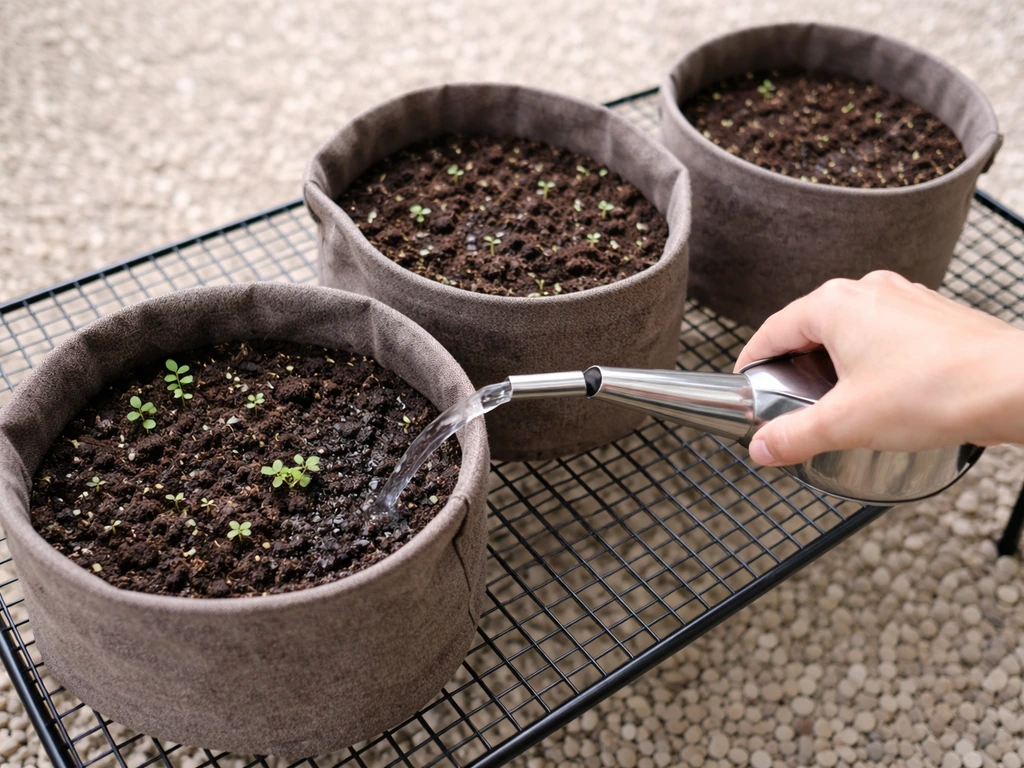
Once your bags arrive, getting setup right saves you from the most common problems. Fabric grow bags behave differently from plastic pots, and if you treat them the same way you'll get suboptimal results.
Setup
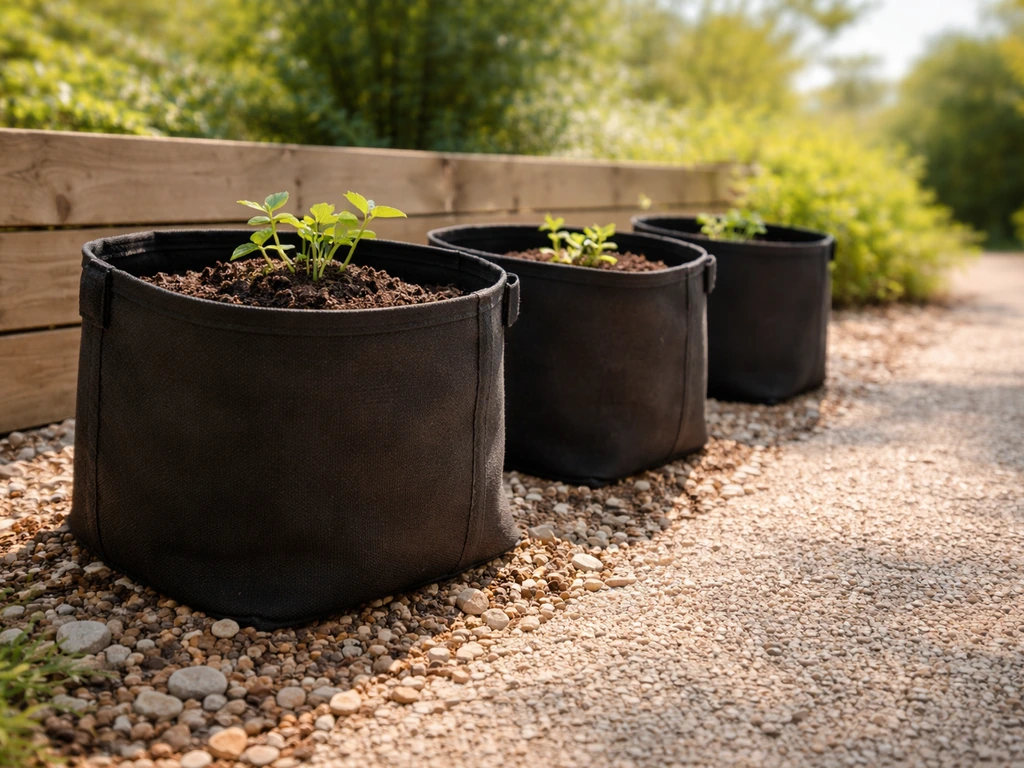
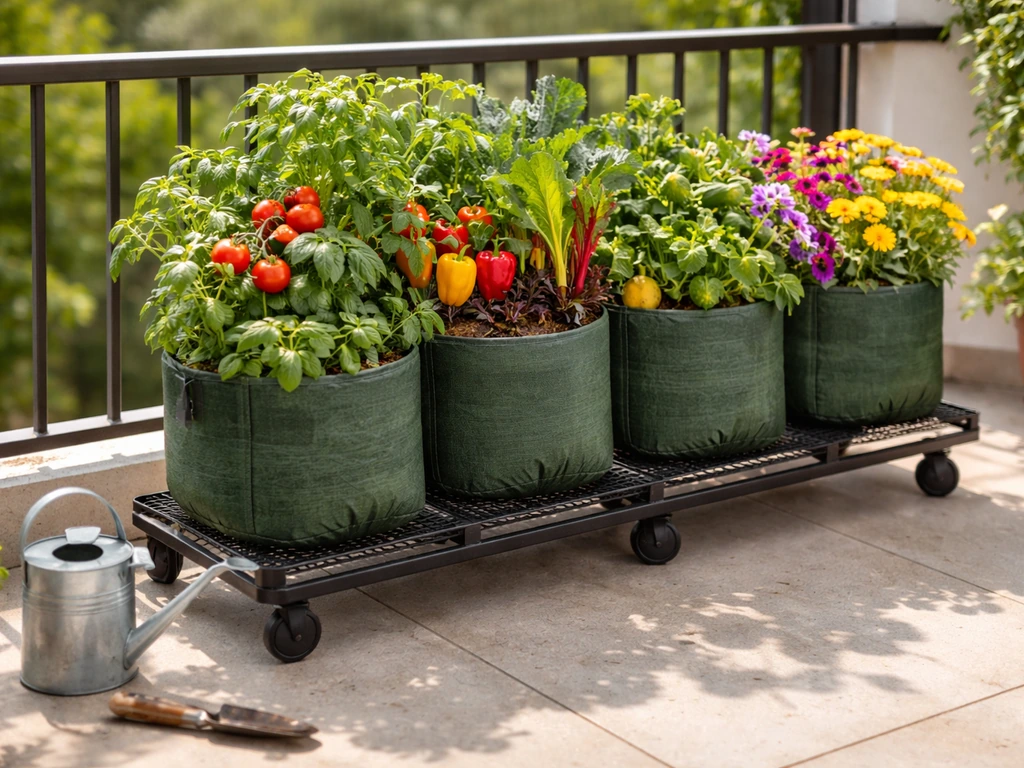
Place bags on a surface that allows air circulation underneath, a pallet, wire rack, or gravel bed works well. Placing directly on concrete or dense soil blocks bottom drainage and defeats the air-pruning benefit. Fill with a well-draining potting mix; standard garden soil is too dense and will compact in fabric bags, restricting root air exposure. A mix of coco coir, perlite (20–30%), and quality compost works well for most vegetables and flowers.
Watering
Fabric bags dry out faster than plastic pots because moisture evaporates through the sidewalls in addition to the surface. In hot weather, 5-gallon bags may need watering once or even twice daily. The easiest fix is to group bags together to reduce sidewall exposure, use a thick mulch layer on top, or run drip irrigation. Stick your finger 2 inches into the media, if it's dry at that depth, water thoroughly until you see runoff from the bottom.
Feeding
Because you're watering more frequently, nutrients leach out faster too. Plan to feed container plants in fabric bags more often than you would in plastic, typically every 1–2 weeks with a balanced liquid fertilizer for heavy feeders like tomatoes and peppers. Slow-release granular fertilizers mixed into the media at planting can help reduce the feeding frequency.
Quick troubleshooting
- Wilting despite regular watering: Check if the bag is sitting on a surface blocking drainage. Stagnant water at the bottom causes root rot faster in fabric bags than plastic because the fabric wicks moisture up into the root zone.
- Stunted growth: Often an undersized bag. If roots are circling the outer fabric layer or pushing through the walls, up-pot immediately.
- Bag losing shape or collapsing: Usually a sign of fabric failure (low GSM or UV degradation) or media that's too dense and compacting. Check your mix ratio.
- White mineral crust on fabric exterior: Salt buildup from fertilizer. Flush with plain water for 2–3 waterings to leach excess salts.
- Seam or handle failure: Document with photos immediately and contact your supplier. This is a valid defect claim, and you want to do it within any return window the supplier specifies.
After your season ends, empty bags, rinse them with a hose or in a bucket of diluted bleach solution (1:10 ratio), and let them dry completely before storing. Fold flat and store out of direct UV exposure. This is what gets you multiple seasons out of a quality 300 GSM bag, and why the per-season cost math favors buying quality wholesale from the start. If you want the best organic grow bags, start with durable, high-GSM fabric and verify that the materials and claims match what you’re growing quality 300 GSM bag.
FAQ
If I’m buying grow bags wholesale for vegetables, how can I confirm they are safe for food?
For edible crops, request the supplier’s material documentation, not just marketing claims. Specifically ask for food-contact or relevant chemical compliance statements (and any test reports for leachables), plus the cleaning and rinsing guidance they recommend before reuse.
Do grow bags sometimes arrive damaged just from shipping, and how should I handle that when buying wholesale?
Ask whether bags are supplied folded, rolled, or compressed, and whether they include a pre-treatment or finishing that affects water uptake. In field use, some batches show uneven moisture wicking when the fabric is shipped heavily compressed, so you want to know if the supplier can ship in a way that preserves shape.
How do I know when it’s time to retire a reusable fabric grow bag?
Yes. If you reuse bags, insist on a documented cleaning method the supplier supports, and replace bags that show thinning, fraying at seams, or persistent odor after rinsing. Bleach rinsing alone is not enough if the fabric has degraded, because micro-tears can reduce drainage and air pruning.
What’s the best way to deal with damaged bags upon delivery under different return policies?
When comparing suppliers, focus on whether the “return shipping” is buyer-paid and whether damaged-in-transit claims are handled through a carrier process. Create a simple intake routine: inspect within 24 hours, photograph every damaged bag, document packing condition, and submit claims immediately so you don’t miss the window.
How can I ensure two bulk orders from the same supplier will match in size and durability?
If you need consistent performance across a farm, ask the supplier whether GSM and dimensions are the same across production runs and whether they can provide batch-level specs. Even with the same headline GSM, some batches vary slightly in seam thickness and handle reinforcement, which shows up as different tear behavior.
What should I adjust for outdoor grow bags in very hot weather so they don’t dry out or fail early?
For hot climates, the key is not just UV resistance, it’s preventing excessive drying and salt buildup. Pair durable high-GSM bags with a top mulch, drip irrigation, and a practical leaching schedule, then track how often you actually water per size (5, 7, 10, 15 gallons) before placing a full order.
If a supplier offers liner options, should I choose them for my crop and climate?
Yes, especially for trees and long-season crops. Ask for recommended watering cadence and whether they expect partial liners or full liner use in your climate. Liner presence can change drainage rate and oxygen availability, so you want usage guidance aligned to your grow media and irrigation setup.
What’s the most reliable sample test beyond just checking seams and tugging once?
Do a seam-and-handle test using your real loading: fill a sample with the same potting mix and water level you use commercially, then lift by the handles repeatedly for several minutes. If handles loosen or seams deform noticeably under normal lifting, treat that supplier as a mismatch even if the GSM looks right.
How do I compare “fill capacity” between different grow bag listings fairly?
If you see a big price difference, check whether the listing includes the same height, diameter, and intended fill capacity. Many wholesale listings quote “max” capacity that looks comparable in photos but holds less usable media once the bag is properly packed and watered.
Should fertilizer schedules change when switching from plastic pots to fabric grow bags?
Expect more frequent watering and more nutrient loss, then plan fertilizer timing accordingly. If you’re buying in bulk, standardize one media recipe and one feeding interval, because the bag fabric changes moisture dynamics, and inconsistency in media can make it look like bag quality is the issue.
How can I reduce the risk of late delivery when ordering wholesale for spring?
Yes. If you’re ordering by season, ask the supplier about production lead time plus their handling time in transit (including whether they can split-ship). For international orders, request an order confirmation with estimated ship date and a backup plan if a freight delay pushes you past spring planting.
Next Articles
Best Soil for Grow Bags: Mix Recipes and How Much to Add
Best soil for grow bags: mix recipes, how much to add by bag size, and vegetable tweaks for strong drainage and yield.
Where to Put Grow Bags: Best Location, Sun, Drainage
Find the best spot for fabric grow bags: sun, wind, drainage, spacing, surfaces, and fixes for heat and root-rot issues.
Pros and Cons of Grow Bags for Vegetables and Flowers
Grow bag pros and cons for veg, flowers, trees, and mushrooms: aeration, mobility, and watering plus fixes for common is