
Fabric grow bags genuinely work well for tomatoes, and in many setups they outperform both traditional plastic pots and flat polythene grow bags. The trade-off is real though: they dry out faster, they need consistent feeding, and if you pick the wrong size you'll fight the plant all season. Get those three things right and a good fabric bag will give you healthy roots, decent airflow, and a solid harvest even on a small patio. You can also use tomato grow bags for other vegetables, but you may need to adjust the bag size and watering frequency to match each crop's needs can you use tomato grow bags for other veg.
Tomato Grow Bag Review: Best Options, Setup, Care Tips
Marcus Holloway
9 Jul 2026
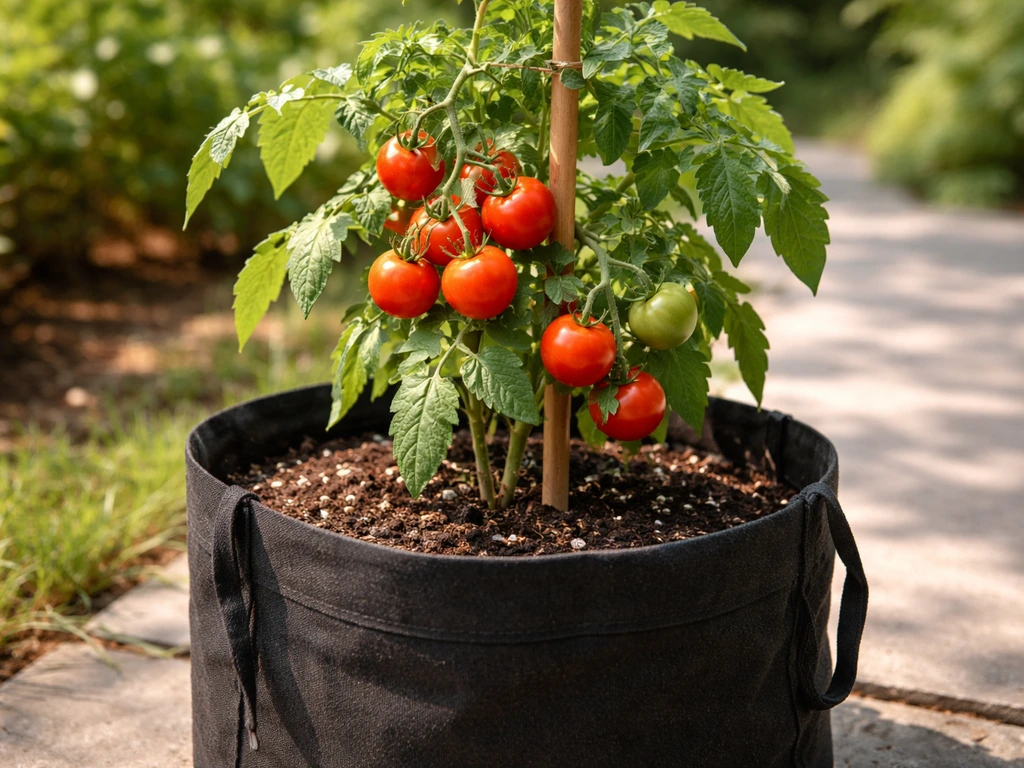
Are tomato grow bags actually worth it?
For most home growers who don't have in-ground space, yes, they're worth it. Fabric grow bags beat cheap flat plastic grow bags on almost every measure that matters for tomatoes: drainage, root health, and temperature control. Where they lose to a big plastic planter or raised bed is moisture retention. Fabric is breathable by design, which means the root zone dries out noticeably faster, especially in warm weather or a sunny spot.
The breathability is also the main advantage. Research on fabric containers confirms that the porous walls trigger air root pruning, where roots that hit the wall are naturally stopped rather than circling the container. That produces a denser, more fibrous root system distributed through the whole substrate rather than a tangled mass at the edges. Better roots mean better water and nutrient uptake, which is exactly what a heavy-feeding plant like a tomato needs.
One honest caveat: if you're growing in a very hot, exposed position and can't water daily, a grow bag will stress you out. In that scenario a larger glazed ceramic pot or a self-watering planter might be a better match. But for most patios, grow bags are a practical, affordable choice that punches above its price point.
Choosing the right grow bag for tomatoes
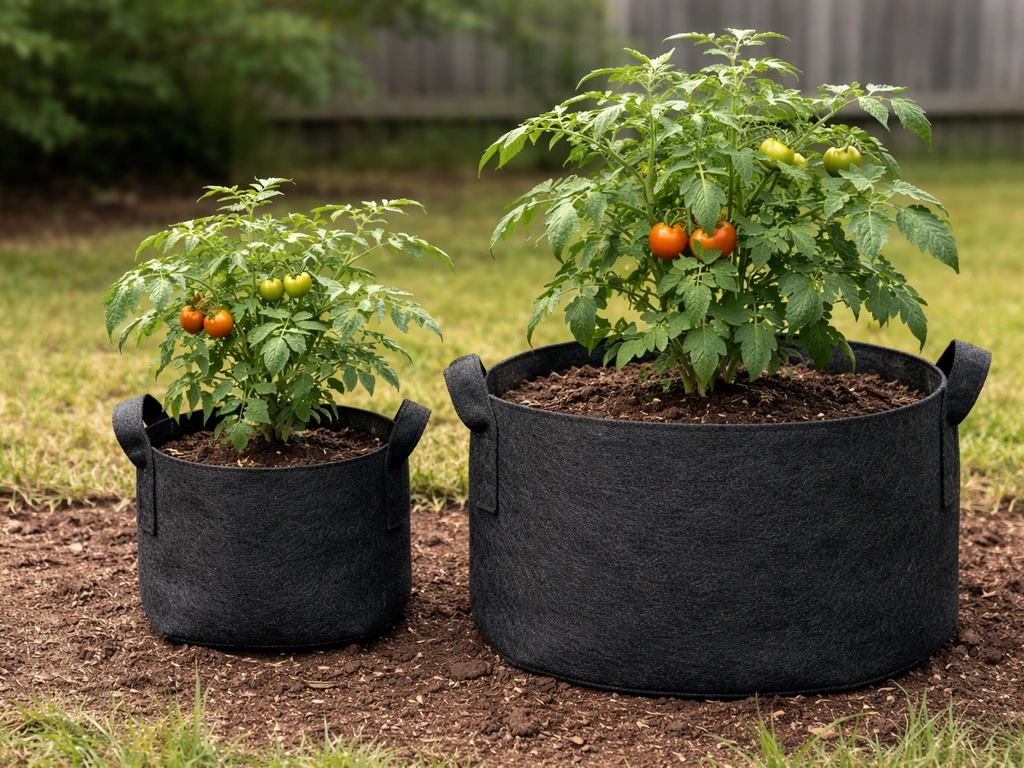
Size is the single most important buying decision. Too small and you'll be fighting water stress all summer. UNH Extension recommends at least one 4-5 gallon container per plant as a minimum, and University of Delaware guidance backs that up with a one-plant-per-5-gallon rule. In practice, for cordon (indeterminate) tomatoes I'd push that further. A 10-gallon (roughly 38-litre) bag is a much more comfortable working volume per plant, reduces watering frequency compared to a 5-gallon bag, and gives the root mass room to develop properly. The Chicago Botanic Garden's container guidance suggests aiming for containers holding 15 gallons or more for a healthy tomato root system, so if you can go bigger, do.
Beyond volume, here are the other specs worth checking before you buy:
- Fabric weight and density: Thicker nonwoven fabric (typically 300g/m² or above) holds its shape better, lasts multiple seasons, and still allows adequate aeration. Thin, flimsy fabric bags collapse under a heavy tomato plant and degrade faster in UV.
- Drainage: The base should be permeable fabric, not a solid plastic or rubber layer. Sealed bases defeat the purpose of a fabric bag and lead to waterlogging.
- Handles: Strong, sewn-on handles matter a lot. A mature tomato plant in a 10-gallon bag is heavy. Double-stitched handles let you move the bag to protect plants from late frosts or reposition for sun.
- Stability: A wider base is better than a tall narrow profile. Tomatoes get top-heavy with fruit and foliage, and a bag that tips easily is a season-ending problem.
- Colour: Lighter colours (tan, grey, or white) reflect heat better than black. NC A&T Extension notes that dark-coloured containers can elevate soil temperature in summer to levels that damage roots. In hot climates, this matters.
Fabric vs plastic grow bags: what actually changes for tomatoes
| Feature | Fabric Grow Bag | Flat Plastic Grow Bag | Rigid Plastic Pot |
|---|---|---|---|
| Root health | Air pruning prevents circling; denser fibrous roots | Roots can circle if bag is too small | Root circling common in undersized pots |
| Drainage | Excellent through base and walls | Relies on drainage holes only | Relies on drainage holes only |
| Breathability/aeration | High; walls allow gas exchange | Low; sealed sides | Low; sealed sides |
| Soil temperature | Moderate; breathability cools slightly | Can overheat in full sun (especially dark colours) | Can overheat in full sun (especially dark colours) |
| Watering frequency | Higher; dries out faster through walls | Moderate | Moderate to low |
| Durability | Multiple seasons if quality fabric | Often single-season | Many years |
| Weight/portability | Lightweight when empty; handles help | Very light but can tear | Heavy |
| Cost | Low to moderate | Very low | Moderate to high |
The breathability benefit is backed by real research. A study published in the Journal of Environmental Horticulture found that plants grown in fabric containers had significantly more fibrous, smaller-diameter roots and less circling than those in plastic pots, directly linked to the air-root-pruning effect at the porous walls. Utah State University research also confirmed that substrate temperatures vary measurably between plastic and alternative container materials, which matters for tomatoes since roots under heat stress limit fruit set. Fabric bags, especially lighter-coloured ones, keep the root zone cooler and more consistent.
The recommendation here is straightforward: go with a quality fabric bag over flat plastic grow bags for tomatoes every time. Flat polythene bags give you almost none of the structural or root-health benefits and tend to waterlog easily. The only reason to choose a rigid plastic pot over fabric is if you water infrequently or grow in an exceptionally hot, dry location where every drop of moisture needs to be retained.
Planting setup: soil, spacing, and getting tomatoes off to a good start
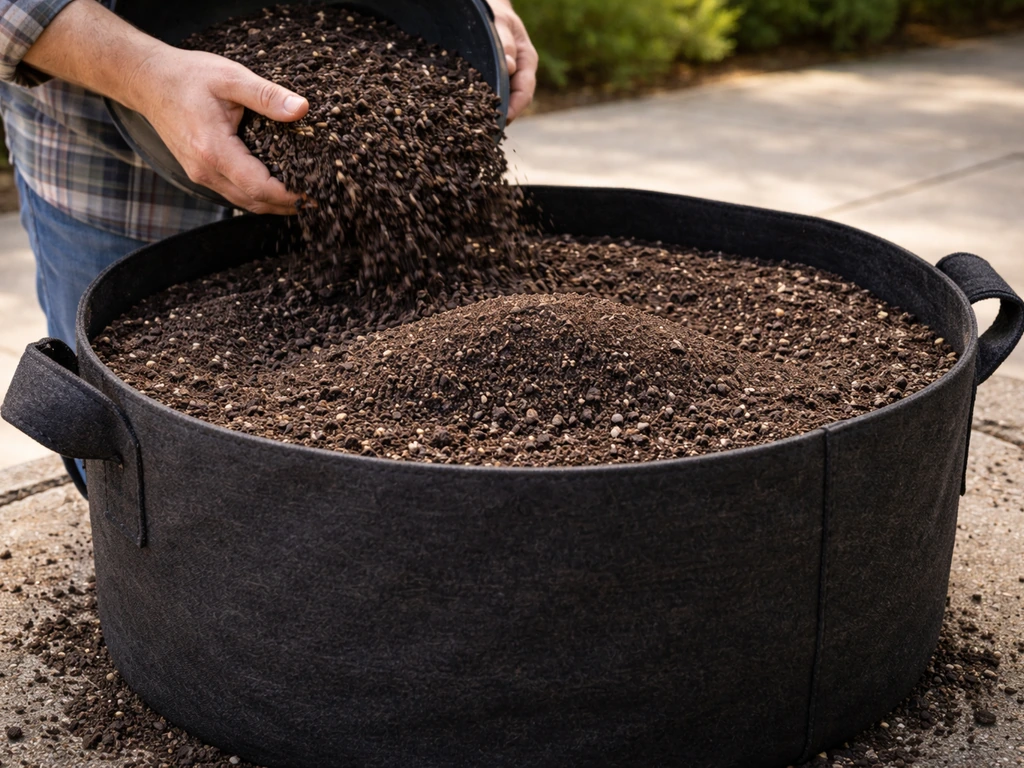
The right growing mix
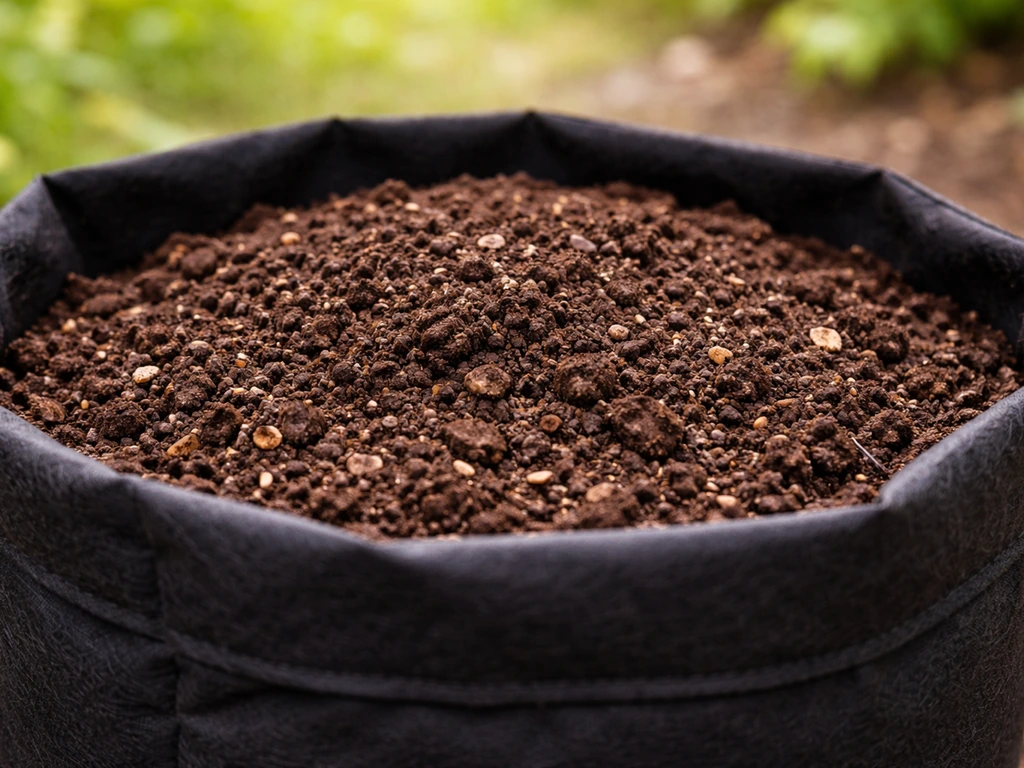
Never fill a grow bag with garden soil or homemade compost straight from the heap. UNH Extension is clear on this: container tomatoes need a soilless, artificial potting mix. Garden soil compacts in containers, drains poorly, and often carries pathogens. A good quality peat- or coir-based potting mix keeps the root zone airy, which is essential given that fabric bags rely on that airy structure for the air-pruning effect to work properly.
A practical DIY approach if you want to stretch bought potting mix or improve it: UC ANR guidance suggests an equal-parts blend of compost, coconut coir, and perlite or vermiculite. Perlite in particular improves drainage and stops compaction over the season. For a 10-gallon bag you're looking at roughly 38 litres of mix, and a UW-Extension guide references about 25 quarts as a working starting volume for a standard container tomato setup. Rutgers Extension also recommends pre-moistening your potting mix before filling the bag, as dry mix is hydrophobic and can leave air gaps that compromise root contact.
Fertiliser at planting
Mix a slow-release fertiliser directly into the potting mix before planting. WSU Extension recommends a 3-4 month slow-release formula blended in at the start. Cornell Cooperative Extension's container gardening guidance suggests around 1.25 cups of granular fertiliser per 5-gallon bag as an initial dose. This gives the plant a baseline nutrient supply while roots are establishing, before you start any liquid feeding programme.
Planting and spacing
- Fill the bag to within about 3-4 inches of the top so you have room to water without overflow.
- Plant one tomato per bag. This is a firm rule regardless of variety. Crowding two plants into a bag doesn't double your yield; it halves the resources available to each plant.
- Bury the stem deep, up to the lowest set of leaves. Tomatoes develop roots along buried stems, so this is a genuine yield advantage.
- For cordon types, position your cane or stake at planting so you're not disturbing roots later. University of Delaware extension specifically recommends supporting plants with cages at planting for upright growth.
- If using a cage, choose one sized for the variety. Compact determinate varieties work fine with a standard wire cage, but tall indeterminate types need a sturdy stake or a heavy-gauge cage at least 4-5 feet tall.
Penn State Extension notes that a single tomato plant needs at least a 20-inch-wide container, which maps closely to a 10-gallon fabric bag footprint. Yes, you can use tomato grow bags for flowers, and the same breathable fabric and drainage benefits help many container-friendly blooms thrive can you use tomato grow bags for flowers. Keep that in mind if you're spacing multiple bags on a patio, and leave enough room between bags so foliage can air out.
Caring for tomatoes in a grow bag all season
Watering
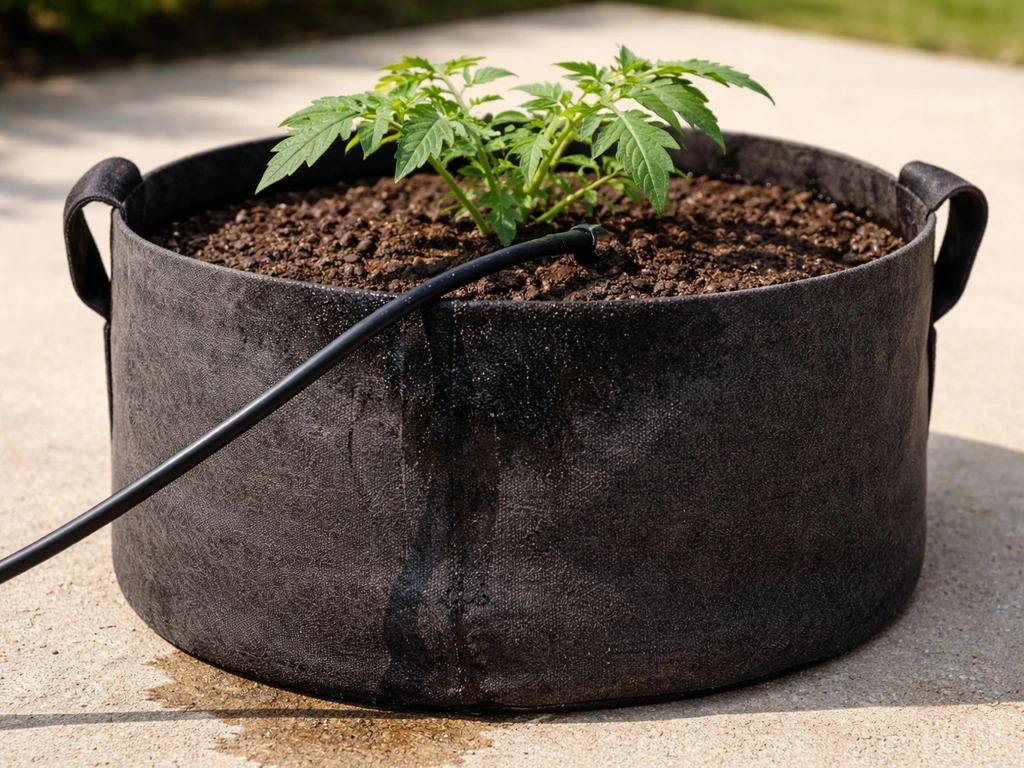
Watering is the discipline that makes or breaks tomatoes in fabric bags. Because the walls are permeable, moisture evaporates faster than in a solid container. The practical rule from extension guidance is to check the top 2 inches of soil: when it feels dry, water thoroughly until water runs out of the base. Don't just dampen the surface. UNH Extension is explicit that container tomatoes have no deep reservoir to draw from, so the grower is entirely responsible for maintaining consistent moisture.
In hot summer weather, a 10-gallon fabric bag on a sunny patio may need watering every day or even twice daily. A drip irrigation system on a timer is worth considering if you can't check consistently. Ask Extension notes that drip systems can prevent the complete drying-out cycles that cause stress and fruit problems. Iowa State Extension links inconsistent watering directly to blossom end rot, a calcium-uptake disorder triggered when water delivery is erratic even when calcium is present in the mix.
Feeding
Even with a slow-release fertiliser mixed in at planting, nutrients in a container get flushed out with every watering. UMN Extension recommends starting regular fertiliser applications between 2 and 6 weeks after planting depending on the medium and how fast the plant is growing. Penn State Extension advises supplementing with a soluble fertiliser every 2-4 weeks through the season for container vegetables. Use a balanced formula while the plant is establishing, then switch to a lower-nitrogen, higher-potassium tomato feed once flowering starts. Alabama Cooperative Extension warns that too much nitrogen drives leafy growth at the expense of flowers and fruit, which is a real risk if you're feeding heavily from early on.
Pruning and training
For cordon (indeterminate) varieties, remove sideshoots (suckers) regularly to keep the plant to one or two main stems. UNH Extension confirms that selective pruning improves harvestable yields and extends the harvest window for container tomatoes, partly because energy is focused on fewer but better-developed trusses. For bush (determinate) varieties, pruning is less critical but removing damaged or inward-facing growth still improves airflow.
Support
Fabric bags don't attach to a wall or fence the way a planter might, so the support structure has to be self-contained or freestanding. A heavy-duty bamboo cane pushed deep into the bag and tied to a trellis or fence panel works well. For freestanding bags on a patio, a sturdy tomato cage with a wide base is more stable than a single cane, which can lever against the bag and tip it in wind.
Troubleshooting the most common grow bag tomato problems
The bag dries out too fast
This is the most reported issue with fabric grow bags, and it's legitimate. The fix is usually going bigger (a 10-gallon bag dries out more slowly than a 5-gallon) and mulching the top surface with a couple of inches of compost or straw to slow evaporation from above. Moving the bag to a slightly less exposed position during peak heat also helps. If you're consistently watering twice a day and the plant still looks stressed, the bag is probably undersized for your climate.
Blossom drop and poor fruit set
Flowers dropping without setting fruit is usually a temperature problem, not a bag problem. Ask Extension and Iowa State Extension both note that extreme temperatures, especially prolonged days over 85-90°F (29-32°C), reduce pollen viability and cause flowers to drop. In a grow bag the root zone may also heat up in direct sun, compounding this. Oregon State University Extension notes that tomatoes grow and set fruit better when the soil is warm, which helps explain why a hotter container root zone can affect fruit set root zone may also heat up in direct sun. Shade the bag in the hottest part of the day if you're in a hot climate, and avoid feeding high-nitrogen fertiliser when flowering is underway. Flowers will typically return to setting fruit once temperatures moderate.
Blossom end rot
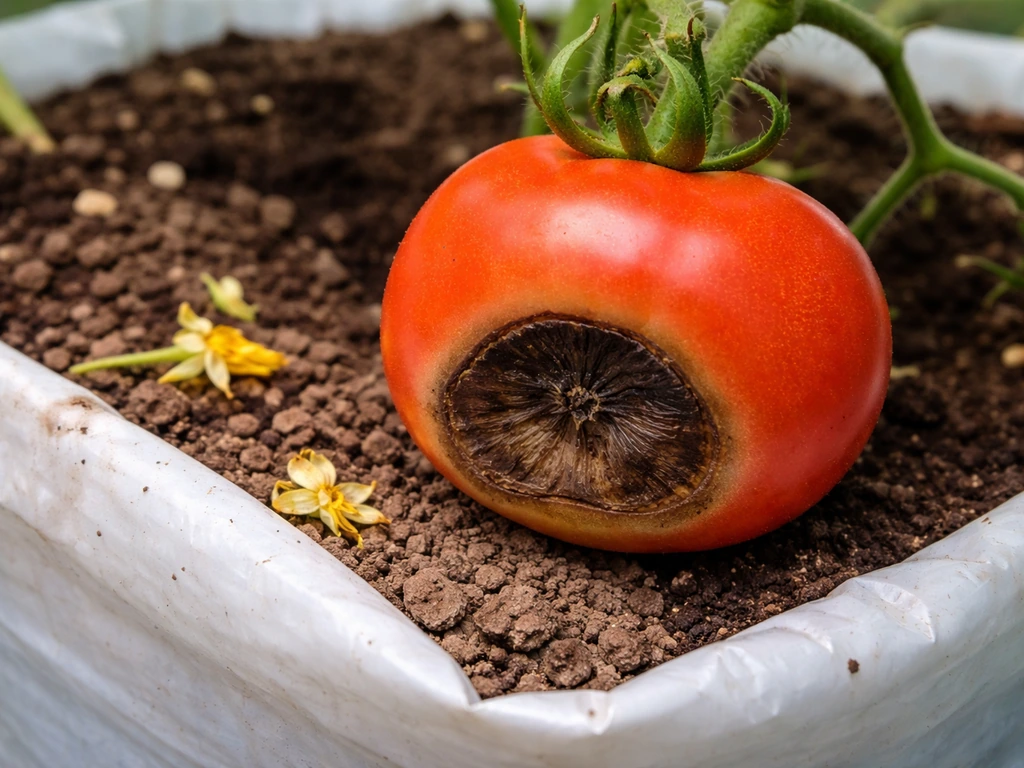
That blackened, leathery patch on the bottom of the fruit is blossom end rot, and it's almost always triggered by inconsistent watering in containers rather than a simple calcium deficiency in the soil. Iowa State Extension explains it as a calcium-related physiological disorder where uneven water uptake interrupts calcium transport to developing fruit. The fix is consistent watering, not necessarily more calcium spray. Get the watering right first.
Nutrient washout
If your plant looks pale and growth slows mid-season, nutrients have likely leached out through repeated watering. This happens faster in fabric bags than in solid containers. The answer is to keep up with your liquid feeding schedule every 2-4 weeks, and consider topdressing with a fresh layer of compost mid-season to replenish organics.
Root problems
Root circling is much less common in fabric bags than in plastic pots, thanks to the air-pruning effect. However, if you're using an undersized bag, roots can still run out of room. A plant that wilts even after watering, shows stunted growth, or produces very small fruit in mid-season may be root-bound. The solution for the current season is to water more frequently and feed liquid potassium to support fruit development. For next season, size up to at least a 10-gallon bag.
Pests and disease
Container tomatoes have one genuine advantage here: sterile potting mix at the start means you're not importing soil-borne diseases. Iowa State Extension notes this is a real benefit of container growing. The risk goes up if you reuse old potting mix. UC Master Gardener guidance recommends fresh potting mix each season and clean tools and containers, and Ask Extension advises cleaning containers before reuse to reduce disease carryover. Above-ground pests like aphids, whitefly, and spider mites still find grow-bag tomatoes easily, especially in warm sheltered spots. Check the undersides of leaves weekly and use insecticidal soap or neem oil early if you see colonies building.
Best bag types for determinate vs indeterminate tomatoes
Not every grow bag suits every tomato type. Here's how to match bag to plant:
| Tomato Type | Examples | Recommended Bag Size | Best Bag Style | Notes |
|---|---|---|---|---|
| Determinate (bush) | Roma, Celebrity, Tumbling Tom | 5-7 gallon (20-28 litres) | Standard fabric bag, wide base | Compact root system; doesn't need maximum volume. A 5-gallon bag is workable but 7-gallon gives more buffer for watering. |
| Indeterminate (cordon) | Gardener's Delight, Sungold, Beefsteak, Moneymaker | 10-15 gallon (38-57 litres) | Heavy-duty fabric bag with strong handles | Large root mass; needs the volume. Going to 38 litres reduces watering frequency and supports heavy cropping. |
| Patio/dwarf varieties | Tumbling Tom, Vilma, Window Box Roma | 3-5 gallon (11-20 litres) | Standard or hanging fabric bag | Fine in smaller bags; suits small-space and balcony setups. |
| Hot/exposed patio | Any variety | 10+ gallon, light-coloured fabric | Light grey or tan heavy-duty fabric bag | Dark bags overheat in full sun; larger volume buffers soil temperature swings. |
For most UK and US home growers running a patio setup with cordon tomatoes like Gardener's Delight or Sungold, a 10-gallon (38-litre) heavy-duty fabric bag with sewn handles is the practical sweet spot. It's large enough to reduce daily watering stress, the air-pruning effect works well at that volume, and the bag is still manageable to move at the end of the season.
If you're growing determinate bush varieties in a small space, a well-made 5-7 gallon bag is genuinely sufficient, costs less, and takes up less floor space. Pair it with consistent watering (consider a drip waterer if you're away regularly) and a reliable tomato feed every two weeks once flowering begins.
One final thing worth knowing: grow bags pair well with the right accessories. A good tomato cage or stake is essential for any cordon variety, and if you're battling the bag-drying-out problem, a dedicated bag waterer with a slow-release reservoir can make a real difference to consistency without requiring daily attention. A dedicated hozelock grow bag waterer can help you keep moisture levels steadier without having to water daily a dedicated bag waterer with a slow-release reservoir.
FAQ
How do I know if my tomato grow bag is the right size before I commit to the whole season?
Do a quick mid-warm-weather check 3 to 5 weeks after planting. If the top of the mix dries out in under 24 hours and the plant wilts later in the day even after thorough watering, you likely undersized the bag. As a rule, indeterminate tomatoes usually need a step up from the minimum 5-gallon range to avoid constant water stress.
Should I line the inside of a fabric grow bag with plastic to slow drying?
Usually no. Lining blocks the breathable, air-pruning behavior that drives healthier root distribution. If you need moisture retention, use mulch on top of the mix and consider a bag waterer or relocating the bag to partial shade rather than wrapping it in plastic.
Can I reuse potting mix in a tomato grow bag next season?
It is risky. Potting mix salts and pathogens can build up over time, and container nutrients deplete even with good feeding. If you reuse, at minimum remove debris, sterilize/replace the mix heavily, and use fresh compost or amendments cautiously. The safer approach is fresh potting mix each season with clean tools and a cleaned container.
What watering schedule should I follow if I can only check my grow bag every other day?
If you cannot water daily, switch from a “check and water” routine to a moisture-management setup. Use a drip irrigation timer or a dedicated bag waterer with a slow-release reservoir, then still test the top 2 inches regularly to confirm the reservoir is keeping up in heat spikes.
Is topdressing with compost enough when my tomatoes start looking pale mid-season?
Often it helps, but compost alone may not replace the exact nutrient balance the plant needs. For best results, topdress lightly to refresh organic content, then resume or intensify a liquid feeding plan every 2 to 4 weeks so you replenish both macro nutrients and micronutrients that get flushed out with repeated watering.
Why are my tomato leaves curling or wilting, and how do I tell underwatering from overwatering in a grow bag?
Underwatering usually shows dry mix, wilt during the hottest hours, and recovery soon after a thorough watering. Overwatering tends to show consistently wet mix, slower growth, and potential yellowing that does not bounce back quickly. In a fabric bag, persistent sogginess is a red flag, so verify drainage by watering thoroughly and checking that excess water runs freely from the base.
How do I prevent blossom end rot in fabric grow bags beyond just adding calcium?
Focus on uniform moisture delivery. Calcium availability depends on uptake, and erratic watering disrupts transport to developing fruit. Keep to consistent watering depth (until runoff), avoid letting the bag fully dry out, and treat irrigation stability as the main “fix,” not calcium sprays.
Do I need to fertilize immediately, or can I wait until later after planting?
If you mixed in a slow-release fertilizer at planting, you can typically delay the first liquid feeding. Still, plan to start supplemental fertilizing about 2 to 6 weeks after planting (timing depends on how fast the plant is growing and how fast the medium dries), because container nutrients wash out with each watering.
What tomato types are best for grow bags, and should I choose determinate or indeterminate for a patio?
For patios, indeterminate (cordon) tomatoes work well because you can prune to one or two stems and tie to a freestanding support, but they generally perform best in larger bags (often around 10 gallons). Determinate varieties can do well in smaller 5 to 7 gallon bags, but they still require consistent feeding and watering to set fruit reliably.
How should I support a tomato in a grow bag to avoid tipping in wind?
Use a stable, wide-based support rather than a single cane for freestanding setups. For cordon tomatoes, a sturdy tomato cage with a wide base or a deep bamboo stake tied to a trellis works well. Push stakes deep into the bag, tie loosely but securely, and reposition the bag away from prevailing wind if your patio is exposed.
Why are my flowers dropping even though the plants look healthy?
In many cases it is temperature stress that reduces pollen viability, often during prolonged hot periods. In a grow bag the root zone can also heat quickly in direct sun. Shade the bag during the hottest part of the day and avoid high-nitrogen feeding when flowering begins, then reassess after temperatures moderate.
Next Articles
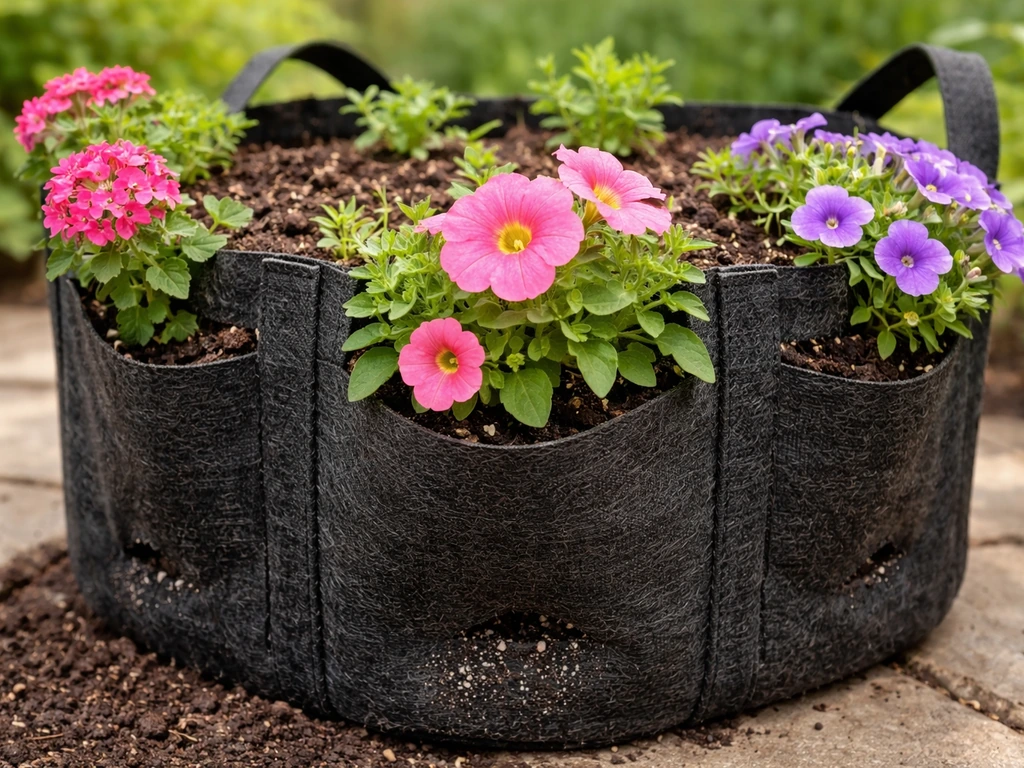
Can You Use Tomato Grow Bags for Flowers? Tips
Yes, use tomato grow bags for flowers. Get soil, drainage, watering, feeding, and sizing tips for healthy blooms.
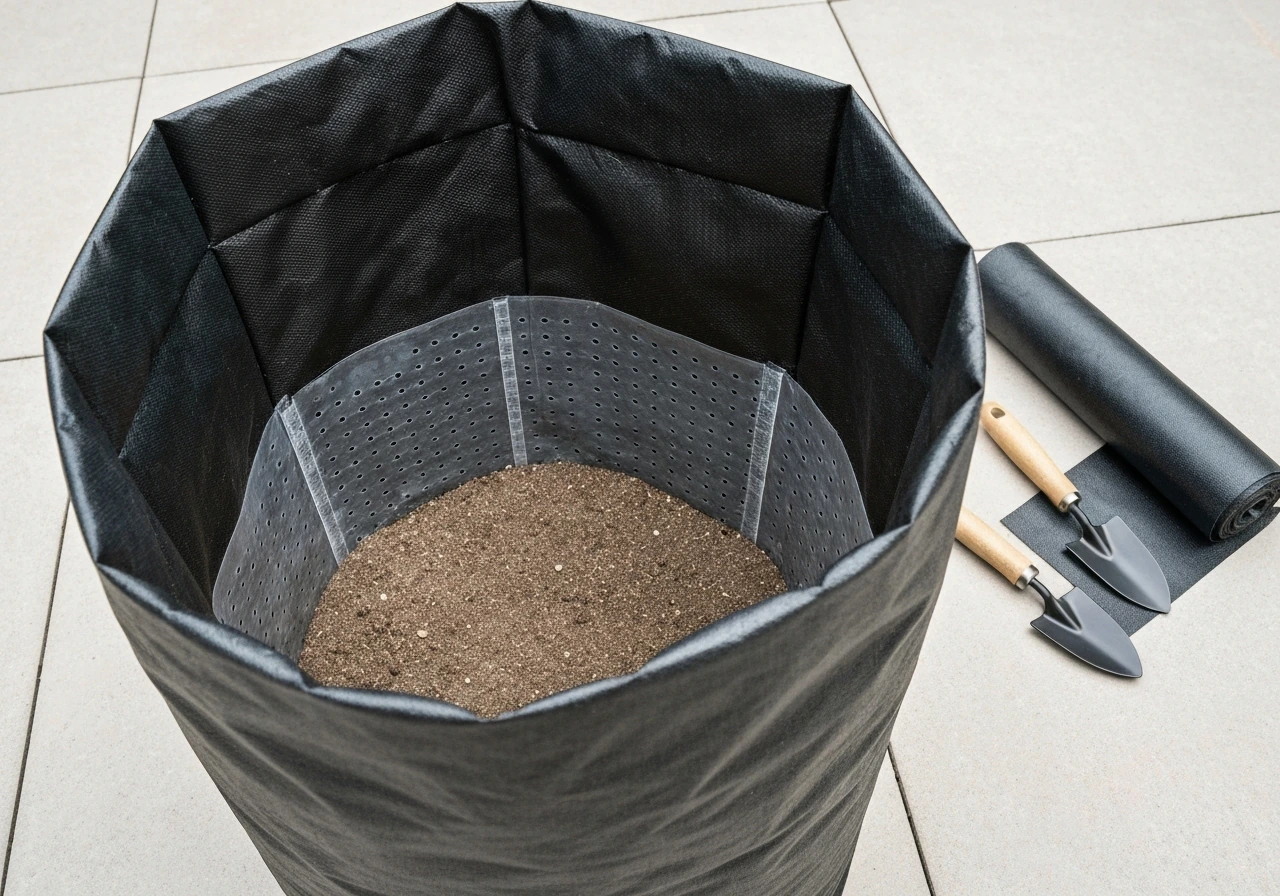
Best Landscape Fabric for Grow Bags: Buy and Install Guide
Choose the best landscape fabric for grow bags with weed-blocking, drainage and aeration tips plus DIY install steps.
Best Soil for Grow Bags: Mix Recipes and How Much to Add
Best soil for grow bags: mix recipes, how much to add by bag size, and vegetable tweaks for strong drainage and yield.