
For most home growers, fabric grow bags are the better buy. They air-prune roots instead of letting them spiral, drain faster than almost any plastic pot, and keep soil temperatures far more manageable on hot days. That said, plastic grow bags have their place, especially for mushrooms and short-season crops where the breathability of fabric isn't a priority. The honest answer to which one you should buy comes down to what you're growing, where you're growing it, and how often you're willing to water.
Grow Bags Reviews: Best Fabric and Plastic Picks
Marcus Holloway
25 Apr 2026
What to actually look for when reading grow bag reviews
Most grow bag reviews lead with aesthetics or price. Those things matter less than you'd think. Here's what actually determines whether a bag will work well for your plants over a full growing season.
Material: fabric vs plastic
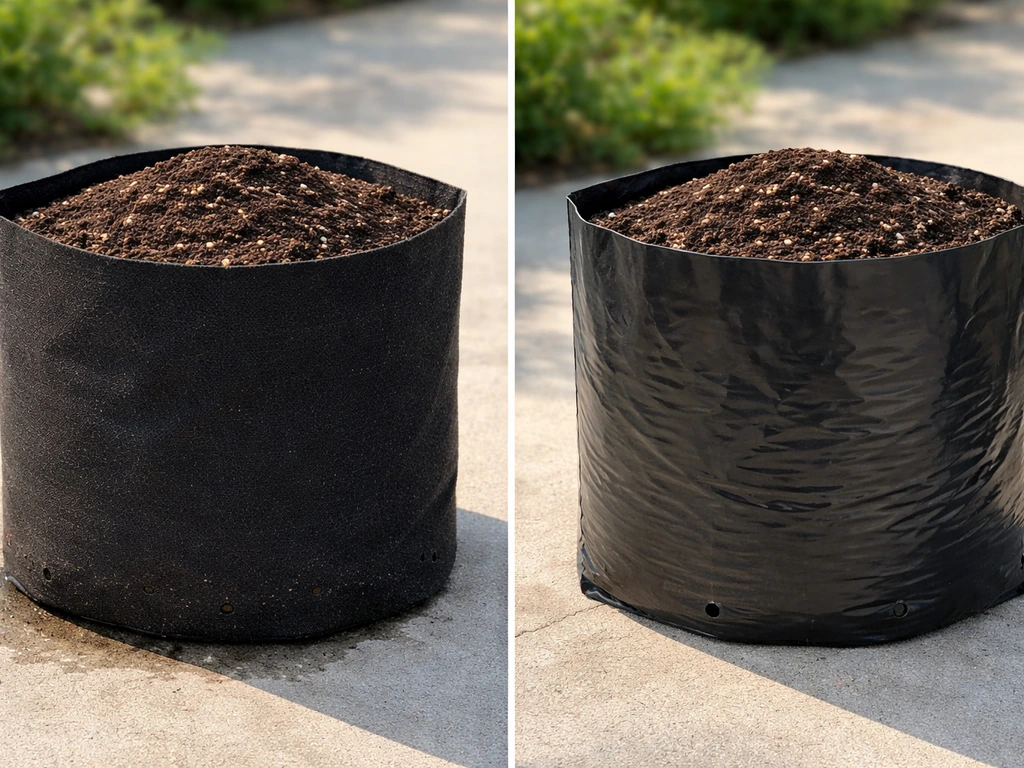
Fabric bags (typically nonwoven polypropylene or felt) allow air to pass through the walls. When roots reach the edge, they are exposed to air and effectively pruned, stopping them from circling and forcing the plant to generate a denser, more fibrous root system. Studies on porous-fabric containers like Smart Pot and Root Pouch confirm this air-pruning behavior produces more balanced root systems than rigid plastic does. Black polyethylene containers, by contrast, can push soil temperatures to nearly 50°C at just 1 cm from the wall when outdoor temperatures are only around 25°C. That level of heat kills roots and creates dead zones that can account for roughly a third of your container volume. Fabric bags avoid this problem almost entirely because airflow through the walls acts as passive cooling.
Drainage and aeration
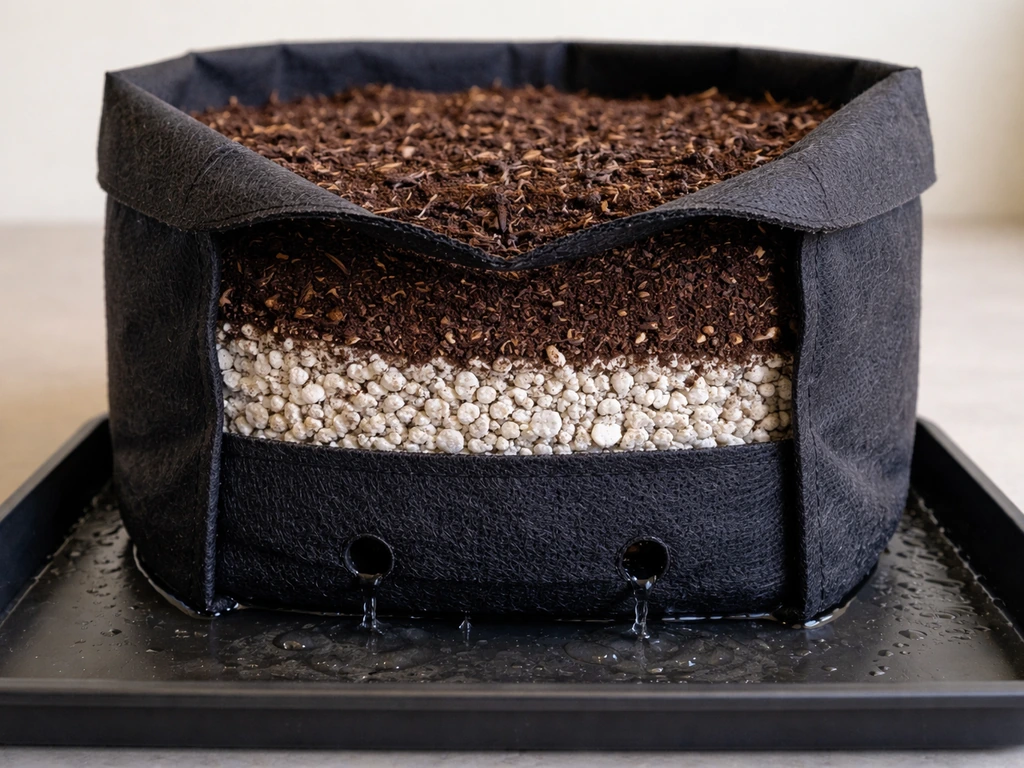
Drainage matters more than most new growers expect. Poor drainage is one of the leading causes of root rot, and once root rot sets in, it's hard to reverse. Fabric bags drain from every surface, not just the bottom, which is a significant advantage. The tradeoff is that they dry out quickly, so in hot weather or full sun you may need to water daily or even twice daily. Plastic grow bags drain only from the bottom and drain more slowly, which can actually be useful for plants that like consistently moist soil.
Seams, handles, and construction quality
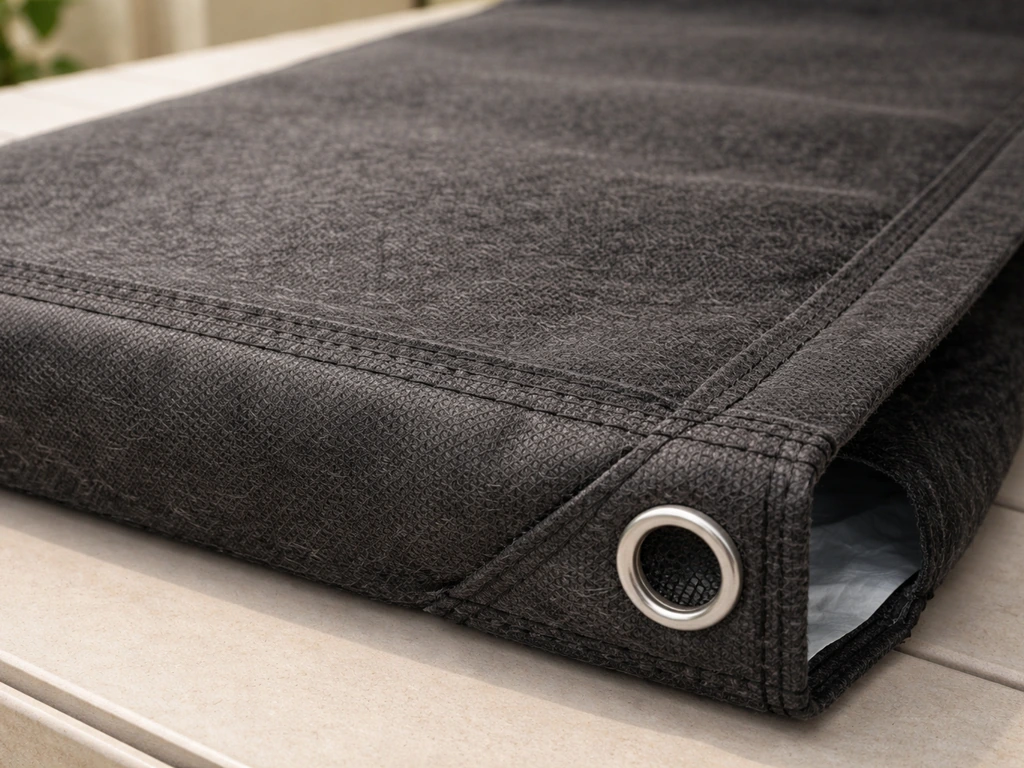
Reinforced seams are a non-negotiable for anything bigger than a 5-gallon bag. A wet 20-gallon bag filled with soil can weigh 50 pounds or more, and thin seams will blow out when you try to move it. Look for double-stitched or heat-bonded seams and wide, sturdy handles. If you're planning to move bags seasonally (bringing trees indoors before frost, for example), this is especially important. Some brands include stands or sell them separately, which helps with airflow under the bag and protects patios from staining.
Size range and availability
A brand that only sells a few sizes is limiting. Good brands offer a range from 1-gallon up to 100-gallon or more. If you're growing herbs, a 3-5 gallon bag is appropriate. If you're growing tomatoes or small fruit trees, you want at least 15-25 gallons. Check that replacement bags are easy to find, because you'll cycle through them every few seasons and you don't want to be stuck with a discontinued size.
Fabric grow bag reviews: who they're best for and what to watch out for
Fabric grow bags consistently outperform plastic for vegetables, fruits, and trees when growers use them correctly. Smart Pot is one of the most tested brands on the market, with BPA- and lead-free fabric and blank" rel="noopener noreferrer">side-by-side trial data showing that plants in their bags developed larger, more balanced root systems and reached marketable size sooner than plants in rigid plastic. Root Pouch is another strong option, particularly for growers who want a more biodegradable product or need bags that double as long-term planters for small trees.
What fabric bags do really well
- Air-prune roots automatically, preventing the circling (girdling) that can interfere with a plant's ability to absorb water and nutrients
- Drain fast and evenly, reducing risk of root rot and waterlogging
- Stay significantly cooler than black plastic on hot days, protecting the root zone
- Fold flat for off-season storage, making them easy to manage if you're working with limited space
- Work well on patios, rooftops, and balconies where weight and portability matter
Common complaints and honest limitations
- They dry out fast. In summer heat, a 5-gallon fabric bag may need water every day. This is the number one complaint from beginners and it's legitimate.
- Cheaper brands have weak seams that split under load. This is more a brand problem than a fabric problem, but it's worth checking reviews specifically for seam failures.
- Fabric can degrade after 3-5 seasons depending on UV exposure and how rough you are with them. Budget brands often fail faster.
- White and light-colored fabric bags stay cooler but tend to show staining more, which is cosmetic but annoying if you care about appearance.
- Roots can grow through the fabric wall and into the ground beneath if you set bags directly on soil. Use a stand or hard surface to prevent this.
Brands like Gardzen sit at a more budget-friendly price point and are worth considering for short-season crops or growers who want to try the method before investing in premium bags. Rain Science grow bags are on the opposite end of the spectrum, using a proprietary fabric construction that's designed for serious growers who want maximum aeration and are willing to pay for it. If you want to go deep on specific brands, dedicated reviews of Root Pouch, Gardzen, and Rain Science bags cover the differences in detail. To decide whether Rain Science grow bags are right for you, it helps to compare their construction and drainage against other top brands in detailed rain science grow bags reviews Rain Science bags.
Plastic grow bag reviews: when they actually make sense
Plastic grow bags get a bad reputation in container gardening circles, and for vegetables and long-lived plants, that reputation is mostly deserved. Roots spiral along the walls because there's no air-pruning mechanism, the USDA has documented root spiraling and egression as common problems in polybag nursery production, and the heat buildup in black plastic is genuinely damaging. USDA Forest Service reforestation guidance notes that when plugs show large horizontal roots spiraling or the plug stays shaped like the original, the tree is suffering from pot binding USDA has documented root spiraling and egression as common problems in polybag nursery production. But dismissing plastic entirely misses some real use cases.
Where plastic bags make sense
- Mushroom cultivation: Plastic grow bags are the standard for most mushroom growing setups because they're sterilizable, airtight where needed, and inexpensive. Fabric bags don't work for mushrooms.
- Very short-season crops: If you're starting seedlings or growing fast-turnover greens that will be harvested in under 8 weeks, root spiraling isn't going to cause a problem in that window.
- Moisture-loving plants: If you're growing something that prefers consistently wet soil and your climate is hot and dry, plastic's slower drainage can actually be an advantage.
- Budget setups for soil amendment: Some growers use plastic bags as cheap, single-season containers when amending heavy clay soil beds, filling and leaving bags in place to decompose.
What to watch out for with plastic
If you use plastic bags for anything that will grow for more than a couple of months, watch for signs of heat stress at the root zone, especially if the bag is black and positioned in direct sun. The soil temperature data is not subtle: nearly 50°C at 1 cm from the wall is enough to kill roots outright. If you're committed to plastic, choose white or light-colored bags, never black, and keep them in partial shade during peak summer heat. Also check that drainage holes are adequate and positioned at the bottom edges, not just the center base, since center-only drainage can leave standing water along the edges.
Plant-by-plant recommendations
Different plants have genuinely different requirements, and matching the bag type and size to the crop is one of the easiest ways to get better results without changing anything else.
| Plant Type | Recommended Bag Type | Recommended Size | Key Notes |
|---|---|---|---|
| Tomatoes (indeterminate) | Fabric | 15-25 gallon | Need deep root run; fabric air-pruning keeps root system productive all season |
| Tomatoes (determinate/patio) | Fabric | 10-15 gallon | Smaller varieties work well in smaller bags; water daily in summer |
| Potatoes | Fabric | 10-20 gallon | Tall bags allow hilling; fabric prevents waterlogging which causes rot |
| Peppers | Fabric | 5-10 gallon | Prefer warm roots but not overheated; fabric keeps temperatures manageable |
| Herbs (basil, parsley, etc.) | Fabric or plastic | 3-5 gallon | Short season; either type works for culinary herbs |
| Leafy greens / lettuce | Fabric | 3-5 gallon (wide) | Wide, shallow bags work better than deep ones; fast turnaround |
| Flowers (annuals) | Fabric or plastic | 3-7 gallon | Single-season use makes either type viable; fabric gives better drainage |
| Flowers (perennials) | Fabric | 7-15 gallon | Multi-year use favors fabric; root health matters more over longer cycles |
| Small trees / fruit trees | Fabric (heavy duty) | 25-45 gallon | Critical to use reinforced seams and handles; fabric prevents girdling roots |
| Shrubs | Fabric | 15-25 gallon | Same logic as trees; avoid plastic for anything that stays in a container over winter |
| Mushrooms | Plastic (clear or polypropylene) | Varies by kit | Fabric is not suitable; plastic allows sterilization and controlled humidity |
For mushroom growers, it's worth knowing that spawn bag reviews and mushroom-specific grow bag reviews are a separate category from vegetable grow bag reviews. Brands like Midwest Grow Kits and Mycohaus specialize in this niche and use entirely different materials and designs than fabric bags for vegetables. If you want region-specific tips, you can also look for a Midwest grow kits spawn bag review. The criteria overlap very little, so read those reviews separately.
Choosing the right size and setting up your potting mix
The most common sizing mistake is going too small. Bigger bags hold more soil, which buffers moisture and temperature swings, giving you more margin for error on watering. If you're unsure, go one size up from what you think you need. The only real downside to a bigger bag is cost and the space it takes up.
Quick size reference
- 1-3 gallon: herbs, small flowers, strawberries, seedling growing
- 5-7 gallon: peppers, compact bush varieties, most annual flowers
- 10-15 gallon: determinate tomatoes, cucumbers, eggplant, larger perennials
- 20-25 gallon: indeterminate tomatoes, squash, young fruit trees
- 30-45 gallon: dwarf fruit trees, blueberries, established shrubs
- 65-100 gallon: large trees, multi-plant polyculture setups, raised bed replacements
Getting the potting mix right
Drainage is extremely important in any container, and grow bags especially. A well-structured potting mix matters more than almost any other setup decision. A ratio of roughly 3 parts quality potting mix to 1 part compost gives you good structure, nutrition, and drainage. Avoid using straight garden soil, which compacts in containers and suffocates roots. If you're in a hot, dry climate and worried about drying out too fast, you can add perlite or coco coir to retain a bit more moisture without sacrificing drainage. Don't add water-retaining gel crystals to fabric bags because they can work against the drainage properties that make fabric useful.
Placement and setup
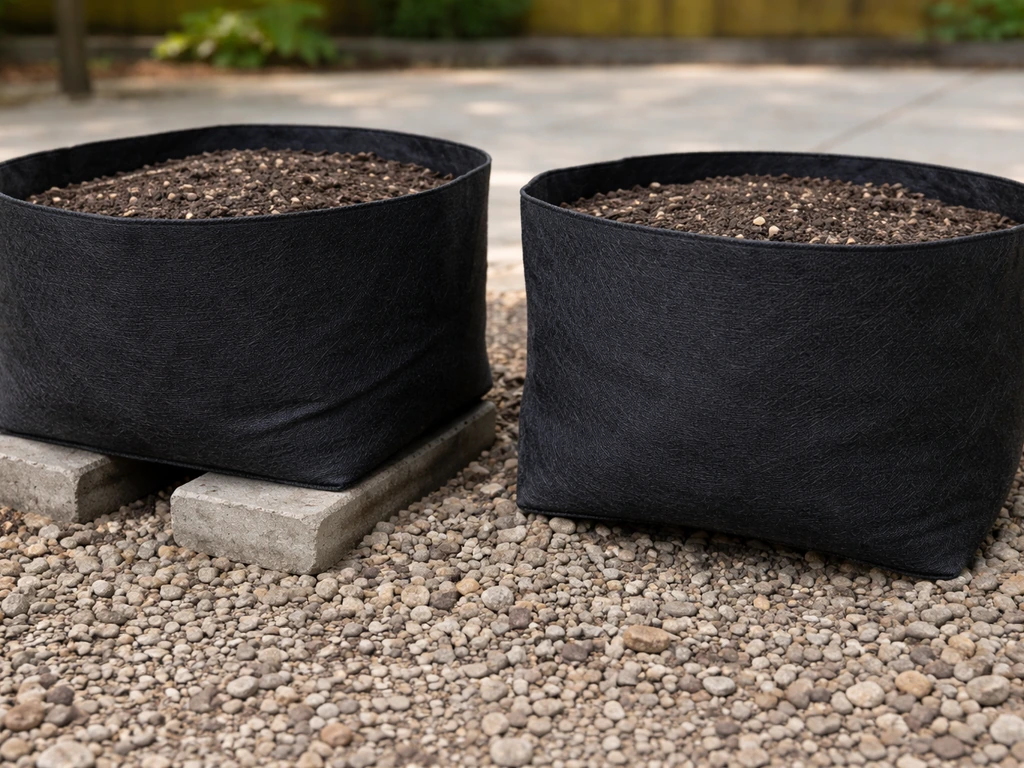
Place fabric bags on a hard surface like a patio, deck, or gravel bed rather than directly on soil. This stops roots from escaping through the fabric bottom and anchoring into the ground. Elevating bags slightly on a stand or pot feet improves airflow under the bag, speeds drainage, and prevents the bottom from staying constantly wet. If you're on a wooden deck, use saucers or stands to protect the surface from moisture and staining.
Watering, roots, heat, and troubleshooting common problems
Most grow bag failures come down to watering. The fast drainage that makes fabric bags great for roots also means they dry out faster than you expect. In summer, a 5-gallon fabric bag in full sun can lose its moisture in a day. A 15-gallon bag might still need water every day or every other day. Get in the habit of checking soil moisture at 2-3 inch depth daily during hot weather, not just sticking a finger into the top.
Overwatering vs underwatering
Underwatering in fabric bags is more common than overwatering, but both cause problems. Underwatering shows up as wilting in the heat of the day that doesn't recover overnight, dry and cracked soil surface, and leaf edges that brown and crisp. Overwatering in fabric bags usually means your potting mix is staying soggy for days and you're watering on a schedule instead of checking the soil. True overwatering in a fabric bag requires some effort because the bag drains quickly, but it's possible in cool, cloudy weather. If roots look brown and mushy rather than white and firm, that's root rot from excessive moisture. Improve drainage by adding more perlite to the mix and reducing watering frequency.
Heat management
Even fabric bags can get hot in intense sun if the fabric is dark colored and the bag is small. In extreme heat (above 35°C / 95°F), consider moving bags to afternoon shade, adding a mulch layer on top of the soil to reduce evaporation and soil temperature, or doubling bags (placing one inside another) for extra insulation. White or light tan fabric bags help significantly. If you're running self-watering grow bag setups with a reservoir, remember that during establishment and high-temperature periods you should still water from the top regularly, not just rely on bottom-up wicking.
Root health and air pruning
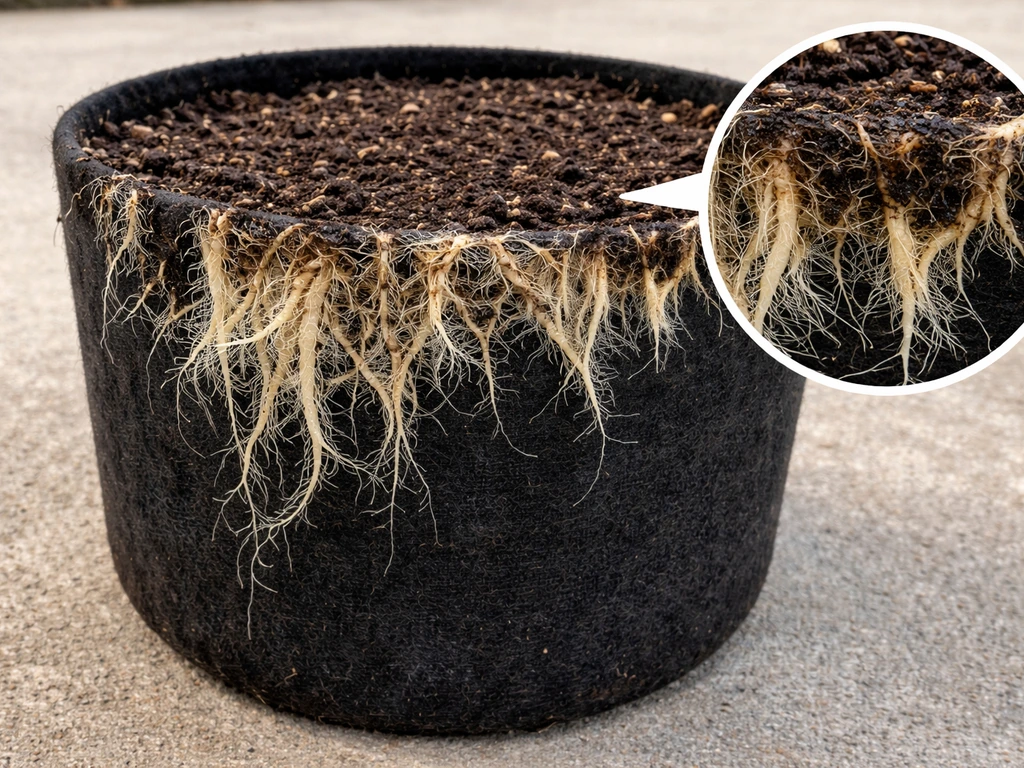
Healthy roots in a fabric bag should be white to cream-colored, dense, and branching. If you notice roots poking through the outside of the bag, that's normal air pruning in action. The tips will dry and die back, triggering the plant to generate more lateral roots. Don't pull the protruding roots off or try to push them back in. If you're transplanting out of a grow bag at the end of the season, you'll usually see a well-developed, fibrous root ball rather than the matted, circling mess typical of plastic pots.
Pests and disease
Grow bags aren't immune to pests, but their portability is a real advantage. If you have a soil-dwelling pest problem (fungus gnats, root aphids, nematodes), you can move bags, treat the soil, or dump and replace the mix more easily than you could with an in-ground bed. Fungus gnats are often a sign of overwatering since they breed in wet topsoil. Letting the surface dry out between waterings usually breaks the cycle. For foliar pests like aphids or spider mites, the bag itself isn't the issue and standard treatments apply. One grow bag-specific note: fabric bags that stay perpetually damp on the outside can develop surface mold or algae. This is cosmetic in most cases, but improving airflow around the bag and avoiding overwatering will prevent it.
Long-term maintenance and bag longevity
At the end of each season, empty your fabric bags, shake out as much soil as possible, and rinse them with water. Let them dry completely before storing flat. Most quality fabric bags will last 3-5 seasons with reasonable care. If the fabric starts to fray badly at the seams or loses its shape and structure, it's time to replace. Some growers sanitize bags between seasons with a dilute hydrogen peroxide solution, especially if they had disease problems. This is a good practice if you plan to reuse the same bag for the same crop. Rotate crops in bags just as you would in a garden bed to reduce pest and disease buildup in the potting mix.
FAQ
Can I leave grow bags outside during winter, or do I need to bring them in?
Yes, but only if you keep the root-zone temperature and drainage under control. If you must overwinter outdoors, use a larger bag (15 gallons or more for small trees), move it to afternoon shade, and insulate the bag sides (bubble wrap or an external sleeve) while keeping the bottom drain path clear. In freezing weather, avoid waterlogged mix, since fabric bags can still dry unevenly and you want the mix to stay airy, not soggy.
What should I do with a fabric grow bag when transplanting at the end of the season?
For in-ground transplanting, you do not want to force the fabric to stay intact. Cut or remove the fabric around the root ball before planting, because the fabric can limit root spread once the roots hit the soil. If roots are dense and white/cream (normal air-pruning), transplant immediately and keep the plant shaded for a few days to reduce transplant shock and rapid moisture loss.
Are soil moisture meters accurate in grow bags, especially fabric ones?
Moisture-meters help, but they can be misleading in fabric because readings vary by fabric thickness and potting mix texture. Use a probe model with multiple readings across the bag and aim for consistency (a stable mid-range at 2 to 3 inches depth), then confirm with visual cues (soil color, surface dryness, and whether the plant shows stress). If you rely only on top readings, you will often under- or overwater.
How do I know whether my grow bag problem is underwatering, overwatering, or root rot?
If you see browned, mushy roots rather than firm white roots, treat it as root rot risk, not just a watering mistake. Stop watering, improve mix aeration (more perlite), and make sure drainage is unobstructed, including edge drainage in plastic. If the bag stays wet for days even after adjustment, consider refreshing the potting mix rather than waiting for recovery.
Do grow bags need different fertilizing than pots or in-ground beds?
Yes, but fertilizer strategy should match how fast the bag dries. Because fabric bags dry quickly and leach more, you may need more frequent, lighter feeding, or a controlled-release fertilizer plus a smaller supplemental dose. Avoid letting fertilizer build up in dry cycles, flush lightly with plain water occasionally, and watch for salt crusting on the soil surface.
If fabric bags dry out too fast in my climate, should I switch to plastic?
Often, yes, but it is location dependent. In dry, windy areas, a slightly larger bag (one size up) plus a top mulch layer usually reduces watering frequency without damaging drainage. In very hot full sun, a mulch layer plus afternoon shade works better than switching materials, because it reduces evaporation and root-zone heating that fabric alone cannot fully prevent.
Can I use water-retaining gel crystals or a self-watering setup with fabric grow bags?
For fabric bags, avoid water-retaining gel crystals in the soil. Instead, tune the mix with aeration and moisture balance, for example quality potting mix plus some perlite or coco coir (as you already would for drainage), and ensure you can water consistently during establishment. If you want “self-watering,” use a reservoir approach designed for grow bags, but still water from the top until the mix is fully established.
What’s the best way to prevent fungus gnats in grow bags?
Yes, and it is specifically about controlling fungal gnats and root-zone humidity. Let the surface dry a bit between waterings, remove any standing water from saucers, and avoid watering on a fixed schedule. For persistent issues, you can also refresh the top layer of mix, since larvae often live near the moist surface.
Should I sanitize grow bags every year, and when is it worth doing?
Usually not needed, but it depends on how often you reuse the bag and what grew in it. If you had disease issues or heavy pest pressure, clean and dry the bag thoroughly, and consider sanitizing before reusing for the same crop. Also rotate crops between seasons in the same bag because many problems persist in the potting mix even if the fabric is cleaned.
Is a bigger fabric grow bag always better, or can it cause problems?
Not always. Fabric bags perform well, but you still need to match size to the root mass and the watering window. If your plants need consistent moisture for long periods, a fabric bag that is too small can increase stress even though the bag drains well. Start with the crop’s typical container size, then move up one size if you cannot check moisture daily in summer.
What should I do if roots start coming through the sides or bottom of a grow bag?
Edge-case but common: when roots grow through the bag openings, do not prune or pull them off. Instead, transplant at the right time and keep the root ball intact as much as possible, since those outward roots are functional and will die back gradually after transplant. Also ensure you are not placing bags directly on soil if you want to prevent roots from anchoring outdoors.
If I use plastic grow bags, what are the most important mistakes to avoid?
For plastic bags, the most preventable failure is heat plus inadequate edge drainage. Choose light-colored bags, position in partial shade, and confirm there are drainage holes along the edges, not only at the center bottom. If the soil stays wet in cool weather or you see mushy roots, reduce watering immediately because plastic can trap excess moisture longer than fabric.
Next Articles
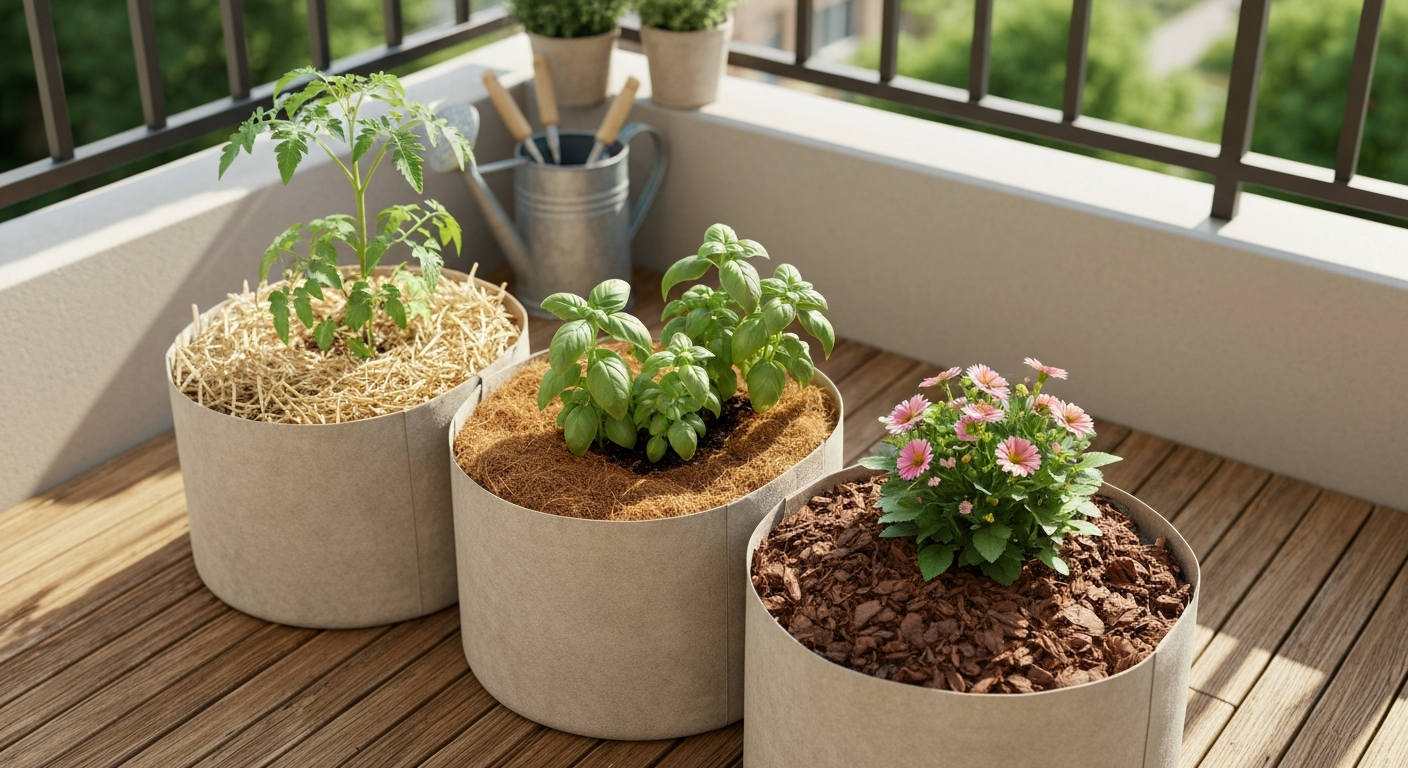
Best Mulch for Grow Bags: Top Picks for Vegetables & Flowers
Find the best mulch for fabric grow bags: top picks, how-to apply, crop & climate advice, and troubleshooting.
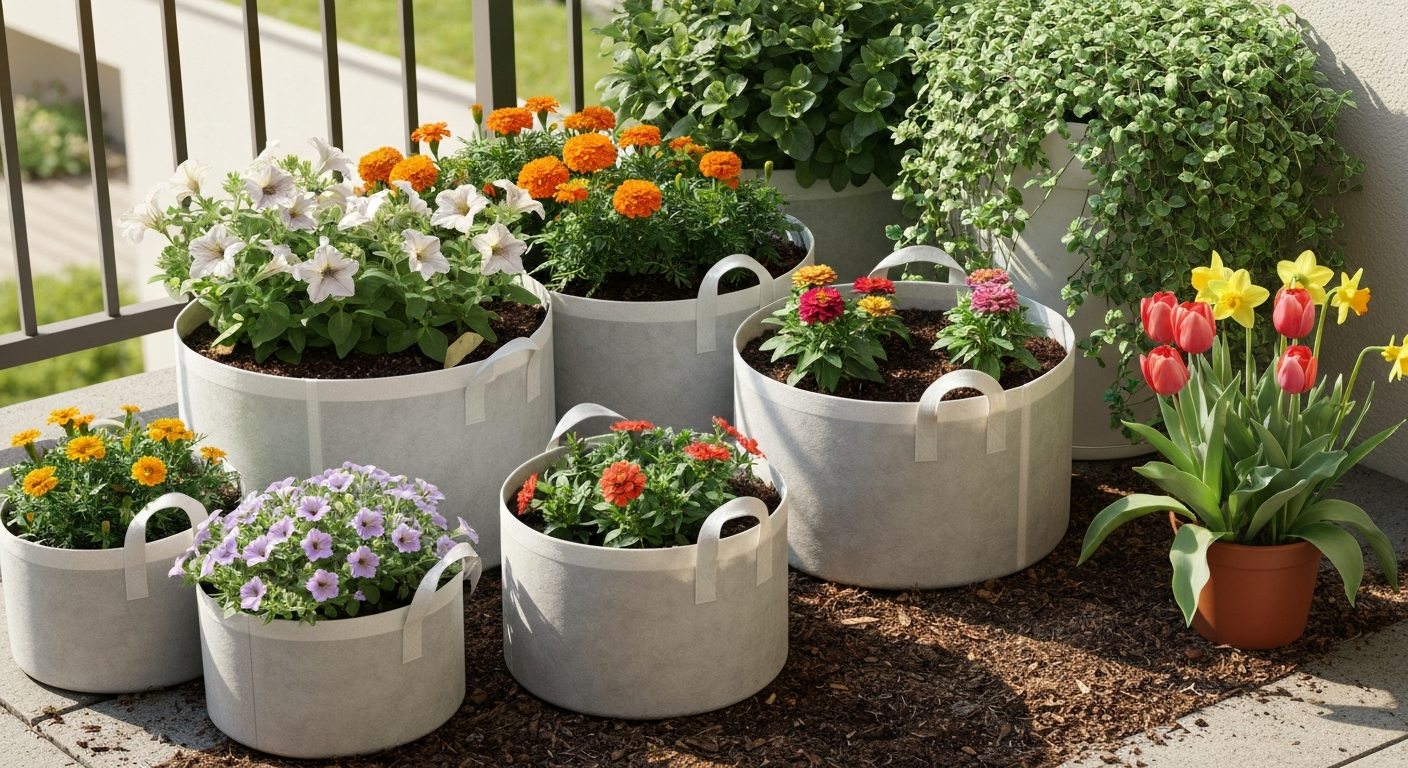
Best Flowers for Grow Bags: Top Picks, Soil & Care Guide DIY
Best flowers for grow bags: top annuals, perennials, bulbs & trailers; soil, fertilizer, planting and care checklists.
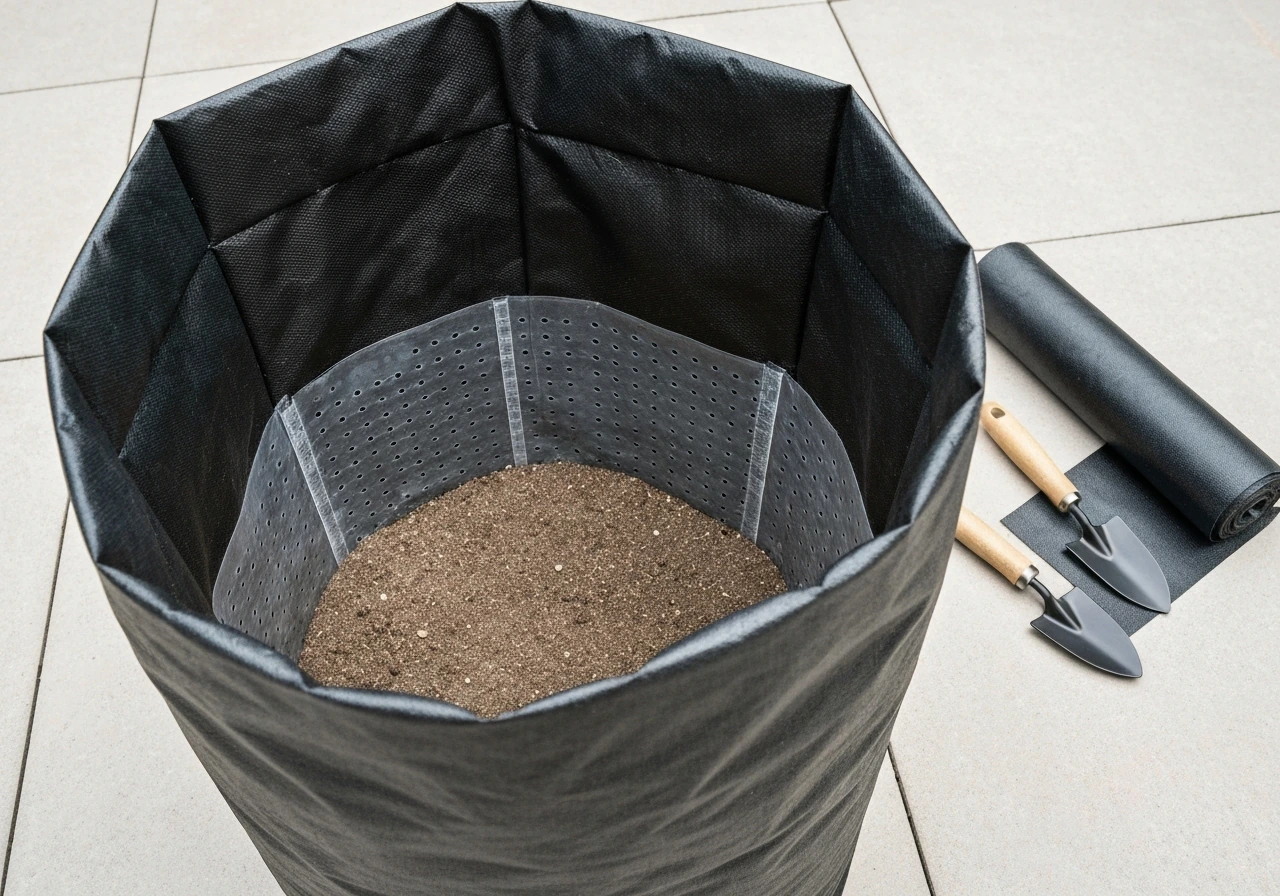
Best Landscape Fabric for Grow Bags: Buy and Install Guide
Choose the best landscape fabric for grow bags with weed-blocking, drainage and aeration tips plus DIY install steps.